Category Archives: NZ author

Poetry Shelf Spring Season’s poetry fans: Paul Diamond picks Gregory O’Brien


Ode to the Sarjeant Gallery


Likened, on occasion, to a boom-box on a grassy shelf,

Sarjeant Gallery, I think of you mostly


as a tin

in which the finest bread

is baked, with your airy dome


and ample intelligence, your south-facing wall

on which the paintings of Joanna Paul


and Edith Collier sing to the river birds,

and are sung back to.


A steadying influence,

above which clouds like

thought balloons moor a while


and around which gather

the moonlit streets of Whanganui.

On your lawn this morning I watched


a film crew being washed down-river, an empty shoebox

blowing towards Moutoa Gardens – but all I could hear


was a distant burbling of the mayor

and his accountants

marooned in the small towns


of their suits, nose-deep in their yellowing pages,

in whose minds


the Whanganui River would be diverted

so it comes out

at Patea, and by whose good judgement


Pak ‘N Save would be enlarged

to enclose the whole town,


and the marble wrestlers in the Sarjeant foyer, this goes

without saying, would be replaced with


jelly. In the council chambers, a hundred years

of Whanganui River fog would seem


to have obscured the mayoral judgement,

the mist outside

clearing to reveal, on the forecourt,


a bullroarer and baby’s rattle – emblems of the town’s

leadership – and towering above it all,


our observatory

of earthbound constellations,

your patient dome, looking down on


the dust-gatherers and nay-sayers, the elected

and the naturally selected. It all comes down,


like the Whanganui River,

to this. And every city

has its limits.


©Gregory O’Brien  NZ Listener April 2-8 2005 Vol 198 No 3386


Note from Paul:

I’m writing a book about Charles Mackay, a former mayor of Whanganui, who was a driving force behind the building of the glorious Sarjeant Art Gallery in Whanganui. In 1920, Mackay shot D’Arcy Cresswell, who threatened to expose the mayor’s homosexuality unless he resigned. Subsequently, the mayor’s name and title were erased from the Sarjeant Gallery foundation stone (but restored in 1985). Spending time at the Sarjeant Gallery and getting to know its staff and collections has been one of the highlights of my research visits to Whanganui. Greg O’Brien’s poem came out of an unhappier, divisive time in the life of the city and the gallery. More than a decade on, fundraising for the gallery redevelopment plan is well underway, and there’s greater awareness of the significance of the Sarjeant building and its collections for the nation, as well as Whanganui. I like to think Charles Mackay would be proud.


Paul Diamond (Ngäti Hauä, Te Rarawa and Ngäpuhi) was appointed as the inaugural Curator, Mäori at the Alexander Turnbull Library in 2011. He worked as an accountant for seven years, before switching to journalism in 1997. He is the author of two books (A Fire in Your Belly, and Makereti: taking Mäori to the World) and has also worked as an oral historian and broadcaster. In 2017 he was awarded the Creative New Zealand Berlin Writer’s Residency, to work on his book about former Whanganui mayor Charles Mackay, who was shot in Berlin in 1929.


Gregory O’Brien is a poet, essayist and writer, currently finishing a non-fiction book, Always song in the water–New Zealand art, letters and the environment. ‘Ode to the Sarjeant Gallery’ was written at a time when the Sarjeant was getting a very bad rap from the local council under mayor Michael Laws. It appeared in the Listener and hasn’t surfaced again until now.

Poetry Shelf – Spring Season’s poetry fans: Steve Braunias picks Vincent O ‘Sullivan

To Miss the Point Entirely

It isn’t good for a writer to live in a country
where a cut-price banker with his next-door smile
is all we have to throw stones at. How one
envies a Chilean say who could dream of knifing
a home-grown monster, the English even
who might smash a TV any day of the year
when a government of schoolboys quiver as if Matron
threatened to punish arse.
‘A country without snakes!’
as tourists at times are amazed to hear. ‘Then what
do people here die of?’, another traveller once
asked me. ‘Of being ourselves,’ I told him,
‘the big tourist pictures falling off the wall with mould.’

©Vincent O’Sullivan


Note from Steve: This is such a fun poem, a genuine LOL. There are some great examples of comic verse – CK Stead’s collection “Dog” is full of them, and I’ve always loved one by Kevin Ireland about a friend who made a bust of his head; it ends with the jokeshop word, quite properly in capital letters, “BOING”. Vince’s poem also works as political verse. I don’t think there are that many good examples of that. They’re often too emphatic, too one-dimensional, just a rant. Vince applies a nice, gentle touch on the poem from beginning to end. I really love the space on line 9, when he introduces a new slant on the poem. It’s like a paragraph break and it allows the poem to take a kind of breath. I love everything about the poem, really, right down to the final line, which is a deeply mordant, black-comedy punchline. This poem can do no wrong.

SB works as a staff writer at the New Zealand Herald, and as the books editor at the Spinoff, where he chooses a new poem every week as the Friday Poem. Publishing verse each week was something he introduced right from the very start of creating a books section at the Spinoff.


Vincent O’Sullivan, poet, novelist, playwright and short story writer, was the New Zealand Poet Laureate from 2013 – 2015. His latest collection of poems, And so it is was published by Victoria University Press in March.

Poetry Shelf Spring Season’s poetry fans: Morrin Rout picks Fiona Farrell

Daffodils

No words to start. No
names. Trees learned
the land by touching
it with dumb fingers.

The names flew in
and hovered, light
as mayflies, skimming
the river of the white
calf, the hill of gorse,
the crag of the cat.

They shifted shape,
became other things.
The river is black
now and deep, the
hill is the hill of
hanging, and the
cats have been
butted from the
crags by shaggy
saints.

As my house
stands on the lip
of the bailer of a
black canoe.

And on a heap
of broken timber.

And on a green shoot.

And on the rocky
point of a man.

Or named Long Bay,
plain words,
printed out
in daffodils.

But already, look:
they’ve multiplied.

Gone wild.

Danced over the lines.
Invaded the field.

They are popping up
in odd places, as if they
have forgotten completely

how to spell.


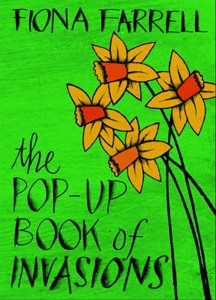
©Fiona Farrell, The Pop-up Book of Invasions (Auckland: Auckland University Press, 2007).

1400031286961.jpg

Note from Morrin: Fiona’s poem continues to delight me and reward each reading. I too live on Banks Peninsula and feel at times precarious. Words and names mutate and the landscape continually reminds us that we are newcomers and much has gone before. I love the image of the daffodils being bidden to spell out the name of the bay but over time breaking free and defying human intent.

Morrin Rout has co-produced and presented ‘Bookenz’ on PlainsFM 96,9 for over 20 years and is the director of the Hagley Writers’ Institute in Christchurch.

Multiple award -winner, Fiona Farrell writes across a variety of genres; she has been a finalist in all three categories at the NZ Book Awards, for fiction, non-fiction and poetry. The critically acclaimed, The Villa at the Edge of the Empire, the factual half of a two-volume work, examines the rebuilding of a city through the twinned lenses of non-fiction and fiction. The accompanying novel, ‘Decline and Fall on Savage Street’ has just been published.

Poetry Shelf Spring Season’s poetry fans: Gina Cole picks Selina Tusitala Marsh

In Creative Writing Class

the pākehā man
calls the kailoma Fijian woman
the Māori woman
and the ‘afakasi Samoan woman
privileged
because they have the experience
of being doubly oppressed
at a time when they qualify
for certain scholarships
when their demographic
is fashionable and interesting
their life experiences
make their writing more convincing
their stories are rich and deep
hot chocolatey and steamy
his are staid, North Shore-ish
lukewarmish gumboot tea

the los atrevido
wait for him to finish
his first world problems
in their global village
their serpent tongues aim
for the space above his collar
they fire simultaneously
no one even hears him holler

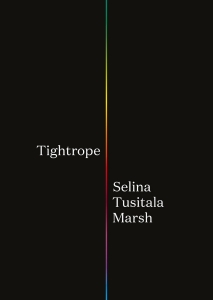
©Selina Tusitala Marsh from Tightrope (Auckland: Auckland University Press, 2017)


1502933415430.jpg


Note from Gina: I love this poem because I have attended many creative writing classes. I am also a kailoma Fijian woman, and I have been in a creative writing class with Selina. In most writing classes that I have attended, I have been one of a minority of Māori and Pasifika writers in the class. I love how the title reads as a play on each word in all their different meanings, especially “class”. I love the last stanza and the description of the women as “los atrevido”. I had to look up what that meant. I found that it translates as – the daring, the badass, the bold. I love that daring in the poem, and that Selina is the new daring, badass, bold Poet Laureate for Aotearoa.

Gina Cole is of Fijian, Scottish and Welsh descent. She lives in Auckland. She writes fiction and poetry. She is a Barrister specialising in Family Law and has a Master of Creative Writing from Auckland University. In 2016, Huia Publishers published Gina’s debut book of short stories Black Ice Matter. Black Ice Matter won the 2017 Hubert Church Prize for Best First Book Fiction at the Ockham New Zealand Book Awards.

Selina Tusitala Marsh is of Samoan, Tuvaluan, English and French descent. She was the First Pacific Islander to graduate with a PhD in English at the University of Auckland where she currently is an Associate Professor. Her first collection, Fast Talkin’ PI, won the Jessie Mackay Award for Best First Book of Poetry in 2010. As Commonwealth Poet (2016) she composed and performed a poem for the Queen at Westminster Abbey. She is New Zealand’s current Poet Laureate.

Grace Taylor’s Full Broken Bloom : Book Launch & Performance Event

21273094_1359894090799418_2169283840626027220_o.jpg

Public Event

Thursday, October 19 at 6:30 PM – 9:30
STOLEN BUTTER, Suite 25, 183 Karangahape Road, St Kevin’s Arcade, AKL

Anna Jackson’s Dear Tombs, Dear Horizon launching with Last Stop Before Insomnia / Dernier Arrêt Avant l’Insomnie

From Seraph Press:

We hope you can join us to celebrate the launch of these two exciting new chapbooks with a French connection, both of which grew out of Anna Jackson’s time as Katherine Mansfield Fellow in 2016.


When: Thursday 26 October 2017, 5.30 pm
Where: Vic Books, Easterfield Building, Kelburn Parade, Wellington

All welcome.

About the books:

efff497f-97fc-4f59-bdbd-26a25f2ac45b.jpg
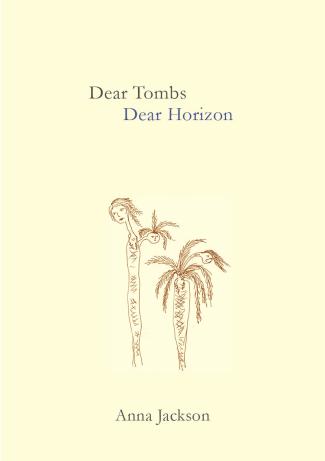
Dear Tombs, Dear Horizon
by Anna Jackson

In 2016, while the Katherine Mansfield Fellow in Menton, France, Anna Jackson began recording some of her thoughts and impressions in a notebook. Over the three months of her tenure this grew into a lively and charming poetic essay, which weaves her own experiences with her engagement with other writers and texts, including her predecessor Katherine Mansfield.


d111481b-2dc0-4e6e-b053-d50013eac3ef-1.jpg


Last Stop Before Insomnia / Dernier Arrêt Avant l’Insomnie

by Marlene Tissot, translated by translated by Anna Jackson and Geneviève Chevallier
Seraph Press Translation Series No. 3

This bi-lingual taster of deliciously playful poetry by French poet Marlene Tissot takes you on a wild ride through the existential, the sensual and the sleep-deprived.
To find out more about the books, or to buy them online, visit here. seraphpress.co.nz.

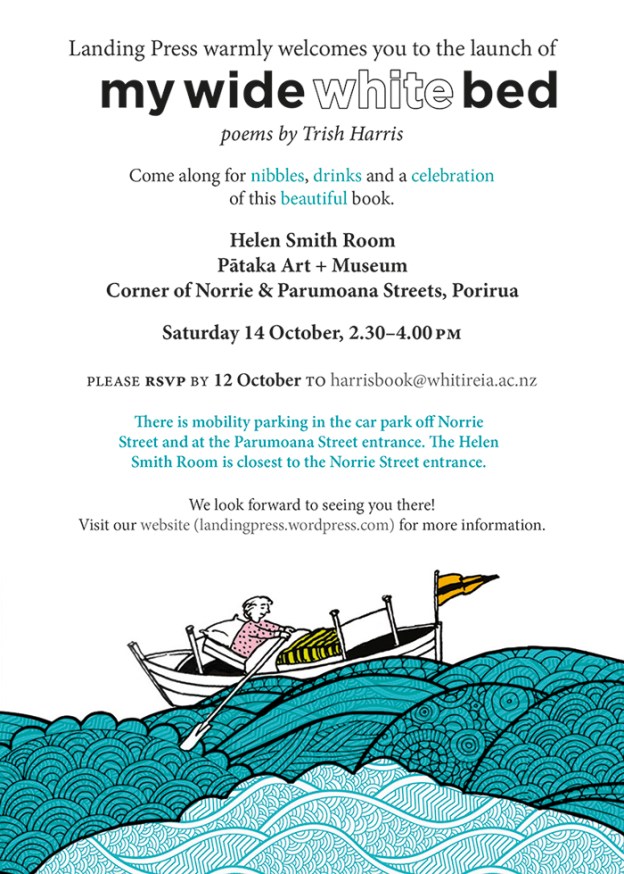
Trish Harris’s My Wide White Bed to be launched on Saturday

Next Saturday, Landing Press will be launching their newest collection of poetry – My wide white bed by Trish Harris.

My wide white bed, Trish’s first collection of poetry, is inspired by her long stay in an orthopaedic ward. Navigating daily hospital life and the path to recovery, the poems capture a unique view of hospital life from a patient’s point of view and demonstrates, as Glenn Colquhoun puts it in his endorsement of the book, ‘how crucial imagination is to being well’.

At a time when health care is a much talked-about issue, this book contributes to the conversation in an insightful way with measure and hopefulness.

The launch will be held at Pātaka Art + Museum in Porirua, Wellington from 2.30pm.


Here is a clip of Trish reading a poem from the book.

My wide white bed - Launch invite small.jpg

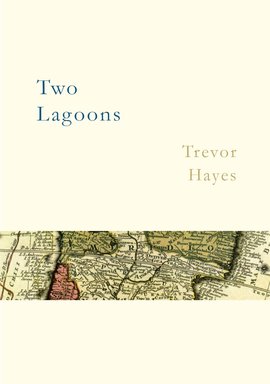
Trevor Hayes’s excellent Two Lagoons – a wee review and a poem


two-lagoons-front-cover.jpg


Two Lagoons, Trevor Hayes, Seraph Press, 2017


‘I have invented

myself this morning.


These lines

I have not imagined.’


from ‘Ash Song’


Trevor Haye’s Two Lagoons offers various resonant pools to sink into—forgive the pun, I rather like the idea of a poem as lagoon—and then establishes myriad links between. There is a here to there shimmer; from the South Island’s West Coast to South America; from a lived world, physically detailed and sensually lifted, to abstract movements, imaginings, sidesteps. The poems – there are 12 – are like surprise pockets: luminous with fizzing alchemy, grace, agility and rich layerings.  The placement of this next to that, of the 19 letters in the mailbox alongside the milkman’s history, of the ‘trickery of phrasal verbs’ next to ‘the benefits of good manners’ is akin to sparks on the line. It’s a delight to read and I look forward to the next book.


Going Nowhere


I pack my suitcase lightly.

I have a toothbrush and floss,

as even nowhere is better


with healthy gums. I have some

reading material: a guide

to the extinct flora and fauna


and a book that translates silence.

I intend to visit the empty museums

and the vacant parking lots.


I’ll be able to take photos of nothing

but the wind. It seems unlikely

I will meet anybody there, as recent


political developments and negative

coverage by news media have discouraged

the travelling public.


©Trevor Hayes from Two Lagoons


Picture

Photo by Richard Arlidge
​Trevor Hayes has an MA in creative writing and a BA in Spanish and English Literature from Victoria University of Wellington. In his adventures around the world he has taught English in Spain, been a gardener in Ireland, a store-man in Australia and a grill chef in the USA. He now lives near Punakaiki on the West Coast.


A poem from James Brown’s dazzling Floods Another Chamber and Gregory O’Brien’s launch speech (the envy of all poets!)

large_9781776561599.jpg


Postmodernism Explained

You’re dreaming. In the
dream you fall asleep and dream
you’re writing. If to

write is to reflect
what you’ve already read, and
thus to reread, to

read is also to
rewrite. What are you saying?
Wake up, you tell me.

©James Brown 2017
And for an extra sample you can read the magnificent ‘Janet and John Go to the Book Launch’ here
 

Brown_017 bw.jpg


The launch speech:


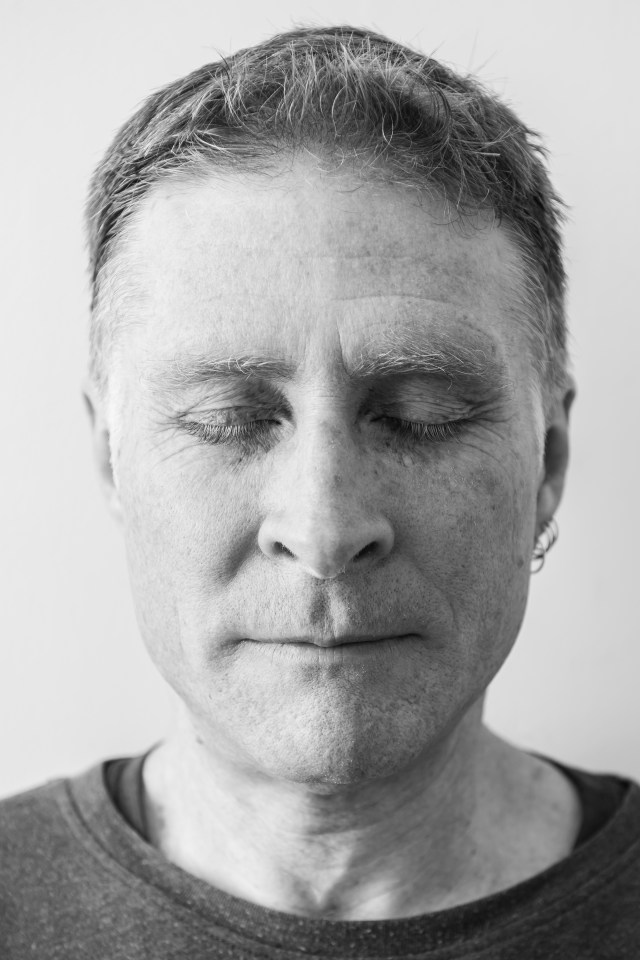
James Brown comes from Palmerston North

There are numerous questions that arise, like a lowland mist, from this collection, as from all of James Brown’s books: For a start, why did he ever leave his home-town of Palmerston North, to which he is so manifestly linked. Or maybe he did never leave? Or when is he due back there?

Taking this, Brown’s sixth poetry collection, as a kind of provocation, two Fridays ago I drove north to Palmerston North and checked in for the night at the Hotel Coachman, a neo-Tudor confection on Fitzherbert Avenue. Not far from ground zero—the address where Brown spent his formative years—I had decided to read this new collection on its home turf—on the south side of ‘the bustling go-ahead city at the heart of the Manawatu Plains’ as Brown once memorably wrote.

According to the Palmerston North Creative Giants website:

‘Of all Palmerston North’s Creative Giants, poet and short fiction writer James Brown stands out…’ Expectations of the new book were, accordingly, running very high in Room 102 of the Hotel Coachman. In the company of an increasing platoon of sopping tea-bags and an intermittently boiling kettle, I lay down and made my way across the flat, bicycle-friendly territory of Floods Another Chamber. . .

Despite the fact she appears in Brown’s new collection a much-remarked-upon four times, Jenny Bornholdt had earlier in the day declined the invitation to accompany me northwards on this hyper-literary excursion. . . Alone, I was consigned to my carpark-facing double room—$160 the night, which included breakfast in a rowdy dining area filled with travelling salesmen and at least one sports team. While the scrambled eggs resembled a Manawatu wetland and the spread, generally, was lacklustre, I was up to my ears in Brown’s book by breakfast time, which made it all not so bad. In fact it was as if James Brown had scripted the whole thing.

Later I drove past the Palmerston North Public Hospital, where the poet was born at 12.40am on April the 1st, 1966; a moment’s respectful silence, also, near the birthplace of Sarah Laing and the childhood home of Karl Maughan—and on Broadway Avenue where painter Pat Hanly, aged 15, was an apprentice hairdresser at Bert Pratt Limited.

The early things in life determine how we evolve. In Brown’s villanelles and quatrains, I can detect the orderly grid of the Palmerston North street plan, and the inspirational, idiot wind that crosses it. This is the place where, as Brown writes in ‘Childhood’, the days ‘inched by… Glue, glitter, galaxies. Things shone. Broke. You laughed / until you cried. There was no escape.’

While James Brown delights in poetic constraints, and is dazzling within them, he can also blast away and, like the late night motorists on Fitzherbert St, has been known to throw beer-cans and drop donuts, or their literary equivalent. . . On the subject of provincial psychology, ‘Erotic Snowdome’, from the new book, contains possibly the best, rudest line in all of New Zealand verse—or first-equal with Hera Lindsay Bird. (You’ll have to read the poem to discover this for yourselves.)

Brown is the New Zealand poet laureate of torpor, resignation and exhaustion (or maybe loss of interest), with intermittent bouts of fanatical bicycle riding. The miracle is that he can make it all so interesting and darkly humorous and weirdly moving. The poems are characterised by a process of subtle inversion whereby the personal is rendered impersonal and the impersonal becomes personal. The end result is a poetry that is simultaneously lop-sided and true. At times, it’s like L=A=N=G=U=A=G=E poetry, but definitely, to use a word from Brown’s book, funner. . .

Like the hometown, the poetry gains a certain intensity through its sprawl, pragmatism, volubility and absence of long term planning. . . Just as Palmerston North has its New Zealand Rugby Museum, Brown embraces the sacred paddock and has written the odd rugby poem (most recently ‘True Blood’ in Warm Auditorium). For such a flat place, Palmerston North casts a long shadow. Echoing the city’s single Beds R Us outlet—at 133 Rangitikei St—Floods Another Chamber includes a similarly stocked poem titled ‘Beds R Us’. . . With its conference centre, in-house training and local dialect, the Museum of New Zealand Te Papa Tongarewa—Brown’s recent long-term place of employment—configures in much of his poetry as a kind of rehash of Palmerston North, but on three or four levels.

Not surprisingly, perhaps, there are a great many poems in Floods Another Chamber about the other place, Wellington, but as any true son or daughter of Palmerston North will tell you, Wellington is only the southernmost suburb of Palmy—a feeder city or satellite. All roads, as indeed all bike lanes, lead to the one true Square.

After giving a talk at the Palmerston North art gallery—which was the other reason for my trip north two weeks ago—I fell into a conversation with a member of the audience, a district planner. When I put it to him that Palmerston North was just a theme park based on James Brown’s poetry, he appeared not to hear me and proceeded to outline, in some detail, the myriad cycle lanes that the council was now investing in—riverside bike trails, designated lanes, scenic diversions. . .  According to my new friend, the place would soon be like Copenhagen—although with Fonterra and DB in the ’hood, and the Manawatu River rolling through and occasionally flooding everything. Having just read James Brown’s new book, it was crystal clear to me that the city was preparing itself for the imminent return of its most illustrious son, its cyclist-poet laureate.

Floods Another Chamber is our latest, biggest chance to bask in the life and work of a genuine Creative Giant of Palmerston North and of everywhere in the world that does not call itself Palmerston North. The overnight trip to Palmy is an optional extra. In some very fundamental ways, this indispensable collection will take you there anyway.

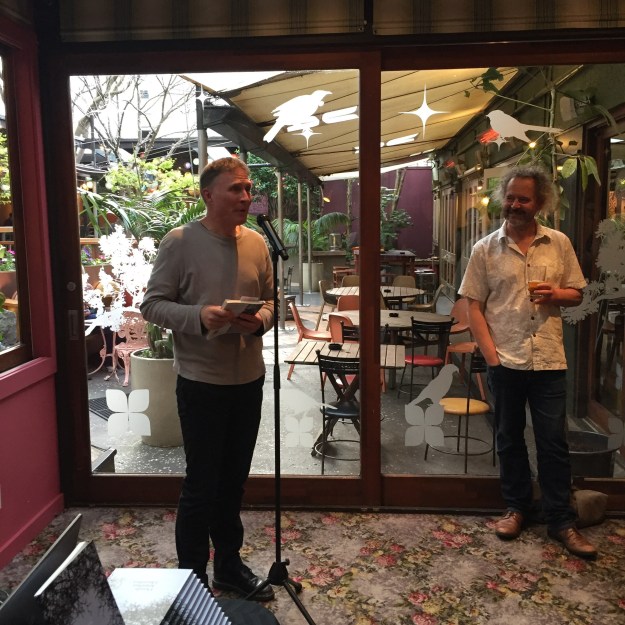
Gregory O’Brien October 2017


James Brown’s previous poetry collections include Go Round Power Please (1995), which won the Jessie Mackay Best First Book Award, Lemon (1999), Favourite Monsters (2002), The Year of the Bicycle (2006), and Warm Auditorium (2012), as well as the useful nonfiction booklet Instructions for Poetry Readings (2005). He edited The Nature of Things: Poems from the New Zealand Landscape (Craig Potton Publishing, 2005), the literary magazine Sport from 1993 to 2000, and the online anthology Best New Zealand Poems 2008. James teaches the Poetry Workshop at Victoria University’s International Institute of Modern Letters.
 

IMG_7711