Category Archives: NZ author

Today in 1941, Virginia Woolf dies: my two poems from 1997


0997400a-5501-4f11-9e31-3caf0ffc1708.jpg


afternoon tea with Virginia Woolf


over the flower beds

over the fumes and steams

over the neck of a horse

over the same broad leaves

over the limb

over the pastry and fruit

over the mass and edge

over the shell against stone

over the one bright feather

over the sharp wedges

over the pressure of the morning

over the swift scales

over the glaze of china

over the bulk of a cupboard


afternoon tea with Virginia Woolf: 2

the curtain quivers

‘I am a poet, yes’


©Paula Green (Cookhouse, Auckland University Press, 1997)


Auckland University Press page


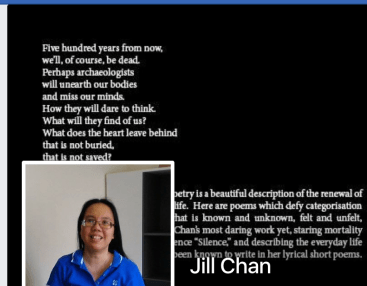
RIP: Poet Jill Chan


Screen Shot 2018-03-28 at 4.48.24 PM.png


I was very sad to discover this news last week – and could not quite believe it. But I want to raise a toast to a wonderful poet and much loved woman.

When I first discovered Jill’s debut collection, The Smell of Oranges’, I was drawn to her freshness of voice, the vital human core, the open windows of the poems. Her writing continued to move in distinctive directions but she never lost her poetic freshness or her finger on the pulse of the world. That combination produced poetry that mattered.

My thoughts go out to friends, family and poetry fans at this sad time.

One poem, in particular, I have kept in a room in my head for those poems that never leave.


The Smell of Oranges

My mother would ask

if I wanted them cut or peeled.

I’d answer that I wanted them peeled

if only to see her fingers hold them

like clay to be molded.

After peeling their husk,

she would put her thumbs in the centre

and break each into halves;

later separate the slices, one by one.

I marvel at the flexible skins

pulling away,

not ever breaking at the pressure.

Jill Chan


A letter from Jill’s family


Dear All,

The family of Jill Chan would like to offer our heartfelt gratitude for your kind expressions of sympathy during our time of grief. We find comfort in knowing that Jill is now with God in Heaven.

Jill very much appreciated your firm support of her poetry and fiction writings. We hope you’ll continue to enjoy reading and revisiting Jill’s work, long into the future.

Jill Chan was a poet, fiction writer and editor. Her work has been published in various New Zealand and international literary magazines both in print and online. She was one of the poets featured in the New Zealand Poetry Sound Archive.

Jill authored four books of prose: Alone and Other Flash Fiction (2017); What We Give: a novella (2017); Phone Call and Other Prose Writings (2017); The Art of It: Three Novellas (2011); and six books of poetry: What To Believe (2017); On Love: a poem sequence (2011); Early Work: Poems 2000-2007 (2011); These Hands Are Not Ours (ESAW, 2009), winner of the Earl of Seacliff Poetry Prize; Becoming Someone Who Isn’t (ESAW, 2007); and The Smell of Oranges (ESAW, 2003).

Jill was the editor of Subtle Fiction at the time of her passing.

Jill Chan passed away on February 28, 2018 after a 9-month illness. She was 45 years old.

Official website

Aotearoa NZ sound archive

Thank you very much.


You can read a recent poem, ‘Poetry’, published in latest Poetry NZ here


12 Questions for the Ockham NZ Book Awards poetry finalists: Briar Wood

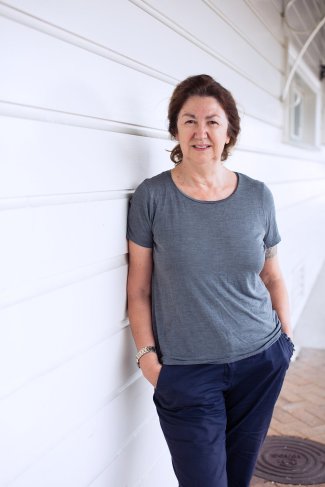
2E4A6298BriarWood.jpg


Congratulations on your short-list placing!

Kia Ora.


What poetry books have you read in the past year?


Say Something Back – Denise Riley

The Bonniest Companie – Kathleen Jamie

Dark Sparring – Selina Tusitala Marsh

Citizen – Claudia Rankine

Deep River Talk Hone Tuwhare


What other reading attracts you?


Fiction – La Rose Louise Erdrich; Parable of the Sower Octavia Butler; A Girl Is a Half-Formed Thing Eimear McBride; Sleeps Standing Moetu Witi Ihimaera with Hemi Kelly; Foreign Soil  Maxine Beneba Clarke

History  – Tuai Alison Jones and Kuni Kaa Jenkins; Inglorious Empire: What the British Did To India Shashi Tharoor

Journalism and Essays –   Feel Free Zadie Smith; False River Paula Morris; The Best and the Brightest David Halberstam


Name some key starting points (or themes) for your collection

wāhi, places, the ambience and etymology of words, kupu kōtuitui


Did anything surprise you as the poems come into being?

Yes, the thematic intensity and interconnections as the collection e-merged.


Find up to 5 individual words that pitch your book to a reader.

negotiating,  rerenga, ecoconscious, beò, karadow


Which poem particularly falls into place for you?

‘Kuramārōtini’


What matters most when you write a poem?

Aligning kupu


What do you loathe in poetry?

I don’t loathe anything or nothing in poetry.


Where do you like to write poems?

Near Maungatapere.


What are strengths and lacks in our poetry scenes?

Te reo writing and performance is a strength – there should be more promotion of it.

The performance and publishing scene is quite inclusive and can be more so.

More consistent newspaper reviews of poetry and media outlets paying to publish poems.


Have you seen a festival poetry session (anywhere) that has blown you off your seat (or had some other significant impact)?


Performances at hui for Te Hā ki Tāmaki – Contemporary Maori Writers by Whaitiri Mikaere and Te Kahu Rolleston pass on their energy and  aroha for te reo with an integrated intensity.


If you could curate a dream poetry session at The Auckland Writers Festival which poets would be there and who would mc or chair it?


Any of the poets could mc or chair it.

Kiri Piahana-Wong

Jacqs Carter

Te Kahu Rolleston

Paula Morris

David Eggleton

Brian Turner


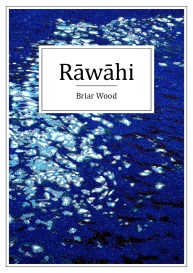
Rawahi-Front-Cover_high-res

Anahera press page

Monday Poem: Maraea Rakuraku’s ‘When does it start?’


When does it start?


It’s not waving a flag, holding a banner, knowing what postcolonial theory

means and when to use it, memorising quotes and lining them up like

soldiers that are sent out in waves of attacks,


It’s not being polite, remaining open, listening fairly, vigilantly assessing

your motivation, re-writing your carefully worded response, marvelling

how the person who has cornered you on-line, at a party, work do or

rugby game is not hearing how every word they are saying is offensive and

they may as well be slicing through your heart, with the intent-sity of a

scythe clearing long grass,


It isn’t realising dressing up racist rhetoric in flash language is still just

racist rhetoric in flash language and sniffing that out in the first, I’m not

racist … but,


It isn’t recognising white privilege and entitlement, functioning under white

privilege and entitlement, loving under white privilege and entitlement,


It doesn’t start with the huge fucking disappointment when a brown

brotha is worse than the worst redneck you’ve encountered in your life,


It doesn’t start by standing up for your iwi, people, culture, colleague,

son, daughter, lover, missus, Koro, Nan, cuzzie, animals, Papatūānuku, or

even yourself,

Mō āhea tīmata ai? ka tīmata āwhea?


Ehara i te whakakakapa i te haki, i te pupuri ki te kara, i te mōhio ki

te ariā pōhi koroniara me te wā e tika ana kia whakamahia, i te tuhi i

ngā whakataukī ki te rae ka whakarārangi ai anō nei he hōia e tukuna

putupututia ana ki te whawhai,


Ehara i te mānawanawa, i te noho areare, i te tōkeke o te whakarongo,

i te mātai i ākinga ōu, i te whatatika i tō whakahoki kua āta tuhia, i te

whakamīharo ki te tangata nāna koe i whakaiti i te ipurangi, i te pāti, i

te kaupapa ā-mahi, i te kēmu whutupōro rānei me tana kore i rongo ki te

hākiki o ia kupu āna, me e haehae ana i te ngākau, he rite tōna kaha ki te

kotinga o te haira e whakawātea ana i te pātītī roa,


Ehara i te kitenga o te kōrero kaikiri kua whakareia ki te kupu whakaniko,

me te mōhio tonu iho he kōrero kaikiri tonu kua whakareia ki te kupu

whakaniko, ehara au i te kaikiri … heoi anō,


Ehara i te whakamārama i te huanga me te āheinga kiritea, e mahi ana i

raro i te huanga me te āheinga kiritea, e aroha ana i raro i te huanga me te

āheinga kiritea,


Kāore e tīmata i te mutunga kē mai o te matekiri i te mea he kino noa ake

te tūngāne kiriparauri i te kakī whero tino kino rawa atu kua tūpono i

roto i ō rā,


Kāore e tīmata i tō tū tautoko i tō iwi, i ō tāngata, i tō ahurea, i tō

kaimahi, i tō tama, i tō kōtiro, i tō whaiāipo, i tō wahine, i tō koro, i tō

kuia, i tō whanaunga, i ō mōkai, i a Papatūānuku, i a koe anō hoki,

It starts,

with that first step from the margins into the glare of light

and

opening

your

mouth,

that started

when the idea of you was born and took seed

that started

when the idea of you was born and took seed

that started

when the idea of you was born

that started

with the idea of you.

Ka tīmata,

i te tapuwae tuatahi i te paenga ki te kōnakonako o te tūrama

me te

hāmama

o tōu

waha,

i tīmata tērā

i te tinakutanga me te tupu o te whakaaro ki a koe

i tīmata

i te tinakutanga me te tupu o te whakaaro ki a koe

i tīmata

i te tinakutanga o te whakaaro ki a koe

i tīmata

i te whakaaro ki a koe.


©Maraea Rakuraku  Translated by Jamie Cowell, Tātai Whetū: Seven Māori Poets in Translation, Seraph Press, 2018.


Maraea Rakuraku is an award-winning playwright, poet, short story writer, critic, reviewer and broadcaster who lives in Wellington and the Bay of Plenty. She creates work that investigates, examines, calls out and celebrates Te Ao Māori and our navigation of 21st century Aotearoa New Zealand.

Her thoughtful, fierce intellectualism, and grounding in her Tūhoe and Ngāti Kahungunu identity, is matched only by her heart and commitment to giving voice.

With Vana  Manasiadis, Maraea is the co-editor of and contributor to Tātai Whetū: Seven Māori Poets in Translation, which has just been published by Seraph Press.

In 2018 she started a PhD in Creative Writing at the International Institute of Modern Letters, Wellington.

12 Questions for the Ockham NZ Book Awards poetry finalists: Elizabeth Smither


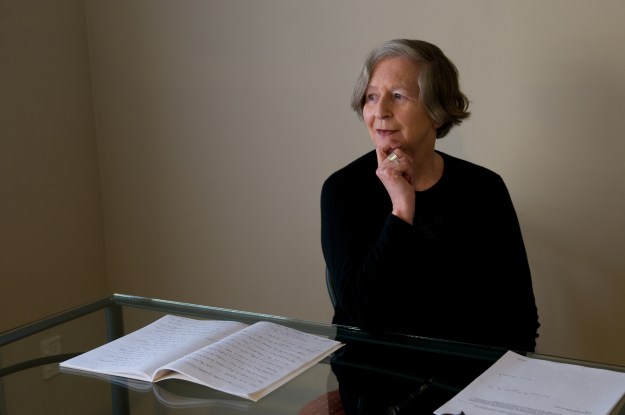
DSC_0067.jpg


Congratulations on your short-list placing Elizabeth!


What poetry books have you read in the past year?

Everything by Wislawa Szymborska and the Penguin Modern Poets series (3 poets in each clutch purse-sized collection): Emily Berry/Anne Carson/Sophie Collins; Malika Booker/Sharon Olds/Warsan Shire etc.


What other reading attracts you?

Almost anything. At the moment I am re-reading Rex Stout and the yellow pyjama-wearing detective Nero Wolfe.


Name some key starting points (or themes) for your collection.

I never discover a theme until a collection is put together. The connections between individual poems can be as subtle and perverse as the most delicate rhyme or rhythm.


Did anything surprise you as the poems come into being?

Perhaps the secret life of animals?


Find up to 5 individual words that pitch your book to a reader.

‘The heart heals itself between beats’ because it was a commission with an extra scoop of fear attached.


What matters most when you write a poem?

Depth and uncertainty.


What do you loathe in poetry?

Nothing. It’s important not to loathe anything.


Where do you like to write poems?

Propped up on a bank of pillows in bed, with the concert programme on the radio and perhaps a glass of wine.


What are strengths and lacks in our poetry scenes?

The chutzpah of our independent publishers; a tendency for too much adulation.


Have you seen a festival poetry session (anywhere) that has blown you off your seat (or had some other significant impact)?

Margaret Atwood and Hans Magnus Enzensberger at the Aldeburgh festival. I read first and sat down between them, shivering.


If you could curate a dream poetry session at The Auckland Writers Festival which poets would be there and who would mc or chair it?

I think I’d do a Dead Poets session. Keats and Shelley, Robert Lowell, William Empson, John Crowe Ransom, Tomas Tranströmer, Szymborska, of course… the possibilities are endless. It might have something of the bitchy tone of ‘The Real Housewives of Melbourne’.  To chair it one of the Paulas: Green or Morris.


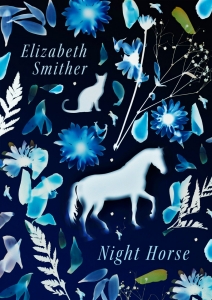
Night Horse AUP author page


1497223465774-1.jpg


Poet Laureate Selina Tusitala Marsh on TVNZ’s Sunday


    • Sunday 18 Mar

    She’s a runner, a writer, a fighter, a scholar, a mother and a teacher. She’s also New Zealand’s Poet Laureate. Dr Selina Tusitala Marsh is a dynamic academic who wants to bust open people’s ideas of poetry and where it belongs because – she says – poetry belongs everywhere.


  • watch here


Poetry Shelf review: Therese Lloyd’s The Facts

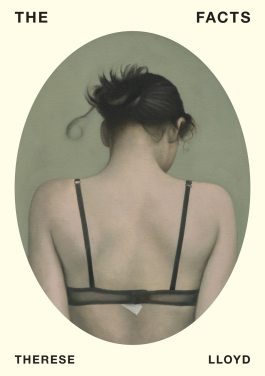
The_Facts_low_res__11927.1513281444.jpg


Therese Lloyd  The Facts Victoria University Press 2018


For three months I tried

to make sense of something.

I applied various methods:

logic, illogic, meditation, physical exertion,

starvation, gluttony. Other things too

that are not necessarily the opposite of one another,

writing and reading for example.

But the absurdity of the thing

made all attempt at fact-finding evaporate;

a sort of invisible ink streamed from my pen

the more data I wrote down: facts are things driven,

as Anne Carson says, into a darkening landscape where other people

converse logically.

from ‘The Facts’


Therese Lloyd’s new collection resides in a captivating interplay of chords. You could say that any poetry book delivers chords whether aural, visual or thematic, and in the light of ideas and feelings. This book does it to a stunning degree. Once you start hunting for them – whether in harmony or not, between poems or within a single example – the rewards are myriad.

Hera Lindsay Bird endorses the book on the back cover: ‘The Facts is mesmerisingly beautiful, and shocking in its intensity. This is already one of my favourite New Zealand books. It won’t make you feel better.’

I didn’t read the back until I had read the poems as I like to start a book with a clean reading slate (if that is possible).  I am thinking of the way reading this book sets up an arc between comfort and discomfort; we are the interlopers into what Therese chooses to let us see.

We enter a collection in debt to a doctoral thesis (IIML), and I am curious about the ideas picked up in the academic component.

This might be the first cluster of chords: shifts between ideas and feelings provoked by the writings of poet Anne Carson and the experience of a broken marriage and a toxic love affair.  This might be an impetus to navigate relations with art, in itself forging a chord with Anne.

I am absorbing the chords as though they flicker between light and dark – and the poem resembles a cinematic space with the external world, and its pressing demands, blacked out so it is just you and the poem. This what flicks for me:

love notlove

truth lies

Carson LLoyd

facts notfacts

pain joy

mother daughter

daughter husband

daughter lover

presence absence

beginning end

end beginning

beauty beauty

deep breath shallow breath

here there

intimacy distance

heart mind

sweet sour

slow stalling

debris order

miracle incidental

share notshare

exposure kept hidden

where you live where you don’t live

mixed clarity

see see

poet poem

poem story


At the core of the book the title poem, the standout-lift-you-off-your-feet poem, achieves the blinding intensity that Hera speaks of: raw, surprising, probing, accumulative, fearless, cutting, detail rich, lucid, testing. On either side the poems offer more subtle chords. Yet any element in my list for ‘The Facts’ might drive a poem. I particularly love the surprising turns of ‘Mr Anne Carson’.

Therese’s collection takes you deep into personal experience that gets hooked up in the poetry of another, in matted ideas and the need to write as a form of survival. It makes you feel as much as it makes you think. It is a riveting read.


I moved all the holiday reading

to the spare room

to keep the literature and the art books

pure

I say squarely in the middle

of the fluffed-up sunroom sofa, I am

careful

not to disturb the cushions

cushion—a curious word

its function of support

is ancillary to its attractiveness

and that’s why cushions have covers

in colourful fabric—I become

an ornament

another word I like

because everything here is decoration

everything here is placed

The story of the things here is not new


from ‘Mr Anne Carson’


Victoria University Press page


The Ockham NZ Book Award Poetry Finalists: an interview with Tony Beyer


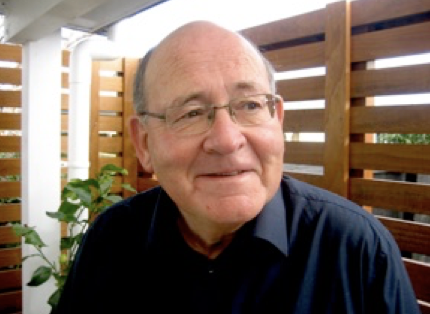
Screen Shot 2018-03-20 at 8.55.02 AM.png


Congratulations on your short-list placing!

Thank you!


What poetry books have you read in the past year?

My favourite NZ books in 2017 were Stu Bagby’s Pockets of Warmth (Antediluvian Press) and John Gibb’s Waking by a River of Light (Cold Hub Press). Recent publication of their respective collected poems has sent me back volume by volume through Galway Kinnell and A. R. Ammons, admired late US poets. Also a delight to have Alistair Te Ariki Campbell’s Collected Poems – VUP’s finest ever publication!


What other reading attracts you?

Very interested lately in female North American long-form poets, specifically Rachel Blau du Plessis, Beverly Dahlen, Daphne Marlatt and Eleni Sikelianos. I read a lot of European and Asian fiction in translation. Non-fiction usually includes Victorian and ancient history.


Name some key starting points (or themes) for your collection.

Finding myself unexpectedly between teaching engagements and having to re-think my assumed identity. The New Pacific Studio fellowship in late 2011, when I was encouraged to be creatively selfish. Since then I seem to have established a modus operandi that keeps me writing whatever else is going on.


Did anything surprise you as the poems came into being?

There was a strong awareness that these were some of the poems I had waited a long time to be able to write.


Find up to 5 individual words that pitch your book to a reader.

Right here now and always.


Which poem particularly falls into place for you?

‘Li Bai’ focuses many of the concerns in the book about environment, identity, time, culture and memory, etc. ‘The characters’ probably does the same in a more succinct, oblique manner. I suppose my basic allegiance is to poetry.


What matters most when you write a poem?

I want to tell the truth and communicate with others. The work is more important than I am.


What do you loathe in poetry?

Reductive expectations.


Where do you like to write poems?

Everywhere.


What are strengths and lacks in our poetry scenes?

Strengths: the new work appearing from younger poets, inventing the future and guaranteeing there will be one; growing bilingual and multilingual awareness has enriched our Pacific possibilities and commands response. Both factors indicate our unique position and opportunities in the Anglosphere.


Have you seen a festival poetry session (anywhere) that has blown you off your seat (or had some other significant impact)?

Have not attended festivals.


If you could curate a dream poetry session at The Auckland Writers Festival which poets would be there and who would mc or chair it?

NZ now: Airini Beautrais, Sarah Jane Barnett, David Howard and Erik Kennedy, MC’d by Stu Bagby.

For all time: Tomas Tranströmer, Charles Olson, Lauris Edmond and C. P. Cavafy, chaired by William Carlos Williams.


9780473411046


Poetry at AWF 2018

-1.jpeg


Lola Ridge and others: Terese Svoboda Terese has put Lola back in the spotlight (amongst many other writing projects including poetry of her own). This is must hear for me.  

Standing Upright Here  Elizabeth Caffin and John Newton celebrate Allen Curnow’s biography and Collected Poems with Patrick Evans.

Tightrope: Selina Tusitala Marsh Selina is in conversation with Adam Dudding

Homage to the River   Airini Beautrais

Afterglow: Eileen Myles   in conversation with Ian Wedde

Portrait of an Artist Mongrel: Rowley Habib

Considering the Women: Choman Hardi  in conversation with me (excited!)

Sad Girls: Lang Leav   with Courtney Sina Meredith

The Art of the Poem: Airini Beautrais, James Brown, Choman Hardi with Terese Svoboda

NZ Poets in mixed sessions: Tusiata Avia, Janet Charman, Anna Livesey, Elizabeth Smither, Briar Wood

NZ poets in the O’Connell street literary mayhem: Morgan Bach, Airini Beautrais, Anne Kennedy, Karlo Mila, Vivienne Plumb, Jessie Puru, Briar Wood and others

Best Best Showcase of spoken word poets John Carr, Jessie Fenton, Daren Komali, Vanessa Crofskey and Alex Wheatle (UK), Renee Taylor (US) and mc Te Karere Scarborough

Sarah Broom Poetry Award with judge Eileen Myles and me as mc (3 shortlisted poets)


Some international poets I am really keen to hear and a scattering of local poets chiefly drawn from the Ockham NZ Book Award poetry longlist.