Category Archives: NZ author

Poems from the Ockham NZ Book Award poetry shortlist: Elizabeth Smither’s ‘Tenderness’


Tenderness


                           I


A tree in the centre of a corn field

the corn rising in its ranks like braided hair

to meet the lowest branches


a tree that has replaced at least twenty

corn stalks with their divided leaves

twenty golden cobs sweetly surrendered


for this lovely grace: leaf sweep touching

leaf sweep, the whole field given by

this rising trunk, a focus


the pattern drawn from the edge of the field

to the centre where the tree

delivers a blessing.


II


The forest planation blankets hills.

Neat-ankled, swift-running

the dark pines descend


except on one little hilltop a ride

of grass begins and runs

with the trees which seem to bend


tenderly towards it: a bed from which

a child has risen and begun walking

the solicitousness of pine branches over grass.


©Elizabeth Smither from Night Horse


Elizabeth Smither’s most recent poetry collection, Night Horse, was published by Auckland University Press in 2017. She also writes novels and short stories.

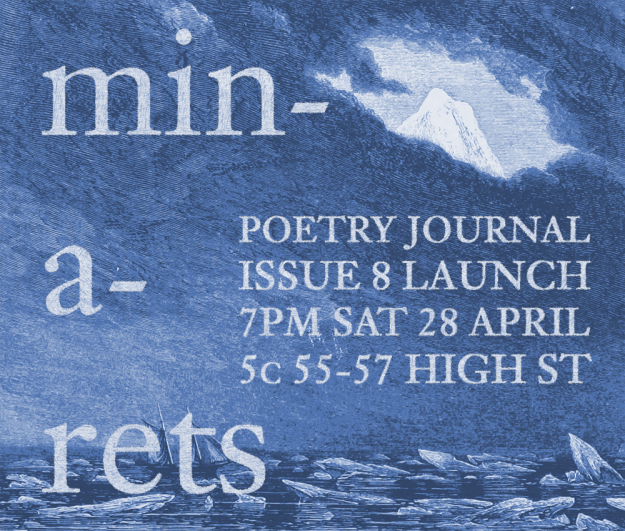
A launch: Compound Press presents Minarets Issue 8


Compound Press presents Minarets Issue 8  Autumn 2018

Edited by Erena Shingade

Illustrations by Harry Moritz

Launch at 7pm, Saturday 28 April at the Compound Press headquarters, 5c 55-57 High Street.


Minarets Issue 8 presents the freshest new writing from a mix of emerging and established New Zealand poets, alongside contributions from two international poets. Humorous, adventurous, and though-provoking, the journal brings a slice of the most intriguing new writing from here and overseas to the table.

Featuring the following New Zealand and international authors: Victor Billot, Freya Daly Sadgrove, Lee Thomson, Zack Anderson (USA), Murray Edmond, Courtney Sina Meredith, Manon Revuelta, Naomi Scully (USA).


MinaretsLaunchImage.png


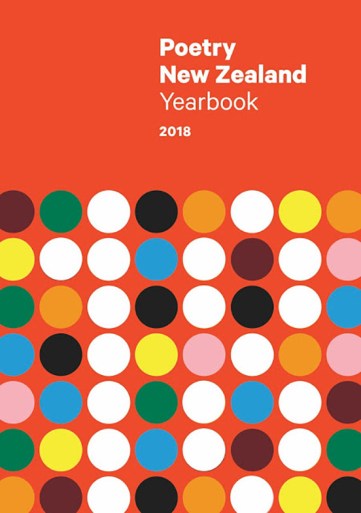
Poetry Shelf Review: Poetry New Zealand Yearbook 2018


2018.jpg


What I want from a poetry journal

More and more I witness clusters of poetry communities in New Zealand – families almost – that might be linked by geography, personal connections, associations with specific institutions or publishers. How often do we read reviews of, or poems by, people with whom we don’t share these links? Poetry families aren’t a bad thing, just the opposite, but I wonder whether the conversations that circulate across borders might grow less and less.

I want a poetry journal to offer diversity, whichever way you look, and we have been guilty of all manner of biases. This is slowly changing.

When I pick up a journal I am on alert for the poet that makes me hungry for more, that I want a whole book from.

I am also happy by a surprising little diversion, a poem that holds me for that extra reading. Ah, this is what a poem can do!


Editor Jack Ross has achieved degrees of diversity within the 2018 issue and I also see a poetry family evolving. How many of these poets have appeared in Landfall or Sport, for example? A number of the poets have a history of publication but few with the university presses.

This feels like a good thing. We need organic communities that are embracing different voices and resisting poetry hierarchies.

Poetry NZ Yearbook Annual offers a generous serving of poems (poets in alphabetical order so you get random juxtapositions), reviews and a featured poet (this time Alistair Paterson). It has stuck to this formula for decades and it works.

What I enjoyed about the latest issue is the list of poets I began to assemble that I want a book from. Some I have never heard of and some are old favourites.


Some poets I am keen to see a book from:


Our rented flat in Parnell

Those rooms of high ceilings and sash windows

Our second city

after Sydney

Robert Creeley trying to chat you up

at a Russell Haley party

when our marriage

was sweet


from Bob Orr’s ‘A Woman in Red Slacks’


Bob Orr’s heartbreak poem, with flair and economy, reminds me that we need a new book please.

There is ‘Distant Ophir’, a standout poem from David Eggleton that evokes time and place with characteristic detail. Yet the sumptuous rendering is slightly uncanny, ghostly almost, as past and present coincide in the imagined and the seen.  Gosh I love this poem.

The hard-edged portrait Johanna Emeney paints in ‘Favoured Exception’ demands a spot in book of its own.

I haven’t read anything by Fardowsa Mohamed but I want more. She is studying medicine at Otago and has written poetry since she was a child. Her poem’ Us’, dedicated to her sisters, catches the dislocation of moving to where trees are strange, : ‘This ground does not taste/ of the iron you once knew.’

Mark Young’s exquisite short poem, ‘Wittgenstein to Heidegger’, is a surprising loop between difficulty and easy. Again I hungered for another poem.

Alastair Clarke, another poet unfamiliar to me, shows the way poetry can catch the brightness of place (and travel) in ‘Wairarapa, Distance’. Landscape is never redundant in poetry –  like so many things that flit in and out of poem fashion. I would read a whole book of this.

Another unknown: Harold Coutt’s ‘there isn’t a manual on when you’re writing someone a love poem and they break up with you’ is as much about writing as it is breaking up and I love it. Yes, I want more!

Two poets that caught my attention at The Starling reading at the Wellington Writers Festival are here: Emma Shi and Essa Ranapiri. Their poems are as good on the page as they are in the ear. I have posted a poem from Essa on the blog.

I loved the audacity of Paula Harris filling in the gaps after seeing a photo of Michael Harlow in ‘The poet is bearded and wearing his watch around the wrong way’. Light footed, witty writing with sharp detail. More please!

I am a big fan of Jennifer Compton’s poetry and her ‘a rose, and then another’ is inventive, sound-exuberant play. I can’t wait for the next book.

I am also a fan of the linguistic agility of Lisa Samuels; ‘Let me be clear’ takes sheer delight in electric connections between words.

Finally, and on a sad note, there is Jill Chan’s poem, ‘Poetry’. I wrote about her on this blog to mark her untimely death. It is the perfect way to conclude this review. Poetry is everywhere – it is in all our poetry families.


Most poetry is unwritten,

denied and supposed.

Don’t go to write it.

Go where you’ve never been.

Go.

And it may come.

Behind you,

love rests.

And where is poetry?

What is it you seek?


Jill Chan, from ‘Poetry’


Poetry NZ Yearbook page


Monday Poem: Essa May Ranapiri’s ‘To Get Out’

Screen Shot 2018-04-09 at 9.29.43 AM.png


TO GET OUT

Screen Shot 2018-03-24 at 3.47.34 PM.png


Screen Shot 2018-03-24 at 3.48.59 PM.png


Screen Shot 2018-03-24 at 3.49.36 PM.png


Screen Shot 2018-03-24 at 3.50.16 PM.png


©Essa May Ranapiri


essa may ranapiri | Ngāti Raukawa/Pākehā | takatāpui | they-them-theirs | has words in [Mayhem, Poetry NZ, Brief, Starling, Cadaverine, Them & POETRY Magazine] they will write until they’re dead


Poems from Ockham NZ Book Award poetry finalists: Briar Wood’s ‘Kuramārōtini’


Kuramārōtini


So the story goes

that trickster Kupe

cheated his friend

into diving overboard

to free the lines

then paddled rapidly away.


Some hoa.

Best to know that

legendary navigators take huge risks

and do not make the safest companions.


Ākuanei—

she asked herself—

what do I want—

home in Hawaiki

or the travelling years?


What does he want—

the waka my father gifted—

Matahourua and me?


Or maybe unhappiness

with the man she’d married

drove her to the coast.

It’s possible—

she was curious and Hoturapa wasn’t

the kind of man who liked a journey

so she chose Kupe.


Yet even an inveterate traveller

might become weary in a waka

on the open sea,

looking out for landfall.


Travelling direct to her destination—

as the future loomed towards her

she named that radiant land

on the horizon

Aotearoa.


Briar Wood from Rāwāhi (Anahera Press, 2017)


Briar Wood grew up in South Auckland, Aotearoa New Zealand. Until 2012, she lived and worked as a lecturer in Britain. Welcome Beltane (Palores Press, 2012) made poetic links between family histories and contemporary places. The most recent collection Rāwāhi (Anahera Press, 2017) is focused through a return to Northland places where her Te Hikutū ki Hokianga, Ngāpuhi Nui whakapapa resonates with ecological concerns.

New Zealander Maria Ji shortlisted for Hippocrates Prize for Poetry and Medicine

With an awards fund of £5500 the Hippocrates Prize for Poetry and Medicine is one of the highest value poetry awards in the world for a single unpublished poem. The 2018 Hippocrates Prize is supported by medical charity the Fellowship of Postgraduate Medicine and the healthy heart charity the Cardiovascular Research Trust.

Entries for the 2018 Hippocrates prize were received from 37 countries and from 5 continents.

The judges – Carol Rumens from Bangor in North Wales, Peter Goldsworthy from Adelaide in Australia and Mark Doty from New York City have just agreed 4 shortlisted poets for the Health Professional Prize and a further 4 shortlisted poets for the Open Prize.

Competing for the Open Prize are Joanne Key from Crewe in England for Colony, Sarah Ann Leavesley from Droitwich in England for At breaking point, Aniqah Choudhri from Didsbury in  England for Repeat Prescriptions and Raphael Dagold from Bishkek in Kyrgyzstan for Pharmacology.

In the running for the Health Professional Prize are Ashley Inez Garzaniti from Pontiac in the USA for Cranial Nerve Shadowbox, Stephen Harvey from Nashville in the USA for The Thirteenth Floor, Maria Ji from Onehunga in New Zealand for Thirteen Ways Of Looking At A Patient and Emma Storr from Leeds in England for Six Week Check.

Commendations were also agreed for entrants from Australia, Canada, New Zealand, England, Northern Ireland, Norway, Sweden and the USA – 19 in the Open category and 20 in the Health Professional Category

See more on the shortlisted and commended poets on the Hippocrates Poetry website.

The winners will be announced at the 2018 Hippocrates Awards ceremony at the Poetry Foundation in Chicago from 4pm on Friday 11th May when the Hippocrates Awards Anthology will be launched. There is also a reading at the Poetry Foundation by Mark Doty from 7pm on Thursday 10th May, an accompanying conference on poetry and medicine that morning and afternoon at Northwestern University in Chicago, and a workshop on poetry, medicine and art at Chicago Museum of Contemporary Art on Friday evening, 11th May.

Since it was launched in 2010, the Hippocrates Prize has attracted over 8000 entries from over 60 countries, from the Americas to Fiji and from Finland to Australasia.


12 questions for Ockham NZ Book Award poetry finalists: Sue Wootton

Sue_Wootton-092012-300dpi.jpg


Congratulations on your short-list placing!

Thank you Paula!


What poetry books have you read in the past year?

And this is why you should always keep a reading diary … I’ll have to cobble this together from flawed memory and my messy bookcase. Here goes: most recently, a ‘slim volume’ in the Penguin Modern Poets Three series with work by Malika Booker, Sharon Olds and Warsan Shire. In contrast, also Sentenced to Life and Injury Time by Clive James. Before these: Undying by Michel Faber, the poetry collections on the Ockham longlist, Bill Manhire’s Some Things to Place in a Coffin and Tell Me My Name, Walking by a River of Light by John Gibb, South D Poet Lorikeet by Jenny Powell, Getting it Right by Alan Roddick, Alzheimer’s and a Spoon by Liz Breslin, Taking my Mother to the Opera by Diane Brown, Fracking & Hawk by Pat White, The Trials of Minnie Dean by Karen Zelas, Taking My Jacket for a Walk by Peter Olds, Wolf by Elizabeth Morton, Where the Fish Grow by Ish Doney, Family History by Johanna Emeney, Possibility of Flight by Heidi North-Bailey, Withstanding by Helen Jacobs, Conscious and Verbal and Learning Human by Les Murray, Poems New and Collected by Wistawa Szymborska, Poems 1962-2012 by Louise Glűck, and X  by Vona Groarke.  

I like keeping an anthology handy too, and in the past year have been dipping in and out of two: Andrew Motion’s Poetry by Heart (on the bedside table) and Carol Ann Duffy and Gillian Clarke’s The Map and the Clock (next to the sofa).  


What other reading attracts you? 

Oh boy, you should see the pile of books by my bed – too many to list here. I enjoy both fiction and non-fiction (especially essays, biographies or memoir). Fiction-wise, I’ve recently finished Fiona Farrell’s wonderful Decline and Fall on Savage Street and am now reading Where My Heart Used to Beat by Sebastian Faulks, and some short stories by William Trevor. I’ve recently reread Olive Kitteridge and My Name is Lucy Barton by Elizabeth Strout (I love all of  Strout’s work!). Vincent O’Sullivan’s All This By Chance is standing by for Easter.

Nonfiction-wise, I’m itching to start neuroscientist Antonio Damasio’s The Strange Order of Things and Marilynne Robinson’s new essay collection What Are We Doing Here? (I love all of Robinson’s work!).


Name some key starting points (or themes) for your collection. 

This is quite a hard question for me to answer because The Yield wasn’t pre-planned as The Yield – it grew very slowly into The Yield, and I only recognised that I had a coherent  collection very late in the process. In hindsight I can see quite clearly that the poems are bound together by themes of give and take, love and loss, flexibility and rigidity, toil and harvest. This finally clicked into place for me after I wrote the poem called ‘The Yield’. It was only after that that I felt I had a potential collection in my hands. But most of the poems in the collection were written in the couple of years preceding that moment, and during those years I had no idea whether a book would eventuate. I had hope, but not much evidence!


Did anything surprise you as the poems come into being? 

Every poem I write is a surprise to me. I can never get over that fact – it amazes me, always.


Find up to 5 individual words that pitch your book to a reader.

These words are from The Yield: haul, reach, lift, roam, home.


Which poem particularly falls into place for you?

Not sure if I can select one – they all have their place.


What matters most when you write a poem?

I like a tight synthesis of sound and sense.


What do you loathe in poetry?

 Sometimes in an art gallery I stand in front of a painting I find ugly or too obvious or (conversely) too obscure – challenging, anyway, a canvas that maybe bores me or offends my personal sense of aesthetics, perhaps even my values. But still, alongside my ‘this is not one for my living room wall’ reaction, I can still respect the graft and the craft that went into making it – so long as it’s well made. Ditto, poetry. What I appreciate, above all else in poetry, is knowing that the poet has really leaned in. That’s a fundamentally appealing quality for me, even if I can’t adore the finished product. But if a poem is attentively made, and it somehow moves me – then I’m all in.


Where do you like to write poems?

 In my study or on the kitchen table (though I scribble scraps in my notebook anywhere, any time).


What are strengths and lacks in our poetry scenes?

We seem to have a lively open mic scene all over the country, with a new fizz of high energy youthful involvement alongside the different – no less intense – energy of more experienced voices. I love the diversity of this, the way it opens our ears and hearts and minds to each other. It’s good, too, to see extroverted poets out there connecting with audiences, attracting media comment and generally flying the flag for poetry. But don’t forget the page! I’m a big believer that poetry is a craft learned by practice. Getting better at it is done through serving a kind of apprenticeship, learning the tools of your trade, and being supported, mentored and informed by more experienced practitioners, so for me it’s really great to see newer literary journals like Mimicry and Starling rising up (though I’m sad to see the end of  JAAM).

Nothing matches the developmental push that comes from submitting work to a well-read editor to be scrutinised word by word. It’s healthy, too, to have enough possible publication places to be able to avoid only submitting work to your friends or classmates. So, I think we can do with still more editor-curated poetry publications to nourish the development of poetry in Aotearoa-New Zealand. Another lack: we need more platforms for the kind of stimulating and informative longform poetry review that critics like Lynley Edmeades, for example (in a recent Landfall Review Online), are so good at writing. But also, no one should be expected to write a seriously-considered review for nothing. Work is work, even if at the end of the day it’s not mud, but ink, on your hands. Funding, funding, funding: there’s a permanent problematic lack!


Have you seen a festival poetry session (anywhere) that has blown you off your seat (or had some other significant impact)?

I was at the 2010 Granada Poetry Festival in Nicaragua – truly a festival, a celebration of la poesia. The readings were held in parks and plazas. The Nicaraguan people have a passionate regard for poets and poetry – they turned out in their thousands to hear readings from their own and international poets. One particular event stands out for me. It was an evening reading, outside, warm and dark in the main town plaza, with about 2000 people in the audience – all ages, children, teenagers, parents, grandparents. Their listening was so attentive (most poems were voiced twice, once in the poet’s language and again in Spanish translation) – I watched face after face absolutely blossom in response to some lines. There was a feeling of us all being tapped into a high-voltage current – such power. Sheer zappery! And all from words.


If you could curate a dream poetry session at The Auckland Writers Festival which poets would be there and who would mc or chair it?

Sharon Olds, Louise Glück and Rita Dove in conversation with Carol Ann Duffy.


Monday Poem: Emma Neale’s ‘Called’


Called

(2015)


It is October in Dunedin.

Rhododendrons fan out flamenco skirts;

magnolias, magnanimous with their moon-cool glow,

light the path south so the sun stirs us early;

although the river, the creek boulders,

the city’s cinched green belt, still hold the cold

like an ice store’s packed down snow.


The days shiver with filaments

of ua kōwhai: soft rain that dampens paths,

shakes loose carpets of white stamens, yellow flowers

bruised and trodden like flimsy, foil cornets.

School holidays send out falling, silvery arcs

of children’s sky-flung laughter; our bodies drink it in

as if love’s parched ground sore needs this watering.


Yet the radio stays hunched in the kitchen corner,

hard grey clot in the light’s fine arteries

muttering its tense bulletins

and as if they sense this late spring still harbours

frost’s white wreck, or some despotic harm abroad

seeps too near, our sons more than anything want

their old games: secret codes, invisible ink, velvet cloaks;

hide ’n’ seek in public gardens’ clefts and coves—


and again, again, can we tell them again


the chapters of how they first appeared

in the long, blurred myths we are entangled in;

kingfisher-blue wells of their eyes a-gleam

as if they know how much all adults withhold.

They want us to go back deeper, to when

we both were star-spill, sea-flume, spirits,

only belatedly woman, man, climbing up from a shore

feathered in sand black and soft as ash,

driven by some gravid magnetism towards each other


in case we changed to birds, lizards, trees,

or back to sea-salt borne by wind;

an urge clear as hunger coursing the cells’ deep helix

to complete this alteration, half bury and re-germinate

the fleet molecules of self, so we could run our mortal hands

the right, kind way along the children’s plush skins,

learn, pulse on pulse, their true, human names.

Yes, we must go back and back; as if to swear

even to this dread epoch’s wild, original innocence.


©Emma Neale


Emma Neale received the inaugural NZSA/Janet Frame Memorial Award, the Kathleen Grattan Award for an unpublished poetry manuscript (The Truth Garden), the University of Otago Burns Fellowship and the NZSA/Beatson Fellowship. Her poetry has been shortlisted for the Sarah Broom Poetry Award and the Bridport Poetry Prize, and her poetry collection, Tender Machines, was long-listed in the 2016 Ockham New Zealand Book Awards. Her novel, Billy Bird, was short-listed for the Acorn Prize in the 2017 Ockham New Zealand Book Awards and long-listed for the International Dublin Literary Award. She is the current editor of Landfall.


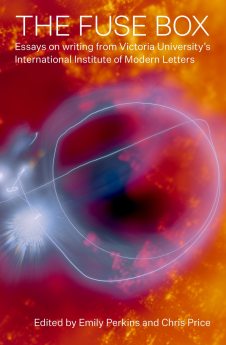
Courtney Sina Meredith pitches highlights from The Fuse Box at Landfall Review Online

Screen Shot 2018-04-01 at 4.14.10 PM.png


I now have to track down a copy of this book! Thanks Courtney.


Full review here


The_Fuse_Box__77194.1496025579.jpg


Poetry Shelf interviews Anna Jackson


On my way elsewhere. 


My shoulders are sore, and my feet.  But I have my vision.

I will look past the old man whose beard drips

down like a stalactite, to the light

at the end of the tunnel – it isn’t a cave

he sits in, but a tunnel, and out

the other side there is a path as white

as sand.  There is a break in the clouds to the East,

but the light falls from the West – it is later

than I thought.  I should have gone home long ago

and he, no doubt, has come a long way himself,

is no doubt just resting a moment, not living in a cave. 

Though it isn’t a cave, but the mouth of a tunnel, and I 

should be getting home, though I have no family

to go home to and the fireworks can be seen

from here, through the tunnel, which could

be seen as a frame, almost.  Would you rather

have twenty-twenty vision of the fireworks or be blind

with five children around you, five children

clamouring for fireworks that you cannot light? 

I would ask the old man this question, if

he were close enough to hear me – I don’t know

how well he can hear.  But what I thought

was the sound of the fireworks I think is the old man, light

catching his eyes suddenly so they shine in the dimness,

calling out from inside the tunnel to me:

“even if you lit them, you wouldn’t be able to see.”  


©Anna Jackson in Pasture and Flock
 

DSCN3393.JPG


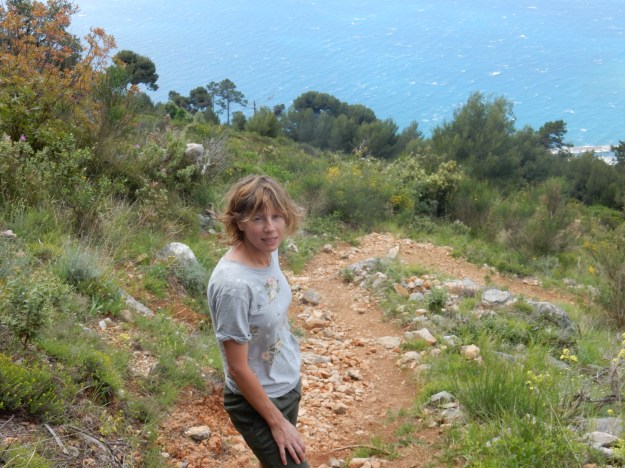
Anna Jackson debuted in AUP New Poets 1 and has subsequently published 6 poetry collections with Auckland University Press. She has a DPhil from Oxford, and is an Associate Professor of English at Victoria University. She has organised several poetry related conferences with Helen Rickerby (most recently Poetry & the Essay) along with the Ruapehu Writers Festival (much loved by participants). In 2009, with Charles Ferrall, she published  British Juvenile Fiction 1850 – 1950: The Age of Adolescence, and in the following year, Diary Poetics: Form and Style in Writers’ Diaries 1915 -1962.

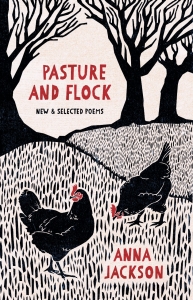
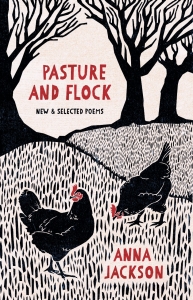
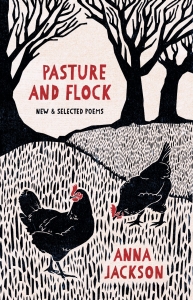
When Anna Jackson’s Pasture and Flock: New & selected poems arrived in my reading lap, I stalled on the perfect cover and the perfect title for curated travels across 25 years of poetry. There is new growth, myriad viewpoints, shelter and flight. My relationship with the poetry extends back to the first publication as does my friendship with Anna. Opening this book is like opening a poetry album where the ghosts above the line are our shared conversations, celebrations and confessions. Yet when I enter the poem, our interlinked history dissolves, and it is just the poem flaring and gliding in my mind.
 

1520468027554.jpg   1520468027554.jpg   1520468027554.jpg


An unfolding email conversation with Anna

Paula: Right from the start your poetry has touched a chord with me. I am reading the early poems, and the litheness on the line, the measured wit, the roving curiosity are as captivating as when your debut poems appeared in AUP New Poets 1 and The Long Road to Teatime. Reading the poems from the early collections, I wondered what it is like musing back on the young woman who wrote them. Are you startled to see what you wrote? What do you love about these first outings? Was there difficulty?

Anna: It is more startling finding unpublished things I wrote at the time, when I really don’t know where they are going to go or what I was thinking.  Because these poems were published I have never forgotten them so completely, but I like returning to that sense of who I was, and who we were, when I was writing poetry for my friends at the age of 23 (“looking as young as the teenagers at the bar” – well of course I did, I was only 23!).  I wasn’t writing for publication except we found we could use the old printing press at the university, so we wrote some things to play around with the letterpress with, and then we got more ambitious and made little chapbook anthologies of our writing, with a photocopier and woodcuts, or maybe they were linocuts.


Paula: I am really drawn to the ‘friendships’ you set up with other writers and the way the poem becomes conversation or story, surprising in the paths taken.


The sun has taken to me.

It rarely comes out now

without stopping to talk.

I am expected to drop everything.


from ‘My friendship with Mayakovsky’


Often your family and friends are drawn into the other scenes. I especially love the Dante poems where you are all lost in a thicket of autobiography, musings and literary engagements.


In the middle of the journey

we found ourselves lost.

‘This is the jungle,’ said Johnny.

Roe asked if we had a map.

‘Not a road map,’ said Simon.

‘So what sort do you have?’

We looked for a life map.


from ‘The road to Karekare’ in ‘The long road to teatime’


Were these early literary friendships like a support crew as you started out, or a way to take risks and refresh the inherited page, or something in between or altogether different?

Anna: Yes and yes…In Dunedin, writing and publishing poetry was a way of taking part in an arts scene I wanted to be a part of.  There were empty warehouse buildings, scavenged equipment, all sorts of projects people were trying out, some of which never amounted to anything, some which were just one-off experiences.  One evening Alastair Galbraith, a musician, writer and artist, read through a Marguerite Duras script with me, I can’t remember why, but it was an extraordinarily powerful theatrical experience for me, except more intimate than theatrical because we were performing for no one.  And making friends with Mayakovsky, travelling with Dante, was part of this way of living in connection with other writers and artists, on and off the page.


Paula: Were there losses in not including the whole sequences? From my point of view there is a greater economy of travel, yet the underlying pulse of intersections is not diminished. So the family refreshes Dante and Dante refreshes the family—and that ‘would of selves’ hungry for ‘hot buttered toast’.

Anna: The collection includes six sequences, two from my first book, and I only edited them a little, for “economy of travel” as you say and also to cut out some lines or stanzas that still embarrass me.  I selected six whole sequences rather than fragments from more sequences, to tell whole stories as much as I could, and I think another story tells itself through the sequence of sequences too maybe.


Paula: I have edited earlier poems when performing them in public on the spot! There is the little nag hovering above a word or a line that I finally pay attention to. When an editor coincides with that nag, I sit up and listen.

It is fascinating how this new version of sequences retains the original chords yet makes the synchronicities between books sing with different intensities. I am thinking of the voice of the child (Johnny, Elvira, Rufus), relations with writing, the imagined and longed for, the lived.

With The Gas Leak you step into narrative, but family is still in acute focus. There is a humaneness at work, little wisdoms, a playful yet serious pushing at familial boundaries. What freedoms and advantages did you find in writing this book? How did the sonnet help?


Has someone broken in?

I wouldn’t know what was missing.

For years I have left

the door open

thinking even mud

from the break-in would be

a gain


from ‘A master key is easy to procure’


Anna:

The family in acute focus, I like that.  The sonnet form allowed for a very taut story-telling voice, the sonnets in the book being reduced sonnets, with fourteen lines but very short lines.  I would put as much as I could in each poem and then cut it back, and when I couldn’t cut it back any further, I would add an additional element and then cut again.  Perhaps I was doing something like that with the narrative too, with the rearrangement and fictionalization of elements of autobiography and elements of narrative I’d taken from Gerrit Achterberg’s Ballade of a Gas-fitter – a “ballad” that is also written in sonnet form.  It is a heightened, fraught version of a family that only incidentally resembles, sometimes, my own.  I wrote it very quickly, between classes, making use of whatever material was to hand, a discussion of Xeno’s arrow with a colleague, an attempt to use the barre around our office lifts for leg stretches, the children’s soccer game in the weekend, a song on the radio.  There isn’t a word I would change, but I’ve already found changes I would make to two of the poems in the new selection at the end of Pasture and Flock.


Paula: What draws you to poetry rather than narrative?

Anna: I went to a novel-writing workshop run by Curtis Sittenfeld once, and she said writers reveal a lot about themselves in fiction in details they don’t think are giving anything away – how much characters drink, or what they worry about, or how they respond to a telephone ringing.  I think poetry offers more secrecy, but maybe I am giving away more than I mean to.  I do think I am writing narrative though – sometimes little narratives in individual poems, sometimes a narrative sequence across a series of poems.  I like the possibility for different forms of narrative, shorter stories, or stories that leap across gaps and shifts in perspective.


Paula: Catullus is your point of return. What attracts you to his poetry? In meshing your voice and his, your preoccupations and his, again you freshen poetic possibilities. There is daring and there is conversation, particularly when you turn your attention to Clodia. The I, Clodia poems have always resonated for me.


I might cry over your verses –

tears of laughter

but these are real tears,

I’m grieving.

Look at what wax my little bird,

yesterday – this was

somebody, closer to me than …

you had better be leaving.


from ‘Pipiabat’


Anna: Yes, the Catullus for Children poems were a kind of translation game, domesticating Catullus not just into a contemporary New Zealand setting but revisiting his poetry in terms of the preoccupations of a seven-year-old child.  I liked how the excess and passion of his poetry translated into the different kinds of excesses of the playground, and also was interested to see what was left with the very adult themes of his poems taken away.  I, Clodia is a more serious engagement with the poetry, putting the love affair with Clodia (or Lesbia as he calls her), that several of his poems return to, right at the centre of a narrative I construct through a series of poems in her voice.  I was drawn to the narrative possibilities that the Catullus poems suggest but do not resolve, and I was also drawn to the romantic intensity of the poetry, and wondered what it would be like to be on the receiving end of it, and perhaps to match it.


Paula: I enthused wildly on the blog about your chapbook with Seraph Press (Dear Tombs, Dear Horizon). Much of these poems were written when you had the Katherine Mansfield Fellowship in Menton. You have included ‘Dear Tombs’ that comes out of that cluster of experience. On my blog I wrote:

The poem steps off from graffiti witnessed on rocks: ‘You are my most lovely horizon’. Each experience, thought, recalled page or vista steps off into the mysterious elsewhere of thinking, and from the elsewhere of thinking into the paradoxical here yet elsewhere of writing. The horizon is the translucent line where Mediterranean sky meets Mediterranean sea, a sensual hook of beauty that stalls the walker, but it is also the indefinable lure that poses a need to write, to think, to experience. It is Katherine Mansfield, the other authors, the conversations that stick, the not-home-ness that becomes a home-ness. (see here for review)

What prompted the ‘Dear Tombs’ narrative? I do think these poems lift from the page in glorious ways. Did your French writing sojourn make a difference?


Dear Tombs, I do not see anything here but dust.

Dust, dust, dust and beyond your hollows

and pillars, some trees still clinging to the dust

that gives them nothing, not a swallow

of water in it, a good winter one with rain,

a bad winter the one they have just had, and the one to follow.


from ‘Dear Tombs’


Anna: Yes, I was wonderfully home and not-home in France, and at home and not-at-home in my own writing as well.  Poetry is something I can write in between what I ought to be doing, as a form of procrastination or resistance, so it was both liberating and unnerving to feel an obligation to write, and to write something I couldn’t otherwise have written.  The Dear Tombs, Dear Horizon chapbook was made up of notes I wrote to myself, work towards writing rather than writing itself, not a way I usually work, but a way of writing I could do every day.  It did come to take on a kind of life and rhythm of its own and I was really pleased Helen Rickerby would publish it as a Seraph Press chapbook.  I feel it has a lightness and spaciousness like our life in France.  It wouldn’t really have worked to work up the notes into a different kind of poetry, except I did work up the dream at the very end of the chapbook about the tombs, exactly as I half-jokingly planned in those notes, in terza rima.  And then that set me off writing a few other poems in terza rima – but none of the others have the depth and glittery darkness of Dear Tombs.


Paula: The new poems continue this uplift. I love all of them, but especially ‘Flammable’, ‘On my way elsewhere’, ‘Bees, so many bees’, ‘Pasture and flock’. Really any page I land on becomes a favourite. There is a pulse of love that is always surprising and that is steered by shifting melodies. Which poems have particularly fallen into place for you? What mattered as you wrote these?


The world was flammable, we knew it was.

Our hair lit up with candle-light, we peeled off

the wax from the table and made it into

something beautiful, tender as the high voices

of the castrati, fine as smoke through the grain

of an old LP, a radiance through their song

like the flame of a wick slowly burning,

burning in its casing of wax. We all felt it.


from ‘Flammable’


Anna: ‘Flammable’ and ‘On my way elsewhere’ I think have something of that glittery darkness of Dear Tombs.  They both, in fact, have darkening skies and glittering lights, candlelight again in ‘Flammable’, and fireworks in ‘On my way elsewhere’, but I also mean a kind of coming from elsewhere, a sort of charged darkness.  They are about what we can’t see, can’t have, don’t know about ourselves, and I think they have something of an oracular quality about them, represented in ‘On my way elsewhere’ by the old man in the tunnel.  Maybe they are also a bit silly, a bit absurd, or at least a bit comic.  Most of the poems have been published in journals and I sent “On my way elsewhere” out to a few in turn but couldn’t place it anywhere, but it is one of my favourites.


Paula: I like the idea of glitter and darkness in a poem. You often draw real people into your poems, as we have already discussed. Does this ever make you uncomfortable?

Anna: I have written some I won’t publish because they draw too closely on real life, in ways that might be uncomfortable for the people I’ve written about. To make a poem work, often you want to push it as far as you can into discomfort.  And sometimes you will take risks for the work, at the risk of other people as well as yourself.  I mean, I have.  It is the same in fiction and essays – Brian Blanchfield’s brilliant, compelling book of essays, Proxies, was written with the method of keeping going from any starting point until he reached a point of personal discomfort or shame.  It makes for brilliant reading but it is very exposing, for himself and sometimes for other people he writes about.  I think he is extraordinarily brave.


Paula: Writing is the most important thing, but there are so many other aspects to a poet’s life: public readings, festivals, reviews, interviews, book awards, teaching. How do you feel about these extra demands?

Anna: I think most poets probably write because it is such a secret art, no one watches you do it.  You can be very controlled about what you release, no one has to see the early drafts or the work that goes nowhere, or goes somewhere you don’t want anyone to know about.  So public events are everything the poet has chosen against.  I love teaching and I have really brilliant, engaged students this year who constantly surprise me with new insights, but it is always still a little frightening standing at the front of the lecture hall, hoping the hour will go well.  There is a poem in Pasture and Flock, ‘The Cooking Show’, about the dread of lecturing, wishing I could lecture in secret, under a blanket with a torch.   You want people to read your work, and so the invitations to take part in events are very welcome, but I always wish I didn’t have to do them.  I don’t want to put people off inviting me by saying this, I’m grateful too to be asked.  I think it is the same for most writers.  And it isn’t as if publishing the work isn’t also an act of exposure you sometimes dread.  You still want to do it.


Paula: Why write poetry? Why read it?

 Anna: I read poetry almost every day.  It allows for a different kind of thinking and seeing.  I love fiction too and the way you can be immersed in a whole other world, but poetry allows for micro-immersions, intense unfinished experiences like dreams, that can have that same urgent resonance a dream can have.  Some poems I have held in my head for years, a poem is very portable.  I would like to think a poem of mine could have that kind of resonance for another reader.  Writing poetry is itself a micro-immersion in a developing dream, a dream you can partly control, even as it takes control of you.  It is like a more active form of reading.  And then you have written a poem, that wouldn’t be in the world if you hadn’t written it.


Pasture and flock


Staring up into the sky my feet

anchor me to the ground so hard

I’m almost drowning, drowning

in air, my hair falling upwards

around my shoulders, I think I’ll hug

my coat closer.  I’m standing

on hundreds of blades of grass, and 

still there are so many more

untrodden on.  Last night, in bed,

you said, “you are the sheet

of linen and I am the threads,” and

I wanted to know what you meant

but you wouldn’t wake up to tell me

and in the morning you didn’t

remember, and I had forgotten

till now when I think, who is

the blades of grass, who is the pasture?

It is awfully cold, and my coat

smells of something unusual.

It almost seems as if it is the stars

smelling, as if there were

an electrical fault in the sky,

and though it is almost too dark

to see I can see the sheep

moving closer, and the stars

falling. I feel like we are all

going to plunge into the sky

at once, the sheep and I,

and I am the sheep and I am

the flock, and you are the pasture

I fall from, the stars and the sky.


©Anna Jackson


Auckland University Press author page

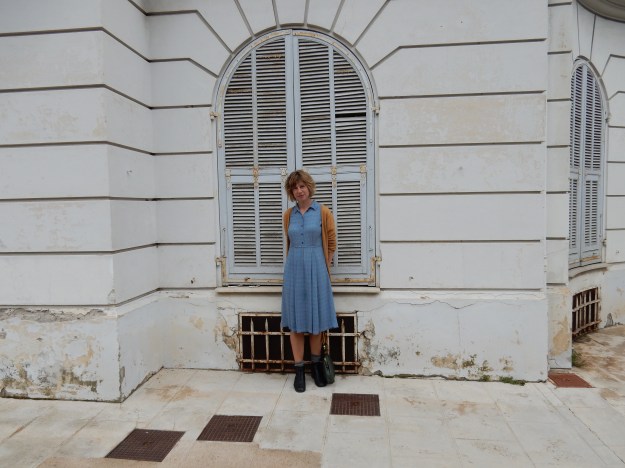
‘Meet Viva la Novella shortlistee Anna Jackson’ – interview with Seizure Press includes her new project!

‘What are you working on now?

I am writing a book about poetry and at the moment I am finishing a chapter on sprawl in poetry, while thinking about a chapter on dead poets and what it means to write in anticipation of being dead.’
 

DSCN1936.JPG