Category Archives: NZ author

The Sarah Broom Prize 2018 winner ….


DSCN9532.jpg

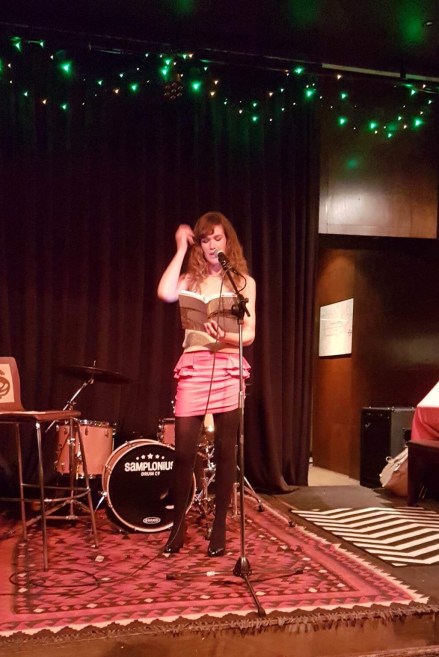
Wellington poet Jane Arthur is the winner of the Sarah Broom Poetry Prize 2018.


Arthur is a Wellington-based poet with a Masters in Creative Writing from IIML at Victoria University, a Whitireia Polytech Diploma in Publishing and an MA in English from the University of Auckland. She has worked as an editor and bookseller for over 15 years and co-founded The Sapling, a NZ children’s website. Her poems have appeared in numerous journals.

Stuart Airey, Wes Lee and Robyn Pickens joined Arthur as prize finalists at the Sarah Broom Poetry event at the Auckland Writers Festival on Sunday 20 May. Each read work from their prize submissions, introduced by Paula Green, who stood in for guest judge and New York poetry icon, Eileen Myers.

Myers described the quality of the entries for the prize as ‘really high’.  After whittling down the list, they said ‘there’s an incredible intimacy about sharing that moment with a group of writers you’ve never met and then hunkering down finally with a small bunch of them’.

Of Arthur, Myers said that ‘poetry’s a connection to everything which I felt in all these poets but in this final winning one the most. There’s an unperturbed confident “real” here.’

The Sarah Broom Poetry Prize was established to celebrate the life and work of Sarah Broom (1972-2013), author of Tigers at Awhitu and Gleam.  It is now in its fifth year, and we are pleased again to be working together with the Auckland Writers Festival to showcase and celebrate New Zealand poetry.


Poetry Shelf audio spot: AWF guest Airini Beautrais reads ‘Listening’

Airini reading.jpg


In case you don’t get to hear Airini Beautrais read at the Auckland Writers Festival this weekend – you can hear her reading a new poem.


Listening

Your love’s a country I will never see

again, a horse that will not take the bit,

a dusty dress I am too fat to fit,

(read: passionate – you’d bust too easily),

a box I’ve locked and then misplaced the key,

a post card I will never receive, a hit

I simply missed, a dog that will not sit,

a prize catch on the hook that wriggles free.

But still I am a wide receiving dish,

listening, listening to signals from the sky

until my ears are thrashed. The cries of birds,

the groans of growing trees, movements of fish,

the rumbling earth, crowd out the sounds that I

am searching for: mute thunder of your words.

© Airini Beautrais


Airini Beautrais lives in Whanganui. Her most recent book of poetry is Flow: Whanganui River Poems (Victoria University Press, 2017). ‘Listening’ is from a work in progress, a narrative sonnet sequence.


You can catch Airini at the Auckland Writers Festival:

Friday May 18th 5.30 until 6.30   Homage to the River   Upper NZI Room

Friday May 18th 6 until 7.30   Call on O’Connell    90 minutes literary mayhem on O’Connell Street

Sunday May 20  10.30 – 11.30 The Art of the Poem with James Brown, Choman Hardi and Terese Svoboda.  Upper NZI Room


A conversation and poem from the Sarah Broom Poetry Prize Finalists: Robyn Maree Pickens


Robyn Maree Pickens.jpg


Urban planning


Before we came to this country

there would’ve been another name

for the Spectacled Flying Fox

(an endangered bat).


I never understood how she could

disparage the indigenous people

yet work long nights giving out free food & bibles

(to the Aboriginal homeless & street children).


Some groups, she says, have taken

the rainbow as their symbol

without knowing its true meaning.

Instantly I want to cover myself with Pride tat

loll in the refracted light where the rainbow meets the mangroves

& hold my girlfriend

(the speed of coloured light).


After a day with her

hordes of yellow crested white cockatoos

descend cawing to roost in the crowns of brittle ribbonwoods

(their guano is killing the trees).


Aboriginal people were sleeping amongst the tropical vegetation

outside her hotel, she tells me. The council raked between the dense weave

collecting bedding & feces which were left to dry before removal

(the maintenance of urban planning).


The plaque in the hotel acknowledges the traditional custodians of the land

pays respect to the elders throughout the ages

but does not name the people, the mob, the community

(a sea-swimming turtle angles towards the milky way).


It is 5:30pm at the bus stop, a drunk man attempts to attack

two women. No one bats an eyelid. Outside my hotel

it is a person I discover, not a machine, breaking down, rupturing

(I remember that under blue light veins are not visible).


The tiny ants come into my hotel room

appearing first on the white bathroom tiles

to run over my bathroom toe & later my bedroom ear lobe

(you and I were kissing but some countries cut that out).


©Robyn Maree Pickens


A conversation


If you were to map your poetry reading history, what books would act as key co-ordinates?

Three books in particular come to mind: The Limits by Alice Miller (2014), Night Sky With Exit Wounds by Ocean Vuong (2016), Big Energy Poets: Ecopoetry Thinks Climate Change edited by Heidi Lynn Staples and Amy King (2017).


What do you want your poems to do?

I want them to do whatever they want to do, so I try not to impose on them too much.


Which poem in your selection particularly falls into place. Why?

Each poem responded to a specific moment or set of circumstances, but I am not sure that there is one that particularly falls into place.


There is no blueprint for writing poems. What might act as a poem trigger for you? 

Probably like most people it comes down to time. Either I am almost inadvertently quiet for long enough so that I can listen for a word, phrase, response, or I actively make time to write. Sometimes of course there is an event or experience that eclipses whatever else I am meant to be doing. A residency with a generous stipend would also work wonders.


If you were reviewing your entry poems, what three words would characterise their allure?

Ecological, political, caring.


You are going to read together at the Auckland Writers Festival. If you could pick a dream team of poets to read – who would we see?

Ocean Vuong, Kaveh Akbar, Alice Miller, Talia Marshall (Ngāti Kuia, Rangitāne ō Wairau, Ngāti Rārua, Ngāti Takihiku), CAConrad, Lucas de Lima, Selina Tusitala Marsh, Adam Zagajewski, Emer Lyons, Hana Pera Aoake (Ngāti Raukawa, Tainui), and if I could raise the dead, Janet Frame.


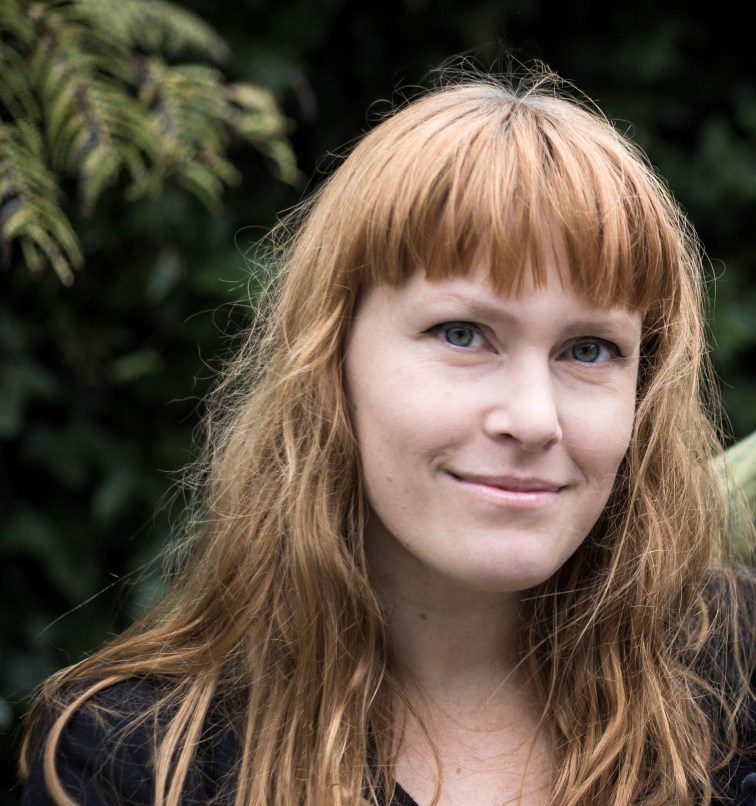
Robyn Maree Pickens is an art writer, poet, and curator. Her critical and creative work is centred on the relationship between aesthetic practices and ecological reparation. Robyn’s poetry has appeared in the Australian eco-poetic journal Plumwood Mountain (2018), and U.S. journals Matador Review (2017), water soup (2017), and Jacket 2 (2017). Her most recent work was exhibited at ARTSPACE, Auckland in March 2018. Robyn’s poetry criticism has appeared in Rain Taxi (2018) and Jacket 2 (2018). Currently Robyn is a PhD candidate in ecological aesthetics in the English Department at the University of Otago, and an art reviewer for the Otago Daily Times, The Pantograph Punch, and Art News.


The four finalists will read from their work at the Sarah Broom Poetry Prize event at the Auckland Writers Festival on Sunday 20 May, 3.15-4.15pm in Aotea Centre’s Herald Theatre. Free event, all welcome.

Sarah Broom Poetry Prize page.

Celebrating Elizabeth Smither’s Best Book of Poetry Award


dsc_0067.jpg


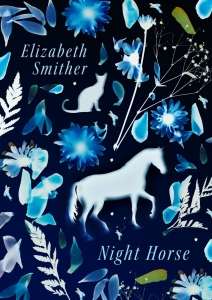
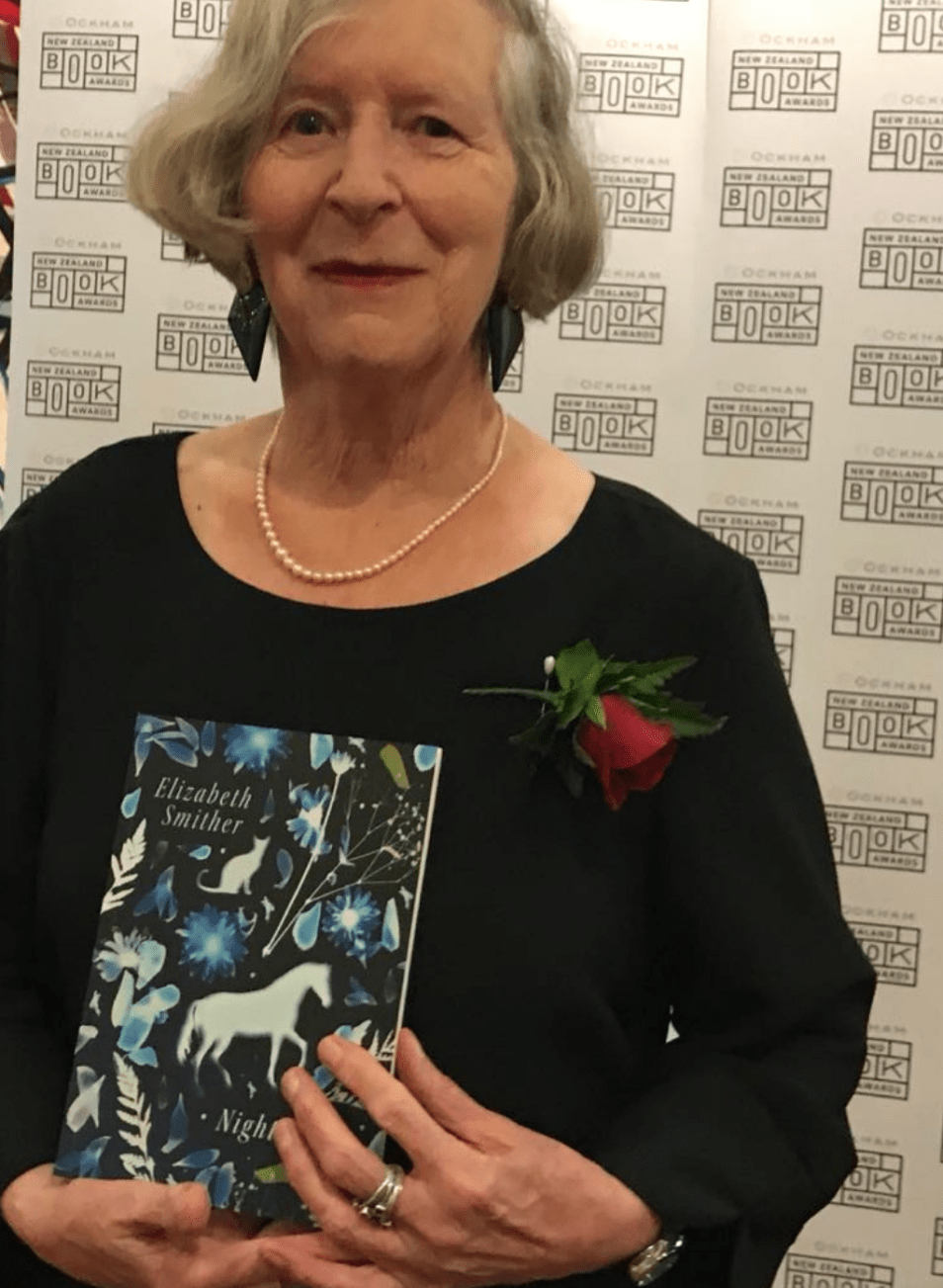
Elizabeth Smither, Night Horse – winner of the Best Poetry Book Award at the Ockham NZ Book Awards 2018


Paula: Your new collection is a delight to read and offers so many poetic treats. I was thinking as I read that your poems are like little jackets that can be worn inside out and outside in. In stillness there is movement and in movement there is stillness; in musicality there is plainness and in plainness there is musicality. In the strange there is the ordinary and in the ordinary there is the strange. What do you like your poems to do?

Elizabeth: I want them to do everything. Everything at once. I want them to feel and think (and feel the thinking in them as you read). I want them to be quick, in the old sense of the word: the opposite of dead. I want them to not know something and try to find it out – I would never write a poem with prior knowledge – I think ignorance can be bliss or at least start the motor. And as I write more I find out more and more about musicality. Isn’t one of the loveliest moments in music when harmony breaks through discord as though it is earned and you know that discord, instead of being a thicket or a dark wood, is part of it?


Paula: I especially love the ongoing friendship and granddaughter poems, but I particularly love the first poem, ‘My mother’s house.’ Kate Camp and I heard you read this at the National Library’s Circle of Laureates and were so moved and uplifted that we asked for copies! Unseen, you are observing your mother move through the house from the street (you gave us this introduction) and see her in shifting lights. The moment is extraordinary; are we are at our truest self when we are not observed? There is the characteristic Smither movement through the poem, slow and attentive, to the point of tilt or surprise. The final lines reverberate and alter the pitch of looking: ‘but she who made it/who would soon walk into the last room/of her life and go to sleep in it.’  Do you have a poem or two in the collection that particularly resonate with you?

Elizabeth: I’m fond of ‘The tablecloth’ after I observed my friend, Clay, scrubbing at a corner of a white damask tablecloth in the laundry after a dinner party. It reminded me of the old-fashioned way of washing linen in a river. It’s both a doll-sized tablecloth and something almost as large as the tablecloth for a royal banquet around which staff walk, measuring the placement of cutlery and the distance between each chair. ‘Ukulele for a dying child’ tumbles all over itself in an incoherent manner because the subject is so serious and no poet can do it justice. The grandmother poems will probably be ongoing because it is such an intense experience: something between a hovering angel and a lioness. Going back to your remark about ‘My mother’s house’ I agree with the truth that is available in our unobserved moments. Perhaps there is a balance between our social and our private moments which might comprise something Keats called ‘soul-making’.

from our interview


Tenderness


                           I


A tree in the centre of a corn field

the corn rising in its ranks like braided hair

to meet the lowest branches


a tree that has replaced at least twenty

corn stalks with their divided leaves

twenty golden cobs sweetly surrendered


for this lovely grace: leaf sweep touching

leaf sweep, the whole field given by

this rising trunk, a focus


the pattern drawn from the edge of the field

to the centre where the tree

delivers a blessing.


II


The forest planation blankets hills.

Neat-ankled, swift-running

the dark pines descend


except on one little hilltop a ride

of grass begins and runs

with the trees which seem to bend


tenderly towards it: a bed from which

a child has risen and begun walking

the solicitousness of pine branches over grass.


©Elizabeth Smither from Night Horse


1497223465774-1.jpg    1497223465774-1.jpg


Paula: Have you seen a festival poetry session (anywhere) that has blown you off your seat (or had some other significant impact)?

Elizabeth: Margaret Atwood and Hans Magnus Enzensberger at the Aldeburgh festival. I read first and sat down between them, shivering.

Paula: If you could curate a dream poetry session at The Auckland Writers Festival which poets would be there and who would mc or chair it?

Elizabeth: I  think I’d do a Dead Poets session. Keats and Shelley, Robert Lowell, William Empson, John Crowe Ransom, Tomas Tranströmer, Szymborska, of course… the possibilities are endless. It might have something of the bitchy tone of ‘The Real Housewives of Melbourne’.  To chair it one of the Paulas: Green or Morris.


from Poetry Shelf  ’12 Questions for the Ockham New Zealand Book Award Poetry finalists’


Elizabeth will appear at the Auckland Writers Festival 

Sunday May 20  1.30 – 2.20 Disappearances  (4 readings) Limelight Room, Aotea Centre


Auckland University Press Night Horse page and author page

Booksellers review by Emma Shi

Radio NZ National review by Harry Ricketts with Kathryn Ryan


Award night


Screen Shot 2018-05-16 at 8.35.48 AM.png

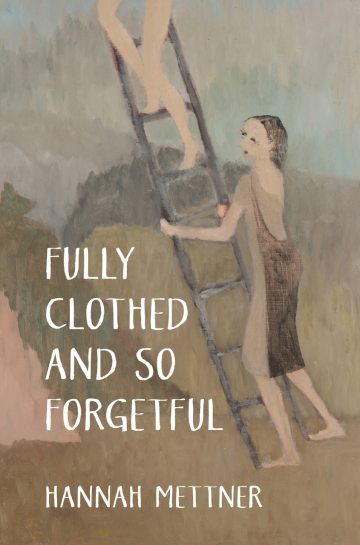
Celebrating Hannah Mettner’s Best First Book of Poetry Award

fullsizerender.jpg

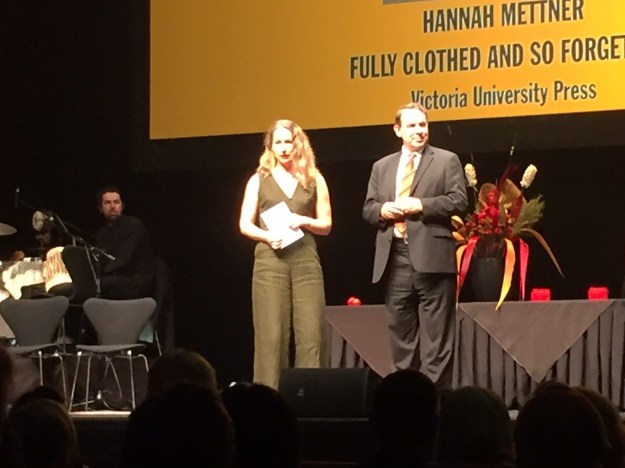
Hannah Mettner, Fully Clothed and So Forgetful – winner of the Best First Book Award at the Ockham NZ Book Awards 2018


We believe in the steps.

We tell our children and then our

grandchildren about the cool

pond at the top where sun-

carp clean our feet and where

we can sleep. The steps are one of

the beautiful mysteries of

life, like how did we get here,

fully clothed and so forgetful?


from ‘Higher ground’


Paula: ‘Fully Clothed and So Forgetful gave me goose bumps as I read and took me beyond words to that state where you stand somewhere wild and beautiful and just stall beyond language to absorb the world. My initial reaction is simply to tell the reader to read the book. But then I start accumulating a list of what I think the poetry is doing: the poems are inventive, unpredictable, melodic, on the move, strange, love-soaked.’

Hannah: The key thing that matters to me in a poem (whether one I’m writing or reading) is that it gets me in the gut. I get very frustrated by poetry that feels empty, or emotionally disengaged or distant, or is teasing the reader or holding them at arm’s length. I just find it boring, I mean, I know that different poems and poets have all sorts of intellectual fare to offer, but I want to be emotionally moved by a poem, and nothing less.

from our interview


My children are abducted by 17th-century French courtesans

In the rose garden near the big house
where somebody famous was either
born, or not, all the ladies spread their
pinks out in the sun. Pretty young ladies
with expensive, dewy faces who want
my children for their photogenic walls.
They look as though they’re picnicking
with their floral bubbles and their green
men but their stiletto fingers give them
away. And my children were just feeding
ducks, but where have they gone?! Quick
say the birds Find them Find them, gobbling
their trails of bread. The ladies strengthen
in the light and their prickles rise and my
nose is so full of their French scent that
I start to sneeze. The ladies wilt a little in
revulsion. Their corals and blushes and rouges
are falling brown, then grey; old ladies with
shallow bones and prickles blunted with
age. And where are your children they
want to know and I want to know too.
I’ve looked everywhere. There’s a low
graze of desperation in my throat, which
stings as I call their names. I uproot one
of the ladies and use her to beat back a
path through the others, until they look
almost young again in the freshness
of their bruises. When I get back to the
pond most of the spinsters have frosted
in the ground. The children are there
wearing new fur coats. One is putting logs
on a fire, while the other pulls dinner
from the snow.

©Hannah Mettner, from Fully clothed and so forgetful (Victoria University Press, 2017)


Author note: This is the poem that helped me realise that there was a way to integrate the emotional authenticity that I want my poems to convey (in this case the fear of ‘losing my children’) with something less literal. For me, this meant that rather than merely ‘stating facts’ in a pleasant or interesting way with line breaks, I was able to tease out multiple concepts and feelings simultaneously in an environment less concretely related to the real world. So, this poem deals with my fear of losing my children after the breakup of my relationship with their father, but holds with that the fear of a potential ‘stepmother’, and the fear of them doing fine without me, but because none of this takes place in a recognisable world (rosebushes don’t usually turn into young women), I felt freer to say all that.


Fully_Clothed_and_So_Forgetful__32303.1486956777.jpg


Victoria University Press page

Radio NZ  National: Harry Ricketts reviews the book with Kathryn Ryan


Award night:


IMG_2312.JPG

Monday Poem: Albert Wendt’s ‘And so it is’


And so it is


we want so many things and much

What is real and not? What is the plan?


Our garden is an endless performance

of light and shadow  quick bird and insect palaver


The decisive wisdom of cut basil informs everything

teaches even the black rocks of the back divide to breathe


Blessed are the flowers  herbs and vegetables

Reina has planted in their healing loveliness


The hibiscus blooms want a language to describe their colour

I say the red of fresh blood or birth


A lone monarch butterfly flits from flower to flower

How temporary it all is  how fleeting the attention


The boundary palm with the gigantic Afro is a fecund nest

for the squabble of birds that wake us in the mornings


In two weeks of luscious rain and heat our lawn

is a wild scramble of green that wants no limits


Into the breathless blue sky the pohutukawa

in the corner of our back yard stretches and stretches


Invisible in its foliage a warbler weaves a delicate song

I want to capture and remember like I try to hold


all the people I’ve loved or love

as they disappear into the space before memory


Yesterday I pulled up the compost lid

to a buffet of delicious decay and fat worms feasting


Soil  earth  is our return  our last need and answer

beyond addictive reason  fear and desire


Despite all else the day will fulfil its cycle of light and dark

and I’ll continue to want much and take my chances


©Albert Wendt

March-April 2017


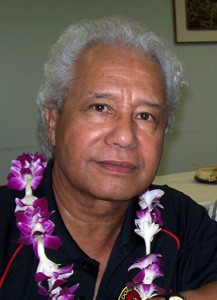
Albert Wendt has published many novels, collections of poetry and short stories, and edited numerous anthologies. Last week, along with four others, he was recognised as a New Zealand Icon at a medallion ceremony for his significant contribution to the Arts.


Bill Manhire and Albert Wendt recognised as Icons


bill-manchester-pic.jpg    1396039023448-1.jpg


Last night The Arts Foundation recognised Bill Manhire and Albert Wendt as Icons. Both  Bill and Albert have produced writing that is a significant part of our literary landscape, yet both have done so much more. Their mentorship of and generosity towards other writers is noteworthy. Their writing stands as uniquely theirs, offering nimble and wide ranging voices, an ability to tap into the humane, the surprising, the musicality of the world. I find their poetry utterly nourishing.

Congratulations from Poetry Shelf on this well deserved honour.

See here for more details. The other Icons were: artist Billy Apple, composer Dame Gillian Karawe Whitehead and sculptor Fred Graham.


Albert’s poem ‘New Coat’

Bill Manhire talks to Poetry Shelf

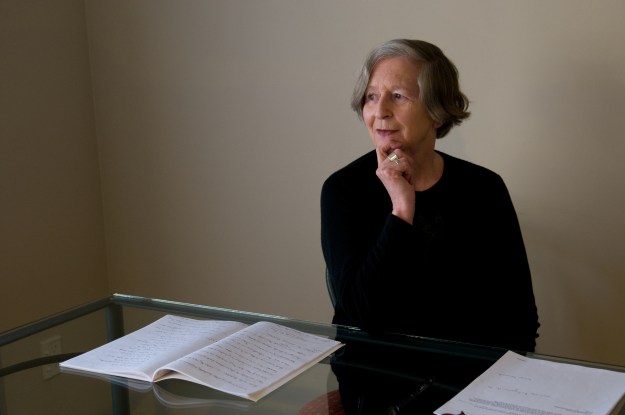
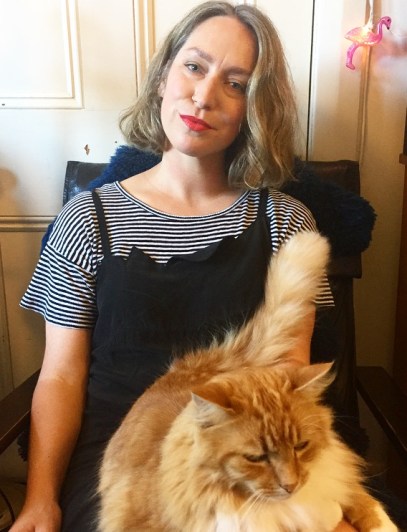
A conversation and poem from the Sarah Broom Poetry Prize Finalists: Jane Arthur

Jane Arthur_2018.jpg


To check up on the state of your heart you must lie back


with your tits out so a warm-handed stranger-

technician can run a small device across your ribs

like a barcode scanner. She seems not to see your skin,

is only concerned with looking beneath it. You want to ask her,

What is it that makes me different

from others who’ve lain here, does my heart hide deeper

in my chest, do my nipples watch you cock-eyed, disturbingly,

am I more beautiful than 50% of others or.

On a black-and-white screen there’s something grainy

and pulsing, trapped in a wedge frame

like an embryo, unheard. This is your heart, twitching.

Watching it you can’t tell what from what, all you know is

the image is moving and you are alive. What a miracle

of existence, you now understand, to have a life inside you

and you want to clutch the technician and rejoice.

Now you can hear it, too, your heart—thumping, muffled,

like listening with your ear pressed up against a wall,

the white-noise hiss of the ocean trapped behind.

But that’s not ocean, not white noise,

it’s blood noise. That’s blood pumping through your heart

to your veins. You hear it through a wall

of veins, bones, fat, flesh, skin keeping all this life inside you

like one big intricate loving dam.


©Jane Arthur


If you were to map your poetry reading history, what books would act as key co-ordinates?

Formatively, I was a music-obsessed teen, so the liner notes of the angsty ’90s: Kristin Hersh, Tori Amos, R.E.M.. Patti Smith. Before that: the poems of Leonard Cohen and Pam Ayres. More recent inspirations: Jenny Bornholdt’s Miss New Zealand; Geoff Cochrane; Kim Addonizio’s What Is This Thing Called Love; Louise Glück’s Vita Nova; random editions of Sport; A Hole is to Dig by Ruth Krauss and illustrated by Maurice Sendak. Online poetry journals, including Sweet Mammalian, Starling, Turbine/Kapohau. The Poetry Foundation website. And most recently: essa ranapiri’s incredible Twitter thread of great NZ poems.


What do you want your poems to do?

I guess I want them to be intellectual exercises that end up appearing thoroughly non-intellectual. I want them to be approachable, definitely messy and imperfect, a bit funny but completely heartfelt without being gross? At least, that’s what I want them to “be”. What I want them to do is … reassure awkward readers that we’ve all been there and it’s cool, don’t worry about it.


Which poem in your selection particularly falls into place. Why?

“To check up on the state of your heart you must lie back” is one of those rare poems that burst out of me in one sitting (having been rolled around my brain for a day or so) and didn’t change significantly after that. An earlier version was published in Ika and two years later only a few words have changed. I wish I knew why some poems come out easily, it’s much more efficient. I am typically the world’s most painfully slow and fussy writer … more of a deleter.


There is no blueprint for writing poems. What might act as a poem trigger for you?

Standing in the shower. Brushing my teeth. Trying to write a different poem. Reading fiction. Going for a walk. Restless nights. Pretending to be someone else. Deadlines.


If you were reviewing your entry poems, what three words would characterise their allure?

Familiar, surprising, dorky


You are going to read together at the Auckland Writers Festival. If you could pick a dream team of poets to read – who would we see?

HRH Selina Tusitala Marsh as MC because I want her to be everywhere at all times. Some of the finest new, super-young poets like Tayi Tibble, Nina Powles and Freya Sadgrove – I’d ask the Starling eds to organize that bit. With interludes from Faith Wilson, Coco Solid, Hera Lindsay Bird, Chris Tse and Fleur Adcock. With a surprise VIP encore from Margaret Mahy during a round of whisky.


Jane Arthur was born in New Plymouth and lives in Wellington with her partner, baby and dogs. She has worked in the book industry for over 15 years as a bookseller and editor, and is a founder of the New Zealand children’s literature website The Sapling. She has a Master’s in Creative Writing from the IIML at Victoria University, where her supervisor was Cliff Fell, a 2017 Sarah Broom Poetry Prize finalist. She also has a Diploma in Publishing from Whitireia Polytech and a Master’s in English Literature from Auckland University. Her poems have appeared in journals including SportTurbineIka, and Sweet Mammalian.


The four finalists will read from their work at the Sarah Broom Poetry Prize event at the Auckland Writers Festival on Sunday 20 May, 3.15-4.15pm. 

Sarah Broom Poetry Prize page.
 

A conversation and poem from the Sarah Broom Poetry Prize finalists: Stuart Airey


DSCF1969.jpg


Horse on the Ice


at first horse and rider rode easily

it was cold and bright across the ice

the frozen lake

we can’t feed you all

you’ll have to go to New Zealand

the next ride was still clear

a little mist hugged the surface

perhaps joinery carpentry building

then a little icy fog formed on the brow

some sort of motorcycle racing

a fall at night and a broken wrist

permanently numb fingers on one hand

now the rider dismounted halfway across

knelt down to get a closer look

if you peered carefully there were fine cracks

a web of spidery blue veins

a small stone bridge in the Lake District

uncle Franks boat accelerating an arc

to test the waterskier

but not last week last month last year

the horse and rider snorted steam

riding faster the crack of hooves on ice

the sure clip of memory

its web of fissures and creaking pressures

he was sure we were sure i was sure

we were all nearly quite certain

it could take the weight


©Stuart Airey


If you were to map your poetry reading history, what books would act as key co-ordinates?

In primary school I loved Louis Untermeyer’s Golden Treasury of Poetry especially the limericks and ‘The Highwayman’. There’s a fair bit of a lull after that until my brother passed away and then I turned a lot to The Oxford Book of English Verse – particularly Thomas Hood’s ‘The Sea of Death’. A few years back I discovered the Bloodaxe ‘Staying Alive’ trilogy which opened up a whole new world of modern poems and poets, particularly shorter ones. (Poems that is). I started writing more seriously about this time. Favourite writers would be Carol Ann Duffy, Wislawa Szymborska, Stephen Dunn and especially Alden Nowlan – a Canadian genius and earthy, accessible poet.


What do you want your poems to do?

I think that first of all I write for myself. I have discovered that quite often the poem is telling me something about myself that I couldn’t get to another way – a sort of self-therapy I guess. If I’m writing about an idea or a feeling it’s a way of turning it over and looking at all the edges. Sometimes it’s the poem that tells me how I’m feeling. After that though I definitely enjoy sharing (mostly) the poem with others and seeing if it touches some vital part of being human. It’s a real kick when others find layers of meaning that I was unaware of or hadn’t really intended. Some are written just to be enjoyed, a bit of a laugh or even more visceral.

A few to provoke though this rarely raises much angst.


Which poem in your selection particularly falls into place. Why?

I find this quite a difficult question. As none of my poems have (yet!) been published I had quite a few to select from for the competition. I have submitted to a few journals and competitions, as yet unsuccessfully, so I found it really hard to gauge which poems I should put in – actually I think I got a little cavalier with the entry. I think ‘Mercury’ fell into place as the last to be picked as it’s one of the earliest poems I wrote and got excited about. I love the word Mercury so much I’ve written several poems all with that title but the one I’ve included is the original.


There is no blueprint for writing poems. What might act as a poem trigger for you?

I’ve found that poems come to me in quite different ways. Usually the best or at least easiest to write is when a first line comes out of the blue, closely followed by the last line. I’m not sure exactly what the prompt in these instances is, whether a scene or a feeling or just a thought. Perhaps a glimpse into someone’s life. Then there are poems that start with an idea or a feeling I want to convey. These are a little harder to write but if the idea or feeling is quite solid they carry through and if they don’t they often morph into something else. I love it when the poem ends with so much more than it started with. I have also written a few poems to a particular theme (one was borders) – these are usually a little slower to start but once momentum kicks in they get there. There’s a lot of polishing that goes on. It’s a real high when a poem is finished.


If you were reviewing your entry poems, what three words would characterise their allure?

So I think you mean if I could detach myself from the poems in a sort of impartial way? In that case variety, accessibility and aftertaste.


You are going to read together at the Auckland Writers Festival. If you could pick a dream team of poets to read – who would we see?

Carol Ann Duffy, Paul Muldoon, Carolyn Forche, Stephen Dunn, perhaps John Burnside. Would have loved to have heard John O’Donohue live but at least we have Youtube.


Stuart Airey graduated in Optometry from Auckland University in 1986 and has worked in this role for over 30 years. He also has a post-graduate Diploma in Theology from Laidlaw College. He is married with three children and lives in Hamilton. Apart from dabbling in short stories in high school Stuart began writing poetry more seriously after the Christchurch earthquake which resonated with personal loss in his family. Stuart has enjoyed performing some of his poetry in a series of dedicated evenings featuring a mix of drama, audio-visual, lighting and special effects. His poems are currently unpublished and he feels he is very much on the threshold of an unknown yet inspiring path.


The four finalists will read from their work at the Sarah Broom Poetry Prize event at the Auckland Writers Festival on Sunday 20 May, 3.15-4.15pm. 

Sarah Broom Poetry Prize page.
Monday Poem: Jack Ross’s ‘My Uncle Tommy’


My Uncle Tommy


‘In the end they had to put him

in a home 


Tommy had grown too heavy

for Dad to carry 


Dad worried about it

till he went to visit


tried to hug him

Tommy didn’t know him


was not aware

of where they were


it was my mother

I was sorry for


she thought she was to blame

for having him


my brother shared a room

with him


all night he’d rock

inside his cot


one winter he got sick

and never spoke


again

no-one


could visit us

because


of Tommy’


©Jack Ross 2018


Jack Ross is the managing editor of Poetry New Zealand, and works as a senior lecturer in creative writing at Massey University. His latest book, The Annotated Tree Worship, was published by Paper Table Novellas in 2017. He blogs here