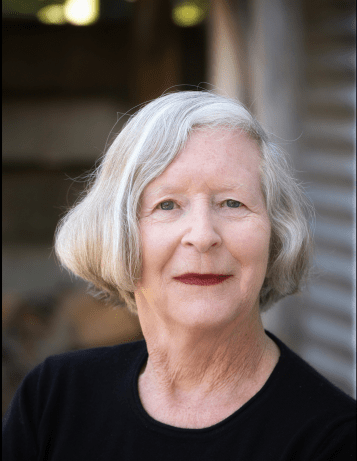
Murray Edmond lives in Glen Eden, West Auckland. His latest book, Back Before You Know, includes two narrative poems, ‘The Ballad of Jonas Bones’ and ‘ The Fancier Pigeon’ (Compound Press, 2019).
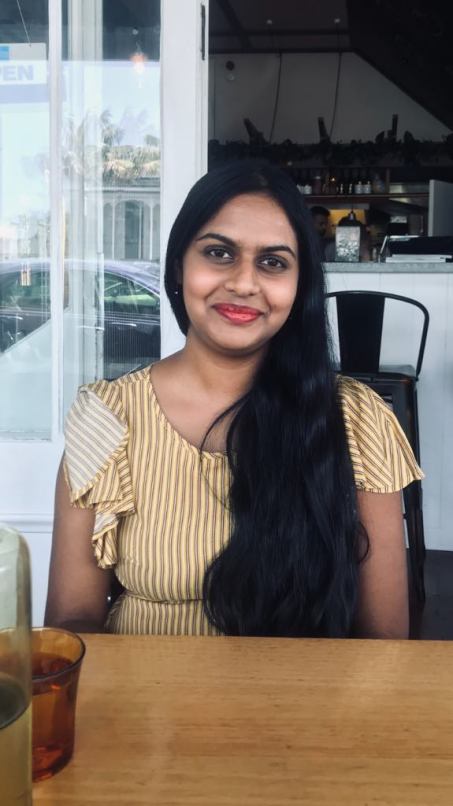
Tusiata Avia is a poet, performer and writer. She has published three books of poetry, a chapbook, three children’s books and is included in over 100 anthologies, journals and online publications. Tusiata has held a number of writers’ residencies and awards, including the CNZ Fulbright Pacific Writer’s Fellowship at University of Hawai’i and the Janet Frame Literary Trust Award. Known for her dynamic performance style, she wrote and then performed Wild Dogs Under My Skirt as a one-woman show (2002-2009). In 2016 it became a multi award-winning play for 6 women, directed by Anapela Polata’ivao. In January 2020 Wild Dogs Under My Skirt made its American debut, Off-Broadway.
in memory of Gerry Melling, poet and architect 1947-2012
I shall explain herein the arrangement and symmetry
of private buildings from the position of the heavens in respect of the earth,
the inclination of the zodiac and from the sun’s course
just the cold left now like a smooth glove on the top of my hand
though the joint between my fingers is still warm
an object under the eye will appear very different from the same object in an open space
think of the shell as part of the architectural setting, a shallow canopy
over the Madonna who, with her child, has been gathering raspberries
the injury which nature would effect is evaded by means of art
take, for example, the more tensile forms of tiny fish that dart,
a little more weighted with their body mass,
more straightforwardly down, slewing side to side like footballers
shaping new subtleties of line to distract the eye
it is the part of a skilful (wo)man to consider the nature of the place,
the purpose of the building and the beauty of it
think of the falcon and the falconer,
of words in circular and ovoid shapes like the seventy-one
cervical vertebrae that held up the neck of the plesiosaur
think of Beethoven’s Quartet No. 15 in A minor
think of the Sky Box overlooking the West Bank in Wellington
think of Gerry and Geoff and Celeste and all the other beautiful people
Bernadette Hall
italicised text taken from the writings of the Roman architect, Vitruvius 80-15BC
Bernadette says: Here is my lockdown poem. Some of the lines have been floating around for a while. I’ve long wanted to write something for Gerry. How good that this week Geoff Cochrane and Celeste should join him. I’ve no idea who Celeste is. She appears in one of Geoff’s poems. She sounds beautiful. All I can say is, here’s to love and friendship, they are timeless. And thank you to all who are working to keep us all safe.
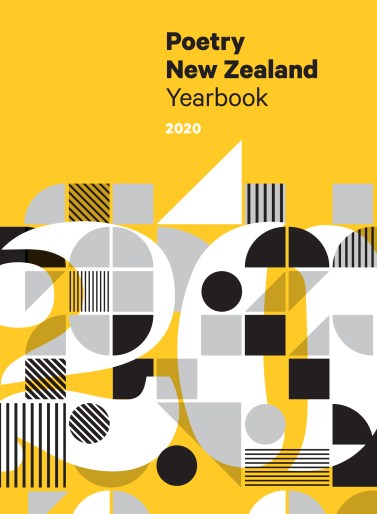
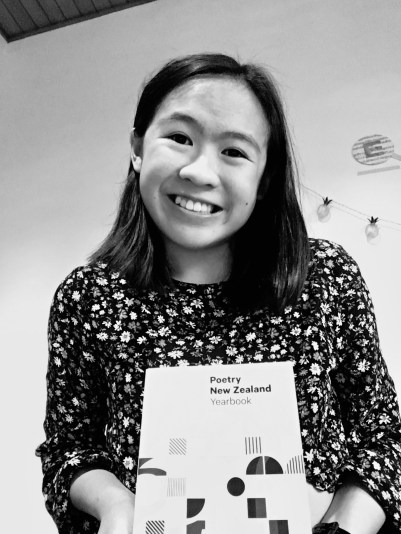
Poetry New Zealand Yearbook 2020 edited by Johanna Emeney (MUP)
Johanna Emeney works at Massey University as a teacher of creative writing and has published several poetry collections.
Many many years ago my first poetry collectionCookhouse (AUP) appeared in the world and it was a big thing for me. I was at the stove with my baby in my arms, when the phone rang, and I dropped something all over the floor. It was Alistair Paterson, then editor of Poetry NZ, wanting to know if I would be the feature poet. The tap was running, the mess was growing, the pot was bubbling, my baby was crying, but somehow I spoke about poetry and agreed to my face on the cover and poems inside. It felt important.
I have only sent poems to journals a couple of times since then as I find it a distraction, but I love reading NZ literary journals. We have so many good ones from the enduring magnificence of Sport and Landfall to the zesty appeal of Mimicry and Min-a-rets.
Poetry NZ has had a number of editors, and is New Zealand’s longest running literary magazine. Poet Louis Johnson founded it in 1951 and edited it until 1964 (as the New Zealand Poetry Yearbook). Various others have taken turns at the helm – most notably Alistair Paterson from 1993 to 2014. In 2014 Jack Ross took it back to its roots and renamed it Poetry New Zealand Yearbook. This year Johanna Emeney stepped in as guest editor while Tracey Slaughter takes over the role from 2021.
Each issue includes essays, reviews, critical commentary, poetry and a featured poet.
For me Poetry New Zealand 2020is a breath of fresh air. It opens its arms wide and every page resonates so beautifully. It showcases the idea that poetry is an open home. The poems behave on the page in a galaxy of ways, sparking and connecting multiple communities. I feel so satisfyingly refreshed having read this, warmed though, restored.
I am at the point in lockdown where I drift about the house from one thing to next in an unsettled state. I alight on this and land on that. So Poetry NZ 2020 is the perfect resting spot. I want to sing its praises to the moon and back, but I am tired, have barely slept and words are like elusive butterflies.
Johanna Emeney’s introduction is genius: ‘It is wonderful to be chosen by poems, and the very opposite of trying to chose poems.’ And later: ‘A poem choose you the minute it takes you by surprise. To be clear this cannot be any old surprise.’ And later: ‘poems that choose you are like mille-feuilles— thoughtfully assembled and subtly layered.’
I love the way Johanna has treated the issue like we often shape our own collections – in little clusters of poems that talk to each other: ‘Into the water’, ‘Encounter’, ‘Other side up’, ‘Remember to understand love’. It is an issue lovingly shaped – I am in love with individual poems but I am also mesmerised by the ensuing conversation, the diverse and distinctive voices.
The essay section is equally strong. You get an essay by Mike Hanne on six NZ doctor poets, Maria Yeonhee Ji’s ‘The hard and the holy: Poetry for times of trauma and crisis’. You also get Sarah Laing’s genius comic strip ‘Jealous of Youth’ written after going to the extraordinary Show Ponies poetry event in Wellington last year. And Roger Steele’s musings on publishing poetry. To finish Helen Rickerby’s thoughts on boundaries between essays and poetry. Restorative, inspiring.
77 pages of reviews cover a wide range of publishers (Cold Hub Press, VUP, Mākaro Press, Otago University Press, Cuba Press, Compound Press, Titus Books, Waikato Press, Hicksville Press and a diverse cohort of reviewers. With our review pages more and more under threat – this review section is to be celebrated.
The opening highlight is the featured poet (a tradition I am pleased to see upheld). Like Johanna I first heard essa may ranapiri read at a Starling event at the Wellington Writers Festival, and they blew my socks off (as did many of the other Starlings). essa is a poet writing on their toes, in their heart, stretching out here, gathering there, scoring the line in shifting tones and keys. So good to have this group of new poems to savour after the pleasures of their debut collection ransack. I particularly enjoyed the conversation between essa and Johanna – I felt like I was sitting in a cafe (wistful thinking slipping though?) sipping a short black and eavesdropping on poetry and writing and life. Tip: ‘That a lot of poems are trying to figure something out. If you already know it, then you don’t need to write the poem.’
I have invited a handful of the poets to read a poem they have in the issue so you can get a taste while in lockdown and then hunt down your own copy of this vital literary journal. Perhaps this time to support our excellent literary journals and take out a few subscriptions. Start here!
a n a u d i o g a t h e r i n g
First up the Poetry New Zealand Poetry Prize and the Poetry New Zealand Student Poetry Competition.
Lynn Davidson (First Prize)
Lynn reads ‘For my parents’
Lynn Davidson is a New Zealand writer living in Edinburgh. Her latest poetry collection Islander is published by Shearsman Books in the UK and Victoria University Press in New Zealand. She had a Hawthornden Fellowship in 2013 and a Bothy Project Residency at Inshriach Bothy in the Cairngorms in 2016. Lynn has a doctorate in creative writing, teaches creative writing, and is a member of 12, an Edinburgh-based feminist poetry collective. Her website
E Wen Wong (First Prize Y12)
E Wen reads ‘Boston Building Blocks’
E Wen Wong is in her final year at Burnside High School, where she is Head Girl for 2020. Last year, her poem ‘Boston Building Blocks’ won first prize in the Year 12 category of the Poetry New Zealand Student Yearbook Competition.
Chris Tse
Chris reads ‘Brightest first’
Chris Tse is the author of How to be Dead in a Year of Snakes and HE’S SO MASC. He is a regular contributor to Capital Magazine’s Re-Verse column and a book reviewer on Radio New Zealand. Chris is currently co-editing an anthology of LGBTQIA+ Aotearoa New Zealand writers.
Fardowsa Mohamed
Fardowsa reads ‘Tuesday’
Fardowsa Mohamed is a poet and medical doctor from Auckland, New Zealand. Her work has appeared in Poetry New Zealand, Sport Magazine, Landfall and others. She is currently working on her first collection of poetry.
Photo credit: Jane Dove Juneau
Elizabeth Smither
Elizabeth reads ‘Cilla, writing’
Elizabeth Smither, an award-winning poet and fiction writer, has published eighteen collections of poetry, six novels and five short-story collections, as well as journals, essays, criticism. She was the Te Mata Poet Laureate (2001–03), was awarded an Hon D Litt from the University of Auckland and made a Member of the New Zealand Order of Merit in 2004, and was awarded the Prime Minister’s Award for Literary Achievement in Poetry in 2008. She was also awarded the 2014 Janet Frame Memorial Award for Literature and the 2016 Sarah Broom Poetry Prize. Her most recent collection of poems, Night Horse (Auckland University Press, 2017), won the Ockham New Zealand Book Award for Poetry in 2018.
Anuja Mitra
Anuja reads ‘Waiting Room’
Anuja Mitra lives in Auckland and is co-founder of the online arts magazine Oscen. Her writing can be found in Starling, Sweet Mammalian, Mayhem, Poetry NZ and other journals, though possibly her finest work remains unfinished in the notes app of her phone.
Semira Davis
Semira reads ‘Punkrock_lord & the maps to i_am_105mm’
Semira Davis is a writer whose poetry also appears in Landfall, Takahe, Ika, Blackmail Press, Ramona, Catalyst and Mayhem. In 2019 they were a recipient of the NZSA Mentorship and runner-up in the Kathleen Grattan Poetry Award.
Photo credit: Miriam Berkley
Johanna Aitchison
Johanna reads ‘The girl with the coke can’
Johanna Aitchison was the 2019 Mark Strand Scholar at the Sewanee Writers’ Conference in Tennessee, and her work has appeared, most recently, in the Poetry New Zealand Yearbook 2020, NZ Poetry Shelf, and Best Small Fictions 2019.
Vaughan Rapatahana
Vaughan Rapatahana reads ‘mō ō tautahi’
Vaughan Rapatahana (Te Ātiawa) commutes between homes in Hong Kong, Philippines and Aotearoa New Zealand. He is widely published across several genre in both his main languages, te reo Māori and English and his work has been translated into Bahasa Malaysia, Italian, French, Mandarin and Cantonese.
His poem tahi kupu anake included in the presentation by Tove Skutnabb-Kangas to the United Nations Forum on Minority Issues in Geneva in November 2019. Interviewed on Radio NZ by Kim Hill in November 2019.
Emma Harris
Emma Harris reads ‘Ward’
Emma Harris lives in Dunedin with her husband and two children. She teaches English and is an assistant principal at Columba College. Her poetry has previously been published in Southern Ocean Review, Blackmail Press, English in Aotearoa and Poetry New Zealand.
Dani Yourukova
Dani reads ‘I don’t know how to talk to you so I wrote it for me’
Dani is a Wellington poet, and one of the Plague Writers (a Masters student) at Victoria’s IIML this year. They’ve been published in Mayhem, Aotearotica, Takahe, Poetry New Zealand Yearbook 2020 and others. They’re currently working on their first collection of poetry.
And it was evening, and it was morning, a second day.
Do taxes ☐
Dishes ☑
Feel guilty for date pudding ☑
Dishes ☑
And it was evening, and it was morning, a third day.
Exercise 30 min ☐
Exercise 15 min ☐
Go outside ☐
Feel guilty for feeling guilty ☑
Reject a negative thought ☐
Avoid crowds ☑
Reject a negative thought ☑
And it was evening, and it was morning, a fourth day.
Get enough sleep ☐
Clean teeth evening ☐ morning ☐
Have a shower ☐
Dishes ☑
Feel guilty for lack of personal hygiene ☐
Dishes ☑
Clean teethmuthafucka you can’t go to the dentist in the apocalypse!!!
And God said, “Let the waters swarm a swarming of living creatures.” And God created the great sea monsters, 15,000 virus species with which the waters swarmed, and God saw that it was good. And God said, “Fill the waters of the seas,” and they did, between 10,000 and 200,000 of them in every drop of seawater.
And it was evening ☑, and it was morning ☑, a fifth day.
1000 words translation/2000 words editing ☐
500 words translation/1000 words editing ☐
200 words translation ☐
100 words translation ☐
0-50 words translation ☐
1 hr work ☐
Write a word ☐
Dishes ☑
Feel guilty for not writing a word ☑
Dishes ☑
And behold, it was very good, and it was evening, and it was morning, a sixth day.
Apply for wage subsidy ☑
DO TAXES ☐
Dishes ☑
Feel guilty for living in NZ ☑
Dishes ☑
Now the viruses of the heavens and the earth were completed and all their hosts. And God completed on the seventh day His work what he did, and He abstained on the seventh day from all His work what he did because there was no more work and He was out of it.
And behold, God had created a universe so it did not matter that He was out of work because He had His universal income. There was evening, and there was morning, a 16th day.
Dishes ☑
Feel guilty for being alive ☑
Dishes ☑
God was never bothered again. There was evening, and there was morning, a 26th day.
Charlotte Simmonds
Charlotte Simmonds is a writer, editor and translator indoors, Wellington.
Vaughan Rapatahana (Te Ātiawa) commutes between homes in Hong Kong, Philippines and Aotearoa New Zealand. He is widely published across several genre in both his main languages, te reo Māori and English and his work has been translated into Bahasa Malaysia, Italian, French, Mandarin and Cantonese.
His poem tahi kupu anake included in the presentation by Tove Skutnabb-Kangas to the United Nations Forum on Minority Issues in Geneva in November 2019. Interviewed on Radio NZ by Kim Hill in November 2019.
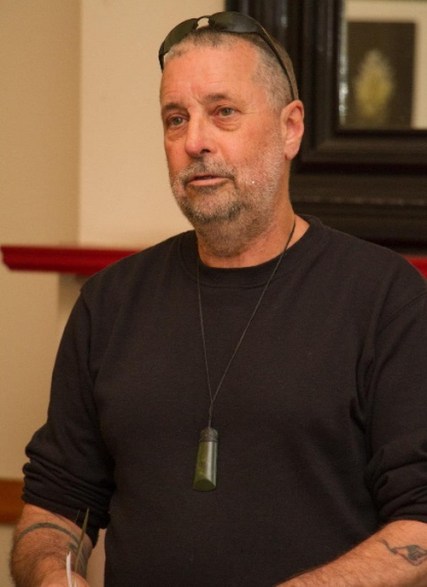
Tony Beyer writes in Taranaki. His recent work can be found online in Hamilton Stone Review, Mudlark and Otoliths; and is forthcoming in print in Kokako and Landfall.
Poet Marty Smith is in lockdown in Hawkes Bay. She plays pool every Friday night (not now) with Paul and a small hard core group. When the competition begins again, it will be renamed as the Davis Cup. For Paul Davis, the best pool player of all.
Being an Isolate Hermit, but not ill, is as awful as being under mild house arrest, kept in by a distant flood or too much sun, or just disliking the season or the times : that is, not very.
Guthlac of Crowland retreated to an island in the fens for twenty years. Wulfric of Haselbury shut himself inside some big rocks at Haselbury Plunkett. Julian of Norwich spent most of her life in a tiny wee cell stuck on her local church, watching Jesus bleed above her head while the population dropped dead of the plague outside.
There is a lesson here : that With Purpose, Away from the World, Much May Be Done.
Guthlac , who would not go to the shops for fear of (mostly moral) infection, ate clags of barley- bread and drank mud-water, and saw Demons with shaggy ears, horses’ teeth, throats vomiting fire and scabby legs, who would never stop shreiking. With much self-scourging, however, his soul was made safe, and his time passed usefully, and he now has his statue at Crowland Abbey (second tier up the old nave). When Guthlac died, honey poured out of his mouth and he flew away on a beam of sunshine with some Angels and became a Saint. How good is that ?
Wulfric (29 years a Hermit) had cold baths and wore a hairy shirt with chain-mail on top, and gnawed turnips and clover. His isolation focused his mind so well that he became an expert weather-forecaster and doctor, and told King Henry by cosmic vibes that he (the King) was soon going to die of food poisoning, which he did. One-nil to the Isolate ! (also now a Saint).
Julian of Norwich, of course, is perhaps the finest example of Retreat & Thrive. She wrote. Lord, did she wrote. While most of us might take up knitting or play Scrabble, Julian established direct communication with God, who Revealed Things to her via (note well, you isolates) the pure and specialised air of her cell, which was subsequently filled instead with crowns of thorns, submarine journeys, lots of blood and three different versions of Heaven. Julian now has a splendid swing-bridge named after her near Norwich Railway Station, something more than any of us can probably hope for.
These are more secular times, and we have, mostly, other gods. Yesterday, I got stuck into several of mine. I began a 2000-piece jigsaw of ‘Hunters in the Snow’ ; wrote a poem about a ruffled swan on a flooded pond near Stanton-under-Bardon ; listened to the audiobook of ‘The Hobbit’ ; made scones (and ate them) ; and read some more chapters of ‘Anna Karenina’ (who has time for that in their healthy days ?). Today the sun is out, and I am going to really really concentrate under the plastic tiki on the wall with some mud-water, and have a vision of Beowulf, who will tell me about some brilliantly exciting and murderous adventures (which I will write down ; pen and paper are well ready) and come back tomorrow, shaggy ears and all, and tell more. Like Julian’s ‘Revelations of Divine Love’, I’m hoping there will be a Short Text, followed by a Long Text, followed by general fame and a literary Sainthood.
Cheer up, folks : we have nothing to lose but our ordinariness !
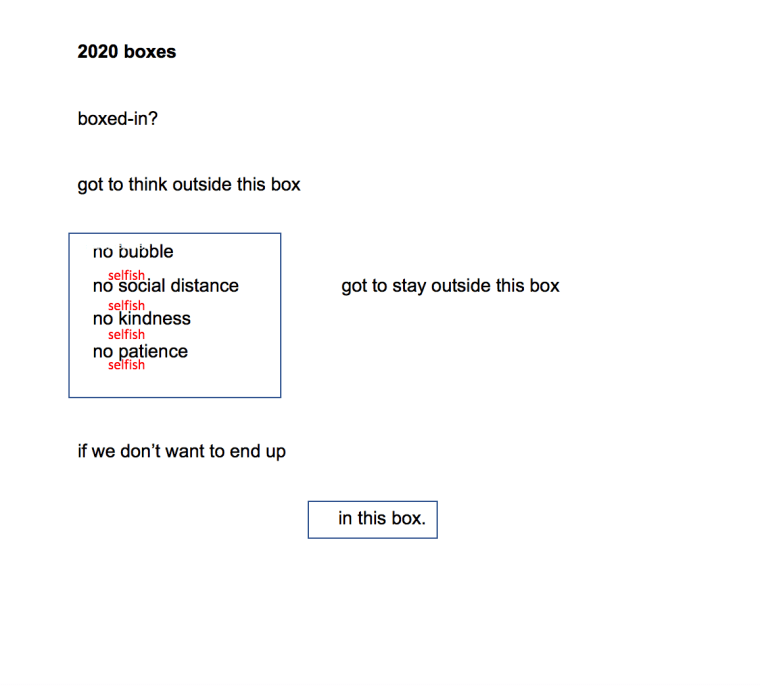
John Gallas. NZ poet published by Carcanet. 20 collections including The Song Atlas, Star City,The Little Sublime Comedy and 52 Euros. The Extasie (60 love poems) and Rhapsodies 1831 (translation of French poet Petrus Borel) to be published January and March 2021. Presently living in Leicestershire. Librettist, St Magnus Festival Orkney poet, Saxon Ship Project poet, Fellow of the English Association, tramper, biker and merry ruralist. Presently working on two sets of poem-prints (’18 Paper Resurrections’ and ‘Wasted by Whitemen’). ‘Unscythed’ written in Sefton, near Rangiora : home of bro.
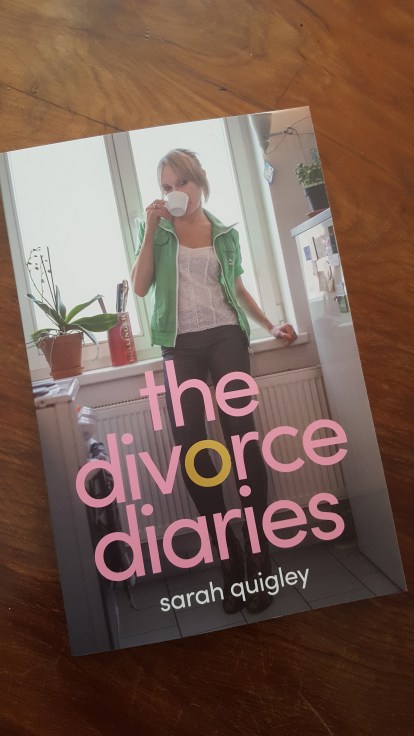
The Divorce Diaries by Sarah Quigley (Penguin Books)
Not everyone would be prepared to open up their lives to share one of the most painful times of their life. Not everyone can find humour and clear-sightedness, even when life is going well. Not everyone can write with honesty and perception about their own experiences. Not everyone can write with precision, beauty and adeptness. Fortunately for us, Sarah Quigley can and in spades.
I’m delighted that this month we are releasing this autobiographical book by this terrific writer. You can buy it online here And as soon as bookshops open again, you can also purchase physical copies.
You might have read about Sarah’s story in her Next magazine columns, for which she won the MPA Columnist of the Year in 2015 and was runner-up in 2016 and 2019. This book is a new version of that material written specially in book form, with added details. It’s smart, amusing and reflective.
Leap into its pages and be transported to Berlin and Sarah’s bohemian life among artists and writers. Be prepared for heartache and laughter, be prepared to be hooked in, right up to the last page. Here’s the beginning:
‘I had my first panic attack on a quiet sunny morning in Berlin. It was mid-summer. The city was drowsing, baking, in the grip of a heatwave. The massive chestnut trees were heavy with leaves, the grass on the sides of Karl-Marx-Allee grew dusty and long. Bats flickered like quicksilver through the sultry evenings. Every day I sat working with my feet in a bucket of cold water.
‘On that particular morning, when I first woke up, I felt as if there were no air in the bedroom. I pulled back the black sheet (we’d never bought curtains), flung open the window, saw the familiar ochre walls of the Babylon cinema across the street. Behind, a blue cloudless sky — which suddenly, inexplicably, felt too low. It was like a lid to the world, pressing down on the trees, on the houses, and especially on me, crushing the breath out of my lungs.
‘I hung out the window, gasping, feeling as if I were suffocating. For half an hour I stumbled around the apartment trying to breathe: lying on the floor, standing up again, half-crying. What was happening? I had no idea. I only knew I felt close to dying.’








 NZ Poetry Shelf