Category Archives: NZ author

Poetry Shelf favourite poems: Ian Wedde’s ‘Ballad for Worser Heberley’

Ballad for Worser Heberley

for the Heberley Family Reunion,
Pipitea marae, Easter 1990

1

I remember the pohutukawa’s summer crimson 
and the smell of two stroke fuel 
and the sandflies above the Waikawa mudflats 
whose bites as a kid I found cruel.

At night and with gunny-sack muffled oars 
when the sandflies were asleep 
with a hissing Tilley lamp we’d go fishing 
above the seagrass deep

—a-netting for the guarfish there 
where the nodding seahorses graze 
and the startled flounders all take fright 
stirring the muddy haze.

And who cared about the hungry sandflies 
when a-codding we would go 
my blue-eyed old man Chick Wedde and me 
where the Whekenui tides do flow.

It’s swift they run by Arapaoa’s flanks, 
and they run strong and deep, 
and the cod-lines that cut the kauri gunwale 
reach down to a whaler’s sleep.

When the tide was right and the sea was clear 
you could see the lines go down 
and each line had a bend in it 
that told how time turns round.

The line of time bends round my friends 
it bends the warp we’re in 
and where the daylight meets the deep 
a whaler’s yarns begin.

I feel a weight upon my line 
no hapuku is here 
but a weight of history swimming up 
into the summer air.

Oil about the outboard motor 
bedazzles the water’s skin 
and through the surge of the inward tide 
James Heberley’s story does begin.

2

In 1830 with a bad Southerly abaft 
soon after April Fool’s Day 
on big John Guard’s Waterloo schooner 
through Kura-te-au I made my way.

And I was just a sad young bloke 
with a sad history at my back 
when I ran in on the tide with mad John Guard 
to find my life’s deep lack.

Seaspray blew over the seaward bluffs 
the black rocks ate the foam 
my father and my mother were both dead 
and I was looking for home.

But what could I see on those saltburned slopes 
but the ghosts of my career: 
my father a German prisoner from Wittenburg 
my grand-dad a privateer

my mother a Dorset woman from Weymouth, 
I her first-born child, 
and my first master was called Samuel Chilton 
whose hard mouth never smiled.

He gave me such a rope-end thrashing 
that I left him a second time, 
I joined the Montagu brig for Newfoundland
though desertion was reckoned a crime —

and me just a kid with my hands made thick 
from the North Sea’s icy net, 
eyes full of freezing fog off the haddock banks 
and the North Sea’s bitter sunset.

And master Chilton that said when your mother dies 
you can’t see her coffin sink 
you can only blink at the salt mist 
about the far land’s brink.

And in the fo’c’sle’s seasick haven 
where a lamp lit the bulkhead’s leak 
you’d share your yarn with the foremast crew 
your haven you would seek.

Where you came from the rich ate kippers 
or if they chose, devilled eggs. 
They didn’t blow on their freezing paws 
they favoured their gouty legs.

And if you pinched an unripe greengage from their tree 
they’d see you in the gallows 
or if you were dead lucky 
wading ashore through Botany Bay shallows.

But I was even luckier, as they say, 
those who tell my tale: 
they tell how my tale was spliced and bent 
about the right whale’s tail.

And how poor young James Heberley 
fresh from South Ocean’s stench 
and the foretop’s winching burden of blubber 
his great good fortune did wrench.

In autumn I came ashore at Te Awaiti 
on Arapaoa Island. 
‘Tangata Whata’ the Maori called me— 
now ‘Worser’ Heberley I stand.

‘Ai! Tangata whata, haeremai, 
haeremai mou te kai!’ 
Food they gave me, and a name, 
in the paataka up high.

My name and my life I owe that place 
which soon I made my home. 
From that time, when Worser Heberley went forth, 
I didn’t go alone.

I raised a considerable family there, 
with Ngarewa I made my pact: 
from him I got my summer place at Anaho, 
my home from the bush I hacked.

I summered there in the mild weather 
and in autumn I went a-whaling 
from the boneyard beach we called Tarwhite 
where Colonel Wakefield’s Tory came sailing.

And I guessed from the moment I saw their rig 
that we had best take care: 
not the Maori, nor Worser Heberley’s mob 
stood to gain from this affair.

With fat Dick Barrett I went as pilot 
on the Tory to Taranaki. 
From Pukerangiora and Te Motu descended 
Te Atiawa’s history —

a history already made bitter once 
in the bloody musket wars, 
that might be made bitter yet again 
for Colonel Wakefield’s cause.

Worser Heberley was never a fool 
else I’d not have lived that long: 
I could see the Colonel meant to do business, 
I could hear the gist of his song.

He was singing about the clever cuckoo 
that lays her egg elsewhere 
and fosters there a monstrous chick 
too big for the nest to bear

so the other chicks must be all cast out 
for the greedy cuckoo’s sake. 
The Colonel sang this song I heard 
as he watched the Tory ‘s wake

tack up the South Taranaki Bight 
with Kapiti falling astern, 
and I, James Heberley, stayed close 
to see what I could learn.

And what I learned has since been written 
in many a history book: 
that you’ll find little enough of our record there 
however hard you look.

3

And now Worser Heberley’s story ceases, 
I hear his voice no more 
though my line still bends by the notched gunwale 
as it had done before

when I was just a kid gone fishing 
in my old man’s clinker boat 
and hadn’t learned that it’s history’s tide 
that keeps our craft afloat.

And now I see as I look about 
in Pipitea marae 
at the multitude here assembled 
that your line didn’t die —

and though old Worser Heberley was right 
to fear Colonel Wakefield’s song, 
he didn’t have to worry about the family 
which multiplies and grows strong.

I thank you for your kind attention 
the while my yarn has run. 
I wish you all prosperity and peace. 
Now my poem is done.

Ian Wedde
from The Drummer (Auckland University Press, 1993) also appears in Ian Wedde: Selected Poems (Auckland University Press, 2017)

In 1986 my novel Symmes Hole was launched at Unity Books in Wellington. An historical character I appropriated for the book is James ‘Worser Heberley’, a whaler who came ashore in Tōtaranui Queen Charlotte Sound in 1829. He married into local iwi and at the book launch tuhanga of James Heberley introduced themselves and suggested it would be appropriate, given my borrowing of their ancestor, if I could donate some copies of the book and also write and share something for their upcoming hui at Pipitea marae in Wellington. This is that poem, a favourite of mine for diverse reasons.

Ian Wedde

Ian Wedde’s latest poetry book was The Little Ache — A German notebook. Victoria University of Wellington Press, 2021. The poems were written while he was in Berlin researching his novel The Reed Warbler.

Poetry Shelf review: Helen Lehndorf’s A Forager’s Life

A Forager’s Life: Finding my heart and home in nature, Helen Lehndorf,
HarperCollins, 2023

I read Helen Lehndorf’s new book, A Forager’s Life: Finding my heart and home in nature, in two sittings. The first sitting was both short and long. I read the opening pages, that focus on a childhood blackberry memory, and then stalled because Helen’s recounted memory affected me so much. I returned to the book the next day and devoured the remainder. It was an all encompassing reading experience.

The book begins with the arrival of a baby brother when Helen is aged four. She goes for a ride on her dad’s motorbike. He wants to head to more rugged terrain with his mates so leaves her on a log momentarily. She is wearing her beloved magnifying glass around her neck and scrutinises the world about her: “The magnifying glass has given me a new way of looking.” She is unsettled by the beady glare of a squawking magpie. She finds comfort in a nearby blackberry bush, gathering and eating the fruit, collecting some for her dad in her handkerchief. The event, both scary and illuminating, feels like a turning point for the adult reflecting back: “I’m not the same kid who rode into the valley that morning.” The perfect steeping stone into a memoir of foraging, of self care, and of challenges.

I muse on the blackberry episode and consider about how we become stitched into books that affect us, and how books that affect us are stitched into us. On the one hand, our own experiences chime and rattle the surface of reading. On the other hand, Helen’s incident reverberates keenly in the context of a foraging life, and how life might offer us new and invigorating ways of looking, existing.

In her author’s note at the start of the book, Helen underlines the need to be careful eating foraged plants, and to eat what you are sure of. She also acknowledges her ancestry and that ancestral connections and knowledge “is utterly different for tangata whenua, the first people of Aotearoa”. She offers “respect and gratitude to all tangata whenua, who suffer many fractures to their intergenerational cultural transmission due to the actions of Aotearoa’s early ‘invasive species’: the European ancestors of Pākehā New Zealanders, like my own, and Pākehā today.”

Take the blackberry bush for example. This may feature in nostalgic memories for many of us who went foraging with families as children, made apple and blackberry pies, and devoured the sweet juicy fruit by bucket loads. But along with the benefits, the introduced plant is an invasive species, “a rampant coloniser”, not kind to locals.

A Forager’s Life includes recipes at the end of each chapter, featuring foraged plants, often with healing properties. There is an excellent guide to the art of foraging, to the principles of permaculture, and a useful bibliography. But aside from being a handbook on foraging, the book is a riveting memoir. It is a memoir in which foraging plays a key role, almost as a key to survival. We move from the awkward schoolgirl whose haven is the school library (book foraging) to the lessons learnt from her butcher dad who took her hunting, to her move into punk music, her meeting of kindred spirits at university and to becoming a community activist. There is the early marriage, the time in the UK and Europe with her husband, the birth of her first son back home, and the second son who was eventually diagnosed as autistic. There is a constant pull to both write and forage.

I adored reading this book. It’s one of those books that arrived at just the right time, when life is corrugated but certain things are anchoring. I found the idea of foraging such an uplift, a vital anchor for Helen in the midst of grief, challenge, the unexpected. In the blurb, Wendyl Nissen writes that the book will get you “looking at your neighbourhood with new intent”. Yes indeed, but it will also get you looking at your own life with new intent.

Beautifully written and carefully structured, this handbook to life and living is one to hold close. I loved it.

Helen Lehndorf is a life-long forager and Taranaki writer who lives in the Manawatu. She co-founded the Manawatau Urban Foraging group. Her first book, The Comforter, was published by Seraph Press in 2012, and her second book, Write to the Centre, a nonfiction book about the process of keeping a journal, was published by Haunui Press in 2016. Her work has also appeared in anthologies and journals such as Sport, Landfall and JAAM.

HarperCollins page

Poetry Shelf Monday Poem: Alice Te Punga Somerville’s ‘Written yesterday’

Written yesterday

It’s Valentine’s Day at this far edge of the Pacific
Clouds hang heavy, obscuring the shape of the land

Cook never made it here
But, according to Wikipedia, he made all of this possible:

I now live in the most livable city in the world
Named after a man who, they say, died in obscurity 

One Of Those White Men whose names are all most of us know
about places they barely touched

              Vancouver
              Vancouver
              Vancouver

Whose names have become lines we are forced to repeat to repent of our sins

Vancouver who was born in Norfolk
           (Pauline soaks aute on an Armidale afternoon –
           her work and her veins tying her family via Norfolk Island
           via Pitkern
           to Tahiti)
Vancouver who forty years later died in Petersham
           (my Sydneysider Ngāpuhi friend Carleen
           lived near Petersham
           on Gadigal country)
which is in Surrey
           there’s a Surrey here too –
           home of the fourth largest Indo-Fijian community in the world)

Vancouver mapped this Eastern edge of Oceania,
Becoming one of those white men who will never be obscure or forgotten

From here, when I look back towards home,
Hawai’i is in the middle distance –

Those complex supple islands where I repaired my waka
the other time I fled from home

Those staunch expansive islands
where love put Cook where he belonged  

It’s already the fifteenth of February in Aotearoa
And the annual jokes about Cookery and love for Hawaiians
are day-old tweets

While here, today, it’s still the fourteenth –
The day to march downtown for lives and deaths of Indigenous women

But we’ve moved too recently with a daughter
too young to be kept safe in a pandemic
            (As if this colony has ever been safe for Indigenous girls)

So I sit, scrolling, in a hired car and read
that New Zealand’s sixth highest mountain
           is also called Vancouver.

I am trying to guess which maunga his name has smothered
and for how long,

I am undone, again –

By how much I have yet to learn about the place I am from

And how much I have yet to learn about this lovely drizzly place

With all these names that hang heavy,
                                               obscuring the shape of the land.

Alice Te Punga Somerville

Alice Te Punga Somerville (Te Āti Awa, Taranaki) is a scholar, poet and irredentist. She researches and teaches Māori, Pacific and Indigenous texts in order to centre Indigenous expansiveness and de-centre colonialism. Alice is a professor in the Department of English Language and Literatures and the Institute for Critical Indigenous Studies at the University of British Columbia. She studied at the University of Auckland, earned a PhD at Cornell University, is a Fulbright scholar and Marsden recipient and has held academic appointments in New Zealand, Canada, Hawai‘i and Australia. Her first book Once Were Pacific: Māori Connections to Oceania (University of Minnesota Press, 2012) won Best First Book from the Native American & Indigenous Studies Association. A recent book is Two Hundred and Fifty Ways to Start an Essay about Captain Cook (BWB, 2020). Alice’s debut poetry collection, Always Italicise: How to Write While Colonised (Auckland University Press), is shortlisted for the 2023 Ockham NZ Book Awards.

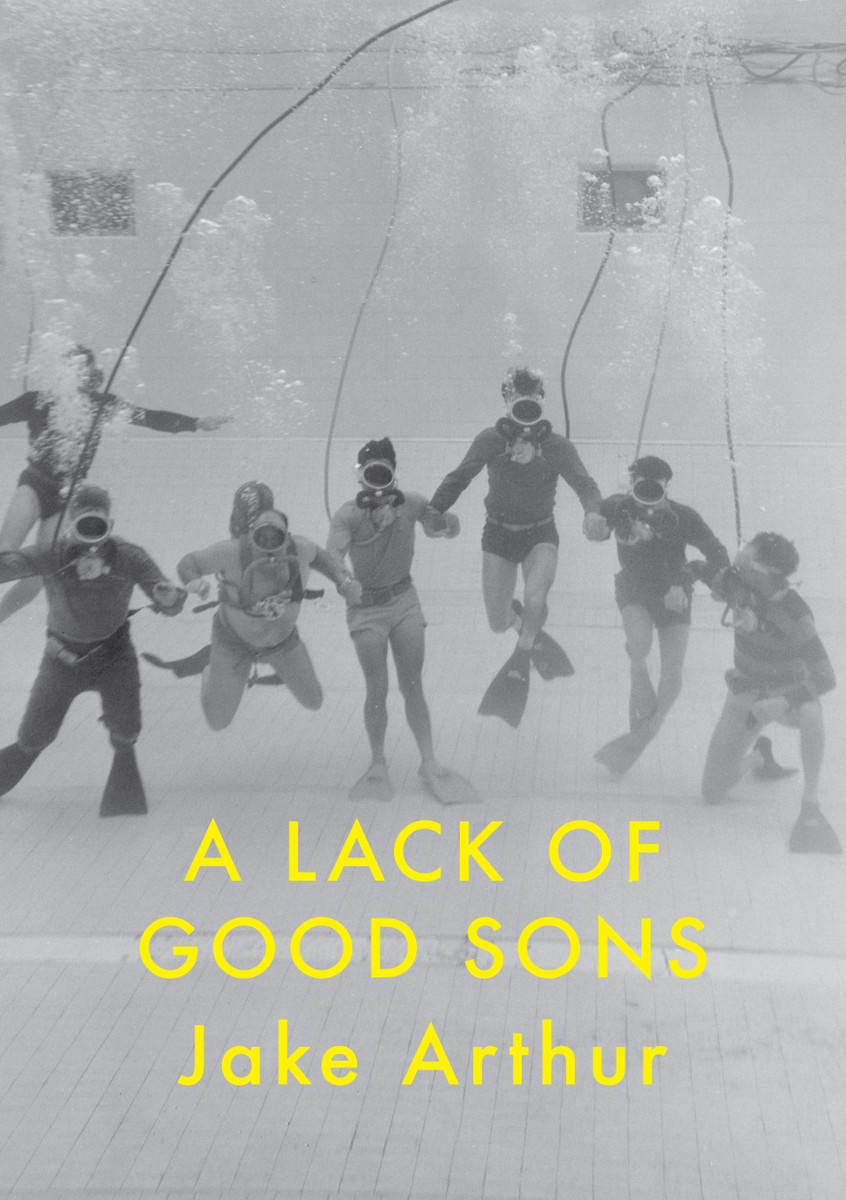
Poetry Shelf review: Jake Arthur’s A Lack of Good Sons

A Lack of Good Sons, Jake Arthur, Te Herenga Waka University Press, 2023

I cavorted through the Gobi Desert
I fell in love with a camel in Saudi
I poured pints in Kraków.

If anecdotes are a life, I have lived.
Otherwise, I’ve urgently wasted my time.

from “Peregrination”

The opening poem of Jake Arthur’s debut poetry collection, A Lack of Good Sons, is wow! A young boy witnesses a bizarre and startling sight through his bedroom window: the farmer who lives next door, stands naked in his gumboots, back to the window. Even more surprising is the mother who says the boy did that when he was younger. The poem is a perfect threshold into a collection that startles and twists, that is honey fluent, detail sharp, physically grounded and metaphysically sailing.

For me this is a travel collection – poetry as a means of travel through time, space, location, voice, perhaps memory. I could say “prismatic” which would make Nick Ascroft squirm with his abhorrence of the word “luminous” in reviews. But this is the collection’s effect on me. It is poetry that glints and hues variously, from dark to edge to light to edge to dark to softness to searing colour and more light. There is a fluidity of voice and representation, epitomised in an “I” that is on the move, third person pronouns that skate and shuffle, a symposium of characters that Luigi Pirandello might fall in love with, or Italo Calvino.

This is the kind of book you need to immerse yourself in without being dampened down by the expectations and limits a review might offer. I offer you a mini tasting platter of poem extracts. Some stanzas are so sticky you keep hold of them for ages. I love the weave and startle turns. In the multilayered “Confessional”, the poem navigates both an external world and internal consumption. The last verse is sublime:

On a pew I rest my head and look up,
the colonnade a forest to a stone ceiling;
in me, too, an awful lot of rock.

The speaking voice might be man woman son or daughter, but at other times it is object. I particularly loved the shifting perspective (a trademark of the book as a whole) of the tree that becomes boat mast in “Bare choirs”. Again I loved the final stanza:

The flap and licking
thrump of the sail is a beat,
the slapping waves an uneven melody,
but it is more dirge than music
and not a tune to sing too.

I ask myself whether I will locate a connective tissue across the collection as a whole, a link beyond recurring motifs and devices. I wondered, for example, if there is “sameness” embedded in all the difference, then I read this in “1588”:

Everything was animated.
It spun on a dime. It was umami.

Now I  know better.
There is a sameness in everything.

Physicality is a lure. It is there in the earth and soil that appear and reappear. In a deft subject sidestep in the poem “Encounter”, a gardener becomes springboard to a sci-fi anecdote, and is abducted by aliens.

                                                      (…) I’m used to getting soil out
of my clothes, being green-fingered, but first I looked up
in the hope of spotting their craft and
I did see a little black shape but
probably it was just a bird
oh well, I thought,
from a distance
everything’s
unidentified.

Reading this sublime book, I am reminded of the wit and humour, the economy and richness of a James Brown collection – and heck, there is James Brown, endorsing Jake’s book on the back cover. Jake takes us on a multi-dimensional, electrifying tour that holds human to the light and then keeps twisting and turning so can we absorb human from different vantage points. So satisfying as reader. I have barely scratched the surface of Jake’s fabulously haunting poetry. Read it!

Jake Arthur’s poetry has appeared in journals including Sport, Mimicry, Food Court, Turbine, Return Flight and Sweet Mammalian. He has a PhD in Renaissance literature and translation from Oxford University.

Te Herenga Waka University Press page

Poetry Shelf review: James Norcliffe’s Letter to ‘Oumuamua

Letter to ‘Oumuamua, James Norcliffe, Otago University Press, 2023

In these uncertain times I gravitate towards quiet poetry. It may sound corny but it is like sitting on the edge of a mountain embracing silence as a form of retreat, and then savouring the way the world is alive with sound. I find myself retreating into poetry collections as a form of balm, relishing the solitude, the complications, the edges.

James Norcliffe, recently awarded the 2023 Margaret Mahy Medal, writes with a pen fuelled by the physical world, and a sense of interiority that allows both confession and piquant ideas. His writing is witty, thoughtful, fluid and rich in movement. The opening poem, ‘Letter to ‘Oumuamua’ nails it. Dedicated to “the first known interstellar object to pass through the solar system”, the letter is as much about where it is written from, as where it is written towards. The rural scene is balm – with its hint of spring and new leaves. Yet the layers prickle as I hold onto the embedded notion that the scene is both beloved and under threat.

Poetry can be the heightened awareness of a moment, of a particular place or experience. James offers many such poems and it is impossible to hold them at arm’s length. This is a form of poetry as retreat. Take ‘The Coal Range’ for example. The poem ventures back in time to pay tribute to an aunt and a location. James slowly builds the scene with acute detail, and I am breathing in the smells, tasting the baking, and back in the embrace of my grandmothers.

The burning coal and smoke smell of Auld Reekie,
of far-away home. Pinned on the Pinex walls are
calendars: Scottie dogs, pipers and Greyfriars Bobby.

Sentiment sweetens distance, as drop scones, ANZAC
biscuits and peanut brownies sweeten the sour
pervading presence of damp coal, smoke and tea-tree.

I love the way the collection offers drift and movement, resistance to fixture. Nothing is as it seems. Everything is as it seems. “Knowing What We Are” is a gloriously haunting rendition of movement, of oscillation. The birds gather on the “shining mudflats”. I’ll share a couple of stanzas with you – then you can track down the book and read the whole poem.

Any day soon, the birds will fly
far beyond the red-rimmed horizon.

Much later they will return. Neither
here nor there is home, yet both are.

Knowing what you are, I take your hand.
Neither here nor there, I try to count the days.

‘Insomnia’ navigates the knottiness of a sleepless night; a restless mind grappling with big questions and small diversions as it fixes upon turning points in life. The what-ifs and T intersections. I muse upon the way the collection offers myriad movements from loop to overlap, from twist to slide, from spiral to scatter.

That path is no more real now than the trees on the bed. The pigeon
recovered and flew away. The child was found and lost and found again.
The woman died. The man makes you laugh and makes you weep and
makes you laugh.

He makes you weep and makes you laugh and makes your weep, but
nothing can make you sleep.

Ah, so many poems I want to share with you in this slender tasting platter. There is a sequence dedicated to Vivaldi’s Four Seasons. There is a return to childhood by way of Granity Museum. There is love and tenderness such as in the exquisite “Sauerkraut”:

(…) One pace at a time:
take care of the steps so that the miles take care
of themselves; conserving ourselves, preserving, avoiding
pretty prickles, but still pressing the white cabbage
that will be sauerkraut into a bright green crock.

There are multiple pathways through Letter to ‘Oumaumau. Numerous nooks and crannies for extended sojourn. Reading this was both solace and restoration. I picked up my pen and wrote a poem. I opened the book and returned to poetry that haunts and sticks. It’s James’s best book yet. Glorious.

James Norcliffe is a poet, children’s writer and editor. He has published 11 collections of poetry and 14 novels for young people. His first adult novel, The Frog Prince (RHNZ Vintage), was published in 2022 and his most recent poetry collection, Deadpan (Otago University Press), was published in 2019. He has co-edited major collections of poetry and short fiction, including Essential New Zealand Poems: Facing the Empty Page (RHNZ Vintage, 2014), Leaving the Red Zone (Clerestory Press, 2016), Bonsai: Best small stories from Aotearoa New Zealand (Canterbury University Press, 2018) and Ko Aotearo Tatou: We Are New Zealand (Otago University Press, 2020). He has had a long association with the Canterbury Poets’ Collective, takahē, the ReDraft annual anthologies of writing by young New Zealanders and, more recently, Flash Frontier.

Otago University Press page

Poetry Shelf review: Frankie McMillan’s The Wandering Nature of Us Girls

The Wandering Nature of Us Girls, Frankie McMillan, Canterbury University Press, 2022

The feel of a book in hand matters. Holding Frankie McMillan’s new collection, The Wandering Nature of Us Girls, is immensely satisfying. The size and shape, the paper stock, the pale blue title pages, the choice of font and font size, the breathing space. A perfect alchemy of design and production.

The dedication page: “For Marvin, / who taught me how to wander. / Without you, I would never have gotten lost.” This is the keyhole entry into a book where wandering becomes wondering; we get lost in wonder and wander, whether reader or writer. The collection of small stories performs bridges between both, in so many delicious ways. Even me naming the pieces is a mental excursion through form and label; how we tag what we write from poetry to prose to essay to fiction to short story, and any number of hybrid marriages.

The book is offered as small stories so I am running with that. Think mouthfuls of narrative or let’s say fiction. Think past and present. Think stepping stones from the miniature to wider issues, issues hungry for human attention: love, death, loss, violence, curiosity. Think anchors in the real, and offshoots in the hyperreal, sidelines in the surreal.

Water is the connective tissue, and if you think of the ever-changing appearance and movement of water, it is extremely apt. Frankie often crafts long sentences, sentences an Italian novelist might favour, sentences that showcase the currency of water. Extended tidal rhythms, the water breathing in and out. It makes me think again of wander, and the flâneur comes to mind, the bricoleuer, with both reader and writer meandering, amassing detail, absorbing atmosphere.

Water is the connective tissue and like the ocean it is a meeting ground of dark and light. The grandmother goes swimming, others go swimming, but there are drownings, there are bodies missing at sea. This is a collection of mystery, of gaps in the narrative, of surprising turn of events, of tragedy. Most definitely tragedy, terrible twists in events. The aunt who loves sweeping stays home in the flood, sweeping out the water, until the point she is on the roof, still sweeping, still sweeping, until she and broom and house are swept away.

There is such power in Frankie’s imagination. A beaked mouth, an antlered head. A baby under a tree writing a thesis on “aerial domesticity”. There are the acrobatics of circuses, of putting on a show. There are the subcurrents of our planet under grave threat. The tragedy we must face. Along with violence against women, ‘us girls’, and suddenly, slowly, the meandering takes on a greater insistent force. We are wandering and wondering, and there are consequences, cause and effect.

The mood and ideas a book generates matters. The Wandering Nature of Us Girls is less concerned with geography than with movement, with action, with human connections. It is a handbook of curious and gut smacking things. It is a book you feel as well as a book you think. It is a book of catastrophe and a book of epiphany. Small story brilliance.

Frankie McMillan is the author of five books of poetry and short fiction. Her most recent collection, The Father of Octopus Wrestling, was listed by The Spinoff as one of the 10 best New Zealand fiction books of 2019 and shortlisted for the NZSA Heritage Book Awards, and her 2016 collection, My Mother and the Hungarians, was longlisted for the Ockham New Zealand Book Awards. She has twice won the New Zealand Flash Fiction Day competition and has been the recipient of numerous awards and residencies, including the NZSA Peter and Dianne Beatson Fellowship (2019), the Michael King writing residency at the University of Auckland (2017), and the Ursula Bethell residency in creative writing at the University of Canterbury (2014). McMillan spends her time between Ōtautahi Christchurch and Mohua Golden Bay.

Canterbury University Press page

Girls Raised by Swans on Poetry Shelf (‘Accounts of Girls Raised by Swans’)

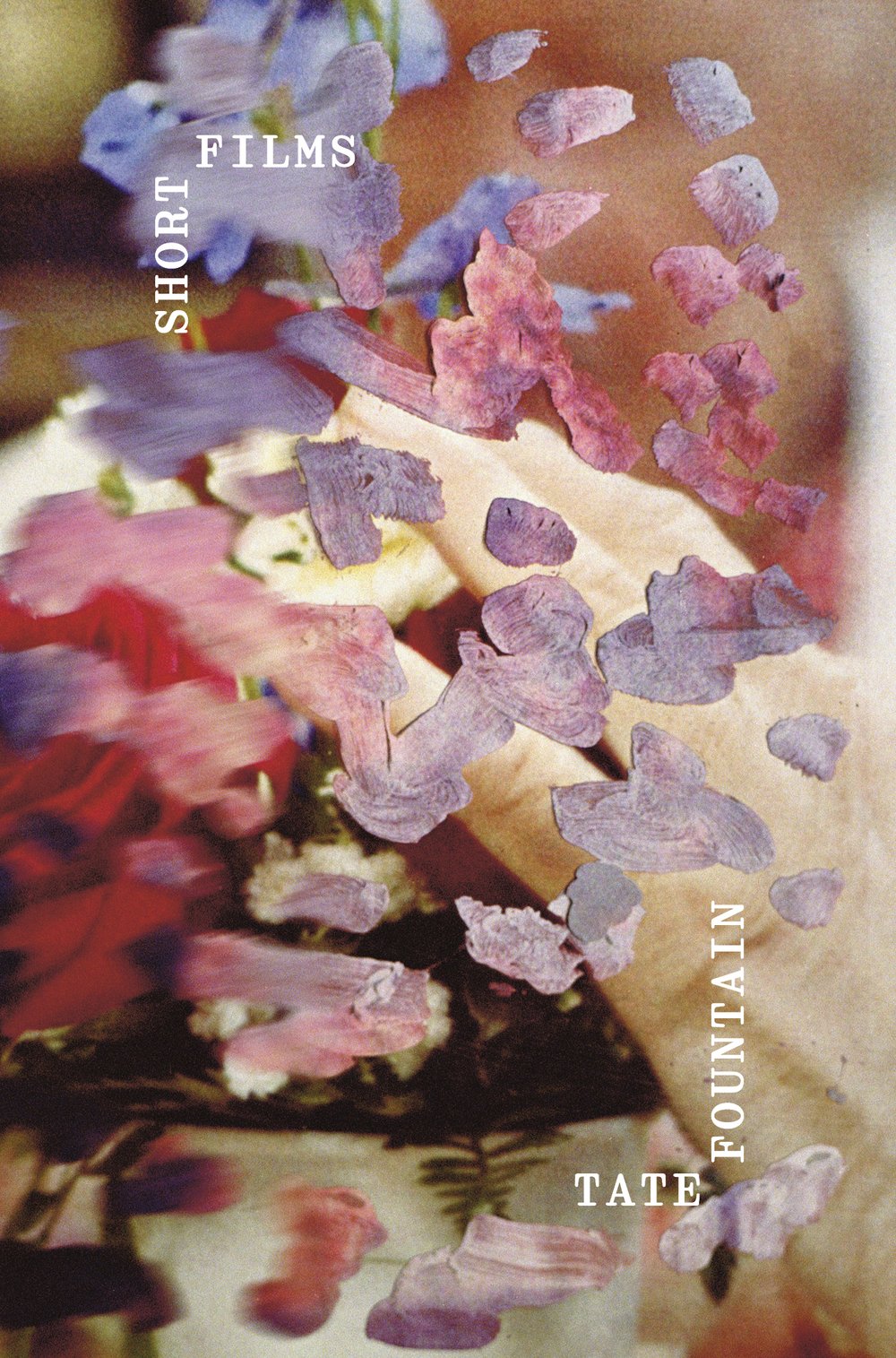
Poetry Shelf review Tate Fountain’s Short Films

Short Films, Tate Fountain, We Are Babies, 2022

and I, well, I have had practice at this; I am far
better attuned to wanting things than I have ever
been to having them, and the day is clear, and the
scent of the kitchen of each nearby restaurant is
carrying. I am alive, and I am settling in, and I have 
in my hand at last something I could not bear to lose, 
some fibrous imperfect gift of a life in the place of
theoretical triumph: blistered heels and my mother’s 
old dress and a self I can face in the mirror; three 
long-stemmed lilies wrapped in cellophane, an 
unripe blushing hydra, five dust-pink tongues 
unfurled to catch the light.

from ‘SUNDAY, 7 NOVEMBER’

Love the idea of a poetry collection called Short Films, especially when it isn’t lifted from a poem title in the book. At the back is the director’s commentary, a HEX index and credits. Rhythm is a vital ingredient in the collection as a whole, the poet’s editing suite has resisted long slow panning camerawork. Instead there are jumpcuts and oblique camera angles, fascinating montage and hypnotic soundtracks. It is an opulent surprising reading experience, that depends upon the visual as much as the aural.

For some reason I made a leap from activated hazelnuts to activated language. Tate’s linguistic agility is spellbinding. Her language is alive, mobile, playful, inventive, active. The word activate is counterbalanced by bracketed space that is rich in possibility. At times it is a blank slate for the reader to scrawl upon, a foyer for musing points, a series of silent beats, a signpost to the unsayable, the unsaid, the gaps in the telling. They strike the eye and they resonate in the ear.

Colour is ubiquitous. Colour pops on the line, sparks across the wider scope of the book. There are individual colour poem clusters. You move from yellow-rayed blossoms to summer to pineapple, and housed in that yellow embrace is ‘a riverside lunch with my mother / We are learning again / / how to be around each other’ (from ‘Yellow’). It is the heightened power of metonymy where you place this shot next to that shot next to this shot. This frame next to that frame next to this frame. Feeling, experience, reaction is heightened.

A stripped back blackout poem uses a prose poem we have just read. I was reminded of how certain words pierced and stuck as I read. And there they were, isolated in the dark black shapes. Tate is taking a form, a convention and then playing with it, pushing it further.

In the inside blurb, the book is aptly compared to ‘a lush bouquet of poems’. I step from the flowers and the fruit, like brocaded still life, like kinetic life, finding mouth and heart, finding float and drift, the light and dark of chiaroscuro. The poetry is bouquet, held out to ignite the senses, but it is also mirror, looking glass for both reader and writer. Love is paramount. YES! These are love poems, heart poems, little outings with glints of self exposure. One poem, ‘LOVE POEM’, plays with ‘I want’, think light and serious, and you move to and fro, between need and desire.

Short films is, as Anna Jackson and Emma Barnes say on the back of the book, wonderful. It is a terrific cinematic experience, Maya Deren flashed in my head, where rhyme feeds motifs and subject matter, and rhythm performs the syncopation of daily life, of love life, of heart life. Utterly wonderful.

stop looking for me in my work /
I am not there /
you are in a hall of funhouse mirrors

from ‘ORANGE’

Tate Fountain is a writer, theatremaker, and DVD Special Features advocate splitting her time between Tāmaki Makaurau and Tauranga. She is a current member of the Starlingeditorial committee, and also works as the coordinator for samesame but different, Aotearoa New Zealand’s LGBTQIA+ Writers and Readers Festival. As an assistant director, actor, and stage manager, she’s worked with Auckland Theatre Company, Binge Culture, and the Pop-up Globe, as well as at Basement Theatre. Her poetry has been published in eel, Aniko Press Magazine, and Min-a-rets (Annexe), among others, and her screenwriting has been recognised by several feature development initiatives. She completed her Master of Arts (First Class Honours) at the University of Auckland, with a thesis on appropriations of the Eurydice myth by H.D., Carol Ann Duffy, and Céline Sciamma. Each month, she releases a new bouquet on Substack. She’s pretty much always thinking about films.

We Are Babies page

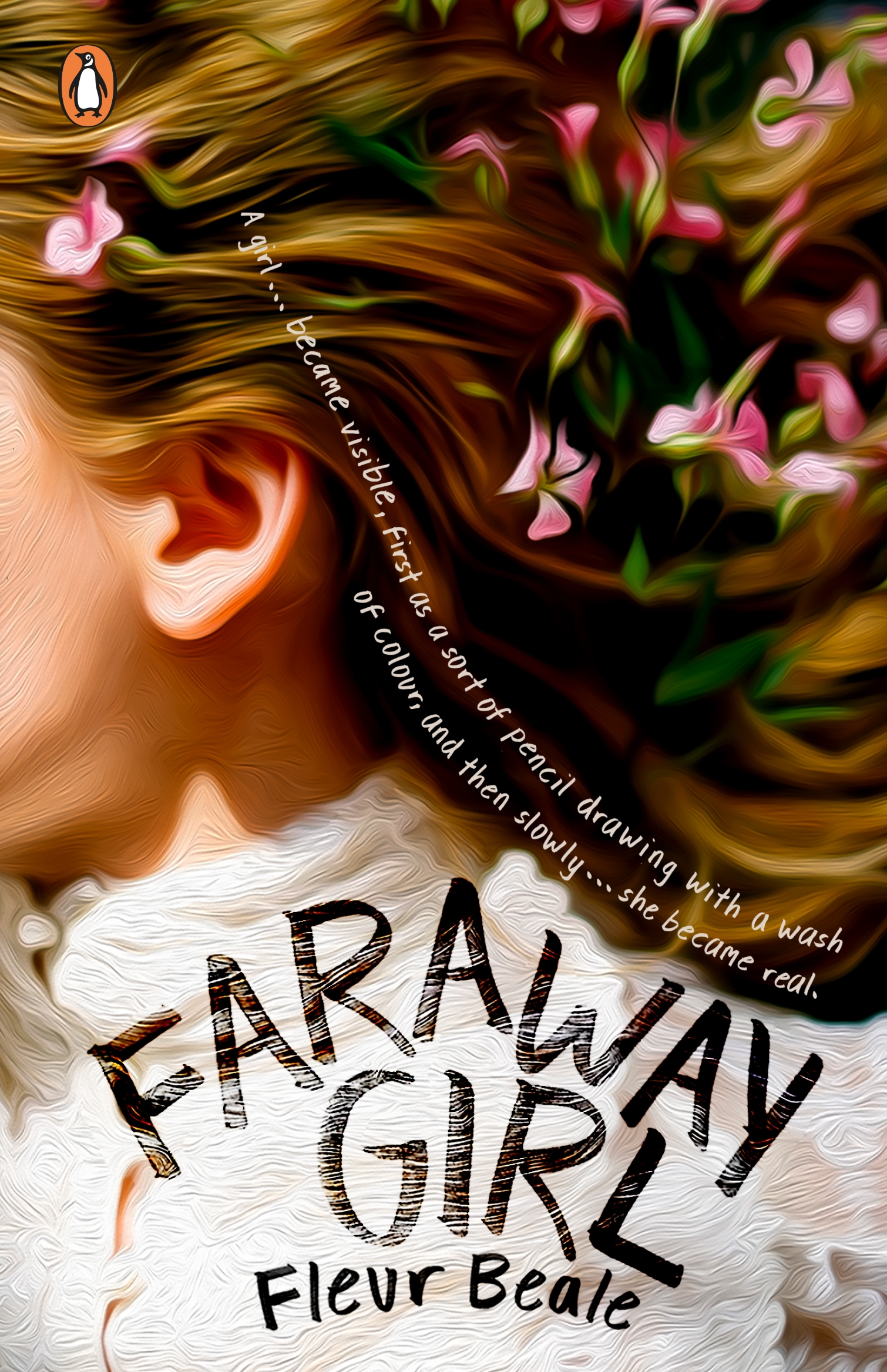
Poetry Shelf review Fleur Beale’s The Faraway Girl

The Faraway Girl, Fleur Beale, Penguin, 2022

Without planning it, I have been reading a bunch of Aotearoa children’s and YA ghost novels. And so far they have been excellent! Fleur Beale’s The Faraway Girl is a YA ghost story that works on so many levels. It underlines why I am a devoted book fan. Novels can divert, amuse, entertain. They can challenge you at the level of feeling and of ideas. They might reflect parts of the world back to you – in ways that are refreshing, transformational, revealing. Things you have forgotten, things you never knew.

Fleur’s novel is so very satisfying. It is action plus, heart-in-the-mouth paced, character rich, dialogue smart. I love the ghost story but I also love the way I engage with both our contemporary time and with 1869. The key issue: what is it like to be a girl or a woman in England 1869 and in Aotearoa 2019. I become the eavesdropping ghost amassing rekindled despair at how it was for women in 1869 – how they were owned and shared, were without rights and chattels, were straitjacketed under corsets and awkward clothing, how they could seldom speak their minds as their minds were consistently denigrated, how they were baby factories. Fleur layers such piquant detail the misogynistic world is bitingly real.

But I am also musing on how things are for women and girls now. So much has changed, our lives are so much better and freer, and more independent. Yet no way are we there yet. Look at how our Prime Minister is treated compared with how men Prime Ministers are treated. If the All Blacks had been playing in a World Cup tonight, the Herald would have been full of it – instead it’s half a page for the Black Ferns. Not forgetting the curious and disturbing responses to men treating women badly, in law courts and politics. We still do not have equity.

Today a brilliant ghost novel got me re-viewing women’s issues, issues that I explored at university, in the theses I wrote, and in the anthologies I have edited.

I love Fleur’s book so much. Every teenager should read it. Get thrilled by a ghost story tugging you to the last page, and muse upon how we need to work harder to remove gender bias, privilege, hierarchies, ignorance. We cannot hold white men as the norm, the standard, the voice of authority.

I hold this sublime book to my heart. It is both entertaining and an essential challenge. Novels like this underline the power and value of books. A glorious reading day.


Fleur Beale is the author of many award-winning books for children and young adults — she has published more than 40 books in New Zealand, as well as in the United States and England. A former high school teacher, Fleur was inspired to write her acclaimed novel I Am Not Esther when one of her students was beaten and expelled from his family for going against their religious beliefs. Fleur is a leading advocate for New Zealand authors, and home-grown literature for children and young adults.

Penguin page

Poetry Shelf Occasional Reviews – Alice Te Punga Somerville’s Always Italicise: How to write while colonised

Always Italicise: how to write while colonised, Alice Te Punga Somerville, Auckland University Press, 2022

And then you skype with me late one afternoon to practise your speech
which begins with your
pepeha as if that is the most ordinary way to start
when you’re eleven years old.

How were we to know – even to guess – that this language would be your weapon
Your strategy
Your bullet-proof vest

from ‘Anchor’

Alice Te Punga Somerville’s new collection offers four vital sections: reo / invisible ink / mahi / aroha. Sections in their own right but the discrete boundaries blur as movement and connections abound. The categories strike a chord, deep seated, poignant, as though this exquisitely designed book becomes a register of life – how we speak, how we are unseen and unspoken, how we work, and how we love. Importantly, how we become.

Alice was once told foreign words need to be italicised, to be rendered apart from standard English. This alienating process includes te reo Māori. Yet some words are adopted by English and slip off tongues without e-strange-ment: think pizza, pasta, cappuccino. Think haka and marae. Inconsistent. Alice puts the shoe on the other foot and italicises the English language leaving te reo Māori as notforeign. It is poem performance yes, but more importantly it is action.

The overturned italics convention, carried across the length of a book, is an insistence. It is personal, it is political and it is ancestral. We are what and how and why and where and who we speak. The historical and contemporary silencing, the historical and contemporary othering of language is inexcusable.

Alice’s poems are writing on the breath, breathpoetry, utterly fluid; it is writing on the breath of memory, story, change, ideas, feeling. Her poems carry the rhythm of life – of reo, invisible ink, mahi, aroha. There is the rhythm of prayer and the rhythm of waiata. The poetic rhythms and crafted fluencies carry the reader across eclectic subject matter.

Alice is spotlighting indigenous worlds, an indigenous presence, replying to colonised worlds. She is building a poem space and a poetry home. Many poems are dedicated to other people, underlying the idea we write within nourishing communities of readers, writers, thinkers, mentors. And for Alice, this includes the academic, acknowledging her poetry is in debt to her life as an academic. The academy is joy but it is also challenge, with settings that are racist, privileged, biased.

Books reach us at different times and in different ways. As readers we establish myriad travel routes through a book, we bring our own experience close or hold at a vulnerable distance. Books are my life rafts at the moment. With the road ahead still bumpy, still uncertain, I hold language and love close, I work and take little steps each day. I see Alice’s glorious, ground-establishing poetry collection as her mahi, her aroha. It is a book spiked with anger and it is a book stitched with love. It has made me smile and it has gripped my heart. It is the most affecting book I have read this year.

Pick up coffee cup and printed pages, open the screen door, walk back inside.

My eyes take longer to arrive than the rest of me:
they’re still adjusted for the brightness outside;
I bump into things, blind, while I wait for my whole self to arrive,
and realise this is the only worthwhile way to proceed anyway –

All of me, all at once:
anger, frustration, cynicism, hope
and, in the centre as well as the outer reaches, love.

from ‘Too’

Alice Te Punga Somerville, Te Āti Awa, Taranaki, is a scholar, poet and irredentist. She researches and teaches Māori, Pacific and Indigenous texts in order to centre Indigenous expansiveness and de-centre colonialism. Alice is a professor in the Department of English Language and Literatures and the Institute for Critical Indigenous Studies at the University of British Columbia. She studied at the University of Auckland, earned a PhD at Cornell University, is a Fulbright scholar and Marsden recipient and has held academic appointments in New Zealand, Canada, Hawai‘i and Australia. Her first book Once Were Pacific: Māori Connections to Oceania (University of Minnesota Press, 2012) won Best First Book from the Native American & Indigenous Studies Association. Her most recent book is Two Hundred and Fifty Ways to Start an Essay about Captain Cook (BWB, 2020).

Auckland University Press page

Poetry Shelf Occasional Poems: Emma Neale’s ‘Little Fibs’

Little Fibs

Let us praise
the small evasions:
the missed call
the slight sore throat,
the prior engagement;
the short works of fiction
that act like the turn of a key,
the snib of a front door’s fly screen
which mean we can try to forge the silence
that ferries us to the hinterland of the wildest interior.

Emma Neale

Emma Neale is the author of six novels,  six collections of poetry, and a collection of short stories. Her novel, Billy Bird (2016) was short-listed for the Acorn Prize at the Ockham New Zealand Book Awards and long-listed for the Dublin International Literary Award. Emma has received a number of literary fellowships, residencies and awards, including the Lauris Edmond Memorial Award for a Distinguished Contribution to New Zealand Poetry 2020. Her first collection of short stories,  The Pink Jumpsuit (Quentin Wilson Publishing, 2021) was long-listed for the Acorn Prize at the Ockham New Zealand Book Awards. The mother of two sons, Emma lives in Ōtepoti/Dunedin, where she works as a freelance editor.