Author Archives: Paula Green

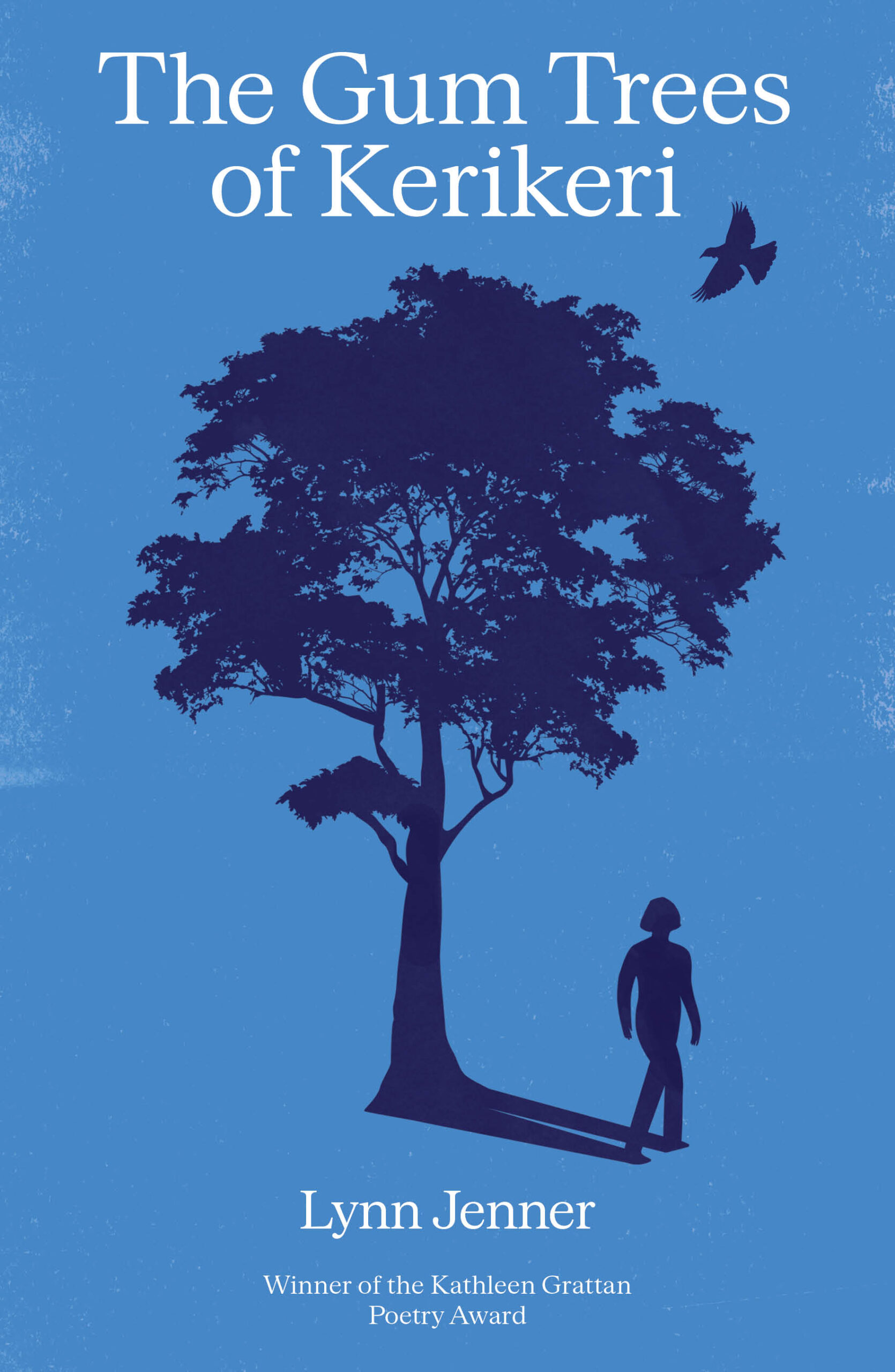
Poetry Shelf Pocket Reviews: Janet Newman on Lynn Jenner’s The Gum Trees of Kerikeri

The Gum Trees of Kerikeri, Lynn Jenner
Otago University Press, 2026

41.

Our talk has no official beginning, no structure and no
official end: it starts when the first person says what has
been on her mind; that could be the problem of finding a
parking place at the supermarket at New Year, or it could
be that she has planned a trip and her husband doesn’t
want to go; no-one is criticised or blamed, including the
husband: our conversation is a river with eddies and
currents. We have children who fight with us as though
we were the enemy; men who have taken themselves off
to other countries and left us with mortgages; we have
diseases with scary names: this is deep water but we are
not scared of deep water. We make gardens, we paint, we
write songs and poems, we record stories from the past
and we create adventures for ourselves so that our spirit
won’t slowly die: there are cool shady pools in this river.
We are not optimistic for the earth and its people, but we
think the best idea is to be as optimistic as possible in our
personal lives. Someone always says that and although
we all look a bit shifty and our eyes slide away, we nod.

Lynn Jenner

Poems in The Gum Trees of Kerikeri are disarmingly matter-of-fact given their subject matter: existential crises, climate catastrophe, war, alongside the things that make life worth living: rivers, trees, the sweet taste of fruit. They offer daily optimism while also asking the hard global questions: Is this the age of the death of the planet? Do you see deliverance and redemption anywhere? Is this the Promised Land? And most chillingly, given that the collection was written before the current war in the Middle East, are we there yet?

Referencing the work of philosphers, writers and artists, Jenner doesn’t provide solutions, rather different ways of looking. She draws connections betweeen disparate thoughts leading to a sense of gentle yet rigorous reflection. In one poem, she tells us Ursula Le Guin searched near the end of her life ‘for a way to resist the unfolding political and environmental catastrophes of these days.’ This quotation perhaps summarises the collection’s raison d’etre. Yet this is not a pessimistic book. It is a journey of enquiry in a life filled with everyday joy and confusion. Each poem feels satisfying yet curious: a small offering of humanity with a grounding effect at a time of crisis.

Janet Newman

Janet Newman is a poet, editor and farmer from Horowhenua. She holds a PhD from Massey University for her thesis: ‘Imagining Ecologies: Traditions of Ecopoetry in Aotearoa New Zealand.’ Her collection Unseasoned Campaigner (OUP, 2021) won the 2022 NZSA Heritage Book Award for Poetry. She is an editor of Koe: An Aotearoa ecopoetry anthology (OUP, 2024). 

Lynn Jenner is the author of Peat (OUP, 2019), a collection of essays and glossaries which consider the construction of the Kāpiti Expressway in the light of aesthetic and ecological ideas drawn from the writings of Charles Brasch. Lynn’s first book Dear Sweet Harry (AUP, 2010) won the NZSA Jessie Mackay Best First Book of Poetry prize and her second book Lost and Gone Away was shortlisted in the Non-Fiction category of the Ockham New Zealand Book Awards. Lynn lives in Waipapa, near Kerikeri.

Otago University Press page

Poetry Shelf noticeboard: Airini Beautrais & Maggie Cocco at Poetry Live

Guest poet: Airini Beautrais
Guest musician: Maggie Cocco
Open mic.
Emcee: Rhona

Koha please for our wonderful artists.

First-time readers are warmly welcomed and encouraged!

When: Tuesday (21/7/26), 7.30 pm -10.30 pm
Where: 39 Bar & Café, Ponsonby Road

Guest poet

Airini Beautrais writes poetry, fiction and non fiction. She is the author of five collections of poetry, most recently Salt Quilt (Te Herenga Waka University Press, 2026). She is also the author of the collection of short fiction, Bug Week, which won the Jann Medlicott Acorn Prize for Fiction at the Ockham NZ Book Awards in 2021, and the essay collection The Beautiful Afternoon, for which she won the Janet Frame Literary Trust Award. She lives in Whanganui.

Guest musician

Hailing from metro Detroit, Maggie Cocco’s dedication to exploring the depth, breadth, and profundity of music has seen her perform in stadiums with legacy artists, galleries with avante garde expressionists, and many people, places, and musics between. Driven by a commitment to her global community, Maggie Cocco Music offers patron subsidized Pay What You Can services and contributions to various arts and social justice movements and organizations, weaving her passions into the fabric of her work. An independent artist, Cocco is based in Northland, New Zealand where she composes and runs community music programming between tours.

Poetry Shelf Playing Favourites: Damien Levi picks Liam Jacobson

THE DAY MELTS AMONG ME 

at like 5.30/6ish
when the wind is heavy with gold 
and there’re soft shadows of glass, dancing 
every afternoon on old wallpaper 
painted a sick ivory by the landlord 

and while the mountain of rats 
that insulate the walls are still dormant 
or else plotting their heist of my coleslaw 

and an ancient draught bleeds ice 
thru the foot of my front door

and black mould is like frost on the ceiling 
that’s sagging with age to the floorboards 
and a garden of weeds climbs to your hip 
thru borer holes 

and i’m down to, like 
the last third of a bottle of old birthday whiskey 
listening to mississipi john hurt hurt with me 

rich on winz fraud 
in the wet light of the early evening 
dreaming of somebody sweet 

about then, 
when i’ve endured myself long enough 
to welcome the hour of angels 
I find my breath heavy with calm 

Liam Jacobson
from Neither, Dead Bird Books, 2023

Much to Liam Jacobson’s chagrin, I have lip-synced along to this poem (often incorrectly) at many places and spaces across Tāmaki Makaurau. One of my favourite contemporary New Zealand poems, ‘THE DAY MELTS AMONG ME’, paints a specific picture, though with a much more discerning hand than a landlord’s. 

It’s one of a messy, unfocused youth; of listlessness and misdirection in housing stock barely fit for habitation. While not a universal experience, it’s a familiar one, especially for those who have grown up working class and/or Māori, been a student or on a WINZ benefit.

While the poem feels like a lament of their living situation, there’s also a fondness, a nostalgia or a contentment. When you have a third of a bottle of whiskey, some coleslaw in the fridge and a few dollars drip-feeding your bank account, how can you complain?

Many of the sibling poems to this one, featured in Liam’s debut collection Neither (Dead Bird Books, 2023), are more amorphous and shrouded in metaphor. They require you to pull at the threads to unpick the meaning. I appreciate ‘THE DAY MELTS AMONG ME’ in context to these, as the imagery is strong, clear and in focus. One can psychically transplant themselves into this drafty, paint-glossed flat through the stanzas. The effect is heightened if you’re listening to Liam read it.

I love many of the lines, but one that stands out in particular for its playfulness and aural ping-pong is “listening to mississipi john hurt hurt with me”. The Blues take on many meanings here, and the chilly hallway becomes a lonesome valley one must walk alone. But the poem gives us solace (or sadness anew) as it closes, with the fact that when all has melted away, there’s a calm to acceptance.

Damien Levi (Te Āti Haunui-a-Paparangi, Ngāti Tūwharetoa, Ngāpuhi, Pākehā) is a publisher, editor and arts facilitator. He is the founder of Āporo Press, editor of the essay collection Tāmaki Makaurau 2025: Essays on Life in Auckland (2025), co-editor of Spoiled Fruit: Queer Poetry from Aotearoa (2023) alongside Amber Esau and was the lead editor for the online arts and literature journal, bad apple. His poetry and essays have been published online and in print.

Liam Jacobson (Kāi Tahu) is a poet, curator and artist (etc.) from Manurewa, South Auckland.

Poetry Shelf noticeboard: Poetry Competition for adults who write poetry for children

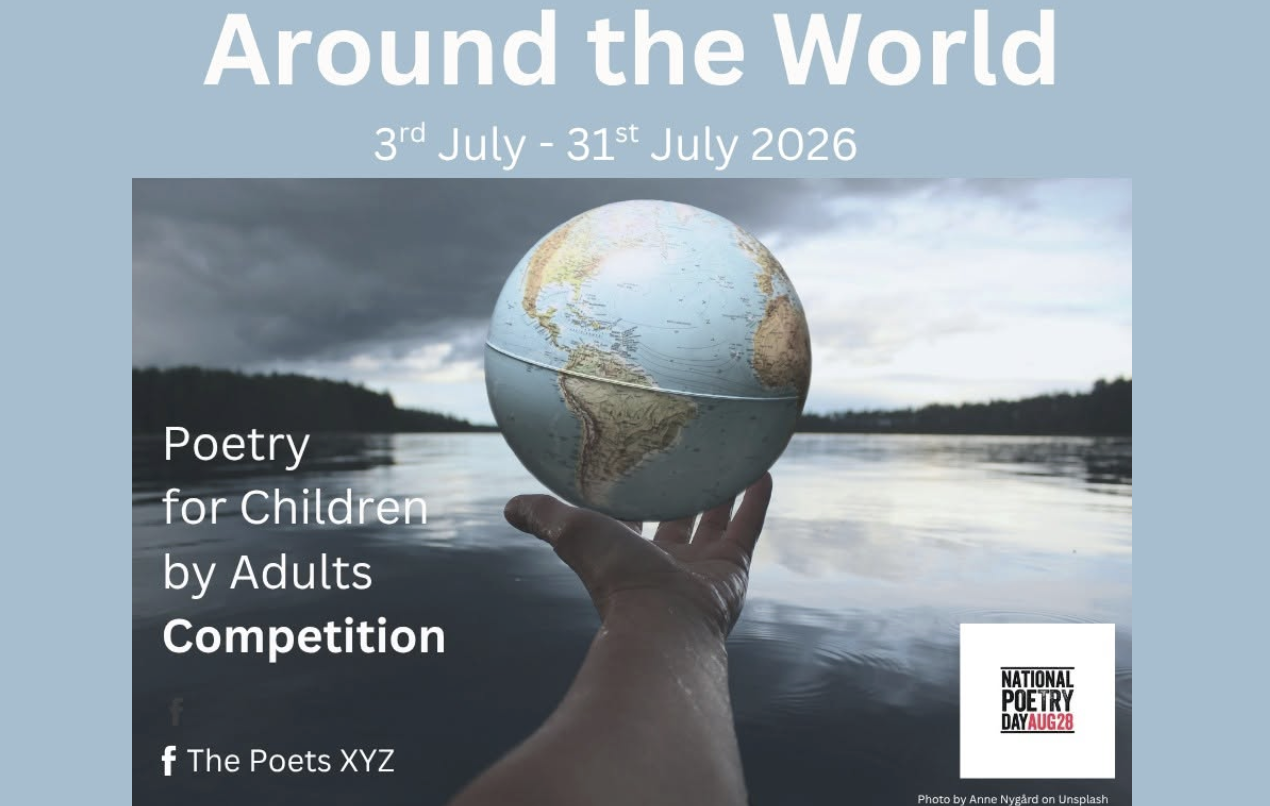
In the lead-up to National Poetry Day 2026, the Poets XYZ are running a nationwide competition for adults who write poetry for children.

Timeline: open now – closes midnight Friday 31st July 2026

Winning poems to be celebrated on National Poetry Day, Friday 28th August 2026

Theme: ‘Around the World’ – to be interpreted as widely and wildly as entrants like

Winning poem: $50 book voucher

Judge: Renowned children’s writer and poet, Bill Nagelkerke

Criteria:

• Entry is free

• Open to anyone in New Zealand aged 18 years and over

• Send in up to three poems aimed at 5-12 year olds

• There is a 25 line limit per poem

• Poems should be previously unpublished (including not on private blogs, websites, social media)

• Poems should be all your own work and not have any AI generated content. Any poems found to have AI generated content will be disqualified.

• Poems should be written in English

• Previous winners are welcome to enter.

To Submit:

• Poems should be in a single Word document. Please use the title of your first poem as the file name for this document. Please don’t include your name anywhere in this document

• You will need to provide a short author bio including a sentence or two about why you write poetry for children (up to 100 words)

• Preferred method: Completing the online entry form (requires Google account) here 

• Alternative method: Emailing your Word document to thepoetsxyz@gmail.com. Please put Around the World Poetry Competition in the subject line. In the body of your email please include your name, the title(s) of your poem(s) and a brief author bio (up to 100 words) and 2-3 sentences about why you write poetry for children

The Fine Print:

By submitting an entry, you are consenting to your poem:

• being promoted as part of National Poetry Day 2026 which may include being published in whole or in part on social or other media;

• being published on social and other media to promote poetry for children in New Zealand and any future poetry for children competitions run by The Poets XYZ for National Poetry Day.

• being used in future digital or printable media to promote poetry for children in New Zealand

Writers will retain copyright of their poems. Unfortunately it is not possible to provide personal feedback for each entry we receive.

Thank you to National Poetry Day, SLANZA and BookHub for their support for this event.

For more info email thepoetsxyz@gmail.com or visit us on Facebook at The Poets XYZ

Poetry Shelf Speaks Out: Practical Navigation by Lyndsey Knight

Practical Navigation                                                                                     

1.
I sit at a moon filled window
sail off to far away lands
he slides ship biscuits under the door.

I need time to consider this leaving
heal the bruises, soothe a heart
burned black.

I roll about on the window-ledge
like a bird trapped in an egg
wanting, but unable to hatch.

2.
My eyes, like hurricane warnings
burn red with two black centres.
you are standing into danger.

It’s as if I am undergoing a speed trial here
dry land is receding fast       I wobble
it would be wise to keep clear of me.

I am maneuvering with difficulty
feel your way past me with care.
help me          don’t help me

3.
NC   –    (am I in distress?)
F      –    (am I disabled?)
communicate with me
CXL       CXL       C  X  L 
(do not abandon me)
hold me    until I am there
not lost.

Lyndsey Knight


Note:

Flag Signals from Charles H Cugle’s 1936 Code of Practical Navigation:
A =I am undergoing a speed trial
D = keep clear of me I am maneuvering with difficulty
F = I am disabled, communicate with me
R=. you may feel your way past me
U = you are standing into danger
X = stop carrying out your intentions
NC = I am in distress
CXL = do not abandon me

The Hurricane Warning.—Two storm flags (red with black centres), displayed one above the other, are used to announce the expected approach of tropical hurricanes.

Lyndsey Knight is an Auckland writer of poetry, flash and essays. She creates hybrid works of written word and abstract collage. Her work has been published in various anthologies and journals at home and abroad, including Landfall, The Miller’s Damsel, Ginosko Literary Journal, The Ekphrastic Review, Mindfood, NZPSA etc.

Poetry Shelf Monday Poem: Crossing by Rhian Gallagher

Crossing

We crossed too soon at Pearl Flat
and found ourselves lagged on a kind of island
backward looking into the future; it was dusk
when we made that mistake, not knowing
it was a mistake, pegging the tent to the river meadow

event cascading to event, all night
the rain outpaced our breathing; the morning woke
slumped under the glossy rock sheets, the waterfalls
bursting from their plaits

below in the mizzle, the rain raining, tussocks
siphoning the fall into their throats. Our mood
darkened like the front – our sodden coats,
the tent sagging like a body in pain

yet, would we ever again
spend so many hours
close-reading a river
with an almost intimacy
rehearsing our long diagonals
through tangles and water-weight
the glittery flutterings.

We made a mistake, such were our days
on Pearl Flat, then the river rose and swept
what-was-left of our plans away.
We don’t own anything the sky seem to say
even ourselves we don’t own
the weather comes – it’s out of our hands.

Rhian Gallagher

Rhian Gallagher grew up in Aotearoa New Zealand. She then lived in London for 18 years, returning to Aotearoa in 2006. Her first poetry collection Salt Water Creek (Enitharmon Press) was shortlisted for the Forward Prize for First Collection, 2003. Her second collection Shift (Auckland University Press) won the NZ Post Book Award 2012. Gallagher was the Robert Burns Fellow in 2018. Her latest collection Far-Flung (AUP) was long-listed for the Mary and Peter Biggs Award for Poetry (Ockham Book Awards) 2021.

Poetry Shelf weekend reading, listening and an invitation

Dotterel

Little whistle
little dartaway
I can hardly hear you
What’s that you say?

follow me follow me

Little pepperpot
little run-a-lot
all a-fluttering
all a-scurrying

just over here just over here
this way please this way please
oh look I’m hurting

Little feathers
little broken wing
over-here no over-here
leading and retreating

follow me follow me
oh no I have no family

all salt and sand
all salt and sand
smaller than my clumsy hand

follow me follow me

Bill Manhire

This past week I have discovered the joy of reading a poem slowly at 5 am, in the movement from dark to light and birdsong. I started with Bill Manhire’s poem ‘Dotterel’, but I loved reading it so much, I read it across the week. I filled to the brim with the joy and the scope of what words can do. The music, the dotterel rhythms, the personal links to the endangered dottorel at Te Henga and the communities ongoing endeavours to protect them.

I got musing on poetry as music echo chamber – as Bill does so deftly but also as an echo chamber of ideas and experience, whether personal or political or imagined.

“‘Dotterel’ is one of five poems about New Zealand birds originally commissioned by the Chamber Music of New Zealand Trust to be set by Gareth Farr for baritone Julien Van Mellaerts. (The other four birds I tried to voice were the extinct huia, the saved-from-extinction takahē, the tūī, and the kiwi.) I remember many happy family summers at Opoutere where parts of the long beach there have become breeding space for dotterel. Every year it was hugely uplifting to meet the tiny dotterel, so brave in protecting their nests from clumsy human beings and (sometimes) their exuberant dogs.” Bill Manhire

So it’s a high recommendation from me, if you are wide awake at 5 am, try dwelling on a poem in the unfolding light.

And as we remember those who have left us this weekend, and contemplate new beginnings, I offer Matariki greetings.


Monday: Monday Poem – ‘All the world’s a stage, & all the poets have main character energy’ Chris Tse This poem has struck readers deeply as so many of us hold AI at arm – or should I say pen’s length.

Tuesday: Poetry Shelf Speaking Out To For With – ‘Radiogram’ by Bee Trudgeon And this struck a chord with me personally, as I am still so dependent on the care of doctors and nurses and a stretched health system.

Wednesday: Poetry Shelf Breathing Room – ‘Empty Coat Hangers’ by Joy Sharp And this poem. Try reading this at 5 am. Poetry as ache and grief and

Thursday: Poetry Shelf review – Dinah Hawken “There are so many pathways through Dinah’s stunning collection, so many glades to linger in, so many vantage points where you can stand or sit to absorb the shifting moods of sea and sky, so many trails into the rugged war-smashed greedy world, into living and dying, into aging and becoming, into mourning the dead. Into the ocean at fingertips and the mantra meditation.”

Friday: Poetry Shelf review and reading – some helpful models of grief by Hana Pera Aoake As my review underlines, this book: “And when I listen to the rhythm, the words spilling and coiling and arching and arcing, I am absorbing the poetry so very deeply.”

Grateful thanks to everyone who reads and shares Poetry Shelf posts, and responds to invitations.

I am very sorry but in order to manage my tiny energy jar I do not publish unsolicited poems.

An invitation: Choose a poetry book published in Aotearoa in 2025 or 2026 and write a paragraph in response to why you are drawn to the book. With permission from the poet/publisher I could include a poem. paulajoygreen@gmail.com

My public postal address: PO Box 58, Waitākere, 0660

Poetry Shelf noticeboard: Writers on Monday – Helen Rickerby, Airini Beautrais, Haro lee

Debut poet Haro Lee’s Watching Television in a Love Motel takes on self, family, and past though the cultural lens of TV. Helen Rickerby’s genre-bending poetic memoir, My Bourgeois Apocalypse, is made with fragments from journals of the ‘weird years’, including the pandemic, while Airini Beautrais’s return to poetry finds her crafting a portrait of an uneasy time in The Salt Quilt, both sharp-witted and self-aware.

These three innovative poets are joined by Chris Tse for a conversation about bending poetic form to make past and future come alive.

Writers on Mondays is presented by the International Institute of Modern Letters and The Museum of New Zealand Te Papa Tongarewa. The 2026 series will run from 12.15—1.15 pm each Monday from 6 July to 28 September at Te Papa and Circa Theatre, with two special evening sessions at Meow. Admission is free and all are welcome. The series is supported by the Letteri family.

The full programme can be viewed here https://www.wgtn.ac.nz/moder…/about/events/writers-mondays

Come celebrate Aotearoa writers with us at Writers on Mondays – we look forward to seeing you there.

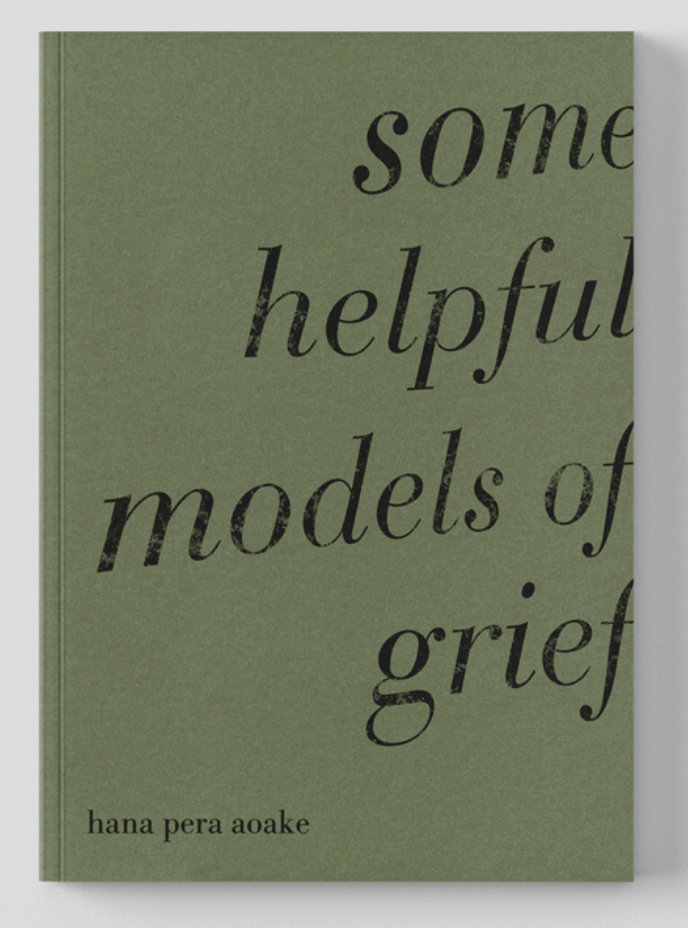
Poetry Shelf reading and review: some helpful models of grief by Hana Pera Aoake

some helpful models of grief, Hana Pera Aoake
Illustrations by Priscilla Rose Howe
Compound Press, 2025

“I stayed up all night and blistered my hands braiding muka into a
rope to slow the sun down just for you.”

Rhythm. I begin with rhythm as I read and slowly reflect upon Hana Pera Aoake’s poetry collection, some helpful models of grief. The rhythm of the line, the rhythm building across the arm-stretch of a poetic sequence. Think heart beat. Think the shifting rhythms of life, illness, love, death. The rhythms of thoughts flooding, speaking to loved ones, sons and daughters. The rhythm that builds as poet puts pen to page, and it is sweet and sharp and sour, these currents of anxiety, epiphany, recognition, searching.

And when I listen to the rhythm, the words spilling and coiling and arching and arcing, I am absorbing the poetry so very deeply.

Here is poetry that moves hand-in-hand with grief, with the sharp and soft edges of desire, aroha, body intimacy, wound, self repair.

“You say you feel understood and that my love of art reminds you why
it matters, but I feel like moss drying in the sun ripped from the moss.”

Here is poetry that navigates and holds close the power and magnetic pull of creating art, beyond and inside the smash of doubt, I too am body struck by Rothko, ache with myriad doubt, and am drawn to the garden, where we might fling our art to burn, and then feed the garden pumpkins with the ash. Ah. The garden, with its ongoing visibility and necessities, might be the fertile earth in which Hana’s poetry is planted. Ah the stories that precede and shape us, whether familiar, inherited, whether myths and legends. And then this: “I think of Martha Stewart saying that if you make a garden you have / a friend for life.”

Here is poetry that interlaces the personal and the political, how can it not in this spiky wounded world. We are standing next to the tourist in Iceland scooping moss that takes hundreds of years to regrow. We are holding Gaza. Grieving. And I am stilled and stalled before the pyramid poem that speaks of our founding document written in te reo Māori but signed in translation, those stolen lands, that stifled language, and pyramid poem becomes precious cloak on the page, with its origins, and vital and connecting stitching.

Here is poetry of echo and return. And it’s yes to poetry as echo and return, as the poems luminate past, present and future. The moss a recurring physical political eco marker that activates our senses, touch and smell and sight, that might build a tower of metaphors as we read, with its beauty and function and fragility and presence. Think life. Think nurture. Think care.

And here is poetry that speaks to you, the shifting me I we they you.

This is a sequence, a chronicle that draws upon the words and ideas of multiple writers and thinkers, including Moana Jackson, Keri Hulme, Talia Marshall, Fleur Adcock, Plato, Louise Glück, Roland Bathes, Annie Ernaux, Samuel Beckett, Homer, Andrei Tarkovsky, Kathy Acker, Stephen Fry, Freud, Shakespeare, Langston Hughes, Sylvia Plath, Autumn Royal.

And here I am back to the notions of rhythm – so deeply fertilised with experience and invention, with the literal and the figurative, with how poetry is sweet and succulent on our tongues, our speaking tongues, sweet and succulent in our ears, our listening ears, sweet and succulent in our hearts, our feeling hearts. And yes sour and savoury. These rhythms, movements, chronicles. This gift. This book. This poetry.

“I saw the Te Rakanui moon still bright this morning and wondered
whether you could see it in the city. By the time went outside
everything was covered in fog and there was ice on the moss.”

the reading

Photo credit: Frances Carter

Hana reads from some helpful models of grief

Hana Pera Aoake (Ngāti Hinerangi, Ngāti Mahuta, Waikato/Tainui is an artist, writer, and sweaty milf living at the foot of Pūtauaki maunga. Hana has published three books, including a bathful of kawakawa and hot water (2020), Blame it on the rain (2025) with no more poetry (Australia) and Some helpful models of grief (2025). They are also working on a fourth book of essays, how to be with Discipline (Australia). Hana is a PhD candidate at the Auckland University of Technology.

Compound Press page