Author Archives: Paula Green

Bernadette Hall’s Life & Customs– such readerly movement is a like a breath of fresh air

IMG_1396

Bernadette Hall, Life & Customs, Victoria University Press, 2013

Bernadette Hall is an award-winning poet, mentor and anthologist living on the coast north of Christchurch. She has published numerous collections of poetry including the terrific The Lustre Jug (2009). She edited Like Love Poems: Selected Poems of Joanna Margaret Paul and The Judas Tree: Poems by Lorna Staveley Anker (see my review of the latter here). She has held a residency in County Cork, Ireland and has visited Antarctica courtesy of Antarctica New Zealand. Both those experiences have found their way into her poetry. You can read my interview with Bernadette here.

life_and_customs_front__40765.1372036384.140.215   life_and_customs_front__40765.1372036384.140.215   life_and_customs_front__40765.1372036384.140.215   life_and_customs_front__40765.1372036384.140.215

Bernadette’s latest book, Life & Customs, is a substantial collection that draws upon the layers of the world with such poetic finesse it is impossible not to fall in love with it. The book is in two parts with a ballet interlude. Bernadette opens with a quote by Wallace Stevens (this bit stood out for me: ‘Life’s nonsense pierces us with strange revelation’). It seems the perfect epigraph for the collection, as the poems enact moments of ‘life’s nonsense’ (you could say — strangeness, surprise) along with those ‘revelations’ (also unexpected, nourishing).

This is a book of home, of shifting geographies and roots laid down, of memory flashes and of loving attachments (‘this is all part of the long slow plunge into memory’). So it is no surprise the first poem, ‘how lovely to see you,’ is like a welcome mat. More than any other book I have read in an age, Bernadette welcomes you into a nook of poetic warmth. This book exudes warmth, there is no extravagant game playing or showing off – instead you get led into the heart of living and life. Such readerly movement is like a breath of fresh air.

The first joy of this collection is the simplicity. I am not going to use the word plainness but opt instead for a word that registers beauty, stillness, contemplation, attentiveness and a zen-like deportment. Take these lines for example: ‘the sea comes in and kisses my feet/ then it goes back out again.’ This line appears after a small list of strange and not so strange things (like kinks in the day): ‘the little boy has swallowed/ a sadness bean.’

The second joy is the music, something that I have written of before in my appreciation of Bernadette’s poetry. Take any poem in this book and you will discover its musical contours – the way each line is pitch perfect in its undulating sounds and tones (‘We don’t need the pucker and slip of a tablecloth’). There is delicious assonance (tick clicky kids drift); there is heavenly rhyme (father/ harbour); there are words that coo on the ends of lines (plunge Mamaku); there are sharp words that sound off key (fatal); there is silence breaking into a line; there are sounds scattered like aural glitter or glue (‘m’ sounds in ‘The view from the lookout’).

The third joy is the humour. There is chuckle and body mirth in many of these poems. In ‘The day Death turned up on the beach’ the narrator invites Death over for scones with jam and cream. There is the book you can borrow but you can’t open to read. ‘In Search of Happiness’ humour mixes together with the surreal in a fablesque poem. There are two islands – one goes up in smoke and one drowns.

The fourth joy is the use of memory that takes you to and fro in nostalgic movements. ‘The Grinder’ takes you back to ‘way back when’ and there you are winding wool and making mince out of cold roast meat. There are things we take for granted that suddenly pulse on the page.

As I read the ballet interlude, I wondered who could turn this into ballet, but as I read, I choreographed the lines into a visual feast in my mind.

Bernadette writes with the poetic poise and insight of Dinah Hawken. To read these earthy and heavenly attachments is to fill with joy at what poetry can do. This is a marvellous collection.

Thanks to VUP, I have a copy of the book to give to someone who likes or comments on this post.

Victoria University Press page

New Zealand Book Council page

New Zealand Electronic Poetry Centre page

Canterbury University Press page

Best NZ Poems edited by Bernadette Hall here

My review of The Lustre Jug in The NZ Herald

Starlight: A poetry reading with John Tranter Michele Leggott Anne Kennedy and Robert Sullivan

John Tranter reads with Michele Leggott, Anne Kennedy and Robert Sullivan

John Tranter is Australia’s most awarded poet and the author of more than 20 books, including the recent Starlight: 150 Poems. Don’t miss this rare opportunity to hear John read his work, joined by local poets Michele Leggott, Anne Kennedy and Robert Sullivan.

Join us at the Auckland Central Library for a welcome glass of wine courtesy of Glengarry at 5.30pm. Readings start at 6:00pm.

This reading is hosted by Auckland City Libraries and the NZ Electronic Poetry Centre.

http://www.aucklandlibraries.govt.nz/EN/Events/Events/Pages/starlightjohntranter.aspx

Screen shot 2013-12-05 at 6.23.02 PM


NZ Poet Laureate, Vincent O’Sullivan’s blog is worth following

furtherconvictionspending.9780864736062__06290.1347922482.140.215 nicemorning.9780864734730__85704.1347922899.140.215 blamevermeer.9780864735515__25533.1347922423.140.215 UsThen__76016.1362003506.140.215

As the current NZ Poet Laureate, Vincent O’Sullivan is following in the footsteps of his predecessors (Michele Leggott, Ian Wedde and Cilla McQueen) and contributing a regular blog to the Laureate site.

Each poet has used this opportunity in quite different ways. Vincent states his aim at the outset: ‘The obvious point of this site is to celebrate and present the breadth of experience and formal variety that poetry embraces. I shall be inviting a guest poet to contribute work of their own, and to select a poem by a living writer they value, as well as a poem from an earlier era that continues to matter to them.’

He also plans to showcase poets who have been persecuted as a writer. The first is Ghanaian Kofi Awoonor, killed by terrorists on the day he was to appear at a literary festival.

The first invited poet is Jennifer Compton.

This is a wonderful initiative on the part of Vincent — an invitation that will be of real benefit to New Zealand poetry communities, and to all those who love poetry.

See here for The Laureate site.

Grace Taylor’s debut poetry collection is tender, strong and essential

1477428_10151783929738359_479190194_n-1

Grace Teuila Evelyn Taylor is an Afakasi poet, teacher, spoken-word artist and mother. Her father is from Glastonbury, England while her mother is from Moata’a and Apolima in Samoa. She is a mentoring presence in South Auckland where she co-directs Niu Navigations and co-founded both the South Auckland Poets Collective and the Rising Voices Youth Movement.

Grace’s debut collection, Afakasi Speaks, is a significant arrival. These poems have sung in the air at spoken word performances, where the poem is wrapped in the body’s movement, and the body’s movement is wrapped in the poem. Hearing Grace perform, it is not just a matter of entering a poem and all its rewards, but encountering a writer who occupies her space with dignity, integrity and compassion. This woman has the courage to stand up and speak out.

Now that the poems have been placed upon the page, where you can stall and back track, you encounter beauty, wit, edge, intelligence, empathy and above all, heart. It is the sort of poetry that takes you into unfamiliar rooms and changes you to the extent you view all that is familiar in a new light — particularly notions of identity.

At the red-hot core of the collection, as the title suggests, is Grace’s navigation of being Afakasi. Afakasi — the daughter of mixed heritage, both white and brown, both Samoan and European — is in-between. The writing (the poems) makes its way in and out of this space. At times it is a gap, a gap that trembles with the electricity of unbelonging. At times it is a braid, a plait, and the electricity of in-between ignites new ways of being. Grace as poet is searching for the words (‘They don’t carry dictionaries for Afakasi’) to take root in this space.

The music of performance is not lost on the page. The white space becomes the silent beat that punctuates the rhythm, the rhyme and the repetition. The white space absorbs the neighbourhood activity. It is where you stall to take on board the heart of speech. The voice.

The first poem, ‘Afastina,’ is dedicated to Selina Tustitala Marsh and Tusiata Avia. In this genealogy song, Grace acknowledges the presence of these writers in her writing lineage. These women. These ‘Afakasi are modern monarchs.’ There is beauty in the image of the butterfly; women are able to stretch their wings wide and find the freedom and skill to fly.

Other poems stand out because Grace seems to reach deep into an honesty of self to say out loud what it is like to be in-between. In ‘Afakasi has no name,’ Grace moves through examples of Afakasi not fitting into the skin of a name, and that poetic movement moves you. How to be Samoan or palangi or New Zealander are the simmering questions? Then, ‘Aunty is Afakasi wishing you would just shut-up/ stop talking about how in-between we are/ it is what is/ just move on.’ ‘The poem, ‘What is Afakasi’ has such energized heat it sears you as you read. This is poetry with its undulating music and chords that catch your ear, but it is also politics. This is a voice that is insistent and strong, a voice that has come from experience and doubt and vulnerability. Like many of the poems in the collection, it is utterly vital, because it can change how we see things. Like all the poems in the collection, it feeds off political ideas, but it never looses sight of heart.

There is an ode-like, tender poem to Grace’s father – she is missing him, and she misses him ‘the most/ when I see/ the weathered paint of our home flake/ when I hear the cold/ tired floorboards creak/ when I get/ a flat tyre on my car.’

The final poems are for and of her child – a different bloodline, where writer becomes mother. Like poetry, he too is a way of filling the in-between. Of finding ways of belonging.

This debut collection is an important entry on the New Zealand poetry landscape. The poems are strong, with wings set to fly and lead us out of misplaced preconceptions into revitalising connections. I loved it.

Afakasi Speaks, Grace Taylor, published by Ala Press, Hawa’ii, 2013

Favourite poetry books of 2013 — make your pick

A Book is a Book_Cover_hires

The New Zealand Listener devotes vital attention to New Zealand writing throughout the year and this is to be applauded — reviews, interviews, features that cover a range of genres. However I was disappointed to see the slim selection of poetry in their recent Top 100 Books (November 30th issue) considering Chief Judge John Campbell had picked poetry as a particular strength of NZ writing at the NZ Post Book Awards this year:  ‘It is a reflection of the extraordinary strength of the new and young writers we read, particularly in poetry, where New Zealand is blessed by so many fine writers (at all ages and stages) that we respectfully suggest poetry could stand beside rugby as our national sport.’

It was a list of 6: I was delighted to spot three favourite books of mine (those of Selina Tusitala Marsh, Amy Brown and Ian Wedde).

Disclaimer: This post might be picked up as sour grapes on my part as I had a book of poetry released in the past year (The Baker’s Thumbprint, Seraph Press), but I have zero expectation of my books being on lists, being reviewed or gaining awards. It is not what matters to me. I focus on writing and all the things I love in life which is why I run two blogs dedicated to a celebration of poetry.

To make up for the Listener’s inattentiveness to the fabulous poetry published both in New Zealand and abroad I invite you to celebrate a favourite poetry book of 2013 (excluding mine). I don’t mind where the book was published. I would love to publish a series of these picks over the next month. Just select your book (you can do more than one if you like) and write a few sentences or a paragraph on what you love about it.

Perhaps these picks will send us hunting for poetry books to put in our summer reading bags.

I have a little bundle of NZ poetry books to send to a random contributor or two.

Send to paulajoygreen@gmail.com

I say let’s invent, cultivate and nourish new ways to talk and write about poetry — Emma Neale raises a question

In a new post Emma Neale wonders if poetry reviews are ever obsolete. It’s a good question. She then posts reviews of two fabulous books.

Print media is in such strife these days poetry reviews have almost become an endangered species (which is partly why I started Poetry Shelf). Some newspapers such as The ODT and the Nelson Mail show a strong commitment to poetry and I still manage to get two or three published in The Herald. Landfall-on-line  is another source, as is the NZ Listener.

So perhaps we have to invent, cultivate and nourish new ways to talk and write about poetry (in new places). A blog like this is only ever going to hook the attention of our small enclave of poetry fans. A newspaper review might capture the attention of someone quite different (it happens!) and give a book a new readership.

What can we do?


Giveaway copy of Selina Tusitala Marsh’s Dark Sparring results

Thanks to Auckland University Press, NZ Book Girl won the random draw to receive a copy of Selina Tustala Marsh’s Dark Sparring (2013).

My review here

The interview here

cp-dark-sparring

Winner of Kathleen Grattan Award for Poetry 2013

Unknown-16

Congratulations to Siobhan Harvey who is the winner of the 2013 Kathleen Grattan Award for Poetry. She was one of ninety entries. This year’s judge was Christchurch-based poet, Jeffrey Paparoa Holman. Siobhan receives $16,000. Here is the Radio NZ piece from Arts on Sunday.

New Zealand Book Council Page

Siobhan Harvey’s profile on the Random House website

Lost Relatives on Steele Roberts’ website

Siobhan Harvey on the The Poetry Archive (U.K.), featuring audio recordings of her work

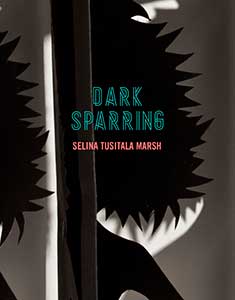
Selina Tusitala Marsh’s Dark Sparring: this collection takes you to the sun and the moon and the clouds

Selina KBox Image

Selina Tusitala Marsh, Dark Sparring, Auckland University Press, 2013  photo credit: Emma Hughes Photography

Selina Tusitala Marsh is of Samoan, Tuvaluan, English and French descent and teaches at The University of Auckland. She was the first Pacific Islander to graduate from its English Department with a PhD. Her debut poetry collection, Fast Talkin’ PI, was awarded the Jessie MacKay Award for Best First Book of Poetry in 2010. She represented Tuvalu at the London Olympics Parnassus event in 2012.

cp-dark-sparring    cp-dark-sparring

Selina’s second collection, Dark Sparring, lifts off from her debut in extraordinary ways. The poems embrace a variety of subject matter and forms, but they are held together by a voice that has grown in both strength and lightness. Selina writes out of two experiences that might seem opposed but that are equally linked both in life and on the line — the death of her mother and her adoption of Muay Thai kickboxing.

I have heard Selina perform these new poems twice in the past week or so. On each occasion, the strength of the poetry resonated in the air. At her launch, Selina was accompanied by Tim Page’s musical layerings, and she interrupted a kickboxing poem with a round or two of sparring in the room. The music and words fed upon each other with infectious energy, and the kickboxing was like a trope for the poems — graceful, startling, strong. Her performance was energised and entertaining (a definite wow factor). On the second occasion, Selina read at the Ladies Litera-Tea without musical accompaniment and without a round or two of sparring. What struck me about this performance was the way silence was a significant part of the poetry palette. The little and longer pauses heightened the emotional, personal and political kick.

The poems in this new collection embrace both the personal and the political; the former reaches out and draws you in close to private moments (a poetry of intimacy) while the latter is a voice that probes and exposes (a poetry of conscience). Both are fueled by Selina’s ear; by her attentiveness to the musicality of the line.

In the terrific opening poem, ‘Matariki,’ the poet is guiding a young writer named Matariki (who has no idea of the constellation and its meaning) in a writing workshop. The poet’s response on what to write serves as a perfect gateway into the book: ‘write what you remember/ write your lost and found/ write the toiling of the year’s grief/ write the seeding of new ground.’

Sound is always paramount. In ‘Chant from Matiatia to Orapiu,’ the words are like present-participle, daisy chains between the two locations with rhyme building the linking stems. The words zigzag down the page like bird flight or like an autobiography of movement. Then there are the single lines, without rhyme and without present participle that check you momentarily. Selina’s fondness for the present tense (a kind of be-here-now philosophy) accentuates the moment and movement.

The political poems (as with Selina’s first book) explore notions of identity, representation, genealogy, tradition, ethnicity and so on. There is always an acknowledgement of the line of writers (mostly women) from which Selina writes. Albert Wendt is there in ‘Emailing Albert.’ There is the poem about the Somali refugees that make words ache and rebound in new ways in the poetry workshop. This poem’s structure is handled beautifully so that it becomes an occasion for both poetry and politics with elegance and a sharp edge. There is the poem, ‘NZ, the Lucky Country,’ that is like a homage to here, unblinkered, incantatory, thankful. It is like a breath of fresh air.

The poems that centre upon the death of her mother, are deeply personal, utterly moving, and stall you, but they have a touch of the grace and strength of the kickboxer. These poems are highly original as Selina has moved about her boxing ring falling upon different shapes and forms to house her experience. The titles suggest this terrific movement; ’30 ways to Look at a Mother,’ ’13 Ways of Looking at Mourning,’ ‘To War with Story,’ ‘On Plagarism’ (which is after Bill Manhire and is all for killing off cancer and breaching copyright). ‘Genesis’ is like a biblical tale or parable on the origins of cancer, on cell warfare. These poems tug at you, stop you, soothe you, make you laugh out loud, and they feed empathy. In ‘A Formal Dinner,’ Selina moves you from smiling at the need to provide so much food at the funeral to a heart twinge at the absence of the table setter. These poems work as glorious symphonies of sound on the page but they also work as acute and tender tributes to a beloved.

In the debut collection, ‘Fast Talkin’ Pi,’ became a vital mantra for Pacific-Island women and women in general. In this second collection, Selina has returned to the poem by way of ‘Kickboxing Cancer’, but now the poem opens it arms wider to take in all women and a more personalised, particular woman. And then the poem holds its arms close in an intimate hug as this is a poem that comes out of love and death and loss.

Selina’s second collection lifts you out of your senses. She lifts her grief out of her body and  translates it into word music on the page and in the air (there is A CD in the back). Reading this collection takes you to the sun and the moon and the clouds, and then returns you to your own patch of ground to grieve and celebrate and challenge. I adore it.

Thanks To Auckland University Press I have a copy of this book to someone who likes or comments on this post or either of the two interviews. Thanks AUP!

Poetry Shelf Interview

Auckland University Press page

nzepc page

New Zealand Book Council page

Radio NZ interview

Best New Zealand Poems here

Blackmail Press page