Author Archives: Paula Green

Poetry Shelf summer reading: Sport 47


I’m not angry—I’m just writing

a new book, thrusting my hands

into the dying earth

until I have enough coffins to burn

for warmth. I finger the jars of teeth

buried for luck. I pocket the coins.


Chris Tse from ‘It’s a metaphor’


Hard to believe we are moving into a change of season and here I am still celebrating books from 2019 in my summer reading. Sport 47 appeared last year and was much loved on social media. I can see why.

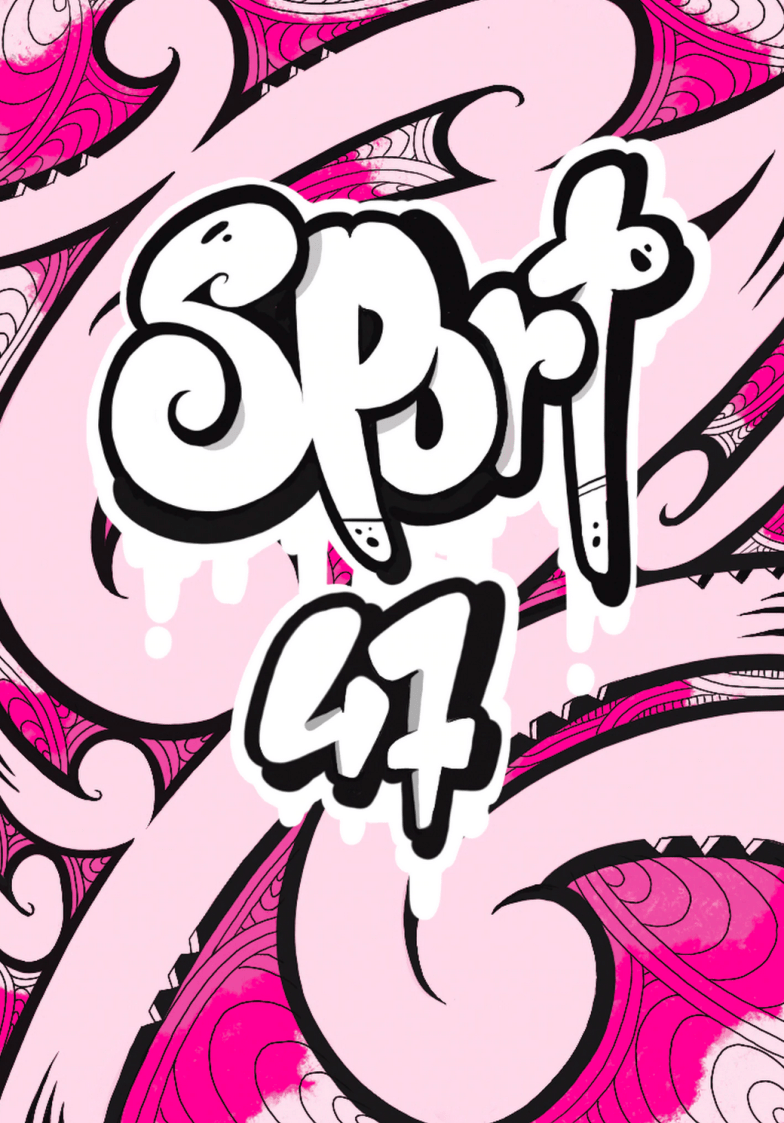
The editor is Tayi Tibble – her debut collection Pōukahangatus won the Jessie Mackay Award for Best First Book of Poetry in the 2019 Ockham NZ Book Awards. Apparently this is her debut in Sport, it’s as editor and she has done a cracking job. The eye-popping cover by Miriama Grace-Smith is the perfect hook for the ear-popping, heart-sizzling, mind-flipping content. I love the different effects on me as reader. It’s a shake-up, it’s balm, music, politics, self exposure, and I love love love it.

So many poets thrilled (I want to follow up on some of these that are new to me): Aimee-Jane Anderson-O’Connor, Hana Pera Aoake, Airini Beautrais, Vanessa Crofskey, Sam Duckor-Jones, Eliana Gray, Rebecca Hawkes, Nicole Titihuia Hawkins, Joy Holley, Talia Marshall, Fardowsa Mohamed, Aiwa Pooamorn, Meg Prasad, Ruby Solly, Anne Marie Te Whiu, Chris Tse, Eefa Yasir Jauhary.

Apart from the exquisite blast of poetry, two other features stood out: Tayi’s introduction and Anahera Gildea’s conversation with Patricia Grace.

Reading Tayi’s deeply personal intro reminded me there are neither wrongs nor rights when it comes to poetry. Heart and mind are active ingredients, writing and speaking from one’s experience and choices will never be redundant. It is ok to embrace confidence. I was especially moved by the importance Tayi gifted the writers and mentors that preceded her. In Tayi’s case: ‘a wise tohunga (my mum)’. And women writers, especially and above all Māori writers. If you haven’t yet read this glorious piece of writing, hunt it down now. Hold it to your heart.

The second treasure is the warm, generous, insightful conversation between Anahera and Patricia. It travels deep into reading and writing, into reading, writing and facing challenges and epiphanies (and everything in between) as a writer who is Māori. If you haven’t yet read this glorious piece of writing, hunt it down now. Hold it to your heart.

essa may ranapiri’s tribute to their kuia is luminous with love.

There is a blinding scene (excuse the pun as blinds do get spotted) in Anne-Marie Te Whiu’s ‘hood/ie’. I held my breath as I read.

Ash Davida Jane’s ‘hot bodies’ is poetry with the thermostat turned up. Wow!

Sam Duckor-Jones’s ‘Night’ and ‘Gut Health’ and are visual and sound triumphs.

I can’t get the last line of Eliana Gray’s poem (which is a version of the title) out of my head: ‘You’ve got to write like your life depends on it.’ That’s exactly how I feel sometimes.

The whole book is just glorious.

We are all the better for Sport 47 arriving in the world. Sport 48 must be just around the corner!


VUP Sport 47 page


Screen Shot 2020-02-27 at 3.57.37 PM.png


Poetry Shelf audio spot: Jordan Hamel reads ‘Tammy the Briscoes Lady Plans my Funeral’


9780995122932.jpg


Jordan Hamel reads ‘Tammy the Briscoes Lady Plans my Funeral’ (published in the Poetry NZ Yearbook 2020)


Jordan Hamel is a Pōneke-based poet and performer. He was the 2018 New Zealand Poetry Slam champion and competed at the World Poetry Slam Championships in 2019. He has poems published or forthcoming in Sport, takahē, Poetry NZ Yearbook 2020, Mimicry, Mayhem, Queen Mob’s Teahouse and elsewhere.


Poetry NZ 2020


Poetry Shelf noticeboard: my emails!


Last year after ten years in this house we got some screens on windows to keep the mozzies out. Wow! A cool house even in this string of hot days. It took us over a decade to do this simple miracle task.

It has taken me even longer to realise I need to check my junk mail folder. I have just discovered a swag of emails that arrived there in February (crikey how long have I been sending emails? I hate to think how many I have missed and not responded to).

I always answer emails from adults and children so if you have sent me one and got no reply please do resend.


Paula Green

Poetry Shelf interviews Heidi North

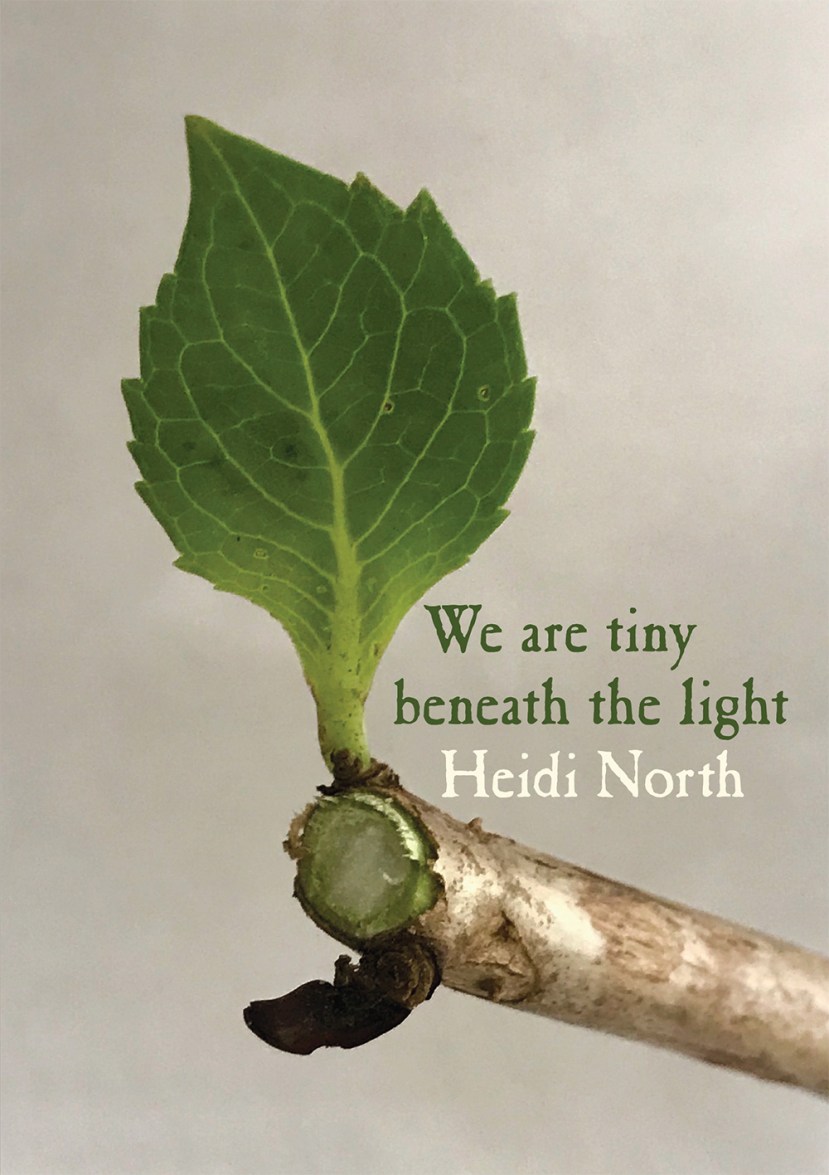
We-Are-Tiny-cover-web.jpg

We are tiny beneath the light, Heidi North, The Cuba Press, 2019


Muscle memory


I don’t know how to let you go

into a future where you don’t turn

as if by muscle memory, as if by heart

to take my hand

I can still feel the beat under your palm

the dry square next to your thumb

crescent moons rise on your fingernails

the tiny red freckle sparking up


Heidi North, from We are tiny beneath the light,


Heidi 2019.jpeg


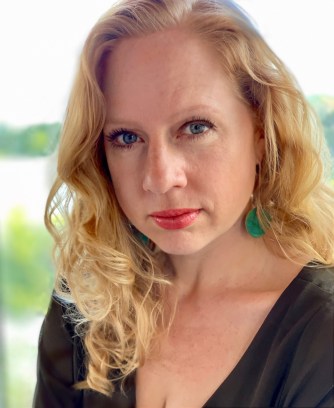
Heidi North has won awards for both her poems and short stories, including an international Irish prize, and has published work in local and overseas journals. She was the New Zealand fellow in the Shanghai International Writers programme in 2016. She was awarded the Hatchette/NZSA mentorship to work on a novel and has a MA in Creative Writing from the University of Auckland. Her debut poetry collection Possiblity of Flight was published by Mākaro Press in 2015. U2 chose ‘Piha Beach, two years on’ from her new collection We are tiny beneath the light to screen at its Joshua Tree Stadium concerts in New Zealand. I find her poetry both economical and rich in effect, the self-exposure moving, the gaps equally significant.


Paula: I loved your debut collection Possibility of Flight. How do you look back upon that book?

Heidi: Oh thank you, that’s very kind of you to say. While I think there are things I would change if I published that collection today, I will always be fond of Possibility of Flight. It feels like a first book to me, in that I’d been working on some of those poems for a long time – some 10 years, so it felt so good to get them out there. This next book is quite different because it covers a relatively short space of time and I knew it didn’t have to contain the whole world. So they’re different collections. Possibility of Flight spans childhood, and leaving New Zealand to go on an OE to London, and ends with getting married and having a baby. Saying this, I realise you could read We Are Tiny Beneath the Light as a sequel of sorts.


Paula: Your new collection, with its evocation of both pain and joy, charts the end of a marriage. How difficult was it translating the private experience in poetic form and allowing it to go public? Does poetry aid the hard-to-say?

Heidi: I think that if I’d set down to write a book solely about the end of my marriage I would never have done it, but by working through the creative process and shaping the collection with my excellent editor and publisher, Mary McCallum at The Cuba Press, I allowed myself to be more vulnerable and go deeper, to strip away the poems that weren’t adding to this story, add in some more that did, and I let it become more of a narrative collection, which I think makes it stronger. I didn’t want people to think I was self-indulgent, and I didn’t want people to find it depressing. To counter that, I focused on the craft, and the book as its own entity, separate to me, and I hope that’s come through. But of course, there was a large part of me that was nervous to publish it – there is no escaping that this is an intense, personal book and I knew it was a risk. But yes, in general I think poetry aids the hard to say, and forces an honesty on ourselves as writer and reader that is at once liberating and terrifying. That’s the thrill of a poem.


There were three red apples

on the tree for weeks

and only today did you brave

the undercurrent of weeds

to find steady ground

to stand on to pick them.


from ‘Autumn’


Paula: Things matter gloriously in your poems. A window, dust, a rose, old photos, the sky resonate profoundly as I read and affect the way I inhabit a poem as reader. Were there particular things that you kept returning to? That were essential poem aides.

Heidi: There weren’t conscious things, but focusing on details, everyday things, is a way of dealing with the impossible. Poetry is a form of paying attention and slowing down. I use it to force to me do so, anyway – both when reading and writing poetry. When I think of myself writing this book, I have a sense of me grappling with the poems, they’re alive, wild and slippery, and I’m trying to button them down with concrete things rather than let them escape and run with the wind.


Paula: The three-section structure works well as you move from a specific place through despair and rupture to repair and joy. What effect did you want for the reader?

Heidi: I wanted to make sure I didn’t leave the reader in despair! Both because that’s an awful reading experience, and because that’s the truth of this story. I hoped to take the reader on a journey and that they would find grief and solace and joy in it, too. Because that’s the juxtaposition of life, isn’t it?


Paula: What are key things when you write a poem? When you read a poem?

Heidi: There’s the language, the musicality and muscularity of it. I want the poem to look right on the page. I spent a long time on that, the silence of a space, the punctuation – I could spend days on punctuation and how the words knit together – and I want to be startled and surprised with imagery. And I want all of this to come together with a clarity that feels like magic – I want to hear what the poem is singing and hear it ringing out clear. I don’t want the note the poem is sounding to be muddied with layers of complexity or cleverness for the sake of it. This is what I love reading in poetry and what I’m always aiming for.


The trouble


He’s wrapped his arms in muslin gauze

broken bird wings pressed close to his chest.

We pass without pecking

at the dried blood.

He’s been doing the washing in the communal machine.

He’s been doing a lot of that lately.


Heidi North


Paula: Did you read any poetry books that captured you as you wrote this collection?

Heidi: When I’m actively writing or editing poetry, I tend to stay away from reading too many other poets as it can influence me too much, but I came across Anne Michaels (she was at the Auckland Writers Festival in 2019) and when I heard her read I knew I needed to read more. She is an incredible poet and writer. Her collection, All We Saw, is so bold and unapologetically seeped in loss, and reading it gave me the courage to let We Are Tiny Beneath the Light be what it is – short, intense and quite raw. I often listen to music while I’m writing, often the same song over and over. For my first collection, Possibility of Flight, the song for that book is ‘England’ by The National and that was clear early on. This book took me longer to find the exact song, but in the end it is ‘Skin’ (live version) by Rag’n’Bone man.


Paula: Yes Anne Michaels was a festival highlight. I read all her books before she came and also especially loved All We Saw.

We Are Tiny Beneath the Light must have been a challenge. What kind of writing challenges do you see next?

Heidi: I have two novels kicking around and I think it’s time to finish them. One of them is a light-hearted novel about two sisters embarking on their OE to London and the other researched while I was in Shanghai on the Shanghai Writing Program in 2016, and wrote the bulk of while completing my Master’s at University of Auckland in 2017,  with the inspirational Paula Morris. It’s the story of a runaway bride from Auckland who goes back to the last place she remembers being happy – Shanghai – after running out her wedding. Perhaps 2020 is the year to finish both of them!


From the top we survey our domain

the sand, the sea, those hills –

for an instant each soft blade

of tussock is picked out in brilliant sunshine

the world sharpened by tiny shadows

from ‘Burst’


Heidi North reads ‘The chickens’ from We are tiny beneath the light


The Cuba Press author page


Poetry Shelf reviews: Claire Orchard celebrates Jane Clarke’s When the Tree Falls


5b9ead6a2b0ca.jpg


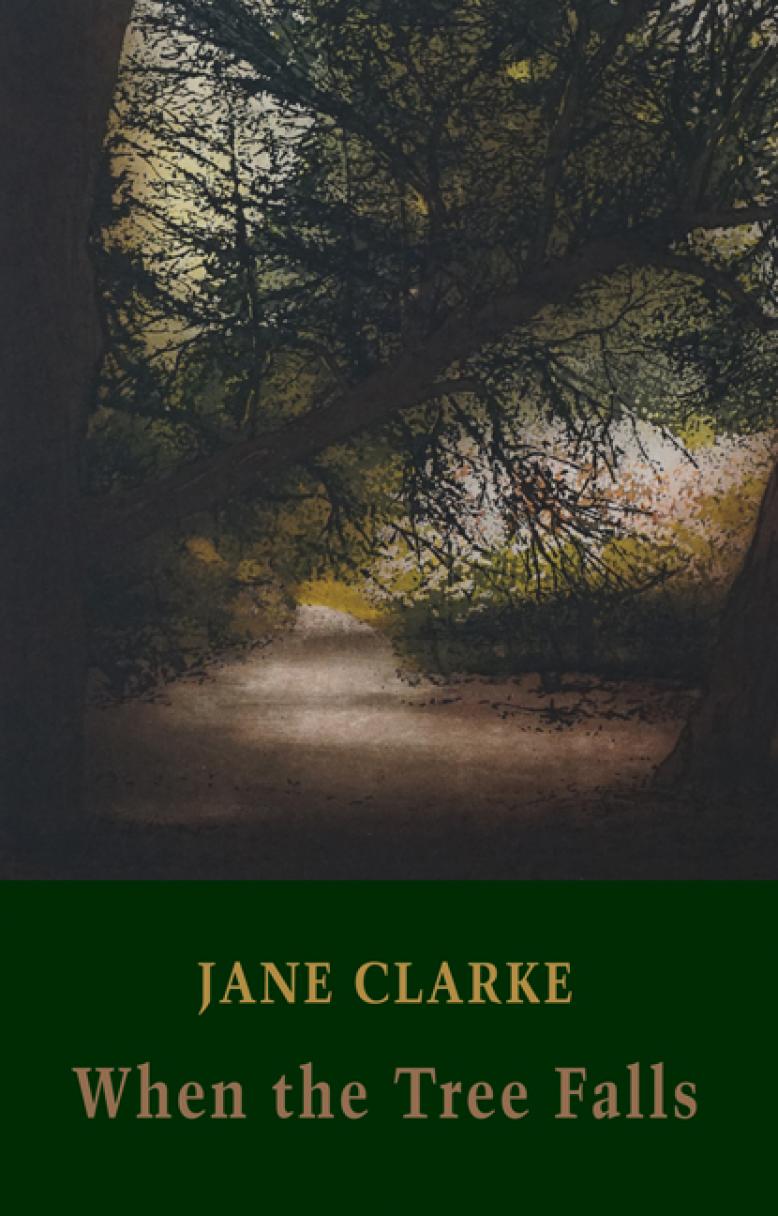
When the Tree Falls by Jane Clarke (Bloodaxe Books, 2019)


I first came across the work of Irish poet Jane Clarke in October of last year, when her poem ‘When Winter Comes’ was published as The Guardian’s poem of the week. On the strength of this encounter I ordered a copy of her second collection, When the Tree Falls, and this slim volume quickly became a poetry highlight of my summer; I was not surprised to hear that this accomplished collection has been shortlisted for this year’s Irish Times Poetry Award. This is one of those books that I want to press upon all my friends, but also really don’t want to allow out of the house for fear it will not return.

This is a collection with family at its heart, with much of the book devoted to a sequence of poems about the final illness and death of the poet’s father. These poems are lyrically deft, poignant, moving, but also pragmatic in their depictions of decline and loss, and of the ways in which the speaker, her father, and other family members deal from day to day with the situation they find themselves in. The father is a farmer, and this is a family deeply rooted in the land, with the poems often set in or referencing locations around the farm. As a dyed-in-the-wool city dweller I sometimes struggle to engage with poetry that has a rural setting but in this collection the farm landscape feels like another character, moving through time alongside the family.

Other poems extend into the poet’s family history – her relationships with her parents and her brothers – and some of my favourite poems are these clear-eyed observations of situations and interactions. Grandparents and other ancestors also feature and yet, although the collection is clearly deeply personal, it succeeds in feeling universal. As Clarke writes in ‘Polling Station’: “every family has stories, left like ploughs / and harrows among thistles behind the sheds.” There are lines that blend quiet strength with sorrow, as in the opening of ‘Ryegrass’, the first poem in the book: “his time is precious as a dry spell / when there’s silage to be cut”, poems where the characters who populate the book are given vivid voice and form, as in ‘Cypress’:


he suddenly struggles

to sit up.


Will you open the curtains

so we’ll see the dawn when it comes?

He gazes out

at the cypress

that in his lifetime

grew higher than the house.


In others, the poet effectively sketches remembered scenes in the space of a few lines, as in “Camping at Bearna”:


The groundsheet rips, the milk

turns sour, someone drops the eggs

and more often than not

we wake to the pock, pock, pock

of raindrops.”


Other poems are devoted to Clarke’s friend and fellow poet Shirley McClure, who died in 2016.  One of these, “Metastasis”, employs “the way couch grass takes hold of a garden” as a metaphor for the insidious nature of cancer spreading in the body, the lines “slips silent under fences, colonises beds / and gets itself entangled through agapanthus” sending a chill of recognition and dread down my spine.

In this eloquent, reflective collection, Clarke wields language with enviable delicacy and a quiet intelligence, creating an immensely satisfying and ultimately uplifting book, one that tackles loss by celebrating love, that acknowledges pain and fear, but also points to the difference compassion and care for one another can make to the close of a good life.


Claire Orchard


Claire Orchard lives in Wellington and is the author of poetry collection Cold Water Cure (VUP, 2016). You can find out more about her at her website

Jane Clarke grew up on a farm in Co. Roscommon and now lives with her partner in Glenmalure in Co. Wicklow. Her first collection, The River, was published by Bloodaxe Books in 2015. Her second collection, When the Tree Falls, was published by Bloodaxe Books in September 2019. All the Way Home, an illustrated sequence of poems in response to a soldier’s letters from the Front during World War 1, was published by Smith|Doorstop in April 2019, in collaboration with the Mary Evans Picture Library, London.

Full biography at Jane Clarke’s website

Bloodaxe Books author page


Poetry Shelf Monday poem: Airini Beautrais’s ‘Soldier’s buttons’


Soldier’s buttons


Saw a man             supine on a bench

thought maybe needs help             recognised your shoes

thought maybe acute grief             or just resting


best left alone. Walked in the other direction.

How have I been so long out of sunlight,

how have I not known down here


there are these round yellow flowers

pushed up out of the river mud.

Or maybe I knew them and forgot.


Picked some, and daises, buttercups,

willow twigs, grass flowers, a madwoman’s posy.

So many ways to be out of one’s tree.


Walked back through the park. All year we’ve sat adjacent

in private losses                   individual lack of sleep

which has manifested as a shared engagement


in mutual insults                and off colour jokes

Oi what are these flowers               That’s no way to greet me

Like a common prostitute              (Me? Or you?)


You tell me soldier’s buttons. Makes sense,

dropped at the water’s edge. I look them up.

Cotula: little cup. Bachelor’s buttons, yellow buttons,


water buttons, brass buttons, buttonweed.

Gondwanan flower that’s scattered the world.

Makes sense, strewn                           like indiscriminate histories


coins shining on shut eyelids, minutes, millennia.

Anyway, we should treat sex workers with respect.

But don’t lift bullshit when under it’s


more shit and under that more painful

than can be looked at. Little cup, can’t fill it.

Goes on flowering like a useless need.


Airini Beautrais


Airini Beautrais is a writer and teacher based in Whanganui. She writes poetry, short fiction, essays and criticism. Her work has appeared in a range of journals and anthologies in NZ and elsewhere. Her first book Secret Heart was named Best First Book of Poetry in the Montana New Zealand Book Awards 2007; it was followed by Western Line (2001), Dear Neil Roberts (2013) and Flow: Whanganui River Poems (2017).


Poetry Shelf noticeboard: Sarah Broom Poetry Prize

Screen Shot 2020-02-24 at 8.51.30 AM.png


I have had a number of queries about the Sarah Broom Poetry Prize. I am no longer involved with this (must get my photo taken down off site!). I do know that  it is not happening in conjunction with the Auckland Writers Festival 2020, but beyond that I have no up-to-date information. I recommend you get in touch with the Trust here. I will post any new information should I receive any.


Poetry Shelf questions poets: Do poetry communities matter to you?

DSCN9858.jpg


Part of my aim with Poetry Shelf is to build bridges between diverse poetry communities and in doing so create a hub for sharing poems, interviews, news, anecdotes, ideas, interviews, audio, podcasts, reviews, new books, old books and so on. I want to engage with and showcase a diversity of voices.

I live on the outskirts of Auckland on the west coast, with dodgy internet, mobile reception and power, and at the moment scarce water (!) and I don’t get into the city that often. So I am dependent on the books I am sent, and my communications with as many poets as possible. I feel both inside and outside communities, belonging not-belonging.

Researching and writing Wild Honey took me into all manner of communities – past and present. Utterly fascinating. Always surpising. I found goodwill, bitchiness, support and aroha in the archives. Connections between women poets seemed vital, especially when women were writing in the shadows. The 2019 Wild Honey events were something special – and got me thinking about connectedness and bridges and how belonging to one community is not enough. Listening hard counts. I agree with Louise Wallace – kindness,  generosity and diversity – are crucial. I see this in what she is doing with The Starling.

Poetry Shelf is my made-up and constantly evolving community and includes best friends, people whose poetry I have admired for a long time, people whom I have never met, new discoveries. Why do I do this crazy thing that takes up so much time and operates outside the currency of money? Because no matter how tired or challenged or doubt-smashed I feel, in its drive to celebrate, question, and connect, Poetry Shelf is a necessary form of nourishment. It is like a huge loving poetry family with a truckload of goodwill and support. It constantly surprises and delights me. Do keep in touch. Do let me know of new discoveries.


Louise Wallace:
Poetry communities matter and have mattered to me immensely. Writing is of course a solitary act, but what’s the fun in doing the rest of it alone? A common misconception seems to be that the NZ poetry community is bitchy or competitive. I have found the opposite to be true. I am grateful for the opportunities I have received, often sent my way by other writers. Poetry communities can fulfil different needs at different times. As a young writer I really valued being surrounded by my peers who were on the same journey as me, and the help and guidance offered to me by senior writers. As a new mum last year I was physically isolated, unable to attend many literary events. Online communities filled that gap as a way to stay connected and still feel myself – I listened to poetry podcasts while out walking my son in his pram, I kept up with NZ poetry news on twitter whenever I could check my phone. Community to me means creating space for others. It means making sure there is room for as many different voices as we can imagine. It means generosity and kindness: lifting each other up. If there’s a window, fill it with someone else’s name.


Jordan Hamel:

I spent a long time figuring out how to answer this. Obviously the answer is yes, but I didn’t know how to articulate what poetry communities to me, ironically it took me to until last minute to ask other people for their opinions, my friend Sara gave me a great analogy. There’s an old classroom trust-building exercise where a bunch of kids sit in a circle and two kids in the middle are blindfolded and try to beat each other with rolled-up newspaper. They have to rely on the voices of the circle to tell them where to swing and gently push them in the right direction. What an apt metaphor, almost too on the nose. Sincerity is awful and I apologise in advance but strap yourself in because here we go.

When I first started writing, like most people I felt like the blindfolded kid swinging the newspaper, never sure if I was hitting anything. In the past couple of years I’ve found a circle, well circles plural, different, intersecting, amorphous circles, some occupy physical spaces like readings, writers groups and open mics, others digital and less tangible, all are so important to me and my poetry. I think the great thing about the metaphor is, in poetry communities you aren’t always the one in the middle wildly swinging, you’re also in the circle guiding others as they go through the same thing, sometimes you’re the one who created the circle in the first place, but as wholesome as this extended metaphor is, poetry communities in NZ aren’t perfect, we could all take a look at our circles and think how we can make them bigger, more inclusive, flexible, every so often we can turn around and try to see who’s outside the circle, blindly stumbling and swinging on their own, or who’s too nervous to even ask to join in. I’ve been lucky enough to find people who will let me play even though most of the time I still feel like a blindfolded kid swatting at darkness, but I think everyone feels that way and everyone needs those voices.


Sugar Magnolia Wilson:

This is such a good question for me right now. The answer is very much yes, poetry communities do matter to me, but also, no, not as much as they used to in the way that they used to.

Before 2012 my poetry community was just myself. I wrote and wrote, for years, in creative isolation and it was awesome, but I didn’t know any different so it wasn’t really anything. It was just the way it was. Come 2012 and I got accepted into the IIML masters course. It changed my life. My views were challenged, my writing grew, and I had such an amazing time being part of the Wellington writing community. The book launches. Amazing writer friends with the same writerly bullshit struggles. The support and lots of love and wine. So much creative generosity and oh boy is Wellington good at that. Without that kind of hothouse scenario, my book wouldn’t have happened, and I wouldn’t have turned my writing into a craft. But … like all good things, it needed to have its own little death.

I started, last year some time, to feel a bit sad about the whole thing. The launch of Wild Honey really defined what a poetry community should look like for me; big, wise, loving, many-voiced, multi-generational. I can’t really explain it, other than I felt like my IIML year had gone on for eight years instead of one, and that I was really and truly ready to graduate and throw my cap off and leave it in the rain. I realised that in order for my writing to survive beyond one book, that I needed to go it alone, to figuratively and literally move away, to let go of all the stuff and the scene and sort of competitive element than can start to creep in. I’m not interested in that stuff and I don’t want to be defined by my success on the Unity Books Bestsellers list. No shade to Unity wot wot.

Anyway, now I live in the bush and it’s nice, and I’m eternally grateful for poetry communities. I am hoping that over time a new kind of one will grow. Something wild and sweet that lets me grown in new ways.


Eliana Gray

Yes!!!! Where would I be, where would any of us be without community? Community to me is the bedrock and the impetus for everything. Why do we write if not to communicate with others? Why do we communicate if not to build community? I feel that almost every – if not all – human action has community building at its base.
We would be very little without community, isolated ghosts. I don’t think that sounds very fun. Other humans are one of the key ways we define our existence. I just can’t imagine life without it. Communities make me a happier person, a better writer, more accountable, more empathetic, a smarter person, harder, better, faster, stronger, all of it. Thank you to everyone in my poetry communities. I am still alive because you make life very appealing.


Vana Manasiadis:

I tried to answer this question before I fell down a metaphor hole grabbing at definitions all the way. What do I think a [poetry] community is, does, has? I like these community values: respect, agency, meaningful participation, collaboration, integrity, inclusion. When I’ve had poetry community experiences that have included lots of these things – kōrero, voices, tautoko – they are like blood transfusions. Like actual substance, and substantiveness. Like: I don’t have to long-walk/talk-listen-disagree-agree-eat-drink-stay late with my poetry community every day and night (though that’s the dream) but I do need more than brief SM broadcasts. (And clearly I’m saying this as a judgmental SM recluse who has swallowed the hard self-inflicted pill of not being part of a/the poetry community online; and who spends way too much time wondering whether it’s even possible to be in the same community as folks who’ve super-active-online-selves). But. Anyway. In my wider-panning poetry community (see above) – which really, really matters to me (see blood) – aside from curation there’s also accident, mess, aporía, and slow time. And now I think of it, I’m in a small but ecstatic community of poets who write long and languorous emails to each other. I should say epistles obviously.


Emer Lyons:

I was working on Heather McPherson’s poem ‘stein song for the blue house’ this month and I was drawn back to a quote from Starhawk’s book Spiral Dance: The Rebirth of The Ancient Religion of The Great Goddess:

And Goddess religion is lived in community. Its primary focus is not individual salvation or enlightenment or enrichment but the growth and transformation that comes through intimate interactions and common struggles. Community includes not only people but also the animals, plants, soil, air and water and energy systems that support our lives. Community is personal­—one’s closest friends, relatives, and lovers, those to whom we are accountable. But in a time of global communications, catastrophes, and potential violence, community must also be seen as reaching out to include all the earth (1999, 22).

Poetry communities are rife with nepotism, can become insular, and elitist, and benchmarks in people’s minds for what is deemed good or bad poetry, rather than the focus being on the sharing of “intimate interactions and common struggles.” The poet Fatimah Asghar says, “I work in the medium of community,” and I feel that, but only as far as community is a place from which I can question, include, and remain accountable.


Kiri Piahana-Wong:

Yes! Poetry communities matter, and they matter to me. I love how people who write in different styles and perform in different modes can find their poetry ‘home’ in different communities of poets. For many years my poetry community was Poetry Live. Attending the event every week somehow kept me grounded in poetry, and the friends I made there were endlessly encouraging of my poetry attempts. It made me feel strongly that poetry was not a niche hobby but rather an art form to take seriously. I’m grateful for the years that Poetry Live was my second home, and I’m also not the first person to meet their husband/future husband or wife/future wife there!


Olivia Macassey:

To begin my answer at the shallow end, writing poetry can feel like a bit of a strange compulsion, so there’s camaraderie involved in being with others who are just as crazy. I vividly remember my astonishment and joy when, as a teenager, I first encountered a bunch of poets en masse (in 90s Auckland at the Shakespeare tavern), and realized how not-alone I was. There’s a solidarity involved in this, which can be supportive and nurturing, and that matters to me. In recent years I’ve been involved in projects in the Northland community, led by Piet Nieuwland, and appreciate the wider perspective of seeing how poetry communities and other communities overlap and weave together and strengthen one another. Shared experiences, interests, kaupapa are essentially about similarity, but there’s also an important dimension that is about difference, mutual discovery and renewal: the way we encounter new ways of seeing and thinking and writing, spark off one another aesthetically, conceptually, politically, or in terms of practice.

Another important type of community is the kind of imagined communities we inhabit as writers. In a narrow sense I see this in, say, different people who may be connected through a particular publisher or publication (such as brief or this blog) – poets I may have read a lot, but not necessarily met or interacted with – but in a wider sense, it’s about ‘finding your people’ outside the constraints of time and place. An imagined community can centralize marginal poetics; social class, disability, sexuality. In my youth, I think without a sense of structures of feeling beyond the mainstream paradigms, or some connection to other poetic genealogies, I would have felt lost, and these communities continue to matter to me. At the deepest level though, for me, the act of writing always already anticipates community because a poem is a priori an act of communication, of reciprocity; its very existence implies a shared world. I write because I have found you: I write in order to find you.


James Norcliffe:

Writing poetry is a solitary act and in adolescence, when poetry began for me, it had a solitary audience as well. There was often an idealised, intended audience, but I was never brave enough to show my poems to her.

Later, though, craving a larger audience, it became apparent that other people wrote poetry too, and while the practice wasn’t as arcane as clog dancing or synchronised swimming (although it was up there) it  was clearly rarefied. Still, reading and submitting to magazines and attending the odd reading, made me aware that these people had names. Moreover some of them were local and, in time, I got to know them.

I’m not entirely sure what a ‘poetry community’ is. I’m pleased the question put community in the plural as it suggests a variety of communities of different sizes, purposes and flavours.

I belong to several. Firstly there is a small core of very close friends I’ve made through poetry and whom I number among my nearest and dearest. We meet regularly, eat together, occasionally holiday together and generally have a great time. We read and support each other’s work (and often launch it), but we’ve moved beyond the shallows of writing and into the warmer, deeper sea of friendship.

Secondly, there’s a closely-knit of poets of about half a dozen poets whom I meet with monthly, a group David Gregory once laughingly called the ‘poots’ groop’ and so the name remains. The p.g. has a shifting population with a fairly stable core and we meet to share and critique each other’s poems. It has been going probably about twenty years and one or two of the first group are part of this as well. I’m off to a meeting tonight feeling a little fraught as I need to find something to take. Even, if I don’t find anything I know I’ll have a great time and that among the laughs there’ll be a lot of close reading and penetrating thought. Just lovely.

Thirdly there’s the wider group of Christchurch writers I’ve been associated with for well over thirty years: the Canterbury Poets’ Collective. This highly active group organises an annual series of readings, bringing poets from beyond the city to a relatively large Christchurch audience. There are eight readings a season – now in Spring – involving over twenty four guest readers and large numbers of b.y.o. people. The CPC also occasionally organises one off readings and events, typically National Poetry Day celebrations. I suppose it involves two communities: the organising committee who are a dedicated set who mix a common goal with fellowship, and the wider collective who come along to support the readings, a large number of whom take part.

Finally, there’s the wider national poetry community of poets I’ve got to know over the years through the magazine and book editing I’ve done. A number of these I’ve only corresponded with, but most I’ve eventually met in real life and many have become firm friends.

All of these communities are hugely important to me. Writers are assumed to have monstrous egos and are supposed to be fiercely competitive. This has not been my experience. I’ve treasured the warmth, encouragement and critical support of people within all of these groups, particularly the more intimate ones. I have never been especially confident in my person or sure of my work although I pretend otherwise. It has been so good to have been nurtured by these communities and so satisfying to have nurtured others who are part of them


Hebe Kearney:

The Titirangi Poets group meets once every month in the Titirangi library, surrounded by bush and chickens, which roam the library car park in gangs. When poetry happens, it happens in a circle. Each person reads in turn like a set of dominoes, one following the other. A ‘round robin’ format.

Just knowing that they are there, in the clean and the library quiet, taking a few hours just for the sake of words, makes me feel better about waking and walking in this world. When I had the privilege of reading there I experienced it as a circle of support, everyone had a kind word to say, a suggestion to give me about honing the sound of my voice and words.

Poetry communities like this matter because everywhere there is poetry there are words living, words breathing and growing in power. Virginia Woolf once described poetry as ‘a voice answering a voice’ – poetry is always communal in that it is always a communication, a reaching of one person towards another and back. Poetry communities not only matter, but poetry communities are themselves part of the act of poetry.

Personally, I have tended to write quietly and hold my words close to myself. It is only recently I have begun learning to let my words free, and to really acknowledge the part of poetry that is the voice listening and the voice answering back. And it is through poetry communities that this interaction of voice and voice can be facilitated.

So I am bursting with appreciation and gratitude for poetry communities. They make space in a busy world for the simple beauty of words, and remind those of us with a penchant for hiding of the reciprocity at the heart of poetry. The way that, in essence, it is all about sharing.


The contributors:


Eliana Gray is a poet from Ōtepoti. They like queer subtext in teen comedies and not much else. They have had words in: SPORT, Mimicry, Minarets, Mayhem and others. Their debut collection, Eager to Break, was published by Girls On Key Press (2019) and they are the 2020 writer in residence at Villa Sarkia, Finland. It is very very snowy and they love it.

Jordan Hamel is a Pōneke-based poet and performer. He was the 2018 New Zealand Poetry Slam champion and competed at the World Poetry Slam Championships in 2019. He has poems published or forthcoming in Sport, takahē, Poetry NZ Yearbook 2020, Mimicry, Mayhem, Queen Mob’s Teahouse and elsewhere.

Hebe Kearney is from Christchurch but now calls Auckland her home. She currently studying to complete her Honours in Classics at the University of Auckland. Her work has appeared in Starling, The Three Lamps and Oscen.

Emer Lyons is an Irish, lesbian writer in her final year as a creative/critical PhD candidate in the English programme at the University of Otago, Dunedin.

Olivia Macassey’s poetry has appeared in Rabbit, Poetry New Zealand, Otoliths, Takahē, Landfall and other places. She is the author of two books, edits brief and co-edits Fast Fibres.

Vana Manasiadis is a Greek-New Zealand poet, translator and creative writing teacher who has been moving between Aotearoa and Greece, and is now living in Tāmaki Makaurau/Auckland. She is the co-editor of the Seraph Press Translation Series, and was the editor and translator of Ναυάγια/Καταφύγια: Shipwrecks/Shelters: Six Contemporary Greek Poets (2016) and co-editor, with Maraea Rakuraku, of Tātai Whetū: Seven Māori Women Poets in Translation. Her second poetry collection The Grief Almanac: A Sequel appeared in 2019 (Seraph Press).

James Norcliffe is a poet, editor and children’s author. He has published ten collections of poetry, most recently Deadpan (OUP, 2019). In 2010 he took part in the XX International Poetry Festival in Medellin, Colombia and in 2011 the Trois Rivieres International Poetry Festival in Quebec. With Jo Preston he co-edited Leaving the Red Zone, a collection of poems prompted by the Canterbury earthquakes and, with Michelle Elvy and Frankie McMillan, Bonsai (CUP) New Zealand’s first major collection of flash and short fiction. A new anthology co-edited with Michelle Elvy and Paula Morris  Ko Tātou Aotearoa | We Are New Zealand celebrating Aotearoa / NZ diversity is to be published this year.

Kiri Piahana-Wong is a poet and editor, and she is the publisher at Anahera Press.

Louise Wallace is the author of three collections of poetry published by Victoria University Press, most recently Bad Things. She is the founder and editor of Starling. Louise lives in Dunedin with her husband and their young son, and is currently working on a PhD in Creative Writing, focussing on contemporary long-form narrative poetry by women.

Sugar Magnolia Wilson lives in Fern Flat, a valley in the far North. In 2012 she completed her MA in creative writing at the International Institute of Modern Letters at Victoria University of Wellington. Her work has appeared in a number of journals, both in New Zealand and overseas, and she co-founded the journal, Sweet Mammalian, with Morgan Bach and Hannah Mettner, which is now run by poet, Rebecca Hawkes. Auckland University Press launched Magnolia’s debut collection, cecause a Woman’s Heart is Like a Needle at the Bottom of the Ocean in 2019; it is longlisted for the Ockham NZ Book Awards.



Poetry Shelf poem archives: Liz Breslin celebrates Anne Kennedy’s ‘I was a feminist in the eighties’


I was a feminist in the eighties


To be a feminist you need to have
a good night’s sleep.

To be a feminist you need to
have your consciousness raised
and have a good night’s sleep.

To be a feminist you need to
have regard for your personal well-being
have your consciousness raised
and have a good night’s sleep.

To be a feminist you need to
have a crack at financial independence
have regard for your personal well-being
have your consciousness raised
and have a good night’s sleep.

To be a feminist you need to
champion women, have a crack at
financial independence, have regard
for your personal well-being
have your consciousness raised and
have a good night’s sleep.

To be a feminist you need to do the
childminding, washing, shopping, cooking and cleaning
while your mind is on higher matters
and champion women, have a crack
at financial independence, have regard
for your personal well-being
have your consciousness raised
and have a good
night’s sleep.

To be a feminist you need to button
your coat thoughtfully, do the childminding
washing, shopping, cooking and cleaning
while your mind is on higher matters
and champion women, have a crack at
financial independence, have regard for
your personal well-being, have your
consciousness raised and have
a good night’s
sleep.

To be a feminist you need to
engage in mature dialogue with
your spouse on matters of domestic
equality, button your coat thoughtfully
do the childminding, washing, shopping, cooking and cleaning
while your mind is on higher matters
and champion women, have a crack at
financial independence, have regard
for your personal well-being, have
your consciousness raised and
have a good
night’s
sleep.

Then a lion came prowling out of the jungle
and ate the feminist all up.


Anne Kennedy

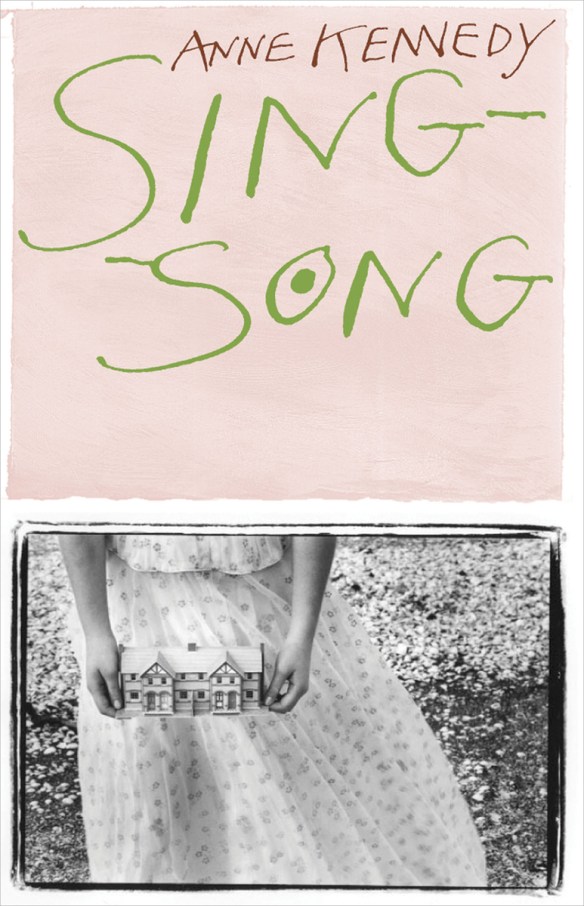
from Sing-Song (Auckland University Press, 2003)


This poem comes from Anne Kennedy’s 2003 book Sing-Song, though I found it browsing Best New Zealand Poems when I was a feminist in the early 2000s and it totally called me on my shit-heaping of perfection on expectation on repeat. It made me laugh and then it got me thinking. All those aspirations. I love how the list builds seemingly statically, and then the subtle rejigging of the line breaks: how the washing, shopping, cooking and cleaning stick out uncomfortably, the unsettled promise of the good night’s sleep. I love the truth in it, and the futility. Serious grappling in a sing-song frame. And what a killer ending. Fucking lion. Also, fucking buttons. Just saying.

Liz Breslin


Liz Breslin is a feminist in the 2020s as well as other things including a writer and editor. She’s working on poems, a play and lyrics for The Vegan Karate Club Band.

Anne Kennedy is a poet, fiction writer, screenplay editor and teacher. Her latest book is Moth Hour (AUP), long-listed in the 2020 Ockham Book Awards. The Ice Shelf (VUP), a novel, appeared in 2018. Awards and residencies include the NZ Post Book Award for Poetry, the Montana Book Award for Poetry, the University of Iowa International Writers’ Program (2017), and the IIML Writers’ Residency (2016).

Auckland University Press page


singsong-kennedy__06504.1552609614.jpg