go here for details

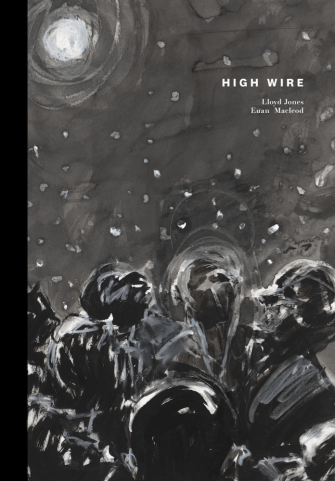
High Wire Lloyd Jones and Euan Macleod Massey University Press 2020
Massey University has launched the kōrero series of picture books for adults – a series of collaborations where ‘two different kinds of artistic intelligence’ work on a shared topic.
The first collaboration links author Lloyd Jones and artist Euan Macleod.
After Lloyd invited Euan to the bridge project, Euan drew and sketched profusely. Lloyd mused upon the crisscrossing bridges that constitute a life, and the way such structures lift you above the mundane. But then his musings changed:
But soon the heady ideas I had about bridges began to collapse. Where I had been, others had. The commonality of experience breathed its deflating air. As exhilarating as it had been to walk across Golden Gate Bridge or to soar above Sydney Harbour or to flit across the modest rainbow from child hood, my footsteps fitted neatly into others’: my beating heart fell in with theirs.
Bridges became high wire.
With High Wire you enter a collaboration that is glorious at every level: the words, the images, the ideas, the feelings. It is a book that saturates you in wonder and, as reader, I contemplate, observe, sidetrack. I had thought about interviewing both Lloyd and Euan, but the book is so powerful, so haunting, I want to celebrate that. Keep room for the unsaid, the enigma, the openings.
To begin with I am mindful of the beauty, the vistas and heights that bridges might deliver but then, as Lloyd abandons his first musings and settles on the high wire, I am lodged in the terrain of vertigo, fear, death, exhilaration, memory, wobbliness.
Euan’s initial drawings resemble subconscious scrawls steered by predetermined subject matter (an oxymoron?). I can’t stop looking at them. I can’t stop turning the pages as the opening light and airiness hit the dark. The thicker wedges of ink and line draw me in and then switch back to an enigmatic wash of light, a sudden and surprising flash of colour. Euan’s kinetic sketches are as much about the maker as they are the subject. I read them as a piece of music. Again an oxymoron, as all senses are lit. More than anything, I relish the musical flow. Art as music as feeling as idea in a tempo-ed move between light and dark, thin and thick, space and density. The high-wire figures – scrawled and ink washed – are a catalogue of human emotion. Think intimacy, think vulnerability, think daring. Think astonishing!
This is gut wrenching stuff. It is a book you feel before you move on and speculate. I find myself thinking about art, heights, tightrope walkers, childhood, people leaping from the flaming Twin Towers, struts and balancing acts. I get to the drawing ‘hold your nerve’ and it seems prescient.
Adjacent to each image is the writing – tightrope writing – where the author opens himself up, testing where he places the next foot so to speak. At one point he writes:
In the subconscious everything is up for grabs – there is no enforced geographical isolation. There are no trespass notices.
Again I am pondering the degree to which the subconscious steers the predetermined subject matter – to the way a sense of risk and challenge is heightened in the state of writing. I could have asked Lloyd this if I had interviewed him, but I remember he once told me his novels are guided by the unknown and discovery.
I don’t need to know how this book came into being – I want to navigate its existence in as many ways as possible. That makes it a book of returns.
On a pragmatic level you could stick with the simple premise that this is a book about a narrator walking to Australia on a high wire! Or the story of Philippe Petit who walked a high wire between the Twin Towers in 1974. Ah but this is a book of so many crossings, crisscrossings and possibilities, both physical and ethereal. At one point we meet the saddest bridge in the world. It is a bridge that is as much about disconnection as it is connection.
Lloyd muses on the bridges between random things as Bill Gates had imagined. So now, having stalled on this opening on the page, the bridges between me reading and my own random things are spiked into view by the book. How do I dare? How do I dare? How do I dare? How do I cross the vertigo-inducing gap between here and there? As reader? As writer? As human being?
What would the world be like without bridges? Lloyd asks. I carry that question as I follow the drawings again.
Lloyd weaves together the mysterious and the physical: to the point a sentence becomes luminous. Haunting.
A dark wriggle in the lunar surface of the sea turns yellow as the cloud passes and the moon reappears. To the west, the steady light of an aeroplane on its direct and patient course.
I love this book for so many reasons: because of its fertility for both heart and mind, because images and words speak to each other without taking a privileged position, because human experience is made complex and absorbing.
I don’t see this as a graphic novel – I see it as a book of connections born out of collaboration. An adult picture book. Massey University Press has created an exquisite book – the paper a perfect hue and texture. A gorgeous object to hold. High Wire is bookmaking at its very best. I recommend it highly and I can’t wait to read the next one.
Massey University Press page
Launch video (an excellent lockdown launch)
Frankie reads ‘The Winter Swimming of my Grandmother’ (first published by New Flash Fiction Review, 2019)
Frankie McMillan is the author of five books, the most recent of which, The Father of Octopus Wrestling and other small fictions was listed by Spinoff as one of the 10 best New Zealand fiction books of 2019. Her previous book, My Mother and the Hungarians and other small fictions was long listed for the NZ Ockham Book Awards, 2017. She was awarded the NZSA Peter and Dianne Beatson Fellowship in 2019. Frankie currently teaches at the Hagley Writers’ Institute in Christchurch.
Island Bay
Bright specks of neverlastingness
float at me out of the blue air,
perhaps constructed by my retina
which these days constructs so much else,
or by the air itself, the limpid sky,
the sea drenched in its turquoise liquors
like the paua shells we used to pick up
seventy years ago, two bays
along from here, under the whale’s great jaw.
Fleur Adcock
Fleur Adcock was born in New Zealand but has lived in England since 1963, with regular visits to NZ. She lives in London, and has dual British and New Zealand citizenship. She was awarded an OBE in 1996, a CNZM in 2008 and the Queen’s Gold Medal for Poetry in 2006. Her poetry is published in Britain by Bloodaxe Books and in New Zealand by Victoria University Press. In 2019 her Collected Poems appeared from Victoria University Press, and later that year she received the Prime Minister’s award for Literary Achievement in Poetry.
Fleur: I wrote this poem when I was in New Zealand late last year. It feels unbelievable that I should have been able to walk freely along the coast of Island Bay basking in the sunshine and the wind, just because I felt like it; things are not like that here, and may never be again for someone of my age. But at least it’s spring, and I have my garden, and am allowed to go for walks in the local woods as long as I don’t travel on a bus to get there, or risk doing anything so audacious as my own shopping.
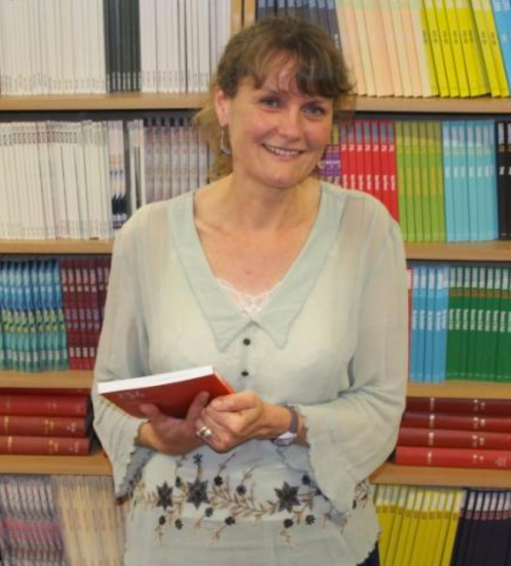
Warm congratulations to award winner, Emma Neale.
Verb Wellington is proudly supporting the Friends of Lauris Edmond. Below is a Press Release announcing the 2020 Lauris Edmond Memorial Award for Poetry. Read on to discover three new poems by the 2020 winner, Emma Neale.
A Birthday Celebration: Dunedin poet honoured in biennial poetry award
Dunedin poet Emma Neale is the 2020 recipient of the Lauris Edmond Memorial Award for Poetry, a prize given biennially in recognition of a distinguished contribution to New Zealand poetry.
Emma Neale is the author of six novels and six collections of poetry. Her most recent novel, Billy Bird (2016) was short-listed for the Acorn Prize at the Ockham NZ Book Awards and long-listed for the Dublin International Literary Award. Her new book of poems is To the Occupant which was published in 2019 by Otago University Press. Emma is currently editor of the iconic Aotearoa literary journal, Landfall.
On receiving the award, Emma says:
“I’m incredulous, happy and stunned in my tracks, as if someone has thrown a surprise party – the way friends did when I was nine, and they waited to jump out at me until I was standing near the host’s swimming pool. All the other nine-year-olds were hoping I’d fall into the water with shock. I didn’t. So here I am, dry, a bit disoriented and also delighted again, and remembering that Lauris Edmond was the first poet I ever heard give a public reading. When I was 16, I caught the bus alone to a Book Council lunchtime lecture during school holidays in Wellington, and went to hear her talk about her writing career. I have a feeling I’d sneaked out of the house to do it – as if my interest in poetry and my aspirations to write it were somehow going to get me into trouble, and my parents and friends shouldn’t know. I sat and listened on the edge of my seat, as the poems and the talk opened a portal that meant I could glimpse the green and shifting light of hidden things. The portal was still a long way off, but I was convinced that poetry and literature were going to carry me into an understanding of intimacy, identity, time, ethics, deeper metaphysical questions.
I still think of Lauris Edmond as a kind of poet laureate of family relationships; her work was immensely important to me as the work of a local woman poet I could not only read on the page but also hear in person. I am just sorry that I can’t thank her face to face for what her work has meant to me, and I’m enormously grateful to the Friends for reading my own poetry and giving me this generous award. I’ve pinched myself sore. I actually feel like leaping into a pool.”
Established in 2002, the Award is named after New Zealand writer Lauris Edmond who published many volumes of poetry, a novel, a number of plays and an autobiography. Her Selected Poems (1984) won the Commonwealth Poetry Prize.
The 2020 award was announced on 2 April the date of Lauris Edmond’s birthday. A ceremony and birthday celebration was due to take place at National Library of New Zealand in Wellington on 3 April to honour Emma, however due to COVID-19 the event is postponed and will take place in collaboration with Verb Wellington later in the year.
Piece in ODT
Submit your poem to the next cycle of the Montreal International Poetry Prize!
Each entry must be an original, unpublished poem of 40 lines or fewer. The language of the competition is English.
Early entry: 1 May 2020
Later entry: 1 June 2020*
Multiple submissions are allowed.
*The usual deadline of 15 May has been extended to 1 June in response to COVID-19. .
Early entry: 20 CAD
Later entry: 25 CAD
Additional entry: 17 CAD
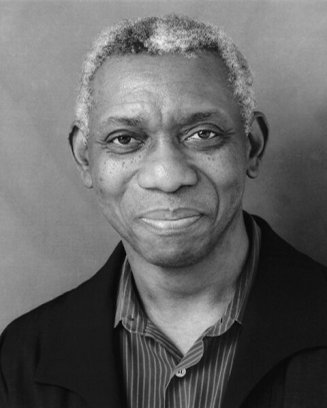
Yusef Komunyakaa’s books of poetry include Taboo, Dien Cai Dau, Thieves of Paradise, Neon Vernacular, for which he received the Pulitzer Prize, Pleasure Dome, Talking Dirty to the Gods, Warhorses, The Chameleon Couch, Testimony, The Emperor of Water Clocks, and Everyday Mojo Songs of Earth (forthcoming 2020). His honours include the William Faulkner Prize (Université Rennes, France), the Ruth Lilly Poetry Prize, and the Wallace Stevens Award. His plays, performance art, and libretti include The Deacons, Wakonda’s Dream, Saturnalia, Testimony, Gilgamesh: A Verse Play, and Somewhere Near Here (Bright Darkness). He is Distinguished Senior Poet and Global Professor at New York University.
Further details here
Hana Pera Aoake (Ngaati Raukawa, Ngaati Mahuta, Tainui/Waikato) is an INFP, Gemini heartthrob living on Kai Tahu land in Te wai pounamu. They are a writer, editor and artist in a stupid amount of debt (Liv, Laff, Luv), having completed an MFA in Fine Arts (first class) in 2018 from Massey University. They are a current participant in the Independent study program at the Maumaus des escola artes via a screen and an editor at both Tupuranga journal and Kei te pai press.
Two more lists after this one because I want to support New Zealand bookshops.
But today I want to celebrate NZ Music Month – music has been such a go-to comfort for me in the past few months. I find myself awake listening to and loving Trevor Reekie’s world-music selection on RNZ in the middle of the night, or Nick Bollinger’s sweetly crafted music reviews along with Jeremy Taylor’s (also RNZ). I found myself playing Nadia Reid latest album over and over again when I was trying to meet an anthology deadline and work seemed impossible.
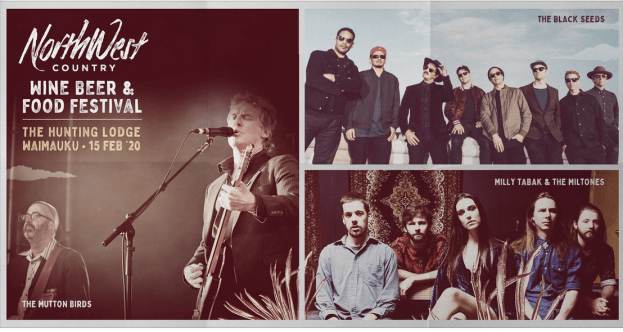
Earlier this year Michael and I sat on the slopes and listened to Don McGlashan and the Mutton Birds along with The Black Seeds at the Hunting Lodge in West Auckland and it was bliss. Another day and I popped over to Kumeu’s summer Folk Festival and loved everything about it. These outdoor / indoor music events seem like a miracle now, a mirage in my mind to which I keep returning. To hear live music is perhaps one of the most extraordinary human experiences because it transcends everything – all the toxic crap in the world and it brings us together. It makes you feel good: both physically and emotionally.
Hard times for musicians, especially with live music events not on the calendar yet.
Just as we can support NZ books in NZ book shops, we can support our local musicians and purchase their music. I am hanging out for Reb Fountain’s amazing new album (physical one due June).
This week I invited musicians and music fans to pick a book or two that has offered comfort or that they have loved, recently, or at any point in time!
Thanks to everyone who contributed. This a treasure house of books that sets me all aglow as a reader. Ruby Solly has assembled the most wonderful list of books ever and because I have read and loved all of them bar two – those two are now on my must-purchase list! I plan to keep buying books from local bookshops once a week and buying NZ music.
A list of books picked by musicians, music critics, music bookshops and music fans
Marysia Collins (Singer)
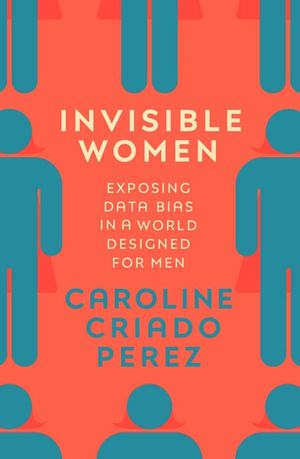
I’d like to recommend the book Invisible Women – Exposing Data Bias in a World Designed for Men by Caroline Criado Perez.
Why do I Iove it?
This book is PACKED with data and examples of biases (i.e. ways the world is way worse for women) which at first punch you in the chest and then make you feel armed with this new power of knowledge. Admittedly it comes with a heavy serving of frustration and sadness, but served in a clever and witty way that in itself reinforces the hope drawn from the good things we know happen when women take an equal place on the stage.
A musical reference from the book is the mention of the fact that a standard piano was designed around the average size of a man’s hands – which are larger than the standard size of a woman’s hands. The obvious implications of this being that it’s harder and more painful/injury-provoking for women to play the piano.
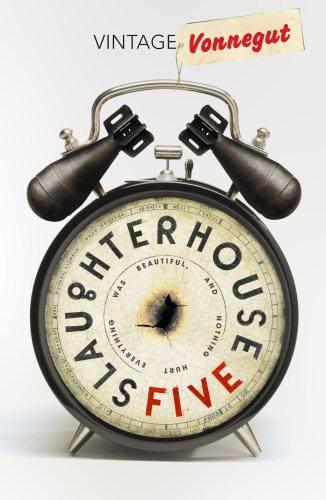
Victoria Kelly (Composer, performer and producer of music – and also the Director of NZ Member Services at APRA AMCOS)
Funny you should ask… just last week I was compelled to return to a book I have read more times than I can count. It’s my favourite book – Slaughterhouse 5 by Kurt Vonnegut – and the only thing I’ve felt like reading during this entire lockdown period.
I think it comforts me because Vonnegut has the gift of being able to take the reader by the hand and lead them kindly and generously through the brutality and strangeness of humanity.
I love the fact that it changes as I get older, and that it still surprises and enlightens me.
Perhaps my favourite passage in the book is one I read aloud to my 13 year old daughter just the other night because she was worried about school and finding it hard to get things done at home.
“Billy had a framed prayer on his office wall which expressed his method for keeping going, even though he was unenthusiastic about living. A lot of patients who saw the prayer on Billy’s wall told him that it helped them to keep going too. It went like this:
God grant me
the serenity to accept
the things I cannot change,
courage
to change the things I can
and wisdom always
to tell the
difference.
Among the things that Billy could not change were the past, the present, and the future.”
That last sentence that gets me every time.
Don McGlashan (Musician)
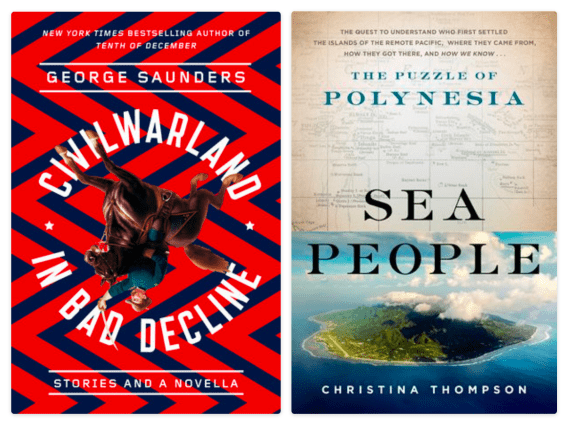
I’ve been reading a lot. First CivilWarLand In Bad Decline, a set of short stories by George Saunders, where grotesque but vivid characters scratch out lives in the wastelands and theme-parks of a post-apocalyptic America. I love how funny and bleak Saunders can be at the same time, and sometimes he just floors you with a piece of imagining so true and strong you have to put down the book and breathe deeply for a bit. Like that, for me, was a story called “Offloading for Mrs Schwartz”, about a man who is forced to sell memories to get by; first other peoples, then finally his own.
Then I read Sea People – by Christina Thompson, an utterly engrossing investigation into the history of Pacific peoples, and their voyages of discovery. Thompson, a US/Australian who teaches writing at Harvard, examines what we know, through the work of greats like Dame Anne Salmond and Te Rangi Hiroa; what we are only just now learning, like the re-vitalisation of ancient navigational knowledge by such scholar-voyagers as Nainoa Thompson – and what we still don’t know, like what happened to the Lapita and Rapa Nui civilisations who left such striking footprints and little else. “Sea People” uses multiple lenses: Polynesian oral history, linguistics, archeology, anthropology, the uniquely Western knack of suggesting radical (and wrong) theories rather than ask the locals – and Thompson has skin in the game, too: she writes from the heart because she’s married to a Maori man, and their children carry Polynesian DNA. I picked it up because I wanted to understand more about the Pacific and its people, but after a while, I found that the timeless fog already brought on by the lock-down became even more hazy, as I missed appointments, meals and sleep so I could cram in another chapter.
Trevor Reekies (Musician, writer, Trip To The Moon member, Producer and Presenter of Worlds of Music RNZ)
These 2 gentlemen remain my favorite Poets
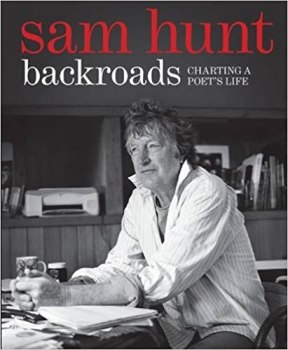
SAM HUNT is one of Aotearoa’s most loved and respected Poets. He has lived the life, walked the walk (usually downhill in his treasured Cuban heels) and entertained audiences from all walks of life with his unique perception of his world, his endearing humour and personality and, of course, his poetry. Living the life of an artist in Aotearoa takes considerable motivation in one’s own belief. Sam may give the perception that he arrived as a fully formed poet and that his work comes to him easily. But the reality is that he applies himself to his art every breathing moment of his day. He rehearses, he reads and writes daily. He chucks his creative line into the pool … sometimes he may get a nibble and other times he may arrive at a finished piece, but crucially, he chucks his line into the pool on a daily basis. Sam is equally a brilliant raconteur. He entertains. Sometimes his introductions to the poem are longer than the poem itself but that is part of his charm. I’ve seen him perform shows with bands like The Warratahs and just take command, such is his presence. This place would be the poorer without him. I don’t own many of his books but one title I enjoyed immensely is his book Backroads, Charting a Poet’s Life (2009). It’s a treasure of a book filled with a collection of yarns that reveal his integrity, eloquence, humour and unique charm.
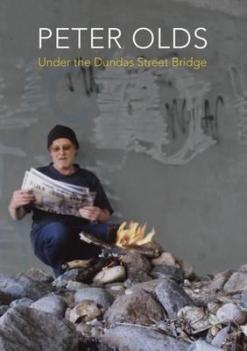
PETER OLDS I met when I was a student at Otago University in the 70’s. From memory it was at a flat in Cumberland street where the Editor of Critic magazine lived. He is the first person I met who described himself as a poet. Peter’s poems are as appealing as many of the ‘Beat’ poets and City Lights’ fraternity. Peter is uniquely himself and writes the way he talks. He was always good company who was totally focused on his work and that is the sort of dedication I admire most. It’s hard work being a ‘poet’ in a country that for years has denied the arts as being ‘work’. .. more a case of being a ‘dole-bludger’ .. Peter Old writes a lot about Dunedin, the city where I was born, walking the same streets that my parents once walked in their youth.
I can read Peter’s work easily and relate to it with the same fondness that I have for the city itself. Peter Olds writes of relationships, hitch-hiking the country and nights at the Captain Cook Hotel with old friends and new, all the time collecting mental notes and anecdotes for future resource. Peter wrote intelligently to a cultural and generational divide. A working class poet blessed with a whimsical humour and a keen ear that (for me) gives his work a significant point of difference.
Favourite Collections: Beethoven’s Guitar (1980) and Under the Dundas Street Bridge (2012)
Nadia Reid (Musician, songwriter)
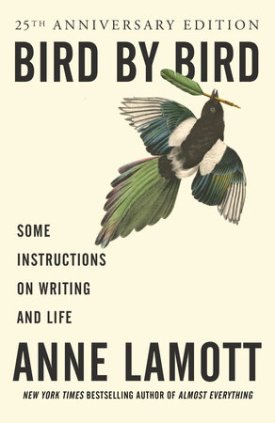
My recommendation would be a non-fiction book called Bird by Bird: Some Instructions on Writing and Life by Anne Lamott.
Something about her writing just gets me right where I need it. This book is a book about writing ultimately and also about Life. I found it quite relevant to songwriting too. She talks about ‘getting your butt in the chair’ and just turning up. My favourite quote from the book:
For some of us, books are as important as almost anything else on earth. What a miracle it is that out of these small, flat, rigid squares of paper unfolds world after world after world, worlds that sing to you, comfort and quiet or excite you. Books help us understand who we are and how we are to behave. They show us what community and friendship mean; they show us how to live and die.
O and this quote! This is actually my favourite:
You own everything that happened to you. Tell your stories. If people wanted you to write warmly about them, they should have behaved better.
Will Ricketts (Musician, Phoenix Foundation)
A book that gave me some comfort …..
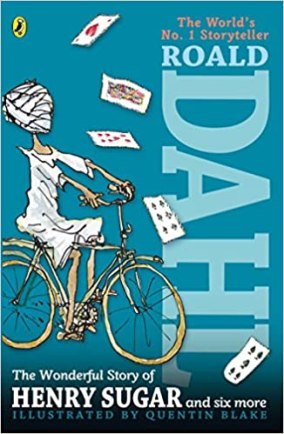
The Wonderful Story Of Henry Sugar Roald Dahl
Perfect little windows into ingenious scenarios, a collection of miniature mental holidays.
I find Roald Dahl’s style of writing transfers that essential spark or signal within the constant noise, something that is intangible if one tries to encapsulate it in essence.
The formula of doing, the gift of story telling, the gift of the imagination.
Grant Smithies (Music critic/ journalist/ broadcaster)
As a kid, I could often be found in my bedroom, touching my tongue to the terminals of a transistor battery. Ow!… Zzzt!… Ow…Zzzt…Ow!… Zzzt! Why? I grew up in Whanganui in the early 60s, where a cheap thrill was better than no thrill at all. And I like a good jolt.
Perhaps that’s why I read mostly short stories, to the extent that whenever I make my way into a novel, it feels like an interminable journey with far too many people to meet along the way. Give me short, surprising, vivid, weird. Give me Denis Johnson and Joy Williams.
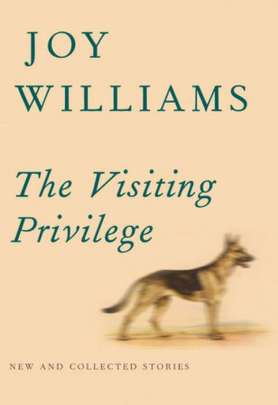
Joy Williams: The Visiting Privilege: New and Collected Stories (2015) is a ripping comfort read, assuming you’d find comfort in visiting a succession of skew-whiff worlds rendered by a preacher’s daughter who believes everything, no matter how mundane, has deep cosmic undercurrents.
So many qualities I love in other writers are there in Williams, plus more besides. She is Anton Chekhov in dark glasses and wraparound skirt; a rural Grace Paley; John Cheever stuck fast in the surrealistic groove that gave us The Swimmer and The Enormous Radio. She cops the minimalism of Ray Carver and Lydia Davis, then blows it all sideways with a humid waft of Flannery O’Conner gothic.
She’s a compassionate misanthropist with bold comedic chops, welding rage and despair to belly laughs within sentences so elegant, you sometimes have to read them twice before moving on with the story.
“What a story is, is devious,” Williams once told an interviewer from The Paris Review. “It pretends transparency, forthrightness. It engages with ordinary people, ordinary matters, recognizable stuff. But this is all a masquerade. What good stories deal with is the horror and incomprehensibility of time, the dark encroachment of old catastrophes.”
Her subject is American failure and its repercussions. She’s interested in the way people deal with loneliness, and regularly sets up occasions in which her characters are forced to confront their own insignificance, facing the fact that they are just another anxious critter struggling to find safety within nature.
Animals provide a mystical non-human dimension to many of her best stories- members of some secret parallel society, bearing witness, hanging out at our side while living in an utterly different world.
And Denis? Let’s just say that Johnson’s Jesus’ Son (1992) is a book every aspiring short story writer worth their salt reads and rereads like a sacred text, eager to unlock its mysteries.
Again, funny and bleak are bedfellows throughout these eleven interlinked tales of lost souls crashing cars, breaking into houses, shooting up, committing murder, hanging out in bars where some drinkers are still clad in wee plastic bootees and hospital gowns after going “over the wall” from rehab.
The action moves between 1970s Iowa, Chicago, Seattle and Phoenix. Someone gets stabbed in the eye by his wife. Bad things happen to bunnies. A naked woman with long red hair hovers above a speedboat while two men strip electrical wire from the walls of a house to sell for drug money.
Leaps in logic, time, focus and tone mirror the addled mental state of the central protagonist: shaky memories/ wishful thinking/ drug hallucinations/ obsessions/ pathologies/ outright lies are all rolled together into sentences so poetically compressed, I sometimes finish a story and go straight back to the start.
Johnson once described his own writing as a “zoo of wild utterances”, and it’s a zoo worth visiting. Jesus’ Son makes you either want to become a better writer or give up writing altogether. And it will give you more pleasure than putting your tongue on a transistor battery.


Ruby Solly (Musician, poet, performer)
Curating this book list was super interesting as I realised books are not really something I turn to much for comfort nowadays. Mostly I turn to books to challenge myself and turn to other things like music for comfort which makes sense as I work with both fields so listen and read a lot. But when I need comfort, there are a few favorites I return too. All of these books are set in strange otherworldly places in one way or another. Be that 1970s New York, or a land stuck in perpetual winter. They also help us to answer big questions, or at least to add a little bit more to what we already know so we can live with not knowing all the answers. They show us parts of who we are, and parts of who we can be. I hope you pick up one or two, and I hope you enjoy them as much as me.
Light Boxes by Shane Jones
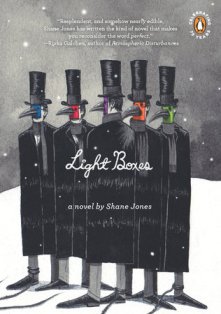
I bought this beautiful little poetic novel on a whim when I was about fourteen before a car trip home, and it lasted me the exact space from Hamilton to Turangi. Shane Jones is an excellent writer in the alt-lit scene and this, his first book, looks at a close-knit town that is perpetually stuck in winter, which is personified as a man called ‘February’ who lives in the sky beyond the clouds. Jones weaves together poetry, drawings, prose and a sea of surreal characters and scenes to make a book that takes you from the depths of depression into a new world. I use this book almost medicinally when I’m feeling really low.
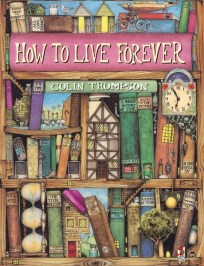
How To Live Forever by Colin Thompson
As part of my job, I spend a lot of time with kids and books. This one has stuck with me for life and comes as both a picture book (with Colin’s detailed and otherworldly illustrations) and a children’s novel. Colin Thompson is my favorite children’s author / illustrator as he managed to weave these incredible worlds filled with magic, and humor; all while examining some really heavy questions around topics such as purpose, greed, and death and dying. But don’t let that put you off. This book is full of magical characters, homes that pop up in books, and helps children (and let’s be honest, adults) understand that good things need to come to an end for us to truly appreciate them.
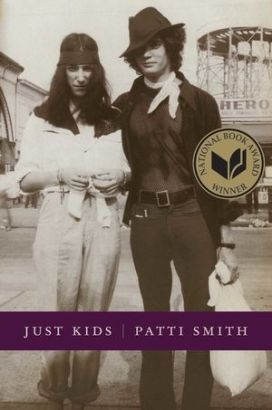
Just Kids by Patti Smith
I’m a huge Patti Smith fan, and this book sums up a such a specific and special relationship that young artists starting out have with each other. It reminds me in part of the girls and gays essay by Tayi Tibble, and describes this beautiful (in Patti’s case, mostly) platonic love and how that support and nourishing of each other creates such beautiful work because both parties feel so loved and supported. In typical Patti fashion, the book is littered with beat celebrities and includes her first encounters with Allen Ginsberg (who initially thought she was a handsome boy) and William Burroughs to name a few. The book has this rich sense of wonder at the size and magic of 1970s New York and feels full of hope.
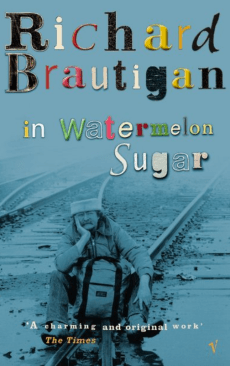
In Watermelon Sugar by Richard Brautigan
This book is described as an American post-modern post-apocalyptic novel; which I admit does not sound comforting from the get-go. Richard Brautigan is also described as being one of the grandfathers of alternative literature, and his influenced can be seen in many other writers including Shane Jones. In this book, he creates a commune in a village that has its own bizarre way of being where nearly everything is made from different colored watermelons, more specifically, the sugar that comes from them. The sky changes color each day of the week and the different colored watermelons must be harvested on the day that the sky matches them. One of the days is a ‘black soundless day’ which is when the black watermelons are harvested. This book is a sensory treat and can take you away from anything with the strength of its imagery and bizarre scenes that can feel almost animated or film like.
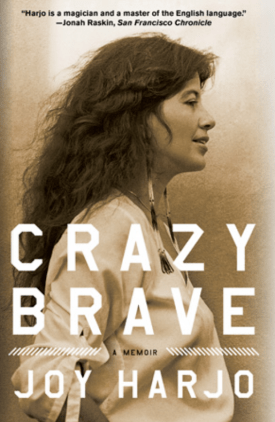
Crazy Brave by Joy Harjo
Written by the first Native American poet Laurette of the United States, this book is filled with wisdom and hope in the face of so many impossible things. Joy’s voice has this incredible way of looking at difficult and awful situations through love and ancestral wisdom in order to survive and honor those who have brought her there. She talks in this book of ‘the knowing’ which is a powerful thing to bring into one’s life during times that comfort is needed. Anything by Joy is a real comfort book for me.
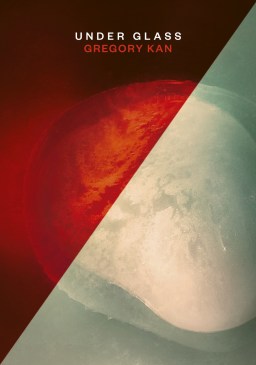
Under Glass by Gregory Kan
I love poetry books that are bigger than just the individual poems. This book is a journey into a strange world with two suns (which light boxes has as well!) and gives us a winding path to follow through the new places we find ourselves in. There’s this subtle percolating, calm sort of insistence in this book. Willing you to read on. The pacing in this is beautiful and always leaves me feeling like if been on a journey and now am ready for a gentle sleep and wherever dreams may take me, I can handle it.
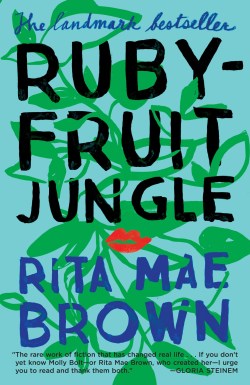
Ruby-Fruit Jungle by Rita Mae Brown
This was my big, queer, coming out read and what a way to start. The story follows Molly Bolt and her life, starting with her in primary school scheming with her best friend getting him to ‘show himself’ to girls for a price that they then split 50/50. Molly is a bulshy, queer little grifter who makes her way around America making friends, art, and discovering herself and the dangers that being yourself can have for someone like her. It’s light, beautiful, and hilarious.
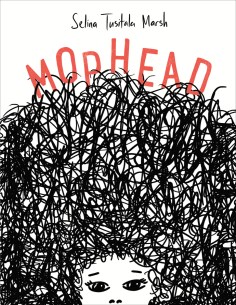
Mophead by Selina Tusitala Marsh
My Mum bought me this book after we read it together in a bookstore and she cried saying “It’s so like you!”. I felt very embarrassed to be compared to Selina even by my Mum, but I’ve returned to this book again and again when I’ve had a rough day. Selina’s writing has a vivaciousness that’s infectious, it’s impossible not to feel powerful and special reading this book. It shows you that no matter where you are at in your journey, you’re exactly where you need to be.
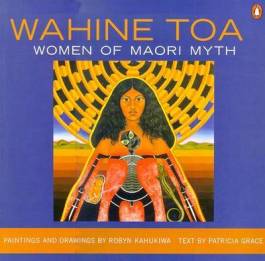
Wāhine Toa by Patricia Grace and Robyn Kahukiwa
This book outlines the female whakapapa of ngā tangata Māori with the deepest words and illustrations. Pūrākau show us how to live our lives, and all of them are filled with multitudes of lessons where we take what we need at the time and leave the rest for others or for when we may need it in future. This is a book to be read again and again, and to discover something new every time.
(Paula: Thanks Ruby! This list was like a comfort blanket to me! I so loved being taken back to books that have meant a lot to me too.)
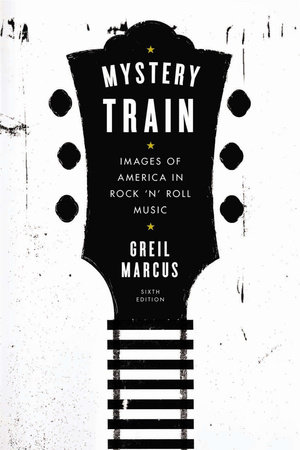
Simon Sweetman (music journalist, music blogger, short story writer and poet
Greil Marcus Mystery Train (1975)
I have a few non-fiction books I return to – some to just dip in and out of, others where you read it again from cover to cover – Mystery Train by Griel Marcus is both. I’ve read this book start to finish a half-dozen times but I’ve dipped in to it for just a few pages in one gulp on so many occasions. It’s a history of rock’n’roll through four essays – four artists mark the development of American music, are the signposts. The Band, Sly Stone, Randy Newman and Elvis Presley. But with Marcus it’s all about the links and distractions – the way he uses these artists to also tell the story of many other musical acts and cultural moments. The writing is brilliant – and the final chapter is the best writing on Elvis Presley that you’ll ever find. And by extension it’s some of the best writing about America. “Mystery Train” is that rare music book where you could read it without having too much interest in reading about music – it is worth it for the journey and the language and the command of writing. But it would be impossible to close the book not being curious about so much of the music discussed in its pages. One of my all-time favourite books and easily one of my favourite volumes of music journalism.
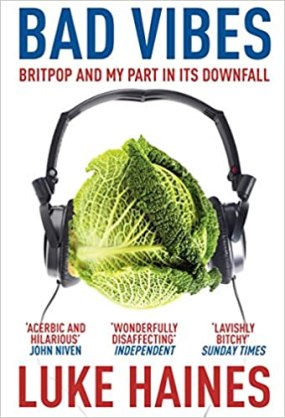
Jeremy Taylor (Slow Boat Records, RNZ music reviewer)
If I were to name one book that I have genuinely loved, and that has stood up to continued re-readings, it would be Luke Haines’ Bad Vibes: Britpop, and my part in its downfall.
It is alternately hilariously funny, bleak, cruel, tender, and self-aware, and has the best anecdotes (returning home to his dingy flat in Camden to find Metallica sitting on his couch!). The history of Britpop as told by someone smart enough to realise it was all, actually, bullshit. Thoroughly recommended!
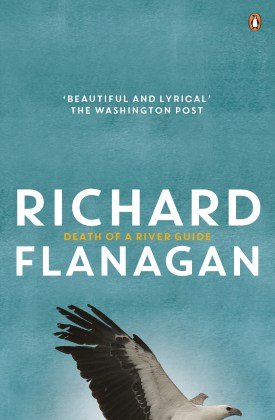
Ariana Tikao (Taonga puoro musician, singer & composer )
Death of a River Guide, by Richard Flanagan. Penguin Books, 1994.
I’ve just started reading this book again. It was a birthday gift from my then boyfriend, who wrote a beautiful mihi to me on the inside cover. We were about to go our separate ways while he went off on his OE, and I headed back to New Zealand after living together in Sydney for a year. It was February 1998, and we’d just finished the Overland Track, an epic seven day tramp through the mountainous heart of Tasmania, down to its lush West Coast. The book is set in Tasmania, and includes not only the drowning river guide Aljaz Cosini’s personal and family history, but touches upon the wider history of Tasmania. It starts with a description of his traumatic birth, which has certain similarities to his pending death. By the way, the boyfriend didn’t stay away on his OE all that long, and now we have two adult children. Our youngest is planning his own OE – once borders open again. Things tend to have a cyclic nature, and in the meantime I will enjoy ‘returning’ to Tasmania via this beautifully told story.
Thank you!
Long may we support and cherish NZ music
steady
day i
i am trying to imagine a body of water from the confines of our green space.
my neighbour reads an excessive number of library books on hydrotherapy,
and i become accustomed to skimming these surreptitiously before returning
them for her. there is a composure to the watery diagrams that i pore over,
searching for instructions beyond mere bodily mechanics, some sort of cure
for aloneness in one’s body. we must stay safe at home, i repeat, but it means
very little to you beyond a sibilant silkiness on your tongue. and sometimes,
although you don’t know it yet, harm can come from within too. these days,
our neighbour calls out to us from her bedroom window each morning
when we are once again wandering undirected in the early flinching bush
and your face breaks, like a wave at its apex, about to crash. to distract,
we lean in to green. you choose the seaweed stick of chalk, and we draw
pulsing trees together. later, finding a grove of wild ginger, you insist
it’s a treasure, protecting this weed with its pervasive rhizomatous roots,
shielding it with your splayed hands and then draping it over your shoulder
along with your foraged Hormosira banksii, claimed at mid-tide on our last
evening swim. everything equal in your mind, you stroke the leaves
and shrivelled olive beads sleepily, lulled by a saturated silence from
the deserted road above; watching you, i think of habits and how they form,
and hope we keep some or all of these we are forming. my pelagic fish,
the silt in your river of isolation came when you realised the sea was lost
to you, and you struggled to use those branching chains of water-filled veins
to withstand the ebbing tide
day ii
morning light hits shivering rimu fingers in a way i didn’t notice before,
like it’s plunging, trying to pick something up that’s lost at the bottom
of a council leisure centre pool; abandoned goggles, cap, stick, stone.
i want to find that thing we’ve forgotten, or maybe all the owners
of these churning lost things that help us stay buoyant or otherwise.
my maternal grandfather was a daily wild swimmer and treated it with
a reverence bordering on panic. it’s the alteration of body temperature
that releases, relieves. it made him feel sound of mind, but maybe not safe
of body, given the lacey shape of the fractured greywacke rocks he dove from
at the inlet they called home. i can visualise a breathlessness, and then
a bruised flying. and I wonder, is that how he felt? did the propulsion
into water, coupled with that numbing, knotty coldness, shake him wildly loose?
like him, you exercise an immersive love that demands return to one salty,
thrown-about body, tangling us up in green scribbles, circles and untraceable
starfish scratches. how deep you want to measure, to fill up every space
between us, the air we share. at breakfast, while slicing apple suns,
we discuss the air quality index and the Clean Air Act and what this means
for cities and transport and adverse health effects. afterwards, floating in
the bathwater on your back, eyes closed to me, i watch the soft depression
of your chest cavity and talk to you about the humming bee breath,
closing one ear to all surrounding sound
day iii
we bend and collect fallen kauri and tanekaha leaves to dry downstairs
for making into sheets of paper, and i feel like calming, wake-like
into the warmness of the leaf litter underneath peeled-bare branches,
sighing into all the worries of the basalt, granite and rock crust
that should be frustrated with us for failing to care. we do not
have kauri rot, and our ritual to ensure this has something of prayer to it.
understanding, you chastise any who visit, pointing to which boots
are allowed to be worn on your indecipherable map filled with rising
lines, eddies, swells. you are rooted deep to your watery west coast clay.
today, we read of the cormorants that have returned to Venice,
as the seaweed-thick fragile lagoon ecosystem is visible again, shorn
of tourism and motor transport disturbance. and while you flick through
photographs, I worry that we will forget too soon. you replay the narrative
again and again, hopping and spinning about and hot-headedly insisting
on mimicry. my body still baffles me after birth; refusing, uncooperative,
not at all one with my clamorous mind, it carries me along through
this time of confinement but feels weightless in a frightening way,
as though i am an alluvial river, and not at all certain how to halt
the erosion of these shores
day iv
stories are one thing we agree upon, resting flock-like on steaming
beds of compost mulch, chopping up rotting weeds and long, prickling
stalks from harvested Jerusalem artichokes. we argue over a pair
of turquoise-handled scissors like siblings until i take your
little finger and link it through mine, pleading silence while i weave
another marshy history. the blue hue of the ocean is largely constructed
from chlorophyll and disintegrating organic bodies, and this seems
to be the only likely truth i can hear. there are more snarled news reports
that i mute furtively, my fingers washing away a wider belly of current,
holding it back for just a little longer. i am selfish in this skimming
of possible narratives, but i want you to be a water-skating insect,
legs as flotation devices, ridged with grooves marked on tiny hairs
that trap air. please slide across this surface without pause; you will learn
to scull or drift through swampy nodes and puckers soon enough.
for now, all you have is the woven ribs of trees, and the light running deep,
keeping us very nearly afloat. sometimes, if i rise early and walk into
the aqueous-lit yawn of bush before you wake, i can hear our neighbour
singing, just ever so faintly
Elizabeth Welsh is a poet, papermaker and academic editor. She is the author of Over There a Mountain, published by Mākaro Press in 2018. Her poetry and short fiction has been published in New Zealand and the United Kingdom. She lives in Titirangi with her husband and daughter.
cricket during lockdown
The ragged monotone
of a cricket’s refrain
is childhood’s waist-high grass
and boredom. It is last chances,
eternity, the beige of neglected summer lawns.
Through an open window
I hear its shrill register
competing
with the sporadic wash
of reduced traffic noise
and my granddaughter’s tearful protests
against an afternoon nap.
This cricket’s front-leg click, rub, whirr,
is an irksome useless key
turning a music box
with a loose spring
that cannot be wound any tighter.
I find myself counting on it to be
today’s measure of time. Even when
everything turns, re-turns,
the cricket will keep
on. For now though, it is
my stop watch.
above the line
Above, a black-backed gull
grifts the high way
only gulls trawl,
a sky- valley current
that streams between
beach and harbour.
I look up, see its chest
feathers ironed white by light,
its black wings
rowing west
towards today’s catch:
fish entrails, road kill,
mud crab. I note
how it hauls its cargo
of intent, watch
until it disappears
behind the tips
of trees, envision
the movement, the trail
it leaves
behind, that caught
rude disturbance
of time’s dead air.
Kay McKenzie Cooke
Kay McKenzie Cooke is a Dunedin writer. The Cuba Press are publishing her fourth poetry collection which is scheduled for release in June 2020.
 NZ Poetry Shelf