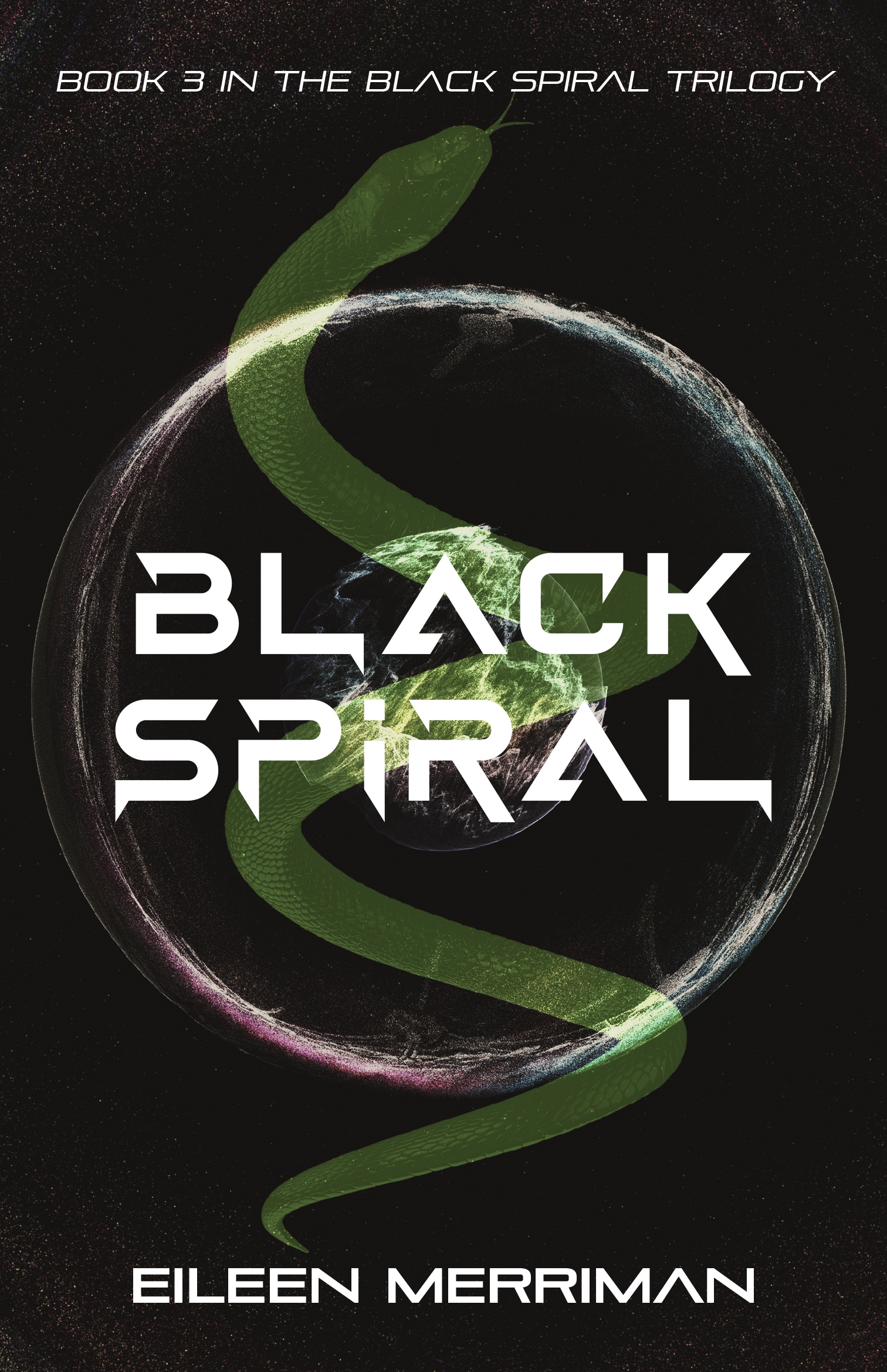
I choose my books carefully in these tumultuous times. I want a book that transports, uplifts, lingers long after you put it down. A book that raises questions, that offers edge, but that leaves you anchored. That draws you in close to what is good in humanity as much as it might signal what is bad. I adored reading the first two volumes in Eileen Merriman’s The Black Spiral trilogy. My words grace the back of the third volume:
Characters matter, dialogue matters, real-life detail matters, significant issues matter and you are always held in the grip of a perfectly pitched narrative …This YA fiction at its life-crackling best.
This appraisal also applies to the third and final volume, Black Spiral because it resonates and grips on many levels. Like the first two books, it is exquisitely crafted at the level of both sentence and architecture. Violet and Johnno/ Phoenix have escaped the Foundation and what the Foundation might do to them, in its devastating commitment to virus experimentation on humans. The Foundation is especially keen to track the escapees down, to harness (hijack, manipulate) their skills at shape-shifting, astral travelling, telepathy. Especially as Violet is pregnant.
What makes the novel strike so deeply are the ideas. Follow the stench of corruption wherein those in power (not just the Foundation but across Governments and other organisations) use power to serve themselves as opposed to multiple communities. To serve the well-off, to dupe the vulnerable. What price human life? was a question running through my mind as I read. Ideas on biological warfare, vaccines, pandemics, human greed, percolate above and below the narrative surface. I am reminded how we need to insist on scrutiny, on speaking out, on maintaining solid, useful and indeed loving human connections.
Yet what also makes the novel are the characters. The way good and evil are not clear cut, easily discernible divisions. For example, Violet’s father’s choices. Or the way some characters are absolute, unadulterated evil and must be stopped. The protagonists, Violet and Jonno, along with the supportive crew that gathers around them, are prismatic. You look through their eyes, actions and thoughts, and see and feel the world differently. You feel their love and courage, their determination to never give up. And yes, this determination to continue and face all the challenges and sideswipes, no matter how tough, is gripping. I couldn’t put the book down.
Black Spiral clung to me as I ate, did chores, did my own writing. After I read the final page, I dreamed of the novel that night, and it stuck with me the next day. Like a shape shifter before my eyes. Like a phantom cloud of ideas, plot and epiphanies. The relationships, the connections. Eileen’s medical background adds gritty layers, ethical choices, questions about the babies we carry, medical interventions, using humans as guinea pigs, being transparent.
Black Spiral still clings as I work on my own novel, as I read the next poetry book, as I hang out the washing, listen to the latest Covid numbers, the catastrophic events in Ukraine, the twisted choices of the protestors. Novels as good as this offer retreat, reinforcement and uplift. Glorious.
Eileen Merriman’s first young adult novel, Pieces of You, was published in 2017, and was a finalist in the NZ Book Awards for Children and Young Adults and a Storylines Notable Book. Since then, she has published another nine novels for adults and young adults and received huge critical praise, with one reviewer saying: ‘Merriman is an instinctive storyteller with an innate sense of timing.’ In addition to being a regular finalist in the NZ Book Awards for Children and Young Adults, Merriman was a finalist in the 2021 Ngaio Marsh Award for Best Crime Novel and Moonlight Sonata was longlisted for the Jann Medlicott Acorn Prize for Fiction 2020. Editions of some of her young adult novels have been released in Germany, Turkey and the UK and three have been optioned for film or TV, including the Black Spiral Trilogy.
Her other awards include runner-up in the 2018 Sunday Star-Times Short Story Award and third in the same award for three consecutive years previously. She works as a consultant haematologist at North Shore Hospital.
find the legitimate. part of the skin. claim it or. don’t claim it my. bad exchange. my pale belonging the. way the word. identity makes you. spit. what’s in there. the visible thing curled. in the mouth. exact like biting. the blood. speaks the quantum. splits. my favourite. colour is white. -passing.
2.
my cousins and I don’t. have any. brothers we don’t know. about men don’t. want to. we connect at the. colour of bruises. open our drinks view. pain as an ash-like. diminishing. we can imagine. a sudden deep optimism. in the face of utter. calamity. I will devote myself. to its water. develop a silken. empathy. harm is better. dismantled.
3.
make me a weaver. I will wait. to stop bleeding. to harvest. the flax in my. backyard cut. away from the. heart at an. angle scrape off. the skin with a. shell my ancestors. also waited.
4.
to be on an earth. that turns is to. exist around crisis. like looking into. a non-human eye. my visions are alive. with me like an. empress I. untouch the insides. I make something. fit that does. not want to.
Stacey Teague
Stacey Teague (Ngāti Maniapoto, Ngāpuhi) is a poet, editor, and teacher living in Te Whanganui-a-Tara.
Iona Winter’s hybrid work is widely published internationally, and she holds a Master of Creative Writing. The author of three collections, Gaps in the Light (2021), Te Hau Kāika (2019), and then the wind came (2018), Iona has recently completed her fourth, which addresses the complexities of being suicide bereaved. Iona Winter’s website
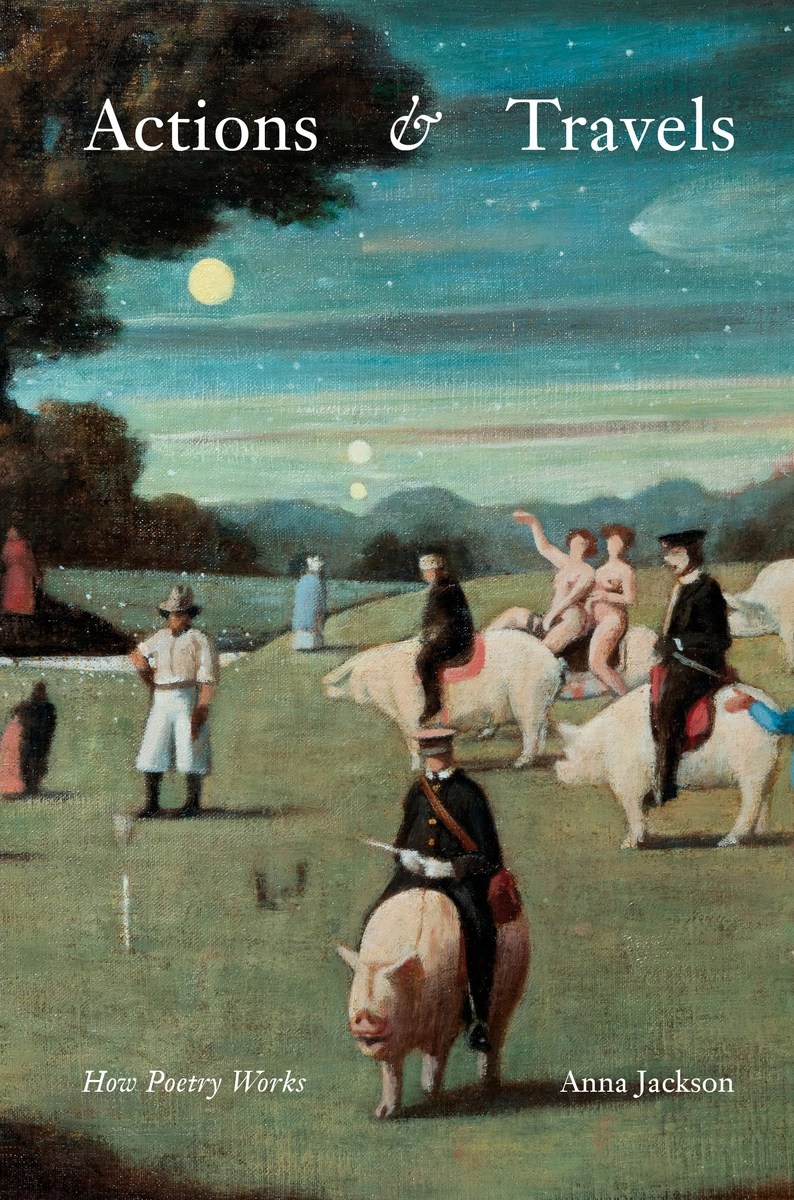
In 2022 I aim to have email conversations with poets whose work has inspired me over time. First up, Anna Jackson. Very apt, as Anna’s new book, Actions & Travels: How Poetry Works, is published by Auckland University Press today.
Right from the start Anna’s poetry has touched a chord with me. In the early poems, the litheness on the line, the measured wit, the roving curiosity captivate, as in AUP New Poets1 and The Long Road to Teatime (2000). In The Gas Leak (2006) Anna steps into narrative, but family remains in acute focus. There is a humaneness at work, little wisdoms, a playful yet serious pushing at familial boundaries. When Pasture and Flock: New & selected poems arrived in 2018, I admired the new growth, myriad viewpoints, shelter and flight. Wediscussed poetry and the Selected Poems in a Poetry Shelf interview.
Paula: Not long after my debut poetry collection Cookhouse appeared (1997) you popped a note in my pigeon hole at the University of Auckland inviting me to afternoon tea. We meet up for the first time and have been sharing afternoon tea ever since, exchanging thoughts on poetry, what we read and write, the world at large and the world close at hand.
To celebrate the arrival of your book Actions & Travels: How Poetry Works, I thought a slowly unfolding email conversation as I read the book would be perfect.
I love the title because it underlines the way poetry is full of movement. I also like the open-spirited ‘how poetry works’. I started listing verbs under the umbrella word, ‘works’: sings, captivates, challenges, narrates, mystifies, dreams, soothes, astonishes, functions. Was it hard settling upon a title?
Anna: I still love Cookhouse, I used to carry around my copy of it so I could read an afternoon tea poem wherever I was in the day. Yes, movement is exactly what I love in poetry, movement and pace. The title comes from a quote I love by Anne Carson, from an interview with her, in which she calls a poem ‘an action of the mind captured on the page’, an action that the reader has to enter into, and move through – so that reading poetry is a form of travelling. Actions and Travels was my working title for the book from the start, but I did try to come up with something that would be a bit less obscure. Instead, the subtitle has had to make it clear that this is a book about poetry. ‘Works’ is a very functional sort of word, less poetic than sings, or mystifies. But when I’m writing poetry myself that is what I am looking for, whether the poem is working or not.
After I’d finished the book, and was editing the final chapter for the last time, a chapter about the poet’s invisibility, and a poem’s flights, I thought Flight and Invisibility could have made a good title for the book. But I like the more prosaic quality of Actions and Travels too.
Paula: Before I move onto the book, is there a poetry book (or two) you have carried with you in the past few months or so?
Anna: Oh, there is, actually – Anne Kennedy’s The Sea Walks into a Wall (AUP). It is a collection that fits different spaces of time, with some shorter poems and some longer poems, so I am quite often picking it up again, and the longer poems in particular I return to at different times. They repay rereading and the collection as a whole also gains in substance and resonance with rereading. It has been a good summer book, and a good counterweight to the Knausgaard novels that have been my other summer obsession.
Paula: I am fascinated how a poetry collection reaches us in different ways over a period of time. In the introduction to Actions and Travels, you discuss John Keats’ brilliant short poem and the hand reaching out: ‘I hold it towards you’. This is poetry. I always think of the bridge I cross as I enter a book. So many ways of crossing, sometimes impossible, so many different bridges. I am thinking of the Bridge of Wonder. The Bridge of Knots. The Bridge of Song. Heaven forbid The Bridge of Dead Ends. What matters to you as you enter a poetry book?
Anna: Different things matter according to the book – I suppose it depends on what mattered to the poet. Wonder, knots and song – those are all things that might draw me in. I was talking to artist/curator Nathan Pohio about the importance of grit in writing and thinking – it was what he was working to include in his own writing – and I thought this was such a good word, something that slows you down and maybe even hurts a little bit, something that makes you need to bring something of yourself to the experience. Grit rather than a dead end – something that invites collaboration and involvement rather than shutting you out. But not something too smooth, either – not something you are forgetting as you read it.
Paula: Collaboration seems important. Openings for the reader rather than closures. When you first came up with the idea for Actions and Travels, what sort of things did you hope it would do. From my early stage of reading, I am finding it a source of openings and inspiration. It prompts me to action as a writer and travels as a reader, and vice versa.
Anna: I hoped it would allow readers to take some time over some poems I love, some of which they might already know, some of which may be new discoveries for them. A lot of people I talk to don’t read poetry but read novels or non-fiction, books they can be immersed in. Part of what I love about poetry is what a quick reading hit it can give you, how you can come across it on social media, in magazines or on posters and be instantly transported. And poetry is reaching more and more readers this way. But Actions and Travels offers a slower reading experience for readers who want to follow my own responses to the poems I read. I hope readers will also want to stop and think about their own responses to the poem and be interested in any differences there might be between their own initial responses and my own. I hope slowing down the reading, and returning to some poems that might already be familiar, will also make space for the poems to resonate deeply, and maybe continue to haunt the reader after the book is finished.
Paula: I was thinking similar things when I wrote Wild Honey. I love the way poetry can fit in small moments, in a pocket, a bag, or while you drink morning coffee. Long poems are immensely pleasurable, but short poems equally so. Bill Manhire sent me a poem he recently had published in PNReview, and I haven’t stopped thinking about it. It’s musical, enigmatic, physical, a haunting Covid snapshot. Tell me a short poem you have read recently that has lingered in your mind.
Anna: Yes, I loved the way Wild Honey gave us time with each of the poems you discussed, and with the poets too – I loved the way it brought the poets into the picture with biographical details. Actions and Travels doesn’t have the same scope but I hope it does open space up in a way that is a little bit similar. As for a short poem, for brilliance with brevity my favourite poet would have to be Lydia Davis, and the short poem of hers I think of most often is ‘Improving my German’, which goes like this:
All my life I have been trying to improve my German. At last my German is better —but now I am old and ill and don’t have long to live. Soon I will be dead, with better German.
And the poem I’ve been talking most about lately is Erin Scudder’s Jewel Box. It is definitely the best poem about grit I can think of. It can be found in Sweet Mammalian Issue 8.
Paula: I love ‘Jewel Box’. It has got me thinking of poems in this way. Yes as jewel boxes, but also the grit that rubs against you. There’s the ‘peach meat’ and there’s the grit. Glorious. As I said long poems are equally rewarding. I wrote long poems when I was doing my Doctorate and my daughters were young, as I felt I could fit something big in small moments. Your long-poem chapter is entitled ‘Sprawl’ and that is so fitting. I am thinking of the way your ‘I, Clodia’ sequence (can I call this a long poem?) both sprawls and concentrates on small poems. Clodia’s voice is the connective tissue. And I am also thinking of The Gas Leak. I see grit and peach meat in both these projects. What draws you to the long poem? Do you like writing them?
Anna: I think of ‘I, Clodia’ and ‘The Gas Leak’ in terms of sequence rather than sprawl, because of the concentration, as you say, in each of the small poems. Every poem of those sequences I think of as quite tightly wound. I did love having the space that the sequence gave to build narrative and to develop ideas over its course. That is what sprawl offers too but I think of the sprawling poem as having more looseness and more fluidity to it, so it can be very relaxed, open and looping. I don’t think I’ve ever really written a sprawling poem though I would like to try. I love your ‘Letter to Anne Kennedy’ which I include as an example of sprawl for the way it unfolds so loosely and easily across the pages. There are patterns too, an intricate architecture of departures and returns, repetitions and echoes, and shifts in perspective, but they are very unobtrusive.
Paula: ‘Tightly wound’ is apt – and it also resonates with wound/ injured. ‘Resonates’ is a word you explore in ‘Simplicity & resonance’. If the stars align in a poem for a reader, it resonates – as in the examples you navigate. I find I am reading the book at a snail’s pace because of the interior resonances. The way I stall on a poem, and then want to read more of Emily Brontë, Robert Frost, Bill Manhire, Rebecca Gayle Howell, Eileen Duggan, William Butler Yeats (or return to). Yet I am also compelled to keep reading – as I might with a detective novel -regardless of what else needs to be done. Did you find this book a challenge to write? It seems to be a book written out of deep love for the subject matter and that shows.
Anna: Resonance is interesting to think about because as you say it depends on the relation between the reader and the poem – what resonates for one reader may not be what resonates for another – but also on how the poem sets up the possibilities for resonance. So it is both internal to the poem and external to it – the way the thought of a wound or injury is suggested by the word wound as in wound up, but is not actually present in the phrase tightly wound. I wondered at the time, actually, about writing “wound up” instead of tightly wound, because I didn’t particularly want the association with injury to come into play, but then I thought, tightly wound is better – it is how you might describe a person, a mood, whereas wound up suggests clockwork, something more mechanical, and something wound up in order to then do something else. And I thought, after all, there is also some kind of injury or wound at the heart of each of those narratives.
Language is complicated! And part of the beauty of poetry is how the poet works with all those complications and manages the interplay of associations. That is what I loved most about writing the book, the close attention it made me pay to all these sorts of details in the poems I was reading. So yes, the writing was totally driven by my love of the poetry.
Paula: It shows. Your sentences are exquisitely crafted. There is a fluency about the book that invites the reader in. I like the way the footnotes are not evident until you see the notes at the back. This is a book of ideas but it resists academic jargon and theory speak. What were your thoughts on how you would write it?
Anna: I loved it when you said, earlier, that you were reading it like a detective novel! It doesn’t have a lot of plot or suspense but I did want readers to be able to follow my thinking and my reading. So yes, instead of footnotes there are notes at the back you only need to refer to if you want to know where a quote comes from. For the same reason, I cut back on references to other critics, so that each chapter would just be shaped by my own thinking and observations. There are times when another critic’s reading really helps me make a point of my own. I give Edward Hirsh’s account of his childhood reading of the Emily Bronte poem because it is such a good example of how resonance can come both from inside and outside the poem – the experience he brought to it, the idea that his grandfather was talking to him through the poem, was his own experience, but the ways the poem allowed that sense of being haunted and the ways it conveyed the exact sense of loss he felt are very specific to the poem, with its stormy scenery, insistent rhythms and echoing rhymes. So some critics are referenced but it is mostly just my own voice, talking my way through the poetry, as the discussion of one poem leads to the introduction of the next, to develop an idea about the political work a poem can do, for instance, or what is going on when poets translate or rework poetry from the past.
Paula: I love the way you weave in the voices of other critics. To me these appearances service connection and building rather than dismantling and disconnection. If as poets we write on the shoulders of the poems and ideas that have preceded us, we also write within the ‘fire’ of the present and the urgency of the future (as you explore). We reach out to the established poets and we listen intently to the new and younger voices. I found I had to leave things out of Wild Honey and it kept me awake at night (chapters, poets, poems). Did you have similar struggles and pain?
Anna: Yes, I did, although Actions and Travels is a very different book. Wild Honey is so inclusive and so wide-ranging and comprehensive an account of women’s writing in New Zealand, you can include so many more poets than I had the space for, and write about their work in so much depth and detail, but even though the book is so inclusive I know how much you agonised over the limits even to so large a book. In some ways it is harder, when a book is so inclusive, to leave any particular poet out. Actions and Travels is so much smaller and it covers poetry from the US and UK as well as New Zealand, and goes back to the sixteenth century and even earlier, much earlier in the case of Sappho. So there was no way I could include every poet who is important to me, or even all my most absolute favourite poems. There are absolute touchstone poets I left out, like Stevie Smith, Anne Kennedy, Lydia Davis, Seamus Heaney, Robert Sullivan, to name just a few, and poems I often return to that are not in the book at all, or are mentioned briefly in passing, like Gerard Manly Hopkins’ ‘Oh, the mind, the mind has mountains’.
I did begin with an idea of some of the poems I wanted to include, but I allowed the readings in each chapter to suggest connections between poems, and I wanted observations to be able to develop into arguments or extended thoughts on how poetry can sustain the particular qualities I was finding in it, so often the poems are chosen for how well they illustrate an idea I am exploring, or how well they fit in the chapter between two other poems. It isn’t a canon-building or a curatorial exercise, just a free-flowing discussion of poetry and ideas. Having said that, I do love every one of the poems that I have included, and I do think they make a beautiful collection together in the book.
Paula: I love the addition of writing prompts linked to each chapter at the back. I really like: ‘Find the words that resonate with you – at a paint shop? In a fabric shop? In a knitting pattern? Put one or more of these words in the centre of a short poem.’ Have you tried any of your prompts?
Anna: The poetry prompts are meant to be taken lightly, tried out to see if anything comes of them. They are a way of setting the writer on a different course of thought than they might have been on. If you write with a loose grip on the instructions and let the writing go wherever it wants to, it will probably arrive at some concern or obsession of your own or draw on something of your own life, but coming at it from a different angle may lift your own story into something both stranger and perhaps more universal. Some of the poetry prompts are based on how I wrote some of the poems I’ve written – describing a physical action in such detail it becomes metaphysical (‘Evelyn, after apple-picking’), adding the word ‘Dear’ to turn a poem into a letter (‘Dear Tombs’), adding rhyme to turn free verse into terza rima (‘Dear Tombs’ again, and ‘Eleanor at the beach’), adding in elements to the scenario in Sappho’s love triangle poem (‘Being a poet’), some of the others too. But I haven’t actually started with any of my own prompts, to generate a new poem. I really should try them out.
Paula: I am particularly drawn to the ‘Poetry in a house on fire’ section as it seems apt for the difficult times we share – what with pandemic, protest, looming war, poverty, despair. Locally, globally. You turn to the poetry of younger writers such as Ash Davida Jane and Tayi Tibble (and yes, more established writers), and it excites me. I take heart from these younger poetry voices. I find poetry is so important at the moment. I want Poetry Shelf to be a place of connection and celebration. The edgy grit along with the soothe. What gives you solace at the moment? How does poetry fit into this ‘house on fire’?
Anna: Yes I think poetry is particularly important in turbulent times, both as solace and as a kind of resistance. Poets are writing more politically now I think than when I began publishing poetry, maybe because social media is already bringing together the personal and the political, maybe because these are such turbulent, politically charged times, though I also love, too, the way poets like Tayi Tibble and Ash Davida Jane are so funny even when they are at their most political. The poems that I find most soothing when events in the world are most overwhelming are poems of quiet but implacable resistance or refusal, there’s a kind of humour but it is very astringent. There was a time I wanted to read Robert Lax’s 1966 poem ‘The port was longing’ over and over again, as a kind of meditation, not of acceptance but of refusal. At the moment, Ilya Kaminsky’s ‘We lived happily during the war’ has a terrible resonance. His reading of it is extraordinarily powerful. It certainly isn’t soothing, it is terribly disquieting, raising such a difficult question of how to live in times of crisis. Does happiness become immoral? Poetry insists not only on an ethical but on an emotional response to such a question. I don’t think we ever want to let go of feeling.
Anna Jackson is a New Zealand poet who grew up in Auckland and now lives in Island Bay, Wellington. She has a DPhil from Oxford and is an associate professor in English literature at Victoria University of Wellington.
Anna made her poetry debut in AUP New Poets 1 before publishing six collections with Auckland University Press. Her most recent book, Pasture and Flock: New and Selected Poems, gathers work from her previous collections as well as twenty-five new poems. The book includes poems from Catullus for Children and I, Clodia, the two collections that engage with the work of Catullus, as well as poems about badminton, billiards, salty hair, takahē, head lice, indexing, proof-reading, hens, truth and beauty.
As a scholar, Anna Jackson is the author of Diary Poetics: Form and Style in Writers’ Diaries 1915–1962 (Routledge, 2010) and, with Charles Ferrall, Juvenile Literature and British Society, 1850–1950: The Age of Adolescence (Routledge, 2009).
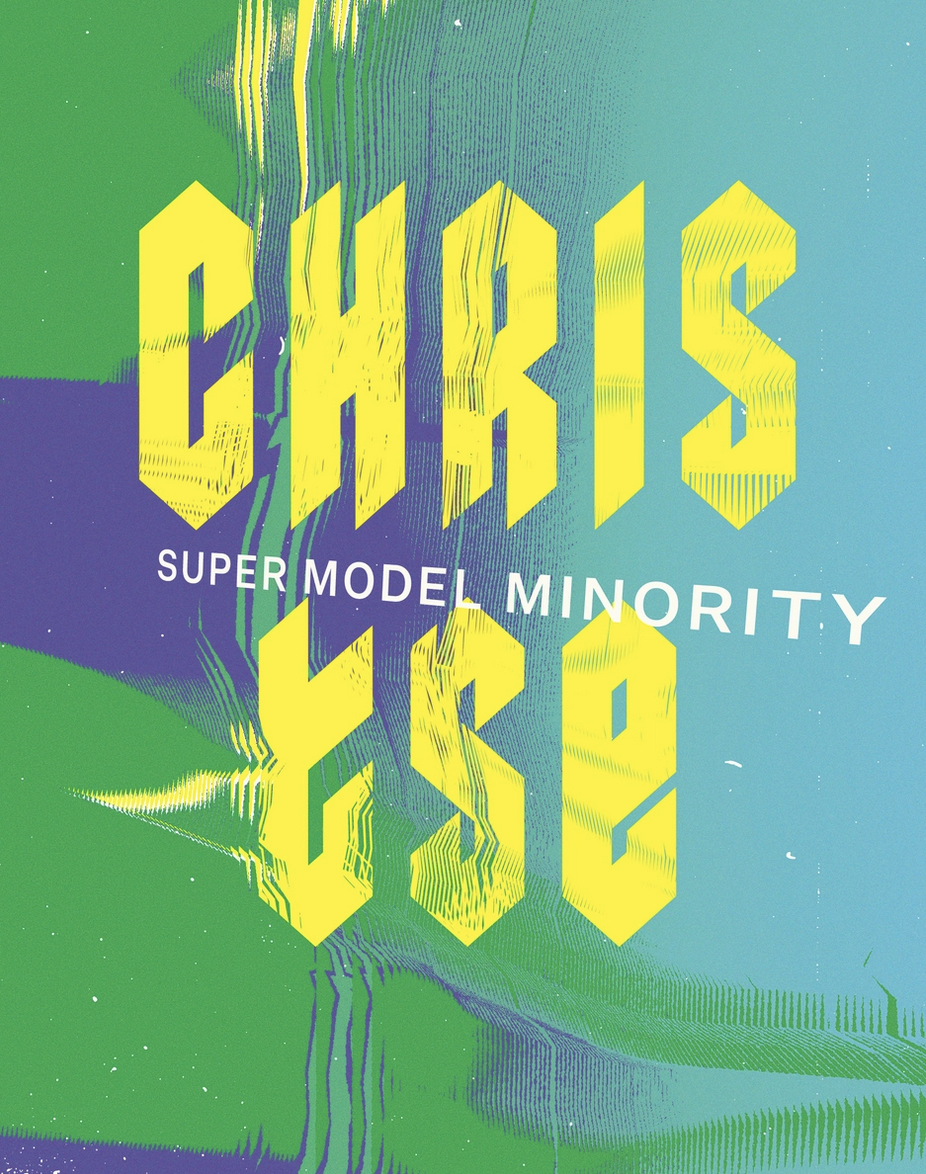
Super Model Minority, Chris Tse, Auckland University Press, 2022
Chris reads ‘Tomorrow, and tomorrow, and tomorrow’
Chris reads ‘BOY OH BOY OH BOY OH BOY’
Chris Tse is the author of three poetry collections published by Auckland University Press: How to be Dead in a Year of Snakes (winner of Best First Book of Poetry at the 2016 Ockham New Zealand Book Awards), HE’S SO MASC and Super Model Minority. He and Emma Barnes are the co-editors of Out Here: An anthology of Takatāpui and LGBTQIA+ writers from Aotearoa.
Today is International Women’s Day. At breakfast, I read NZ Supreme Court Judge Susan Glazebrook’s terrific story about her ongoing ZOOM efforts to help get women Judges out of Afghanistan last year (with the help the International Association of Women Judges). The story is in the February issue of North & South and it is unmissable. It feels like we are living and breathing under such a blanket of darkness at the moment. We know the list: the pandemic and its ripple effects, misguided protests, impending war, human suffering under despots across the globe, misguided journalism, mis-and-disinformation, poverty, greed. At times it is too much. I switch off social media, the radio, the papers to avoid toxic voices creeping in with their destructive influences influencing the vulnerable and the disenfranchised. But here I am reading a magazine presenting good journalism under Rachel Morris’s astute editorship. Rachel is stepping back now from the role, but I am grateful for the issues she has presented (not forgetting worthy attention to books in Aotearoa).
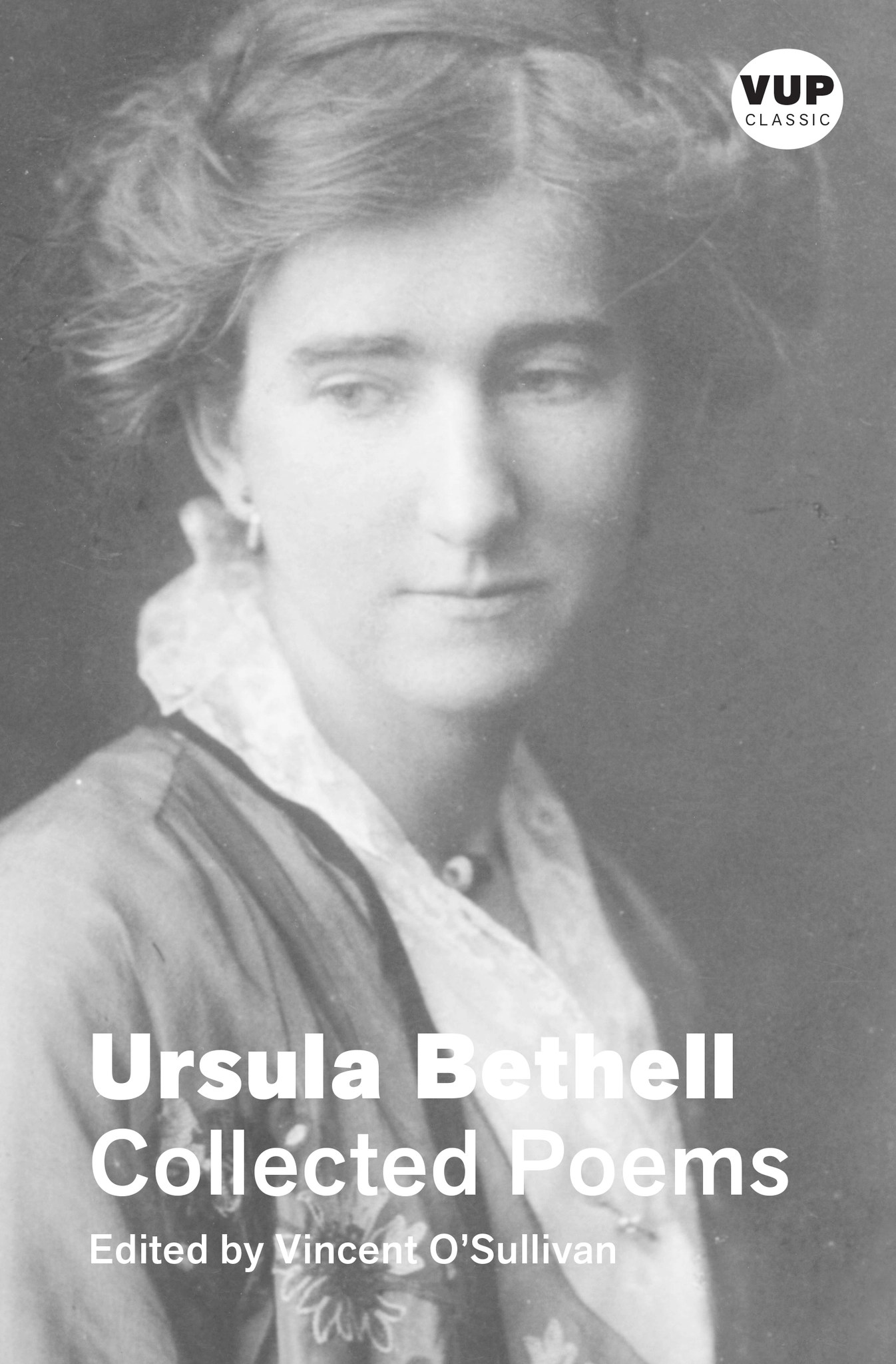
It seems an eon since Wild Honey appeared in the world, yet it was only last year I was doing the online Ockham NZ Book Award celebration for it. But it is fitting to remember this project of love – I set out to celebrate and retrieve women poets in Aotearoa. The younger generations of women poets are vibrant, inspiring, active, revealing, political, personal, edgy, lyrical, path-forging and it is a joy to read them. To write about their work on Poetry Shelf. But I don’t write out of a vacuum. I write out of the women poets who preceded me. Who also wrote with vigour, with various connections to the personal and the political. And so to celebrate International Women’s Day, to celebrate women’s poetry in Aotearoa, I draw your attention to Te Herenga Waka University Press’s reissue of Ursula Bethell’s Collected Poems.
I have several copies of Wild Honey to give away. Email or DM or leave a comment if you would like a copy.
Let’s shine lights this week on all the wonderful things women are doing – but hey, not just women, everyone. Let’s shine lights on humanity’s goodness.
Ursula Bethell Collected Poems, ed Vincent O’Sullian, VUP Classic, 2021
Detail
My garage is a structure of excessive plainness. it springs from a dry bank in the back garden. It is made of corrugated iron, And painted all over with brick-red.
But beside it I have planted a green Bay-tree — A sweet Bay, an Olive and a Turkey Fig, — A Fig, an Olive, and a Bay.
Ursula Bethell, From a Garden in the Antipodes, 1929
Ursula Bethell is the kind of poet I turn to when I want uplift, when I crave the poetic line as transport beyond ongoing despair at this sad-sack world. Ursula Bethell’s reissued Collective Poems is now a member of the VUP Classic series. Oxford University Press originally published the collection in 1985, and it was reissued in 1997 with corrections and a new introduction by editor Vincent O’Sullivan.
I utterly loved engaging with Ursula’s poetry in Wild Honey. I considered it in three parts:
“I want to approach her poetry as three distinctive garden plots with a memorial garden to the side: From a Garden in the Antipodes (1929), Time and Place (1936) and Day and Night (1939) and ‘Six Memorials’. You could consider the debut collection as poem bouquets for friends, the second as a poetry posy handpicked for Pollen after her death, while the final collection, a late harvest from the same ground, almost like a consolation bouquet for self. The memorial poems were penned annually on the anniversary, or thereabouts, of Pollen’s death.”
I wrote in my Wild Honey notebooks:
Bethell published three collections of poetry in her lifetime, all anonymously, with the poems chiefly drawn from a decade she devoted to writing, gardening and her cherished companion, Effie Pollen. For ten years, the two women lived in Rise Cottage in the Cashmere Hills, until Pollen’s premature death, at which point Bethell’s life was ripped to unbearable shreds. The more I read Bethell’s poetry and letters, and the more I muse beyond her characteristic reserve, I feel as though this is the woman to whom I would devote an entire book. She is a knotty collision of reticence, acute intellect, acerbic advice, crippling heartbreak and poetic dexterity. Bethell rightly counters the claim that she ‘knows no school mistress but her garden’, with the point that the garden was ‘a brief episode in a life otherwise spent’. Yet her gardening decade was the most joyous of her life, responsible for the bulk of her poetry, and a period she could not relinquish in letters and the grief that endured until her death. She moved back into the city with ‘no cottage, no garden, no car, no cat, no view of mountains’, no dearest companion and an impaired ability or desire to write poetry.
I was uplifted by individual poems and by the threads and luminosity as a whole:
“How can poetry ever match the joy and beauty a garden offers? Bethell brings us to the pleasure of words, the way words bloom and bristle. For Ruth Mayhew, a close friend to whom she dedicated a number of poems, Bethell builds her green garden symphony in ‘Verdure’: an abundant foliage of lemon, myrtle, rosemary, mimosa, macrocarpa. Without these variations, Bethell confesses she ‘should have, not a pleasaunce, not a garden/ But a heterogeneous botanical garden display’. The word, ‘pleasaunce’, is the spicy fertiliser waiting to explode the poem into new richness. Bethell favours flowers over produce, a pleasure enticement for the senses over fruit and vegetables for the kitchen (‘I find vegetables fatiguing/ And would rather buy them in a shop’. Her poetry ferments as a form of pleasaunce where the ‘plausible’, easily digested details of domestic routine, the house interior, daily conversations, intimate preferences and relations are sidestepped for words that provoke sensual and intellectual variegation in an outside setting.” from my Wild Honey notebook
To re-enter Ursula’s poetry is an act of restoration, just for a blissful moment, because it’s a way of feeling the warmth of the ground, the warmth of humanity (as opposed to its cruelty and ignorance). It is reminder that our literature offers so many rewards, on so many levels, and it is at times like these, poetry can be such necessary solace, respite, prismatic viewfinders, idea boosters. I am toasting the poetry of Ursula Bethell with thanks to Te Herenga Waka University Press.
Vincent O’Sullivan is the author of the novels Let the River Stand, Believers to the Bright Coast, and most recently All This by Chance. He has written many plays and collections of short stories and poems, was joint editor of the five-volume Letters of Katherine Mansfield, has edited a number of major anthologies, and is the author of acclaimed biographies of John Mulgan and Ralph Hotere.
Ursula (Mary) Bethell (1874-1945) was born in England, raised in New Zealand, educated in England and moved back to Christchurch in the 1920s. Bethell published three poetry collections in her lifetime (From a Garden in the Antipodes, 1929; Time and Place, 1936; Day and Night, 1939). She did not begin writing until she was fifty, and was part of Christchurch’s active art and literary scene in the 1930s. A Collected Poems appeared posthumously (1950). Her productive decade of writing was at Rise Cottage in the Cashmere Hills, but after the death of her companion, Effie Pollen, she wrote very little. Vincent O’Sullivan edited a collection of her poetry in 1977 (1985).
Thursday 10 March, 6pm GOOD BOOKS, 2/16 Jessie St (Beside Prefab) and streamed live online on Youtube
Vaccine passes and masks required. Very limited numbers, get in quick. RSVP to maggie@at-the-bay.com
Pre-order your copy of Formica here for a copy signed live at the event.
Link to Youtube stream will be embedded on this page leading up to the event. Here
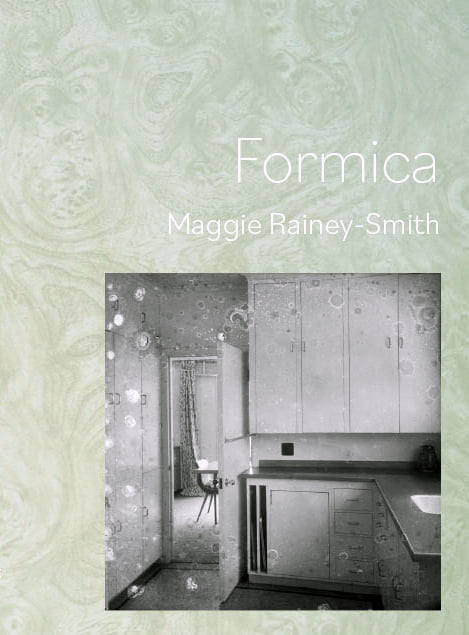
Formica’ begins in 1950s Richmond with the author’s family struggling in the aftermath of a war that took her father to Crete to fight and then Poland as a prisoner of war. At the Formica kitchen table, Maggie’s mother is reciting poems while chopping the veggies for tea. Maggie listens while tying her boots for marching practice. Poems follow her as she makes her way in the world – working as a typist, doing her OE, becoming a wife, a mother and grandmother …
An unsentimental writer of honesty and humour, Maggie nods to the lives of all women of her generation – too often defined by their fertility and kitchen appliances when there was fun and fulfilment to be had elsewhere. Not that Maggie doesn’t adore her Kenwood mixer, but it lines up with abiding friendships, granddaughters, travel, sex and the joy of words.
To be launched by Fiona Kidman.
Follow the link to pre-order your signed copy and watch the livestream on the night. Online sales will happen during the livestream as well.
Among the dark brood of hills, I spot a landed square of kakapo-green, a paddock’s grab of sunlight on grass caught in one glance just as noon strikes Dunedin’s western hills.
No matter where you go in Dunedin there’s bound to be some hill’s flanks to fix an eye on — a rock-shrouded cliff, the bones of a quarry, the harbour’s overcoat-navy smudge of peninsula, a slouching Mount Cargill
parked at the end of George Street. Beyond this café’s window, hills loom as the conversation moves and sways: someone pointing out that here, below the 45th parallel,
it’ll soon be time to plant courgettes, celery and tomatoes. For today though, under this present soar of clouds in full sail, winter hills are magma-heavy, slumped
into their own eternal weight until by some quick trick, a piece of trapped sunlight breaks free to mark land from sea-light, bend rock from mist.
Kay McKenzie Cooke
Kay McKenzie Cooke (Kai Tahu, Kati Mamoe) lives in Ōtepoti Dunedin. Her most recent collection of poetry is titled Upturned published in 2020 by Cuba Press. She is presently working on a manuscript for her second novel, as well as writing poems for her fifth collection of poetry.
The Disinvent Movement Susanna Gendall, Victoria University Press, 2021
‘Every week we would disinvent something. This week it would be plastic. Next week it would be the aeroplane. I stood outside the supermarket and handed out flyers, which people kindly refused as they left carrying large packs of bottled water.’
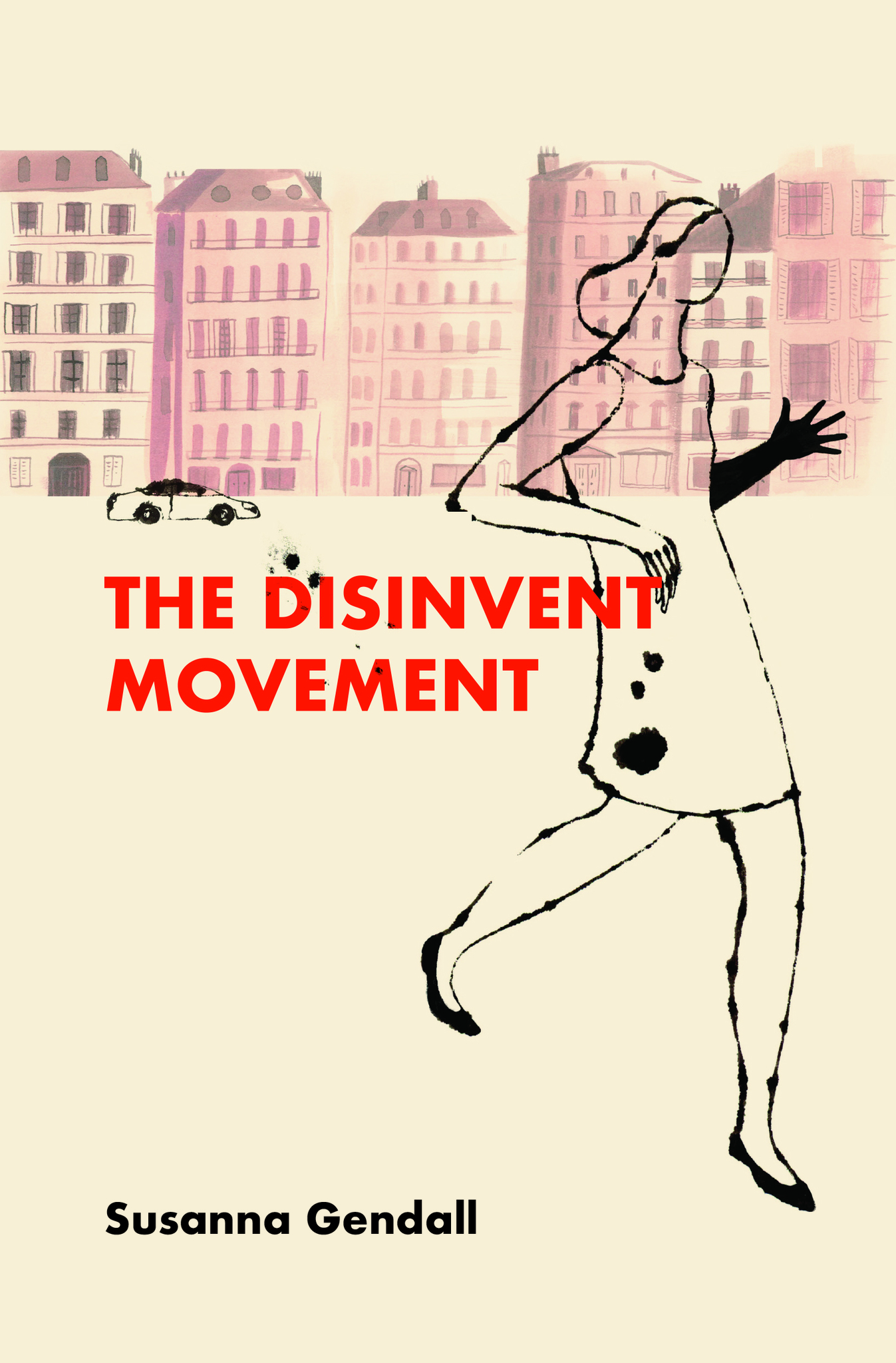
Susanna Grendall’s short fiction and poetry have appeared in a number of journals in Aotearoa, in print and online. The Disinvent Movement is her first book. Presented as a novel, it might also be viewed as poetry or short fiction. The short chapters, the 81 vignettes, create a patchwork-quilt effect, exquisitely stitched pieces that fit together as both absence and arrival. One chapter appeared as a poem on The Spin Off‘s Friday Poem. Susanna (at the time of publication) lives in Wellington and Paris, and the novel bridges both cities, along with time spent in other countries.
The novel sustains the rhythm of the quotidian, almost as though we accompany a bricoleur strolling, collecting, musing, assembling, pausing. There is a plainness at work. There is a knottiness at work. There is the protagonist, both intimate and at a distant. She is in an abusive marriage, but that is held at arm’s link, so we only get squinty looks. She is vignetting her encounters with men (love affairs) that masquerade as encounters with self. She invents the Disinvent Movement as she craves substance, concreteness, attachment. More importantly she yearns to rid (disinvent) the world of unnecessary things (plastic, appliances). She holds so much at arm’s length: her children, her husband, her lovers, her friends. Yet in this swirl of daily existence she is exposing herself. It is poignant and it is unsettling. How do we survive the slam of life and living? Of finding a place in our mayhem world?
The protagonist’s Disinvent Movement acquires straggler fans who don’t necessarily get what disinvent means. Maurice does. Maurice wants to disinvent cars. To black out car windscreens, and to set them all on fire a week later. Mavis however wants to drive her car to pick up horse manure (sometimes). The windscreens get painted black, but such anarchy prompts the protagonist to flee.
She is working in an office not quite under her own name. Nothing feels stable, neither the people close at hand, nor the people at arm’s length. She asks near the end of the book: ‘What was identity except a bit of stitching?’ Indeed. I am reading this and as I read I am unravelling and picking up stitches, admiring patterns, threading yarn and inventing as much as disinventing. Catching the mistakes in living, the craft in living, the self garment in the making.
I read this in one compulsive swallow. It is unlike anything I have read (maybe whiffs of French and Italian writing) and is altogether glorious.
Tayi Tibble caught my poetry heart with her debut collection – Poūkahangatus – and the hearts of a galaxy of poetry fans. Rangikura is snaring my heart again. Gloriously so.
Why is it so good to read this book? It is stepping into liquid currents of words, river currents of ideas, images, feelings: incandescent, life-affirming, fast flowing. The poem is the water current and the lightness current, and it is the vessel-on-the-water current. I am climbing in, word splashed, and drenched in joy. The poet is deep diving, skimming the shallows, riding the rough, revelling, honouring, exposing.
Feel the vernacular, the te reo, the melodies along the line, and it is so skin-prickling good.
The first part reclaims the girl. This is girlhood and it is feminism. It is dangerous and vulnerable, mermaid girls racing the boys in the water, girl bonding, girl bounding, the step-brother test, horoscopes, delivering kittens, armouring the danger-girl, becoming winter, the East Coast map carried inside. A road map of adolescence. And always the scintillating rapids of writing. Bliss.
And I remember the year we were the two strongest ‘girl swimmers’ in our syndicate. This meant we were forever forced to race the boys for Western feminism and you would always win, even against the boys who were so like men the teachers treated them as if they were more muscle than human.
from ‘Lil Mermaidz’
The middle section is a sequence of she he prose poems, a shift in key, a miniature novel in verse, where love is threaded at a distance, and we all might have different things to say about the he, about the she, the tyranny of separation, and the tyranny of waiting. The sexiness of everything. Hierarchies. The love affair, the love relationship, ah what to call this, as dialogue and desire unfold in restaurants and hotel rooms, and the restaurants are sweet and soured with taste and preference. I am almost eating the rice and peanuts (well not the meat), relishing the ‘tacky’ surroundings. And it is sharp edge reading this love, this like love like suite. Think of the way you might look at a photograph and everything is sharp edged with life. And light. And yes the dark shadow jags.
The third section returns to free verse, freedom to break the line, to make it clear that sometimes politics is personal, and that maybe politics is always personal, and that poetry is the the whenua, the maunga, the ocean, the awa. Poetry is sky and breath and beating heart. Tayi’s poetry is grounding liberating speaking out singing. This is what I get when I read Rangikura. It is poetry, but it is also life, more than anything this is poetry as life.
Tayi’s collection is framed by an opening poem and a last poem, ancestor poems, like two palms holding the poetry tenderly, lovingly. Hold this book in your reading hands and check out the electricity when you stand in the river, the ocean. Reading Tayi spins you so sweetly, so sharply, along the line, off the line. I love this book so much.
I sat in the lap of my great-grandmother until the flax of her couldn’t take it. So she unravelled herself and wrapped around me like a blanket and at her touch the privilege of me was a headrush as I remember making dresses out of sugar packets, my bro getting blown up in Forlì, my grandfather commemorated under one tree even though he forced himself into our bloodline and then abandoned me and me and me.
from ‘My Ancestors Ride with Me’
Tayi Tibble (Te Whānau ā Apanui/Ngāti Porou) was born in 1995 and lives in Wellington. Her first book, Poūkahangatus, won the Jessie Mackay Best First Book of Poetry Award in 2019.


 NZ Poetry Shelf