Monthly Archives: February 2020

Poetry Shelf summer reading: essa may ranapiri’s ransack


Screen Shot 2020-02-04 at 6.54.10 AM.png


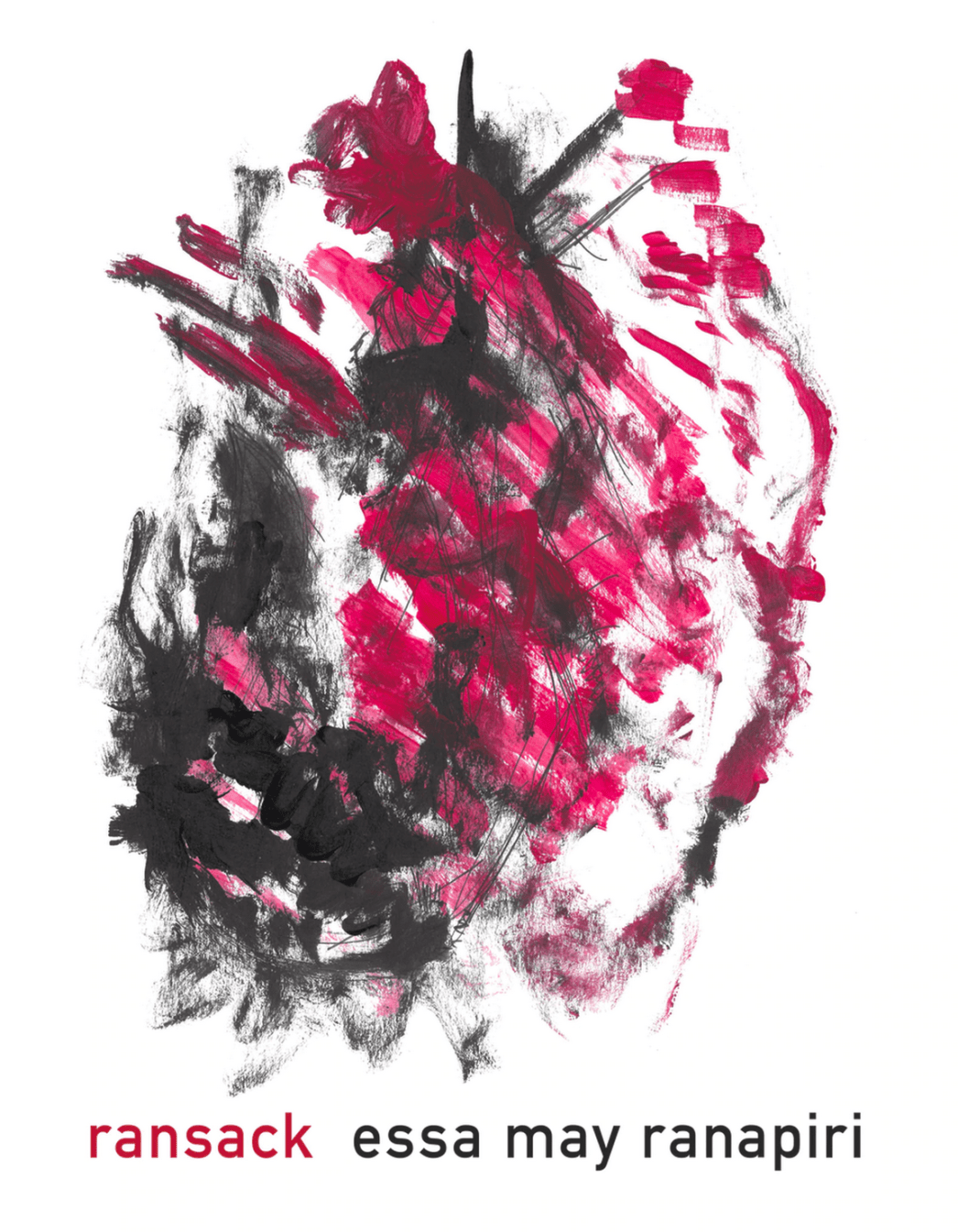
ransack, essa may ranapiri, Victoria University, 2019


he is like a bumblebee stinger on my tongue when I say it’

from ‘Dear Orlando’


essa may ranapiri begins their debut poetry collection ransack with a quote from Virginia Woolf’s gender-switching Orlando: ‘Ransack the language as he might, words failed him. He wanted another landscape, and another tongue.’

When I was doing my doctoral thesis (Italian) I carried a Virginia Woolf quote from A Room of One’s Own with me and I still do: ‘Mary is tampering with the expected sequence.  First she broke the sentence; now she has broken the sequence. Very well, she has every right to do both these things if she does them not for the sake of breaking, but for the sake of creating.’

Sometimes we need to break language, to smash how we do things in order to begin again, in order to find form and fluidity for our voices. Sometime language fails us. Sometimes we have to smash muteness and test our way into a new musicality, a new sequence of connections. We may be fierce and we may be vulnerable.

I dipped in and out of ransack last year, and loved every snatched moment, but a few weekends ago I sat down in the cool shade and read the book slowly, cover to cover, and felt myself upturn, overturn, inturn and sideturn as the poetry pulsed through my being (I am thinking of that as a verb). This is what a book can do.

essa’s book is a glorious sequence of creating – of ransacking what has been, in order to refresh what will be. Letters written to Orlando make an appearance – like a epistle spine for the collection or a poetry pivot for both reader and writer.

The opening poem ‘my tongue as rope’ lays down a thicket image – the kind of image that hooks you, especially when you think of  writing, speaking and even self as braid. The braided rope is the anchor, the preserver, the tough knot, ‘the single knot’, the finder.

essa writes: to pull in sound / draw in lists / the endeavour hits the land’. Can the poems be a form of rope? ‘my tongue-rope wraps itself until it is a single knot.’

A single poem breaks apart in my mouth and heart. The break in the flow creates a new current.


fetal


a mothe

r returnin

g to the grown ground like a gow

n of weeds got a stretching motion

n to stil

l body corps

e the wood in the wax in the flowe

r chains a bab

y stil

l bor

n rattling i

n the mutton skie

s chubby in the loa

m to no mor

e


Reading ransack allows me to absorb the nonbinary experience afresh. Unsettling the line on the page unsettles the line of thought, the entrenched dichotomies of either / or / male / female / she / he / soft / hard / weak / strong

A long poem ‘Con-ception’ is dedicated to essa’s mother and is a reading explosion of arrival, pregnancy, forming embryo, forming mother. I have never read a piece that breaks into and out of the maternal that has affected me so much. I am going to give you a quote that is also right-hand margin justified, but not all the book is (the forms are dancing on their toes in an exuberant display of variousness:


in the world and into the world of tubes

ride the machine

incubate in plastic

and drench in yellow light

the air is whole new in-the-world

and out of the old world

recognise voices

am i

an i?


put in

alove?

When she finally has a shower afterwards she is crying.


Reading the ransack sequences and I am feeling poetry. essa tells Orlando ‘You never had to discover yourself in a book. You never questioned your gendered nature – you moved from one perfect set of genitalia to another according to Aristophanes and the great round people of concave and convex, of female and male.’

essa places body and experience at its white hot core – a gift in its sharpness, its broken cutting lines and its sweet fluencies as the writer navigates how to be, how to be body, how to be bodymindheart in the world. Part of the writing of experience, with that backstory sting of ‘he’, is claiming name, celebrating a pronoun:


u said you liked the ‘th’ sound in they and them the softening of it

and how it fitted around my rage

made it/for it

to be okay to touch

i talk you through other constructions

ones that subverted phonetics

me as a slice of not that

when expecting this

the xe sound like zay


from ‘a phone call about the nature of pronouns gendered and otherwise’


ransack is a skin-prickling, heart-blasting, mind-opening glorious feast of a book that in the spirit of Virginia breaks up language in order to create something breathtakingly new.


essa may ranapiri, Ngāti Raukawa, is a poet from Kirikiriroa, Aotearoa. They graduated with an MA in Creative Writing from Victoria University of Wellington (2018) and their work has appeared in many local journals. They are the featured poet in Poetry Yearbook 2020 (Massey University Press). ransack has been longlisted for the Ockham NZ Book Awards 2020.


essa may ranapiri website

Victoria University Press page

The Pantograph Punch Jackson Nieuwland reviews ransack

RNZ interview

Poetry Shelf: essa reads ‘Glass Breaking’

essa on being at IIML with Tayi Tibble


Poetry Shelf Monday poem: Vaughan Rapatahana’s ‘Aotearoa New Zealand’


Aotearoa New Zealand


‘Kotahi ano te kōhao o te ngira 

E kuhuna ai te miro ma te miro whero me te miro pango ‘

– Pōtatau Te Wherowhero

]There is but one eye of the needle,

Through which the white, red and black threads must pass.]


ko Aotearoa te ingoa o tēnei whenua ātaahua.

land of the long white cloud for many

nestling in a sea of verdant green,

surrounded by a brilliant blue ocean

& where the All Blacks often reign.


yet of course New Zealand

is also the name of these islands

some say that maybe –

with our increasingly multi-cultural crew

Pākehā, Māori, Asian, Pasifika –

it is time for a new name,

stressing our interconnections?

after all, we are rowing together

in this waka nowadays

heading in the right direction –

learning how we can all work closely

to include, as well as to respect, all our

sometimes confusing cultural credos

and to kōrero together in spite of them

in a continuous talanoa.


ni hao 

talofa lava 

tēnā koe  

geddaye

malo e lelei

as-salam alaykom


different, yes and yet, respecting this diversity,

this contrasting, this sometime conflicting mix,

where Te Tiriti o Waitangi is the foundation document,

where journalism has flourished for well over 150 years

with upfront news & freedom of views

in the two key tongues, te reo Māori rāua ko te reo Ingarihi,

& Hindi is now the fourth most spoken language – namaste!

together we can connect and thrive.


āe ko Aotearoa te ingoa

throughout both North and South

we are birds singing several different waiata

tui, takahē, kōkako, kiwi

striving to make one mighty nest;

our own place for all –

one of a kind, the very rare huia,

a heaven on earth.

pristine air; clean water; prime food,

scenic vistas second to none,

what else could anyone want?


āe, ko Aotearoa te ingoa

let’s be thankful about who we are

& what we have –

the sense of fair play

the spirit of helping those in need,

sharing & supporting

including one and all.


thank you my friends 

kia ora taku hoa  

fa’afetai outou o a’u uo 

xie xie wo peng-youmen

salamat po mga kaibigan

shukraan lakum ‘asdiqayiy


there is so much to celebrate

in this lengthy land,

tō mātou whenua tino waimarie

& we should all be proud.


Vaughan Rapatahana

from ngā whakamatuatanga / interludes  (cyberwit, 2019)


A poet, novelist, teacher, critic, translator and editor, Vaughan Rapatahana, Te Ātiawa, commutes between homes in Hong Kong, Philippines and Aotearoa New Zealand. He is widely published across several genres, in multiple countries, in both his main languages, te reo Māori and English, and his work has been translated into Bahasa Melayu (Malay), Italian, French, Mandarin.

In 2019, he published five books, participated in World Poetry Recital Night, Kuala Lumpur and Poetry International at London’s South Bank Centre and in the launch of Poems from the Edge of Extinction and in Incendiary Art: the power of disruptive poetry. His poem tahi kupu anake included in the presentation by Tove Skutnabb-Kangas to the United Nations Forum on Minority Issues in Geneva in November 2019. His PhD thesis from the University of Auckland is on Colin Wilson and subsequently published a collected works about Wilson,  More than the Existentialist Outsider (Paupers Press, Nottingham, UK, 2019.)

His latest poetry collection ngā whakamatuatanga/interludes was published by Cyberwit, Allahabad, 2019) and Aotearoa New Zealand. Atonement (University of Santo Tomas Press, Manila) was nominated for a National Book Award in Philippines (2016). He writes a series of commentaries pertaining to Aotearoa New Zealand poetry for Jacket 2 (University of Pennsylvania, USA): a 2015–2016 series and again during 2018-2019.

His poetry teaching resources have been published in Hong Kong SAR, Brunei Darussalam, Australia, and New Zealand, including the first bilingual (Māori and English) such resource in 2011, Teaching Poetry. In 2019, book three of the series Poetry in Multicultural Oceania has been published by Essential Resources, Christchurch, New Zealand – with a new resource Exploring Multicultural Poetry for younger students due at the end of 2019.

Rapatahana will be participating in The Foundation and Cultural Organization International Academy Orient-Occident. Curtea de Argeş, Romania in July 2020.

Rapatahana is one of the few World authors who consistently writes in and is published in te reo Māori – in all of his books and also poetry publications in Aotearoa NZ (for example, Mayhem, Poetry New Zealand, takahē), USA (Antipodes), Canada (The Capilano Review), Australia (Meniscus), U.K. and so on. It is his mission to continue to do so and to push for a far wider recognition of the need to write and to be published in this tongue.

His New Zealand Book Council Writers File


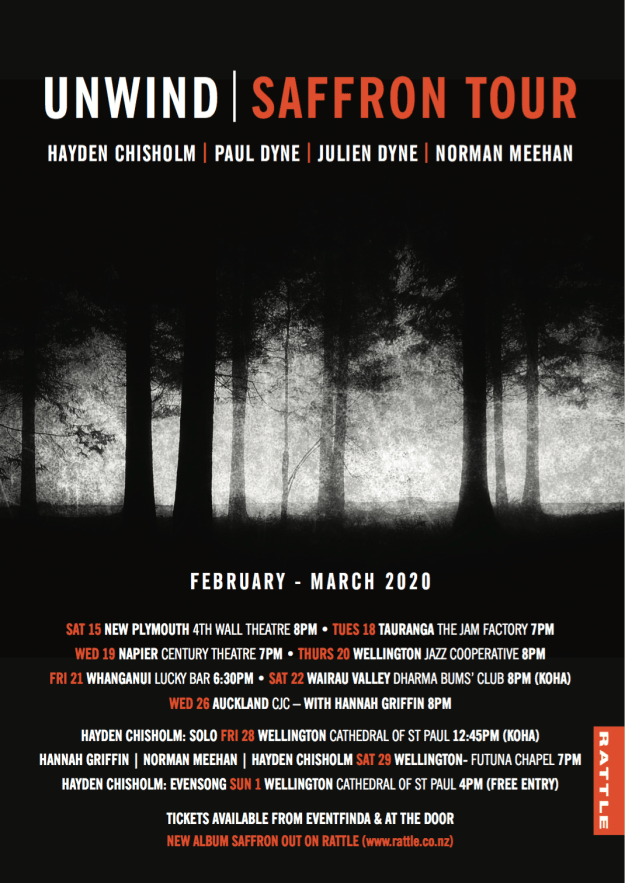
Poetry Shelf noticeboard: Unwind Saffron Tour – Norman Meehan, Hannah Griffin, Hayden Chisholm

Great tour news: I am a big fan of what these musicians do with local poetry. Breathtakingly good!

Norman Meehan be performing in Auckland and other centres  later this month – Wednesday February 26 – with vocalist Hannah Griffin and saxophonist Hayden Chisholm. We’ll be playing song settings of NZ poems, including a number of new texts by some wonderful poets who are recent additions to our songbook: Hinemoana Baker, Eileen Duggan and Cilla McQueen. We’re joined by bassist Cameron McArthur and Julien Dyne.


Screen Shot 2020-02-02 at 9.27.17 AM.png