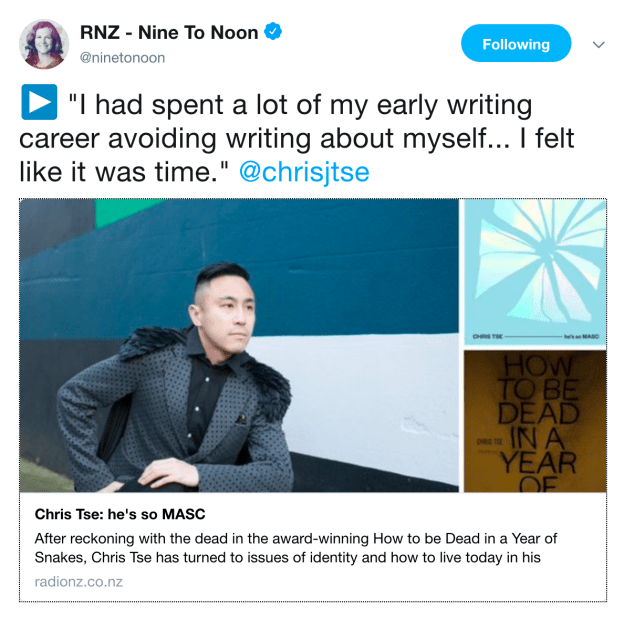
this is great!
Listen here

When does it start?
It’s not waving a flag, holding a banner, knowing what postcolonial theory
means and when to use it, memorising quotes and lining them up like
soldiers that are sent out in waves of attacks,
It’s not being polite, remaining open, listening fairly, vigilantly assessing
your motivation, re-writing your carefully worded response, marvelling
how the person who has cornered you on-line, at a party, work do or
rugby game is not hearing how every word they are saying is offensive and
they may as well be slicing through your heart, with the intent-sity of a
scythe clearing long grass,
It isn’t realising dressing up racist rhetoric in flash language is still just
racist rhetoric in flash language and sniffing that out in the first, I’m not
racist … but,
It isn’t recognising white privilege and entitlement, functioning under white
privilege and entitlement, loving under white privilege and entitlement,
It doesn’t start with the huge fucking disappointment when a brown
brotha is worse than the worst redneck you’ve encountered in your life,
It doesn’t start by standing up for your iwi, people, culture, colleague,
son, daughter, lover, missus, Koro, Nan, cuzzie, animals, Papatūānuku, or
even yourself,
Mō āhea tīmata ai? ka tīmata āwhea?
Ehara i te whakakakapa i te haki, i te pupuri ki te kara, i te mōhio ki
te ariā pōhi koroniara me te wā e tika ana kia whakamahia, i te tuhi i
ngā whakataukī ki te rae ka whakarārangi ai anō nei he hōia e tukuna
putupututia ana ki te whawhai,
Ehara i te mānawanawa, i te noho areare, i te tōkeke o te whakarongo,
i te mātai i ākinga ōu, i te whatatika i tō whakahoki kua āta tuhia, i te
whakamīharo ki te tangata nāna koe i whakaiti i te ipurangi, i te pāti, i
te kaupapa ā-mahi, i te kēmu whutupōro rānei me tana kore i rongo ki te
hākiki o ia kupu āna, me e haehae ana i te ngākau, he rite tōna kaha ki te
kotinga o te haira e whakawātea ana i te pātītī roa,
Ehara i te kitenga o te kōrero kaikiri kua whakareia ki te kupu whakaniko,
me te mōhio tonu iho he kōrero kaikiri tonu kua whakareia ki te kupu
whakaniko, ehara au i te kaikiri … heoi anō,
Ehara i te whakamārama i te huanga me te āheinga kiritea, e mahi ana i
raro i te huanga me te āheinga kiritea, e aroha ana i raro i te huanga me te
āheinga kiritea,
Kāore e tīmata i te mutunga kē mai o te matekiri i te mea he kino noa ake
te tūngāne kiriparauri i te kakī whero tino kino rawa atu kua tūpono i
roto i ō rā,
Kāore e tīmata i tō tū tautoko i tō iwi, i ō tāngata, i tō ahurea, i tō
kaimahi, i tō tama, i tō kōtiro, i tō whaiāipo, i tō wahine, i tō koro, i tō
kuia, i tō whanaunga, i ō mōkai, i a Papatūānuku, i a koe anō hoki,
It starts,
with that first step from the margins into the glare of light
and
opening
your
mouth,
that started
when the idea of you was born and took seed
that started
when the idea of you was born and took seed
that started
when the idea of you was born
that started
with the idea of you.
Ka tīmata,
i te tapuwae tuatahi i te paenga ki te kōnakonako o te tūrama
me te
hāmama
o tōu
waha,
i tīmata tērā
i te tinakutanga me te tupu o te whakaaro ki a koe
i tīmata
i te tinakutanga me te tupu o te whakaaro ki a koe
i tīmata
i te tinakutanga o te whakaaro ki a koe
i tīmata
i te whakaaro ki a koe.
©Maraea Rakuraku Translated by Jamie Cowell, Tātai Whetū: Seven Māori Poets in Translation, Seraph Press, 2018.
Maraea Rakuraku is an award-winning playwright, poet, short story writer, critic, reviewer and broadcaster who lives in Wellington and the Bay of Plenty. She creates work that investigates, examines, calls out and celebrates Te Ao Māori and our navigation of 21st century Aotearoa New Zealand.
Her thoughtful, fierce intellectualism, and grounding in her Tūhoe and Ngāti Kahungunu identity, is matched only by her heart and commitment to giving voice.
With Vana Manasiadis, Maraea is the co-editor of and contributor to Tātai Whetū: Seven Māori Poets in Translation, which has just been published by Seraph Press.
In 2018 she started a PhD in Creative Writing at the International Institute of Modern Letters, Wellington.
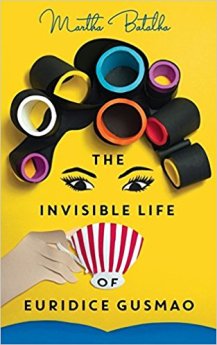
The Invisible Life of Euridice Gusmao, Martha Batalha, One World, 2017 (originally published by Companhia das Letras, 2016)
After studying journalism and literature in Brazil, Marta Batalha moved into publishing, and to California. This is her first novel. It was translated form Portuguese by Eric M B Becker.
This was another book I discovered in authors’ picks in the Guardian for 2017. The binding of the novel made it one of the most difficult books I have read in an age – at times I got sick of trying to bend back the book. Truly I found myself skimming the edges because it was such a pain holding the book wide open.
Maybe that fits a character who is invisible in the eyes of her husband because he decided she was not a virgin on her wedding night – I just upped the degrees of invisibility. To compensate for her housewife role and lack of status – this reads more like offbeat realism than kitchen sink grit – she invents intense projects for herself that always amplify neighbourhood suspicion. She cooks with flair and invention beyond the expected daily staple and assembles a cookbook that ends up in the trash. Cooking is replaced with sewing – she sews herself into visibility by making the best clothes for the neighbourhood. The sewing machine ends up in the trash.
Her sister had vanished and near the end she returns with her own complicated story and the sibling relationship becomes one of rescue, of finding a way to be visible in the world, to matter and be of worth. The issue of female invisibility has affected women for centuries, along with shaping self to suit oneself. How do we make ourselves beyond the stereotyped role of mother and wife? How do we speak ourselves and make choices the furnish presence, worth?
Writing also has a role to play in Euridice’s invisible life and quest for presence.
If I had not felt like throwing the novel in the trash half the time, because I couldn’t keep the book open, I might have loved it 100 percent – but something, perhaps the strangeness coupled with the acute reality, the caustic wit and the pulsing Rio, the intricate and subtle rebellions, still made this compulsive reading.
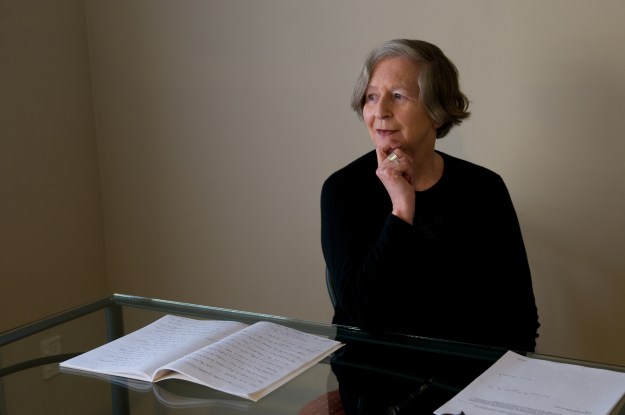
Congratulations on your short-list placing Elizabeth!
What poetry books have you read in the past year?
Everything by Wislawa Szymborska and the Penguin Modern Poets series (3 poets in each clutch purse-sized collection): Emily Berry/Anne Carson/Sophie Collins; Malika Booker/Sharon Olds/Warsan Shire etc.
What other reading attracts you?
Almost anything. At the moment I am re-reading Rex Stout and the yellow pyjama-wearing detective Nero Wolfe.
Name some key starting points (or themes) for your collection.
I never discover a theme until a collection is put together. The connections between individual poems can be as subtle and perverse as the most delicate rhyme or rhythm.
Did anything surprise you as the poems come into being?
Perhaps the secret life of animals?
Find up to 5 individual words that pitch your book to a reader.
‘The heart heals itself between beats’ because it was a commission with an extra scoop of fear attached.
What matters most when you write a poem?
Depth and uncertainty.
What do you loathe in poetry?
Nothing. It’s important not to loathe anything.
Where do you like to write poems?
Propped up on a bank of pillows in bed, with the concert programme on the radio and perhaps a glass of wine.
What are strengths and lacks in our poetry scenes?
The chutzpah of our independent publishers; a tendency for too much adulation.
Have you seen a festival poetry session (anywhere) that has blown you off your seat (or had some other significant impact)?
Margaret Atwood and Hans Magnus Enzensberger at the Aldeburgh festival. I read first and sat down between them, shivering.
If you could curate a dream poetry session at The Auckland Writers Festival which poets would be there and who would mc or chair it?
I think I’d do a Dead Poets session. Keats and Shelley, Robert Lowell, William Empson, John Crowe Ransom, Tomas Tranströmer, Szymborska, of course… the possibilities are endless. It might have something of the bitchy tone of ‘The Real Housewives of Melbourne’. To chair it one of the Paulas: Green or Morris.
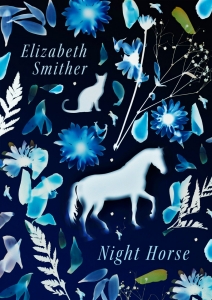
Night Horse AUP author page
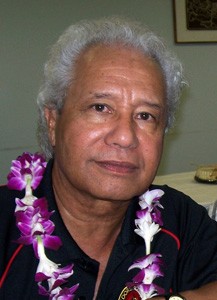
Talofa, Everyone,
I’m giving a poetry reading at the THIRSTY DOG TAVERN, 469 Karangahape Road, Auckland, on Tuesday 3 April, starting at 8 pm. Musicians will also be performing.
COME AND ENJOY THE EVENING WITH US. Ia manuia le aso.
Al Wendt
A lot of authors born in Taranaki have left the province on a permanent basis, to become successful or dead. The successful ones are Anthony McCarten and Stuart Hoar from New Plymouth; Dinah Hawken, Gaelyn Gordon, and Fiona Kidman from Hawera; June Opie from Mokau; Fleur Beale from Inglewood; Shonagh Koea from Eltham; Graeme Lay from Opunake, also Jackie Sturm, quondam wife of James K Baxter, and a much nicer human being to deal with; and Sylvia Ashton-Warner from Stratford. The dead one was Frank S Anthony of Midhirst, who wrote his gentle, innocent Me and Gus stories of dairy farms up skinny shingle roads and tongue-tied young men in hairy sports-coats, then sailed for England with a suitcase – a suitcase – of manuscripts, and died from TB in a Bournemouth boarding house in 1927.
See full feature here
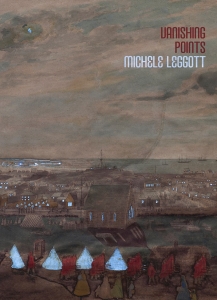
Lots of poets have connections to Taranaki but I would spotlight Michele Leggott who was born and raised in Stratford and whose latest book Vanishing Points offers numerous returns. I am going to talk about this glorious book with Michele at some point this year for my blog. I loved it. One of my top poetry reads in 2017.
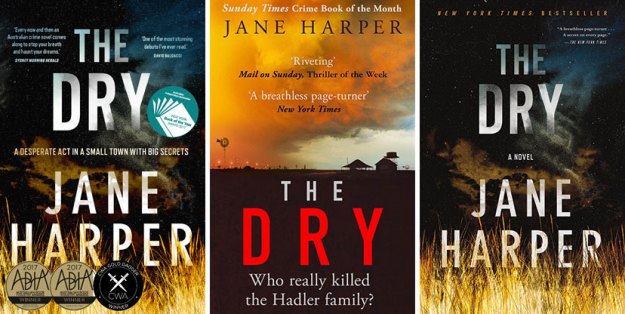
Jane Harper is coming to AWF this year. I will miss her session as it clashes with mine but her debut novel is a top read. Now based in Melbourne, Jane has worked as a print journalist in both the UK (her first home) and Australia. The Dry won the 2015 Victorian Premier’s Literary Award for an an unpublished manuscript and was an international bestseller. Her second novel, Force of Nature, awaits me – I got it in the revitalised Paradox Books in Devonport this week.
This is what Ron Rash says on the back cover: ‘The Dry is a marvelous novel that once begun is hard to put down, and once finished even harder to forget’.
Federal Agent Aaron Falk goes back to his small home town after the shocking murder of his childhood best friend and his family. He enters a spider’s web of suspicion and recrimination that is sticky with revelation and side swerves. To be snared in a weblike plot, with no idea of how things will unfold, with writing that is both fluid and evocative, is utterly satisfying. On the one hand you get a thrilling story, but on the other hand, you move deep into the humanity of place. People struggle to survive; they mourn, they fight, they deceive, they aid and they love.
I read this book in one afternoon and for the rest of the day it stuck to everything I did. Highly recommended.
Jane Harper website here

I encouraged locals to vote on this so delighted to see some of my picks made the list: Tusiata Avia, Jenny Bornholdt and Hera Lindsay Bird.
This seems like a very timely time to have my book on reading New Zealand women’s poetry in the production pipeline.
You can see the full PBS list here
She’s a runner, a writer, a fighter, a scholar, a mother and a teacher. She’s also New Zealand’s Poet Laureate. Dr Selina Tusitala Marsh is a dynamic academic who wants to bust open people’s ideas of poetry and where it belongs because – she says – poetry belongs everywhere.
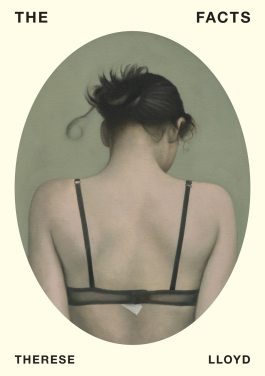
Therese Lloyd The Facts Victoria University Press 2018
For three months I tried
to make sense of something.
I applied various methods:
logic, illogic, meditation, physical exertion,
starvation, gluttony. Other things too
that are not necessarily the opposite of one another,
writing and reading for example.
But the absurdity of the thing
made all attempt at fact-finding evaporate;
a sort of invisible ink streamed from my pen
the more data I wrote down: facts are things driven,
as Anne Carson says, into a darkening landscape where other people
converse logically.
from ‘The Facts’
Therese Lloyd’s new collection resides in a captivating interplay of chords. You could say that any poetry book delivers chords whether aural, visual or thematic, and in the light of ideas and feelings. This book does it to a stunning degree. Once you start hunting for them – whether in harmony or not, between poems or within a single example – the rewards are myriad.
Hera Lindsay Bird endorses the book on the back cover: ‘The Facts is mesmerisingly beautiful, and shocking in its intensity. This is already one of my favourite New Zealand books. It won’t make you feel better.’
I didn’t read the back until I had read the poems as I like to start a book with a clean reading slate (if that is possible). I am thinking of the way reading this book sets up an arc between comfort and discomfort; we are the interlopers into what Therese chooses to let us see.
We enter a collection in debt to a doctoral thesis (IIML), and I am curious about the ideas picked up in the academic component.
This might be the first cluster of chords: shifts between ideas and feelings provoked by the writings of poet Anne Carson and the experience of a broken marriage and a toxic love affair. This might be an impetus to navigate relations with art, in itself forging a chord with Anne.
I am absorbing the chords as though they flicker between light and dark – and the poem resembles a cinematic space with the external world, and its pressing demands, blacked out so it is just you and the poem. This what flicks for me:
love notlove
truth lies
Carson LLoyd
facts notfacts
pain joy
mother daughter
daughter husband
daughter lover
presence absence
beginning end
end beginning
beauty beauty
deep breath shallow breath
here there
intimacy distance
heart mind
sweet sour
slow stalling
debris order
miracle incidental
share notshare
exposure kept hidden
where you live where you don’t live
mixed clarity
see see
poet poem
poem story
At the core of the book the title poem, the standout-lift-you-off-your-feet poem, achieves the blinding intensity that Hera speaks of: raw, surprising, probing, accumulative, fearless, cutting, detail rich, lucid, testing. On either side the poems offer more subtle chords. Yet any element in my list for ‘The Facts’ might drive a poem. I particularly love the surprising turns of ‘Mr Anne Carson’.
Therese’s collection takes you deep into personal experience that gets hooked up in the poetry of another, in matted ideas and the need to write as a form of survival. It makes you feel as much as it makes you think. It is a riveting read.
I moved all the holiday reading
to the spare room
to keep the literature and the art books
pure
I say squarely in the middle
of the fluffed-up sunroom sofa, I am
careful
not to disturb the cushions
cushion—a curious word
its function of support
is ancillary to its attractiveness
and that’s why cushions have covers
in colourful fabric—I become
an ornament
another word I like
because everything here is decoration
everything here is placed
The story of the things here is not new
from ‘Mr Anne Carson’
Victoria University Press page
 NZ Poetry Shelf