Monthly Archives: September 2018

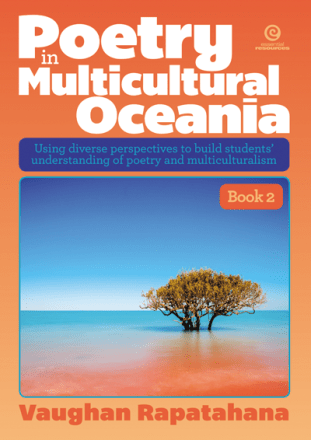
Poetry in Multicultural Oceania 2 – a teaching resource for Years 6 to 9


909ff650-8574-440e-954e-5c6548f874da.png

Poetry in Multicultural Oceania Book 2

edited by Vaughan Rapatahana, Essential Resource, 2018


‘mountains once roamed/ this land’  Apirana Taylor


Vaughan Rapatahana has edited a second collection of poems with associated activities to encourage the reading and writing of poetry and to further develop a student’s multicultural awareness. Vaughan is committed to drawing upon diverse poetry voices: Māori, Pākehā, Pasifika, Aboriginal Australian, Asian.

This issue includes: Mere Taito, Renee Liang, Apirana Taylor, Gregory Kan, Alan Jeffries, Simone Kaho, Paula Green, Michelle Cahill, Reihana Robinson, Alison Wong, Serie Barford, Michele Leggott, Selina Tusitala Marsh, Iain Britton, Makyla Curtis, Lionel Fogarty, Shasha Ali.

Each section includes the poem, a warm-up, focus on vocabulary, tips on reading aloud, consideration of the language and layout, questions to explore understandings and evaluations, followup suggestions.

The subjects are wide ranging but generally attached to identity issues.


I love the way this book will expose new and familiar poets to students and teachers and offer accessible and stimulating entries into poems. Bravo Vaughan for continuing to celebrate local poetry. This is an essential resource.


‘I am told that the wai of who/ is the water of our veins’  Makyla Curtis


Vaughan Rapatahana commutes between Hong Kong SAR, the Philippines and Aotearoa New Zealand. He is widely published in several genres in Māori, English and other languages.  His latest poetry collection is ternion (erbacce-press, Liverpool, England). Vaughan has a PhD in existential philosophy from the University of Auckland. Vaughan has written commentaries for Jacket2 (University of Pennsylvania), including a 2015–2016 series and a new series currently in progress.


Essential Resource page
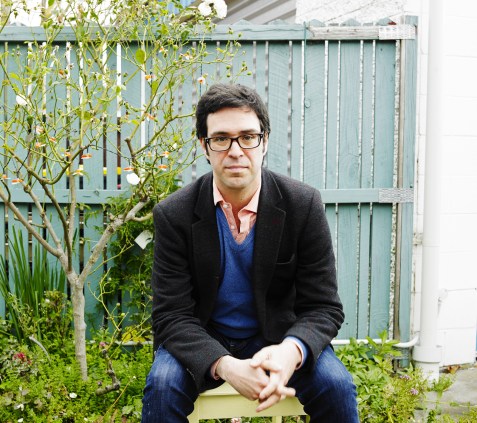


Erik Kennedy reads ‘Your Grandfather’s War Stories’ from his debut collection


Erik-Kennedy-by-Victoria-Birkinshaw-web.jpg


Erik Kennedy, ‘Your Grandfather’s War Stories’, There’s No Place Like the Internet in Springtime, Victoria University Press, 2018. Originally published in The Interpreter’s House, no. 66, October 2017.


Erik Kennedy is the author of There’s No Place Like the Internet in Springtime (Victoria University Press, 2018). His poems have recently been published in places like 3:AMMagazine, Hobart, LEVELER, The Manchester Review,and Poetry, and his criticism has been in the Los Angeles Review of Books and the TLS. He is the poetry editor for Queen Mob’s Teahouse. Originally from New Jersey, he lives in Christchurch, New Zealand.


Ka Mate Ka Ora: A New Zealand journal of poetry and poetics Issue # 16 now live

Screen Shot 2018-09-11 at 7.30.40 AM.png

Ka Mate Ka Ora live

Featuring:
Hannah Lees on Vaughan Rapatahana
Owen Bullock on Michele Leggott
Susannah Whaley on Janet Frame
Erena Shingade sends a Letter from Mumbai
Ian Wedde remembers John Dickson
Peter Bland remembers Gordon Challis
Aorewa McLeod remembers Heather McPherson
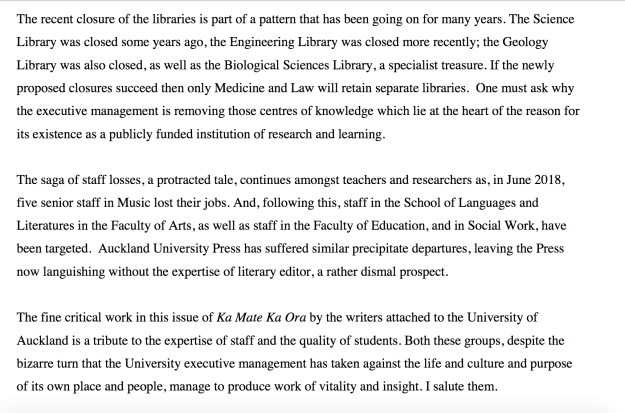
and Murray Edmond ponders Closure with a Wrecking Ball


I was really delighted to read Aorewa’s memories of Heather and her poetry.

I loved Erena’s letter with its poem inserts.

Reading Murray’s editorial on The University of Auckland decisions to shrink The Arts along with sites of book culture and knowledge is essential reading. Heartbreaking to read as a graduate. What can we do?


An extract:

Screen Shot 2018-09-11 at 7.44.21 AM.png

Now back to the rest of the issue!


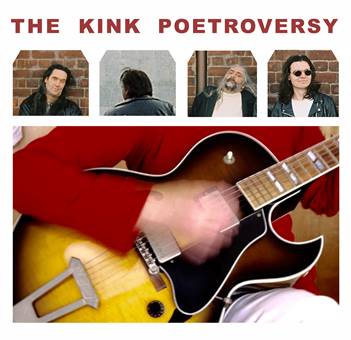
A Poetry Reading: The Kink Poetroversy


image001.jpg


This year’s Winter Readings will belatedly
be held in the month of September in
Paekakariki, continuing a popular event
at the City Gallery in Wellington
2003-2008. Each event featured a tribute to an
album or group. This year’s readings form
a tribute to the Kinks.

Sunday, 23 September 2018
Poets: Iain Sharp and Joy MacKenzie (Nelson),
Michael O’Leary and Damian Ruth (Paekakariki),
Mark Pirie, Mary Campbell and Wyeth Chalmers
(Wellington) and Bill Dacker (Otago).
MC: Rob Hack

Venue: St Peter’s Hall, Beach Rd, Paekakariki.
Time: 12-2pm.

Admission to the reading is by koha. Books for
sale from 12.00pm.

Earl of Seacliff Art Workshop (ESAW) will publish
an anthology of poems (free with koha) by the
readers featured to celebrate the event.

Winter Readings are presented by:

HeadworX Publishers

Paekakariki Community Trust

Poetry Archive Trust

Earl of Seacliff Art Workshop

Poetry Shelf Monday Poem – Charlotte Simmond’s ‘Teach Me, I Will Execute’


Teach Me, I Will Execute


Insert some sort of political comment here

about privilege and perspective and 1st wrlds and then

insert an uplifting hope inspo to combat fear


or else you’ll justify all the retiring folks who leer

that these tiring millennials are entitled ignorant young narcissists, so then

insert some sort of political comment here


that shows off all the things you care

about: communism, class, colour, climate, conditioning, but then

insert an uplifting hope inspo to combat fear,


and to validate why this collection deserves a share,

why it is relevant and should matter to humen,

insert some sort of political comment here


about the woes of the world and the villainies we [bare/bear]

and the news of the day, but bait the next click by then

inserting an uplifting hope inspo to combat fear.


You dried up old fruit! You withered old pear!

Complaining that hair doesn’t rhyme with beer! Okay then,

I’m inserting some sort of political comment here

but insert the uplifting hope inspo to combat yr fear yrslf.


©Charlotte Simmonds


Charlotte Simmonds is a Wellington writer, translator and, until the end of this year, also a historian of medicine. Her goals and aspirations are forestalling homelessness and escaping poverty.


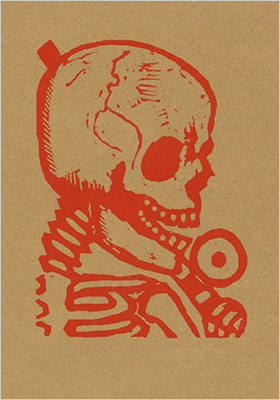
In the hammock: min-a-rets issue 9 spring 2018


Minarets9_webcover.png


Min-a-rets is published by Compound Press and Issue 9 is edited by Craig Foltz

The editor’s motive was ‘to create a forum for an absurdist, collaborative experiment, roughly based on the surrealist Exquisite Corpse experiments from the 1920s’. In the collective approach to writing the second writer only sees the last line of the first writer.


In this instance:

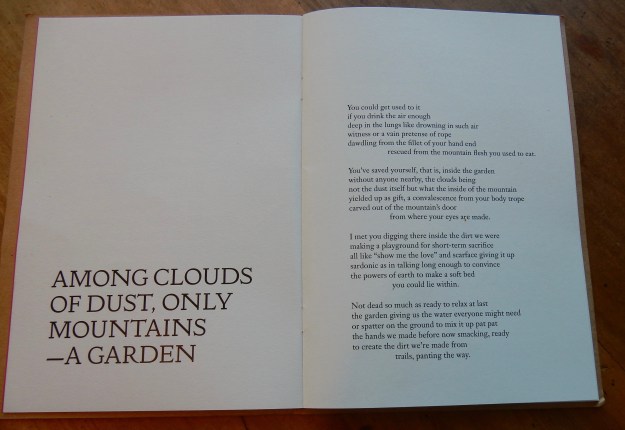
28 writers got a line of text, a specific form and 7 days to produce a piece. The last line was handed onto the next writer. There were four groups each starting with the same first line: Among clouds of dust, only mountains – a garden

The writers come from New Zealand, USA, Taiwan, Australia and Sweden and include Joan Fleming, Nina Powels, Ya-Wen Ho, Steph Burt, Airini Beautrais, Lisa Samuels, Anna Jackson, Amy Brown, Sarah Jane Barnettt, Essa Ranapiri, Rebecca Hawkes.

Names were put in a hat to assign group and order.

Four poems, without attribution to individual writers, achieve a sweet and surprising fluency. It is like picking up a stitch from the previous writer and taking  it wherever you fancy. Sometimes it is a shift in pattern, sometimes repetition.

Four distinctive poems like a game of whispers in the ear or the game where you draw a head, fold the paper over and let the next person continue with a modicum of clues. I was hungry to keep reading, motivated by the bridge between stanzas.

What a delight to read the hooked stitches: the surprising links and the wayward disconnections. I utterly adore this issue, both startling and sumptuous.


DSCN9583.jpg


Compound Press page


The Moth International Short Story Prize 2018: Caoilinn Hughes (1st and 3rd) and Tracey Slaughter (2nd)

Screen Shot 2018-09-07 at 8.36.25 AM.png


‘The author Kevin Barry chose not one but two of Caoilinn Hughes’ stories as his prizewinners in this year’s Moth Short Story Prize, which he judged anonymously. Psychobabble takes first prize, and is, according to Barry, “a story that walks a difficult road in terms of its tone or note – it’s a dark situation dealt with not lightly but with an effervescence in the line, in the sentence-making, and it’s this vivacity that elevates the piece above the rest. It’s both poignant and very funny, emotional yet sardonic. The writer has great control.”’

You can read Caoilinn’s winning story, ‘Psychobabble’ here.

You can read her third placed story, ‘Standard Deviation’ here.


And poet and fiction writer, Tracey Slaughter, came 2nd with ‘Postcards are a Thing of the Past’.

Tracey Slaughter’s Postcards are a Thing of the Past, which won second prize, is “a narrative that shows the boundless possibilities of the short story as a form – it could be described almost as a kind of erotic travelogue, but the important movement is internal, or within,” said Barry. “It’s about the heart, essentially, and there is real intensity in the writing, and some astonishing jolts in the language.”

You can read Tracey’s story here.

The three winning stories appear in the autumn issue of The Moth, available to purchase in select bookshops and online

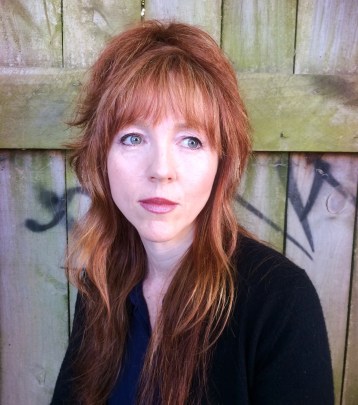
Poetry Shelf audio spot: Tracey Slaughter’s ‘breather’


headshot-green-fence.jpg


Tracey Slaughter is the author of deleted scenes for lovers an acclaimed collection of short stories (VUP, 2016). Her poetry and prose have received many awards including the international Bridport Prize (2014), two BNZ Katherine Mansfield Awards, and the Landfall Essay Prize 2015. Her poetry cycle ‘it was the seventies when me & Karen Carpenter hung out’ was shortlisted in the Manchester Poetry Prize 2014, and her poem ‘breather’ won Second Place in the ABR Peter Porter Poetry Prize 2018. She teaches at Waikato University where she edits the journal Mayhem.