Monthly Archives: May 2018

The Sarah Broom Prize 2018 winner ….


DSCN9532.jpg

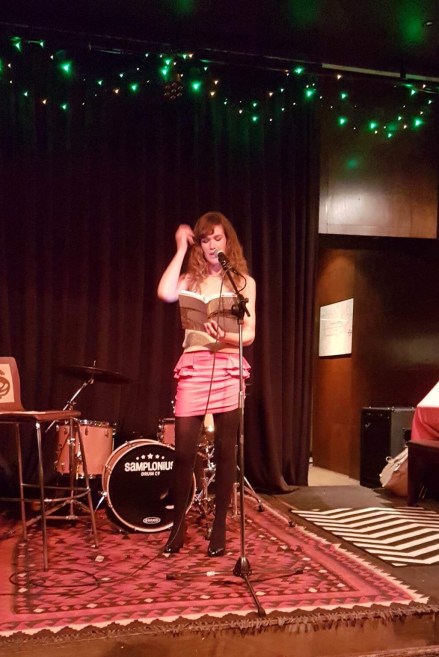
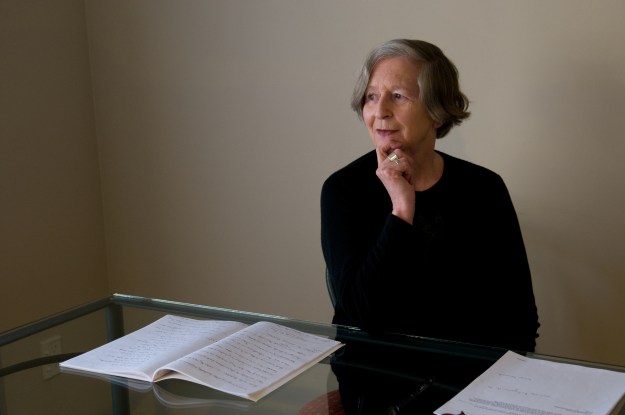
Wellington poet Jane Arthur is the winner of the Sarah Broom Poetry Prize 2018.


Arthur is a Wellington-based poet with a Masters in Creative Writing from IIML at Victoria University, a Whitireia Polytech Diploma in Publishing and an MA in English from the University of Auckland. She has worked as an editor and bookseller for over 15 years and co-founded The Sapling, a NZ children’s website. Her poems have appeared in numerous journals.

Stuart Airey, Wes Lee and Robyn Pickens joined Arthur as prize finalists at the Sarah Broom Poetry event at the Auckland Writers Festival on Sunday 20 May. Each read work from their prize submissions, introduced by Paula Green, who stood in for guest judge and New York poetry icon, Eileen Myers.

Myers described the quality of the entries for the prize as ‘really high’.  After whittling down the list, they said ‘there’s an incredible intimacy about sharing that moment with a group of writers you’ve never met and then hunkering down finally with a small bunch of them’.

Of Arthur, Myers said that ‘poetry’s a connection to everything which I felt in all these poets but in this final winning one the most. There’s an unperturbed confident “real” here.’

The Sarah Broom Poetry Prize was established to celebrate the life and work of Sarah Broom (1972-2013), author of Tigers at Awhitu and Gleam.  It is now in its fifth year, and we are pleased again to be working together with the Auckland Writers Festival to showcase and celebrate New Zealand poetry.


Sarah Broom Poetry Prize winner announced today @AWF Herald Theatre 3.15 pm

Screen Shot 2018-04-30 at 2.34.13 PM.png


Sarah Broom Poetry Prize Finalists 2018 will read today


Stuart Airey is a poet with a day job as an optometrist, which involves using the logical, scientific part of his mind. He describes poetry as “letting me explore all the other bits”.  Stuart began writing poetry a few years ago; these poems are as yet unpublished, but they have been performed in his local church. Though he has been living in Hamilton for many years now, Stuart feels an increasingly strong call from his Christchurch roots and his resonance with loss. Poems allow a part of him to look up at the Port Hills, walk along leafy Saint Albans, and gaze longlingly out at the Sumner surf.


Jane Arthur was born in New Plymouth and lives in Wellington with her partner, baby and dogs. She has worked in the book industry for over 15 years as a bookseller and editor, and is a founder of the New Zealand children’s literature website The Sapling. She has a Master’s in Creative Writing from the IIML at Victoria University, where her supervisor was Cliff Fell, a 2017 Sarah Broom Poetry Prize finalist. She also has a Diploma in Publishing from Whitireia Polytech and a Master’s in English Literature from Auckland University. Her poems have appeared in journals including Sport, Turbine, Ika, and Sweet Mammalian.


Wes Lee is the author of Body, Remember (Eyewear Publishing, 2017), Shooting Gallery (Steele Roberts, 2016), and Cowboy Genes (Grist Books, University of Huddersfield Press, 2014). Her work has appeared in the Poetry New Zealand Yearbook 2018, New Writing Scotland, The London Magazine, Landfall, Poetry LondonIrises: The University of Canberra Vice-Chancellor’s Poetry Prize Anthology 2017, and many other journals and anthologies. She has won a number of awards for her writing including the BNZ Katherine Mansfield Literary Award; the Short Fiction Writing Prize (University of Plymouth Press) and the Over the Edge New Writer of the Year Award in Galway. Wes is currently working on her third poetry collection, By the Lapels.


Robyn Maree Pickens is an art writer, poet, and curator. Her critical and creative work is centred on the relationship between aesthetic practices and ecological reparation. Robyn’s poetry has appeared in the Australian eco-poetic journal Plumwood Mountain (2018), and US journals Matador Review (2017), water soup (2017), and Jacket 2 (2017). Her most recent work was exhibited at ARTSPACE, Auckland in March 2018. Robyn’s poetry criticism has appeared in Rain Taxi (2018) and Jacket 2 (2018). Currently Robyn is a PhD candidate in ecological aesthetics in the English Department at the University of Otago, and an art reviewer for the Otago Daily Times, The Pantograph Punch, and Art News.


Judged by Eileen Myles

The four finalists will read from their work at the Sarah Broom Poetry Prize event at the Auckland Writers Festival on

Sunday 20 May, 3.15-4.15pm.   Herald Theatre, Aorea Centre

Poetry Shelf audio spot: AWF guest Airini Beautrais reads ‘Listening’

Airini reading.jpg


In case you don’t get to hear Airini Beautrais read at the Auckland Writers Festival this weekend – you can hear her reading a new poem.


Listening

Your love’s a country I will never see

again, a horse that will not take the bit,

a dusty dress I am too fat to fit,

(read: passionate – you’d bust too easily),

a box I’ve locked and then misplaced the key,

a post card I will never receive, a hit

I simply missed, a dog that will not sit,

a prize catch on the hook that wriggles free.

But still I am a wide receiving dish,

listening, listening to signals from the sky

until my ears are thrashed. The cries of birds,

the groans of growing trees, movements of fish,

the rumbling earth, crowd out the sounds that I

am searching for: mute thunder of your words.

© Airini Beautrais


Airini Beautrais lives in Whanganui. Her most recent book of poetry is Flow: Whanganui River Poems (Victoria University Press, 2017). ‘Listening’ is from a work in progress, a narrative sonnet sequence.


You can catch Airini at the Auckland Writers Festival:

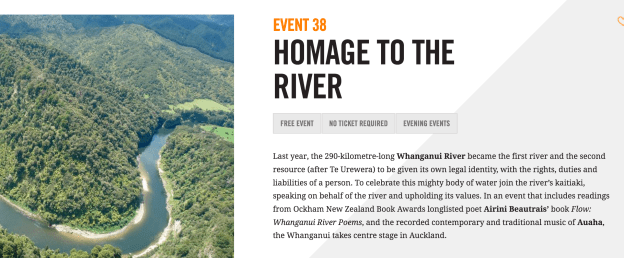
Friday May 18th 5.30 until 6.30   Homage to the River   Upper NZI Room

Friday May 18th 6 until 7.30   Call on O’Connell    90 minutes literary mayhem on O’Connell Street

Sunday May 20  10.30 – 11.30 The Art of the Poem with James Brown, Choman Hardi and Terese Svoboda.  Upper NZI Room


Wow! Poetry at the AWF on Friday 18th May

Sadly I am sick with sore throat and can’t see these events today. If anyone goes and wants to do a little write up for my blog – well that would be just wonderful.

1 pm Upper NZI Room:

Screen Shot 2018-05-18 at 9.04.53 AM.png


2 pm Herald Theatre:

Screen Shot 2018-05-18 at 9.05.21 AM.png


2.30 Upper NZI Room:

Screen Shot 2018-05-18 at 9.08.37 AM.png


2.30 Limelight Room:

Screen Shot 2018-05-18 at 9.14.36 AM.png

4pm Lower NZI Room:

Screen Shot 2018-05-18 at 9.09.36 AM.png


4 pm Limelight Room

Screen Shot 2018-05-18 at 9.10.32 AM.png


5.30 Upper NZI Room

Screen Shot 2018-05-18 at 9.11.27 AM.png


6- 7.30 pm O’Connells St Locations

Screen Shot 2018-05-18 at 9.12.17 AM.png


8.45 – 10.15 pmASB Theatre:

Screen Shot 2018-05-18 at 9.17.00 AM.png


Poet Grace Taylor writes a letter for her mother’s unfair treatment


Screen Shot 2018-05-18 at 8.40.44 AM.png


Screen Shot 2018-05-18 at 8.40.38 AM.png


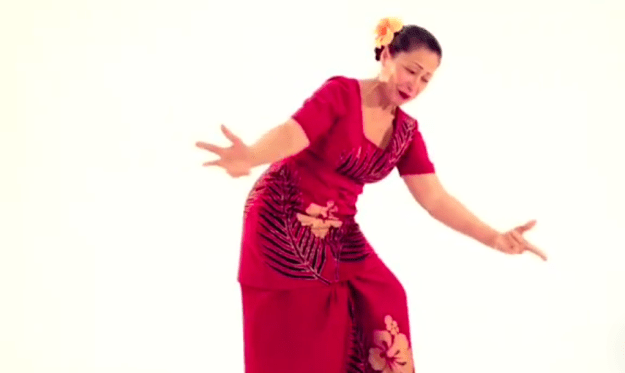
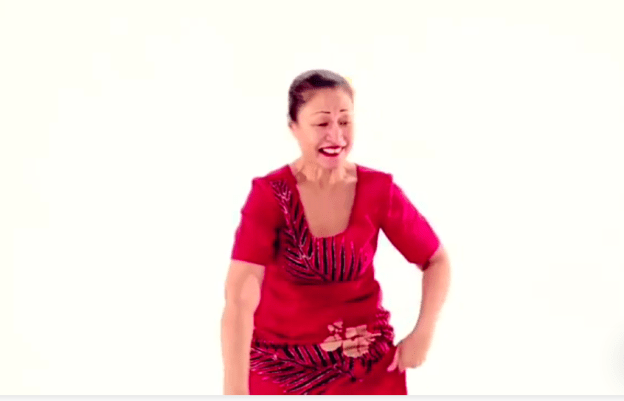
‘Titled Dear Loyal New Zealand Citizen, Grace Taylor reads a letter written to the Ministry of Social Development with a video of her mother slowly dancing the Samoan siva, or dance wearing a traditional pea.

Grace Taylor was motivated to share on social media about her mother’s unfair treatment over the subsidy, given she has Alzheimer’s and no direct family member in New Zealand to care for her.

She said that the Ministry of Social Development needed to recognise that people had different and unique situations, including those of Pacific heritage, that were not taken into account.’

Radio NZ piece here

Watch video here

Watching Grace’s mother dancing as you listen to the letter is a heart-smack experience.

Screen Shot 2018-05-18 at 8.39.55 AM.png


A conversation and poem from the Sarah Broom Poetry Prize Finalists: Robyn Maree Pickens


Robyn Maree Pickens.jpg


Urban planning


Before we came to this country

there would’ve been another name

for the Spectacled Flying Fox

(an endangered bat).


I never understood how she could

disparage the indigenous people

yet work long nights giving out free food & bibles

(to the Aboriginal homeless & street children).


Some groups, she says, have taken

the rainbow as their symbol

without knowing its true meaning.

Instantly I want to cover myself with Pride tat

loll in the refracted light where the rainbow meets the mangroves

& hold my girlfriend

(the speed of coloured light).


After a day with her

hordes of yellow crested white cockatoos

descend cawing to roost in the crowns of brittle ribbonwoods

(their guano is killing the trees).


Aboriginal people were sleeping amongst the tropical vegetation

outside her hotel, she tells me. The council raked between the dense weave

collecting bedding & feces which were left to dry before removal

(the maintenance of urban planning).


The plaque in the hotel acknowledges the traditional custodians of the land

pays respect to the elders throughout the ages

but does not name the people, the mob, the community

(a sea-swimming turtle angles towards the milky way).


It is 5:30pm at the bus stop, a drunk man attempts to attack

two women. No one bats an eyelid. Outside my hotel

it is a person I discover, not a machine, breaking down, rupturing

(I remember that under blue light veins are not visible).


The tiny ants come into my hotel room

appearing first on the white bathroom tiles

to run over my bathroom toe & later my bedroom ear lobe

(you and I were kissing but some countries cut that out).


©Robyn Maree Pickens


A conversation


If you were to map your poetry reading history, what books would act as key co-ordinates?

Three books in particular come to mind: The Limits by Alice Miller (2014), Night Sky With Exit Wounds by Ocean Vuong (2016), Big Energy Poets: Ecopoetry Thinks Climate Change edited by Heidi Lynn Staples and Amy King (2017).


What do you want your poems to do?

I want them to do whatever they want to do, so I try not to impose on them too much.


Which poem in your selection particularly falls into place. Why?

Each poem responded to a specific moment or set of circumstances, but I am not sure that there is one that particularly falls into place.


There is no blueprint for writing poems. What might act as a poem trigger for you? 

Probably like most people it comes down to time. Either I am almost inadvertently quiet for long enough so that I can listen for a word, phrase, response, or I actively make time to write. Sometimes of course there is an event or experience that eclipses whatever else I am meant to be doing. A residency with a generous stipend would also work wonders.


If you were reviewing your entry poems, what three words would characterise their allure?

Ecological, political, caring.


You are going to read together at the Auckland Writers Festival. If you could pick a dream team of poets to read – who would we see?

Ocean Vuong, Kaveh Akbar, Alice Miller, Talia Marshall (Ngāti Kuia, Rangitāne ō Wairau, Ngāti Rārua, Ngāti Takihiku), CAConrad, Lucas de Lima, Selina Tusitala Marsh, Adam Zagajewski, Emer Lyons, Hana Pera Aoake (Ngāti Raukawa, Tainui), and if I could raise the dead, Janet Frame.


Robyn Maree Pickens is an art writer, poet, and curator. Her critical and creative work is centred on the relationship between aesthetic practices and ecological reparation. Robyn’s poetry has appeared in the Australian eco-poetic journal Plumwood Mountain (2018), and U.S. journals Matador Review (2017), water soup (2017), and Jacket 2 (2017). Her most recent work was exhibited at ARTSPACE, Auckland in March 2018. Robyn’s poetry criticism has appeared in Rain Taxi (2018) and Jacket 2 (2018). Currently Robyn is a PhD candidate in ecological aesthetics in the English Department at the University of Otago, and an art reviewer for the Otago Daily Times, The Pantograph Punch, and Art News.


The four finalists will read from their work at the Sarah Broom Poetry Prize event at the Auckland Writers Festival on Sunday 20 May, 3.15-4.15pm in Aotea Centre’s Herald Theatre. Free event, all welcome.

Sarah Broom Poetry Prize page.

Celebrating Elizabeth Smither’s Best Book of Poetry Award


dsc_0067.jpg


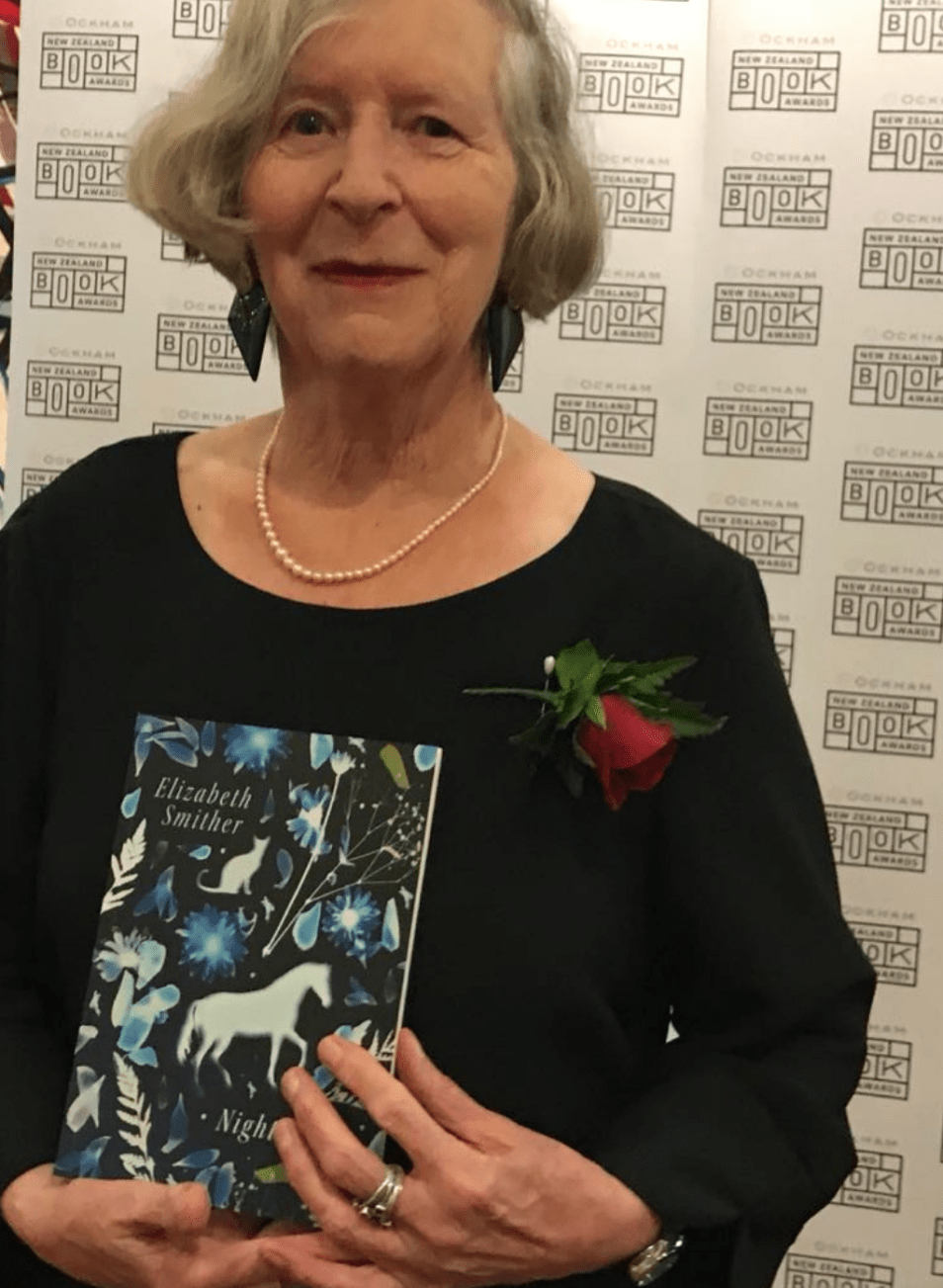
Elizabeth Smither, Night Horse – winner of the Best Poetry Book Award at the Ockham NZ Book Awards 2018


Paula: Your new collection is a delight to read and offers so many poetic treats. I was thinking as I read that your poems are like little jackets that can be worn inside out and outside in. In stillness there is movement and in movement there is stillness; in musicality there is plainness and in plainness there is musicality. In the strange there is the ordinary and in the ordinary there is the strange. What do you like your poems to do?

Elizabeth: I want them to do everything. Everything at once. I want them to feel and think (and feel the thinking in them as you read). I want them to be quick, in the old sense of the word: the opposite of dead. I want them to not know something and try to find it out – I would never write a poem with prior knowledge – I think ignorance can be bliss or at least start the motor. And as I write more I find out more and more about musicality. Isn’t one of the loveliest moments in music when harmony breaks through discord as though it is earned and you know that discord, instead of being a thicket or a dark wood, is part of it?


Paula: I especially love the ongoing friendship and granddaughter poems, but I particularly love the first poem, ‘My mother’s house.’ Kate Camp and I heard you read this at the National Library’s Circle of Laureates and were so moved and uplifted that we asked for copies! Unseen, you are observing your mother move through the house from the street (you gave us this introduction) and see her in shifting lights. The moment is extraordinary; are we are at our truest self when we are not observed? There is the characteristic Smither movement through the poem, slow and attentive, to the point of tilt or surprise. The final lines reverberate and alter the pitch of looking: ‘but she who made it/who would soon walk into the last room/of her life and go to sleep in it.’  Do you have a poem or two in the collection that particularly resonate with you?

Elizabeth: I’m fond of ‘The tablecloth’ after I observed my friend, Clay, scrubbing at a corner of a white damask tablecloth in the laundry after a dinner party. It reminded me of the old-fashioned way of washing linen in a river. It’s both a doll-sized tablecloth and something almost as large as the tablecloth for a royal banquet around which staff walk, measuring the placement of cutlery and the distance between each chair. ‘Ukulele for a dying child’ tumbles all over itself in an incoherent manner because the subject is so serious and no poet can do it justice. The grandmother poems will probably be ongoing because it is such an intense experience: something between a hovering angel and a lioness. Going back to your remark about ‘My mother’s house’ I agree with the truth that is available in our unobserved moments. Perhaps there is a balance between our social and our private moments which might comprise something Keats called ‘soul-making’.

from our interview


Tenderness


                           I


A tree in the centre of a corn field

the corn rising in its ranks like braided hair

to meet the lowest branches


a tree that has replaced at least twenty

corn stalks with their divided leaves

twenty golden cobs sweetly surrendered


for this lovely grace: leaf sweep touching

leaf sweep, the whole field given by

this rising trunk, a focus


the pattern drawn from the edge of the field

to the centre where the tree

delivers a blessing.


II


The forest planation blankets hills.

Neat-ankled, swift-running

the dark pines descend


except on one little hilltop a ride

of grass begins and runs

with the trees which seem to bend


tenderly towards it: a bed from which

a child has risen and begun walking

the solicitousness of pine branches over grass.


©Elizabeth Smither from Night Horse


1497223465774-1.jpg    1497223465774-1.jpg


Paula: Have you seen a festival poetry session (anywhere) that has blown you off your seat (or had some other significant impact)?

Elizabeth: Margaret Atwood and Hans Magnus Enzensberger at the Aldeburgh festival. I read first and sat down between them, shivering.

Paula: If you could curate a dream poetry session at The Auckland Writers Festival which poets would be there and who would mc or chair it?

Elizabeth: I  think I’d do a Dead Poets session. Keats and Shelley, Robert Lowell, William Empson, John Crowe Ransom, Tomas Tranströmer, Szymborska, of course… the possibilities are endless. It might have something of the bitchy tone of ‘The Real Housewives of Melbourne’.  To chair it one of the Paulas: Green or Morris.


from Poetry Shelf  ’12 Questions for the Ockham New Zealand Book Award Poetry finalists’


Elizabeth will appear at the Auckland Writers Festival 

Sunday May 20  1.30 – 2.20 Disappearances  (4 readings) Limelight Room, Aotea Centre


Auckland University Press Night Horse page and author page

Booksellers review by Emma Shi

Radio NZ National review by Harry Ricketts with Kathryn Ryan


Award night


Screen Shot 2018-05-16 at 8.35.48 AM.png

Celebrating Hannah Mettner’s Best First Book of Poetry Award

fullsizerender.jpg

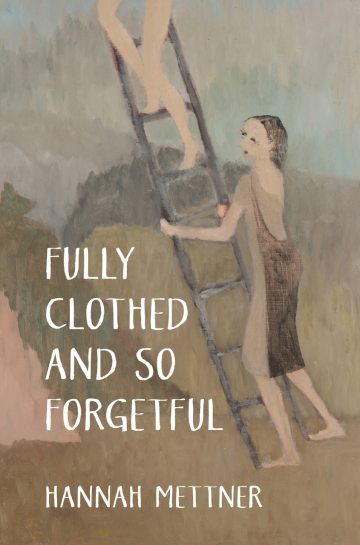
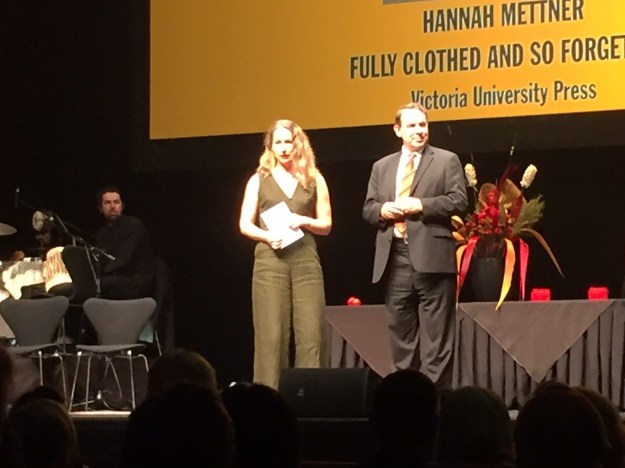
Hannah Mettner, Fully Clothed and So Forgetful – winner of the Best First Book Award at the Ockham NZ Book Awards 2018


We believe in the steps.

We tell our children and then our

grandchildren about the cool

pond at the top where sun-

carp clean our feet and where

we can sleep. The steps are one of

the beautiful mysteries of

life, like how did we get here,

fully clothed and so forgetful?


from ‘Higher ground’


Paula: ‘Fully Clothed and So Forgetful gave me goose bumps as I read and took me beyond words to that state where you stand somewhere wild and beautiful and just stall beyond language to absorb the world. My initial reaction is simply to tell the reader to read the book. But then I start accumulating a list of what I think the poetry is doing: the poems are inventive, unpredictable, melodic, on the move, strange, love-soaked.’

Hannah: The key thing that matters to me in a poem (whether one I’m writing or reading) is that it gets me in the gut. I get very frustrated by poetry that feels empty, or emotionally disengaged or distant, or is teasing the reader or holding them at arm’s length. I just find it boring, I mean, I know that different poems and poets have all sorts of intellectual fare to offer, but I want to be emotionally moved by a poem, and nothing less.

from our interview


My children are abducted by 17th-century French courtesans

In the rose garden near the big house
where somebody famous was either
born, or not, all the ladies spread their
pinks out in the sun. Pretty young ladies
with expensive, dewy faces who want
my children for their photogenic walls.
They look as though they’re picnicking
with their floral bubbles and their green
men but their stiletto fingers give them
away. And my children were just feeding
ducks, but where have they gone?! Quick
say the birds Find them Find them, gobbling
their trails of bread. The ladies strengthen
in the light and their prickles rise and my
nose is so full of their French scent that
I start to sneeze. The ladies wilt a little in
revulsion. Their corals and blushes and rouges
are falling brown, then grey; old ladies with
shallow bones and prickles blunted with
age. And where are your children they
want to know and I want to know too.
I’ve looked everywhere. There’s a low
graze of desperation in my throat, which
stings as I call their names. I uproot one
of the ladies and use her to beat back a
path through the others, until they look
almost young again in the freshness
of their bruises. When I get back to the
pond most of the spinsters have frosted
in the ground. The children are there
wearing new fur coats. One is putting logs
on a fire, while the other pulls dinner
from the snow.

©Hannah Mettner, from Fully clothed and so forgetful (Victoria University Press, 2017)


Author note: This is the poem that helped me realise that there was a way to integrate the emotional authenticity that I want my poems to convey (in this case the fear of ‘losing my children’) with something less literal. For me, this meant that rather than merely ‘stating facts’ in a pleasant or interesting way with line breaks, I was able to tease out multiple concepts and feelings simultaneously in an environment less concretely related to the real world. So, this poem deals with my fear of losing my children after the breakup of my relationship with their father, but holds with that the fear of a potential ‘stepmother’, and the fear of them doing fine without me, but because none of this takes place in a recognisable world (rosebushes don’t usually turn into young women), I felt freer to say all that.


Fully_Clothed_and_So_Forgetful__32303.1486956777.jpg


Victoria University Press page

Radio NZ  National: Harry Ricketts reviews the book with Kathryn Ryan


Award night:


IMG_2312.JPG

Maria Ji on poetry and the mountains


DdMhnIdV0AA0hRb.jpg


Maria Ji:  Things that make me feel both big and small at the same time include poetry and mountains.