Monthly Archives: July 2017

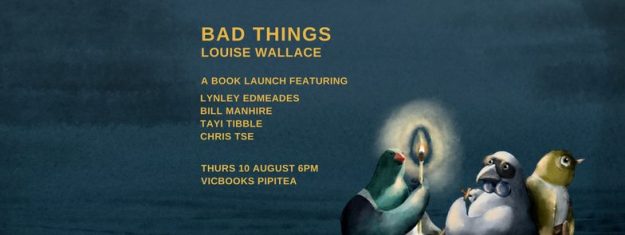
Louise Wallace & guests to launch her new collection August 10th

Sad to miss this event! Glad I get to read to the book!


20046639_10159006640045402_1957579315497457026_n.jpg


Screen Shot 2017-07-15 at 5.01.22 PM.png

Book launch for BAD THINGS: a new book of poems by Louise Wallace. With readings from Lynley Edmeades, Bill Manhire, Tayi Tibble and Chris Tse. All welcome.

Books by all authors available for purchase on the night, along with limited edition cover art prints by Kimberly Andrews.

Drink, nibble, get your books signed and be merry.

VUP page


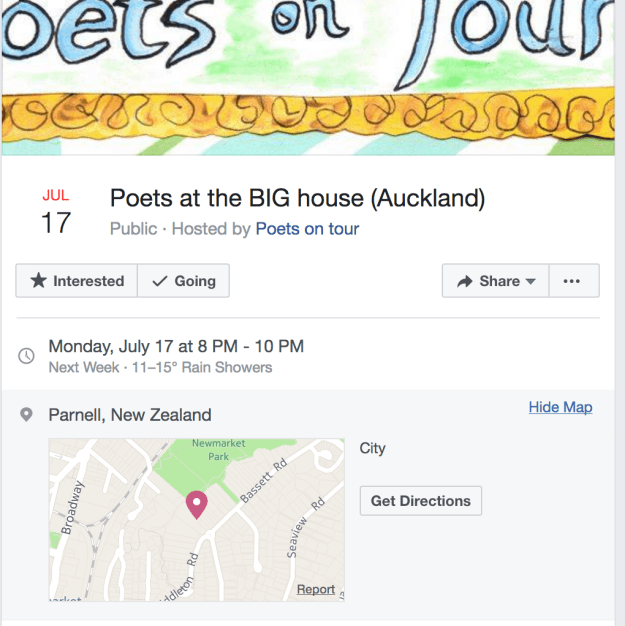
Poets on Tour: McMillan & Beautrais at the Big House in Auckland

Screen Shot 2017-07-13 at 9.23.03 AM.png

‘Poets at the big house. Airini Beautrais (brand new book ‘Flow: Whanganui River Poems’, Maria McMillan (brand new book ‘The Ski Flier’, Tulia Thompson and possibly an awesome guest who I don’t have confirmation of when I created this invite but she’s awesome and I’ll update when we know. Bring wine (or not), sit by the fire, listen to us read things, watch us perform things. We’ll sign our new books (cash sales only).’

Note from Paula: Not sure of exact address

Some details here on Facebook

Applications open for VUW Writer in Residence

Writer in Residence

The Writer in Residence is an annual appointment to foster New Zealand writing, with support from Creative New Zealand.

About the residency

Creative New Zealand Logo

The Victoria University of Wellington / Creative New Zealand Writer in Residence appointment is jointly funded by Victoria University of Wellington and Creative New Zealand. It has been created to foster New Zealand writing by providing the appointee with the opportunity to write full-time within an academic environment for the period of tenure.

Applications are invited from writers in all areas of literary activity, including drama, fiction and poetry, New Zealand art, biography, history, music, society and culture, etc. Applicants should be authors of proven merit normally resident in New Zealand or New Zealanders currently resident overseas. There is no restriction on the occupation of applicants, but they should not be employees of Creative New Zealand or Victoria University, or have been employed by Victoria University in the twelve months prior to the closing date.

Applications for the 2018 appointment are now open, with an application deadline of 30 September 2017. A full role description and application is available on the Current Vacancies page of Victoria’s website (position reference 1661). Enquiries can also be directed to modernletters@vuw.ac.nz.

see here

Deadline close for proposals for Poetry and the Essay conference


f4142a64-5874-438b-9281-eef5b5f905bb.jpg
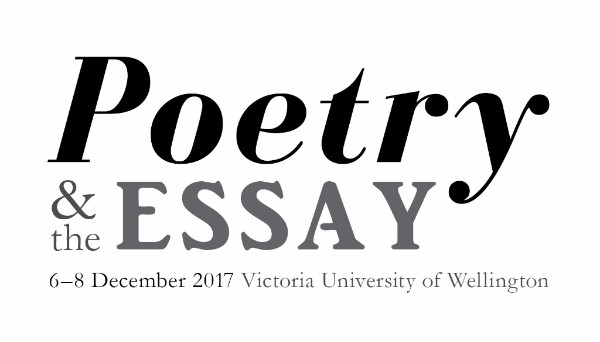
There’s just one more week to get in your proposals for the Poetry and the Essay conference, which will be held at Victoria University of Wellington, from 6 to 8 December 2017. This three-day conference will bring together poets and scholars to explore the space where poetry intersects with the essay.

We are interested in:

proposals for scholarly papers (20 mins)
proposals for panel discussions, and
expressions of interest from poet-practitioners to read (and perhaps discuss) their own essay poems, either as a 10-minute reading or a 20-minute paper.
If you don’t have a complete abstract, an informal email briefly outlining your idea will suffice at this stage.

For more information:

read our call for papers
read our guidelines for proposals.
Proposals should be sent to the organisers, Helen Rickerby, Angelina Sbroma and Anna Jackson, by 17 July 2017. They can be emailed to Anna.Jackson@vuw.ac.nz.

Conference registration opens soon
Conference registrations will open soon. Registration for the three-day conference will be:

$180 full registration (for attendees with institutional support)
$60 concession (for students and attendees without institutional support).
There will also be an optional conference dinner, which will cost $65.

If you want to attend the conference but cost is a barrier, get in touch with us at poetryandessay@gmail.com.

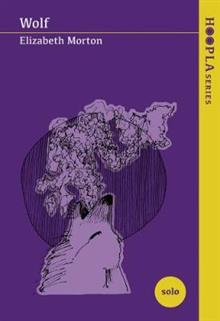
Elizabeth Morton’s Wolf: ‘Wolf goes to suburbia’

9780994137821.jpg

Wolf, Elizabeth Morton, Mākaro Press, 2017


Elizabeth Morton’s debut collection is a mysterious, eye-catching, sound-catching read, with piquant detail and a poetic net that catches all manner of things – the light and the shade. I was particularly drawn to the opening sequence of poems featuring Wolf. Wolf is ‘a critter of humanity’; he is an outsider, an outcast, living on the edge and off scraps. The writing is assured, pungent and rich in atmosphere. I love the way Elizabeth deliberately slows things down, like a raconteur, so the art of the storyteller infuses the poetic line. As a reader, you pay attention to the amassing detail that startles and shines. I also like the way the lower-case letters that precede full stops is like a little hiccup or start on the line. It shifts the fluency and is akin to looking at a view where things pop in the corner of your eye.


Wolf goes to suburbia

rubbish bags hunch in
deathrow orange. yogurt pots
tickle the gutter pit.
newspapers suck asphalt.

like everything else,
Wolf is a shambles –

hide all a-scab with
the nippings of fleas.
skull abuzz with the
echoes of home-

the belchings of elk,
the titterings of muskrats.

today Wolf is a critter
of humanity.

where gophers whistled
trucks now vroom.
where hornets rattled
traffic lights now click

into the emerald of his
mother-world.

Wolf mouths his way
into a rubbish bag.

the yellow night
covers him like a rash.


© Elizabeth Morton 2017


Elizabeth Morton is a poet, fiction writer, and reviewer from Auckland. Her poetry and prose are published in New Zealand, UK, USA, Australia, Canada and online. She is the feature poet in the Poetry New Zealand Yearbook 2017. Her own poetry collection, Wolf, was published by Mākaro Press (2017). In 2013 she was winner of the New Voices Emerging Poets competition. She was shortlisted for the Kathleen Grattan Award (2015) and was, twice, 2nd place in the Sunday Star-Times Short Story Competition (2015, 2016). Her flash fiction was selected for the international anthology, The Best Small Fictions 2016.

Side-projects include: collecting obscure words, penning bad rap music, studying the brain, and exploring the coastal rock pools. She likes to write about broken things, and things with teeth.


Mākaro Press page

Emma Shi’s review at The Booksellers

Liz Breslin on poetry in ODT: Alzheimer’s and a Spoon out next week

“They’re not really a way of making sense of the world as such, more of poking at it and mining it … My family tells me that my writing is not therapeutic or meditative because I am not very peaceful in the doing of it or the aftermath, but it is a total necessity for me.”

Breslin is in a celebratory mood, keenly awaiting the publication of her first collection of poetry, Alzheimer’s and a Spoon, which will be launched in Dunedin and Wanaka next week.

The collection’s title, and various works within it, directly references the dementia she witnessed in her Polish grandmother (or “babcia”), as well as delving more widely into the notion of memory, relationships and how events take on different meanings depending on a person’s viewpoint.


Full piece here

from E-Tangata: Paula Morris in excellent conversation with Dale Husband

Paula Morris: Our Māori writers are free to write whatever they want


I suppose there’s the question of what constitutes a Māori story. And whether a Pākehā can write a Māori story.

Generally, when I talk about Māori literature, I’m talking about writers who are Māori. To me, if you’re a Māori writer, you’re part of Māori literature — no matter what you’re writing. Overseas, people understand that. If Ernest Hemingway is writing a book in Spain — he’s still an American writer. If Graham Greene is writing a book set in Haiti or Cuba — he’s still a British writer.

Here, sometimes I think that, because our literature is younger and a bit more anxious, we worry about who’s in and who’s out. I do think really good Pākehā writers can write a Māori story if they really understand what they’re writing — and if they have the empathy, imagination, and skills, and if they’ve done their research. Then, yes. Absolutely.

And, of course, Māori writers can write about whatever the hell they want to. So Kelly Ana Morey can write about a racehorse in a book largely set in Australia — and still be part of Māori literature because she is a Māori writer. Our national literature is like other art. It’s to do with the painters or the sculptors themselves. It’s not to do with the actual work having to fit a particular theme or subject.


Full interview here

Sarah Jane Barnett’s Home essay

home-cvr-final.jpg

Suffering is Optional

In this moving essay, Sarah Jane Barnett writes about womanhood, grief, and how running allows her to feel at home in her body.


I started running in my twenties. I’d never done any regular exercise, so my first attempt involved running the distance between two lampposts, and then walking to the next. The route I took on those first few runs was a loop starting from my parents’ house and out around the suburbs of my childhood. At the time I was essentially homeless. I was staying with my parents after my first marriage had ended, after my husband calmly said on the phone, ‘I don’t desire you any more.’ Looking back, I don’t blame him. I didn’t desire myself either. Dragging my body through the dark streets was the only way to numb the public humiliation of being discarded, to ease the shame and grief.


Full essay here. It is so very good. Excellent lure to get the book: Home: New Writing, published by Massey University Press, 2017.

PS If you break your foot on Queen Charlotte track and then walk on it for six hours to get out and then get back to running too soon and too fast – ah it all goes haywire, so watch for that. Walking is just not the same! Love your essay, Sarah!