Monthly Archives: November 2016

Poetry critic Stephen Burt gives public masterclass in Wellington with Bill Manhire

image004.jpg

Contemporary poetry has plenty to offer new readers, and plenty more for those who already follow it. Yet its difficulty—and sheer variety—leaves many readers puzzled and overwhelmed. The critic, scholar and poet Stephen Burt sets out to help.

In Close Calls with Nonsense: How to Read New Poetry, Victoria University of Wellington’s International Institute of Modern Letters (IIML) presents a public masterclass on poetry. Steered by Victoria University Emeritus Professor Bill Manhire, Burt will guide the audience through a number of contemporary poems by writers from the United Kingdom, United States and New Zealand, illuminating their methods and unfolding their pleasures. This event aims to introduce both tentative and long-time poetry readers to the rewards of reading new poetry. Burt will also give a reading of their poems.

Burt is Professor of Poetry at Harvard University. Their influential reviews and books have made them one of the leading critics of their generation, and their enthusiasm for new writing has helped to establish the careers of younger poets, and helped audiences to appreciate their work.

Burt’s 1998 essay ‘The Elliptical Poets’ is widely credited with identifying a new school of poetry. The book that followed, Close Calls With Nonsense (2009), includes an essay on James K. Baxter among those on more recent poets.

In their new book, The Poem is You, Burt explores 60 American poems. Publisher’s Weekly wrote that: “Burt’s many ways of looking at a poem will inspire new students and accomplished poets, especially as many of his meditations circle the question of what poetry does or should do: making readers pay attention, ask questions, and experience new things.”

In 2012 a NY Times interview hailed Burt as ‘Poetry’s Cross-Dressing Kingmaker’. Burt identifies as transgender, and their poetry chapbook All-Season Stephanie (2015) explores coming of age as it might have happened for their female alter-ego. Burt prefers to use the gender-neutral pronoun ‘they’.

Close Calls With Nonsense is presented by the IIML in partnership with City Gallery Wellington. Admission is free, with all welcome. The gallery will be open prior to the event for visitors to view the exhibition Cindy Sherman (exhibition entry charges apply).

What: Close Calls With Nonsense, with Stephen Burt and Bill Manhire
When: 5.30–7pm, Monday 12 December
Where: City Gallery, Wellington

For more information contact Chris Price on chris.price@vuw.ac.nz.
Lynn Davidson’s terrific essay on Charlotte Wood’s The Natural Way of Things

Have reposted this to due to my slumber morning brain where I mixed up our poet Lynns.


full essay available here at Text Vol 20 number 2

On a single day in a wintery week I finished reading Charlotte Wood’s blazing novel The Natural Way of Things and went to the Degas exhibition at the National Gallery of Victoria. I went to the exhibition in the early afternoon instead of applying for a job – or another in the patchwork of jobs that keep a roof over my head. I needed my brain to be washed through with colour and dance and process. I wanted to remember about movement and change; things even more reliable than death and taxes.  Later that day, on a 1½-hour train journey from work, hungry for dinner, I finished Wood’s novel. I read how the main character, Verla, makes a hard and conscious decision to ‘jump off the bus’ that is taking a group of brutalized girls ‘home’ to the implied safety of a corporate, market-led world.

I teach creative writing, and now that tertiary teaching has been largely casualised, my working life is mixed: rich, stressful, and very often and very suddenly just not there. There is no continuity. So, four evenings a week I travel three hours to tutor kids for two hours at a modest hourly rate. This saves me from financial free-fall when the university semester ends (well, not quite, this job is also ‘casual’ but the holidays are shorter and the work more reliable). I give you this context because both the book and the exhibition are about work, about women’s work. So here’s another bit of context. I was a single mother who raised two children without financial support from their fathers. Any reserves of energy and time were spent on a very long battle around custody of my daughter. But those difficulties aren’t the defining things. Our little family had, and has, a good time. It’s just that I’m writing about women’s work and art, and suddenly this fact of single parenting seems important to say.
Poetry: The Unexpected Greenness of Trees

Unexpected-greeness-e1479015700984.jpg

From Caselberg Trust

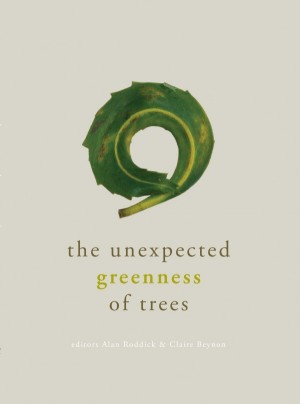
Christmas is coming and what better way to celebrate it than by supporting us and purchasing a copy of our beautiful poetry book “the unexpected greenness of trees”. Celebrating 6 years of the Caselberg Trust International Poetry Prize, it includes both winning and highly commended entries, judges reports and a forward by organiser Alan Roddick. This is a wonderfully diverse collection of poetry.

If you would like a copy they are $27.00 each, with $5.00 postage within New Zealand. If you want to pick one up locally we can arrange it. Please PM me if you would like to purchase a copy, or go to our website shop.

Inaugural Poet Laureate of the Navajo Nation Luci Tapahonso in Auckland

Two free public events, 28-29 November

Writing Workshop:  Monday 28th, 12-2pm, University of Auckland, Arts 2,  Room 501, Pat Hannan Room.
Luci Tapahonso Reading: Tuesday 29th, 12-1pm, University of Auckland, Arts 1, Room 209.

All Welcome!
For more info, contact Selina Tusitala Marsh, s.marsh@auckland.ac.nz

Thanks to: University of Auckland School of Humanities, Academy of New Zealand Literature, in partnership with Wai-te-ata Press, Victoria University, and the Embassy of the United States of America.

Brief bio:

Luci Tapahonso (1953) was born in Shiprock, New Mexico, where she grew up on a farm within the Navajo culture. Tapahonso received her B.A. and M.A in 1980 and 1983 respectively from the University of New Mexico, where she was a Professor of English Literature and Language. Tapahonso has served on the Board of Directors at the Phoenix Indian Centre, was a member of the New Mexico Arts Commission Literature Panel, steering committee of Returning the Gift Writers Festival, Kansas Arts Commission Literature Panel, Phoenix Arts Commission, Telluride Institute Writers Forum Advisory Board, and commissioner of Kansas Arts Commission. She is a member of the Modern Language Association, Poets and Writers, Inc., Association of American Indian and Alaska Native Professors, and New Mexico Endowment for the Humanities. In 2013 she was named the inaugural poet laureate of the Navajo Nation. Tapahonso is the author of three children’s books and six books of poetry, including A Radiant Curve, which was awarded the Arizona Book Award for Poetry in 2009. Tapahonso’s work has appeared in many print and media productions in the U.S. and internationally. Her poems have been translated into German, Italian and French. She was featured in Rhino Records’ CDs, “In Their Own Voices: A Century of American Poetry” and “Poetry on Record: 98 American Poets Read Their Work” and in several PBS films. Tapahonso received the 2006 Lifetime Achievement award from the Native Writers Circle of the Americas and a Spirit of the Eagle Leadership Award for her key role in establishing the Indigenous Studies Graduate Studies Program at the University of Kansas. The Native Writers Circle of the Americas named Tapahonso the 1999 Storyteller of the Year. She has also received a Kansas Governor’s Art Award, and Distinguished Woman awards from the National Association of Women in Education and the Girl Scout Council of America. She was honoured as Grand Marshal for the Northern Navajo Fair Parade (1991, 1999) in her hometown of Shiprock, New Mexico.

Vaughan Rapatahana wins THE PROVERSE POETRY PRIZE

THE PROVERSE POETRY PRIZE
FOR SINGLE POEMS PREVIOUSLY UNPUBLISHED IN ENGLISH
ANNOUNCEMENT OF RESULTS
The inauguration of the international Proverse Poetry Prize (single poems)
was announced at The Proverse Publishing Parade in November 2015.
The first entries were received and judged atthe same time and by the same judging panel as the international Proverse Prize for unpublished book-length work submitted in English. Depending on the standard of the poems received in any year as entries for the international Proverse Poetry Prize (single Poems), cash prizes will be awarded to those judged first, second and up to four third winners. Selection to appear in an anthology of entries is also awarded by the judges as a prize.
The results of the inaugural (2016) competition were announced at the “Proverse Publishing Parade” held on Tuesday, 22 November, in Central Hong Kong. They are as follows:
First Prize: Vaughan Rapatahana, for ‘tin yan don’
Second Prize: Maria Elena Blanco, for ‘Temple of Chamundi, Mysore’
Third Prizes:
Joy Al-Sofi, for ‘White Water’;
Gili Haimovich, for ‘Pedestrians’ Cheer’;
Luisa Ternau, for ‘Spring in My Heart’.
Winners of a place in the Proverse Poetry Prize Anthology 2016
Aytül Akal · Joy Al-Sofi · Maria Elena Blanco ·Hei Feng · Gili Haimovich · Akin Jeje · Susan Lavender · Liv Lundberg · Marta Markoska ·Mathura (pen-name of Margus Lattik) · Glória Sofia Varela Monteiro · Keith Nunes ·Sam Powney · Vaughan Rapatahana · Angelo Rizzi · Hayley Solomon · Dong Sun ·Luisa Ternau · Carter Vance · Mavisel Yene
The Proverse Poetry Prize Anthology 2016
will be published and the cash prizes for first, second and
third place winners will be awarded at or immediately after the next Proverse event, which is expected to take place in or about April 2017.
The places of birth of the twenty writers whose work will be included in the anthology range from Scandinavia to the Far East, to the southern hemisphere; and
include Canada, Cap Verde, Cuba, Estonia, Italy, Macedonia, New Zealand, Norway, the People’s Republic of China, Turkey, the UK and the USA. Of those who live or presently live in a country other than their place of birth, one or more writers live in
Austria, Chile, Holland, Hong Kong, Israel, the Philippines, Spain and
the USA. For most of them, English is not their mother tongue. — A truly international group of talented and thoughtful people!
PRACTICAL DETAILS
Entries for the 2017 Proverse Poetry Prize will be received from 7 May 2017 until 14 July 2017.
Updated
information is available
from the free Proverse E-Newsletter, published every 4-6 weeks and also from
To be kept informed of the progress of the annual cycle of the
international Proverse Prizes, please send a request to join the mailing-list for the Proverse Hong Kong E-Newsletter, <info@proversepublishing.com>.

Sarah Jane Barnett interviews Steph Burt for Pantograph Punch

How We Are: A Conversation with Steph Burt

On the occasion of Steph Burt’s visit to New Zealand, Sarah Jane Barnett talks to the American writer and critic about living as two genders, poetry, criticism and the body.

Poet and critic Stephen Burt has been described as ‘one of the most influential poetry critics of his generation’ (NY Times). Burt is a professor at Harvard University and has published three full-length collections of poems – Popular Music (1999), Parallel Play (2006), and Belmont (2013) – along with several chapbooks, most recently All-Season Stephanie (2015). Burt is also well known for criticism, most recently, The Poem is You: 60 Contemporary American Poems and How to Read Them (2016).

In 2012 the New York Times Magazine ran a profile on Burt with the headline ‘Poetry’s Cross-Dressing Kingmaker,’ identifing the poet and critic for the first time in public as transgender. Burt – who answers to Stephen, Steph, and Stephanie – has since written about having two genders in poetry and in essays such as ‘My Life as a Girl’ and ‘The Body of the Poem.’ Photo of Steph by Alex Dakoulas.


Sarah Jane Barnett: First, would you like me to call you Stephanie or Stephen, or simply Steph? In December you’re giving a public masterclass in Wellington called, ‘Close calls with nonsense, or how to read new poetry’ (the class sporting the same name as your book which was a finalist for the National Book Critics Circle Award). What has brought you to New Zealand?

Steph Burt: Steph or Stephanie in person; Stephen is the name on the books. This summer I’m an Erskine Scholar at the University of Canterbury in Christchurch; they’ve brought me over – and by they I mean the university, but also the wonderful critic and Baxter scholar Paul Millar – so that I can teach a summer course in modern poetry. Of course I’ll be doing some readings and public events, in addition to traveling around both islands with our family, while I’m here.

SJB: You have such enthusiasm for helping people read poetry. Did you grow up with this love of language and literature? You’ve said, ‘I understand the world best, most fully, in words’; can you talk about what happens when you read a poem? I often think that poetry moves through the mind to create an experience in the body – that reading is performative and the poem is created new each time. What do you think about that idea?

SB: I think it’s correct. My colleague Helen Vendler (echoing a letter of Gerard Manley Hopkins’s) has described lyric poetry as a score for performance by the speaking voice: the poem becomes yours when you take it into yourself, which also means taking it into your body, your voice: both the body you have, and the body you wish or imagine that you ought to have.

That’s a general model for what happens when we read lyric poems. When I myself read a poem I also feel like I’m testing out the sonic and the semantic relations among all the words, to see whether I’ll want to come back to them. A good poem is a poem that I want to come back to, again and again.


Full interview here

Submissions open for Sport 44

Sport 44

Sport has now opened its call for submissions for Issue 45: deadline 31 December 2016 for publication May 2017.


Sport 43 New Zealand New Writing 2016

A5, pbk, 276 pages,
RRP NZ$30
Publisher: Fergus Barrowman
Publication: 10 March 2016

Packed with new essays, poetry and fiction from 56 leading and new New Zealand writers, Sport 44 is an essential overview of current New Zealand writing.

Edited by Fergus Barrowman with Kirsten McDougall and Ashleigh Young and published by Fergus Barrowman.

Cover: Elyjana Roach, ‘Body Language’

The print edition is available at RRP NZ$30 from good bookshops or directly from Sport.

The ebook is available on meBooks and Amazon.

New submission deadline 31 December 2016.

Poetry Shelf congratulates The Ockham NZ Book Awards Long List

9780143770053.jpg  Mansfield_and_Me_final_cover__50890.1467692638.220.220.jpg    TWC_front_corrected_dimensions__88547.1470790944.140.215.jpg   Hungarians-catalogue.jpg

Woohoo happy days Sarah Laing’s graphic memoir makes a list and Victoria Press has had a boom year of quality publishing. Congratulations to all those shortlisted and to those who didn’t make the cut: it all comes down to the way a love of writing transcends and the way books endure.

That said, I am dressed in black not seeing Cilla McQueen’s In a Slant Light: a poet’s memoir here somewhere. I adored this book.

It is not easy being a judge but these lists underline what good heart our literature is in. Bravo!


POETRY

  • Back with the Human Condition by Nick Ascroft (Victoria University Press)
  • Fale Aitu/Spirit House by Tusiata Avia (Victoria University Press)
  • Hera Lindsay Bird by Hera Lindsay Bird (Victoria University Press)
  • In the Supplementary Garden: New and Selected Poems by Diana Bridge (Cold Hub Press)
  • Thought Horses by Rachel Bush (Victoria University Press)
  • As the Verb Tenses by Lynley Edmeades (Otago University Press)
  • Fits & Starts by Andrew Johnston (Victoria University Press)
  • This Paper Boat by Gregory Kan (Auckland University Press)
  • And So It Is by Vincent O’Sullivan (Victoria University Press)
  • Beside Herself by Chris Price (Auckland University Press)

Judges: Harry Ricketts, Vivienne Plumb, Steven Touissant

This is a strong list and underlines the excellent work Victoria University Press is doing as one of our key poetry presses. I have reviewed and adored virtually every one of these books on the blog. The ones that have haunted and stuck and spiked or uplifted: Tusiata, Hera, Rachel, Gregory, Chris, Diana, Lynley. Already too many for a shortlist!


FICTION (The Acorn Foundation Fiction Prize)

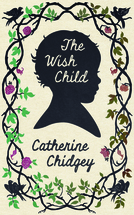
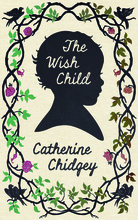
  • The Wish Child by Catherine Chidgey (Victoria University Press)
  • A Briefcase, Two Pies and a Penthouse by Brannavan Gnanalingam (Lawrence & Gibson)
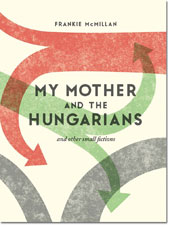
  • My Mother and the Hungarians by Frankie McMillan (Canterbury University Press)
  • Love as a Stranger by Owen Marshall (Penguin Random House)
  • Tail of the Taniwha by Courtney Sina Meredith (Beatnik Publishing)
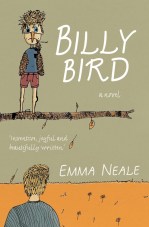
  • Billy Bird by Emma Neale (Penguin Random House)
  • Deleted Scenes for Lovers by Tracey Slaughter (Victoria University Press)
  • The Name on the Door is Not Mine by CK Stead (Allen & Unwin)
  • Dad Art by Damien Wilkins (Victoria University Press)
  • Strip by Sue Wootton (Makaro Press)


Judges: Bronwyn Wylie-Gibbs, Peter Wells, Jill Rawnley (and an unnamed international judge?)

I love the diversity of style in this list and recognise what a tough and brilliant field of entries. I mourn Laurence Fearnley’s  The Quiet Spectacular but am delighted to see small fiction makes an appearance (Frankie McMillan) along with several fiction writers that can astonish with both content and craft (Catherine Chidgey, Courtney Sina Meredith, Emma Neale). Tracey Slaughter’s book hit me like no other and I think Damien Wilken’s is one of his best. I loved it. On another note, in terms of the missing, I haven’t read Fiona Kidman’s yet but it has got great reviews. This is my favourite list although I have only read six on it. Making a shortlist out of this gold cloth seems impossible let alone picking a winner.


GENERAL NON- FICTION (Royal Society of New Zealand Award for General Non-Fiction)

  • Goneville: A memoir by Nick Bollinger (Awa Press)
  • This Model World: Travels to the Edge of Contemporary Art by Anthony Byrt (Auckland University Press)
  • My Father’s Island by Adam Dudding (Victoria University Press)
  • New Zealand’s Rivers: An environmental history by Catherine Knight (Canterbury University Press)
  • The Broken Decade: Prosperity, depression and recovery in New Zealand, 1928-39 by Malcolm McKinnon (Otago University Press)
  • The Great War for New Zealand: Waikato 1800-2000 by Vincent O’Malley (Bridget Williams Books)
  • The Big Smoke: New Zealand Cities, 1840-1920 by Ben Schrader (Bridget Williams Books)
  • The World, the Flesh and the Devil; The Life and Opinions of Samuel Marsden in England and the Antipodes, 1765-1838 by Andrew Sharp (Auckland University Press)
  • Being Chinese: A New Zealander’s Story by Helene Wong (Bridget Williams Books)
  • Can You Tolerate This? By Ashleigh Young (Victoria University Press)


Judges: Susanna Andrew, Professor Tom Brooking, Morgan Godfrery

Delighted to see Ashleigh Young makes the cut as this is a top read – and although I haven’t read the book yet, Helene Wong’s extract at The Ladies Litera-Tea was topnotch. Have several others on my must read list (Adam Dudding, Nick Bollinger).


ILLUSTRATED NON-FICTION

  • Islands: A New Zealand Journey by Bruce Ansley & Jane Ussher (Penguin Random House)
  • A History of New Zealand Women by Barbara Brookes (Bridget Williams Books)
  • A Whakapapa of Tradition: One Hundred Years of Ngati Porou Carving 1830-1930 by Ngarino Ellis with Natalie Robertson (Auckland University Press)
  • 101 Works of Art by Ken Hall, Jenny Harper, Felicity Milburn, Nathan Pohio, Lara Strongman, Peter Vangioni (Christchurch Art Gallery Te Puna o Waiwhetu)
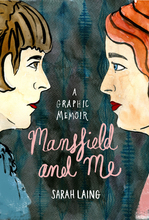
  • Mansfield and Me: A Graphic Memoir by Sarah Laing (Victoria University Press)
  • New Zealand Wine; The Land, the Vines, the People by Warren Moran (Auckland University Press)
  • Futuna: Life of a Building by Gregory O’Brien (Victoria University Press)
  • A Beautiful Hesitation by Fiona Pardington (Victoria University Press)
  • Dark Matter by Ann Shelton (Auckland University Press)
  • Bloomsbury South: The Arts in Christchurch 1933-1953 by Peter Simpson (Auckland University Press)

Judges: Paul Diamond, Linda Tyler, Bronwyn Labrum

So very glad to see the extra good Mansfield and Me here. I want this one to win. Let’s see a graphic memoir sing from the rafters. Because it is so very good. Not familiar with the other books so very biased!

Catherine Chidgey writes novels with the ear of a poet: Love this SST interview with Eleanor Black

TWC_front_corrected_dimensions__65592.1470791012.220.220.jpg   TWC_front_corrected_dimensions__65592.1470791012.220.220.jpg   TWC_front_corrected_dimensions__65592.1470791012.220.220.jpg

This is a terrific novel and a terrific interview. As Sue Orr said: read this book!


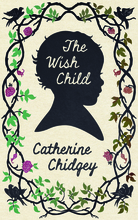
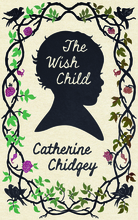
The Wish Child, Catherine Chidgey, Victoria University Press

‘Now the book: The Wish Child, classically Chidgeyesque in its complexity, its velvetine language and its dash of stardust, it considers the state-sanctioned brutality in Germany in the years leading up to and including World War II – how such a thing can be normalised and even embraced.

Centred on two children who meet in a bombed-out Berlin in April 1945, it is narrated by a mysterious all-knowing presence (whose identity is not revealed until the end) with clinical detachment and devastating power.

It is Chidgey’s fourth novel, and she finished writing it at the end of last year, leaving 2016 clear for baby adoration and a new writing project. There might even be another Chidgey book out next year, which is a bright and shiny gift for readers who have wondered why we got three novels in six years
In a Fishbone Church, Golden Deeds, The Transformation – and then nothing for 13 years.’

For the complete interview see here