Monthly Archives: October 2015

Lounge Reading #47

MEGA-READING AT OGH LOUNGE 21 OCTOBER 5.30-7 PM
ALL WELCOME!

LOUNGE #47 Wednesday 21 October
Old Government House Lounge, UoA City Campus, Princes St and Waterloo Quadrant, 5.30-7 pm

MC: Jack Ross
Stu Bagby
Peter Bland
Roger Horrocks
Sophia Johnson
Michele Leggott
Bronwyn Lloyd
Vana Manasiadis
Elizabeth Morton
Lisa Samuels
Robert Sullivan

Free entry. Food and drinks for sale in the Buttery. Information Michele Leggott  m.leggott@auckland.ac.nz  or 09 373 7599 ext. 87342. Poster: http://www.nzepc.auckland.ac.nz/events/lounge47_poster.pdf

The LOUNGE readings are a continuing project of the New Zealand Electronic Poetry Centre (nzepc), Auckland University Press and Auckland University English, Drama and Writing Studies,  in association with the Staff Common Room Club at Old Government House.

LOUNGE READINGS #45-47: 12 August, 23 September, 21 October  2015

Poem Friday: Murray Edmond’s ‘The Letter from Rilke — Like a boat under the milky moon you slip and sway upon the crest of the poem


The  Letter from Rilke


Did you get the moon?

(I ask) as you come in

in your hoodie with your tripod.

You laugh. Recall another evening.

When you did ‘get the moon.’

Nice to see the sky. Okay. True.

Clock ticks. One always looks

for a total time of ecstasy

called writing. Taking a photo

it’s all there – or it’s not.

But even to trace letters

has no immediacy. It’s

like the moon rising.

There. You said. Some trace

of old enormity beckons.

The jug is heating up.

Footsteps. Water pump. Floorboards

shaking. I peel off

the outer layer of my insistence.

There is a letter from Rilke

underneath. As if it were a

landscape on the skin. He writes

about how it is impossible for

anything to escape itself. The sea

burnished with the full moon

blue of hyacinths. When you

look into them.


© Murray Edmond Shaggy Magpie Songs Auckland University Press, 2015


Author Bio: Murray Edmond was born in Hamilton in 1949. He has published thirteen books of poems. Letters and Paragraphs (1987) and Fool Moon (2005) were New Zealand Book Awards finalists. His latest volume of poems is Shaggy Magpie Songs (2015) from Auckland University Press. A collection of fiction, Strait Men and Other Tales, will be published by Steele Roberts in October 2015. His collection of critical writings, Then It Was Now Again: Selected Critical Writing was published by Atuanui Press in 2014. A study of Noh theatre and the Western avant-garde, Noh Business, was published by Atelos Press in California in 2005 and the long poem A Piece of Work was published by Tinfish Press in Hawai’i in 2002. He co-edited the anthology Big Smoke: New Zealand Poems 1960–1975 (AUP, 2000); and is the editor of the peer-reviewed, online journal of poetics Ka Mate Ka Ora: A New Zealand Journal of Poetry and Poetics. Since the 1970s, Edmond has been active in experimental and innovative theatre companies and for over 25 years taught theatre and drama at The University of Auckland, retiring from his position as Associate Professor of Drama at the end of 2014. He works as the dramaturge for Indian Ink Theatre Company, whose latest play, Kiss the Fish, was awarded Best New Play of 2014 in the Chapman Tripp Awards.


Note from Paula: Reading a Murray Edmond poem is like entering a linguistic harbour – you are held by the sway and slip of words, the way that sharp sea air alerts your senses, rejuvenates skin and eye and ear. He is the master of word play but the coils and overlaps and skids never feel stuck in exercise mode. This word play is infectious. It nourishes the gap and supports the bridge. Beneath the surface there is always heart, and with that subterranean heart, these are poems that matter.

Moons are a favoured motif in this collection and others. Mysterious; a drawcard in the pitch black of night or a poem or a myth or mood. The first line startles in its punning sidetracks (‘Did you get the moon?’). The last lines startling in their pitch for beauty. In between, gossamer threads that make silvery links between things. Luminous. Eye catching. In the heart of the poem, a relationship. And then another. A letter read. Under the skin; a poet, a lover perhaps. Like a boat under the milky moon you slip and sway upon the crest of the poem. It haunts. Lines stick like glue (‘I peel off/ the outer layer of my insistence’ ‘As if it were a/ landscape on the skin’). Do you get the poem? Jammed packed as it is with light and dark, everyday detail (Floorboards/ shaking’).  The line that sends you between the lines (‘He writes/ about how it is impossible for/ anything to escape itself’). Get – arrivals. Glorious.


Auckland University Press page

NZ Book Council page

nzepc page


Guardian Witness: UK National Poetry Day: readers dedicate poems to babies, partners, friends and goats – video

‘We’re breaking with “the tyranny of prose” this week, and turning to you, our readers, to make the most of National Poetry Day by making poems come alive. The focus of this year’s UK-wide celebration of poetry, for which you can find the full programme here, is to get you thinking, dreaming and acting like a poet. Here are some of the video dedications you shared on GuardianWitness – a mix of your own creations and your favourite poems by others.’

see here

to celebrate this, my 500th post on Poetry Shelf, I have a giveaway bundle of poetry books

I have a little bundle of NZ poetry books to give to someone who within the space of a paragraph or so tells me about a NZ poetry book they have have enjoyed reading this year.

If I get any responses, I will post them on Poetry Shelf, and will randomly pick one poetry fan to receive the books.


send to paulajoygreen@gmail.com by October 11th

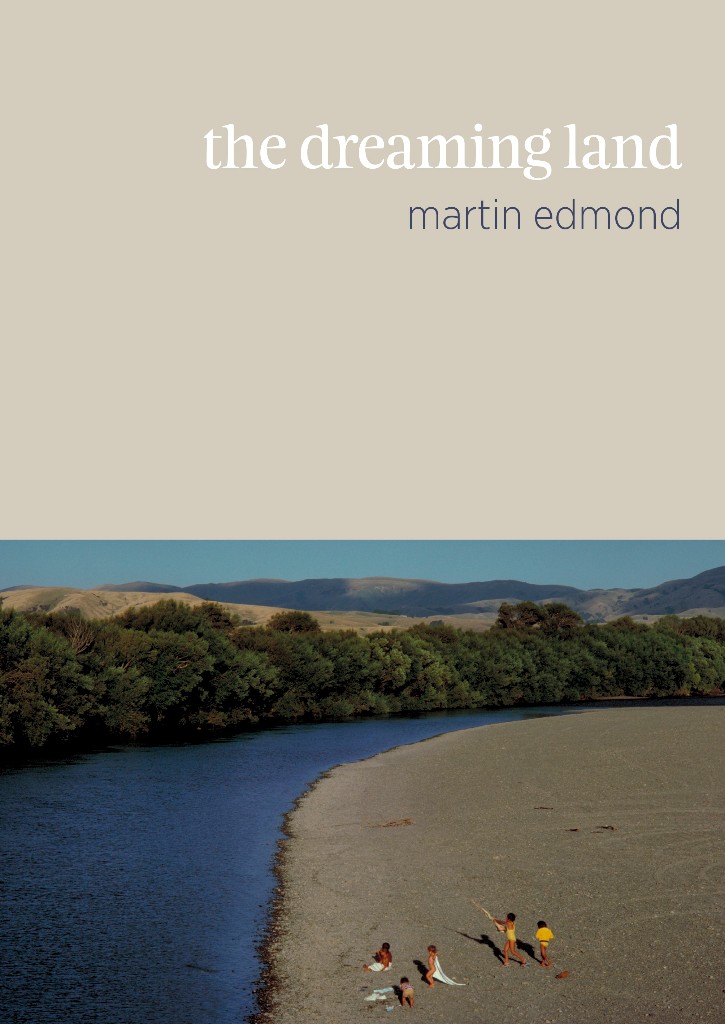
2015 Michael King Fellow Martin Edmond releases first full-length memoir, The Dreaming Land In October Martin Edmond visits New Zealand (from Sydney) to receive the prestigious Michael King Fellowship – and launch his evocative memoir, The Dreaming Land.

a7ea5a18-a399-4239-99a9-0e34d970c07b

Press release:

Published by Bridget Williams Books, The Dreaming Land is a frank and lyrical evocation of a childhood and adolescence spent in rural New Zealand in the 1950s and 60s, richly coloured with details that resonate across generations.

Martin Edmond’s early life was shaped by his schoolteacher father’s developing career and the moves it dictated: from Ohakune, to Greytown, to Huntly, to Heretaunga. The Dreaming Land depicts a slice of New Zealand history from a very personal perspective. Edmond documents the people, places and events that made lasting impressions on him over the course of this peripatetic upbringing. He charts too his mental landscape – a terrain marked by curiosity, empathy and acute observation.

Coming from one of New Zealand’s finest writers, The Dreaming Land makes a significant contribution to the New Zealand literary canon. It adds not only to the extensive body of Edmond’s own work (in art criticism, biography, essays and screenplays) but also to the catalogue of prose writing about people and place in New Zealand.

Martin Edmond’s writing has been recognised by the Michael King Fellowship and the Prime Minister’s Award for Literary Achievement (Non-fiction, 2013); other awards include 3rd prize at the 1993 Goodman Fielder Wattie Book Awards for The Autobiography of my Father, and the Biography Award at the 2005 Montana New Zealand Book Awards for Chronicle of the Unsung.

Martin Edmond will be in New Zealand between 14 and 26 October to speak at launch events for The Dreaming Land and to receive the Michael King Fellowship. He is available for interviews throughout this time.

Launch events

WELLINGTON
Thursday 15 October, 6pm

Unity Books
57 Willis Street

AUCKLAND
Tuesday 20 October, 5:30pm

Central City Library
44-46 Lorne Street

Both launch events for The Dreaming Land will feature a reading by Martin Edmond

fingers comma toes is a new online journal for children and young adults –seeking submissions

fingers comma toes is an online journal for children and young adults created by Lola Elvy and Tristan Deeley in October, 2015, in Nosy Be, a small island to the west of mainland Madagascar.

Submissions – currently open

The inaugural issue is scheduled for January, 2016, and is themed Blue.

see here

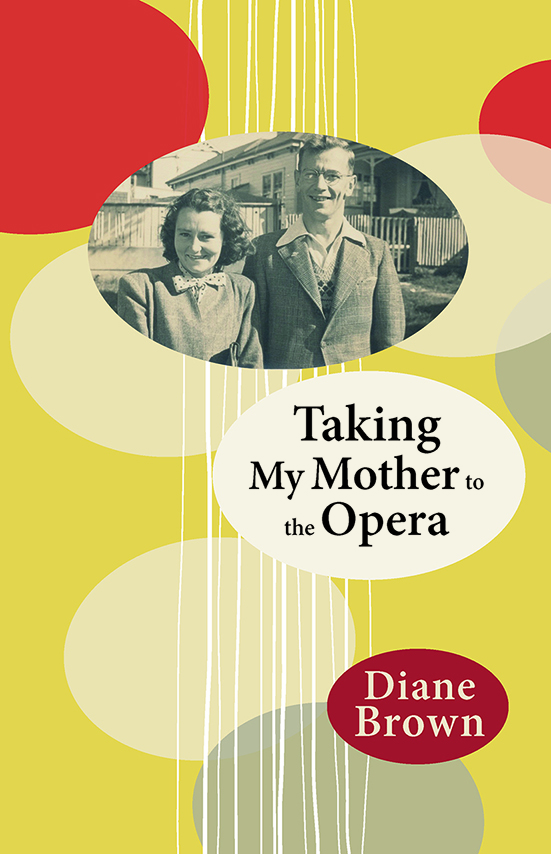
Diane Brown’s memoir in verse is out now — love the cover and title — looking forward to seeing it!

Taking My Mothter to the Opera

‘I like the idea of doing a narrative in poetic form and using dialogue in poetry to create character,’ says Diane Brown. ‘Taking My Mother to the Opera is not a series of individual poems so much as one long poem. It tells a story: the sum is more than the parts.’

Poem Friday: Dinah Hawken’s ‘Stone’ – Its window catches any number of lights


Stone


Stony this, stony that. They are cold

today, these stones on the desk.

Stone cold. Stone blind. Stone deaf.

Heart, reception, stare, silence.

They remember the slingshot.


It is said he is a man to reckon with.

He hasn’t spoken to his son for years.

It is said that words will never hurt you.

‘To be hard in hard times,’ he announces,

‘we must build an expressway like an arrow


through the quiet heart

of your coastal town.’ Cold facts

say one thing, cold politics another.

We remember the ballistic missile.

The falling debris and the striking edge.


© Dinah Hawken Ocean and Stone Victoria University Press, 2015


Author bio: Dinah Hawken is one of New Zealand’s most critically acclaimed poets. Born in Hawera in 1943, she trained as a physiotherapist, psychotherapist and social worker in New Zealand and the United States. Most of the poems in her award-winning first collection It Has No Sound and Is Blue (1987) were written in New York in the mid-1980s while she was studying at Brooklyn College and working with the homeless and mentally ill. Her two most recent books, One Shapely Thing: Poems and Journals (2006) and The Leaf-Ride (2011), were both shortlisted for the New Zealand Book Awards. Dinah was named the 2007 winner of the biennial Lauris Edmond Award for Distinguished Contribution to Poetry in New Zealand. She lives in Paekakariki.


Note from Paula: This poem is in Dinah’s new collection just out from Victoria University Press. It is an utterly beautiful book in every detail (the feel of the pages, the choice of font, the simplicity of the cover and of course the billowing beauty of the poems themselves. I have been a Dinah-Hawken fan for a long time. I remember the pleasure of writing a long essay on Small Stories of Devotion as part of my Masters degree. There has been a sustaining chord between Dinah’s work and my writing since those far-off days. In part it is to do with the grace, the elegance, the economy, the lyricism. In part it is to do with the sumptuous view that settles as you open the window of the poem. In part it is the curious self that questions the world and the way we do things.

This poem is a thing of beauty, and it draws upon all the things I have detailed above. There is the lyricism that builds out of stress, meter and repetition (‘Stone cold. Stone blind. Stone deaf.’) There is the way a thing (stone) shakes with life and possibility. There is the way, with that small frame of the window ajar, we fall upon the beauty of an object (a stone) and then fall away to the hurt we inflict upon each other — at the level of the individual, the level of a town, the level of a nation. It really is the kind of poem that needs to speak for itself, to shimmer on the page in its own marvelous way. Its window catches any number of lights.


Victoria University Press page

NZ Book Council page