Tag Archives: Victoria University Press

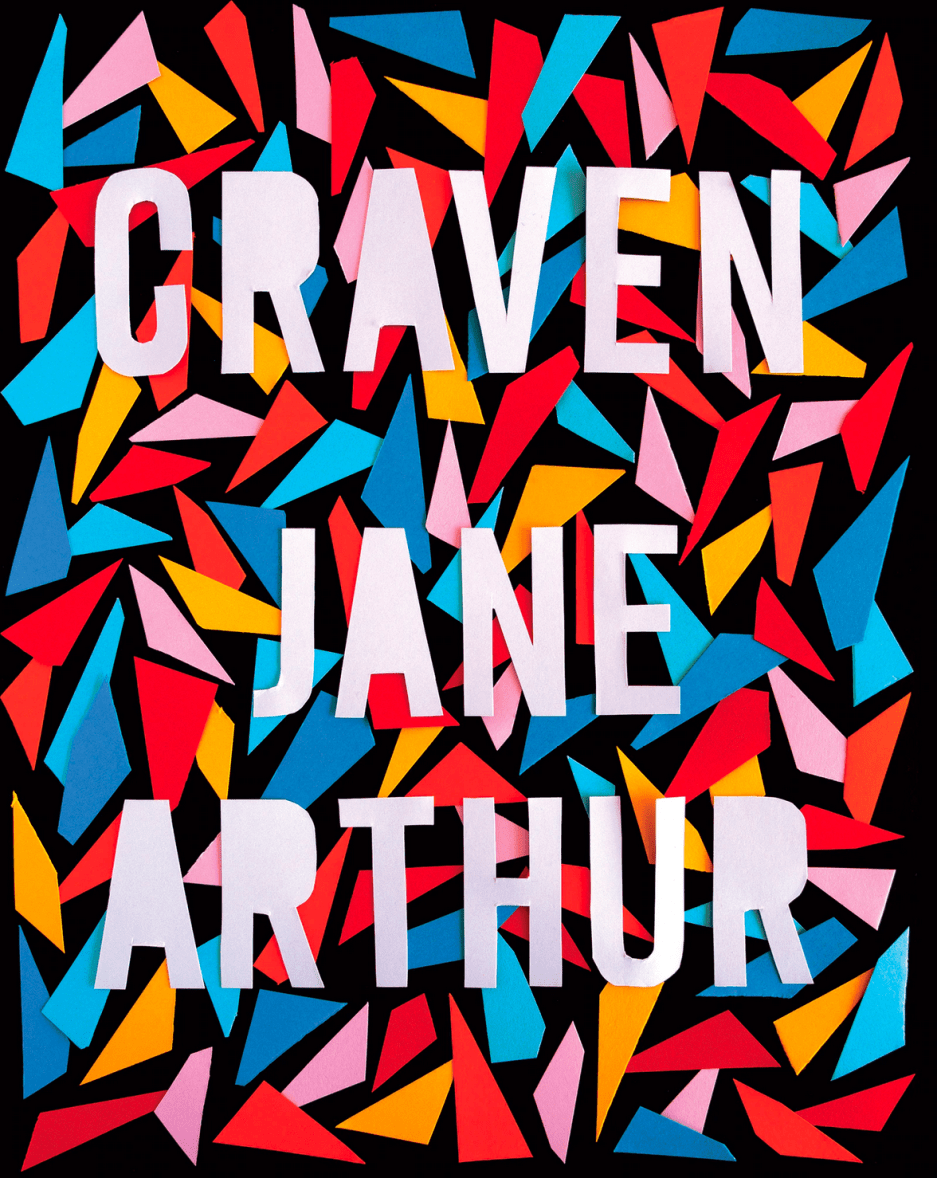
Poetry Shelf summer reading: Jane Arthur’s Craven

Screen Shot 2020-02-11 at 8.45.03 AM.png


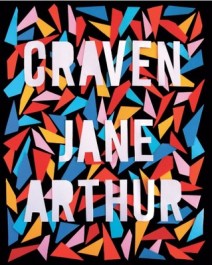
Craven, Jane Arthur, Victoria University Press, 2019


I have a broth at a simmer on the stove.

Salty water like I’ve scooped up some ocean

and am cooking it in my home. Here,

gulp it back like a whale sieving plankton.

Anything can be a weapon if you

swallow hard enough:

nail scissors, a butter knife, dental floss,

a kindergarten guillotine, hot soup,

waves, whales.


from ‘Circles of Lassitude’


Jane Arthur’s debut collection Craven inhabits moments until they shine – brilliantly, surprisingly, refractingly, bitingly. Present-tense poetry is somewhat addictive. With her free floating pronouns (I, you, we) poetry becomes a way of being, of inhabiting the moment, as you either reader or poet, from shifting points of view.

It is not surprising it has been longlisted for the Ockham New Zealand Book Awards.

The collection title references lack of courage, but it is as though Jane’s debut collection steps across a line into poetic forms of grit. This is a book of unabashed feeling; of showing the underseam, the awkward stitching, the rips and tears. Of daring to expose. The poems are always travelling and I delight in every surprising step. You move from taxidermy to piano lessons to heart checks and heart beats, but there is always a core of exposed self. And that moves me. You shift from a thing such as a plastic rose to Brad Pitt to parental quarrels. One poem speaks from the point of view of a ship’s figurehead, another from that of Constance. There is anxiety – there are dilemmas and epiphanies. The poetic movement is honeyed, fluid, divinely crafted – no matter where the subject travels, no matter the anxious veins, the tough knots.

An early poem, ‘Idiots’, is like an ode to life, to ways of being. I keep crossing between the title and the poem, the spare arrival of words punctuated by ample white space, elongated silent beats that fill with the links between brokenness, strength and pressing on.


Idiots

I’ve known people who decided

to carry their brokenness like strength

idiots

I’m a tree

I mean I’m tall, I sway

I don’t say, treat me gently

No¾I say, cool cool cool cool

I say, that really sucks but I guess I’ll survive it

or, that wind’s really strong

but so are my roots, so are my thighs

my branches my lungs my leaves my capacity to wait things out

I can get up in the morning

I do things


I heard Jane read for the first time at the Sarah Broom Poetry Prize session at the Auckland Writers Festival in 2018. Her reading blew my socks off, just as her poems had delighted American judge, Eileen Myles, and it was with great pleasure I announced her as the winner. Eileen described Jane’s poetry: ‘poetry’s a connection to everything which I felt in all these [shortlisted] poets but in this final winning one the most. There’s an unperturbed confident “real” here.’ In her report, Eileen wrote:

The poet shocked me. I was thrust into their work right away and it evoked the very situation of the poem and the cold suddenness of the clinical encounter, the matter of fact weirdness of being female though so many in the world are us. And still we are a ‘peculiarity’ here and this poet manages to instantly say that in poetry. They more than caught me. I like exactly how they do this – shifting from body to macro, celestial, clinical, and maybe even speaking a little out of an official history. She seems to me a poet of scale and embodiment. Her moves are clean and well-choreographed & delivers each poem’s end & abruptly and deeply I think. There’s a from the hip authority that inhabits each and all of these poems.


I am revisiting these words in view of Craven’s multiple poetry thrills. So often we talk about the way a poem steps off from the ordinary and blasts your heart and senses, if not your mind, with such a gust of freshness everything becomes out of the ordinary. This is what happens with Craven. A sense of verve and outspokenness is both intoxicating and necessary:


I’m entertaining the idea of never being silent again,

of walking into a room and shouting, You Fuckers Better Toe the Line

like a prophylactic.

from ‘Sit Down’

A sense of brittleness, vulnerability and self-testing is equally present:

I’ve been preoccupied with what others think again.

I’ve been trying not to let people down.

Nights are not long enough.

Lately there’s been more sun than I would’ve expected.

I keep the weather report open in its own tab and check it often.

From ‘Situation’


The movement between edge and smooth sailing, between light and dark, puzzle and resolution, and all shades within any dichotomy you might spot – enhances the reading experience. This is a book to treasure – its complexities and its economies, its confession and its reserve. It never fails to surprise. I am so excited she will be reading at my Poetry Shelf Live session at Wellington’s Writers Festival in March (see below). Triple yeah!


Jane Arthur was the recipient of the Sarah Broom Poetry Prize  (2018). She has worked in the book industry as a bookseller and a book editor for over fifteen years. She has a master of Arts in Creative Writing from IIML at Victoria University of wellington. She was co-founder of the The Sapling, an online site for children’s literature. She lives in Wellington.

Jane will be appearing in my Poetry Shelf Live session at NZ Festival of the Arts,

Michael Fowler Centre,  Sunday 8 March 2020 12:30pm – 1:30pm


Victoria University Press page

Poetry Shelf Monday poem: ‘Situation’ by Jane Arthur

Poetry Shelf audio spot: Jane Arthur reads ‘Snowglobe’

Poetry Shelf: Conversation with Sarah Broom Prize finalist, Jane Arthur


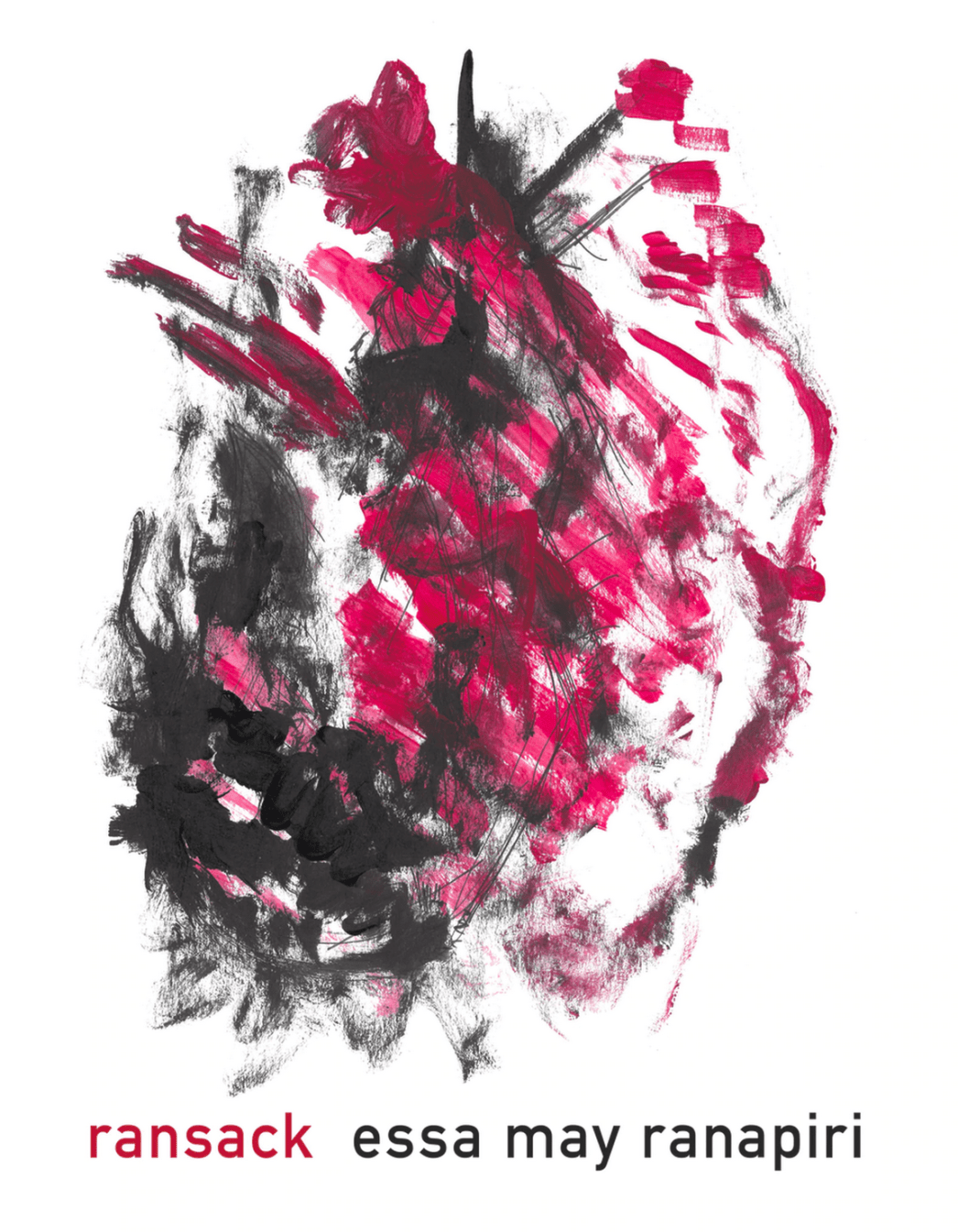
Poetry Shelf summer reading: essa may ranapiri’s ransack


Screen Shot 2020-02-04 at 6.54.10 AM.png


ransack, essa may ranapiri, Victoria University, 2019


he is like a bumblebee stinger on my tongue when I say it’

from ‘Dear Orlando’


essa may ranapiri begins their debut poetry collection ransack with a quote from Virginia Woolf’s gender-switching Orlando: ‘Ransack the language as he might, words failed him. He wanted another landscape, and another tongue.’

When I was doing my doctoral thesis (Italian) I carried a Virginia Woolf quote from A Room of One’s Own with me and I still do: ‘Mary is tampering with the expected sequence.  First she broke the sentence; now she has broken the sequence. Very well, she has every right to do both these things if she does them not for the sake of breaking, but for the sake of creating.’

Sometimes we need to break language, to smash how we do things in order to begin again, in order to find form and fluidity for our voices. Sometime language fails us. Sometimes we have to smash muteness and test our way into a new musicality, a new sequence of connections. We may be fierce and we may be vulnerable.

I dipped in and out of ransack last year, and loved every snatched moment, but a few weekends ago I sat down in the cool shade and read the book slowly, cover to cover, and felt myself upturn, overturn, inturn and sideturn as the poetry pulsed through my being (I am thinking of that as a verb). This is what a book can do.

essa’s book is a glorious sequence of creating – of ransacking what has been, in order to refresh what will be. Letters written to Orlando make an appearance – like a epistle spine for the collection or a poetry pivot for both reader and writer.

The opening poem ‘my tongue as rope’ lays down a thicket image – the kind of image that hooks you, especially when you think of  writing, speaking and even self as braid. The braided rope is the anchor, the preserver, the tough knot, ‘the single knot’, the finder.

essa writes: to pull in sound / draw in lists / the endeavour hits the land’. Can the poems be a form of rope? ‘my tongue-rope wraps itself until it is a single knot.’

A single poem breaks apart in my mouth and heart. The break in the flow creates a new current.


fetal


a mothe

r returnin

g to the grown ground like a gow

n of weeds got a stretching motion

n to stil

l body corps

e the wood in the wax in the flowe

r chains a bab

y stil

l bor

n rattling i

n the mutton skie

s chubby in the loa

m to no mor

e


Reading ransack allows me to absorb the nonbinary experience afresh. Unsettling the line on the page unsettles the line of thought, the entrenched dichotomies of either / or / male / female / she / he / soft / hard / weak / strong

A long poem ‘Con-ception’ is dedicated to essa’s mother and is a reading explosion of arrival, pregnancy, forming embryo, forming mother. I have never read a piece that breaks into and out of the maternal that has affected me so much. I am going to give you a quote that is also right-hand margin justified, but not all the book is (the forms are dancing on their toes in an exuberant display of variousness:


in the world and into the world of tubes

ride the machine

incubate in plastic

and drench in yellow light

the air is whole new in-the-world

and out of the old world

recognise voices

am i

an i?


put in

alove?

When she finally has a shower afterwards she is crying.


Reading the ransack sequences and I am feeling poetry. essa tells Orlando ‘You never had to discover yourself in a book. You never questioned your gendered nature – you moved from one perfect set of genitalia to another according to Aristophanes and the great round people of concave and convex, of female and male.’

essa places body and experience at its white hot core – a gift in its sharpness, its broken cutting lines and its sweet fluencies as the writer navigates how to be, how to be body, how to be bodymindheart in the world. Part of the writing of experience, with that backstory sting of ‘he’, is claiming name, celebrating a pronoun:


u said you liked the ‘th’ sound in they and them the softening of it

and how it fitted around my rage

made it/for it

to be okay to touch

i talk you through other constructions

ones that subverted phonetics

me as a slice of not that

when expecting this

the xe sound like zay


from ‘a phone call about the nature of pronouns gendered and otherwise’


ransack is a skin-prickling, heart-blasting, mind-opening glorious feast of a book that in the spirit of Virginia breaks up language in order to create something breathtakingly new.


essa may ranapiri, Ngāti Raukawa, is a poet from Kirikiriroa, Aotearoa. They graduated with an MA in Creative Writing from Victoria University of Wellington (2018) and their work has appeared in many local journals. They are the featured poet in Poetry Yearbook 2020 (Massey University Press). ransack has been longlisted for the Ockham NZ Book Awards 2020.


essa may ranapiri website

Victoria University Press page

The Pantograph Punch Jackson Nieuwland reviews ransack

RNZ interview

Poetry Shelf: essa reads ‘Glass Breaking’

essa on being at IIML with Tayi Tibble


Poetry Shelf summer reading: Amy Brown’s neon daze

Screen Shot 2020-01-20 at 11.11.45 AM.png

neon daze, Amy Brown, Victoria University Press, 2019


The title of Amy Brown’s new collection neon daze hooked me. Having published extracts from the book on the blog, I knew the collection came out of motherhood. I mused on the way you can be caught in a blazing daze as you invent your own mother role. How moments can also gleam with light, the miracle of a newborn baby you are responsible for. Not everyone chooses or can be mothers and there is no standardised mothering role. Thanks heavens. Women have written mother poems for centuries despite denigration from men. I came across the denigration in my Wild Honey travels, but I also came across a rich harvest of mother poems that shed light on the multiplicity of experience, experience that shaped the way poems were written as well as the content. I also encountered relentless doubt – doubt about whether what women were writing could be claimed as poetry when it retained a domestic or maternal focus.

I still encounter this!

At the Poetry & Essay conference in Wellington (2017), I sat with Amy, Joan Fleming and Brian Blanchfield over lunch and we talked about how being a mother does not shut down the option of being a poet, of being a published poet, of being read and valued. And most importantly, about the significance of publishing poems about motherhood, about sons and daughters and domestic matters.

Amy’s glorious evocation of motherhood tests how poems form on the page. neon daze raises questions about both writing and mothering and resists turning away from the difficult, the intensely private. There is a sense of inquiry, contemplation and play, along with the doubt and constrained time. Amy discusses the genesis of the title – she had ‘Neonatal’ to being with and then began playing:


(…) Too clinical to be appropriate now,

I play with the cursor, like the baby plays with the

nipple when he wants comfort rather than food.

I keep Neon: a bright, new, elemental word

like a swipe of highlighter over these days

in the calendar. I add Days, then change it

to Daze. This is where I am, in a floodlit

stupor, so bright I can barely see, like in Dante’s

Paradise, shadowless knowledge so pure it’s empty.


from ‘9 October 2016’


Amy admitted she told people she was writing even when she privately thought ‘this writing didn’t count’. She kept a verse journal for three months after her baby was born – subsequently editing and adding footnotes which pick up on a word or idea prompted by the poem.  The footnote titles track a mind musing, raising questions, allowing doubt to surface and resettle. They are like an infinitive-verb poem:

to admit, to edit, to push, to sate, to repeat, to define, to expect, to hallucinate, to dream, to dance, to address, to winter, to resolve , to heal, to regret, to visit, to abstract, to doubt, to donate, to sever, to touch, to cringe, to name, to eat, to earn, to permit, to wake, to care, to wean, to wave, to finish

The footnotes ( I want to call them something else) form their own vital presence, not as asides, but as a sequence of numbered prose pieces that enervate the poetry.

I cross the bridges between poems and prose. Sometimes I make a clearing for the poem and surround it with silent beats like the white space on the page. Sometimes I dwell on the pirouetting trains of thought in the prose and let the questions gain momentum. I am particularly interested in Amy’s double self-exposure in both poetry and prose. The writing is called into question. Is it poetry? Is it poetry of value? Does it make a difference that the writer is a woman? A mother? What lines are crossed? What lines are tested?

I am affected by this collection because it draws me deep into the challenges of writing and motherhood. How can I write when I am so depleted? How can I write anything of worth? I still feel this.

The poetry exposes both physical and emotional realities. At times it underlines the relentless day-in-day-out routines that both exhaust and provide uplift, while at other times the poetry holds a scene (still, luminous) for us to absorb. This is a personal record of mothering: of baby stages, breastfeeding, a need to avoid baby bragging, to settle baby to sleep, to listen to baby coos and baby cries. This is a personal record of climbing to the rock summit, behind baby and father, like a baby mountain goat up the less than easy walk. The poem reverberates with feeling (sharp, understated, complicated)


(…) I have seen you fall, your father replies.

And I think it has something too do with you thinking

you are a mountain goat. The words are said tensely

as he holds his left arm around you and balances

with his right palm against a rock. The sky is

granite too – shimmering, hard and slick.


from ’16 0ctober 2016′


For me neon daze satisfies on so many levels. Lines spring out with musical and visual agility. Scenes shimmer with a sensual underlay. The poetry is fluent, intricate, detail-rich. A question could stall me all day such as the thorny issue of writing the lives of others; of making public what is intimate and private. Amy admitted when she was younger she ‘had no qualms / about giving air and light to what now / seems better off private’. But now she is more inclined to keep secrets yet is compelled still ‘to expose private parts of life’. She claims: ‘now I see that even if it is just / me on display, there is still a problem: / I no longer own myself’. After Amy heard Jenny Bornholdt read a poem about the death of her father and her friend Nigel Cox at the Poetry & Essay conference she asked Jenny a question:


During the reading, Jenny invited questions, so I asked about the responsibility of writing about loved ones – Where I asked, do you draw a line? I don’t, she replied, firm and gentle at once. I don’t draw a line.


from ’26 To Permit’


Ah, this is a question pertinent to the making of neon daze. But the strongest presence is the mother poet, the poet mother. I am drawn into her world, her challenges, her delights, her epiphanies. She has placed herself on show but she had to think equally hard about putting her son and husband in the poetry frame. This questioning of the line Amy may or may not cross, and the various revelations she makes that place family and friends in good and bad lights, affected me as I read. How to write those closest to us?

I love this book. I love navigating the alleys and the undergrowth. I love coming across the hard stuff and then falling into a piquant scene. The mother rests on the sofa with her baby sleeping and watches the men in the garden working. This exquisite juxtaposition of stillness and movement is heightened by the poet’s movement of thought. She meanders from clods of earth and labour to dreams of the future, of what may or may not be. It enters me like the wind. I am replete with the movement of this book. Grateful this book exists.


What if, I wondered, looking at Alison Lester’s illustrations

of things parents want to give their child – a cosy bedroom

with a view of a tree full of wattlebirds; a garden rippling

with tulips and roses; a perfectly weeded vegetable patch

with benign insects for a child to discover; friendly cats,

dogs and horses; a rock pool full of rainbow-coloured fish;

a kaola above us in a tree; a woollen blanket and a steaming

mug of tea at the fireside. What if we never have a garden?

Or pets. or perfect holidays. At least he will know

that we wished such pleasures would be his. This book

is a petitionary prayer of sorts, and I realise now

that the answer to these requests is here, dilapidated

and overgrown and snake-infested, but here.


from ‘8 October 2016’


Amy Brown is a poet, novelist and teacher. In 2012 she completed a PhD in creative writing at the University of Melbourne. She is the author of The Propoganda Girl (VUP, 2018), which was shortlisted in the 2009 NZ Book Awards, and The Odour of Sanctity (VUP, 2013), a contemporary epic poem. She is also the author of Pony Tales, a series of children’s novels.


The Spin Off – ‘Turning on the Light Ladder: Amy Brown on motherhood and writing neon daze

Radio NZ – Harry Ricketts reviews neon daze

Poetry Shelf – excerpt from neon daze

Victoria University Press author page


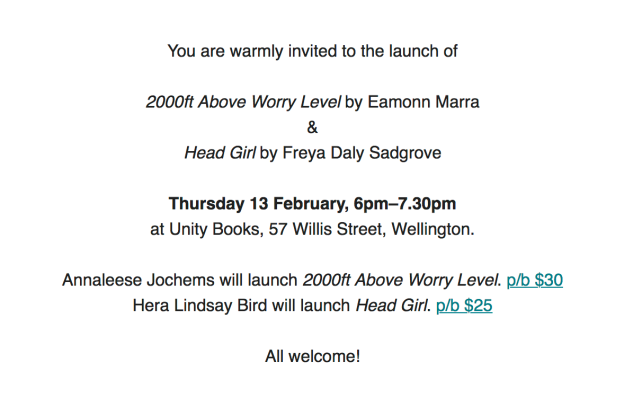
Poetry Shelf noticeboard: Double VUP launch with Freya Daly Sadgrove and Eamonn Marra

A double book launch from Victoria University Press


1878d328-bd1a-48ce-85d4-e2bd3b742fa0.jpgScreen Shot 2020-01-16 at 9.13.58 AM.png


Poetry Shelf summer reading: Lawrence Patchett’s The Burning River


Screen Shot 2020-01-03 at 4.24.57 PM.png


The Burning River Lawrence Patchett, Victoria University Press, 2019


Complete immersion in a novel is a wonderful thing. A precious thing. I have just spent the past few days inhabiting Lawrence Patchett’s The Burning River and it feels like I will carry this gripping book with me for a long time. It is exquisitely crafted, the sentences flow like honey, the rhythms are perfectly in tune with the subject matter. But it is the way this novel represents narrative as a form of listening that has affected me so much. It takes place in the unsettling and hazardous future of a re-imagined Aotearoa New Zealand. However, this strange and estranging future, with near dead rivers and herbs that heal, is dependent upon the author paying close and astute attention to our past. Especially to the past narratives of Māori and Pākehā, both entwined and in conflict. Different groups of people are connected by bloodlines, languages, cultural rituals and behaviours, and a fierce need to survive and protect family. The novel foreshadows the ominous state of the world, yet it offers hope, bridges, restorative moves. It maps the state of an individual heart. I am so affected as I read – reading is both despair and joy.

Let me say this again: I have never read a work of such acute listening, of attending to whānau language song trading nurturing nourishing planting remembering singing kõrero.

In his acknowledgements, Lawrence thanks Araon Randell  for assistance in making ‘the altered “patchwork” world of this world deeper and richer.’ The Burning River is like a patchwork quilt, comprising many luminous and connected pieces, stitched together with such caution, feeling, integrity, vulnerability, aroha, enduring mahi, attentiveness. It becomes a narrative quilt that you hold about your shoulders as you face a world that is burning and flooding, that is wounding and maiming, that is hungry and overfed, that is tending and loving.

I adore the presence of te reo because it is part of the fabric of the storytelling – not as an exercise, not as an exotic frill – but as an essential and uplifting belonging.

This novel is a significant arrival. Find a stretch of time and immerse yourself in its extraordinary currents. If you only read one book this month make it The Burning River. I have written this very small tribute off the cuff of finishing the book, in that half-mourning state where the real world seems unreal, because I still occupy the burning river, because now I am longing even more for everything to be good and fair and humane.


Ngā mihi nui Lawrence

thank you, thank you, thank you


Victoria University Press author page


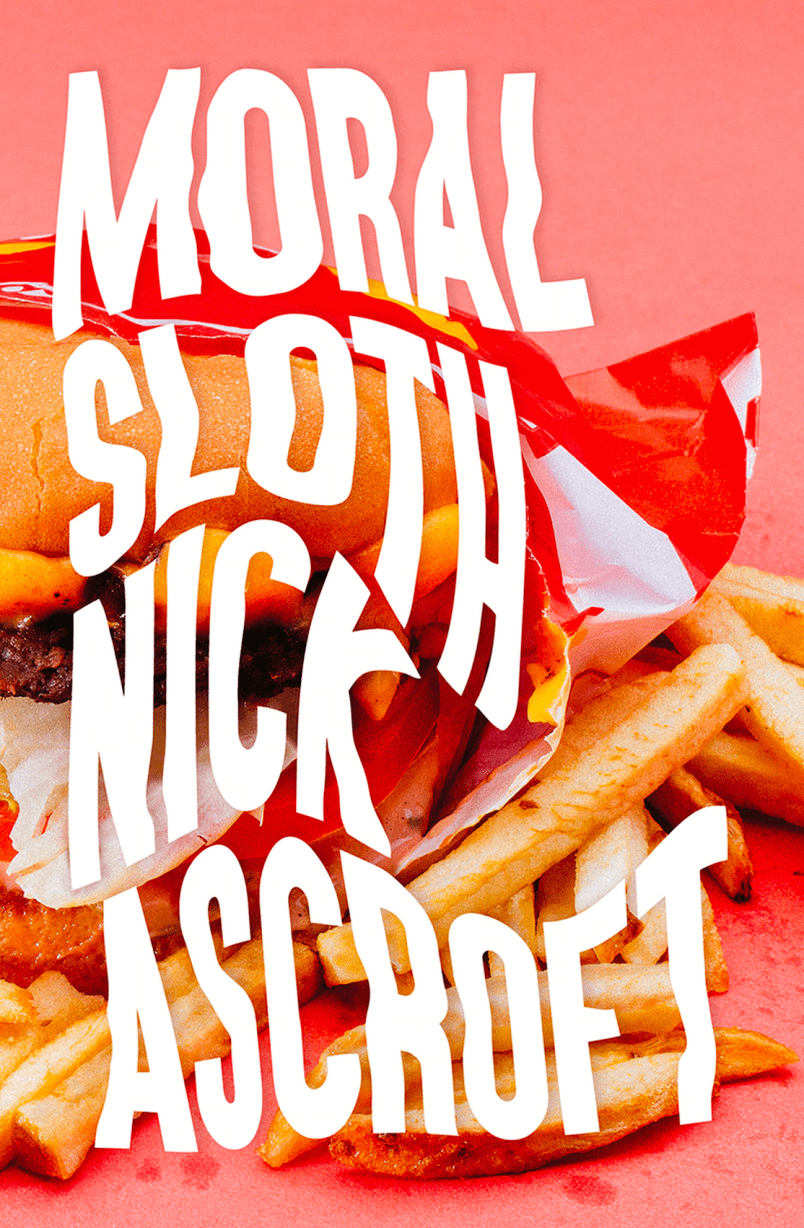
Poetry Shelf Monday Poem: Nick Ascroft’s ‘The Plotz’


The Plotz


Phlegmatic, I’m not one to plotz or wax

nostalgic for a life that could’ve been.

I bumble forward, shuffling in my tracks

to work and back again. The kitchen’s clean.

I use Excel to calculate Kate’s tax.

I had once dreamt I’d be a libertine,

admired for simile and malaprop.

The 90s raised me up then let me drop.


Back then, each anecdote would cost you corkage,

my poems swigged on flasks, were furious

and hot with psychedelic flash and squawkage.

I blazed, affectedly bi-curious.

These days I just complain about the mortgage,

all other matters somehow spurious

and flat. I spend the evening sudsing plates

and pots, in fear of rising interest rates.


Not one to plotz, I’m private, careful, flaccid.

How did I change? One moment I wear blouses,

vinyl shoes, I’m pulverised on acid,

the next I’m at the bank discussing houses

or circling with a whiteboard marker ‘hazard

class’, a tucked-in shirt with belted trousers.

I want to understand, to tweeze this tuft.

Did I grow up? Or was my brightness snuffed?


Before I went under a nom de plume,

before the bank had made a covenant

with me to slavishly add commas to

abhorrent documents for subsequent

emolument, I lived in Oamaru.

(I still took money from the government,

the dole.) And from that opposite of Eden,

I drag the band with me down to Dunedin.


I trip the halls like velvet under

my beret, a lip-stuck elf with pointed toes.

I study language, thought, but wonder

why, in chief, so few enjoy my gigs, or prose.

A typically blind-spotted blunder:

I’m unchanged it seems. Less fresh of gill, less rosy

eyed, perhaps, but so alike in fact

of taste and dreams. My foibles are intact


at least. The years gallumph like this. I shake

songwriting off and go for verse. They’re kinder,

literary types. I’d tried to break

our demo to a label not inclined to

it. Pete from Snapper said we’re a mistake.

I graduate, am single (dumped), and find a

bookshop gig. It’s 1998.

I chase a girl, and demonstrate I’m straight


by kissing boys just to ensure we will

avoid the sin of overegging hetero.

My gender freedom is sartorial.

Free too from time, I dress embracing retro.

London is more dictatorial.

It frowns. And though years pass before I let go,

it schools me how to look more apropos,

to come across more man than man-mango.


The movie I’d self-finance of my life

(the casting option either Aquaman

or Jesse Eisenberg – and here my wife

can roll her eyeballs) would compact a span

of years into a weekend on a knife-

edge. Sleeping at a bus stop backward, fanned

around my bag, cold in PVC,

I doze, am homeless, terrified, but free.


Above, the stars are smothered by the smog.

I’m outside Heathrow, stuck until the Tubes

resume. They treat a person like a dog.

To bed, they say, till six. Go to your rooms,

you Londoners. The pubs lock up the grog.

But airports, they’re all hours, one presumes?

Two coppers sweeping shake their heads, say no.

I make it through the night outside, then go.


I stay with Andy’s friends near Glastonbury.

I have no job and live on money sponged

from Kim, back home, who’d said if drastically

required I could use her card – I lunged –

and cash from Mum as well, left spastically

behind in Wimbledon. Their flat’s implunged

in odour, but they offer me a niche

to kip in, and tobacco with hashish.


The two are always smoked together, all

day long and every day by him in whom

I see a British doppelgänger, tall

and slim, long hair. It’s not the constant fume

emitted from his lips that splits us, or will

once I partake. It’s that he bears a gloom.

That’s Britain, and its thrashing underclass.

He takes a kicking in an underpass.


The nights unfold with dramas of the poor.

A day’s work picking peas from yellow turf.

We mark the solstice drumming on the Tor.

At Argos, blag a tent, intending to return

it after camping in the mud before

the policy – ‘no questions’ – comes to term.

The festival itself is glad, we’re gladder

still we stole in with a home-made ladder.


Returning back to Wimbledon, I claw

my horde of traveller’s cheques in glee

then crash out in the sticks, a room, well, floor

some kid – the dealer of whose ecstasy

I’d met – extends an open offer for.

This stranger’s kind. I rest my neck rent-free.

One sleeps more, if turns less, when in a bed,

but cushions brace my hip and ease my head.


The weeks rotate. I get a ten-hour job,

but till I’m paid, possessing no per diem,

I can’t examine ethics like a snob.

I think, ‘They’re not as hungry’, when I see them.

‘These tourists shouldn’t miss a couple bob,’

and fleece them as they ramble the museum.

That is, the cashier does, when she miscounts

their change. I simply balance the amounts.


Asleep, the kid I stay with moans and keens.

Still dossing every evening in the sticks,

the tube and bus is just within my means

but only once perfecting certain tricks

to keep the Travelcard inside my jeans.

I search under his bed, there’s porn, the pix

are strange to me: in each the women flick

their eyes to where above there hangs a dick.


Two times I sleep at Jon’s. His place is bleaker:

Paddington, guests not allowed, and stinking.

My presence irks his girlfriend, one Tameka.

I was naive to leave New Zealand thinking

that I’d just stay with Jon, the pleasure seeker.

The cops raid our speakeasy. But a winking

dealer passing sells us . . . oregano!?

‘Race traitor!’ chirrups T like a soprano.


The lowest point before I get a proper

bedsit of my own in Saint John’s Wood,

is when I beg Tameka for a Whopper,

and she assents, annoyed to feel she should.

This is the seed. I never want to cop the

look again. And so ends childhood.

The film returns. I’m at the bus stop, cold,

inhaling in short draughts. The credits roll.


I grow I think from this. I learn the scaled

threat of non-conformance. It’s no shame

and easier to navigate regaled

as others, smart, domesticated, tame.

Another view is that in fact I’ve failed

to change a jot. That I remain the same

pretentious fool and cautious pragmatist,

and always was a dry protagonist.


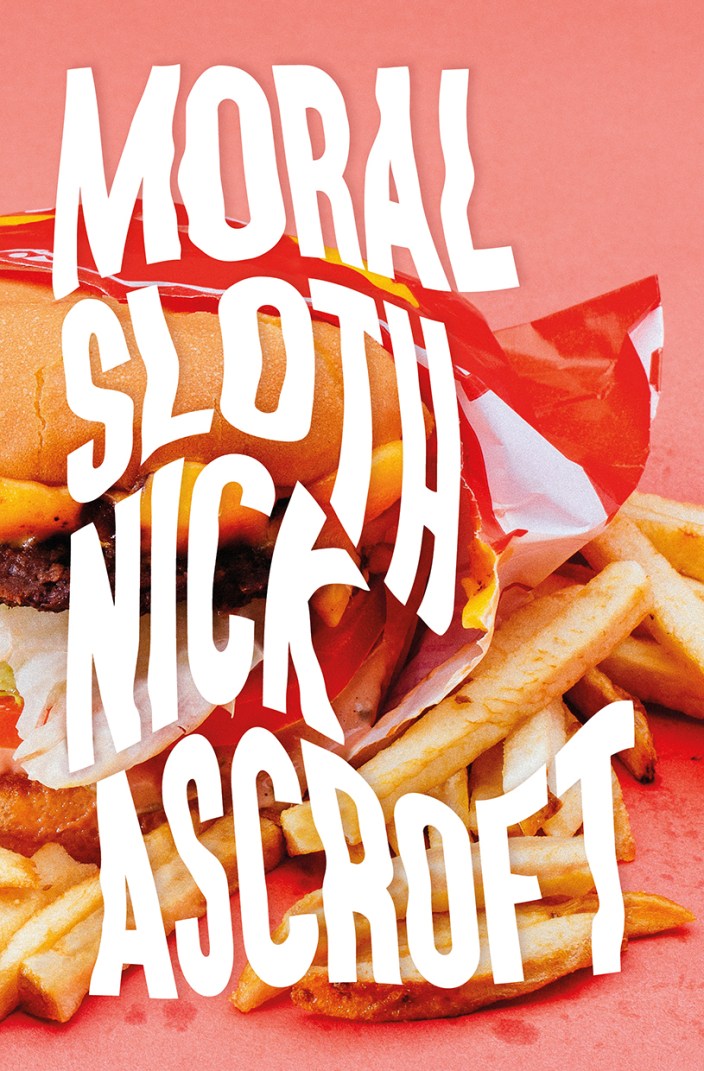
Nick Ascroft, from Moral Sloth, Victoria University Press, 2019


Nick Ascroft has released four collections of poetry through Victoria University Press. The latest, Moral Sloth, appeared in November. Kapka Kassabova once said of his face that ‘it shines through the obscurity of life like / fake gold’. Burn.


Victoria University Press author page


Screen Shot 2019-12-06 at 11.16.08 AM.png


Poetry Shelf Monday Poem: Jenny Bornholdt’s ‘Crossing’


Crossing


Driving across town

she feels plain

and botanical.


At a crossing

there’s a man

with a cake, girl

with a tune.

Four young people

wheel a bed,

headed for a house

where a young woman

might read, love a man/some

men, might hold their bodies

close and welcome some parts

of those bodies

into hers.


Years later

she might see these men

in suits and on television and

many years later

might pass one, a house painter,

as she drives to buy

paint, for heaven’s sake.


Now, nearing sixty,

this woman loves her husband

ferociously.

When she turns the compost

and finds the flat wrinkled body

of a mouse,

she remembers the time

he rang her in Scotland

to say he’d seen one in the pile

and what should he do?


She shovels the remains

of the mouse with the rest

of the compost to beneath

the blossom, which bows

low and graceful over neglect,

which abounds, as it does,

wonderfully, in the garden of the

southern house they move to

for a time.


He’s up to his ears

in sadness, both of them aghast

at landscape. Being asthmatic

he is immediately attractive

to animals – at the lake

a fox terrier pup takes shelter

under his chest as he lies down

on a towel after a swim.

In the kitchen a mouse

bumps into his foot. Drama

in the house! Not for the first

time. These were rooms

of costume, scenery,

leading ladies and men

on the front terrace, leaning

on architect Ernst Plischke’s rail,

stone warm underfoot, snowed

mountains as backdrop

while the deep, broad river passed

below them, always

on its way.


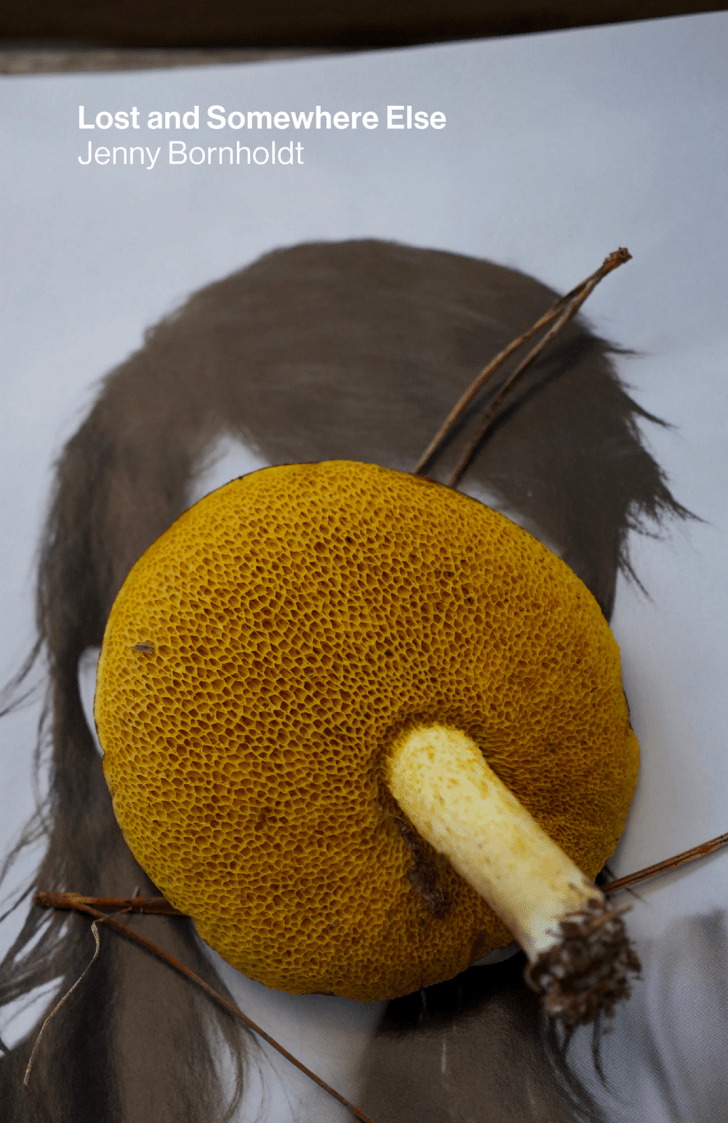
Jenny Bornholdt, from Lost and Somewhere Else, Victoria University Press, 2019


Jenny Bornholdt is the author of many poetry collections, including The Rocky Shore (Montana New Zealand Book Award for Poetry winner, 2009) and Selected Poems (2016). She has edited several notable anthologies including Short Poems of New Zealand (2018).

Victoria University Press author page


Screen Shot 2019-12-02 at 9.40.46 AM.png


Poetry Shelf Monday Poem: Jane Arthur’s ‘Situation’


Situation


Kākā have been screaming across the sky.

I’ve been thinking up jokes to tell myself.

One of the dogs pisses on the floor as soon as I leave the room.

The other dog follows me around the house.

There are a lot of dogs in the neighbourhood.

I am sure they know how to behave.

They don’t bark so much.

I’ve been preoccupied with what others think again.

I’ve been trying not to let people down.

Nights are not long enough.

Lately there’s been more sun than I would’ve expected.

I keep the weather report open in its own tab and check it often.

The internet has most of the answers I’m looking for.

Some of my questions come up at inconvenient times.

Some are just hard to explain.

Like, when people say ‘I want you inside me’

do they sometimes mean cannibalism?

Or that they want to inject your fluids into their veins?

Or do they only ever mean something plainly sexual?

Don’t laugh, it’s not always obvious, and

sometimes desire can make us hungry or violent.

Maybe healthy emotional behaviour wasn’t modelled to us as children.

So we bite. We draw blood. We take things that aren’t ours, I don’t know.


Jane Arthur, Craven, Victoria University Press, 2019


Jane Arthur was the recipient of the Sarah Broom Poetry Prize in 2018, judged by Eileen Myles. She has worked in the book industry for over fifteen years as a bookseller and editor, and has a Master of Arts in Creative Writing from the IIML at Victoria University of Wellington. Born in New Plymouth, she lives in Wellington with her family. Her first poetry collection, Craven, was published in September 2019 by Victoria University Press.

Victoria University Press page


large_craven.jpg


Poetry Shelf noticeboard: Nick Ascroft’s launching Moral Sloth

531745d5-a272-4bec-9a02-9ed67cce6044.jpg


You are warmly invited to the launch of

Moral Sloth
a new collection of poetry by Nick Ascroft
to be launched by Ashleigh Young

Tuesday 12 November, 5.30pm–7pm
Hudson Bar, Chews Lane, Wellington.

All welcome!
$25


Poetry Shelf celebrates Fleur Adcock: Winner of 2019 Prime Minister’s Award for Literature Achievement in Poetry

To celebrate the terrific news that Fleur Adcock will receive the Prime Minster’s Award for Literary Achievement in Poetry, I am re-posting the interview we did earlier in the year. It was such a pleasure doing this – as it was reading my way through Fleur’s poetry backlist for Wild Honey. A research highlight!

In celebration I will give a copy of Fleur’s magnificent Collected Poems (VUP, 2019) to one reader who names a poem they love by her – and in one sentence says why (either on Twitter, Facebook or as a comment on this post. NZ readers only sorry!

Brava Fleur!
 

3c58eb2e-2c98-4359-a439-504f7467e974.jpg


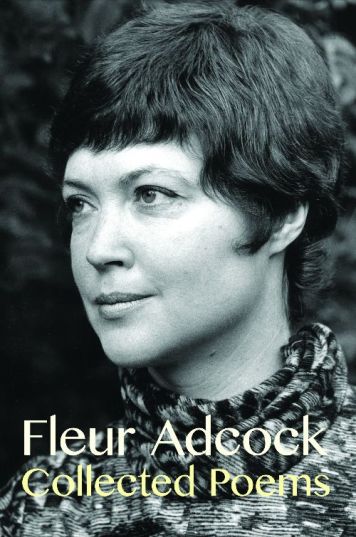
Fleur Adcock, Collected Poems, Victoria University Press, 2019


No; I can’t get it to knit. Scrunch!

Somewhere on the timeline between

the historical Eva whose

disappointments and retreating

daydreams I so tenderly probe

and our childhood’s ‘Grandma Adcock’

comes a fracture: Sam’s young lady,

eager emigrant, pioneer,

snaps into the dumpy figure

telling me off, when I was three,

for proving, at the tea-table,

I could put my toes in my mouth.


from ‘Reconstituting  Eva’ (originally published in The Land Ballot, 2014)


One of the many joys in researching and writing Wild Honey was reading Fleur Adcock’s poetry books – from The Eye of the Hurricane (1964) to Hoard (2017). Since then Victoria University Press has published Fleur’s Collected Poems. It is a sumptuous, substantial tribute to a much loved poet: the hardback book is beautifully designed, keenly edited and a perfect way to enjoy the scope of her poetry.

Born in New Zealand in 1934, Fleur has spent most of her writing life in Britain; she is an editor, a translator and above all a poet. She has published 18 collections of poems including the latest book along with several other Selected Poems. She edited The Oxford Book of Contemporary New Zealand Poetry (1982); The Faber Book of Twentieth-Century Women’s Poetry (1987); The Oxford Book of Creatures, with Jacqueline Simms (1995).  Her multiple awards include the Jessie Mackay Prize in 1968 and 1972, the Buckland Award in 1968 and 1979, and a New Zealand Book Award in 1984. She received an OBE in 1986, the Queen’s Gold Medal for Poetry in 2006 and was made a CNZM for services to literature in 2008.

The effects of Fleur’s poetry are wide ranging; she writes from a sustained history of reading and inquiry, from personal experience and sharp observation, from measured craft to conversational tones. Her poetry can be poignant, witty, serious, physical, abstract, humane. She assembles family and she looks back at New Zealand as she widens the definition of home.

To celebrate the arrival of Collected Poems we embarked on a slow email conversation.


At school I used to read, mostly,

and hide in the shed at dinnertime,

writing poems in my notebook.

‘Little fairies dancing,’ I wrote,

and ‘Peter and I, we watch the birds fly,

high in the sky, in the evening’.


from ‘Outwood’ (originally published in The Incident Book, Oxford University Press, 1986)


Paula: Can you paint a small snapshot of yourself as a young girl? Did books and writing feature?

Fleur:  From the age of six I was always a passionate reader, somewhat to the annoyance of my mother as the years went by. One of my favourite childhood photographs of myself (there were very few, because photographic films were almost unobtainable during the war) is of me lying on my stomach on the grass in our garden when I was eight or nine, reading a book. When I was nearly seven I was given a book called Jerry of St Winifred’s, about a girl who wanted to be a vet and who when trying to rescue a puppy from a rabbit hole accidentally discovered an ancient manuscript. This was when Marilyn and I were living in the country, as unofficial evacuees on the farm of our father’s cousins George and Eva Carter. Auntie Eva told me reading was bad for the eyesight, and restricted me to one chapter a day. If she had wanted to encourage me this would have been the best thing she could have done – in these days of reluctant readers, parents are told that if reading were forbidden more children would want to do it. In my case there was absolutely no need.

At that time we were away from our parents, and therefore writing letters and little stories for them, or at least I was – Marilyn was still at the stage of sending pictures, but it was all useful practice in communication.

The following year, 1940, we were living in Salfords, Surrey, with our mother, just across the road from the small tin-roofed public library. I used to go and browse in it alone, to borrow books. Titles I remember are Fairies and Chimneys, by Rose Fyleman, and Tales of Sir Benjamin Bulbous, Bart, which involved naiads, water sprites, etc. You will observe a fairy theme.

In what seems no time at all we were settled in a house of our own and I was reading whatever I could lay my hands on: library books, books from school, occasional books I was given as presents. Because of the wartime paper shortage these were in rather short supply. I liked adventure stories: Dr Doolittle, books by Arthur Ransome, Robert Louis Stevenson, and inevitably Enid Blyton. When I was 10 my mother lent me her copy of Gone with the Wind, and the following year gave me a rather beautiful ex-library copy of  Pride and Prejudice, which I read over and over again and still treasure. 

I was also writing poems. When I was seven, at Outwood School in the Surrey countryside, I had a little notebook in which I wrote my compositions at lunchtimes. I was there for only three months, from early June to early September 1941, and had no friends. Marilyn was away for the first few weeks, with whooping cough. Poetry was my refuge.


(…) I was impatient

for Jerry of St Winifred’s

my Sunday School prize, my first real book

that wasn’t babyish with pictures –


to curl up with it in the armchair

beside the range, for my evening ration:

‘Only a chapter a day,’ said Auntie.

‘Too much reading’s bad for your eyes.’


I stuck my tongue out (not at her –

in a trance of concentration), tasting

the thrilling syllables: ‘veterinary

surgeon’, ‘papyrus’, ‘manuscript’.


from ‘Tongue Sandwiches’ (originally published in Looking Back, Oxford University Press, 1997)


At my next school, St John’s, I won a gold star (see my poem ‘The Pilgrim Fathers’, and also the previous one, ‘Tongue Sandwiches’, re the earlier experience). I graduated to a slightly larger notebook and my subject matter expanded slightly, although one of my principal influences was still Enid Blyton – our mother thought her little magazine “Sunny Stories” was suitable reading matter for children, rather than the comics we swapped with our friends from school. I also liked ballads and melodrama. There were three more schools before the end of the war. At one we studied ‘The Lady of Shalott’: just my cup of tea, with its Tennysonian sound-effects and melancholy ending.

When I was 13 we went back to New Zealand, and I began writing nostalgic poems about such topics as “Spring in a Surrey wood”. The poems were rather fewer in my teens; some of them were carefully made, with rhymes and proper scansion, suitable for the school magazine, in which I won prizes for ‘The Bay’ and a poem about a seagull. My more private poems came under the influence of TS Eliot, whose work we studied when I was 15. World-weary disillusionment set in, together with free verse; I’ve just found one that ends with the two lines: “But what the hell does it matter? / Let’s go out and shoot ourselves.” The Waste Land has a lot to answer for.

But I’m afraid this is not a small snapshot but a sprawling album! I’ll stop.


Paula: I got goose bumps picturing the power of words and books for the young child making her way from girlhood to adolescence. Has poetry writing always been a refuge for you? Or has it developed other functions?

Fleur: Writing poetry has many functions for me; more than I can identify. It’s art, it’s therapy, companionship, a challenge, an indicator of health – I’ve always been aware that when I’m healthy I’m writing, and when I’m writing I’m healthy. It’s that much despised thing self-expression, as resorted to by generations of teenagers. It’s also, to some extent, my bread and butter. When I had a proper job, as a librarian in the civil service, time to write poetry was the unattainable ideal. Now that I’m retired I have a small pension from that ‘proper job’, but for a long time while I was freelance most of the work I did, in the form of poetry readings, broadcasting, book reviewing, translating, teaching on writing courses, going to festivals, writing libretti, etc, arose out of the fact that I wrote poetry. There’s less of that now – you don’t get quite so many commissions in your 80s – but still a certain amount. And I’m still writing the poems.

Poetry also has a social function. Some 18th century poets used to call their books ‘Poems upon Several Occasions’. I’ve written a number of those, too: poems for other people, for specific occasions or on topics that I hope they will be able to identify with. My poem ‘The Chiffonier’ about a particular habit of my mother’s (marking out special items for her children to inherit, long before she died) turned out to be common to a whole troop of mothers, I was pleased to learn from fan letters. I write a number of family poems: for birthdays, for Greg’s wedding to Angie, for the birth of my great-grandson Seth (a rare male among my hosts of female descendants), also elegies – for my parents and various ancestors, and one for Alistair that I managed to produce in time for Marilyn to read it at his funeral. There are elegies for friends, too, and increasing numbers of laments for doomed or extinct inhabitants of the natural world: birds, butterflies, insects of all kinds (my book Glass Wings contains examples), bats… It would be depressing to go on.


But now I see you in your Indian skirt

and casual cornflower-blue linen shirt

in the garden, under your feijoa tree,

looking about as old or as young as me.

Dear little Mother! Naturally I’m glad

you found a piece of furniture that had

happy associations with your youth;

and yes, I do admire it – that’s the truth:

its polished wood and touch of Art Nouveau

appeal to me. But surely you must know

I value this or any other treasure

of yours chiefly because it gives you pleasure.

I have to write this now, while you’re still here:

I want my mother, not her chiffonier.


from ‘The Chiffonier’ (originally published in The Incident Book, Oxford University Press, 1986)


Art: one of the enormous satisfactions of writing is constructing a beautiful or at least memorable and satisfying artefact. I believe that one of the essential elements of being human is wanting to create some kind of art. I remember having an argument with a friend about this, or perhaps just a misunderstanding – when I say “art” I include large areas of human creative endeavour such as gardening, growing plants, making clothes, furniture, jewellery, or anything that gives satisfaction to its creator. Some people (I’m not among them) find artistic pleasure in cooking. When my grandchildren Cait and Ella were small they spent hours of ingenuity constructing miniature items of furniture for their Sylvanian toys out of scraps of cardboard, Sellotape, fabric or whatever was around; that was art. So, I suppose, were the elaborate cakes their mother made for their birthdays; I remember one in the form of a swimming pool with blue jelly for water. For me the primary art-form is poetry. Very few things make me happier than finishing a poem I’ve been struggling with.


Paula: I love the way poetry emerges from the nooks and crannies of your life and thinking, the way it feeds and spurs. Your Collected Poems demonstrates this so clearly. Rereading the first two collections – The Eye of the Hurricane (1964) and Tigers (1967) – I am reminded how these early poems have travelled so well across the decades. Take the much-loved and anthologised ‘For a Five-Year-Old’ for example.  What were your early preoccupations as a poet in view of both style and subject matter?


I see, then, that a kind of faith prevails:

your gentleness is moulded still by words

from me, who have trapped mice and shot wild birds,

from me, who drowned your kittens, who betrayed

your closest relatives, and who purveyed

the harshest kind of truth to many another.

But that is how things are: I am your mother,

and we are kind to snails.


from ‘For a Five-Year-old’ (originally published in The Eye of the Hurricane, AW Reed, 1964 and then in  Tigers, Oxford University Press, 1967)


Fleur: I don’t think I can answer this in any meaningful way. I could look back through the early collections to see what I was writing about, but so could anyone; it’s not the same as being inside my feelings at the time, which I find it impossible to recall. I wasn’t setting out with any aim or objective; I just wrote about whatever topics suggested themselves, and my chief emotion was “Oh, good, I’m writing a poem!”

One of my first preoccupations, even as an adolescent, was my ‘exile’ from England. I wrote about this in my early teens, and also in the poem I called ‘The Lover’, in which I imagined a male persona trying to adapt to living in a new country. This ridiculous enterprise naturally misfired: everybody thought I was writing about Alistair. Serves me right, for not having had the confidence to write as a female.

Looking at The Eye of the Hurricane, I see that a number of the poems were about relationships with various men, one in particular – a natural preoccupation of a person in her 20s. One person they were definitely not about is Alistair. I was very surprised, in later years, to find that some people imagined he was the character represented in such poems as ‘Knifeplay’, when he was not at all like that.  Most of those poems were written in the nearly five years between my divorce from him and my marriage to Barry Crump in 1962. I never wrote about Alistair while I was married to him. Most of my very few poems about him were written while he was dying or after his death in 2009 – my elegy for him was modelled stylistically on his famous Elegy in Mine eyes dazzle.  My own early “battle of the sexes” poems (to use a Baxter phrase) were about my then current preoccupations. By 1959, Alistair was history.

As for the style, in those days I wrote in traditional verse forms, often rhymed, because it was easier to be convinced that I’d got a poem right if the rhymes and metre were correct. Free verse is far more difficult to judge (I don’t mean blank verse – unrhymed iambic pentameter, as in Shakespeare’s plays – which is another kettle of fish. I certainly used that from time to time.)

When it came to my next collection, Tigers, a new subject presented itself: culture shock. I was suddenly living in a wider society, in England, exposed to the harsh realities outside insular little cosy New Zealand. ‘Regression’ is a reflection of my new political anxieties, although I had also written about the nuclear threat earlier, in NZ. We were all convinced the world could end at any time, as seemed quite likely. But on the whole I rather cringe to open these two earliest collections. I think of what Katherine Mansfield wrote to JMM when he urged her to allow In a German Pension to be reissued: “It is far too immature, and I don’t even acknowledge it today. I mean I don’t ‘hold’ by it. I can’t go foisting that kind of stuff on the public” (quoted in his introduction to the Penguin Modern Classics edition).


All the flowers have gone back into the ground.

We fell on them, and they did not lie

crushed and crumpled, waiting to die

on the earth’s surface. (..)


from ‘Regression’ (originally published in Tigers, Oxford University Press, 1967)


Paula: You touch upon the way autobiography can both corrupt and enhance a reader’s pathways through a poem and the danger of making assumptions about both the speaker and subject of a poem. Some things in a poem stay secret and some are exquisitely open.  As I read my way through your collections I relish the shifting tones, sharpness, admissions, contemplations. The way poems are both oblique and transparent. Two collections have particularly affected me, but before sharing these, are there one or two books that have been especially important in the making and published result?

Fleur: Once again, impossible to answer. For quite some time The Incident Book gave me particular pleasure to look back on, but inevitably it was overtaken by others.  Every published collection that appears between covers and looks like a complete and separate entity is in fact just a bundle of individual poems. When my youngest granddaughter saw the size of my Collected Poems in New Zealand, she said to her father, “Wow! How could she write so many poems?” The answer is, one at a time. Each new poem is a world in itself, something to plunge into and be absorbed by for as long as the writing of it lasts. Only much later does it become part of a published book, if I decide to include it in one. Not every poem is chosen.


21

The fountain in her heart informs her

she needn’t try to sleep tonight –

rush, gush: the sleep-extinguisher

frothing in her chest like a dishwasher.


She sits at the window with a blanket

to track the turning stars. A comet

might add some point. The moon ignores her;

but dawn may come. She’d settle for that.


from ‘Meeting the Comet’ (originally published in Time-Zones, Oxford University Press, 1991)


My feelings about the various collections tend to be influenced by my memories of the circumstances and places in which they were written. For example, Time-Zones received its title from the travelling I was doing during that time I was working on it. It contains poems from my three months in Australia as writer in residence at the University of Adelaide in 1984, including the two long sequences at the end, ‘Mrs Fraser’s Frenzy’ (written for music, originally for Gillian Whitehead, but she decided it didn’t suit the commission she had in mind and it was subsequently set by the English composer George Newson instead), and ‘Meeting the Comet’, which I wrote in bits and pieces during my journey to and from the southern hemisphere, as a way of staying sane and having something to work on while I was in transition from one place to another. (The girl in the poem is fictional, but was originally inspired by the child of friends in Newcastle, who had the same disability although not the same history as the one in the poem.) The collection also includes poems about Adelaide, where I was living for a time, and Romania, which I had visited and where I had made good friends and had my eyes opened to a new political landscape. Altogether a bit of a ragbag – I was crossing time zones as the poems came to me.

How complicated these things are to explain.

Then there was Looking Back, which was short-listed for the T.S. Eliot prize in 1997. It gave me great pleasure to write, or at least the poems about my ancestors did, because of my obsession with genealogy, but shortly afterwards, oddly enough, I lost interest in writing poems for some years, and devoted myself to the ancestors in a big way.

Dragon Talk was important, by virtue of the fact that it marked my return to writing poetry after a gap of several years. However, I certainly wouldn’t call it my best collection; it was a necessary one, to get the wheels turning again, but afterwards I moved on in different directions.

The only book I actually conceived and embarked on as a single entity, in the way you might embark on a novel, was The Land Ballot. I wrote three or four poems about my father’s childhood, and then it dawned on me that  I might be able to produce enough for a book. I did enormous amounts of research for this, over a period of two years, 2012-2013, building up a picture of this remote community and its inhabitants, and was totally immersed in it. Two of the happiest years of my life as a writer. On the other hand, one of the happiest years of my life as a person was 1977-8 (September-June), living in the Lake District as writer in residence at Charlotte Mason College in Ambleside, surrounded by amazing scenery, with time to walk and explore and make discoveries, as well as making a quantity of new friends and spending more time than usual with many of the old ones: if you live in a famously beautiful place and have a spare bedroom you suddenly become very popular. But the poems that emerged from this time are scattered between more than one published collection.


As there was only one lamp

they had to spend the winter evenings

at the table, close enough to share

its kerosene – perfumed radiance –


his mother sewing, and he

reading aloud to her the books

he borrowed from Mr Honoré

or the Daysh boys on the next farm


from ‘Evenings with Mother’ (originally published in The Land Ballot, Bloodaxe Books and VUP, 2014)


Paula: I love the way a poem becomes a miniature absorbing world for both reader and writer, and the way the context of its making is important for the poet. Reading a book is akin to listening to a symphony; you absorb the composition as a whole with certain notes and melodies standing out. I also loved The Incident Book with its fertile movement, physical beacons and emotional underlay. I keep going back to ‘The Chiffonier’, both a conversation with and portrait of your mother. The ending never fails to move me.

But I also loved Looking Back and The Land Ballot, two collections that consider ancestors, the past and the present, an attachment (and detachment) to two places, the UK and New Zealand. I guess it gets personal; the fact I am drawn to the gaping hole of my ancestors with insistent curiosity and the fact your exquisite writing satisfies my interest as a poet. Heart and mind are both engaged. Questions might arise, I feel and think multiple things, the music holds me, the intimacy is breathtaking.

What attracts you in poetry you admire?

Fleur: Another impossible question. The simple answer is simply expressed in the last line of my poem ‘The Prize-Winning Poem’: “it’s got to be good.”  Of course you will ask what is the nature of that ‘goodness’, or excellence? I could talk about the tone, the rhythms, the emotional resonances, the sense of mystery or wonder that poems sometimes induce, but what I always want a poem to do is surprise me. The only full answer would be a list of poems I have admired over the years, which would be impractical.

This afternoon I was listening to a performance of Britten’s Serenade for tenor, horn and strings, which includes the setting of Blake’s little gem ‘O rose thou art sick’, which I’ve known and admired since childhood, but because the musical setting (also familiar to me) slows the words down I was listening to them more carefully than usual, and particularly struck by them. A perfect poem. But then yesterday I picked up the latest copy of the TLS and found a poem by Helen Farish that was totally new to me, and found it striking in a different way, possibly because of its strangeness: it makes you want to know more about the situation she describes, although on the other hand knowing too much might spoil it.

Poems serve different functions in our lives, and how we respond to them is affected by the circumstances in which we read or hear them.


Paula: Indeed. Can you name three poetry collections you have admired in the last few years?

Fleur: The answer is that no, I can’t make any such choices. I don’t do “favourite poets” or “favourite books”. To do so would not constitute a considered judgement. Enthusiasms come and go; they are things of the moment. It takes me a long time to make up my mind about the value of any particular writer. For example, many of my friends have published books that were important to me, but that would be a judgement about friendship, not necessarily about literary worth. I’d rather pass on this question.


Paula: What activities complement your love of poetry?

Fleur: Walking (in our local woods or wherever I happen to be), watching plants grow, watching birds and other living creatures in my garden or elsewhere. The greater the destruction of our natural environment, the more important these things become. When I first bought my house in London, in 1967, huge crowds of birds came to the neighbours’ bird table; miniature froglets hopped around the grass verges when I tried to mow the lawn; the buddleia tree was smothered in butterflies; we used to hear owls in the night. Now that I have my own birdfeeders, and more time to watch and observe the population, I’m more and more aware of the sad losses. On the other hand, I’m grateful for my health and continued ability to look after my garden and get out and about.

Now that my eyesight is so much worse I find myself reading less and listening to music a lot more, but that doesn’t really belong in this interview – music is a completely different medium from literature.


Paula: Thank you Fleur, especially as I posed such difficult questions. I have loved this slowly unfolding conversation that has kept me returning to the joy and richness of your poetry. Thank you for your generous and engaging responses – it is now time for you to get back to what you love – writing poems!


Paths


I am the dotted lines on the map:

footpaths exist only when they are walked on.

I am gravel tracks through woodland; I am

field paths, the muddy ledge by the stream,

the stepping-stones. I am the grassy lane

open between waist-high bracken where sheeep

fidget. I am the track to the top

skirting and scaling ricks. I am the cairn.


Here on the brow of the world I stop,

set my stone face to the wind, and turn

to each wide quarter. I am that I am.


(originally published in Below Loughrigg, Bloodaxe Books, 1979)


Victoria University Press page