Tag Archives: Tim Upperton

A week of poems: Tim Upperton’s ‘On the eve of my 53rd birthday’


On the eve of my 53rd birthday

After Gregory Corso


Once I was very small but then I grew up

and other things were small and nothing hurt

like it did when I was sixteen, and again

at twenty-one. Fifty-fucking-three!

The poems I wrote and the poems I shouldn’t

have written but they’re done now and in books

nobody, absolutely nobody,

ever reads. There was some craziness,

and sometimes I was alone and other times

I was not alone, and alone was better

but I was lonely. To be honest,

the craziness didn’t amount to much.

The confessional stopped working about

the time I had things to confess, and now —

now I’d have to spend the rest of my life

in there and still never get to the end

of it, fuck it, I may as well carry on.

My hair was long and straight but went springy

in my thirties then straight again but not

as straight as before. Now it’s mostly grey

but I don’t really care about it.

I let it grow and grow and then I cut

it all off. I imagine it growing

when I’m lifeless in my coffin, masses

of it, which is unpleasant to think of

and anyway not yet. I want more life

in front of me than I have behind me,

but that’s not about to happen. I want

a bell down there, in the wormy darkness,

like in the Edgar Allan Poe story,

or a buzzer, a buzzer I can press

and somebody to listen just in case.


©Tim Upperton


The Listener raises the point of what poetry is

IMG_3239

From Mark Broach:

‘What is poetry? “Poetry is the other way of using ­language,” goes one definition. It’s what gets left behind in translation, goes another. It’s a hundred things: rhythm, harmony, metaphor, compression, juxtaposition, an obsession with the line. But what is poetry for? That topic’s up for debate this weekend, so we put the ­question to a group of poets.

The current New Zealand Poet ­Laureate, CK Stead, says poetry has many roles, some seemingly conflicting.

“It’s for pleasure, intellectual and emotional. It’s sometimes for what Yeats called ‘the fascination of what’s difficult’; and sometimes for a sense of ease, effortlessness, peace and harmony. It’s to remind us of the best uses that have been made, and can still be made, of what marks the human species out as unique on our planet – language. Shakespeare says ‘The truest poetry is the most feigning’, and Wilfred Owen says, ‘The true poets must be truthful’, and both are right without contradiction.”

Tim Upperton wonders if poetry is of any use at all. “If you go by the words of some of its famous practitioners, poetry’s not much good for anything.” ‘

For the rest of the article see here.

Mark also consults CK Stead, our current Poet Laureate, and the three poets performing here:

Kate Camp, Gregory O’Brien and Louise Wallace speak at “A Still Small Voice – What Does Poetry Do for Us?”, a session at Wanaka’s Aspiring Conversations on Sunday, April 24.


The Ockham NZ Poetry short list- two reviews, an interview and a book in my bag

I am heading off to Wellington this morning to go to A Circle of Laureates, the Lauris Edmond prize event and do a smidgeon of reading in between. Thought I would share these first:
1411440756602

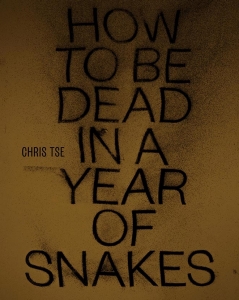
How to Be Dead in a Year of Snakes Chris Tse, Auckland University Press

Chris Tse is a writer, musician and actor whose poetry first appeared in AUP New Posts 4 (Auckland University Press, 2011). He resides in Wellington, his home town.

Chris’s debut collection, How to Be Dead in a Year of Snakes, responds to a moment in history not so much by narrating that history but by installing a chorus of voices. He takes an event from 1905 when Lionel Terry went hunting for a Chinaman in Haining Street, Wellington and ended up murdering Joe Kum Yung. Within the opening pages, the chilling event is situated in a wider context where laws proscribe the alienness that situates  Chinese as outsiders. This is what gets under your skin as you read.

The poems draw upon and draw in notions of distance, defeat, guilt and forgiveness. There are the unsettled imaginings of what it is to be home, to be at home and to be out of home to the extent that home becomes difficult and different. Mostly it is a matter of death (and casting back into life) whereby phantoms stalk and cry about what might have been and what is: ‘You spend your thoughts drowning in your family-/ missing from this vista- and contemplate a return with nothing to show/ for your absence.’

The collection harvests shifting forms, voices and tones that promote poetry as mood, state of mind, emotional residue. Yes, there is detailed evidence of history but this is not a realist account, a story told in such a way. Instead the poetic spareness, the drifting phantom voices give stronger presence to things that are much harder to put into words. How to be dead, for example. How to find the co-ordinates of estrangement, of that which is unbearably lost and is hard to tally (family, home, what matters in life). On page four you move from a matter-of-fact representation of the law to page five and the wife in Canton (‘you carry her bones in your body’). Two disparate but equally potent aches.

For the rest of the review see here
 

OLYMPUS DIGITAL CAMERA       $_35


From an interview I did with David Eggleton last year:

I love the title of your new collection (The Conch Shell, Otago University Press). The blurb suggests that this collection ‘calls to the scattered tribes of contemporary New Zealand.’ What tribes do you belong to? What literary tribes? How does the word ‘contemporary’ modify things?

Yes, I’m blowing my own (conch) trumpet at sunrise. That title refers to tide-lines of life, to surf-like sounds, to gathering good vibrations, to gods of the sea who, clarion-like, lull the waves, and to the summer of shakes, the year of quakes. And so on, to the final burnout of the run-ragged consumer. The rest is the tribal outcast, and everything you cannot pin down, or ascribe a bar code to.

In fact, the word ‘tribe’ is fraught. I think James K. Baxter brought it into the literary realm. My own tribal background is distinctly heterogeneous rather than Fonterra-homogenous, but if I look around at my contemporaries, poets and otherwise, I see most of them making it up as they go along. A poem tests a proposition; it doesn’t always prove it.


These new poems offer shifting tones, preoccupations, rhythms. What discoveries did you make about poetry as you wrote? The world? Interior or external?

My poems like to dwell on the silver wake of a container ship, or the wet sand beneath the upturned hull of a dinghy, or the half-seen, the overheard. Poets re-arrange, but they have duties of care. X.J. Kennedy has pointed out that: ‘The world is full of poets with languid wrenches who don’t bother to take the last six turns on their bolts.’

It’s been five years since my last poetry collection Time of the Icebergs appeared, and one reason my collections have been regularly spaced that far apart is the need for more elbow-grease and line-tightening to get the burnish just so.

The poet’s mind, like anyone else’s is made up of reptilian substrate, limbic empathy and neo-cortical rationality. These shape your reveries and hopefully together lift them out of banality. Our ideas are dreams, styles, superstitions. We rationalise our temperaments, draw curtains over our windows, but poems carry an anarchic charge that reveals the force that through the green fuse drives the flower.

A poet is in the business of the unsayable being said, showing you fear in a handful of dust. A poet is amanuensis to the subconscious ceaselessly murmuring, and indeed to the planetary hum, the gravitational pull of the earth, the wobble of placental jellyfish in the womb — anything alive, mindless and gooey.


Is there a single poem or two in the collection that particularly resonates with you?

Every poem resonates on its own wavelength, but I found constructing an immediate elegiac response to my father’s death one of the most turbulent. A bit like getting to grips with a storm, with a howling wind that has shape and substance.


Returning to the notion of detail, I see the accumulation of things in your poems as an overlay of highways to elsewhere whether heart, issues, ideas, fancy, memory. Yet the things also pulsate as things in their own right. What draws you to ‘the thisness of things’ (the blurb)?

Things accumulate in my poems in almost haptic fashion, wrestled there like sculptural ingredients. They accumulate, as in the random haphazard assemblages of the Dadaist Kurt Schwitters, built out of found objects in the streets. Yes, I want to acknowledge the ‘thisness’ of things, but not in the sense of ‘property’. Rather, in the sense of: he who kisses the joy as it flies, lives in eternity’s sunrise.


For the complete interview see here

 

Tim-FB 9780473288396-TU

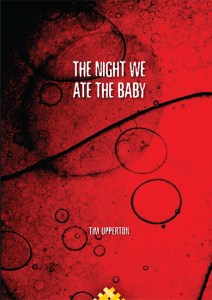
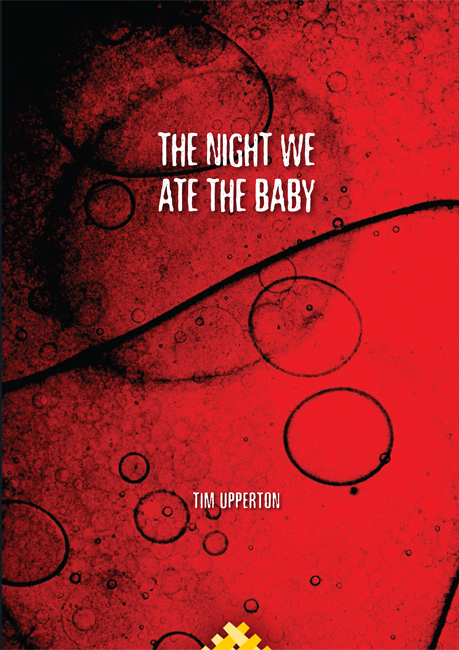
Tim Upperton, The Night We Ate The Baby HauNui Press, 2014

Tim Upperton’s debut poetry collection, A House on Fire, was published by Steele Roberts in 2009. Since then, his poetry has been published in numerous journals and he has won awards for a number of them. The poems for this new collection were written with the assistance of a Doctoral Scholarship from Massey University of New Zealand, so perhaps they form/formed part of his doctoral submission. Tim will be reading as part of the Haunui Press ‘Deep Friend Poetry Reading’ series at Vic Books on 26th March. Details here.

This latest book is unlike any other collection I have seen in New Zealand; chiefly in terms of the measure of discomfort. The forms are various, scooping an edgy wit into prose blocks, villanelle, triplets, couplets and freer patterns. Yet there is connective glue at work here, and that is what makes this collection stand out. I think it comes down to voice (whether or not it is the personal voice of the poet doesn’t really matter) because the voice steering the poems is sharp, forthright, witty, edgy, grumpy. It unsettles. It keeps you on your toes. On the back of the book, Ashleigh Young suggests that ‘[t]hese willfully, calmly disagreeable poems have tenderness and courage at their heart.’ I would agree. Therein lies the pleasure of reading these poems; there is more to the brittle edginess than meets the initial eye.

The first poem, ‘Avoid,’ very clearly announces that this is a poet who loves language, that is unafraid of rhyme and rhythm working arm in arm. The poem is a miniature explosion of sound effects — with sliding assonance, bounding consonants, near rhyme and sumptuous aural connections. It brought to mind the refrain in Don McGlashan’s song,  ‘Marvellous Year,’ and Bill Manhire’s glorious ‘1950s’ in the use of rhythm and rhyme, and aural trapeze work that is ear defying. Whereas Don’s song represents a potted portrait of the world in all its warts and glory (in a marvellous year), and Bill’s poem is a nostalgic recuperation of things, Tim sets up the collection’s  negative disposition and itemises things to avoid!

For the rest of the review see here


ghost_cover_front__73226.1427153026.140.215   ghost_cover_front__73226.1427153026.140.215   ghost_cover_front__73226.1427153026.140.215

Roger Horrocks Song in the Ghost Machine

I haven’t read this book! Last year I picked it up to review then found something about it was very close to a fragile starting point I had for a book in my head. I can’t talk about poems I am writing until they are written. I didn’t want to scare my starting point off so left in the pile to read.

Now that I am hard at work writing about NZ women’s poetry, my starting point is in a little holding bay where it may or may not survive. It has been there for over a decade though and has moved to second place in  a queue.

So I am throwing caution to the wind and taking this book to read on the plane.


My thoughts: 2016 Ockham NZ Book Award Poetry short list

Congratulations to all those who make the short lists! Especially in a year that was larger than a year.

Here is the short list for poetry, see below for other categories.

Poetry
How to be Dead in a Year of Snakes, by Chris Tse (Auckland University Press)
The Night We Ate the Baby, by Tim Upperton (Haunui Press)
Song of the Ghost in the Machine, by Roger Horrocks (Victoria University Press)
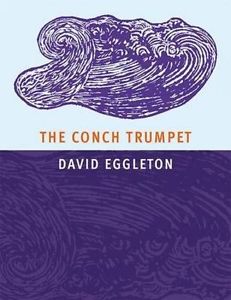
The Conch Trumpet, by David Eggleton (Otago University Press)
Would this be my list? No! But that doesn’t mean a thing. Book Awards will always reflect the predilections of the judges. And there are some strong collections here that I have reviewed and loved. Great to see Chris’s debut collection make the cut.
Good to see a small press make it along with the big presses who continue to show an admiral devotion to poetry.
Whom do I mourn? Emma Neale’s extraordinary collection, Tender Machines. Ahh!
I haven’t read many of the novels that made it but how I adored Anna Smaill’s The Chimes that did not. Sorry to be a party pooper on that one.
And how good to see Fiona Farrell and Lynn Jenner make the non-fiction list. I reviewed both those books on the blog and thought they were standout examples of how we can write about the world, catastrophe, home.
Fiction plus poetry equals one woman out of eight.  No women poets. Does this mean the men wrote all the best books in the past year? No way!
Is NZ literature in fine heart? Utterly yes. Astonishing books missed the long lists in both poetry and fiction. We are publishing such quality writing it makes judging almost impossible for Book Award Judges.
For those that missed out, good books have a life beyond book awards. Astonishing books are bigger than book awards. Remember that.
For those that have been picked, enjoy the well-deserved moment, then let the white noise settle and get on with what really matters. Writing.
The 2016 Ockham New Zealand Book Awards finalists are: 
Fiction
The Back of His Head, by Patrick Evans (Victoria University Press)
Chappy, by Patricia Grace (Penguin Random House)
Coming Rain, by Stephen Daisley (Text Publishing)
The Invisible Mile, by David Coventry (Victoria University Press)
Poetry
How to be Dead in a Year of Snakes, by Chris Tse (Auckland University Press)
The Night We Ate the Baby, by Tim Upperton (Haunui Press)
Song of the Ghost in the Machine, by Roger Horrocks (Victoria University Press)
The Conch Trumpet, by David Eggleton (Otago University Press)
General Non-Fiction
Maurice Gee: Life and Work, by Rachel Barrowman (Victoria University Press)
The Villa at the Edge of the Empire: One Hundred Ways to Read a City, by Fiona Farrell (Penguin Random House)
Māori Boy: A Memoir of Childhood, by Witi Ihimaera (Penguin Random House)
Lost and Gone Away, by Lynn Jenner (Auckland University Press)
Illustrated Non-Fiction
Te Ara Puoro: A Journey into the World of Māori Music, by Richard Nunns (Potton and Burton)
New Zealand Photography Collected, by Athol McCredie (Te Papa Press)
Tangata Whenua: An Illustrated History by Atholl Anderson, Judith Binney, Aroha Harris (Bridget Williams Books)
Real Modern: Everyday New Zealand in the 1950s and 1960s, by Bronwyn Labrum (Te Papa Press)
The Fiction category is judged by distinguished writer Owen Marshall CNZM, Wellington bookseller and reviewer Tilly Lloyd, and former Director of the Auckland Writers Festival and former Creative New Zealand senior literature adviser Jill Rawnsley.
The Poetry Prize is judged by former Auckland University Press publisher Elizabeth Caffin MNZM, Dr Paul Millar, of the University of Canterbury, and poet and University of Auckland academic Dr Selina Tusitala Marsh.
The General Non-Fiction Prize is judged by Metro Editor-At-Large Simon Wilson, Professor Lydia Wevers, literary historian, critic and director of the Stout Research Centre at Victoria University of Wellington, and Dr Jarrod Gilbert, a former Book Awards winner for Patched: A History of Gangs in New Zealand, of the University of Canterbury.
The Illustrated Non-Fiction Prize is judged by former publisher Jane Connor, publisher of the magisterial The Trees of New Zealand, which won the Book of the Year award in 2012, Associate Professor Linda Tyler, Director of the Centre for Art Studies at The University of Auckland, and Leonie Hayden, the editor of Mana magazine.
The winners (including of the four Best First Book Awards) will be announced at a ceremony on Tuesday May 10 2016, held as the opening night event of the Auckland Writers Festival. The awards ceremony is open to the public for the first time. Tickets to the event can be purchased via Ticketmaster once festival bookings open on Friday 18 March.

Poetry Shelf, Poet’s Choice: Jane Arthur makes her picks


thenightweatethebaby-211x30076545

I feel like I was luckier than everyone else this year because I got to read my classmates’ work at the IIML where I was working on my MA folio. I don’t understand how there can be so many good writers around, but there are and I have the proof. At some time in the future, I will choose Nick Bollinger’s ‘Goneville’ as one of my books of the year – it’s a music bio/memoir/cultural history and it just won the Adam Prize for being excellent. Please also check out the latest issue of Turbine online to see how clever my other classmates are.

Tim Upperton’s The Night We Ate the Baby came along right when I needed it this year. It does things and says things poetry “shouldn’t”. It kicks against beauty, niceties, and resolution. A few times, it does this self-referentially, like: poetry is such a dick. Eww, poetry, you’re so gross (see “Fonnet”). It’s a breeze to read and the speaker of the poems is great because he’s such a grumpy bastard. A sucker-punch for anyone who thinks poetry is difficult and pretentious.

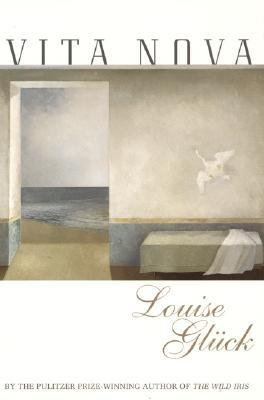
Louise Glück’s Vita Nova couldn’t be more different from Upperton’s book, but I loved it too. Each poem feels like a whisper, somehow, though they kept on kicking me in the gut when I wasn’t looking. It’s bloody beautiful. Hold your breath and eat it, I reckon.

I rediscovered the joy of Beauty Sleep by Kate Camp, which is full of zany turns and genuinely funny bits, and the blurting-out of thoughts I’m so fond of in my own life and writing. And the poem “Yuri Gagarin’s bed” has an ending that made me gawp at its honesty and perfection.

Jane Arthur

beautysleep.9780864735119__48403.1347922411.140.215  beautysleep.9780864735119__48403.1347922411.140.215   beautysleep.9780864735119__48403.1347922411.140.215

Tim Upperton’s The Night We Ate the Baby — You need to read the whole collection to get a sense of the tonal subtleties, the echoey anecdotes, the spade that digs open and the spade that buries.

Tim-FB 9780473288396-TU

Tim Upperton, The Night We Ate The Baby HauNui Press, 2014

Tim Upperton’s debut poetry collection, A House on Fire, was published by Steele Roberts in 2009. Since then, his poetry has been published in numerous journals and he has won awards for a number of them. The poems for this new collection were written with the assistance of a Doctoral Scholarship from Massey University of New Zealand, so perhaps they form/formed part of his doctoral submission. Tim will be reading as part of the Haunui Press ‘Deep Friend Poetry Reading’ series at Vic Books on 26th March. Details here.

This latest book is unlike any other collection I have seen in New Zealand; chiefly in terms of the measure of discomfort. The forms are various, scooping an edgy wit into prose blocks, villanelle, triplets, couplets and freer patterns. Yet there is connective glue at work here, and that is what makes this collection stand out. I think it comes down to voice (whether or not it is the personal voice of the poet doesn’t really matter) because the voice steering the poems is sharp, forthright, witty, edgy, grumpy. It unsettles. It keeps you on your toes. On the back of the book, Ashleigh Young suggests that ‘[t]hese willfully, calmly disagreeable poems have tenderness and courage at their heart.’ I would agree. Therein lies the pleasure of reading these poems; there is more to the brittle edginess than meets the initial eye.

The first poem, ‘Avoid,’ very clearly announces that this is a poet who loves language, that is unafraid of rhyme and rhythm working arm in arm. The poem is a miniature explosion of sound effects — with sliding assonance, bounding consonants, near rhyme and sumptuous aural connections. It brought to mind the refrain in Don McGlashan’s song,  ‘Marvellous Year,’ and Bill Manhire’s glorious ‘1950s’ in the use of rhythm and rhyme, and aural trapeze work that is ear defying. Whereas Don’s song represents a potted portrait of the world in all its warts and glory (in a marvellous year), and Bill’s poem is a nostalgic recuperation of things, Tim sets up the collection’s  negative disposition and itemises things to avoid!


New Age mystics. Wave-particle physics.

Federico Garcia Lorca, that all-night talker.

The law. The rot inside the apple core.

All dawdlers. Power walkers. Tattoo

parlours. Death metal concerts.

Poetry readings that go on for hours.


The second poem, ‘Valediction,’ is a list poem steered by straightforward rhyme, and coupled with the incantatory joy of repetition you fall upon the humour. This is a lonesome poem, yet it is unbearably funny.


Goodbye, bagel, table for one.

Coffee, cigarette. Warmth of the sun.

Goodbye, sparrow. Goodbye, speckled hen.

Goodbye, tomorrow. Goodbye, remember when.


The third poem, Spring,’ (it would be so easy to work my way through the book, poem by poem but this trend is about to stop!) is not your usual homage to the season of daffodils and lambs. It is both refreshing and refreshed as the negative bite overturns such empathetic images. You board the slippery slope of the poem and run into the self-deprecating turn of the poet as he surveys the ruins of his touch (‘I ruin the jonquils, the daffodils. I ruin the I love you.’). Beneath this surface of ruination there is a white-hot core of intimacy and loss of intimacy. Unbearably moving. The final stanza holds its most potent kick until the oxymoron in the final line. Spring becomes the vehicle to hint at so much more:


Which is to say, I am terrified.

Meanwhile the grassy goodness, the lengthening day.

It’s not as if you died.

You come closer and closer away.


I  was really drawn to ‘The trouble with poetry’ (originally published in Sport). It felt like this  poem was a sleuth on the trail of another poem that would in turn become this poem; the Private Eye Poem collected all the necessary pieces (to tell the story in the manner of ‘a poet, not a novelist’). Like many of the poems in the book, it is as much about story as it is about language effects. There are characters and problems and turning points. The poems begins like this:


In the poem

which is like a house

the poet is looking

out a window.


The poem-houses in the book do look out into the world and what they gather in through their wide open and half-open windows are little anecdotes sometimes layered the one upon the other. They house jarring relations, spiky revelations. They are not-love poems as much as they are love poems. They house broken worlds, interior and external. ‘Late Valentine’ is like an ode to what is not:


I don’t sleep with you anymore,

and this makes the rain come

in the open window


The honeyed repetition of a villanelle renders the ‘hook’ in ‘The bare hook’ more damaging. Again there is discomfort, ache, and the oxymoronic kick of a last line (‘The way in is the way out.’) Here’s a sample:


The bare hook where you hung your coat

is a question mark. The answers never.

Don’t ask what this is all about.


You need to read the whole collection to get a sense of the tonal subtleties, the echoey anecdotes, the spade that digs open and the spade that buries — the language that takes to  limitless skies, and the forms that contain. This is a risky collection. It’s like a series of negative imprints that if you tilt to the left you get exquisite glimpses of fracture and repair.


from ‘Take care’

You are precious,

so carry yourself carefully

through this day,

don’t drop yourself because

you will smash

and fly apart in every direction,

and then,

and when that happens–

who will gather you,

who will pick you all up

I’d like to know?


Tim’s Blog

HauNui Press page


Ashleigh Young finds much to admire in the poetry of Tim Upperton and that admiration is infectious!

Ashleigh Young has posted an engaged reading (a not-review) of a poetry collection by Tim Upperton on her blog, eyelashroaming. It makes you want to go and buy the book, and read the book, if you haven’t already. It is a matter of semantics what you call it when you share your enthusiasms and entry points into poetry books. In my mind the best reviews do in fact ‘talk’ about the writing and the effects of the writing in a way that re-illuminates the content and its myriad possibilities. Bravo Ashleigh!

You can see Ashleigh’s full post here.

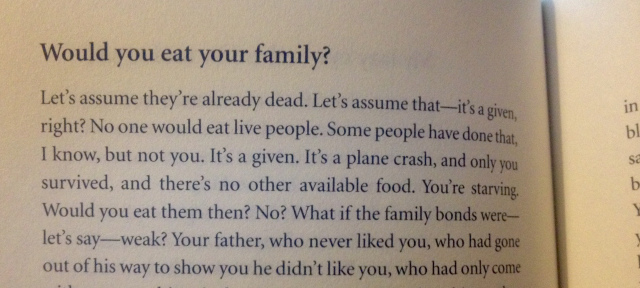
would-you-eat-your-family

‘Tim Upperton is the kind of poet who tends to have his poems shared without people asking his permission or paying him money. They’re the kind of poems that you want to share with another person immediately. So you do, which I can’t help but feel is a kind of stealing. I have done it often. I tell people they should buy the book, but how can you be sure they’ll follow through? When it comes to poetry, people don’t follow through. I need to repay my debt to Tim Upperton somehow, and rather than giving him money like a decent human being, I am going to write about his book The Night We Ate the Baby, like a writer. His book has been reviewed in only one place, briefly. Why hasn’t it been reviewed elsewhere? Probably because of shrinking arts review coverage on all fronts, or maybe because it was published by a small press, but a more interesting theory is: because it’s too good.

This isn’t a review. If it was, it would be effusive and dull. I actually just wanted to talk about the book. The first time I read these poems I thought of Larry David saying to Jeff Garlin that the Larry of Curb Your Enthusiasm is a fantasy – an embodiment of the things the real Larry would like to say. ‘I cannot tell you the pleasure, the pleasure that it gives me to have a moment of honesty in my life, albeit fictional. There is nothing that feels better to me!’ I’ve always thought there’s beauty in the way this honesty is delivered on the show, and watching it feels cathartic at the same time as it feels slightly unbearable. Because outside of that moment of honesty, ‘We’re full of shit all the time! It can’t be helped, you have to get along in this world, that’s the way to do it.’ In the end it’s always Larry against the world, holding his small triumphs close and being swallowed by a mob of Michael J. Fox fans. Anyway, my point is, it sometimes feels a bit like that in a Tim Upperton poem, especially when he’s not going easy..