Tag Archives: Te Herenga Waka University Press

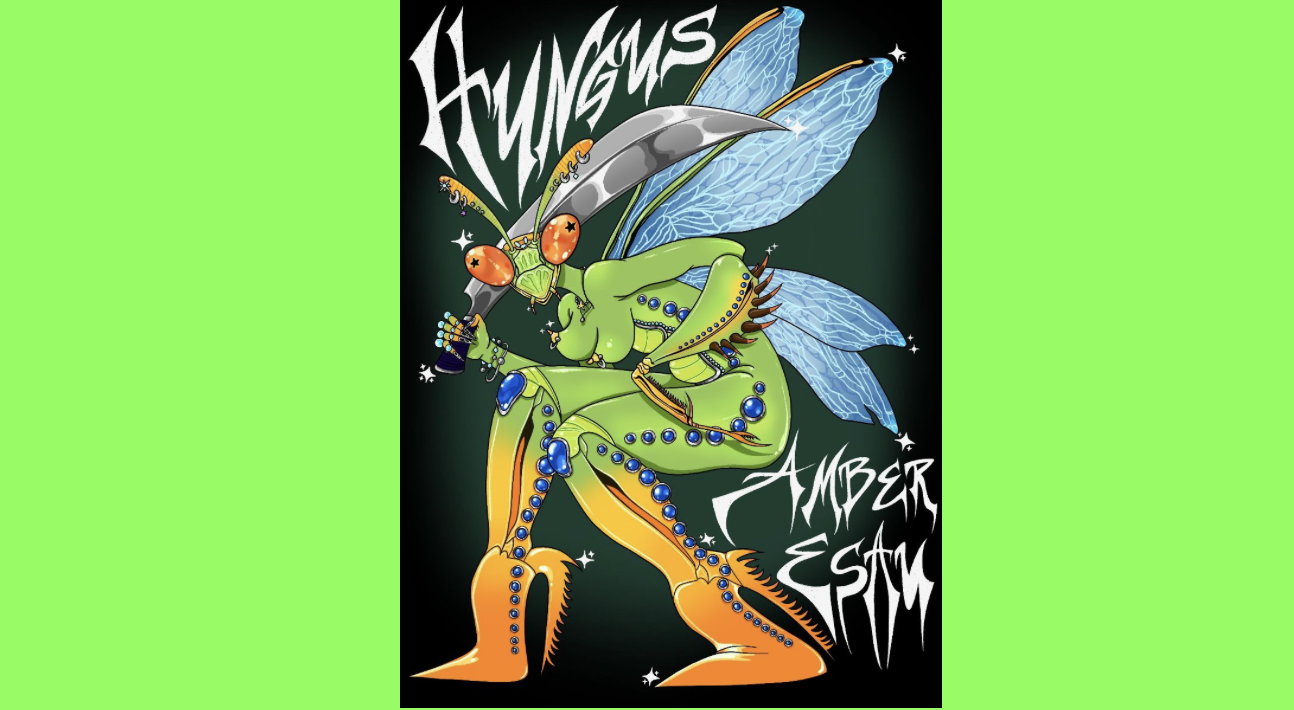
Poetry Shelf noticeboard: Amber Esau poetry launch

Join us next week to celebrate a dazzling new voice in New Zealand poetry!

 Thursday 26 March, 6pm
Rocketman bar, 8 Roukai Lane, Auckland Central
 Free entry – all welcome!


The book will be launched by Courtney Sina Meredith and we’ll have three amazing artists – @dam_dandan@make.aotearoa.native.again, and the book’s cover artist Katrina Steak – in the house with us for mini makeki styles. Books will be for sale thanks to Unity Auckland.

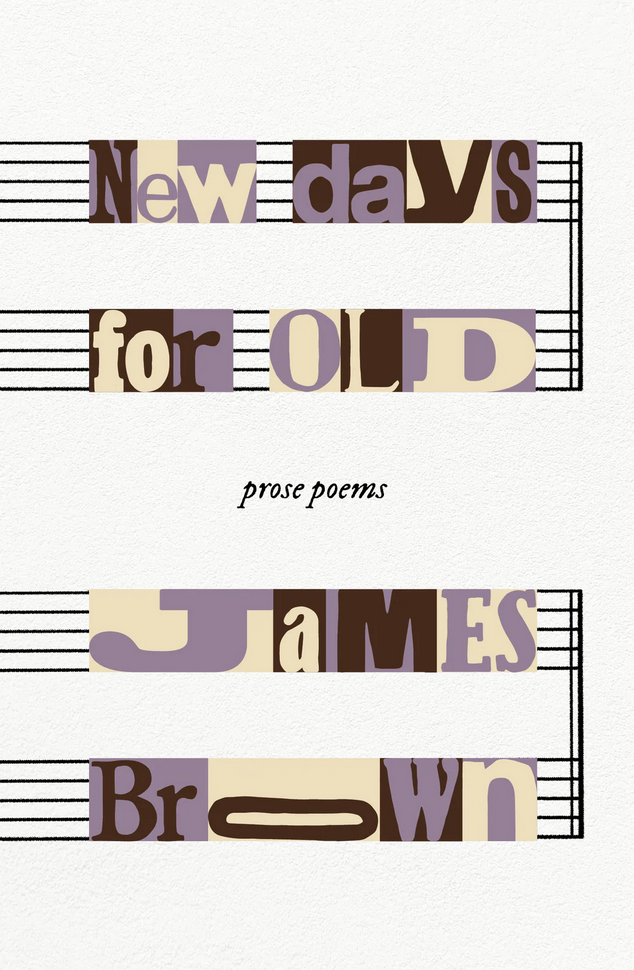
Poetry Shelf Cafe Readings: James Brown

New Days for Old: prose poems, James Brown
Te Herenga Waka University Press, 2026

To celebrate the publication of his new poetry book, New Days for Old, James Brown talks poetry and reads from the collection.

‘How does James Brown do it? Every page in this book is my favourite.’
Bill Manhire

“First up, I love the feel, shape and look of James Brown’s new poetry collection. Secondly, I love the title: New Days for Old. Thirdly, I love the choice of genre: a sequence of prose poems. And finally I love the opening quotation: ‘Much of the greatest art, I find, seeks to remind us of the obvious.’ (Patrick Bringley, All the Beauty in the World: A Museum Guide’s Adventures in Life, Loss and Art).
I tip the quotation on its heels, borrow the word beauty, and get caught in a thinking whirlpool of beauty and wonder, the obvious and the ordinary. I am sidetrailed into musing on the small in the large as much as the large in the small. Nothing like a glorious poetry eddy to get your senses tingling.”
Paula Green (from forthcoming review)

James reads from New Days for Old

James Brown describes himself as ‘a Sunday poet who fell in with the wrong crowd’. His poetry collections are New Days for Old (2026), Slim Volume (2024), The Tip Shop (2022), Selected Poems (2020), Floods Another Chamber (2017), Warm Auditorium (2012), The Year of the Bicycle (2006), which was a finalist in the Montana New Zealand Book Awards 2007, Favourite Monsters (2002), Lemon (1999), and Go Round Power Please (1996), which won the Best First Book Award for Poetry.

James has been the recipient of several writing fellowships and residencies, including the 1994 Louis Johnson New Writers Bursary (1994) and a share of the 2000 Buddle Findlay Sargeson Fellowship, the Canterbury University Writer in Residence (2001). He edited The Nature of Things: Poems from the New Zealand Landscape (Craig Potton, 2005), the literary magazine Sport from 1993 to 2000, and Best New Zealand Poems 2008. In 2002, as Dr Ernest M. Bluespire, he published the useful booklet Instructions for Poetry Readings (Braunias University Press). In 2018, James created what he calls ‘a transcribed poem’ out of Herbert Morrison’s famous radio commentary of the Hindenburg disaster: ‘Hindenburg: A transcribed poem’, and also produced the small booklet Songs of the Humpback Whale. In 2019, Alan Gregg, formerly of the band the Mutton Birds, turned two of James’s poems (‘Shrinking Violet’ and ‘Peculiar Julia’) into songs.

James works as an editor and teaches the Poetry Workshop at the International Institute of Modern Letters at Te Herenga Waka—Victoria University of Wellington.

Te Herenga Waka University page

Poetry Shelf celebrates the Ockham NZ Book Awards poetry longlist: Tusiata Avia

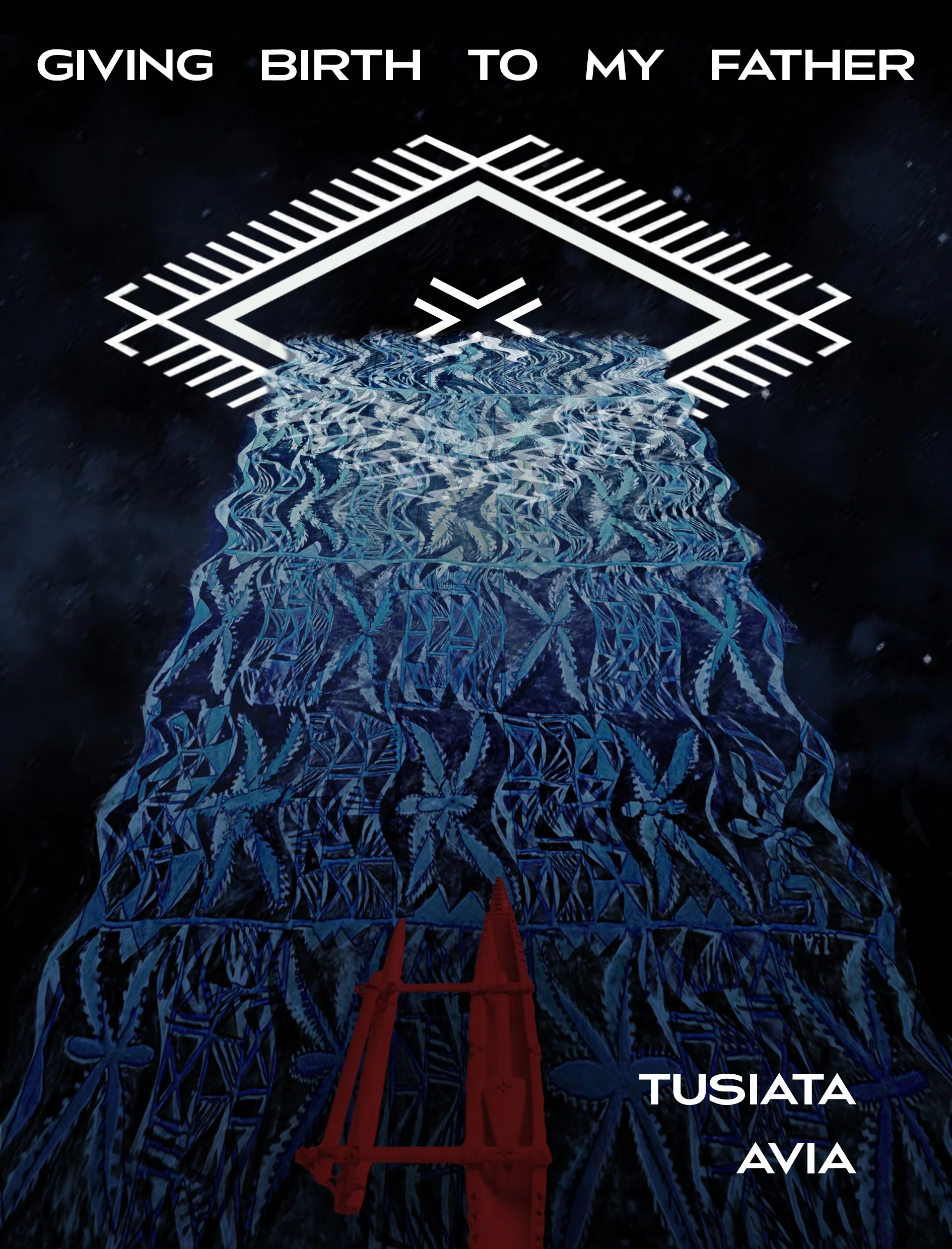
Giving Birth to My Father, Tusiata Avia
Te Herenga Waka University Press, 2025

Ah. Tusiata Avia’s sublime fifth poetry collection is like moving into a meditative room where grief and love are yin and yang. The book is written to and from the death of her father, which in Sāmoan culture, is also his birth. Tusiata’s dad had lived in Aotearoa for fifty years, but returned to Sāmoa for the final stages of his life. He had helped build and nurture the Sāmoan community in Ōtautahi Christchurch.

The opening poems rise out of mourning, out of her father’s funeral ceremony in Sāmoa. First an imagined how-it-was-supposed-to-go sequence. Then a second how it-actually-went sequence. This precious collection was nine years in the making; a book, as Tusiata said in an RNZ radio interview, that was difficult to send into the world, a book in which she kept adjusting thoughts feelings revelations. It’s a eulogy, it’s writing poetry as a way of drawing close, it’s poetry as writing the gap that aches, facing the questions that compound, the anger that sizzles, it’s writing and living when each day grief is the shawl draped across the shoulders of being.

Yes. It’s travelling with and responding to and negotiating grief.

Ah. I am so deeply moved as I read this. Entering different scenes. Sometimes poignant, such as ‘In the Countdown carpark’, when the father’s hand rests on the shoulder of his fifty-year-old daughter sitting in his kitchen as she weeps. Or the flashes of anger at Sāmoan funeral culture and the way a grieving family feels, or the presence of water and of boats, the carving of boats, the rowing the steering the sharing. There is the ping and pang that her father wasn’t always present, a voice on the end of the line, and then how father and daughter are moving closer with visits in later years. The way mother and daughter, brother and many aunties, are also moving in and out of scenes, amplifying the love, sometimes irritations, but always returning and maintaining the integral power of alofa.

Yes. It’s travelling with and responding to and transmitting alofa.

It’s recognising the complicated difficulties of being mother daughter sister niece. It’s sitting in the gods with her mother to watch her dad in the band or hearing her beloved daughter on the ukulele.

It is is the shifting lights of here and not here, and as a reader my every pore is trembling. This from ‘I thought you were gone and not coming back’, where there are multiple light sources, there’s ice cream and old women’s foreheads:

It’s important I know where the light is coming from –
the afterlife or the ice cream?
My grandmother’s hair or the minister’s house?
The important thing is: I thought you were gone.

And then to read the final skin-trembling line: “in other words, you are the light, Dad.”

I stall on the poem, ‘Watch’. This is what Tusiata’s poetry can do. Swivel and tilt you as each poem carries you though every diamond-cut facet of feeling. Heck this poem sticks to me as it unfolds. The poet, and yes I am saying Tusiata, because this collection is incredibly personal, removes the watch from her father’s wrist, and then places it upon her own. You get that skin tremble again with building memory-ache as both poet and wristwatch summon this place and that occasion, this smell and that nickname. The brown watch that becomes gold watch, becomes missing watch, that becomes this watch returned. It’s me brimming with alofa and grief and tenderness, especially when I read the final two stanzas:

That was six months ago. Now I’m in the Sky City Hotel layering
myself in my niece’s make-up. I am going to have a seizure in a few
minutes. I will wake up and find myself on the bathroom floor. I
will crawl to the hotel phone, ring my cousin in Christchurch and
ask her what city I’m in and what to do.

You’re at the book awards, the book awards, she calls to me. Ring
Hine and make her come and get you. I ring Hine, who will win
the book awards. Before I leave the room, I open a small zip on the
side of my overnight bag and my father enters the room. He slips
the watch over my wrist. I kiss his hand. And we go.

And here we go, yes let’s go into the meditative room of reading, this special special place that Tusiata has built for herself, for her loved ones, that we, her poetry fans and friends can share, travelling deep into grief and alofa through the power and nourishing strength of words. Thank you.

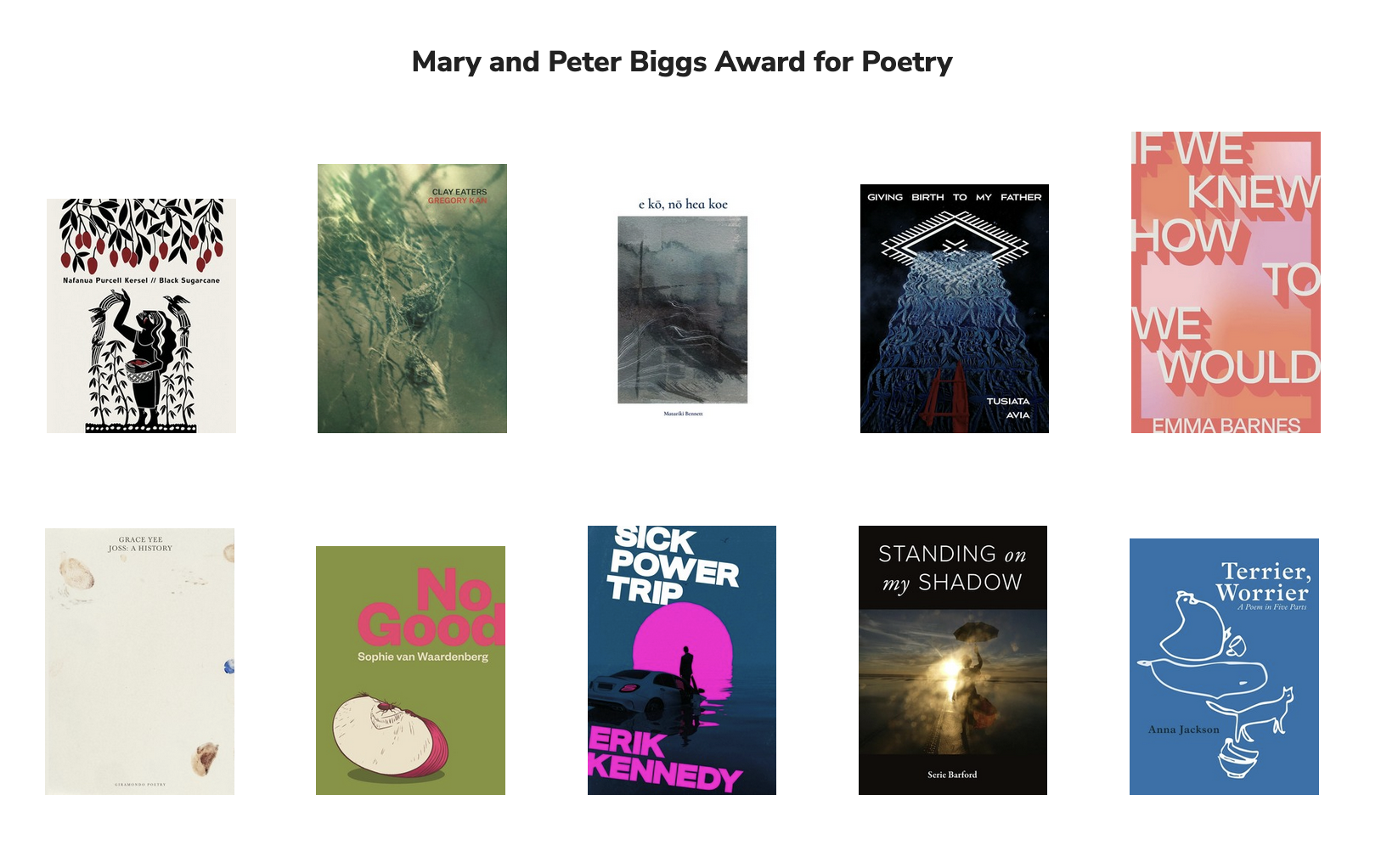
Tusiata Avia is the award-winning author of Wild Dogs Under My Skirt (2004; also staged internationally), Bloodclot (2009), Fale Aitu | Spirit House (2016), The Savage Coloniser Book (2020; winner of the Mary and Peter Biggs Award for Poetry and also staged nationally) and Big Fat Brown Bitch (2023). Tusiata has held the Fulbright Pacific Writers Fellowship at the University of Hawai‘i in 2005 and the Ursula Bethell Writer in Residence at University of Canterbury in 2010. She was the 2013 recipient of the Janet Frame Literary Trust Award, and in 2020 was appointed a Member of the New Zealand Order of Merit for services to poetry and the arts. In 2023 she was given a Distinguished Alumni Award at Te Herenga Waka—Victoria University of Wellington and a Prime Minister’s Award for Literary Achievement. 

Te Herenga Waka University page

Interview on RNZ on Culture 101

Poetry Shelf celebrates the Ockham NZ Book Awards Poetry Long list: Nafanua Purcell Kersel

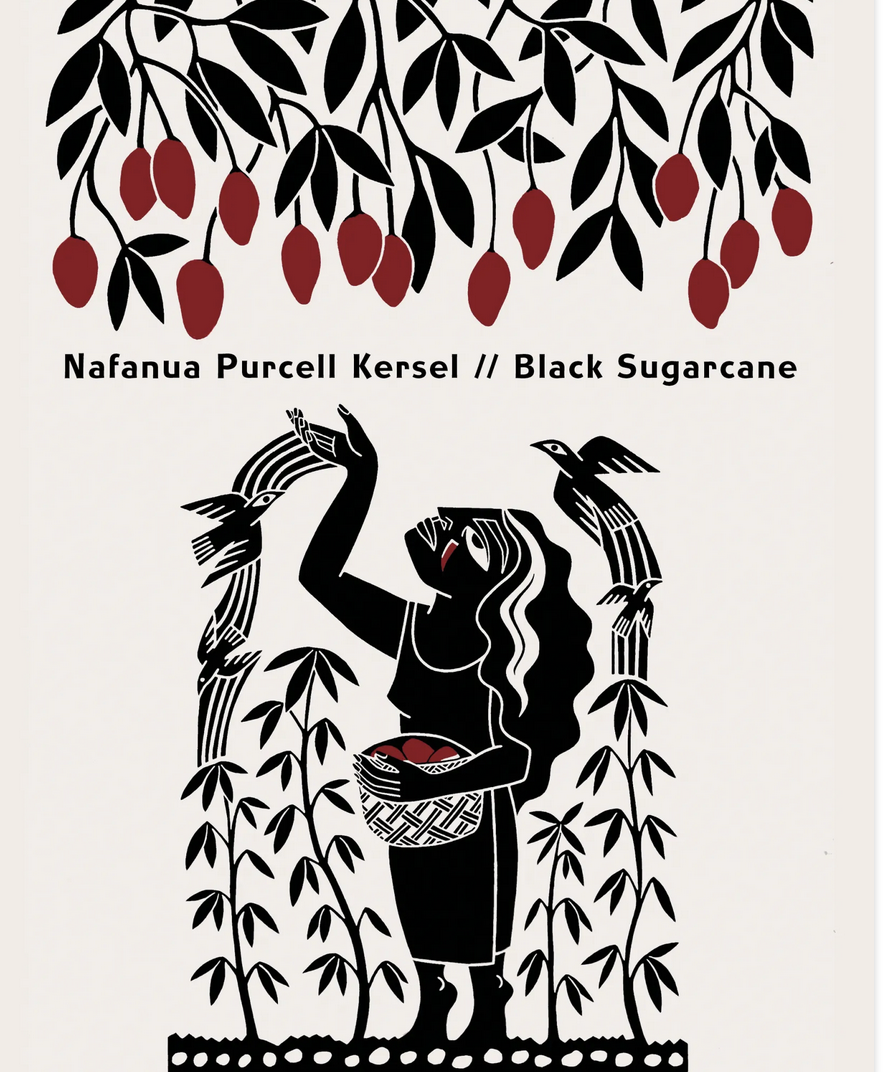
Black Sugarcane, Nafanua Purcell Kersel
Te Herenga Waka University Press, 2025

Moana Pōetics

We build a safe around our birth stones.
Craft it with a dream, a gourd, a drum-made
chant.

Pile it high with frigate bird bones,
song bones, bones of
cherished names.

We rub sinnet along our thighs and lash
our cache. Our stories kept sound, where words
and names and songs are not forgotten.

One day before, now, or beyond, something
with a heart drops a hank of its flesh
before us. It sounds like a drum and we know

it’s time
to undo the rope, iron-rock and bone-sand.
The stories, they tell us

that if we are the dark blue seas then we are
also the pillowed nights and days, soft with
clouds, spread half-open.

We are a tidal collection, hind-waters of the
forever we rally on, to break the staple
metaphors from the fringes.

Safe.
We sound together on a dance or
bark an intricate rhyme.

We, are the filaments of a devoted rope. We,
who contain a continuance and

call it poetry.

Nafanua Purcell Kersel

Nafanua Purcell Kersel’s debut poetry collection, Black Sugarcane is a book to savour slowly, with senses alert, ready to absorb the aroha, the myriad pathways, the songs, the prayers, the dance of living. The first line of the first poem, ‘Moana Pōetics’, is a precious talisman: ‘We build a safe around our birth stones.’ It is a found poem that uses terms from the glossary in Mauri Ola: Contemporary Polynesian Poems in English, edited by Albert Wendt, Reina Whaitiri and Robert Sullivan (Auckland University Press, 2010). The poem draws us deep into the power of stories, night and day, the ocean, safety, the power of rhythm. And that is exactly what the collection does.

The book is divided into five sections, each bearing a vowel as a title (ā, ē, ī, ō, ū), the macron drawing out the sound, as it does in so many languages like an extended breath. When I read of vowels in the poem, ‘To’ona’i’, the idea and presence of vowels lift a notch, and poetry itself becomes a ‘sweet refresh’, a warm aunty laugh: “Aunty Sia’s laugh is like a perfectly ripe pineapple / a sweet refresh of vowel sounds”.

Let me say this. There is no shortage of poetry books published in Aotearoa this year to love, to be enthralled and astonished by. We need this. We need these reading pathways. Sometimes I love a poetry book so much I transcend the everyday scene of reading (yes those bush tūī singing and the kererū fast-swooping) to a zone where I am beyond words. It is when reading is both nourishment and restoration, miracle and epiphany . . . and that is what I get with this book.

Begin with the physicality of a scene, a place, an island, a home. The scent of food being prepared and eaten will ignite your taste buds. Pies filled and savoured, luscious quince, the trickster fruit slowly simmered, a menu that is as much a set of meals as a pattern of life. Move into the warm embrace of whanau, the cousins, aunties, uncles, parents, grandparents, offspring. And especially, most especially, the grandmother and her lessons: ‘”If you want to learn by heart, / be still and watch my hands” (from ‘Grandma lessons (kitchen)’).

Find yourself in the rub of politics: the way you are never just a place name and that where you come from is a rich catalogue of markers, not a single word. The question itself so often misguided and racist. Enter the ripple effect of the dawn raids, or the Christchurch terrorist attack, or poverty, or climate change, crippling hierarchies. And find yourself in the expanding space of the personal; where things are sometimes explored and confessed, and sometimes hinted at. I am thinking pain. I am thinking therapist.

Find yourself in shifting poetic forms, akin to the shifting rhythms of life and living: a pantoum, a found poem, an erasure poem, long lines short lines, drifting lines. Find yourself in the company of other poets, direct and indirect lines to the nourishment Nafanua experiences as a writer: for example, Lyn Hejinian, Kaveh Akbar, Karlo Mila, Tusiata Avia, Selina Tusitala Marsh, Serie Barford, Konai Helu Thaman, Dan Taulapapa McMullin. So often I am reminded we don’t write within vacuums. We write towards, from and because of poetry that feeds us.

Bob Marley makes an appearance so I put his album, Exodus, on repeat as I write this. It makes me feel the poetry even more deeply. This coming together, this ‘One Love,’ this getting together and feeling alright, as we are still fighting, still uniting to make things better in a thousand and one ways.

I give thanks for this book.

Listen to Nafanua read here.

Nafanua Purcell Kersel (Satupa‘itea, Faleālupo, Aleipata, Tuaefu) is a writer, poet and performer who was born in Sāmoa and raised in Te-Whanganui-a-Tara, Aotearoa. Her poetry has been widely published. She has an MA from the IIML at Te Herenga Waka—Victoria University of Wellington and won the 2022 Biggs Family Prize in Poetry for Black Sugarcane, her first book. She lives in Te Matau-a-Māui Hawke’s Bay.

Te Herenga Waka University Press page

Poetry Shelf celebrates the Ockham NZ 2026 Book Awards Poetry Long List: Erik Kennedy

Poetry Shelf has invited poets to choose a poem from their longlisted collections and to write a few comments on the poem and poetry. Today Erik Kennedy:

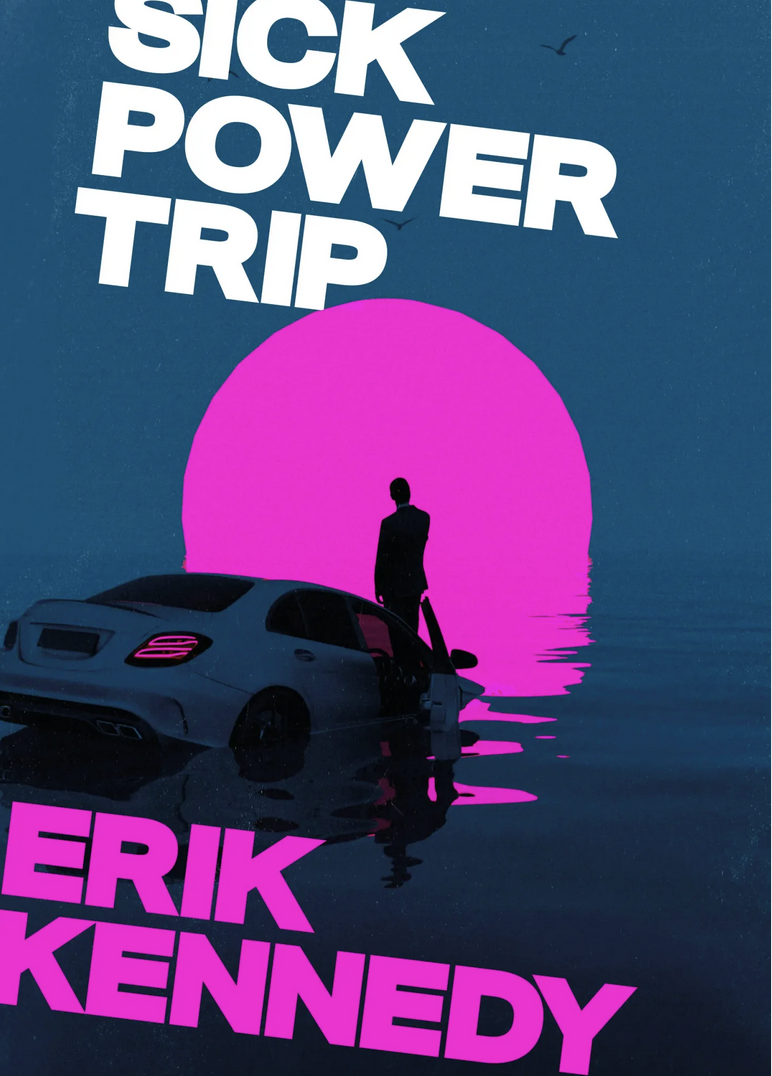
Sick Power Trip, Erik Kennedy
Te Herenga Waka University Press, 2025

Animals on Leads

We entered the town and the first thing we saw
was a woman taking her ferret for a walk.
‘Nice day for it,’ I said significantly. The ferret
was going everywhere at once, an absolute possibility engine

producing the energy of a ten-man brawl in a two-man toilet.
And us, should we visit the town’s oldest church
with its medieval eagle lectern and greensand voussoirs,
or should we ramble to the squinty, stony seafront, walled in

by white gin-palace-style hotels? Let’s let the twitchy ferret
be our compass needle, straining against its bonds,
the confident quadrupedal scamperer pulling its minder along
until she’s going north and south, finding nothing and God.

Erik Kennedy

‘Animals on Leads’ is perhaps not a typical Sick Power Trip poem. It doesn’t lean into the collection’s preoccupations with things like illness and politics and war. It is explicitly not set in Aotearoa. And there is barely any glumness to it; it is almost chipper. But I like it a lot because I like poems that tell true stories, and I wish I had more of them. (The problem is that I don’t lead an interesting enough life to generate reams of fascinating ‘true story poems’.)

The setting of the poem is Eastbourne, East Sussex. There are two solid clues as to the location. ‘The town’s oldest church / with its medieval eagle lectern and greensand voussoirs’ is St Mary the Virgin, which is an absolutely stonking Grade I listed building. I lifted the language in that second line directly from the leaflet about the church’s architecture. And ‘the squinty, stony seafront, walled in // by white gin-palace-style hotels’ is a feature of Eastbourne more than any other South Coast resort town. I rate Eastbourne surprisingly highly. On looks it is at least an 8 out of 10. On culture it is becoming more like Brighton. The sea itself is pretty clean, which is a luxury in twenty-first-century England. And it has a wonderful collection of Eric Ravilious works at the Towner gallery.

And of course a third way we know the poem is not set here is the presence of a pet ferret. A ferret is an animal that certainly doesn’t belong in New Zealand, given that its great passion in life is eating birds and eggs. But in England, being walked on a lead, a ferret is a different proposition altogether. It stands for chaotic exuberance. The lines ‘The ferret / was going everywhere at once, an absolute possibility engine // producing the energy of a ten-man brawl in a two-man toilet’ have probably earned me more compliments for their deranged splendidness than any other lines I have ever written. Something in this image speaks to people.

It might be obvious to say this, but the ferret is not the only animal ‘on a lead’ in the poem. The owner of the ferret, dragged about according to her mad mustelid’s whims, is in my view also an animal on a lead. I mean, we all are, in one way or another. A lead always connects two animals, and the hierarchical relationship between them may not be what you would expect. I think there is some joy in the serendipitous meanderings of creatures without meaningful plans. Quite a lot of joy, in fact. When I said ‘Nice day for it’ to the woman in line 3 of the poem, I really meant it.

Erik Kennedy

Erik Kennedy (he/him) is the author of the poetry collections Another Beautiful Day Indoors (2022) and There’s No Place Like the Internet in Springtime (2018), both with Te Herenga Waka University Press, and he co-edited No Other Place to Stand, a book of climate change poetry from New Zealand and the Pacific (Auckland University Press, 2022). His poems, stories, and criticism have been published in places like berlin lit, FENCE, The Florida Review, Los Angeles Review of Books, Poetry, Poetry Ireland Review, the TLS, and Western Humanities Review. Originally from New Jersey, he lives in Ōtautahi Christchurch.

From Poetry Shelf review:
“Erik’s collection has stuck with me for a number of reasons. I have never read a collection quite like it and I love that. It feels like there are two significant settings. Firstly, an extraordinary band of wit and humour, with unexpected scenarios, shifting angles and points of view. Secondly, the necessary and imperative knottiness of humanity, from exposed self to a wider global reach. Not an either or view, but an incredible shifting light on how to live and how to survive. A poetic prism on the contemporary world that might be sharp, jagged, wise, personal.” Full review here and reading by Erik here

Te Herenga Waka University Press page

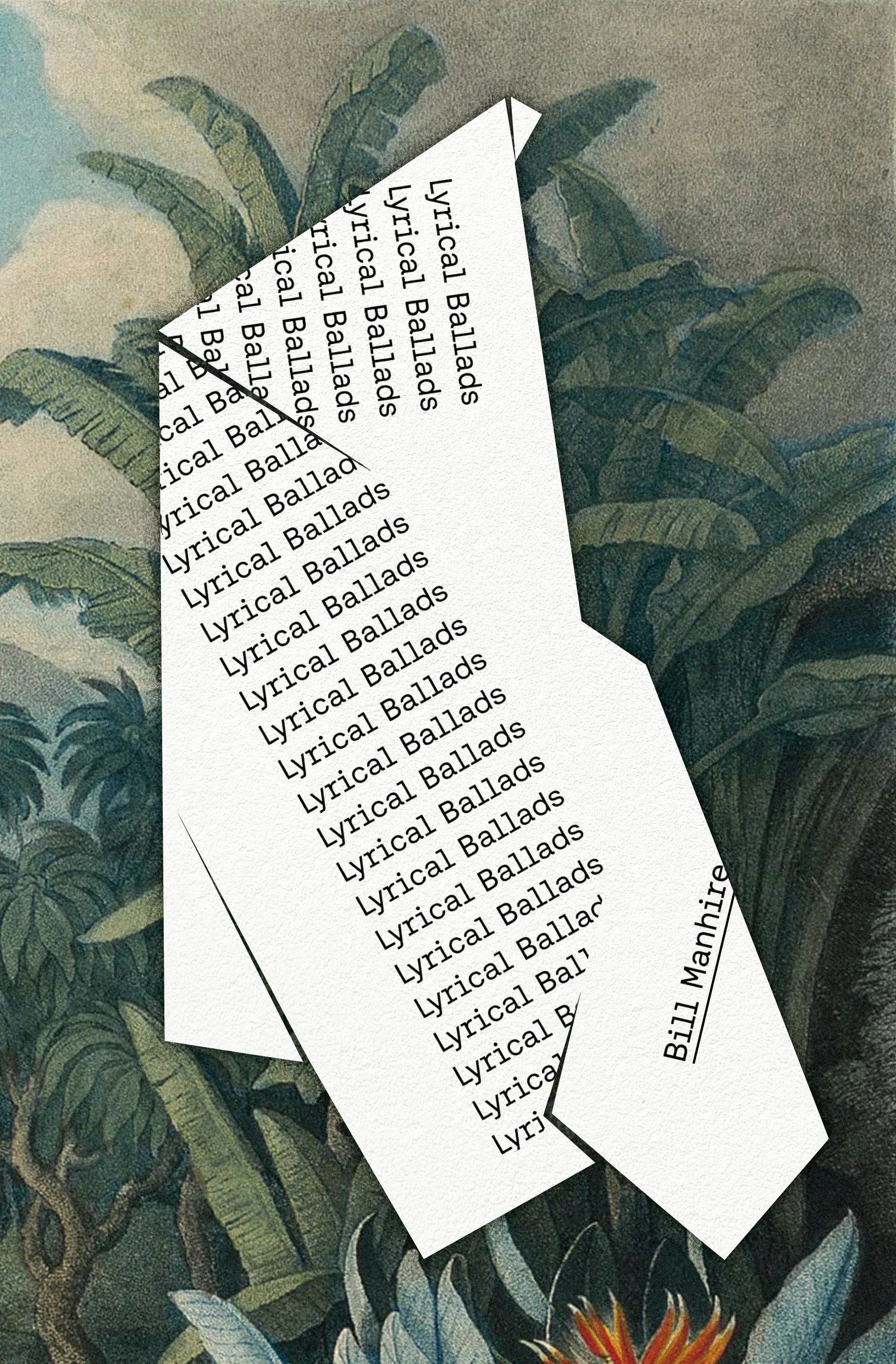
Poetry Shelf reviews: Lyrical Ballads by Bill Manhire

Lyrical Ballads, Bill Manhire
Te Herenga Waka University Press, 2026

Lyrical Ballad

I bought a bend in the river. It was a good,quiet bend.
You couldn’t see around the corner and after a few
steps you could. The water flowed round the bend, which
is essentially what you want. Everything else was doing its
thing. The Lost Hills were there in the distance. The river
was slow as it entered the bend, and maybe just a little
faster after that, I don’t know why. For a while I wondered
about getting a little boat, maybe a raft, but it was walking
around the bend that really made me happy. I liked the
reliable surprise. It’s gone now anyway, that bend, washed
away in the last big rains. Now it’s just a patch of land: a
channel and some structural damage. I suppose I should
sell it, but I can’t quite make myself. It was everything I
ever wanted.

Bill Manhire

In 2017, I chaired ‘Words and Melody’, a session with Bill Manhire and Norman Meehan at Going West. We discussed their collaboration, Tell Me My Name, and how they worked together to reach a place where, to quote Bill, “the music doesn’t overpower the words; but neither does it defer to them”. You can listen to the podcast here. And yes, there was music in the room. The best session I have chaired ever.

Bill has now written a collection of lyrical ballads dedicated to Norman. One part of me wants to hold the book out to you all, and simply say read this glorious collection, find a cosy reading nook and snuggle into the poetry to read in one slow and sweet sitting. Then put the book to one side for a few days before reading it again, even more slowly. I would stay on a hooked on poem, read it a number of times before turning the page.

But that said, I want to find a few words that will catch specks and glimmers of why I love this book so much. Last year I read all of Bill’s collections before writing a paragraph on his poetry to go in a new book and decided he was my Desert Island poet. His writing, over the course of decades, has offered everything I love about poetry, what makes me want to write poetry, read poetry, and yes review poetry. A word that has lifted to the surface in my week of roaming and reflecting within and beyond Lyrical Ballads, even above the beloved musicality and surprise arrivals, is “openness”. Poetry in Bill’s care, foregrounds the open poem. Dump prescriptions, formulae on the compost heap where they might transmute into open settings.

So here goes. The cicadas are at late summer screech. The west coat wind is nipping. The coffee is waiting. I want to write my way in and out of Bill’s glorious collection without closing windows and doors, paths and bridges for you, you the potential reader.

The first poem, ‘Come On In’, is an open invitation. We are invited into a room, “the kissing room”, and the four-couplet poem forms a labyrinth of possibilities. The poem (the room) might be a miniature narrative, anecdote, postcard from elsewhere or a home doorstep, an invention or a confession. A fable. A song. A lyrical ballad. It’s an open invitation to fill in detail with coloured pencils, if we so desire. Here is the room (the poem) that fills with talk and maybe heartbreak, braveness and maybe recitations.

When I roll the word “open” about in my mind, it picks up on ambiguity, the way a poem might swivel meaning, favour cloudy edges. The cast of characters feeds into this, relishing ambiguity and openness, along with Bill’s characteristic wit. We get to meet Mr Crimson from the Ministry of Health, Mr Doormat, Mungo, a girl called Daffodil Paddock (wow!!!) who wanted to be a character in a Margaret Mahy story, the recurring Alexander and Raewyn. This assembly of characters augments the ballad, advances the accumulation of story, the openness of story, as we get to picture and imagine, and add our own details. More than anything, the awkwardness, the ragged edges of existence, the difficulties (and ease) of fitting in and not fitting in, sing out.

Part of the joy of openness in poetry, is the way it promotes travel, and that is a significant and satisfying feature of the collection. We encounter roads and rivers and canals and bridges. We contemplate beyond, ins and outs, distance and proximity. It may be the known, it may be the unknown. It might be softening edges. Tough climbs. Watching the dawn or the dusk. Moving into older age. And wonder, yes above all wonder. I am reminded of the poetry of Vincent O’Sullivan where a poem infused with his ink might be an occasion of being there/here, or as one of Bill’s title says, “Getting There’.

After a time

After a time, my writing began to take a new direction.
Left after you cross the bridge, and then down what people
used to call the stumble-path – steps cut in the bank,
occasional big stones – to the water’s edge. You go down in
daylight and wait till it’s dark and there’s absolutely no one
there. After a while you aren’t there either. You feel truly
alone, fully neglected. I write all that down – you know,
in my head – then start on the difficult climb, no moon,
back up to the road. I need badly to return to the house,
even though it is empty now, windows open and curtains
billowing, still the place where everybody sits up waiting.

Ah. So many things to hold out to you in delight. I now want you to read the poem ‘Some Other Words They Sang’, where we are walking in the same direction as the insects when they sing in the night.

Some Other Words, I Think They Sang

Insects singing in the night.
We were all walking in the same direction.

Be careful. Be strong. Be kind.
That’s what they sang.

Sing when the world is worn away.
Some other words I think they sang.

Insects singing in the night.
We were all walking in the same direction.

Or read and re-read, and hold close Bill’s Gaza poem that has already moved us so deeply. Many of us are struggling with how to write within a matrix of global and local catastrophes, and abominable leaderships, climate change. How to live.

I am drawn to the talisman words and mantras I might carry in my pocket through the day (a bit like the words of the insects singing). I loved what the student took away from the History lecturer’s blackboard covered in difficult language: “‘It’s not the facts,’ he / said. ‘It’s what we do with the facts.'”

And of course there is the ink steeped in music, with rhyme and repetitions, loops, the exquisite lyricism that audio-marks each ballad. My dream is to sit in the Titirangi hall again and listen to Bill read us the whole book as we sit spell bound, before moving to the side room to the spread the locals have put on, to return with plates of food balancing on our knees, and to talk poetry and life until our voices are hoarse.

Is it possible to consider this collection in the light and possibilities of tracing paper, where each poem is a set of overlaid sheets, where story is overlaid upon song, which is overlaid upon the personal, which is overlaid upon philosophy and contemplation, and where every layer is embued with humanity, what it means to be human and humane, kind and caring, and every layer is shining through and adding myriad possibilities. What will the insects sing next? What will I hear in the kissing room? What do I picture when I picture the bend in the road?

In the acknowledgement page Bill thanks several people for their “encouragement, wisdom and rescue”. These words strike deep with me just as this book does. It feels like the poetry gives me encouragement, offers wisdom and rescues my frozen pen. There you go, I am holding this book out to you, so that you too may find your own gleams and shimmers.

Bill Manhire’s previous books include Wow (2020), Some Things to Place in a Coffin (2017), Tell Me My Name (with Hannah Griffin and Norman Meehan, 2017) and The Stories of Bill Manhire (2015). He has won the New Zealand Book Award for Poetry five times, and was New Zealand’s inaugural poet laureate. He founded and directed the International Institute of Modern Letters at Te Herenga Waka—Victoria University of Wellington. He has edited major anthologies of New Zealand literature, including, with Marion McLeod, the now classic Some Other Country: New Zealand’s Best Short Stories (1984). In 2018 Bill was awarded an Icon Award Whakamana Hiranga from the Arts Foundation.

Te Herenga Waka University Press page

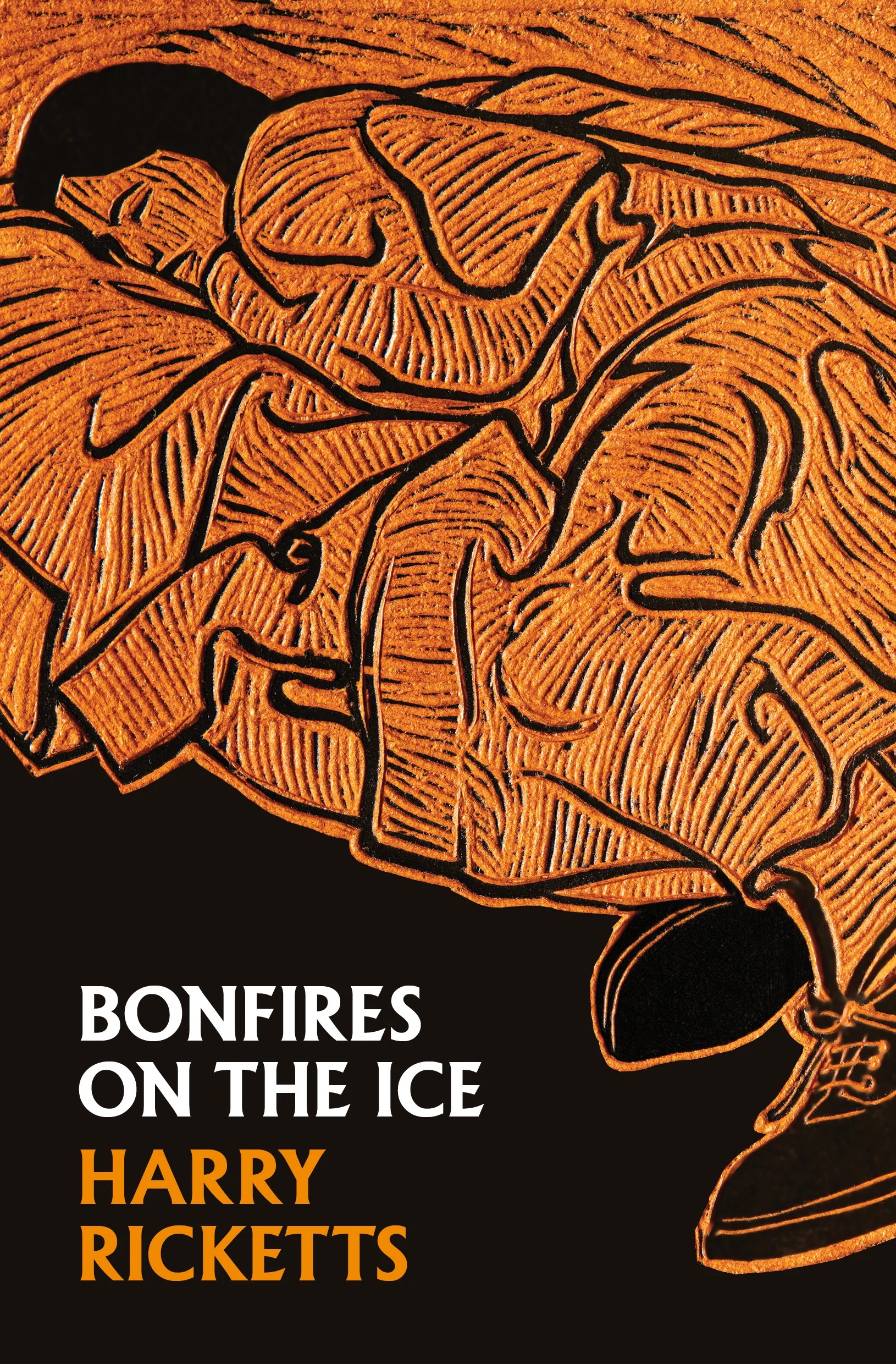
Poetry Shelf reviews 2025: Bonfires on the Ice by Harry Ricketts

Bonfires on the Ice, Harry Ricketts
Te Herenga Waka University Press, 2025

Harry Rickett’s poetry collection delivers multiple heart loops, beginning with a poem entitled ‘Happiness’, travelling though terrains of grief and loss, and then reaching sparks of hope, with the grief bonfires and the grief ice easing, just a little, just a very little. Happiness, as the poem indicates, is illusory: “we cling to the thing with wings” and “It’s no potato you can grow”. The poetry is deeply personal: love and death is personal, the world is personal, politics is personal. I am feeling this book to the edge and depth of what matters, to the edge and depth of being alive, to the edge and depth of not being alive, being present and human and humane. I am recognising the difficulty of writing when happiness and equilibrium is in jeopardy. And how poetry can affect us so much.

The first poems are dedicated to friends no longer here, with each poem offering a savoured memory, a phrase, a place, a miniature portrait of dear friend (especially Lauris Edmond). In ‘Aro St Again’, a poem for Juliet, for me, the final lines resonate throughout the collection: “You paused, smiled, said / quite distinctly: ‘Aroha and ambiguity.'” This bloodline of writing, this love, these smudged edges of life and living. This aroha, this ambiguity.

How to write within the throb of grief and loss? What to hold close, what to let go? The poem, ‘Tangle’, strikes a chord. I am reading tributes to dear friends but I am also reading how the tangle of life, and I infer grief, might be reflected in the tangle of a poem, in an acute writing-life-writing tangle:

The past’s shifting scalene triangles
tease us to adjust their angles,
though geometry won’t put it right.

Harry gets me thinking about the poet as architect or builder in his couplet, ‘Poetic Architecture’, a poem that likens poems to rooms: “some poets prefer walls and a door, others open plan.” I am musing on the process of writing – how we may have a sense of walls and doors from the outset, and how we might also (or instead) write and read within a form of open plan. ‘Down There on a Visit’, a Rakiura poem penned for Belinda instead of a valentine, where the depiction of a shared experience of place becomes a tender gift, gets me musing even deeper. On the walls and windows and open expanse of writing.

If this is poetry as a series of rooms, with windows and doors opening onto and out of grief, onto and out of living, then both the exterior and internal views are paramount. Take the room where the poet is teacher, with the students sidetracking diverting moving into and beyond literature. I am back there in the heart loop, catching up on the ancient mariner, or listening to the lesson in “Another Footnote to Larkin”:

But if we hand the misery on
from self to others every day,
there’s this to say (Larkin again):
we should also be kind while we may.

The poetry draws me again and again into that ricocheting phrase love and ambiguity. And let me lift the word crochet, a craft that depends upon holes as much as it does thread. Take the poem ‘Bits and Pieces #3’ for example. It is not just a matter of crafting the missing pieces, but holding them as they jiggle, switching between sky and water, or hill and undergrowth. Is writing a continuous state of being, replete with ambiguity and flux, etched and anchored with love? Ah. How to face the silence, the blankness, the missing and ambiguous pieces? I utterly love the sequence that introduces Stella, an invented poet who is learning the grammar of grief, who is coming in from the garden, embraced by books, cooking badly, looking at hills and sky with infinite wonder.

The Garden (Stella)

Here you are, in from the garden,
smelling of yourself.

In your left hand is a present,
a tiny black box.

Inside is a single, perfect,
pointy leaf of thyme.

Bonfires on the Ice is a gift, in the bright light, the half light, the dream light. It is a lyrical record of living and loving, reading and writing, whether there are windows and doors or open plan. Yes there is the pain of bonfire and ice, but there is also the gradual breaking of ice in the flowing river. Near the end of the collection, a handful of poems draw Belinda closer, from the first long-ago meetings to the nearness of the hospice setting, her chemical life, their shared routines. And there in in the fading light, with the grief in me mounding, I read a couplet poem dedicated to hope. And inside the fragile dimensions of hope, I recognise the insistent infusion of love across the heart loops of the poetry. How this collection makes me hold these two precious words even closer. Sometimes when I review a book I might focus on the craft, but today what matters more than anything, is the way poetry can affect us so very deeply. And this book does exactly that.

Hope

Hope is a grey warbler,
that whistles down our street,
the tune is thin and sweet,
but always on repeat.

Harry Ricketts has published thirty-five books, most recently First Things: A Memoir and  (co-written with David Kynaston) Richie Benaud’s Blue Suede Shoes: The Story of an Ashes Classic (both 2024) and his thirteenth poetry collection, Bonfires on the Ice (2025). He lives in Wellington Te Whanganui-a-Tara, loves cricket and coffee, and teaches a creative non-fiction course at the International Institute of Modern Letters at Te Herenga Waka Victoria University of Wellington.

Te Herenga Waka University Press page
Poetry Shelf noticeboard: Launch of Kate Camp’s Leather & Chains

Leather & Chains: My 1986 Diary by Kate Camp

‘Kate Camp reads the words of grownupchild Kate of 1986 – achingly funny, arch and louche, often shocking, always clever. And all of it threaded through with such pain and sadness and unsettling darkness, such yearning to be loved . . . I’ve often wondered about Kate Camp: how did she get to be so fearless, so peerless, so bold? The answer is in these pages.’ —Tracy Farr

Published 12 February 2026. Paperback, $40.

Poetry Shelf Cafe Readings: Harry Ricketts

Harry reads from Bonfires on the Ice, along with earlier poems.

Harry Ricketts taught for many years in the English Programme at Te Herenga Waka Victoria University of Wellington. He has published around 30 books, including literary biographies, essays and twelve collections of poems (most recently, Selected Poems). First Things, published by Te Herenga Waka Press, is the first instalment of a two-volume memoir. He lives in Te Whanganui-a-Tara/Wellington and is mad about cricket and coffee. Persuasion is his favourite novel, Les Enfants du Paradis his favourite movie. Bonfires on the Ice has just appeared from Te Herenga Waka Press.

Te Herenga Waka University Press page
Poetry Shelf review and reading: Sick Power Trip by Erik Kennedy

Sick Power Trip, Erik Kennedy
Te Herenga Waka University Press, 2025

Mujaddara

I know. I know what’s happening elsewhere.
While I mess around with my kitchenware.from


‘Autumn Couplets’

Every time I review a new poetry collection, it feels like I am holding poetry itself to the light, discovering things about how poems might work, what they might deliver, what they might spark in a reader.

Erik Kennedy’s sublime new collection, Sick Power Trip, got me musing on how poetry might stand as a prism. A poem might be held to get a view, then swivelled to get a different view, and then another, and then again. Each time I turn a page in Sick Power Trip, it’s a prismatic surprise. Unexpected. Utterly fertile. I love it.

Erik’s collection has stuck with me for a number of reasons. I have never read a collection quite like it and I love that. It feels like there are two significant settings. Firstly, an extraordinary band of wit and humour, with unexpected scenarios, shifting angles and points of view. Secondly, the necessary and imperative knottiness of humanity, from exposed self to a wider global reach. Not an either or view, but an incredible shifting light on how to live and how to survive. A poetic prism on the contemporary world that might be sharp, jagged, wise, personal.

Even the pronouns, particularly the ‘I’ and the ‘you’ are multi-tendrilled. The voice speaking is prismatic, drawing us into a stretching field of possibilities, vulnerabilities, recognitions. Nothing is set concrete here. I love this.

Let me shift the prism again for you, in a collection that reveals both the positives and negatives of situations, poetry that is mindful of an impulse to decipher, to muse upon sides, to navigate the good and the bad and the inbetween. There’s involvement and not involvement. Darkness and lightness splintering, merging, resisting clear borders.

And always, let me underline this, there is always the ripple of surprise, in turning each page, within the poem itself. I love this. For example, going shopping after illness:

I thought about the things that are abut me.

And I went to look for the aisle where they keep the fully realised lives,
doubtless alongside the wax food wraps and the fancy vinegars.


from ‘Shop Floor Layout Algorithm’

Another stunning example, the notion (or experience) of consolation. Wit and wisdom again refracting. Self fragility and collective strength. The poet holds the prism poem along the degree to which one can understand what someone is going through. Here is the final stanza, it resonates so deeply:

That’s why I can picture it
but can’t imagine what it feels like
to be a phone,
delicately poised on the arm of a chair,
that gets one message too many
and vibrates onto the floor.


from ‘Consolations’ 73

I want to share so many of the poems in the book with you, so you too can experience the glorious settings. I like how a word or idea might pose like a mise en abyme – inside this thought (word) another thought (word), inside this light refracting, another light that surprises startles delights. Take the poem offering an analogy on thinking, poised on the moment in a fable when the thorn pulled from a lion’s paw turns out to be a little lion, and the whole progression and stability and expectation of thought or story is in jeopardy.

And then, most importantly, how to deliver and absorb the poem prism in a time when the world is so damn awry. I keep swearing I won’t mention this in a review, but it’s the monster in my kitchen. As I read, I pick up on how doing is in partnership with thinking, how in one poem protest might be deflating tyres of SVUs and in another poem caring might be hugging trees like a 70s hippy. Again the vital oscillation. I am thinking this. Writing poems might be a form of protesting, sharp insistent necessary protesting (listen to the three poems below), but it is also a form of caring. I love this. I love this so very much.

On multiple occasions, a single poem stalls (shadows?) me with its prismatic effects. Surprise turns alongside shards of wisdom alongside physical detail alongside acute global and local concern, with every effect housed within writing that is sublimely fluent. Read ‘How a Year Ends’ for example. This poem. This magnificent poem. Try this stanza:

A year is a road
that ends at the sea
in an afterthought of a town,
just a few weatherbeaten houses,
some indifferent trees,
a small picnic area,
and a one-eyed cat
wandering around proprietorially.
You drive here
because it is here.


from ‘How a Year Ends’

Maybe reading this collection is akin to a snow globe effect. Every time I hold a poem to the light and dark of my reading, and let the poetry shake and settle in my mind, I feel the sharp sweet delight of surprise and wonder. On the back of the book (always the last thing I read), it states “Kennedy reminds us that some things remain true and vital: self-care, empathy and solidarity”. And that is exactly why I love this collection so very much. Let us put these words in our pockets and carry them over close the coming months: self-care, empathy, solidarity.

I went out into the day with my symptoms. The sun made the swans look
like harps. I appreciated the silhouettes of buildings. I scrumped apples
from over a fence. My symptoms were still with me but also not with me.
I was loving them. I was setting them free.


from ‘Self-Affirming Mantra’ 

a reading

Erik reads: ‘Bildungsroman’, ‘I Like Rich People, but I Couldn’t Eat a Whole One Myself’ and ‘The $6 Pepper Song’

Erik Kennedy is the author of two previous books of poems, both with Te Herenga Waka University Press: the Ockham-shortlisted There’s No Place Like the Internet in Springtime (2018) and Another Beautiful Day Indoors (2022). Originally from New Jersey, he lives in Ōtautahi Christchurch.

Cover design: Todd Atticus
Te Herenga Waka University Press page