I watch the slow tide one late February day,
stare into the grey whiteness of sky,
marvelling at the vagary of clouds.
If they could unshackle themselves,
I’d parcel them up with the mountains,
the inlets, the sea,
paint them on canvas,
carry them home under the nook of my arm.
Majella Cullinane
from ‘Broad Bay’, Whisper of a Crow’s Wing, OUP, 2018
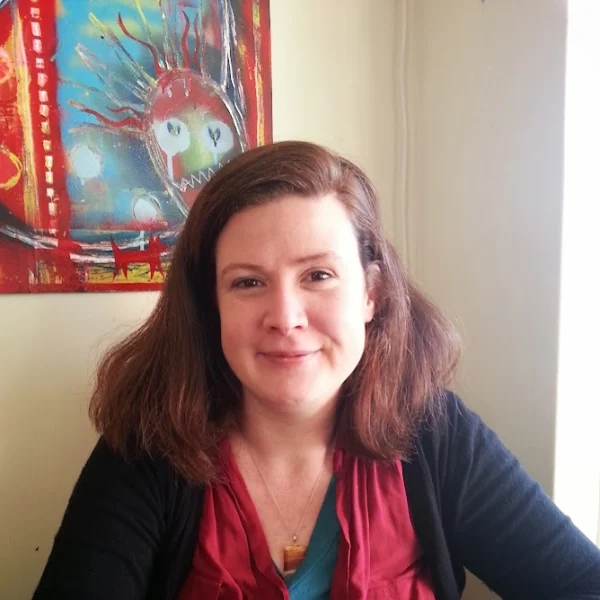
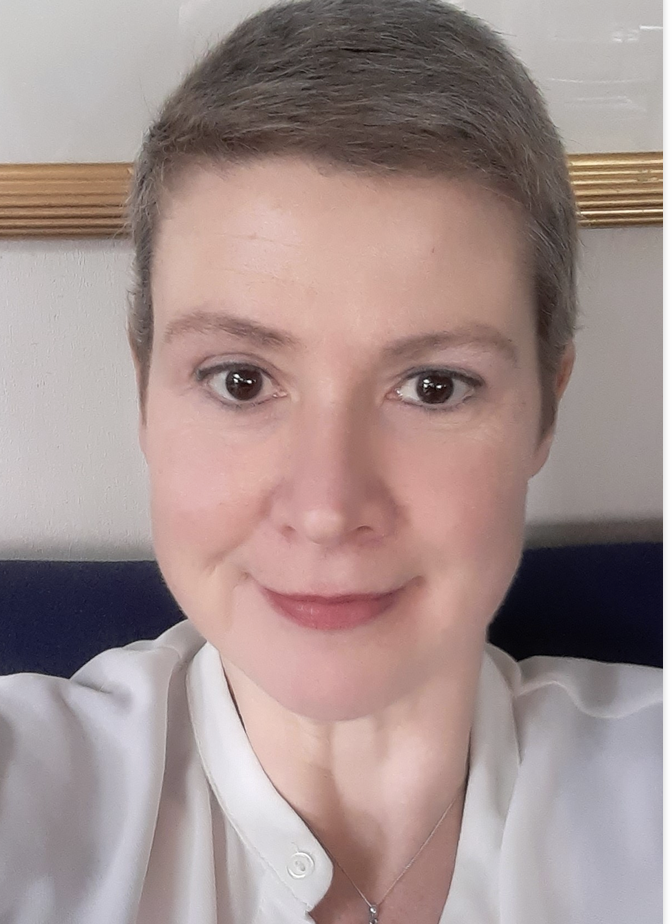
We are coming together in shared and deep grief, to gather our words and poetry choices as a way of acknowledging the passing of Majella Cullinane. We are doing this with such sadness, drawing the woman close who has touched us in so many ways with her presence, her poetry, her friendship.
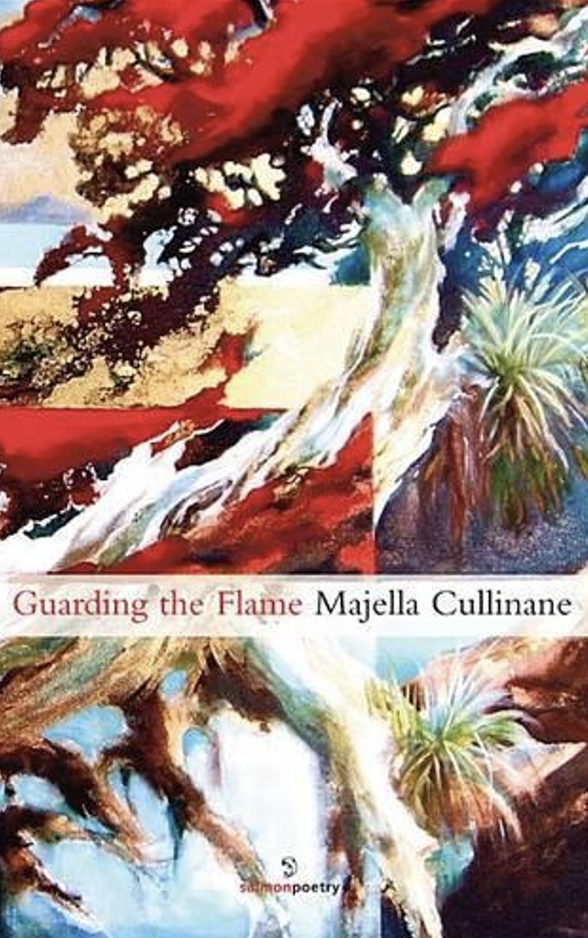
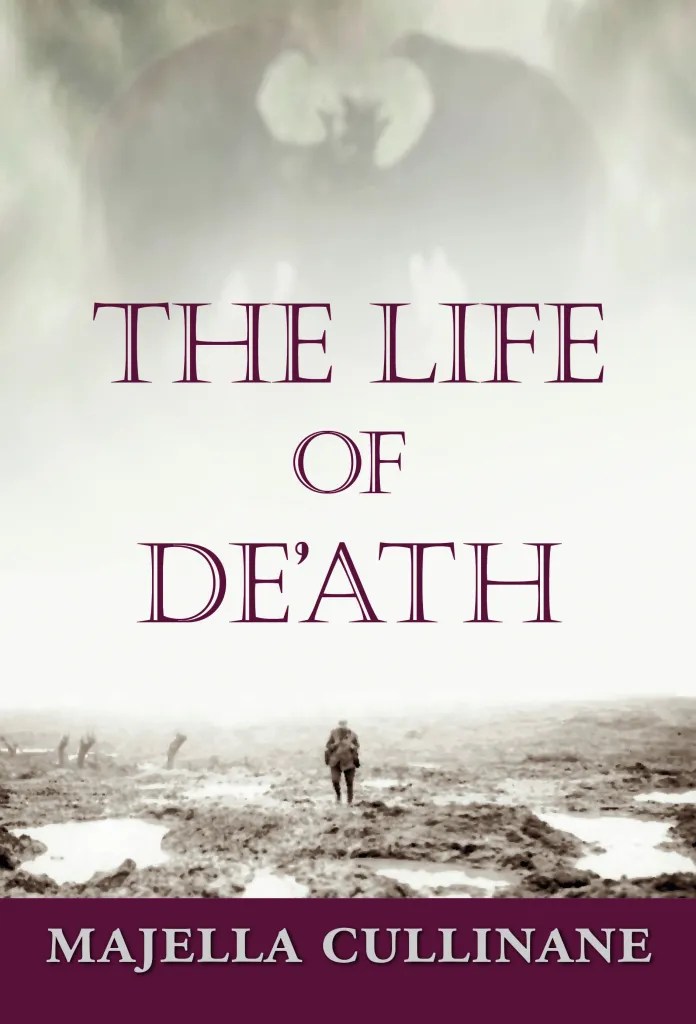
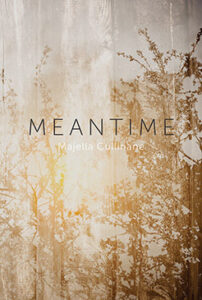
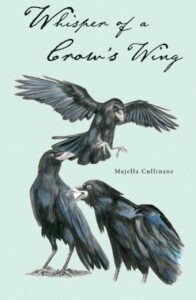
I have loved her poetry intensely, it has fed me as a poet, but more than anything as a human being. Majella published three collections of poetry: Guarding the Flame (Salmon Poetry, 2011), A Whisper of a Crow’s Wing (Otago University Press, 2018) and Meantime (Otago University Press, 2024). Majella also published fiction: a novel, The Life of De’Ath (Steele Roberts, 2018) and sort stories, Islands Ever After and other stories (Quentin Wilson, 2026). Two of Majella’s poems will appear in Landfall Tauraka 252, due out in November.
Most reviews I write draw upon the idea that to review a book is to re-see a book, to return and let the multiple lights and darknesses settle upon me, to enter the myriad delights of discovery. I have read so many extraordinary poetry collections over the past few years (perhaps this is an example of post-transplant awe and wonder) but to read, and reread Majella Cullinane’s glorious Meantime, I keep taking stock of myself as reader and reviewer. Firstly, I am drawn to the heart of a poem, the heart of a book. I am picturing a poetry heart promoting rhythm, energy, reading blood flow . . . along with ideas, fascinations, feelings. I am curious about the alchemy of elements and the effects that set me alight and comfort me as I read. A good book of poetry is like an effervescent tablet in the heart.
Majella’s Meantime is exactly this, an effervescent tablet in my heart – it is a jolt, a boost, a sparkle. Majella wrote this book out of grief, mourning her mother who died in Ireland when the poet was trapped in Aotearoa due to the Covid lockdown. Writing becomes a form of speaking, poetry a way of talking to and of and for her mother, and it is so very intimate, this maternal portrait, this daughter speaking. Mother missed and missing. Fugitive memory. Necessary memory.
And here we are at this tribute gathering, holding Majella’s poetry to our hearts, together our hearts boosted and jolted and aching.
You can listen to Majella read from Meantime here.
You might also like to step back into the conversation Majella and I had to celebrate Whisper of a Crow’s Wing, another book I treasure. She writes:
“It is the craft and close attention to each word that I really love about poetry, the way poetry has this magical way of making you stop and notice the seemingly small things in life. Also because I also write fiction I think poetry allows me to access the stiller, more reflective side of my personality.”
Majella in conversation with Paula.
Poetry Shelf offers thanks to the contributors, and especially to Michelle Elvy whose mahi has made this tribute possible. Over this long weekend and the months to come, let us feel and re-see Majella’s poetry, let us return and let the multiple lights and darknesses settle upon us, entering the myriad delights of discovery and recognition.
Michelle and I offer you this gathering, today Majella’s birthday, in shared mourning, remembering, connecting, reading, listening.
Go well, dear friends, go gently and kindly and hand in hand.

Majella Cullinane, originally from Ireland, lived in New Zealand since 2008. She graduated with an MLitt in Creative Writing from St Andrew’s University in Scotland and her debut collection was published by Salmon Poetry in Ireland. She received a number of awards including the Robert Burns Fellowship at Otago University and the 2017 Caselberg International Prize for Poetry. Her writing was published internationally, and she held residencies and fellowships in Ireland, Scotland and New Zealand. She was awarded a Copyright Licensing New Zealand Grant (2019) and a Creative New Zealand Arts Grant (2021) to complete Meantime. She graduated with a PhD in Creative Practice from the University of Otago in 2020. She lived in Kōpūtai Port Chalmers with her family.
Otago University Press page
Quentin Wilson Publishing page
Steele Roberts page
Salmon Poetry page
The gathering
Poems by Majella Cullinane, selected by Ōtepoti friends
Feather
If only every day was as simple as listening to birds, their small voices
plucking the grey-blue morning, emboldened on this first day of spring.
We too might dare to hope that what has long been desired is not so far away.
Let’s suppose it is here already, as real as this room’s radiator
switching itself on and off; the thermostat of our longing unhindered
by a dial of hours. Rather it exists in a kind of elsewhere,
or takes form in the wanderer who crosses bridges and borders
without restraint. Better to loosen the tangle of our rough wishes,
of the could-have-beens and might-have-beens and know we had it all,
just for a moment. Beneath the clamour of sounds –
logging trucks rattle to and fro from the port, a dog barks at the passersby.
A friend writes a message, subvoce – imagine, imagine,
and the bird that sheds a feather without knowing,
is the one we might chance upon, pick up and carry home.
from Whisper of a Crow’s Wing, Otago University Press, 2018
selected by Emma Neale
Isla
If I defer the grief I will diminish the gift
– Eavan Boland, ‘The Pomegranate’
Could I entice you from the ether, distil space and time,
wield molecule, particle, whatever arcane formula
that exists in the silvery vibrations of darkness and lights,
I would fashion the smallest gap you could sneak through.
Enough room for the almost, to blend the soft light
of mystery, to assemble some guise of you —
let us say blue-eyed and fair like your father.
And yet, as another year passes you become harder
to pin down — the flush of grey in the white surge
of an autumn cirrocumulus, even the shadows
sweeping through the hours have called off the search.
I have come to see you in that rift
between nothing and something,
basking in the liquid of the half-formed,
mistress of your own island, Isla, a small grey moth
tripping itself in the light, a never destined butterfly.
I imagine you as mist eddying around edges
or at night leaving traces of yourself on the shore.
I am daughter, mother, sister
but I will never know you.
Does it matter that you never existed?
That Isla was one of the many names I had for you;
a name called at the kindergarten gate;
even at my son’s assembly you came forward
to claim some prize. But here
let me tell you now, missy, dearest, beloved,
it’s time we parted ways. Like legend
it’s time for the island to disappear beneath the sea,
and with it, the bones of grief.
Time to give loss back to the shadows,
to tell you I’m as whole as whole can be.
from Whisper of a Crow’s Wing, Otago University Press, 2018
Majella recorded herself reading ‘Isla’ for a lecture I gave a few years ago at Otago University on women’s poetry featuring the poem. I want to look up the date she sent me the recording but I can’t read our emails. I want to listen to her voice but I can’t play the clip. My last text to her was: ‘Booked my flights!!! I arrive 29th of December xx Leave on the 17th x.’ She text back on the 26th of September: ‘Can’t wait to see you.’ I can’t scroll further back than that. I chose ‘Isla,’ so I could enter into the ether of loss through Majella’s lament to a daughter’s ‘almost’ existence, an ambivalence between ‘nothing and something.’ ‘Isla’ demonstrates Majella’s surety in lyric poetry. The poem is a sensual escapade, travelling through emotion so deftly and with that tone I know so well, that I can hear so clearly, like she speaking just to me:
But here
let me tell you now, missy, dearest, beloved,
it’s time we parted ways.
I never expected we’d part ways so soon. If I could, ‘I would fashion the smallest gap you could sneak through,’ just to see you one last time.
Emer Lyons
Bolton St. Memorial Park
Follow a raindrop’s interior as it falls on stone,
entranced by that first dispersal of sound –
the dead cry their names
through a querulous October wind.
from Guarding the Flame, Salmon Poetry, 2011
Such a small-looking poem; such an expansion as it lands in the heart. For me, these four lines beautifully encapsulate Majella’s voice, her powers of perception and her magic touch for language.
Sue Wootton
Anzac Avenue
Congregations of leaves, pools of rainwater like tea stains,
the beat-up student couches that have seen better days.
Between footsteps I hear words echoed in a room
tight with the cluster of box desks, black chalkboards, girls in uniforms.
That day I left, a final glance at the schist walls,
the school’s back door where I collected milk for the nuns.
Did I suspect then there were things better not held on to,
that by walking away I might arrive at this moment, to this place?
To watching the flicker of tea towels pegged on a line,
the tapestry of yellow-brown leaves on the grass;
to the drip drip drip of water through a tunnel of trees,
to marvel this morning at the roads
like lacquered straps of leather in the rain,
loosening and tightening, buckling their belts in the winter air.
from Perch: Ōtepoti Dunedin poets celebrate 10 years of our UNESCO
City of Literature, edited by Michelle Elvy, At the Bay | I te Kokoru, 2024
There are so many poems by Majella one could select to celebrate her work, her ‘lyric grace’ as Vincent O’Sullivan once said about her poetry. ‘Anzac Avenue’ has all the hallmarks of Majella’s grace – the percussive pops (‘drip drip drip’) and the silky sinews of language (‘lacquered straps of leather’); the ability to slow time right down to this single moment, the great epiphany buried and almost hidden in the middle couplet (‘Did I suspect then there were things better not held on to/that by walking away I might arrive at this moment, to this place?’); her bringing of Ireland (the nuns, the schist walls, black chalkboards) to these very streets. Majella’s poetry was a quintessentially Irish in its lyricism but was very much in tune with ‘this place’, the here and now of Ōtepoti and Aotearoa more generally. Our literary landscape is forever richer for all that she brought to it.
Lynley Edmeades
Op Shop, 1985
It hits you – the hot steam from the kitchen stove, the scent of starch.
Your father’s detached collar hanging on the crook of a chair like a waxing moon.
The long dark line of him, standing in pleated trousers and waistcoat,
his pocket watch nestled into his heart. Your mother’s arms
reaching towards him as she fixed the collar around his neck,
lapping the left side of the shirt over the right, inserting the stud,
running her fingers over the collar band to smoothen it.
The birch collar box lying in the centre of his suitcase the day he had left.
And you wondered about it, whether or not it had been returned;
if he had ever worn such a neat, rigid, clean thing, knees deep in rain and mud,
with the boom of the guns deafening, the smell of the kitchen,
the stove’s heart miles away.
So there you were, white-haired and eighty-five,
old now as your father would never be, drifting through aisles of bric-a-brac,
past unmatched tea sets and chipped glass, garish dresses worn once, if at all.
On a shelf, beneath a pile of old records, you saw it – a collar box,
its oval shape like a blank, polished face, a small latch holding it closed.
You stroked its face, stretched your fingers over its surface.
It was not the same. The wood a lighter colour,
the box, when you opened it – empty.
Still, you carried it to the counter, slowly counted out two dollars.
In your room later, you opened it, inhaled its emptiness,
and for a moment smelled his starched collar again,
glimpsed his neat tie hanging below his heart,
stroked his moustache curved upwards like a smile.
from Whisper of a Crow’s Wing, Otago University Press, 2018
The power of absence. In many of her poems, Majella explores the not-here, often a beloved person or beloved place, which/who is nevertheless always and intensely present. I love that in this poem, the separations are layers deep. Imagination and love coalesce worlds within the collar box, albeit one made of different wood. An emptiness to be inhaled. Alive.
Carolyn McCurdie
Invitation
The moon arrives, inconsequential,
unsure of herself,
a shy visitor, wringing her hands,
darting her eyes about
not knowing where to look –
at the relic of grass blanched and sun-scorched
from weeks of drought, so much so
the blackbirds have little left to peck.
A cluster of cloud dawdles over a ridge of sky
drawing her down the hill
and onto the beach
where her light is as much a surprise
to a sea-weary pōhutukawa
whipped up by some switch and toss of wave,
a sea-horse of saddled bark now,
its grooves and knots often tramped on by small feet.
She might stake its echo of canter and stride
for the sea unhinging itself, for the invitation it proffers –
barter the night for the whorl of a wave’s tongue,
the relish of brine. Know what it is to untangle
light from the tooth of a roving tide.
from Whisper of a Crow’s Wing, Otago University Press, 2018
Majella, early christened ‘Dr Mermaid’ by me, appeared ever present in the physical world. For such an adventurous spirit, she was a cautious witness. Her lines often establish then reinforce. Yet at times, the best of times, reading her I recall Coleridge: ‘spirit courses, drives, and eddies…a sort of bottom-wind, that blows to no point of the whole compass…’ The writer is taken over. This is where fear and wonder meet for more than the moment, where anything appears possible in the mind’s eye because of the body’s desire to move rhythmically with purpose. It is close to the territory of folklore. Dr Mermaid had an Irish Catholic upbringing to sharpen her ear and her eye. As St Augustine understood: ‘When the sky clears enough for good visibility, the direction of all the roads is apparent, but which is to be taken is still in doubt, not because of any obscurity but solely because of ambiguity.’ There are many places you might go with Dr Mermaid; this poem is where I was left by her.
David Howard
August
It doesn’t matter how far away I am.
I am nothing to this place.
It cannot hold me.
The blackbird singing in the pitched edge
of darkness
will not remember me.
The yellow spark of broom that I passed
in the alleyway will not remember me.
The moon illuminating the living room
will not remember me,
cannot see the house’s sleeping occupants,
or their dreams that peep through keyholes
trying to pluck themselves from the thread of loss.
Come morning, a spider’s web tangled
in the clothes rack is a gift.
Later, reading an email from Inis Mór,
I imagine the Atlantic,
see hefted waves against cliffs,
grief momentarily suspended.
from Meantime, Otago University Press, 2024
‘August’. I read it in October, the day after the tributes started for you. I read it with my feet in the sea at St Clair, not enough layers on, my sweetheart standing next to me. They did a mihi ki a koe and I told them, again, about your upright proper insistence, and I told them, again, about how we recorded those sessions where you sat with me in the study rooms in the library, telling me, supervisorishly, to take my words seriously. Your dedication, your particularity. Your ability to make a decaf coffee last a full hour of gossip and maybe something sweet. I told them about how you told me about standing in the water, knowing that somewhere across the water was Ireland and how women in history had stood on both those sides. Lynda Topp said something similar about her and Jools, standing with their feet in connected waters on different islands, and from her, too, I have learned so much about the specificity of grief. And it is not my place, and it is not my place to say, but I will remember you, Missus, in this place.
Liz Breslin
Nowhere to be
I want to be part of that world again,
no more than a few doors on a suburban street,
the gate open, the garden with its patch of green,
the red roses dozing outside the front porch. At dawn,
the cooing pigeons, the crows catastrophising
on the shed wall. Yes, yes, I’d tell them, I’ve heard,
the world is nothing like it was. I’d leave the traffic hum
to the main road, mute the ticking traffic lights, silence the clock
that chimes each quarter hour outside the pub.
I’d stand outside the house that was once my whole universe.
At first I wouldn’t say a word. I’d see you
In that stirring behind the curtains, almost as imperceptible
as an intake of breath. I’d tell you I was back, that it wasn’t too late,
that there was nowhere else I needed to be.
from Meantime, Otago University Press, 2024
Majella, as far as I can tell, was a wise old soul. At an age when some of us were indulging a midlife adolescence, she was confronting the poignant cruelties of ‘old age, suffering and death’ in her parents. Accompanying my own elders through these phases, I’m awed and heartened by the astute, kind eye her poetry brings to bear on the distances wrought — by dementia, by the separations inherent in living elsewhere and attending to one’s own life, and ultimately by death. Majella conjures the loved, retreating figures, and brings them near, quickens language into blessing.
Penelope Todd
Small places – a haibun
You were happier in small places. The familiar – a second skin you cultivated. You liked to sit in the front porch and watch the street. The warmest room in the house; in summer you’d leave the door open, listen to the traffic on the main road, the airy buzz of insects in the garden. I turn my chair to the window, watch the amber oak leaves quivering. Remnant of an older world, so close, so… I watch a pīwakawaka flicker in the rhododendron. Nothing new to say, little messenger. You don’t need to tell me what I already know, what’s happening in those bigger places we see each night on the TV. These days, I too keep to small spaces, I, who swore my life would never be so small. Maybe there’s more than one way to live at any given time. I picture myself there again, sitting in that porch, the two of us looking out on the street. The gate is closed. It’s raining. There’s no need for us to speak.
Pīwakawaka
flickers. Autumn’s amber-blue breath
succumbs to winter.
from Meantime, Otago University Press, 2024
and selected for Best Small Fictions 2025
Majella had a way of writing from the heart but without falling into sentimentality; it was more like she was writing from the edge, considering all angles, all possibilities of the heart. I think she was like this as a person and on the page: thoroughly real and original. I love how compact this haibun is, and how expansive its beauty: this singular person in the wider world, this connection to home, this intense sense of that porch, that road. I am surprised each time I read it at the open-endedness of being: ‘more than one way to live at any given time’. Her mind, her heart and her words were a gift for us all.
Michelle Elvy
Stay Here
Could I tell you of tonight’s stillness,
how twilight glowed behind the hills,
how a half-moon hung in a sapphire sky,
how there was not one leaf-flicker on a tree?
Could I tell you I binge-watched TV,
programmes set at home (can I still call it that?)
how I yearned for my country’s familiar cadences?
Could I tell you how I waited in all day,
until something shifted in me, something
I couldn’t quite put my finger on?
Could I tell you how I blew out the candle
I’d lit for you before I left,
how I opened the bathroom window
even though I had the front door keys?
I’ve stopped trusting in the simple function of things.
Outside the street was deserted.
I was alone but not lonely.
There is nothing like an autumn sky for beauty.
I exchanged a smile with a girl on the path,
her blue surgical mask snug under her chin;
mine in a shopping bag.
Could I tell you the cat followed me to the shops
but I didn’t notice until I met her on the train tracks
walking back? You would have laughed.
Could I tell you I wish you could see this sky?
We could sit on the deck;
ignore the overgrown clematis — I’m not much of a gardener.
I wish I could speak to you
but I do not understand the language of the dead.
Stay here and watch with me —
watch the sky shift from flaxen to coral to mauve,
and as the minutes pass, to a mute grey.
Let’s watch with the door open for the light to go.
from A liminal gathering Elixir & Star Press, 2023
Majella’s toikupu speaks for itself – the complexities of grief and love are myriad. There is no need to provide a commentary on ‘Stay Here’, because the coexistence of grief and love are universal experiences, felt through our individual bodies and hearts and minds. Majella and I met through the writerly scene in Ōtepoti Dunedin, and the ability to convey grief, through the written word, was something we recognised in one another from our first conversation. Perhaps, she also recognised the Irishness in me. Many years and conversations later, I invited her to submit to the first ESP* grief almanac a liminal gathering, she didn’t baulk at the idea, she celebrated it. I don’t think we ever stopped speaking to grief, because we recognised its presence in our lives as something to be unafraid of. My deepest aroha to Majella’s beloved whānau pani – may candles be lit, hands well-held with the ache of her passing, and without needing to understand the language of the dead, may you know that her aroha remains close by and in your hearts. Moe mai rā, e kare waiwaiā.
Iona Winter
Feather
If only every day was as simple as listening to birds, their small voices
plucking the grey-blue morning, emboldened on this first day of spring.
We too might dare to hope that what has long been desired is not so far away.
Let’s suppose it is here already, as real as this room’s radiator
switching itself on and off; the thermostat of our longing unhindered
by a dial of hours. Rather it exists in a kind of elsewhere,
or takes form in the wanderer who crosses bridges and borders
without restraint. Better to loosen the tangle of our rough wishes,
of the could-have-beens and might-have-beens and know we had it all,
just for a moment. Beneath the clamour of sounds –
logging trucks rattle to and fro from the port, a dog barks at the passersby.
A friend writes a message, subvoce – imagine, imagine,
and the bird that sheds a feather without knowing,
is the one we might chance upon, pick up and carry home.
from Whisper of a Crow’s Wing, Otago University Press, 2018
There’s a lifetime’s instruction here. Majella had a way of creating word images that affirm the available enchantments of our everyday world and at the same time carry echoes of the long lineage of writers she read avidly and kept company with.
In ‘Feather’, she writes of ‘the wanderer who crosses bridges and borders without restraint’ and I cannot help seeing these lines as the markings of a self-portrait. She was not one to be constrained by limitations, perceived or real. She was mischievous, colourful, curious and capacious; super-smart, reverent and, at times, delightfully irreverent. I listen in her work for the infinite and the ineffable, embedded as these often are within the intimate and domestic.
I was struck when re-reading Meantime, Whisper of a Crow’s Wings and her recently-launched short story collection, Islands Ever After how often birds feature in Majella’s writing. In many cultures and faith traditions birds are considered messengers capable of crossing freely between this realm and the next. Following the loss of a loved one, people sometimes tell of a feather left for them by an unseen bird. Signs like these offer comfort. For me, this poem speaks into such possibilities, implying as it does an ongoing story. Perhaps the membrane between this world and the next will show itself to be no-distance and our beautiful friend will remain within arm’s reach – certainly the legacy of her writing ensures this.
Much love and aroha to Andrew and Robbie, her sister Marie and all who have been blessed to call Majella friend. She will be much missed.
Claire Beynon