Tag Archives: NZ poet

Alice Miller’s debut poetry collection liberates a way of reading that defies limits

IMG_8526    THE LIMITS_CONCEPTS_01


The Limits, Alice Miller (Auckland University Press, 2014)

Alice Miller, an award-winning author, has just published her debut poetry collection both in New Zealand (Auckland University Press) and in Britain (Shearsman, due May). Alice’s awards indicate the eclectic stretch of her writing: a Creative New Zealand Louis Johnson Bursary, the BNZ Katherine Mansfield Premier Award for Fiction, the Landfall Essay Prize and the Royal Society of New Zealand Manhire Prize. She was the Glenn Schaeffer Fellow at the Iowa Writers’ Workshop and graduated from the International Institute of Modern Letters at Victoria University with an MA with Distinction. Alice has also worked as an historian, studied music and taught creative writing. She held the recent Summer Residency at the Michael King Writer’s Centre in Auckland. She usually lives in Vienna where she is Associate Editor of The Vienna Review.

The Limits is a slender volume (37 poems) with widespread possibilities. The poems are quiet, spare and luminous. Each poem is like a marvellous vista—it is as though you keep returning to the same spot on a hill to contemplate a view because that view is in a glorious state of flux. Always on the move, sustaining, transcendental. This is what it is like to read an Alice Miller poem.

The poems sit in mist or silence or enigma, or puzzling and then rewarding fragments. This is not prosaic writing, the plain everyday lilt we find in much of our local poetry (nothing wrong with that!). If there is a story to be told, it is told in a poetic manner (but not ornate lines that strive for the Romantic or the Baroque). If there is a story to be told, it is told though the poetic art of concealment, of ellipsis: the white space on the page, the silent beat in the rhythm and the fertility of the gap. This shifts the manner of reading—no ambulatory beat here. Instead, as reader, you stall and you ponder, you concentrate and you backtrack. Most of all, and this is what I love about these poems, you drift in the poetic space, feeding both intellect and heart.

Alice also embraces the abstract. As you move through a poem, it is as though you are moving through the surreal, the unreal, the unearthy, a dreaminess that is one step back from the grit and grimy edge of the real, of everyday life with its bumps and hollows. Yet Alice does something extraordinary—she gives life to the philosophical, the dreamlike, the mist beyond limits and within limits. Enigmatic detail compounds. Things may be things and nothing more or they may shimmer and shine as metaphor or symbol.

The collection is divided into four parts: Skin, Steps, Earth, Body. It is fascinating to link these governing entities back to the title of the book; the way there are borders (inside/outside, corporeal/heavenly, containment/limitlessness), the way there is implicit movement and travel (the earth on its axis, the steps) and the way all roads lead back to what it is to be human (are there limits?).

Sometimes single lines leap out and then you leap with them:

‘Still the spaces keep growling for something.’

‘I may wander but my wonder’s still.’

‘You’ll always have life instead of art.

‘Tonight a scrunch of air between fingers/ what more do you expect?’

‘You are locked/ in the wing/ of history/ with blood still/ stuck in your veins.’

‘I look out, and the terms are still sloshing/ by our window, past cobwebs nestled/ in hedges like fog.’

‘I fashion some antlers/ to guard my brain.’


Alice’s poems are so beautifully crafted. ‘Apple’ is an earthquake poem and it is the strand of verbs that constitute a shudder and aching ripple through the poem (cracked, reaching, brush, crane, caress, wrench, rip, split, shudder, broke, tore). These verbs create a moving ripple effect through the poem that heightens the intensity and is matched by the shifting placement of lines upon the page. To me Alice’s poetic choices get to some kind of poetic essence (is this possible?) and then breaks out visually, semantically, emotionally to wider effect.

At times the syntax and vocabulary are fluent and reachable; at other times they seem deliciously out-of-kilter, quirky even. ‘In Season’ is a superb example of the latter. There are the trademark gaps, the points of ellipses, the dense accumulation of detail. It might be an unexpected verb choice: (‘Listen to waves mutter/ as sun butters the water’ or ‘A couple/ of boots stroke the road’). The overall effect, in my view, is a finely crafted stream-of-consciousness (yes, an oxymoron).

There are other ways to enter these poems. You can follow the deeply grooved tracks of love (poems are often addressed to a mysterious ‘you’ and the love felt is palpable). You can also follow in the steps of the historian and re-enter historical or mythical moments and figures (Troy, Caesar, Rome’s Senate, war, Brahms, Picasso).

Alice’s debut collection liberates a way of reading that defies limits, that poses limits and that makes dazzling connections. Each poem takes you to the top of the hill where you sit to behold the view, a view that shifts and settles, shifts and settles, in countless extraordinary ways.


See my interview with Alice here.

Alice Miller website

Auckland University Press page

Shearsman UK page

On Antarctica on New Zealand Book Council page

Alice Miller’s poetry duets — The Red Room page
Zarah Butcher-McGunnigle’s debut poetry collection, Autobiography of a Marguerite, needs support

Image1
Hue & Cry Press is excited to announce the upcoming release of Zarah Butcher-McGunnigle’s debut poetry collection, Autobiography of a Marguerite.

Autobiography of a Marguerite is scheduled for publication at the end of May, but we need your help to get the book printed. PledgeMe is providing a platform for you to get your hands on some excellent paraphernalia, including signed copies of Autobiography of a Marguerite, so we can afford to give the book the treatment and send off it deserves.

Every little bit will count, so please spread the word on our behalf. See the Autobiography of a Marguerite PledgeMe page for more details and to pledge.

Autobiography of a Marguerite is an innovative autobiography about illness, family dysfunction, and identity, and how they can shape one another. The narrator struggles with the effects of her auto-immune illness, and struggles to separate herself from her troubled mother. The narrative that emerges from the connected prose poems is both revealing and mysterious. Fragmentation, non-linearity and the use of footnotes reflect the disruptive nature of illness and the nature of recalling memories and family patterns.

Zarah Butcher-McGunnigle’s work has appeared in a wide range of publications. Along with Hue & Cry these include Sport and Landfall, and her poems have been selected for Best New Zealand Poems in 2011 and 2012. She has a Masters in Creative Writing from the International Institute of Modern letters, where was awarded the Biggs Poetry Prize for her manuscript, the first rendition of Autobiography of a Marguerite.

Owen Marshall’s The White Clock provides a frame for shimmering contemplation

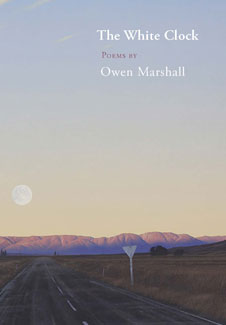
otago065671   3378992_orig

Owen Marshall, The White Clock, Otago University Press, 2014

In Owen Marshall’s third poetry collection, The White Clock, poems provide a frame for contemplation—for reflecting back into the hills and dales of memory and for musing upon the physical and metaphysical currents of the world and of living. The adept fiction writer is at work here, with his trademark economy and grace, but so too is the roving mind of a philosopher. There is also the bird watcher (I should say life watcher) as Owen trains his figurative binoculars upon detail that renders his lines lucid and vital. Not all poems work for me, but those that do (the majority), dig and delve into the essence of humanness. There is humour (wry and infectious) and there is tenderness. As a whole the collection provides lovely contours of thought and feeling.

The title poem takes us in all directions—from the ‘multi-limbed Leonardo man’ to the idea that ‘Time writ this large is discomforting.’ This sway between the transient and the concrete, the hard to pin down and the readily held, is a terrific vein throughout the book. Thus ‘Freeze Frame’ observes the fleetingness of time. The opening line, ‘In the spool that is my life,’ makes a nice link to the way photographs also share ‘the stabbing sadness/ of glimpsed transience.’

Owen embraces playfulness. ‘Dog Winds’ does just that. He links a season to a wind and that season to a dog.

Winter wind is the starving bitch

heeding no one’s whistle, baring

cold, white teeth if faced, with ribs

of adversity and a muzzle-up howl.


Or he returns to the fable of the tortoise and the hare and resists favouring the tortoise that is ‘commensurately wise’ and endures ‘an eternity of slow vegetative mastication.’ Instead:

Better a mad March dance before

a lover, the sprint with wind in

your hair, the ultimate exhilaration

within the headlights’ glorious flare.


In ‘Watcher on the Shore,’ Owen (or narrating voice) confesses he prefers ‘Brueghel’s/ trivial and persistent cruelties’ to ‘transcendent, uplifting paintings.’ Is the last line then a cue for us to see the darker line of thought in the collection?

Like old Jacques I find more sustenance

in melancholy than any other humour.


Sometimes the humour, though, is laugh out loud. When the poet-narrator is about to talk about ‘narrative point of view/ and psychic distance’ he looks into the crowd and spots a woman asleep. Disconcerting, hilarious:

[  ] Golf balls could

have been dropped into her mouth

and there was nothing I could say

that would add to her contentment.


What I particularly love about this collection is the way the poet opens himself up for inspection—through what he observes, experiences and thinks. It imbues the poems with an acute truthfulness (which goes against the grain of poetic game play and irony). One black coat (now a little shabby) was purchased in Menton and conjures up past memories in ‘Habit.’ It is the last verse that shows Owen at his perceptive best:

[   ] We

are a fit, and I cannot bear its

replacement with any companion

less familiar with my life and form.


The White Clock, like the Graeme Sydney image on the cover, provides a frame for shimmering contemplation.


Otago University Press page

New Zealand Book Council page

Owen Marshall web page

Christchurch City Library interview

Random House author page

Marty Smith’s Horse with a Hat– you get grit and you get open views

good one 7 cat

Marty Smith, Horse with a Hat, Victoria University Press, 2014

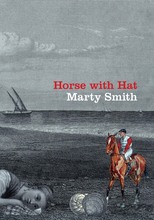
Marty Smith’s debut collection, Horse with a Hat, is a gorgeous book. The lush and evocative collages by Bendan O’Brien draw you in close, in a way that is both haunting and intimate. His cover collage replicates the way a poem can lead you to a wider picture (the ocean and its lure of voyage) and the catching detail (the pattern on a shell, the way a horse holds its head in anticipation). Heavenly!

The book itself is equally captivating. Horse with a Hat revels in poetry as a way of tracking a life, of harnessing an anecdote. The poems delve into relationships, previous generations, magical moments, pockets of history and, while they exude warmth and joy, Marty is unafraid of darker things, earthier things (violence, the threat of violence, grease and oil, bad tempers, men at war).

Marty was raised on a remote hill country farm between Pahiatua and the ocean so ‘bands of wild horses moving like wind patterns’ is as familiar to her as putting ‘the bloody thing [the lamb] out of its misery.’ Having learnt to ride, read and love horses from an early age, the animal is lovingly tended in the poems. Early on, the autobiographical and poetic motif is set when the father teaches the daughter how to ride bareback (‘Dad’s horses’). The emotional ripples—of a young girl trying to hold on tight with knees or keep up with the distant dot of her father—are poignant. So too is the poem’s lyrical beginning:

Dad’s horses

darken out the sun

I am at their knees looking up

at the lode star of the stirrup

and my four-storey father.

Horses are a nostalgic and potent link back to the author’s past, but they also connect the reader to the exhilarating movement of the poems (as though you are riding them bareback, wind in your hair so to speak). Poems are both reined in (diligently crafted) and set free (open to intuitive turns).

There is a sweet lyricism at work in these poems—from exquisite musical phrasing to biblical overtones to the pleasure of plain language in the service of narrative to gutsy dialogue. Here are some of my favourites:

‘I hide in the chook shed/ under a tin cold sky, thin bitter wind.’

‘It’s a demon—no it’s Dad, down in the dark/ sparks arcing off the grinder’

‘who flatten, who scatter’

‘I lived in the library. I was a child outside/ and I did not look up.’

‘He stays home with the slow slouch of cows’


There is terrific detail that adds vibrant life (yes, these poems are lived in!):

‘There are wasps all over the jam/ in the kitchen.’

‘the radio static fizzy, and raspberry biscuits.’

‘a heavy blur of rice’


And finally there are tropes that catch your eye:

‘My grandmother wore God like a glove/ to church’

‘the planes of light in the room’

‘bright flowers surprised to a standstill’


Marty’s collection takes you back to the child, to mother and father, and to country life, and in doing so you travel through sumptuous lines and layers. This is no rose-tinted memoir—you get grit and you get open views, you get life’s awkwardness and you get empathy. It is a fine debut.

Marty Smith teaches at Taradale High School, but she has also worked as a track-work rider in New Zealand and in England.

Horse_with_Hat_front_cover__77059.1385936731.220.220  Horse_with_Hat_front_cover__77059.1385936731.220.220  Horse_with_Hat_front_cover__77059.1385936731.220.220

Thanks to Victoria University Press, I have a copy of Horse and Hat for someone who likes or comments on this post.


Marty Smith’s website

Victoria University Press page

Blackmail Press multimedia performance and the stunning poem ‘Radar’

Marty Smith on Modern Lettuce

Alice Miller in interview—Poetry as a shift between the unconscious brain and the conscious

IMG_8526

Alice Miller has written poetry, plays, essays and fiction. She has worked as an historian for the Waitangi Tribunal, studied music, and graduated with an MFA from Iowa Writers’ Workshop and an MA with Distinction from the International Institute of Modern Letters at Victoria University. She has gained numerous awards—from The Royal Society of New Zealand Manhire Prize to a prize for the Landfall essay competition and the BNZ Katherine Mansfield Premier Award for Fiction.

Alice has been based in Vienna where she is the Associate Editor of The Vienna Review, but has spent the first part of 2014 at Auckland’s Michael King Writers’ Centre as its Summer Writer in Residence.

To celebrate the arrival of her stunning debut collection, The Limits, Alice kindly agreed to answer some questions for Poetry Shelf. The book was published by Auckland University Press in early March and will also be published by Shearman Press (UK)  this year. I will shortly review this book (Bill Manhire gives it a terrific endorsement on the back: ‘At the same time, her book takes us far beyond its title, letting us glimpse again and again – in finite space – what it limitless.’).

THE LIMITS_CONCEPTS_01    THE LIMITS_CONCEPTS_01

Did your childhood shape you as a poet? Did you write as a child? As a kid I wrote long, interminable stories. I think I filled an entire exercise book with a single story about a chestnut pony trying to get home. One chapter featured a hundred and three exclamation marks, all in succession. I still feel very sorry for my teacher.


When you started writing poems as a young adult, were there any poets in particular that you were drawn to (poems/poets as surrogate mentors)? Yes! When I first read Eliot – that disembodied voice, those great leaps, and the result being such an astounding whole – it may well’ve made me a poet. A large part of love is timing, and The Waste Land was my first real glimpse of what poetry could do.  It was so familiar and so foreign, like all the world was poured into this one voice.


Perhaps a large part of writing is timing! I love the way your poems abound in connections—narrative, musical, cerebral, material, enigmatic. What are key things for you when you write a poem? Thank you! I think of writing as basically a shift between the unconscious brain and the conscious. At first, the poem happens entirely in the unconscious; if you let the conscious brain in too early, it’ll try to explain the poem and kill it. But after some time away from the poem, the conscious brain has its part in editing, and re-editing, and re-editing –

After that, what I look for is a sense that a poem is working, that the machine o’ words has a functioning engine.  I know a poem is worth keeping if, when I return to it after revision over weeks or months, it’s still a mystery to me; it’s still alive on the page.


You were once a historian. Is a sense of history an important factor as you write? A way of exploring how and where you belong? Yes, absolutely. The Limits is haunted by a particular image, that of a city which carries all its pasts at once. I stole this idea from Freud. If we translate it to Wellington, say, we have the untouched bush, we have the first pa sites on the headland, and we have every building that’s been built ever since, as well as those buildings’ ruins – and all of it is able to exist simultaneously. Freud used this image as a metaphor for the mind, which holds all its memories at once.  We’re around on this planet for such a brief time, but poetry can, in a sense, cluster and compress space and time.


Name three NZ poetry books that you have loved. Because I’ve been overseas I’m behind on my local poetry – I’m about to catch up! – but I’ve heard great things about many recent collections.  And I loved Sam Sampson’s first book, and Lynn Jenner’s, and Bill Manhire’s Selected.


What poets have mattered to you over the past year? Some may have mattered as a reader and others may have been crucial in your development as a writer. Some poets of the last year (with the term ‘poet’ used rather loosely) would be Elizabeth Bishop for her precision and her use of abstraction, her embrace of specific geography alongside the unmappable; Chekhov for holding his sad and funny mirror to the world; Flaubert for his exquisite sentences; and Shakespeare and Yeats for, well, everything else.


The constant mantra to be a better writer is to write, write, write and read read read. You also need to live! What activities enrich your writing life? I do like to play football, or rather, at my level, to run about a football field accidentally kicking people’s ankles.


Your new collection is entitled The Limits. Is it important for you to break boundaries, respect boundaries or a bit of both? Or to see poetry as a way of navigating the limitless possibilities of the world, both real and imagined? Great question. For me, the limits also suggest limitlessness; would we still recognise beauty if we lived forever? Or was Stevens right when he wrote death is the mother of beauty? That there are limits means there’s something to reach beyond. I’ve always been terrified by time and death, and I see poetry – and art in general – as the only way to deal with time, to momentarily lose that terror.

You know those moments when you see a puddle on the pavement and it seems astonishing?  Are these the greatest moments of being alive?  We can’t live in a constant state of awe, so we spend a lot of time stretching to attain it.  Perhaps when I talk about a poem working, it’s actually reaching for awe.


I love that notion of writing as stretching—the way poetry has its feet in puddles (the ordinary) and its eyes on the distance (the awe-dinary?). Finally if you were to be trapped for hours (in a waiting room, on a mountain, inside on a rainy day) what poetry book would you read? Today I’m feeling a little anxious, so I’m going to say Whitman: ‘All goes onward and outward, nothing collapses, And to die is different from what any one supposed, and luckier.’

Thank you Alice!


Alice Miller website

Auckland University Press page

Shearsman UK page

On Antarctica on New Zealand Book Council page

Alice Miller’s poetry duets — The Red Room page
 

The Nigel Cox Unity Books Award was awarded to writer Anne Kennedy


anne-kennedy-mugshot

I was delighted to see Anne Kennedy was awarded the Nigel Cox Unity Books Award. This generous gift to New Zealand authors recognises the importance of an author’s reading life.  Anne has contributed a terrific range of books to our reading options. Her writing takes us on narrative and poetic journeys unlike any other — her use of language is sumptuous, innovative, fresh, moving. Reading her fiction and her poetry is an absolute treat. Congratulations Anne!

Poetry Shelf interview with Anne

The Nigel Cox Unity Books Award was awarded to writer Anne Kennedy (left) at a surprise announcement at the end of her session at the Wellington Writers Week. The Nigel Cox Unity Books Award is an award for a writer that displays ‘an exceptional way with words’.

The award was founded by Unity Books Auckland owner Jo McColl, and Susanna Andrew to commemorate Nigel’s love of writing and reading. From his time as a bookseller, Nigel understood the sad reality that writers don’t always have the money to spend on books. The recipient receives a $1000 Unity Books voucher to spend as they wish.
Writers are readers before they are writers and Nigel adored it when fellow writers came into the shop, loitered and mulled and browsed the shelves. Unity Books, he believed, was “a writers’ turangawaewae”.
Anne Kennedy has recently published the novel The Last Days of the National Costume and the poetry collection The Darling North. She is a writer who has consistently surprised her readers with an utterly unique way of viewing the world.
Previous winners of the award have been writers Geoff Cochrane and Bill Manhire.


Susanna Andrew said, “A $1000 book voucher buys a lot of browsing time… Research has shown that more thought goes into spending vouchers than spending cash so I hope Anne will do a lot of standing around in the bookshop and take all the time she needs. This voucher has no expiry date… As an early fan of Anne’s writing, I know Nigel would be immensely proud to be championing her work today. He thought she was immensely talented and I have a clear memory of the way he loved slyly peddling her book 100 Traditional Smiles (now sadly out of print) as though it were a secret society he was letting you in on.”

Owen Marshall in interview: ‘Poetry in the service of something sincerely felt’

otago065671   3378992_orig

Award-winning author and editor of 25 books, Owen Marshall is both a poet and fiction writer. He is considered one of the most significant writers of short stories in New Zealand. He received the 2013 Prime Minister’s Award for Fiction, and was awarded an Honourary Doctorate of Letters from the University of Canterbury where he is an adjunct professor. Owen’s poetry reflects a deft and economical eye that catches luminous detail. His poems are steered by love as much as keen intelligence as they travel from everyday experience to an eclectic reading history to contemplative moments.

To mark the arrival of his third poetry collection, The White Clock (Otago University Press, 2014), Owen kindly agreed to be interviewed by NZ Poetry Shelf. I will review this new collection shortly.

1- Have reading and writing always been important to you?

My father was a lover of books, and he read to us as children, mainly from such authors as Kipling, Dickens, Galsworthy,  Conan Doyle and the lake poets.  He was also a devoted walker and loved the outdoors.  I was open to both enthusiasms.  Although a  keen reader I made few attempts to write until I had finished university study.

2- What poets have influenced you?

I have  enjoyed reading poetry since my teens, but began writing it comparatively recently and without systematic study.  Early haphazard reading included the usual suspects – Housman, Auden, Eliot, Dickinson,  Bishop, Yeats, Frost, Hughes and Dylan Thomas.  I  was drawn to the lyrical qualities of Laurie Lee, which are evident in his prose as well as his poetry.  I much admired Jane Austen’s epigrammatic precision which may be so effectively used in poetry.  When in my twenties I was stunned by Henry Reed’s wonderful poem, ‘The Naming of Parts,’ and it remains a favourite.  More recent influences are people like Paul Muldoon and Gary Soto.  James K Baxter is the leading New Zealand poet for me, despite the unevenness of his work. Among many others  I admire are Vincent O’Sullivan, Brian Turner, Bill Manhire, C.K. Stead, Michael Harlow, Fiona Kidman, Lauris Edmond, Frankie McMillan, and Fiona Farrell.  There are many more.

3 – In my Herald review of your collection, Sleepwalking in Antarctica, I suggested your poems were `an exquisite marriage of musicality, observation, elegance and economy.’  What are the key things for you when you write a poem?

I hope for emotional intensity.  Word play may be attractive, maybe even dazzling, but eventually it palls for me if not in the service of something sincerely felt.  When I read I want to find out more about how others find the business of living to be.   Wordsworth’s definition of poetry has become a cliché, but `emotion recollected in tranquility’ still takes some beating.  Humour and satire are attractive in poetry, and of course cadence, insight and originality.

4 – Has your writing changed over time?

I hope that my writing has become more assured, but the work always twists in the hand and never matches the artistic intention.  In the end you write as you can rather than as you wish.  No doubt an evolution is discernible in my fiction, but all the poetry I have published is comparatively recent.  I do feel however that it continues to free up, and increasingly I feel comfortable with using the vernacular.

5 – You write in both forms.  Are you attached to one more than the other, or are both necessary to you?

In reading I make little distinction.  In my writing the inclination is perhaps to the short story, which itself tends towards the associative effects of poetry because of the need for economy.   My poetry tends to be more personal than the prose, directly related to my own experience and feelings.  I can’t will poetry in the way I can prose.  The poems come in their own time, sometimes thick and fast, sometimes not at all.  I was fortunate to have the Henderson Arts Trust residency in Alexandra last year and many of the poems in The White Clock were written while I was there, and out of the stimulus of a new setting.

6 – What irks you, and delights you, in poetry?

I dislike cloying sentimentality and obfuscation parading as profundity.  I admire cadence, exactitude, sincerity and striking imagery.

7 – Do you find social media an entertaining and useful tool, or white noise?

I’m not involved with it.  It seems to me peripheral to the central concerns of reading and writing, and life generally.

8 – What activities enrich your writing life?

Nothing is more important than family.  Friends and outdoor interests help prevent too much studious self absorption.  I used to play a lot of sport, but the joints protest now.  Writing has taken me to many places – France, Italy, China, Antarctica among them.   My degree is in history and I find travel in Europe especially interesting. I always keep a journal to record impressions  and experiences.  Also as an adjunct professor at Canterbury University I have enjoyed keeping up with younger people interested in literature, being challenged in my views, reading and practice.

9 – Your writing is enlivened with acute details of place.  Is a sense of home an important factor as you write?

Our physical environment influences us in tangible and intangible ways, and we in turn mold it.  Cityscapes and landscapes are far more than just backdrops.  The latter tend to dominate in my work because most of my life has been spent in provincial centres.  I’m rather drawn to natural places that are not overwhelmed by people.

Thank you Owen Marshall.


Otago University Press page

New Zealand Book Council page

Owen Marshall web page

Christchurch City Library interview

Random House author page

Invitation to a Book Launch: Alan Brunton’s Beyond the Ohlala Mountains with a terrific lineup of guests

BEYOND THE OHLALA MOUNTAINS
Beyond the Ohlala Mountains 
Alan Brunton / Poems 1968-2002

Book Launch

Date: Thursday, 27 March 2014

Time: 6:30 for 7-9pm

Venue: Wharekai at the University of Auckland’s Waipapa Marae, 16 Wynyard St.

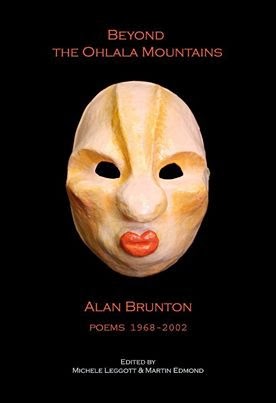
Titus Books is proud to launch Beyond the Ohlala Mountains: Alan Brunton / Poems 1968-2002. Drawing on twelve published collections and the rich resource of his papers, editors Michele Leggott and Martin Edmond present a selection that shows for the first time the scope of Brunton’s poetics as well as his trademark linguistic bravura.

Join us for a glass of wine to launch the book with readings and performances in the spirit of Red Mole and Roadworks, those experimental theatre troupes that put so many of Alan Brunton’s words in the mouths of singers, musicians and actors.

Performers include Anne Kennedy, Arthur Baysting, Barry Saunders, Bob Orr, Brian Potiki, International Superstars of Westlynn, Jean McAllister, Jeff Henderson, John Davies, John Newton, Kilda Northcott, Ksenija Chobanovich, Leila Adu, Madeline McNamara, Mr Sterile Assembly, Murray Edmond, Nisha Madhan, Peter Simpson, Ruby Brunton, Russell Haley, Stephen Bain and Tony McMaster.

For further information please contact publicist Simone Kerr simonekerr@gmail.com.

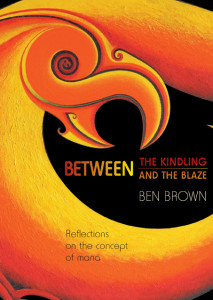
Ben Brown’s The Kindling and the Blaze is poetry from the heart

Between-the-Kindling-Front-Cover-web-res-213x300   Between-the-Kindling-Front-Cover-web-res-213x300

Ben Brown Between the Kindling and the Blaze (Anahera Press, 2013)

Ben Brown (Ngāti Paoa, Ngāti Mahuata) is an award-winning writer, performer and children’s author currently living in Lyttelton. His debut poetry collection, Between the Kindling and the Blaze, was completed during his residency at the Michel King Writers’ Centre in Devonport. He has previously released a CD of poetry entitled Dogtown (2010).

With scant collections by Māori writers making an appearance in New Zealand’s poetry scene, this book is an important arrival. Ben declares from the outset that these poems are ‘reflections on the concept of mana.’ A preface story introduces humans (a man) to the vastness and the smallness of the world: mountain, rock, grain of sand, tree. It speaks of how a human can furnish a shelter from sand, rock and wood, and how it can be built with both love and dignity. In this way, a family shelter becomes ‘a place of mana.’

The book, fittingly, is dedicated to whānau.

And so the poems, also a shelter for friends, family, whānau, are miniature edifices crafted with dignity and love. These poems become vessels for the poet’s loving kōrero. Mana is there between the kindling and the blaze, between an idea and and an experience. Mana is in the wisdom of the grandfather, but it is in a host of surprising things. Through this poetic contemplation, you are taken from moko to hui, from the ‘concrete cold of a city’ to Presidential dreamings, from James K Baxter to Hone Tuwhare. The poems become reattached to the world–to values and to customs.

Ben centres a lot of the poems on the page (Western poets have a habit of hugging the left-hand margin). It becomes a different way of reading with the billowing, silent beats on either side of the poems. It accentuates the music of the shortened lines that swell and contract like the belly of a vessel (that place for kōrero that comes from the heart, but that holds itself open to politics).

Listening to a selection of the poems on the CD, heightens the music and the sense of contemplation. I particularly loved ‘Taniwha’ (a subtle evocation of the force that ‘is there for all to see’), the lyrical delights of ‘The heron is God,’ the cheeky warm tribute to Hone Tuwhare in ‘Chur bro,’ the twists and turns of ‘I am the Māori Jesus’ as it jams with the Baxter original. Like Hone, Ben mixes up his language, mixes up the voices, the tone of the lines.

The book, like a good LP, demands to be replayed.

Anahera Press page

New Zealand Book Council page

Storylines page

Random House page

Interview with NZ Children’s Authors, Christchurch Public Library

Richard von Sturmer’s new collection is aglow

th-14_EQUANIMITY VERSES COVER for web   th-14_EQUANIMITY VERSES COVER for web   th-14_EQUANIMITY VERSES COVER for web

Book of Equanimity Verses  Richard von Sturmer (Puriri Press, 2013)

Richard von Strumer‘s latest poetry collection is an utter treat. Inspired by Wang Wei’s Zen text, The Book of Equanimities (100 koans), Richard has assembled his own set of miniatures. He has used the tanka form but added a few lines to expand upon each moment. And this new collection is indeed a celebration of moments – billowing, shimmering, luminous moments in time and place. Through the act of writing, Richard stops still and opens his senses to the world and its splendid detail, and in that loving attentiveness reproduces astonishing movement.

In the introduction, Richard cites translator Yoel Hoffman’s observation that a tanka poet observes nature and in that observation observes himself (the tanka is thus a two-way mirror). It is an interesting entry point to Richard’s poems. The pleasure of reading this collection is the pleasure of contemplation, but it is not as one might expect, solely a regard of the sublime. Instead you navigate fablesque and pocket narrative, alongside the ordinary profound. Everyday detail sparks and reverberates. The poetic moment might be a transcendental landscape, but it might also be a trembling morsel of anecdote.

The physical details are glorious: a field of violets, kings, strong fingers, Jean Cocteau, weeds, an iron raincoat, the muddy waves, fishhooks, spades and shovels. Yet what elevates these miniature poems is the movement within the poem itself. There is always a shift — a tremor, a sense of humour, a wry wit, a cartwheel or tumble, an oxymoron, a doubling, a subtle difference. In the midst of the rolling of the blinds and the ebbing tide, there is a paddock ‘nothing to add/ nothing to take away.’ Alongside ‘salmon swimming upstream’ we read ‘somehow we’ve drifted away/ from our original home.’ Or to read of the ‘cough’ alongside the ‘toast popping.’ Or the person ‘who drinks/ excessive amounts of water/ is denied access/ to the swimming pool.’ Or ‘I divide my time/ between High Street/ and the Tang Dysnasty.’

This delightful book is a book of sweet harmonies, unexpected, enthralling. Like Dinah Hawken and Bernadette Hall, Richard’s poetry is aglow with wisdom, empathy and a love of poetry. I urge you to add this book to your shelves.


Richard von Sturmer is a poet with four previous  publications.

New Zealand Book Council page

Richard’s Auckland Zen centre website

NZEPC page

Puriri Press page

An interview on YouTube