Tag Archives: Kiri Piahana-Wong

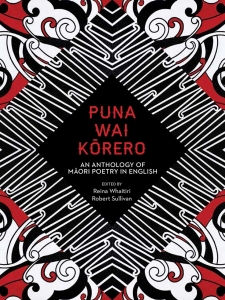
Puna Wai Kōrero: An Anthology of Māori Poetry in English — I flipped a question that I carried with me through my doctoral thesis

1411441130757

Puna Wai Kōrero: An Anthology of Māori Poetry in English editors Robert Sullivan and Reina Whaitiri (Auckland University Press, 2014)

I am curious as to how many Māori poets we can name beyond a handful, beyond the much loved Hone Tuwhare. Open a New Zealand literary journal and do we still fall upon a Pākehā bias? The arrival of Puna Wai Kōrero: An Anthology of Māori Poetry in English (2014) presents us with a selection of writing that celebrates a wide and vibrant field. The editors, Robert Sullivan and Reina Whaitiri have brought a glorious range of voices into the spotlight.

Robert, of Ngāpuhi/Irish descent, is a poet and anthologist, and is currently Head of the Creative Writing Programme at Manukau Institute of Technology. Reina, of Māori/ Pākehā descent, is also a poet and an anthologist, and has taught English at the Universities of Auckland and Hawai’i. Along with Albert Wendt, Robert and Reina edited Whetu Moana (AUP, 2003) and Mauri Ola (AUP, 2010).

Puna Wai Korero is a moving feast. The poets selected come from a variety of locations, circumstances, backgrounds, writing preferences. The choices of style, tone, subject matter and poetic techniques are eclectic. There is humour, inward reflection, love and loss. There are poems of the marae and poems of elsewhere. There are mothers, fathers, sons and daughters. There is politics on the quiet and politics loud and clear. There is grief. There is home. There are familiar voices, there are those that are not. There are writers known for their fiction.

Through all this, I flipped a question that I carried with me through my doctoral thesis (does it make a difference if the pen is held by a woman?) to ask: Does it make a difference if the pen is held by a Māori. Do some writers deliberately and gloriously foster a Māori voice (perhaps, where the poet stands and writes from, how the poet stands and writes from, how the oratory traditions of the marae inflect the poetry, how genealogy inflects the poem and so on). I spent seven years hauling my question through politics, law, history, psychology, familial relations, art, literature, history, patriarchy within an Italian context and the Italian language. Over the past months, I have held a book that drew me in close to all of these things within the miniature frame of a poem and within the context of Aotearoa. You can view the poems within whatever cultural luggage you bring to them (a Western paradigm of how to write a poem and how to break a poem, both cemented by tradition and innovation). Or you can step out of that luggage and approach these poems afresh, and in doing so open out the ways in which we can make and read and hear poetry.

This was the first joy of reading this anthology — navigating the burgeoning questions for which I felt inept at answering.

The second joy, the equally sustaining joy, was the discovery of new writers along with a return to those well loved (whenever I visit secondary schools I share my James K Baxter/Hone Tuwhare anecdotes that kickstarted me on the path of poetry in 1972). A wee taste of what I have loved: a tingle in reading Hilary Baxter’s ‘Reminiscence,’ the heart and gap in all of Hinemoana Baker’s poems, the sharp kick of Arapera Hineira Blank’s ‘After watching father re-uniting with sons in prison,’ the utter joy of Bub Bridger’s ‘Wild daisies,’ the force of Ben Brown’s ‘I am the Māori Jesus,’ the insistent catch of Marewa Glover’s ‘Pounamu,’ the evocative laying of roots in Katerina Mataira’s ‘Restoring the ancestral home,’ the pocket narrative in Trixie Te Arama Menzies’s ‘Watercress,’ the piquant detail of Paula Morris’s ‘English grandmother,’ the subtle shifts in Kiri Piahana-Wng’s ‘Four paintings,’ the verve and aural steps of Vaughan Rapatahana’s ‘Aotearoa blues, baby’ (I want to hear him read this!), the sumptuous detail in Reihana Robinson’s “God of ugly things,’ the poetic and political and personal stretch of Alice Te Punga Somerville’s ‘mad ave,’ all of JC Sturm (especially ‘At times I grieve for you’), Robert Sullivan (especially ‘Voice carried my family, their names and stories’), Apirana Taylor (especially ‘Te ihi’ and ‘Haka’) and Hone Tuwhare (especially, most utterly especially ‘Rain’).

This is a book of returns, to be kept on every shelf. Bravissimo!

Jess Holly Bates’s Real Fake White Dirt — The poems overlap and interlace with a vibrant cutting bite

Jess Bates book cover   Jess_author_photo_lo-res

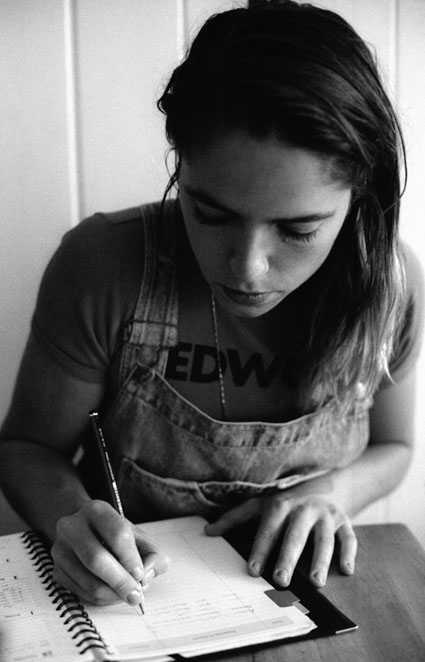
Jess Holly Bates is a Pākehā poet, particularly a spoken-word poet, and has studied English and Chemistry at The University of Auckland. Her Masters Thesis (she gained First Class Honours) is entitled ‘Revolting Others; Disgusted Bodies as a Function of Colonial Continuity in Aotearoa NZ and the Pacific.’ She did a Rising-Voices workshop which spurred her desire to write spoken word poetry. Her first piece, ‘P.I.P: Pakeha Identity Poetry’ was performed at the Rising Voices Slam in 2011. Since then she has performed in various places; most notably, REAL FAKE WHITE DIRT, which was performed at the Edinburgh Fringe Festival (with a four-star review).

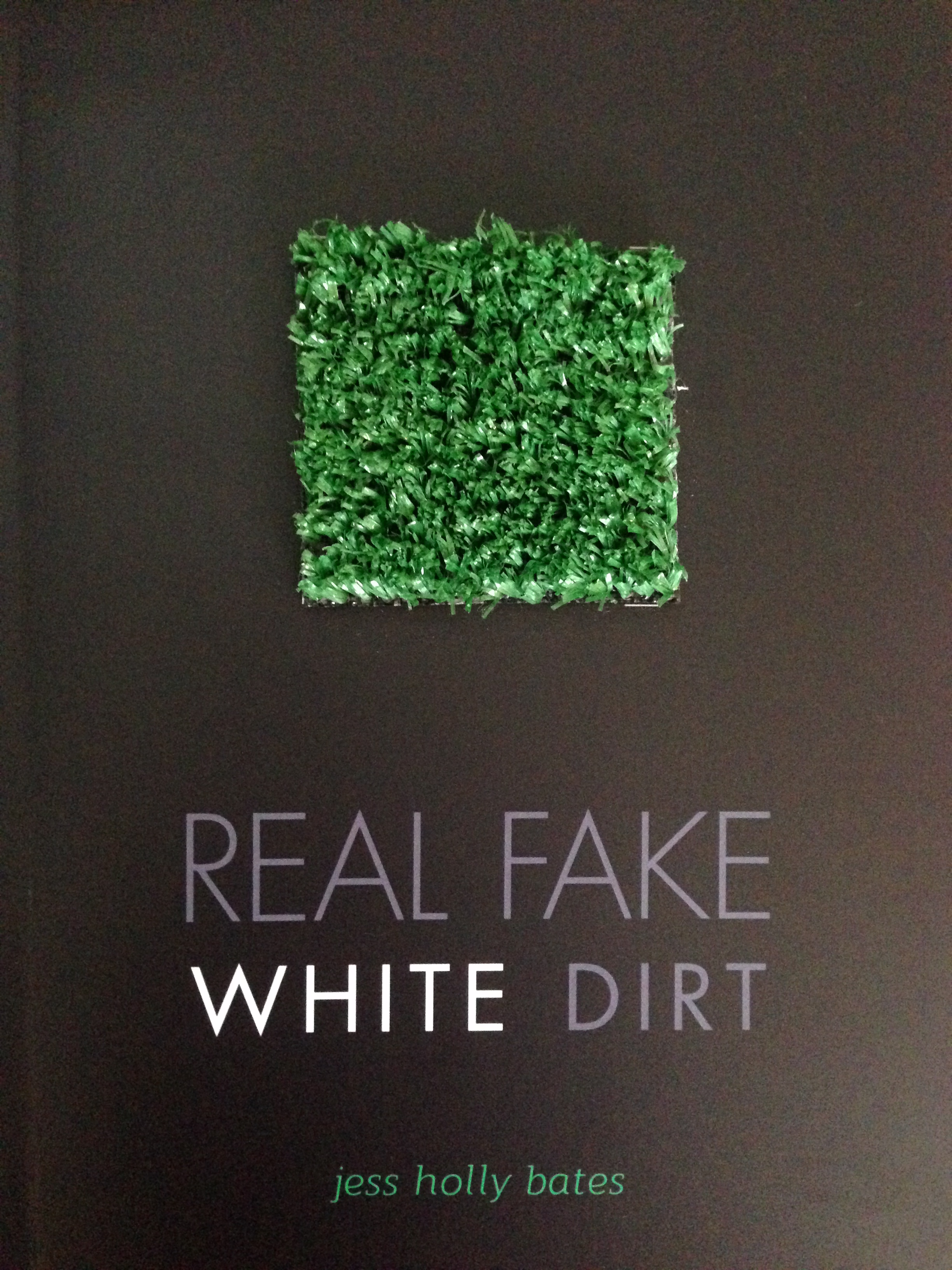
Anahera Press (publisher is Kiri Piahana Wong)  published REAL FAKE WHITE DIRT in 2014 and it is a terrific debut. It is the first Pākehā poet that this press has published and I can see why Jessie was chosen. The poems overlap and interlace with a vibrant cutting bite. This is wide open, loud politics that navigates identity issues face on. Tough. Uncompromising. Edgy. I loved the urgent challenging punch of ideas but I also love the way the words on the page split and weave into poetry. There is glorious word play at work. On the page, phrases flit and float. You have to keep your eyes roving as this is not conventional poetic forms/form (although not exactly unconventional  as you can trace back examples of this for decades). I see it as poetry misbehaviour. There is enviable rhyme (taxes/ masses, bleached/ keen, schtict/ poetic). There is leapfrogging assonance and the aural allure of repetition. Repeated things gain flesh in shifting contexts. Sound enacts political punctual marks. Everything comes back to the white-hot core that this is poetry from the heart and that vital ideas percolate above the surface. Wonderful!

PS: It is a gorgeous production with a striking black cover and a fake patch of grass that in the manner of poetry could equally be something else.

Anahera press page here

Poem Friday: Kiri Piahana-Wong’s ‘Kahukeke’ flows down the page like water, honeyed in its fluency

night swimming author pic


Kahukeke

Here at Hikurangi,

the waters pour

down Waitekahu

and into the sea.

On the threshold,

the surf surges up

against the river.

Quietly the water

is absorbed.

Even in flood, the

river is never as

strong as the ocean

it returns to.

Kahukeke used to

kneel here, washing

in the river.


Kiri’s note on the poem: At the moment I am working on my second poetry collection, which has the working title ‘Tidelines.’ The collection is based around the history of the Te Kawerau a Maki people, kaitiaki of the Waitakere Ranges region in West Auckland where I currently live. Other iwi also traversed this area, amongst them Kahukeke, who was the wife of the senior tohunga of the Tainui canoe, Rakataura. In this poem, and others in the collection, I am attempting to inhabit the lives and voices of these early tūpuna.

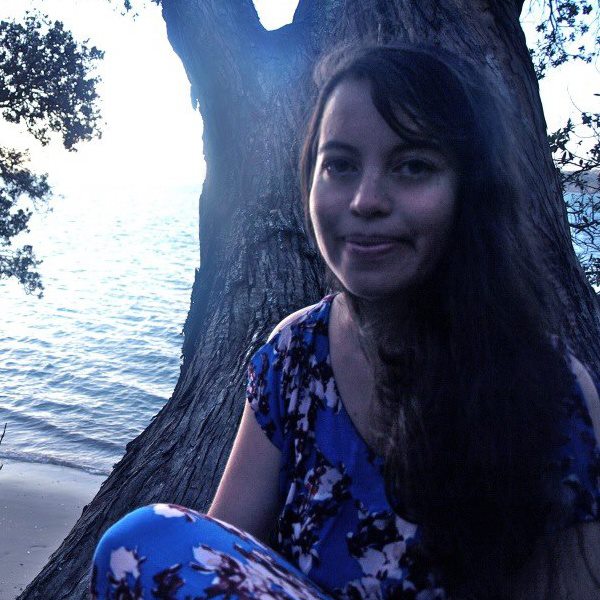
Author bio: Kiri Piahana-Wong is a New Zealander of Māori (Ngāti Ranginui), Chinese and Pākehā (English) ancestry. She is a poet, editor and publisher. Her first poetry collection, night swimming (Anahera Press), was published in 2013.

Paula’s note: Kiri’s poem flows down the page like water, honeyed in its fluency. Such fluency is addictive; you keep returning to the beginning to fall again into the watery flow. Then, the final image arrests you–the way, in the midst of riveting scenery, and the cyclic and never-ending movement of nature, there is the precise and vital instance of human activity. This image of a figure kneeing is poignant, potent. In such ways, the poem is utterly absorbing.

Māori poets celebrate Matariki

kiripiahana_160x170  apirana_taylor   robertsullivan_160x151

An exciting group of Māori poets – several of the country’s leading poets and some emerging writers – will come together to celebrate Matariki with readings and korero at a free event on Saturday June 28.

Māori Poets Celebrate Matariki features Ben Brown from Lyttelton, Apirana Taylor from Kapiti, with Auckland’s own Robert Sullivan, and social historian, novelist and poet, Kelly Ana Morey, from Mangawhai. It also features writer Te Awhina Arahanga, publisher and poet Kiri Piahana-Wong, and an emerging young poet Amber Esau.

This is a rare opportunity to hear some of the leading Māori poets in Aotearoa today, together with the next generation of talented young writers. It is a free event, part of the 2014 Matariki Festival, supported by Auckland Council and the Michael King Writers’ Centre.

Where:  Depot Artspace, 28 Clarence St, Devonport, Auckland
When:   Saturday, June 28, 2014, 4 pm
Free