You will find it in the icy sky of daybreak above the marine light of waves in the pages of the books of the dead poets: Vincent who some would call Voss, Lauris, Brian, Glover and Campbell, I loved them all more or less the pub and the drinks, the banter until evening and swearing blue murder blue, the word blue although to read them you could be forgiven for thinking it is a word they couldn’t bring themselves to use, as if every day blue was too ordinary a betrayal of the imagination, a carpet of flowers to trample, yet if you search deep in the end you will find it, the irresistible blue rain beyond the blue and round the lake so blue the visible blue dark they came to it sooner or later. You will find it too in the dark luminosity of navy on the mountain ranges at nightfall.
Fiona Kidman
Fiona Kidman has been writing for the past sixty or so years, her life’s vocation. Her work includes fiction, poetry and memoir, although for a long time her income came from screen writing. Her work has been published internationally and she has received a number of prizes, most recently the Jann Medlicott Ockham new Zealand Book Award for Fiction for This Mortal Boy. Her latest publication is The Midnight Plane: Selected and New Poems (Otago University Press 2025). She is a Patron of the New Zealand Poetry Society and of the Randell Cottage Writers Trust.
The Midnight Plane: Selected and new poems, Fiona Kidman Otago University Press, 2025
It’s the same again this weekend, wild weather, rain and delays, and a long way south, suspension on a cloud, books take you everywhere.
from ‘On small planes’
Reading your way through the poetry collections by a particular poet can be such a rewarding experience. I recently read Chris Tse’s poetry books and felt utterly moved. I sat at the kitchen table thinking this is why I write my own poems, and read, review and blog all-things poetry. Poetry is the ultimate prismatic experience for heart and mind, eye and ear. It is sustenance, it is challenge, beauty and balm, multiple-toned music. It is deep-rooted aroha.
For a number of years, I read and researched every possible woman poet who had published poetry in Aotearoa. It was illuminating, heartbreaking and felt utterly necessary to shine a light on the women who have written and published poems for over 150 years, to question their scant representation in anthologies, in publishing and award lists, in public appearances. The visibility of and attention paid to women poets has changed to a remarkable degree, but I am always suspicious of any critique or review that promotes a hierarchy of style or subject matter, that dismisses the domestic, the personal, the tricky-and-impossible-to-define feminine.
In the 1970s, women poets were finally catching the attention of readers. In an interview with me in 2016, Fiona mentioned some of the women who were publishing poetry and performing at venues together: Lauris Edmond, Elizabeth Smither, Marilyn Duckworth, Meg Campbell and Rachel McAlpine among others. A handful of women joined the young men countering the poetry traditions that had preceded them with calls for the new, but others, such as Fiona, advanced the rewards of the domestic in poetry. Rachel made it intoBig Smoke: NZ Poems 1960 – 1975 (AUP, 2000), while Fiona, with her attention to the domestic, did not. Yet in my view, both women liberated words for women, inspired women to write. Like Fleur Adcock and Rachel, Fiona has favoured the first person pronoun. It is personal and intimate, and I feel like I’m sitting in the same room as the poem, entering the terrain of autobiography. The relationships, the acute observations and anecdotes, carry me within and beyond a domestic setting.
In her preface to The Midnight Plane, Fiona tellingly writes: ‘I am a plain poet; some critics would describe my early work as ‘confessional’, others as ‘domestic’. Perhaps I was such a poet, and at heart still am, although I am not given much to such labels. What I know is poetry still has the power to shake the heart.” And that is exactly what Fiona’s poetry does for me. It shakes my heart.
Let’s listen to Fiona read:
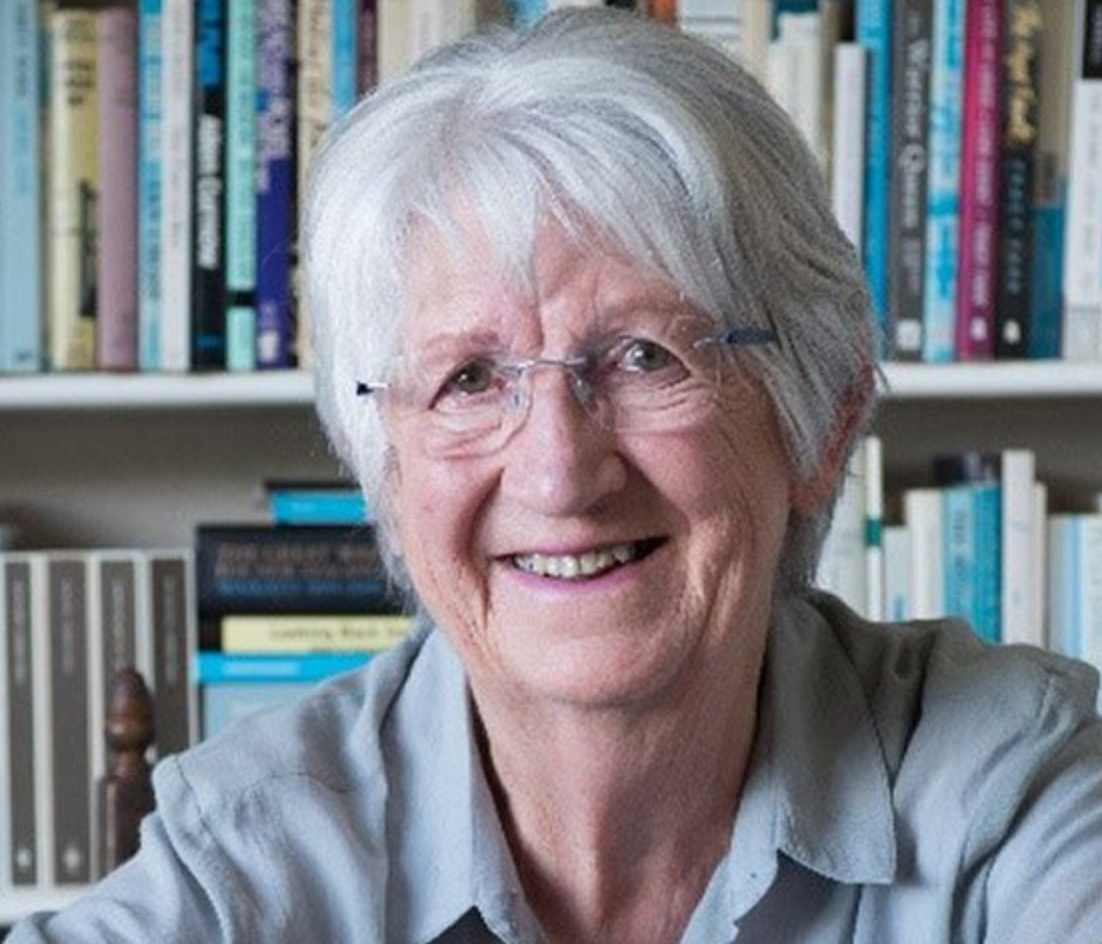
Fiona Kidman at home
Photo credit: Robert Cross
‘The midnight plane’
‘What I do’
Otago University Press has gathered a selection of poems from Fiona’s books, along with some new ones. The beautiful production, with a hard cover, lovely paper stock, and a gorgeous cover, acknowledges the work as a national taonga.
Fiona’s debut collection, Honey & Bitters (1975), is one of my all-time favourite poetry collections. It is a series of both actual plantings and memory plantings, a matrix of movement and stillness, physical views and revealed feelings, where what is not said rubs alongside what is said. The writing is agile, surprising, holding out the rhythm of slow-paced observation. I read a poem, I stall and have to read it again, and again.
In the field the sheep are scattered like hail, this pale dun landscape with small quaint cottages we’ve driven miles to find, for sale, near trees
whose scribble branches wait for spring, scratch barren messages across the sky. But a man, a boy, a girl and I are here.
from ‘Wairarapa Sunday’
The poem, ‘Kohoutek’ is dedicated to the comet, but draws our attention to the preciousness of each day, to the ‘voyages of discovery’ in a new house, to the trees bursting in green, and the sunlight patches. Fiona writes: ‘These are the miracles of the everyday’, and this for me is a miniature poetry manifesto. It is one I hold close to my heart, sitting at the kitchen table where I have written so many books, celebrated so many books by other poets, shared so many meals.
I like the way you stand, fingers trailing over the back of a chair before a velvet curtain looped with braid, your eyes fierce and direct, a hat like a guardsman’s helmet tilting on your brow, a telltale ruffle of lace at the wrists because you are my grandmother fluted silver vases stand poised above my bookshelves because you are my grandmother I wear old fine gold and mother-of-pearl because, because of this, I wear this hair shirt of guilt the settlers’ shame
from ‘Speaking with my grandmothers’
In Where Your Left Hand Rests (2010), another collection I adore, there is a poem I would love to post in its entirety on Poetry Shelf. ‘Speaking with my grandmothers’, is a poem that threads past and present, that forms a braid of spike and silk as Fiona reflects upon the grandmother ancestors she never met, and the stolen land she stands upon. Here are the final lines: “Tonight I want to sit quietly by this window. There is so / little silence, so many voices.” Ah, we can take this moment and hold our line of grandmothers close, and for some of us, the stolen land we stand upon.
This Change in the Light (2016) is another go-to collection for me, with its haunting portrait of Fiona’s mother in ten sonnets, its travels from Paris to Provence to Singapore to a cancer ward. The poem, ‘What I do’, is one I could pin to the wall; it navigates mornings devoted to writing books, afternoons to preparing food, suggesting the mornings may not be cut and dried like food, but how love seeps though the whole day. It feels like I see myself in the poem’s mirror, with my endless hoard of cookbooks, my love of cooking and writing every single possible day. And then, and then movingly then, the exquisite final poem, ‘So far, for now’, a loving tribute to her beloved husband Ian. I am holding this poem to my heart. I wanted to share lines but it felt wrong to take a handful out, you need to read it in full, and let it unfold in you over the course of a day.
On the cover of the book, a photograph shows Fiona sitting in her lounge looking out the window at the Wellington sky and harbour. A perfect image for poetry that embraces both lounge and sky, that depends upon slow observation and the dailiness of living, a mind that goes travelling. Sitting at my kitchen window looking out across the ever-changing expanse of bush and sky, as I pick my way along a road thatched with spike and sweetness, I am crying, strangely crying, because somehow, I know that for so many of us, poetry is a gift, a gift we do and a gift we share. Fiona’s poetry winds about me, I gather it in, the shifting lights and the vital substance, knowing in her work there is always heart, her fingers on the pulse of humanity, and that is why the poetry of Fiona Kidman matters so very much.
Dame Fiona Kidman is a poet, fiction writer and memoirist. She has also written for the screen industry. Her internationally published work has won numerous prestigious literary awards, and her honours include a damehood (DCNZM), an OBE and the French Legion of Honour (La Légion d’Honneur). She lives on a cliff top in Wellington.
Poetry is a way of bridging the faraway and the close at hand. A poem can make the achingly distant comfortingly close. Poetry can be a satisfying form of travel, whether to the other side of the world, to the past or to imagined realms. Reading poems that offer the faraway as some kind of presence, I feel such a range of emotions. Moved, yes. Goose bumps on the skin, yes. Boosted, yes. This is such a fertile theme, I keep picturing a whole book moving in marvellous directions.
I am grateful to all the poets and publishers who continue to support my season of themes.
The Poems
Remembering
if you can you can try to recall
the sun across the roof and you
knee-deep in childhood playing
near the fence with the storm
of daisies still impressionable
in the way of dreams still
believing leaves had voices
and you might then remember
curtains drowned in burnished light
how at night the sky emptied
into a field of stars leaching out
the guilt you’d soon forget unlike
the woman you called Nana who kept
knitting you hats while you kept not
writing back and maybe then you’d know
the injustices you had no part in
the lady who bought your house how
she ravaged your kingdom while
you were away oh these memories
spiralling into memories into
nothing this helter skelter art of
remembering this bending
over backwards running out of light
Anuja Mitra
from Mayhem Literary Journal, Issue 6 (2018)
Drifting North
Acknowledgement to David Eggleton
She said we discussed post
structuralism in a post modern
context. She said in order
to remember such crucial
poetic phrases she had bought
a small exercise book in which
to record them.
It was, she said, a book
of semantic importance.
She said we considered
the deception of disjointed
parody and the fragmentation
of shallow consumer culture.
I can only remember
a girl
in her pale blue cardigan
drifting north
in a zither of light.
Jenny Powell
from Four French Horns, HeadworX, 2004
apricot nails
I want to paint my nails apricot as an homage to call me by your name and the fake italian summer I had last year —
fake because I didn’t cycle beside slow streams or in slow towns
Instead I lay on a 70 euro pinstripe lounger and couldn’t see the water only other tourists
And the apricots I ate came from peach spritzes at sea salt restaurants and clouded supermarket jars
But all the shops are shut and the closest nail colour I have is dark red
I want to be somewhere in northern italy with light green water and deep green conversations
I want to pick fresh apricots from drooping branches and kiss a boy I shouldn’t on cobblestone paths against cobblestone walls
I want to lick a love heart on to his shoulder so that when he gets on a train my hands shake like a thunderstorm
and I can’t cycle home past the fields we held each other in and mum has to pick me up from the station
I want to walk down a staircase with winter at the bottom waiting to sweep me into snow
I want the phone to ring when the sky is white and hear an apricot voice ripe and ready to be plucked from the tree
he’ll say how are you and I’ll slowly leak
Rhegan Tu’akoi
from Stasis 5 May 2020, picked by Aimee-Jane Anderson-O’Connor
Wearing Katherine Mansfield’s Shawl
Seventy years on, shut
in a cardboard box in the basement
of City Hall, you might think
the shawl would have lost
its force to charm, the airy fragrance
of its wearer departed, threads
stripped bare as bones,
yet here it is, another short story:
it felt like love at the Hôtel
d’Adhémar the moment you placed
the silk skein around my shoulders,
the dim red and rusty green fabric
and a fringe gliding like fingertips
over my arm, a draught of bitter
scent – Katherine’s illness,
Virginia’s sarcasm – and
yes, a trace of wild gorse
flowers and New Zealand, not
to mention the drift of her skin
and yours during the photograph,
the stately walk through the town.
Fiona Kidman
from Where Your Left Hand Rests, Godwit, Random House, 2010
Sparks
On the occasion of the Sew Hoy 150th Year Family Reunion, September 2019
Here in this earth you once made a start
home treasure watered with sweat, new seeds
a fire you can light and which gives off sparks
the gleam of gold glowing in darkness
an open door, warm tea, friendships in need
here on this earth you once made a start
sometimes you imagined you left your heart
elsewhere, a woman’s voice and paddies of green
a fire which was lit, remembering its sparks
but even halfway round the world, shoots start
old songs grow distant, sink into bones unseen
here in this earth you can make a new start
with stone and wood you made your mark
built houses of diplomacy and meaning
a new fire was lit, with many sparks
flame to flame, hand to hand, heart to heart
150 years, sixteen harvests of seed
here, in this earth, you once made a start
A fire was once lit. We all are its sparks.
Renee Liang
Heavy Lifting
Once, I climbed a tree
too tall for climbing
and threw my voice out
into the world. I screamed.
I hollered. I snapped
innocent branches. i took the view
as a vivid but painful truth gifted
to me, but did not think to lay down
my own sight in recompense.
All I wanted was someone to say
they could hear me, but the tree said
that in order to be heard I must
first let silence do the heavy lifting
and clear my mind of any
questions and anxieties
such as contemplating whether
I am the favourite son. If I am not,
I am open to being a favourite uncle
or an ex-lover whose hands still cover
the former half’s eyes. I’ll probably never
have children of my own to disappoint
so I’ll settle for being famous instead
with my mouth forced open on TV like
a Venus fly-trap lip-synching for its life.
The first and last of everything
are always connected by
the dotted line of choice.
If there is an order to such things,
then surely I should resist it.
Chris Tse
from he’s so MASC, Auckland University Press, 2018
My city
drawing blank amber cartridges in windows
from which we see children hanging, high fires
of warehouse colours, a reimagining, my city fluttering
far and further away with flags netted
and ziplining west to east, knotted
and raining sunshine,
paving cinder-block-lit-tinder music in alleys
where we visit for the first time, signal murals
to leapfrog smoke, a wandering, my city gathering
close and closer together a wilderness
of voices shifting over each other
and the orchestra,
constructing silver half-heresies in storefronts
to catch seconds of ourselves, herald nighttimes
from singing corners, a remembering, my city resounding
in and out the shout of light on water
and people on water, the work of day
and each other,
my city in the near distance fooling me
into letting my words down, my city visible
a hundred years from tomorrow,
coming out of my ears and
forgiving me,
until i am disappeared someways and no longer
finding me to you
Pippi Jean
Looming
I call it my looming
dread, like the mornings I wake
crying quietly at the grey
in my room, like whispering to my sleeping
mother – do I have to
like the short cuts I can’t take
like the standing outside not breathing
like my hand on the doorknob
counting to twenty and twenty
and twenty.
Tusiata Avia
from Wild Dogs Under My Skirt, Victoria University Press, 2004
mothering daughter
I am coming home to myself
while watching
my mother going away from herself.
Every move you make
an effort
so much slower now, mother
like your body is trying to keep pace
with your mind
everything about you reads as
tired
but sometimes I read as
giving up
FUCK THIS! silently salts my tongue
a tight fist slamming the steering wheel
gas under my foot
tears choking my ears
smoke swallowing my chest.
I am a mother:
Mothering her son,
a motherless daughter mothering her mother.
It’s hard somedays not to be swallowed.
Grace Iwshita-Taylor
from full broken bloom, ala press, 2017
Memoir II
Preparing for death is a wicker basket.
Elderly women know the road.
One grandmother worked in munitions, brown
bonnet, red stripe rampant. the other, a washerwoman:
letters from the Front would surface, tattered.
You must take the journey, ready or not.
The old, old stream of refugees: prams
of books and carts with parrots.
Meanwhile the speeches, speeches: interminable.
When the blood in your ears has time to dry: silence.
The angel will tie a golden ribbon to the basket’s rim.
You will disappear, then reappear, quite weightless.
Jeffrey Paparoa Holman
from Blood Ties: New and Selected Poems 1963- 2016, Canterbury University Press, 2017
fever
moving away from the orchard plots,
laundry lines that sag under the macrocarpa.
moving away from the crystalline skies,
the salt-struck grasses, the train carts
and the underpasses. i astral travel
with a flannel on my head, drink litres
of holy water, chicken broth. i vomit
words into the plastic bucket, brush
the acid from my teeth. i move away,
over tussock country, along the desert
road. i chew the pillowcase. i cling
my body to the bunk. the streets
unfurl. slick with gum and cigarettes.
somebody is yelling my name. i quiver
like a sparrow. hello hello, says the
paramedic. but i am moving away from
the city lights, the steel towers.
and i shed my skin on a motorway
and i float up into the sky.
Elizabeth Morton
from This Is Your Real Name, Otago University Press, 2019
Black Stump Story
After a number of numberless days
we took the wrong turning
and so began a slow descent
past churches and farmhouses
past mortgages and maraes
only our dust followed us
the thin cabbage trees were standing
in the swamp like illustrations
brown cows and black and white and red
the concrete pub the carved virgin
road like a beach and beach like a road
two toothless tokers in a windowless Toyota
nice of you to come no one comes
down here bro – so near and
yet so far – it takes hours
not worth your while –
turned the car and headed back
shaggy dogs with shaggy tales
Murray Edmond
from Fool Moon, Auckland University Press, 2004
The Poets
Tusiata Avia is an internationally acclaimed poet, performer and children’s author. She has published 4 collections of poetry, 3 children’s books and her play ‘Wild Dogs Under My Skirt’ had its off-Broadway debut in NYC, where it took out The Fringe Encore Series 2019 Outstanding Production of the Year. Most recently Tusiata was awarded a 2020 Arts Foundation Laureate and a Member of the New Zealand Order of Merit for services to poetry and the arts. Tusiata’s most recent collection The Savage ColoniserBook won The Ockham NZ Book Award for Best Poetry Book 2021.
Murray Edmond, b. Kirikiriroa 1949, lives in Glen Eden. 14 books of poetry (Shaggy Magpie Songs, 2015, and Back Before You Know, 2019 most recent); book of novellas (Strait Men and Other Tales, 2015); Then It Was Now Again: Selected Critical Writing (2014); editor, Ka Mate Ka Ora; dramaturge for Indian Ink Theatre. Forthcoming: Time to Make a Song and Dance: Cultural Revolt in Auckland in the 1960s, from Atuanui Press in May, 2021.
Jeffrey Paparoa Holman is a Christchurch poet and non-fiction writer. A poetry collection, Blood Ties: selected poems, 1963-2016 was published by Canterbury University Press in 2017. A memoir, Now When It Rains came out from Steele Roberts in 2018. He makes his living as a stay-at-home puppy wrangler for Hari, a Jack Russell-Fox Terrier cross. Hari ensures that little writing takes place, while psychogeography and excavating parks happen daily. Recent work has appeared in Poetry New Zealand Yearbook 2021, an essay on prison reform, and poetry; also, an inclusion in The Cuba Press anthology, More Favourable Waters – Aotearoa Poets respond to Dante’s Purgatory.
Grace Iwashita-Taylor, breathing bloodlines of Samoa, England and Japan. An artist of upu/words led her to the world of performing arts. Dedicated to carving, elevating and holding spaces for storytellers of Te Moana nui a Kiwa. Recipient of the CNZ Emerging Pacific Artist 2014 and the Auckland Mayoral Writers Grant 2016. Highlights include holding the visiting international writer in residence at the University of Hawaii 2018, Co-Founder of the first youth poetry slam in Aoteroa, Rising Voices (2011 – 2016) and the South Auckland Poets Collective and published collections Afakasi Speaks (2013) & Full Broken Bloom (2017) with ala press. Writer of MY OWN DARLING commissioned by Auckland Theatre Company (2015, 2017, 2019) and Curator of UPU (Auckland Arts Festival 2020).
Pippi Jean is eighteen and just moved to Wellington for her first year at Victoria University. Her most recent works can be found in Landfall, Starling, Takahe, Mayhem, and Poetry New Zealand Yearbook among others.
Fiona Kidman has written more than 30 books and won a number of prizes, including the Jann Medlicott Acorn Fiction Prize for This Mortal Boy. Her most recent book is All the way to summer:stories of love and longing. She has published six books of poems.In 2006, she was the Katherine Mansfield Fellow in Menton. The poem ‘Wearing Katherine Mansfield’s shawl ‘is based on an event during that time. Her home is in Wellington, overlooking Cook Strait.
Renee Liang is a second-generation Chinese New Zealander whose parents immigrated in the 1970s from Hong Kong. Renee explores the migrant experience; she wrote, produced and nationally toured eight plays; made operas, musicals and community arts programmes; her poems, essays and short stories are studied from primary to tertiary level. In recent years she has been reclaiming her proud Cantonese heritage in her work. Renee was made MNZM in 2018 for Services to the Arts.
Anuja Mitra lives in Auckland. Her writing has appeared in Takahe, Mayhem, Cordite Poetry Review, Starling, Sweet Mammalian, Poetry Shelf and The Three Lamps, and will appear in the AUP anthology A Clear Dawn: New Asian Voices from Aotearoa New Zealand. She has also written theatre and poetry reviews for Tearaway, Theatre Scenes, Minarets and the New Zealand Poetry Society. She is co-founder of the online arts magazine Oscen.
Elizabeth Morton is a teller of poems and tall tales. She has two collections of poetry – Wolf (Mākaro Press, 2017) and This is your real name (Otago University Press, 2020). She has an MLitt in creative writing from the University of Glasgow, and is completing an MSc in applied neuroscience at King’s College London. She likes to write about broken things, and things with teeth.
Jenny Powell is a Dunedin poet and performer. Her work has been part of various journals and collaborations. She has a deep interest in music and used to be a french horn player.
Chris Tse is the author of two poetry collections published by Auckland University Press – How to be Dead in a Year of Snakes (winner of Best First Book of Poetry at the 2016 Ockham New Zealand Book Awards) and HE’S SO MASC – and is co-editor of the forthcoming Out Here: An Anthology of Takatāpui and LGBTQIA+ Writers From Aotearoa.
Rhegan Tu‘akoi is a Tongan/Pākehā living in Pōneke. She is a Master’s student at Victoria and her words have appeared in Turbine | Kapohau, Mayhem and Sweet Mammalian. She has also been published in the first issue of Tupuranga Journal
The Public History Talks are hosted by the Ministry for Culture & Heritage History Group at the National Library of New Zealand. They are usually held on the first Wednesday of the month from March to November.
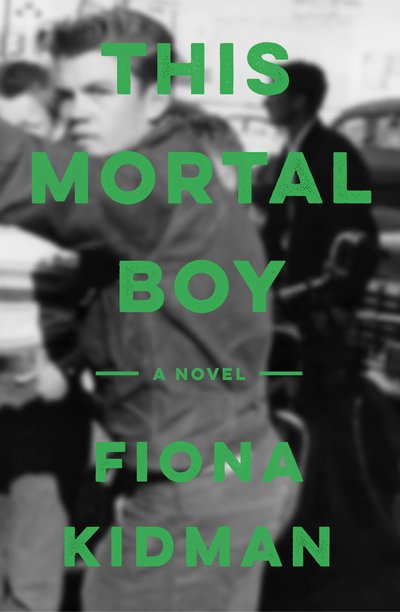
Please join us to hear Dame Fiona Kidman discuss the writing of her award-winning book ‘This Mortal Boy’.
Albert Black, born in Belfast, was eighteen when he arrived in New Zealand as an assisted work immigrant, in 1953. Although his life in New Zealand started well, he was found guilty of murder after an altercation in an Auckland cafe, two years later. He was hanged in December 1955.
In writing the novel ‘This Mortal Boy’ (Vintage, 2018), Fiona Kidman explores the story behind the headlines and asks whether Black might have been found guilty of manslaughter rather than murder.
The 1950s were a time of social upheaval in New Zealand, and form a background to the events she describes. Central to this talk will be the methods of research employed and the boundaries between fact and fiction.
These free public history talks are a collaboration between the National Library of New Zealand and Manatū Taonga Ministry for Culture and Heritage. They are usually held on the first Wednesday of the month March to November.
Dame Fiona is a Wellington writer. Over the years she has been a librarian, radio producer and screenwriter.
She has written more than thirty books, including novels, short fiction, memoir and poetry. Her latest novel ‘This Mortal Boy’ was awarded the Acorn Foundation’s Prize for Fiction at the Ockham Book Awards 2019. She has a DNZM, OBE and two French honours, including the French Legion of Honour.
My bookshelves are like an autobiography because books, like albums, flag key points in my life.
To pick only three poetry books that have mattered at different points in your life is a tall order but these poets have sent me chasing collectons and composing my own list.
Featured poets: Fiona Kidman, Joan Fleming, Hannah Mettner, David Eggleton, Sam Duckor-Jones, Amy Leigh-Wicks and Murray Edmond.
Fiona Kidman
I was team teaching a creative writing group with my dear late friend, the poet Lauris Edmond, when she read Elizabeth Bishop’s poem, “The Fish”. I remember the electricity in the air, as the dazzling images tumbled out, wonderfully read by Lauris. And then there is the moment where the caught fish is released back into the wild. I trembled when I heard the poem, the first I knew of Bishop’s work. This was in the late 1970s. Later, I bought Elizabeth Bishop The Complete Poems 1927 -1979, and discovered her inimitable Nova Scotian poems. I was working towards a novel partly set in Nova Scotia, and I carried the book with me – there, and on all my travels for years afterwards. I had a habit of pressing wildflowers collected along the way, and eventually, I realised that I was a danger to myself at the New Zealand border if I was to continue carrying them. I read the poems at home now.
Another book I have read and re-read many times, is Marguerite Duras’s last book (I think) Practicalities (published in 1993). I had been influenced by her fiction as a young woman. But this was a tiny book of essays, fragments, interior monologues, about desire, housekeeping, her struggles with alcohol, domestic lists of important things to have in the house, reflections on death.
And one more. On the bedside table I keep Seamus Heaney’s Opened Ground: Poems 1966-1996. I came late to Heaney’s work, but late is good, because I’m still making discoveries, there are still pleasures in store from the great Irish Nobel Prize winning writer. It’s like tracing my finger through language and feeling my own Irish blood singing its way through my veins. The collection contains, incidentally, a poem about Katherine Mansfield.
Joan Fleming
Anne Carson’s Autobiography of Red was a gift from Amy Brown on my 23rd birthday. It blew my head off. It is the best and strangest failed love poem I have ever read. But more than that, it showed me how a book could perform an argument, and at the same time, exquisitely fracture the foundations of the kind of thought that makes argument possible.
Jordan Abel’s book The Place of Scraps is an erasure poem and a series of prose reflections, which explode and complicate the work of ethnographer Marius Barbeau. I had been searching for poetry that could do this mode of critical work all through my PhD, and discovered The Place of Scraps very late in the journey, on the recommendation of the dear and brilliant Brian Blanchfield. The book is a stunning example of a new kind of ethnopoetics – or, perhaps, counter-ethnopoetics. I was needing and seeking it, and its sensibility has offered me a kind of permission for my own work.
I wonder if all writers read as opportunistically as this? Maybe we’re all like exploration geologists, searching for those forms and sensibilities that we can mine for our own nefarious compositional purposes. The latest book of this ilk for me has been Rachel Zucker’s Mothers. What gets me about this book is the collage essay form, the candid revelations, and the way Zucker’s poetics walk the line between sentimentality and the rejection of sentimentality. I’m completely charged by the possibilities of this book’s form. Watch this space, I guess.
Hannah Mettner
Every birthday when I was a girl, my parents would get me an obligatory book. This wasn’t a problem, as I liked reading, but the choices were a bit hit or miss, and I was often far more thrilled by other gifts. One year though, they got me The Door in the Air and other stories by Margaret Mahy, and it has become my enduring favourite book, certainly the book I’ve re-read most. My current favourite story (it changes all the time) is about a woman who bakes her grown-up son a birthday cake, ices it, and leaves it in a glass dome for the month leading up to his birthday (I presume it’s a fruit cake, otherwise, ew). In a hilarious twist, the cake becomes the next big thing in art, when it’s “discovered” by two gallery owners. I think it’s the perfect take-down of the art scene, and I often wonder what had happened in Mahy’s life that had inspired this gentle trashing of “taste-makers”. It’s also a really beautiful allegory for women’s work, which is so often un-recognised and un-celebrated: by elevating a cake, made with love by the light of a new moon, Mahy draws our attention to how little we do recognise this work, in the usual course of things. In the end, much to the chagrin of the gallery owners, who are considering taking the cake on an international art tour, the cake is eaten when the son comes home for his birthday, as intended. And all the stories in the book are these complicated, magical-realism, gently humorous, domestic, relationship-centred stories that do so much in such a short space.
My current favourite book of poems is Morgan Parker’s There are more Beautiful Things than Beyoncé, which I bought for its provocative title. It is the perfect mix of pop culture, politics and outrageously beautiful lines of poetry. It’s the kind of book that you can’t read all at once because each poem slays you. One of the poems, ‘The Gospel According to Her’ opens with this couplet:
What to a slave is the fourth of July
What to a woman is a vote
I mean! Wow! I’m so tired of the kind of ‘flippant cool’ and ‘awkward funny’ poetic voice that’s been popular for a bit now, and this book feels like such an antidote to that. It’s really important writing about the intersections of race, gender, class and pop culture in America, and it feels fiercely genuine.
And obviously one of my all-time favourite books of poems is Mags’ (Sugar Magnolia Wilson’s) new collectiom Because a Woman’s Heart is like a Needle at the Bottom of the Ocean. I’ve been waiting for this book since I first met Mags in our MA course in 2012, and, though I’d seen (I think) all of the poems in it before it was published, having them gathered together in one place makes them all seem to glow a bit brighter. It possesses some of the magical realism that brings me back time and again to the Mahy, with a slightly darker, more grown-up edge. It feels like a book that has already lived a thousand lives, and lived them richly, and has picked up scraps and talismans along the way to adorn its stories, like the bower birds in the poem ‘Glamour’. It does what the best poetry does, which is to offer you something beautiful and immediate on the surface, but with more and more layers of meaning to unpick as you make repeat visits. I think what it has to say on how we define ourselves in relation to other people is genuinely complex and profound.
David Eggleton
The Walled Garden by Russell Haley, published in 1972 by The Mandrake Root, was one of the first poetry books I ever bought, and I bought it in order to read it over and over and internalise it. Its verses I found visionary, oneiric, hallucinatory. I had seen it displayed in Auckland’s University Book Shop, which was then in the Student Quad on campus. I picked it up off the shelf, began idly flicking through and became immediately ensnared by its strange chanting lines:
Invest the real with moths of dream
white paper is a time machine
and
six inches of semantic dust cover the carpet
he drew with his fingers
new maps of home
Grafton Road and Carlton Gore …
As I was living in Grafton Road at the time, just along the bustling hippie encampments in the grand old villas near Carlton Gore Road, my brain began to hum. I bought the book and it immediately became my guide to a certain state of mind a celebration of another, more phantasmal, Auckland in the decade of the 1970s:
Gagarin is finding a new way to walk
both the rock and the lion are starting to talk …
Russell Haley was a British migrant who grew up in the north of England and then served in the R.A. F. in Iraq in the 1950s, at a time when the oil wells of Middle East were relatively untroubled by the meddling of the United States, and archeological expeditions to the Fertile Crescent were proceeding in an orderly fashion, and Persian poetry was being celebrated as the ne plus ultra of the Islamic Golden Age. In Haley’s The Walled Garden, still to me a wondrous book, I was attracted to the private mythology, the prophetic quality, the dream-like imagery, the air of premonition, of the circularity of history he was invoking: a sense of time of time regained out of a kind of colourful rubble — the bric a brac of twentieth century international modernism — which seemed to me at the time seductively exotic. Moreover, he managed to make tenets of Sufi mysticism rhyme and chime with kite-flying in the small hours on Bethells Beach:
3.30 am …
There are two voices —
the first is that of the man
holding the kite string —
he says everything and yet nothing.
The second is the deep hum of the rope
linking the man and the kite —
this voice says nothing and yet everything
(from night flying with hanly)
Published in Auckland by Stephen Chan’s Association of Orientally Flavoured Syndics in 1972, David Mitchell’s first, and for several decades his only poetry collection, Pipe Dreams in Ponsonby, was reprinted in a second edition in 1975 by Caveman Press, whose publisher was Trevor Reeves. That is the edition, acquired second-hand years later, that I have in my possession, knocked out by Tablet Print in Dunedin and, though in a similar thin black cardboard jacket, not quite as elegant and well-printed as the earlier one. Yet it still conveys the magic, the mojo, of a poet who celebrated the poem as spoken word. For me, David Mitchell is an exemplar of the shaman able to take a poem off the page and make it into something performative, transcendent, on a stage. In Auckland in 1980, David Mitchell established the Globe Hotel weekly poetry readings which became inspirational. Mitchell was a poet of the primal, one who had an ability to suggest and conjure up the electric atmosphere of raw improvisation. A master of syllabics, the man with the golden ear, he was actually all craft. He worked with silence, building up cadences out of short phrases and using the pregnant pause to create resonance. He was intent on emphasising the evanescence of the moment; with the use of subtle intonation and enunciation, seeking to establish an authentic encounter with the poem he was reciting, its mood, its music.
Kendrick Smithyman was another early enthusiasm of mine, in particular his 1972 collection Earthquake Weather in its drab olive green cover, containing the poem ‘Hail’ whose last lines give the book its resonantly memorable title: ‘We call this earthquake weather. We may not be wrong.’
But it is his later epic 1997 poem Atua Wera that spun my compass round as an example of what a truly ambitious New Zealand poem could be. Atua Wera, is a poem glued together out of bits and bobs. It muses on historical hearsay, folklore, museological keepsakes, and intertextual chunks of letters and journals. It requires you to latch onto the poet’s rhythms of thought, his oblique way of saying things as he tells the story of Papahurihia, a Northland Māori millennial prophet who was a tohunga descended from tohunga.
In this verse biography, Smithyman is a prose Browning, up to his elbows in the old colonial dust, breaking up journalistic reportage into cryptic fragments, into crabbed lines scattered across the page, except that where Robert Browning embroidered endlessly in his epic The Ring and the Book on a story that, as Thomas Carlyle said, might have been told in ten lines and were better forgotten, Smithyman’s effort is a superb revivification of an amazing chapter in New Zealand colonial history.
A master-ventriloquist, like his subject, Smithyman uses James Busby, Thomas Kendall and Frederic Maning to tell us about Yankee sailors encountering Moriori voodoo, and about the Garden of Eden snake in Genesis being transformed into a lizard, then a dragon, then ‘a fiery flying serpent’ who turns out to be Te Atau Wera himself, the shape-shifter. Atua Wera is itself a shape-shifting poem of ghost-riders and end-of-world portents, of the phantom canoe on Lake Tarawera before the eruption, and of a light in the sky which turns out to be a TV repeater mast. It’s a book which is a palimpest, a treasure trove, a landmark, a beacon.
Sam Duckor-Jones
DIFFERENT DANCES / SHEL SILVERSTEIN
This is a large coffee table book of drawings of naked men and women fucking and sucking and being impaled in various ways. There is straight sex, queer sex, and not-so-subtle nods towards fun things like necrophilia! incest! bestiality! We loved this book when we were kids, we poured over it wide eyed, impatient, tingling and desirous and competitively appalled or nonchalant, depending. A little later, ie adolescence, when my friends and I started liking boys but had no language or real world models with which to express it, we drew: cousins rutting in basements, fey teachers with debased secrets, musclemen kissing in pantries… Different Dances was my manual for lusty expression: put it on the page. To this day I still prefer a pen and paper to real life, sigh.
DEAR PRUDENCE / DAVID TRINIDAD
David Trinidad has this long prose poem called ‘Mothers’ in which he remembers all the mothers from his childhood neighbourhoods. It’s intimate and cinematic and filled with satisfyingly stifling pastels and veneers of conformity and simmering desperations and a serious deluge of kitsch, moving from comic portrait to heartbreaking confession. I read it in 2016 and immediately made David Trinidad one of my favourite poets and Dear Prudence one of my most frequently thumbed books. David Trinidad constructs his poems from celebrity interviews, soap opera scripts, trashy novels, idol infatuations, all with a serious wash of queer love and it’s associated traumas. He takes plain language and wrings it with tight margins til it becomes something crystalized. I love him.
BLISS / PETER CAREY
When I lived in Auckland I was a bad employee. I worked in a number of cafes, briefly. I was scared of the customers and didn’t have the cahones for kitchen trash talk. All I wanted to do was read and draw, why was this not allowed? On a lunch break at a Ponsonby spot where I was the lame FOH, I read Bliss in the upstairs staffroom. The barista came and sat beside me and talked and talked and would not stop talking so I picked up my book and climbed right out the window. I ran along the awnings and shimmied down a drainpipe, stormed righteously to Grey Lynn park, finished my chapter. Caught the next train home to Wellington. Ever since, Bliss has represented a real particular sort of escape to me, and is a reminder that a good book is worth it.
Amy Leigh Wicks
I came across Jack Kerouac’s On the Road in university. I resonated with his ability to articulate the insatiable longings of the human heart. The novel wasn’t the best written thing I’d read, but the timing of it, the casual language paired with a desperate feeling of urgency coincided perfectly with my itch for travel and spiritual discovery. Kerouac said in a later interview that the book was really just about two catholic boys in search of God. I think a lot of people might have trouble seeing it because of all the Benzedrine and riotous living, but it hit me in the guts as true.
I was in my early twenties when I read Edna St. Vincent Millay’s Collected Poems. Her sonnets continue to be one great sources of inspiration and reflection. From Sonnet XXX which begins, ‘Love is not all,’ and ends in a surprising turn, to her sonnet What lips my lips have kissed and where and why, which appeared in Vanity Fair in 1920, but reads to me as if it were written now, her poems are delicious, layered, and precisely crafted.
I started studying James K. Baxter while I was working on my Masters in New York, and found a very hard time finding his books. When I moved to New Zealand and came across New Selected Poems: James K. Baxter edited by Paul Millar, I felt I had struck gold. I carry it with me in my purse most days, as it is not cumbersome, and it has a selection of poetry from all of Baxter’s books as well as a selection of previously unpublished works. I find myself coming back to Farmhand, where ‘He has his awkward hopes, his envious dreams to yarn to […]’ to later in his life, the bittersweet but undeniably beautiful He Waiata mo Te Kare where he says, ‘Nobody would have given tuppence for our chances,/ Yet our love did not turn to hate.’
Murray Edmond
Plants of New Zealand by R.M.Laing and E.W.Blackwell (Whitcombe and Tombs , 1906)
Shanties by the Way: a selection of New Zealand Popular Songs and Ballads collected and edited by Rona Baily and Herbert Roth (Whitcombe and Tombs, 1967)
Hidden Camera by Zoran Zivkovic, trans. Alice Copple-Tosic, (London: Dalkey Archive, 2008)
I think I was given ‘Laing and Blackwell’ (as it was always called) for my 12th birthday, at the end of 1961. I would have asked for it. I had recently joined the Hamilton Junior Naturalists Club and had begun to discover ‘another world’ in the flora of Aotearoa, which was to be a gateway for understanding many other things about the country I lived in that no one had yet mentioned. Robert Laing and Ellen Blackwell’s Plants of New Zealand was the first serious, semi-populist, reasonably comprehensive book on New Zealand plants. Ellen Blackwell, an amateur botanist in her late thirties, had met Robert Laing, Christchurch school teacher, graduate of Canterbury University College, and botanist with a special interest in marine algae, on a ship heading for New Zealand in 1903. Laing was returning from an overseas trip, Blackwell was visiting her brother Frank at Pahi in the northern Kaipara, her first (and only!) visit to New Zealand. The fruit of this meeting was the publication of the evergreen ‘Laing and Blackwell’ in 1906, with Ellen contributing photos (along with brother Frank) and much of the northern botanical information. The sixth edition I received had been published in 1957. It’s a strange old hodge-podge of a book, with reliable basic botanical coverage, mixed with Maori ‘lore’ on plant use, plus some poetical diversions to William Pember Reeves and Alfred Domett. Pretty soon us budding naturalists had graduated to Lucy Moore and H.H.Allan’s properly scientific Flora of New Zealand, but we never forgot our Laing and Blackwell. Ellen Blackwell returned to England after three years in New Zealand, never to return, but she left a little gem behind her. I wrote a poem called ‘Te Ngahere’ (‘The Bush’), using my new discoveries, and next year, 1963, my first year at high school, it was published in the school magazine.
I bought Rona Bailey and Bert Roth’s anthology Shanties by the Way, when I was a first year student at Auckland University in 1968. It might be my favourite New Zealand poetry anthology. Of the 85 songs, ballads, chants, rhymes, jingles, ditties, shanties, broadsides, protests, burlesques, etc. 21 are by the illustrious Anon. It’s a history book and a poetry book at the same time, a collection of voices, registers and, indeed, languages of Aotearoa. When Russell Haley and I wrote our satire, Progress in the Dark, on the sordid history of Auckland city, for the Living Theatre Troupe in 1971, I raided the prohibition section of the anthology for our play:
I am a young teetotaller
And though but six years old,
Within my little breast there beats
A heart as true as gold.
Bert Roth, socialist, Viennese Jew, escapee from Hitler’s Austria, declared ‘enemy alien’ by the New Zealand Government, became the historian of the Union movement in New Zealand; Rona Bailey, physical education teacher, dancer, communist, activist, had studied modern dance and the collecting of folk dance and song in the USA just before World War Two. Together these two created a rich record in verse and song of the story of Aotearoa – read it, sing it, and you’ll get the picture!
Lisa Samuels gave me Zoran Zivkovic’s novel Hidden Camera not so long ago. It’s a scary, funny, dark, narratively powerful and hauntingly intoxicating tale that makes you question the very reality around you as you read. Zivkovic, who wrote his masters’ thesis at Belgrade University on Arthur C. Clarke, and latterly taught there for many years, knows his Lem, his Kafka, his Bulgakov and his Gogol. Perhaps his work evokes what a Robert Louis Stevenson thriller or a Henry James ghost story in the 21st century might read like. Aren’t we all being recorded, all the time? Are the narratives of us that are recorded more real than the lives we think we are living? Zivkovic is a writer who makes me want to record narratives myself, if only to fight back against the capture of ourselves, to escape the horror of the prisons we have built for ourselves.
Contributors
Sam Duckor-Jones is a sculptor and poet who lives in Featherston. In 2017 he won the Biggs Poetry Prize from the International Institute of Modern Letters at Victoria University of Wellington. Victoria University press published his debut collection People from the Pit Stand Up in 2018. His website.
Murray Edmond is a playwright, poet and fiction writer; he has worked as an editor, critic and dramaturge. Several of his poetry collections have been finalists in the New Zealand Book Awards: Letters and Paragraphs, Fool Moon and Shaggy Magpie Songs. He has worked extensively in theatre including twenty years with Indian Ink on the creation of all the company’s scripts. His latest poetry collection Back Before You Know was published by Compound Press in 2019.
David Eggleton is a Dunedin-based poet and writer, who was formerly the editor of Landfall. He is working on a number of projects, including a new poetry collection.
Joan Fleming is a poet, teacher, and researcher. She is the author of two books of poetry, The Same as Yes and Failed Love Poems (both with Victoria University Press), and her third book is forthcoming with Cordite Books. She has recently completed a PhD in ethnopoetics at Monash University, a project which arose out of deep family ties and ongoing relationships with Warlpiri families in Central Australia. She is the New Zealand/Aotearoa Commissioning Editor for Cordite Poetry Review and teaches creative writing from Madrid, where she currently lives. She recently performed and served as Impresario for the Unamuno Author Series Festival in Madrid, and in 2020 she will travel to Honduras for the Our Little Roses Poetry Teaching Fellowship.
Fiona Kidman has published over 30 books including novels, poetry, memoir and a play. She has received a number of awards and honours including a DNZM, OBE and the French Legion of Honour. Her most recent book This Mortal Boy won the Acorn Foundation Fiction Prize at the Ockham Book Awards 2019. She has published a number of poetry collections; her debut Honey and Bitters appeared in 1975 while her more recent collections were published by Random House: Where Your Left Hand Rests (2010) and This Change in the Light (2016).
Amy Leigh Wicks is the author of The Dangerous Country of Love and Marriage (Auckland University Press 2019) and Orange Juice and Rooftops.
Hannah Mettner is a Wellington-based poet from Gisborne. Her first collection, Fully Clothed and so Forgetful (VUP 2017), was longlisted for the 2018 Ockham New Zealand Book Awards, and won the Jessie Mackay Award for best first book of poetry. She is co-editor with Morgan Bach and Sugar Magnolia Wilson of Sweet Mammalian, an online poetry journal launched in 2014.
The Writing Life: Twelve New Zealand Authors edited by Deborah Shephard
Massey University Press, 2018
Albert Wendt reads ‘Used-by Date’
Twelve authors talk to biographer and historian, Deborah Shephard, about writing and living. It is a captivating new book. Deborah has done an excellent job drawing out stories and raising issues; from what it means to write alongside domestic and money-earning demands to coping with both success and failure. She is familiar with the authors’ books and the context of the times in which they were written. The interviews often feel like a warm and stimulating conversation rather than a pre-prepared interview. John McDermott took stunning photographs to accompany the text.
Joy Cowley’s interview is essential reading. I didn’t realise how tough things were for her in her first marriage and how writing became increasingly important. The depth and range of her revelations moved me. I have been a big fan of Joy’s writing for decades. Along with Margaret Mahy she has also shown me that writers can be generous beyond the writing desk – in the way they listen and back younger or emerging writers (from the child to the adult). Joy was motivated to write New Zealand children’s books because it was really hard to find local examples.
Writing was something I just did. Wanting to be a writer, well, that’s like wanting to be a breather. I just lived stories.
Joy said she used to think people were like apples that fell from trees when they withered and dried but that she now thinks of people as onions – beautifully layered. This is an apt description for the interviews, for the writing life.
Deborah undertakes the interviews on the author’s turf, often over several days, and that makes a difference. We discover that Fiona Kidman has images of her writing mentors on the wall: Robyn Hyde, Katherine Mansfield, Margurite Duras. When they talk about Fiona’s mother and her knowledge of china, there is some Royal Doulton with pansies on the wall . That this is the china that featured as decorative end pieces in Fiona’s poetry collection This Change in the Light adds layers for me. I feel present in Fiona’s kitchen and I am reminded of her terrific poems about her mother.
My way of communicating with the world from when I was a very solitary child was through the written word.
Fiona’s interview covers family, friendship and feuds, love and terrible loss, along with the origins of her novels, the way she brings them to life and the way her writing process has changed over time. Her novels catch me immeasurably with their humaneness, their warmth and empathy; and the meticulous attention paid to details (think dialogue, setting, signs of the time). I have just read her latest, This Mortal Boy, and I recommend it highly.
In her interview Fiona returns to the 1970s, a time when women were reassessing their roles, finding their voice, standing together and speaking out. I was fascinated to read the back story to her debut novel, A Breed of Women – the way an early unpublished novel, ‘Club Litany’, was shelved because ‘it wasn’t a book I was quite ready to live with’. That novel formed the basis of A Breed of Women – the novel that affected so many women at the time. Fiona talks about entering ‘some new hall of knowledge’ and the women who gave her both the confidence to write and the tools to explore feminist issues.
I was particularly drawn to Fiona’s struggle to find a way to put Māori in her novels – Fiona grew up close to Māori communities and married a man with both Māori and Pākehā ancestry and has a daughter with Māori and Pākehā ancestry.
Again I am riveted by the conversation; the way it takes me back to Fiona’s writing and the way I reconsider what it was like to write in a particular time in a particular place.
Owen Marshall’s interview begins with Deborah reading his poem, ‘Missing person file – Jane Ella’, aloud. The poem features his mother and his slender memories of her; she had died when he was young. She is also there because Marshall had adopted her maiden name as his writing surname. His father remarried and had six more children to add to the initial three. Owen wanted to stay at secondary school beyond 5th form so was allowed to if he paid for it and contributed a small sum towards the household. Fascinating – the commitment to learn when many of his friends were reluctant. Like his father he savoured books and academic learning along with outdoor activities.
I loved the way Owen described the relationship between experience and invention in a novel or short story:
Much of that is my own experience, but burnished and reformed by the process that is fiction writing.
And that Owen prefers the novel to autobiography when he is asked about his short memoir:
The memoir is based on two short pieces I did for Sport magazine and takes my life only to the beginning of the nineties when I left full-time teaching and became a professional writer. I did enjoy revisiting an earlier time and earlier self, but the experience hasn’t given me a desire to write my autobiography. I prefer to be seen through the prism of my work.
Albert Wendt, like Joy Cowley, has gifted us literature across diverse genres and has offered extraordinary support towards other writers, both emerging and established. In the interview he keeps some things private out of respect to the living but he draws us close to his lineage, to parents and grandparents, to the way writing both takes flight and becomes grounded. In a talk to students at his old school, New Plymouth Boys’ High he said:
Our lives are made up of great joy and love and also great pain and suffering and change. At times we feel like giving up. But this is the only life we have so we have to try and survive it, and enjoy it. Live it with integrity and honesty and to the best of your gifts.
I want to pin this to my wall. Like many of the authors I have read so far, the writing life is a life of both challenge and joy. It is also a life of reading, and in most cases from an early age. Albert is no exception. He read the Bible and then the School Journal before hiding himself away in the secondary -school library. Then his sixth-form English teacher gave handouts of The Waste Land.
I’d never heard of The Waste Land but when he began reading, shit, it was like listening to music and the way my grandmother chanted. We studied the whole poem for the next two weeks and my attention was held right from the beginning.
Albert talks about the way he has always been political; and of his willingness to write about and challenge racism. He talks about the way politics infused Sons for the Return Home. I remember reading this book the year after I had left school – and thinking, as it settled inside me, this is what writing can do. Albert said:
When I write it’s mainly for myself. I’m writing a book that I would like to read. It has to mean something to me and if it has some impact on the public then good, but that is not my aim. At the time I wrote Sons for the Return Home I had become politicised, and I still am, but I was interested in exploring colonisation, what it does to people, both the colonised and the coloniser.
I am also fascinated by the process of writing and the way it differs from writer to writer. Albert speaks of writing poems:
I deliberately set out to make them feel effortless, but to achieve that sometimes I had to rewrite and rewrite, or leave it for a few days and then go back to it. With my new collection From Mānoa to a Ponsonby Garden I decided to write a set of poems fourteen lines long each, and centre each one on this garden and this house and Reina, our cat, me, and any other creature that entered the garden, and see what happened. I was doing what I do with my paintings, deliberately limiting the colours, and the bloody poems began to take off. And instead of having short lines I decided to have fourteen fairly lengthy lines and make them appear just casual, and closer to prose.
I love this book. I love the way it returns me to writing I am familiar with and lives that I am not. It reminds me that the writing process is addictive, sustaining and for many a necessary joy. It is not a criticism – because I found the interviews I have read immensely satisfying – but at the end of each one I wanted to enter the room and carry on the conversation myself.
I shall read the other interviewed authors over summer: Marilyn Duckworth, Tessa Duder, Marilyn Duckworth, Chris Else, Patricia Grace, David Hill, Witi Ihimaera, Vincent O’Sullivan and Philip Temple.
Fiona Kidman’s marvelous new novel features Albert Black – the ‘jukebox killer’ – the second-to-last person to be hanged in New Zealand. He had left his impoverished but loving family in Northern Ireland in the 1950s to seek a better life. He was barely an adult.
Having read extensive research material, Fiona recreated the events and relationships that led to Albert’s controversial execution. I knew the ending but I kept hoping the Irish mother or the anti-hanging supporters would change the outcome. Not possible. So I read the novel – so beautifully detailed, so alive in rendition – in a state of sadness at human behaviour. I am not talking about what seems to be murder in the heat of the moment after physical attacks.
I am talking about the way we treat people – who are claimed as different – as inferior: those from other countries, with different coloured skin, different accents, who make sexual choices other than heterosexual. Albert Black loses his name and becomes ‘Paddy’ because his Irish identity is not worthy of attention. It seems like the legal system, the judges, the media and general public were swayed by cultural scorn.
I might have had ongoing heartache as I read but I also absorbed the pulsating life Fiona created. The dialogue, the characters, the locations, the signs of the times – these all work to make a sumptuous depiction of a particular place in a particular time. I just loved it. I was born in June in Auckland one month before the jukebox event took place on 26 July 1955. Were my parents talking about it in their rented Point Chevalier bungalow? What did they make of the case?
The execution bothered Mt Eden’s Prison Superintendent, the defence lawyer, friends Albert had made, to the extent public disgust at the death penalty saw the campaign against it work towards change. The new Labour Government of 1957 -1960 (in contrast to the fierce support of previous PM Sydney Holland) commuted death sentences to life imprisonment. In 1961 a National Government introduced legislation to abolish the law and allowed non-party voting. With ten National Party members, and those from Labour, the law was changed.
This is the kind of book that makes you reflect deeply upon how we do things today – how our prison system works to advantage or disadvantage, how difference still contributes to a lack of societal or cultural privilege.
Some books stick to you. This compelling novel is one of them. Beautifully crafted, meticulously researched, with ample attention to the grittiness of life and both the kindness and cruelty of people. I adored it.
I wrote a new poem. You’ll be amazed at what happened next.
Bill Manhire from ‘Thread’
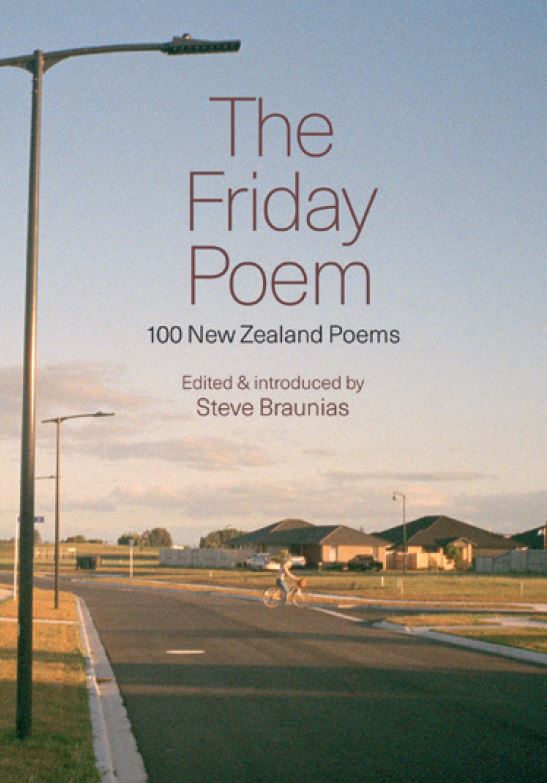
Steve Braunias kickstarted his Friday poem at the Spinoff four years ago – which prompted me to shift my Friday poems to Mondays! Decided to begin the week with a poem in the ear and have since started an ongoing season of Thursday readings (I really like hearing other poets read, especially those I have never met). More importantly I also like the fact we have more than one online space dedicated to local poems. Steve tends to pick from new books which is great publicity for the poet. I tend to pick poems that have not yet been published in book form and find other ways to feature the new arrivals (interviews, reviews, popup poems on other days).
Steve’s anthology of picks from the Friday-Poem posts underlines our current passion for poetry. I don’t see him belonging to any one club (like a hub around a particular press or city) – unless he is inventing his own: Steve’s poetry club. And there is a big welcome mat out. You will find mainstream presses and boutique presses, established poets and hot-off-the-press brand new poets, a strong showing of Pasifika voices, outsiders, insiders. He is fired up by the charismatic lines of Hera Lindsay Bird and Tayi Tibble but he is equally swayed by the tones of Brian Turner, CK Stead, Elizabeth Smither, Fiona Kidman.
She cried wolf but she was the wolf
so she slit sad’s bellyskin
and stones of want rolled out.
Emma Neale from ‘Big Bad’
Who would he feature at a festival reading? At Unity Books on November 12th in Wellington he has picked: Dame Fiona Kidman, Bill Manhire, James Brown, Joy Holley, Tayi Tibble.
The anthology is worth buying for the introduction alone – expect someone writing over hot coals with an astute eye for what is happening now but also what has happened in the past (especially to women poets). And by hot coals I mean a mix of passionate and polemical. This person loves poetry and that is hot.
Where there’s a gate there’s a gatekeeper, I suppose, but I think of the past few years as an exercise in welcoming rather than turning away. Publishing works of art every week these past four years has been one of the most intoxicating pastimes of my writing life. But I came to a decision while I was writing the Introduction, and commenting on the work of women writers, and adding up the number of women writers: it’s time to step aside. An ageing white male just doesn’t seem the ideal person right now to act as the bouncer at this particular doorway to New Zealand poetry. Women are where the action is: the poetry editor at the Spinoff in 2019 will be Ashleigh Young.
Steve Braunias, from ‘Introduction’
I felt kind of sad reading that. I will miss Steve as our idiosyncratic poetry gate keeper. Of course this book and the posts are unashamedly Steve’s taste, and there are a truckload of other excellent poets out there with new books, but his taste keeps you reading in multiple directions.
That said it’s a warm welcome to the exciting prospect of Ashleigh Young!
On most drives I like quiet because my mother
had a habit of appraising every passing scene, calling ordinary
things, especially any animal standing in a field, lovely
and this instilled in me a strong dislike for the world lovely
and for associated words of praise like wonderful and superb
but on our drive home tonight the sky is categorically lovely
You can hear the discussion and read Louise’s fabulous poem. Check out Fiona’s full sequence in Where Your Left Hand Rests (Godwit, 2010). It is poetry in an exquisitely produced book.
All the same, grandmother
how many hills are there left to stand on
because I tell you, it’s getting quite
lonely on this high moral ground
and now that I’ve found you, guilty secrets and all,
I can’t keep away, can’t stop looking at your picture
from ‘High ground’ in the sequence ‘Speaking with my grandmothers’
This year, The Women’s Bookshop hosted two Ladies Litera-Tea events. I didn’t make the first one, but the one on Sunday was perhaps the best one I have been to. The range of voices was inspired programming. I needed toothpicks to hold my eyes up when I left home, but Dame Fiona Kidman had me sitting up listening to the sonnets she wrote for her mother, Kirsten McDougall mesmerised with an extract from the must-read Tess, Heather Kidd showed the diverse creativity and ambitions of rural women (wow!), Michalia Arathimos spoke of the gut-wrenching origins of her debut also must-read novel Aukati, Fiona Farrell’s extract from Decline & Fall on Savage Street had me sitting on the edge of my seat, the sentences were so good (now have a copy!). Hearing how Eat My Lunch came into being from Lisa King underlined the difference one person can make (with help from friends!).
The first half was a glorious rollercoasting brain-sparking heart-warming delight.
By this stage no vestiges of tiredness. I thought I might flag in the second half but the immune-system boost continued. Wow! Hearing Sue Wootton read poems was a bit like hearing Anne Kennedy read and I just wanted more (please can she come to AWF?), Annaleese Jochems had me gasping every time she read an extract (also now on my table), Diana Wichtel’s account of Driving to Treblinka and her missing Polish Jewish father was so moving I was in awe of her tenacity and ability to bring that story to life on the page, Tina Makereti made abundantly clear why Black Marks on the White Page matters and why this collection is compulsive reading. I actually loved the way – rather than read her own award-winning ‘Black Milk’ – she picked ‘Famished Eels’ by Mary Rokonadravu to read (it had won the 2015 Commonwealth Short Story Prize for the Pacific Region).
We tell stories and we write poems in so many different ways – and that matters.
I came home with four new novels and so much more! Thank you Carole Beu, her team and the authors. I so needed that pick-me-up. Seriously I felt like I had come back from a month at Sandy Bay after reading novels and swimming.
Somewhere in the glorious mix, Courtney Sina Meredith read some new poems – which is no easy thing. I loved hearing her half sing/half speak an early poem, ‘Brown Girls in Bright Red Lipstick’, and I loved hearing the new poems. There is the same musical lift, the same political undercurrents, the same heart that beats along every line – yet there is also a stepping out, a tasking risks, a renewed self exposure with vital attachments to the world. Courtney kindly agreed to let me post two new poems that make a rather good pairing. Just so you can have a taste. I feel rather lucky as I an read them with her performance voice taking over.
I just adore the way these two poems make conversations with each other.
The poems
How about being a woman?
How about being a young woman?
How about being a young brown woman?
How about being a young brown queer woman?
How about being a young brown queer single woman?
How about being a young brown queer single educated woman?
How about being a young brown queer single educated professional woman?
How about being a young brown queer single educated professional creative woman?
How about being a young brown queer single educated professional woman?
How about being a young brown queer single educated woman?




 NZ Poetry Shelf