
In 2022 I had a lifesaving bone marrow transplant and, since then, have been on a long and bumpy recovery road. To celebrate the arrival of my new collection, The Venetian Blind Poems (The Cuba Press) I am creating three features to post on the blog over the coming month, with the help of other fabulous poets. Thank you!

The Venetian Blind Poems, Paula Green, The Cuba Press
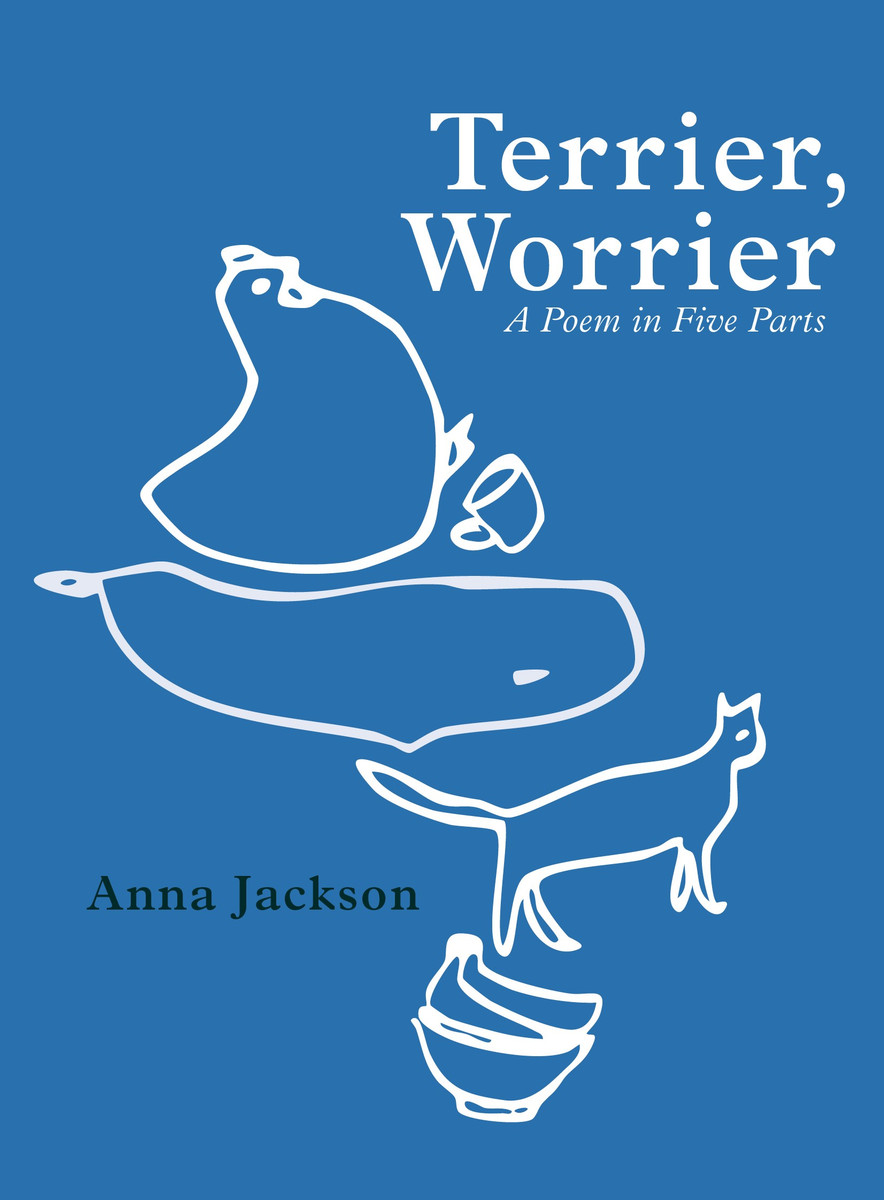
Terrier, Worrier, Anna Jackson, Auckland University Press
‘I thought, every body is a memory palace.’
Anna Jackson
‘I will try roaming drifting stalling sailing’
Paula Green
An email conversation: Anna Jackson and Paula Green
Paula: We have known each other for a long time, drawn together by our mutual love of poetry. When my debut collection Cookhouse was published by Auckland University Press in 1997 you slipped a letter in my university pigeonhole inviting me to afternoon tea, and we have been friends ever since. Over the past couple of years, in my isolation period, we’ve had ‘café conversations’ on the phone, filled to the brim with talk of books and writing and poetry. And of course, life. These conversations have been so precious to me.
We both have new poetry books out this year so I thought it would be wonderful to have an unfolding email conversation where we get to talk about reading and writing poetry, and most importantly, our two new books. Like a miniature road trip with no predetermined route or lookout points.
Where to start? For the past few days various ideas fell on the page, but I kept returning to an insistent thought: why poetry matters to me. I guess I have simple answers and complex answers. I have written poems all my life because I love doing it. Writing poetry gives me strength and joy. It feeds my love of music, my intellect, my heart, it offers surprising pathways into the past, the present, into beauty and despair, into humanity. I love how poetry can be so open, so organic.
Why does poetry matter to you?
Anna: I loved your Cookhouse book and I think it is funny how literally I took it – it is full of imaginary afternoon teas with writers, and you were the writer I wanted to have my own afternoon tea with, so I just asked you. I love the way poetry opens up possibilities, on the page and in the world. I thought about answering your question about what poetry means to me in these terms, as an intimate kind of relationship between poet and reader, and as a way of opening up possibilities for actions in the world. But trying to answer completely truthfully about what it is that has kept me reading and writing poetry for more than three decades now, it is really more as a form of art I engage with it, rather than as a form of conversation.
I am endlessly interested in the effects of form, and in how to arrange ideas and imagery in ways that add resonance to meaning, that give rise to a kind of beauty. I would really have liked I think to have been an artist, and to work to create a visual language and visual beauty that would also give rise to thought, but thoughts are my material, words are what I know how to work with, or have practiced working with, and I am no closer to reaching the limits of what I can do with them.
I’m trying to think if this is true of me as a reader of poetry as well as a writer and I think so? I do feel a little in love with poets as a reader, and so I do also think about poetry as a kind of conversation, or as a kind of self-expression – I can fall in love with a voice and want to read anything written by, for instance, Frank O’Hara or Eileen Myles or Amy Marguerite. And I love Raymond Carver’s poetry because I think of him writing it – even though I have never met him (or Frank O’Hara or Eileen Myles). And when I read Cookhouse, I wanted to know you as a friend. So it isn’t just an interest in formal arrangements – and that must be true for me as a writer too. I am not interested in arranging just anything, I am arranging ideas and experiences of my own. But the arrangement matters.
Paula: So much I want to say. I am thinking of poets whose books I have travelled with over decades – Bill Manhire, Bernadette Hall, Dinah Hawken, Elizabeth Smither, Michele Leggott, Anne Kennedy, Robert Sullivan, Selina Tusitala Marsh, Tusiata Avia, Emma Neale, Helen Rickerby – whose work I love so much and with whom I have had uplifting café poetry conversations. I am thinking of the incredible waves of new poets whose work both sustains and amazes me, and I feature this on Poetry Shelf.
I am also thinking of Terrier, Worrier, and how the book’s form, with its loops and patches, its intellectual and emotional rhythms, celebrates, yes celebrates, how poetry can open and re-view worlds, both internal and exterior. So yes, an arrangement that, like a Frances Hodgkin’s still life, offers expansive movement, and out of that movement, an intoxicating interplay of stillness and beauty. And it feels deeply personal. The poetry collections that depend upon, that navigate or have poetic bloodlines in the personal in myriad ways, these are the collections I want to keep reading and re-reading.
Anna: I read The Venetian Blind Poems as your friend, and knowing something about what you had been through, and having had many conversations with you about the politics of the time we are living in, the atrocities we have witnessed, and so of course I didn’t read it just as a formal arrangement of ideas. But I also do love it for its composition, for the way you balance the small, vivid details of a life – the sound of air conditioning, the day-break birds – with the concerns that extend beyond your own experience, your concern for other people, the way your own life is shaped by the news you hear on the radio and read on your phone. And I love, too, the way so much of the imagery is imagined or remembered – you can think of a beach while lying in a hospital bed, you can climb over pain like a mountaineer. Your whole life, in a way, is there in the room with you, even while it is so taken up with the routines of a hospital stay, the comings and goings of nurses, the way symptoms of illness and recovery shape the experience of time. It must have been a challenge arranging all these different things into a collection that moves as beautifully as The Venetian Blinds Poems does. Do you want to talk about this?
Paula: For me it simply comes back to three words: joy, light and love. Writing along with cooking is way of nourishing the joy, light and love that shape each day. And for me, both involve sharing. The Venetian Blind Poems comes out of a tough experience, but perhaps it comes back to beauty. I imagined (and still do) I am climbing a mountain. Yes, it is tough and there are obstacles, but in hospital I would stop on the side of the mountain and pause to look at the beauty view. And still do. My transplant was a gift, and even though I still face daily challenges, each day is a miracle.
I think I should add friendship to my list. I’m sitting here musing on the notion of poetry as friendship. I’m heartened by the acknowledgement pages in poetry books I have read this year, pages that situate the creation of a book within a matrix of friends, along with other writers and their work.
Anna: Oh yes, I like reading the acknowledgement pages too, especially in books by poets who are not part of my own poetry community, when they reveal friendships between different poets I love that I didn’t know were friends. I love to think of them reading each other’s work! Reading poems by friends, or people you want to make friends with, is a brilliant short cut to intimacy, you get to know them not only through the autobiographical details they might draw on, but through the particular way they leap from one idea to the next, the kind of images they think up, what they find beautiful in the world.
Returning to the question of the relation between poetry and beauty, there is so much beauty in The Venetian Blind Poems, in images like the moon shining through the blinds in the hospital, or the sweet-talking light that the hens respond to when you are back home in Bethells, looking out at a view you say you could make sugar from! And there is a beauty too in the arrangement of ideas and metaphor and in the movement through time that the collection gives us. I know you were an artist yourself before you were a poet, and your partner is an artist, so I’d be interested in what you have to say about the relationship between poetry and visual art, and the importance of beauty to you as a poet.
Paula: I love your drawings. I have one on the wall above my desk. You should do more! There is a long line of artists in my family. Colin McCahon once lived in a shed at the bottom of my mother’s garden. Toss Wollaston is in my family tree. I would stay with my artist uncle in Mapua, he would get out his paints for me, and I fell in love with painting. When Michael and I met in London we knew we wanted to be together, and that we wanted to write and paint no matter how poor we were, and we have done that. I get to walk up the hill to his studio and get an incredible uplift from his work. And I can go to exhibitions now.
When I initially view an exhibition or read a sublime poetry book, I move beyond words, into a state of intellectual and emotional uplift. A state that may move into narrative or ideas or memory or feeling. I felt that after reading Terrier, Worrier, it took me ages to find a way to review it, to find a form and an arrangement that opened the book for the reader.
There were so many lines I wanted to quote from your book in my review – ideas that would expand as I moved through the day. For example:
I felt as if my own life were like that dream in which you climb some stairs in your house and discover a whole additional room, or a whole
series of rooms, you didn’t know was there.
I love this idea. I definitely have rooms in my head! It got me musing on connections between writing and space and discovery. Is this key for you too?
Anna: I think that’s a common dream, finding you have more rooms in a house than you knew you had? And I think it does represent an opening up of the self. I think I even read that in a dream dictionary! And I think poetry does build rooms that expand the sense of self and gives you more room in the world. I think art does too. I draw all the time, actually, or often, anyway, but I don’t usually keep my drawings and I wouldn’t want to exhibit them, they are just for me, something I like doing. To be an artist I think is more than drawing, or painting, or it would have to be for me to think of exhibiting – it would be more of a conversation with the world, perhaps, than my drawings are, I would have to think in terms of audience, and in relation to other art.
I am secretive about playing the piano too, and singing – I have no interest in performing. But I don’t know if I would write poetry if I didn’t think I would publish it, or if I did, it would be a different kind of activity. How strange. What is the relation for you between writing and publishing? Does it change the nature of the work, do you think?
Paula: Interesting question. I have so many secret manuscripts I have written over the past couple of years and every single one I wrote out of a love of writing. Some I might like to see in book form, some I might not, but I would never sacrifice my voice or vision in order to be published. Working with Harriet Allen on 99 Ways into NZ Poetry, and with Nicola Legat on Wild Honey: Reading NZ Women’s Poetry were special experiences. Working with Helen Rickerby for many years on poetry collections was equally special. The past three years I have experienced multiple forms of isolation, but my secret writings and my public blogs have been vital engagements with the world. They both matter to me far more than being published. I love talking about poetry books by other people, but talking about my new book takes me back to such an extraordinary time, both on the ward and on my recovery road, I am cautious. Illness is a tricky thing. How do we talk about it? How do we care about it? How do we listen?
I was thinking about secret writing, and how poetry collections, especially sequences such as Terrier, Worrier, both mind and heart fluent, come into being. Did its arrival surprise you? Like opening different doors and windows onto the world and self? Like discovering different poetry trails?
Anna: My secret writing is mostly just stories in my head. I’ve been interested lately in books that include day-dreaming as part of the narrative – Rosalind Brown’s Practice, about a student who is trying to write an essay on Shakespeare’s sonnets, opens out into the most extraordinary day-dreaming sequence, so true to the experience of inhabiting an imaginary self, allowing a story world to come into a kind of reality overlaying the actual reality. And Claire-Louise Bennett’s Checkout 19 also has a story of a story inside it, a kind of written day-dream. Both of these narratives of day-dreaming feel astonishingly transgressive to me – so revealing of an interior self! Which is odd because what else is poetry?
Terrier, Worrier was a surprise to me, yes! I wasn’t planning on writing it. But I had recorded some thoughts, over about 3 or 4 years, including the lockdown years, as a blog on my website, that was semi-public – I had a link to the blog on the website but not many people ever read it. So it didn’t feel published, exactly, but not quite secret either. I considered going through the blog posts and turning them into sonnets, or giving them a rhyme scheme, and I also considered expanding the ideas and developing the logic of each thought, and perhaps developing a logic connecting them to each other. Instead, I took out an image, or a fragment of thought, or a few connected points, from each of them (or, not all of them – maybe about half of them), and pieced these extracts together in the fragmentary way the book works now, letting the connections between different ideas resonate in a more open way, and adding in additional thoughts, observations and reading notes, thinking more about the rhythm of the text than the content. I liked the thoughts much more when they were cut short and had some space around them.
Tell me about the process of writing The Venetian Blind Poems – they are set in the time of your hospital stay but were written later. Did you draw on written notes or just on memory? Were you writing poetry in hospital, in your head or on the page, or just thinking poetry, or did the poetry come later?
Paula: I love how fragmentation, space, openness and openings work together in Terrier, Worrier, so it is fascinating to hear their role in the process of writing it. I was ‘writing’ in my mind on the ward – in one of those secret head rooms – but I was on morphine for pain and every now and then things would spill out. I would create line fragments, reciting them like beauty echoes in my mind, especially when things were tough, to help me step outside physical challenges. I think I was assembling drifts of poetry in my head. Sometimes I jotted poetry drifts in my notebook along with blood results and the water sipped.
Back home, I wrote it in a big beautiful notebook. The first section, ‘The Venetian Blinds’, was a mix of memory fragments and notebook drifts. It’s why there’s a strange rhythm sometimes, with miniature snags, jarrings and arrivals, along with sweet currents. The second section, ‘Through the open window’, is one-hundred percent back home where the miracle world is an incredible mix of wonder and fragility. It felt like I was writing poetry with a miracle pen, in a world that filled me with despair as much as it filled me with wonder.
Somehow through this, I’ve also been reading and reviewing books for Poetry Shelf. Taking time to read and write slowly. To open the possibilities for poetry book reviews wider. My slow pace and personal approach means I don’t complete as many reviews as I would like. But I love doing it so much.
I have been thinking about how writing is both words and beyond words. When I write a poem, I’m taken beyond words to a state akin to listening to music or watching pīwakawaka dance beside the kitchen window. And it’s exactly the same when I read poetry collections that carry me beyond words before returning me to the exhilarating moment of writing a review. These are the books that stick to me regardless of form or style, voice or subject matter. I often wonder how I’ll ever manage to review such books without shutting them down for potential readers, without placing limits on the possibilities of reading. I am currently reading Josiah Morgan’s breathtaking collection, i’m still growing and I’m at the point of being beyond words I love the poetry so much. I felt this with Terrier, Worrier and ended up writing a review loop in nine parts.
Do you find writing is both words and beyond words? Every book I review – I am stalling on the word review here and might write a piece on it for the blog – I discover something different about poetry writing as a process. Any thoughts on this?
Anna: I love the idea of poetry drifts, and the idea of creating beauty echoes in the mind, and I love your account of how the book was assembled out of notes and memories, out of poetry drifts and notebook accidents, and completed in that time of miracle and fragility. I know what you mean about the beyond-words aspect of poetry – but I don’t know if I can find the words to talk about it! Maggie Nelson writes in The Argonauts about Wittgenstein’s idea that “the inexpressible is contained – inexpressibly! – in the expressed,” and I find myself talking to poetry students about how a poem can “mean more than it means” – stopping by some woods on a snowy evening becomes about more than stopping by some woods on a snowy evening, without ever being precisely about anything else. In my poetry class I call this “resonance” – the way a poem kind of thrums with meaning, through the ways different ideas, or images, or events, or objects are placed together in the same textual space. But you have to use words to make the words mean more than the words do!
In your work, you often use abstract words in a way that seems very concrete, while filling the poems, too, with material objects that seem to shimmer with meaning. This is something I’ve always loved about your writing. In Cookhouse, for instance, several of the poems have an item of food as the title, then a more abstract phrase or couplet to follow:
iced water
the perpetual sense of the little piece
Relishing stroke upon stroke
gelato
habits harbouring no conclusions
in my moment of heat
I found these poems mysterious and compelling, I loved the way the iced water or gelato anchored the lines that followed into something I could picture, but I also loved thinking of the habits that harbour no conclusions, the perpetual sense of the little piece, and how these ideas might both attach to the objects that gave rise to them but also how they might float free from them, and I found that after reading Cookhouse all the objects around me became magnetised with the potential to attach meaning.
The Venetian Blinds poems work a little differently but the effect is still to layer meaning on meaning. There is a lot of figurative imagery, which in itself seems to me to lean towards abstraction, in the sense that as soon as you compare one thing to another it becomes at once both things and neither thing. But you are more often bringing different concrete, material things into relation with each other rather than relating an abstraction to something concrete. So, you write for instance:
At dawn the air conditioning
is the sound of rain on a tin roof
and then water dripping in distant bush
Or, writing about the hospital food (I found this very funny):
It’s a solid square of inedible fish pie
slathered in Thai coconut sauce that reminds
me of cotton wool and saltless sea foam
And along with the details of hospital foods, nurses coming and going, the view from the window, changing light, changing sounds, there are memories of other views and objects and occasions, and daydreams of other places, thoughts of what is going on elsewhere, so everything is at once concrete and material but also often belonging to dream or memory or imagination. And then you are also concerned with writing about pain, illness and fear in concrete terms, imagining pain as a box, or recovery as a mountain. And poetry itself you think of in visual terms, you talk about driving a poem at low speed so you can enjoy the view through the window, and you even have an image for the relation between the expressed and the inexpressible:
Whenever I open a poem
there’s a curious river
between what I write
and what I don’t write
Paula: Driving a poem – whether as reader or writer! Writing and reading is a crucial form of travel for me. The word that comes to mind as I reread your book again, is movement, that sweet satisfying sensation I accrue as both reader and writer. I am thinking intellectual, emotional, mnemonic, self-nourishment, musical. When I reviewed your book, I created a loop review in nine parts, and movement was a vital ingredient in each section. That and thought.
I enter your poems and I am re-viewing thought, moving across a bridge between one idea and another, along currents of thinking that expand and condense. I read: ‘every body is an emergency room’ and then ‘every body is a memory palace’. I am crossing a bridge into self and then into poetry. Could I carry the emergency room and the memory palace over to the poem? Think of the poem as emergency room? As memory palace? I love this. It resonates so acutely with The Venetian Blind Poems.
Your title, Terrier, Worrier, with its foraging dog image and fretful thinker, offers multiple gateways into movement. You write:
I thought, a terrier is a good symbol for the work of digging up
something underground but still alive.
Again I lead an idea over a bridge to self and then to poetry. To the making and the reading of a poem. And as you indicate with my collection, there are the vital anchors in a physical world. Your thinking, for example, finds roots or starting points in your hens, the birds you observe, the floor tiles, the concrete slabs you photograph, as much what you read, experience, remember.
Thinking, I am surmising, is a relative of wonder, with its attraction to both questions and awe. On each occasion I read Terrier, Worrier, I am wondering. It’s like you are opening both the emergency room and the memory place for us as readers, to let us feel and think the looping ideas, the attachment to beauty and art, to empty space and infinity possibilities.
In this piece, for example, I grasp the need for similes as much intentions or plans, especially how the similes you include add taste and texture to your curling thoughts, as though you are sprinkling grated ginger or finely chopped curly parsley over the writing, the thinking:
I thought, I feel like we ought to acknowledge our feelings,
but I also feel like we ought to then present thoughts, and
claims, that can be challenged and which could be backed
up with evidence, and we ought to act on our claims and the
implications of them. And, I thought, I feel like the phrase
‘I feel like’ ought to introduce a simile at least as often as a
thought or an opinion or a plan. I wanted to feel like a leaf
but I felt like a sink of dirty dishes.
I am about to begin a sentence with ‘More than anything …’, but what follows keeps changing, because Terrier Worrier, offers so many rewards. But I think the word I return to is nourishment. More than anything, the collection nourishes me. The idea that thought, feelings and dreaming, along with poetic devices, form and tempo, are sustenance. Poetry is nourishment, and in this uncertain world, that matters. To that I am adding preparing meals, baking bread, keeping my two poetry blogs active, connecting and engaging with family, friends and other writers.
What matters in our days? What matters in these catastrophic times is how we nourish ourselves, each other, our planet. And writing and reading poetry is one small but vital form of doing this.
Watch Anna Jackson in conversation with Amy Marguerite and John Geraets
Auckland University Press page
The Cuba Press
 NZ Poetry Shelf