Tag Archives: Auckland University Press

In conversation with Selina Tusitala Marsh


1497493006148-1.jpg  1497493006148-1.jpg


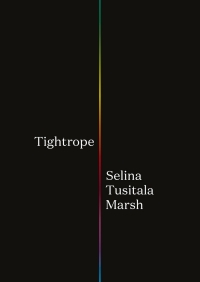
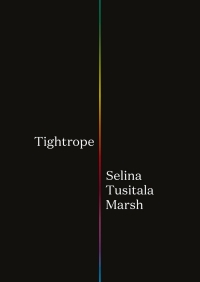
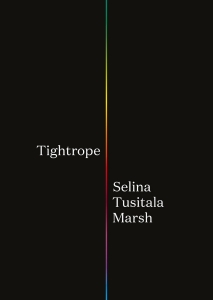
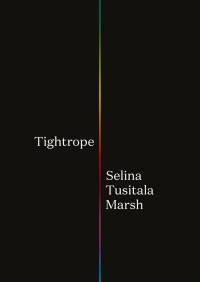
Tightrope, Selina Tusitala Marsh , Auckland University Press, 2017.


Let’s talk about unity

here in London’s Westminster Abbey


did you know there’s a London in Kiritimati?

Republic of Kiritibati, Pacific Sea.


We’re connected by currents of humanity

alliances, allegiances, histories


from ‘Unity’


To celebrate Selina’s new poetry collection, Tightrope, and her appointment as our current New Zealand Poet Laureate we email-conversed over several weeks. Selina is of Samoan, Tuvaluan, English and French descent. Her debut collection, Fast Talking PI, won the Jessie Mackay Award for Best First Book of Poetry. She was the first Pacific Islander to graduate with a PhD in English from the University of Auckland. Last year as Commonwealth Poet she performed ‘Unity’ for the Queen at Westminster Abbey.

I leapt for joy when I found out our new Laureate was Selina. Firstly because I am in awe of what she writes and she is a good friend. Her latest book catches you from first to last page on so many levels. Secondly I follow behind her at schools and I can see how she has utterly inspired teachers and students, whatever the level. This is poetry gold. Thirdly I leapt for joy because that now makes it 5 women poets  out of the 11. Did it matter to me that a woman was picked -yes it most certainly did. Selina has talked about the way she wants to have 1000 hands touch the tokotoko – how she wants to bring the poetry of brown faces to the spotlight. When I look about and see how whitewashed we are in so many ways – what gets published, what gets reviewed (check out the latest list of best poetry books 2017 in The Listener), what gets put stage centre at festivals, journal content etc – I leapt for joy that we have Selina. Hone Tuwhare and Sam Hunt are the two poets that are so beloved by our nation. I predict Selina is our third. I am currently writing a book on NZ women’s poetry and while my aim is to showcase the poetry that so often gets eclipsed by theory and dogma and bias, I also, at times, talk about the woman holding the pen. She has existed in the shadows. She has been maligned and misunderstood and devalued. I want to give women poets presence where it seems apt because their stories have so seldom been told. So while I think the poem is the first most paramount thing, I also think it is important to navigate the difficulties and triumphs women have faced as poets over the past century in New Zealand; how their poetry has been denigrated and erased due to gender or race. To have Selina given this golden opportunity to write further into our sightlines is heartwarming.

Paula Green 10 October 2017 on Facebook


Our conversation


Paula: I have spent a stormy Sunday morning lying in bed reading your new poetry collection, Tightrope, from cover to cover, and now I want to read it again slowly as an email conversation unfolds between us. The reading experience moved shook soothed challenged diverted me with the ooh and aah of recognition pain delight. In other words, the poems take you so many places in so many ways. I love it!


Gran’s jasmine

delicate pink


heavy and sweet

clings to the bone


from ‘Kiwitea Street in the ’80s’


The cover is striking with the tightrope moving from top to bottom rather than stretched taut across a horizontal line. I had held up my piece of red wool at your book launch, but it is only now, I am wondering why it holds a vertical line. It as though the rope stretches from the sky (heavens) to the earth (grounding), or from earth to sky. It is like an upturn, an overturn, and is infinitely resonant in its red to green glow. Why this placement?


Selina:  Instinctively insightful as always Paula.  In part, it references the living conditions of what I think of as the first poem of this land – the poetic parting of Papatuanuku, Earth mama and Ranginui, Sky dad, and the struggles of living before, during and after their separation. What does it mean to live in between such aroha, such passion, such angst?  Sometimes, like this morning, it means submitting to Tawhirimatea’s restlessness in the driving wind; other times, it means tuning into a mist-like longing in the light after-rain.  I’m often in between.  As a middle child I’m used to it and have finely honed skills of negotiation. Inbetweeners possess tightropish qualities:  a tender balance between joy and pain; the toe inching forward of a line that demands feeling before seeing.  That’s why the line is raised (much to Michele Leggott’s joy, who proclaimed at the Devonport Library launch recently that it was one of few books which she could hold up to an audience and know it was rightside up!)  Because I feel my lines.  Because that’s what brings me out of the abyss.  It’s also what gives depth to the abyss.

Unity is an underlying theme in the collection, as well as being the title of the poem for the Queen.  Unity is what’s needed in ‘the struggle’, however you define it in your life at that point (evoking the brothers’ struggle against the darkness imposed on them by their parents).  Unity is what my poetry seeks to create.  Unity of the multitudinous stories that constitute our memory, which in turn, form our history, ‘the remembered tightrope’, to quote Albert Wendt. The morphing colours of that beautiful vertical rainbow line (thanks Katrina Duncan and Spencer Levine) evokes the many hues of our lives that refuse to be forgotten.


Al,

I’ve taken a black vivid marker

pressed it against your page

and letter by space by word by phrase

inked across your lines

streaking pouliuli pathways

wending in and out of the Void


from ‘The Blacking Out of Pouliuli (1977)’


Paula You climb reverse-wise through Albert’s quote, so to speak, in your three sections: from the abyss to the tightrope to the trick. It seems the poetry pollinates the inbetween space between forgetting and remembering. He places this in view of history, but is it also personal?

‘We are what we remember, the self is a trick of memory … history is the remembered tightrope that stretches across the abyss of all that we have forgotten.’ Maualaivao Albert Wendt

Selina:  History is deeply personal, after all, it’s ‘written by the winners’, as I first saw in my undergraduate years graffettied under Grafton Bridge as my bus was heading out to Avondale (and later attributed to Churchill).  I’m reading a delicate collection of poems titled ‘Luminescent’ by Nina Powles at the moment (PG: my review here). 5 chapbooks are stacked in a fold out box (Seraph Press does a beautiful job) and each of them speaks back to women figures – some famous (I especially like the poem ‘If Katherine Mansfield were my best friend’) and some lesser known (to me), like ‘The Glowing Space Between the Stars’ responding to the award-winning New Zealand cosmologist Beatrice Tinsley (1941-1981), who ended up at Yale University teaching on galaxy evolution.  Where was her history in school?  Nina’s personal, poetic connection with five (early) New Zealand women is helping to build this history.

I think that’s why I so love Al’s line ‘the self is a trick of memory’, because that’s the personal self (‘Queens I Have Met’, a way to memorise moments), the communal self (‘The Dogs of Talimatau’ – how did all those dogs really die?) and the national self  (from the New York poems, see for example ‘Inward Hill, New York’ – what happened to the indigenous people of Manahatta? – to Oceania’s ‘Atoll Haiku Chain’ – Tahiti’s stories fan the flames of its history of colonisation, nuclear testing, and protest.  That inbetween space between forgetting and remembering though, is probably most potent in the abyss of death, but ‘Essential Olis for the Dying’, the poem written for my beloved colleague and ‘shooting black star’ Teresia Teaiwa (1968-2017), to whom this collection is dedicated, appears in the ‘Tightrope’ section.   That’s because, to quote Al again, ‘we are what we remember’, and we choose to capture moments of relationship that are ephemeral by nature, that’s the act of tightrope walking.

We choose, inch by inch, what we will feel beneath our toes, how we will balance ourselves in the air and keep our centre of gravity so that we can keep moving forward.  Certain moments, particular memories, we will throw across the abyss of time in order to reach back while moving forward.  Other things will recede into the background – we think we’ll never forget, but then we do.  We lose shades of it, pieces of it, and even though the loss stays, even that, the depth of it, the pain of it begins to diminish over time.  Maybe it’s meant to.


Take this cardamon

to ease you into the next plane

not the one taking you back to Santa Cruz

or Honolulu or Suva

but the next plane.


from ‘Essential Oils for the Dying’


Paula: I also love Nina’s collection and the way she is casting light on these five diverse women. That you dedicate your collection to Teresia Teaiwa resonates deeply, on an individual level, but also because you are part of a weave of women writing, speaking, sharing. You don’t write out of a vacuum.

I was particularly moved by, ‘Apostles’ and the way it challenges on so many levels. Alice Walker lays down the first challenge:


Alice Walker said

before placing a red

cushion in the middle of the road

that poetry is revolutionary.


You recount events that speak to such a claim. I am musing on way you highlight the example you accidentally found when googling lime; a brown skin woman mob tortured for sorcery. Not famous; one woman suffering. Do you think poetry can make a difference?


A brown woman is sitting

her back to us

bare on a corrugated

iron dock

noose round her neck

wrists bound

machete bites

mar her back

one gash so deep

its creviced meat

blackens

in the smoking air.


from ‘Apostles’


Selina: ‘Apostles’ is my answer to that question, which is answered by a question back to Alice Walker, poet, writer and activist extraordinaire: ‘Alice, how can a poem possibly revolutionise?’  Then Kepari Lenara, the name of the young woman murdered by mob, appears and fades over the following lines. These visually echoing whispers evoke the power of orality at the heart of poetry.  Poems are meant to sit on the tongue, be spoken and sung, flung into someone’s ears.

One of my favourite lines of all time is by poet and lyricist Rangitunoa Black: ‘A fire burns on the tip of my tongue, I should cry to put it out.’ That’s the power of poetry, that it matters, that it creates fire and movement out into the world.  It’s why the Poet Laureate Matua Tokotoko (parent tokotoko) is so gorgeously poetic. The parents have three detachable sections to them (to enable easy travel!).  It comprises of a mama section (which has a hand written poem by Hone Tuwhare in its belly) and a papa section (which has a grooved tip).  When you rub them together – ahi!  Smoke! Isn’t that what poetry is about?  It’s why I’d love love love to have a flint embedded in my own tokotoko so in performance, I can strike it and create that spark.  A living metaphor.  A heightened engagement with the audience.  An interactive poetry.  That’s the difference poetry can make.   And poetry has made a tangible difference in my life.  Poetry enabled me to articulate my turangawaewae (standing place) at university as nothing else could. Poetry can make a difference.  That’s why I take it out to schools, community halls, corporate boardrooms.  For the difference it can make.


Paula:  And you take it to your sons in ‘Warrior Poetry’. It is like a letter coming from the gut, saying this is what I do, but it also feels like an energised song-chant-poem for teenagers, especially boys, who skirt books and poetry.

Putting together a poetry collection, boys

is like the NLR nines

Eden Park, 45,000 packed

you’ve got 90 pages of lines

to work the eclectic crowd

into some kinda synthesis – some kinda wonderful


from ‘Warrior Poetry’


Poetry does many things in your collection – even act as a little spot of revenge! Ah! the revenge poem.

Selina: Poetry for all occasions right?  You see, often in a difficult, embarrassing, confronting, uncomfortable situations, my first reaction is to smile (my kickboxing trainer used to call me the ‘Smiling Assassin’).  It’s only later when the brilliant retorts, the intellectual one-liners, the sardonic replies, come to the tongue. Or I should write, the pen.  And poems can carry the weight of my anger or angst; they can take the push-pull of my righteousness and ambivalence (at the same time); they can turn a moment of indecision about what just happened or shock at someone’s rudeness or felt gut-disempowerment and re-story it ways that return power to me.  Call it ‘the revenge poem’ or call it ‘the re-storying painful or uncomfortable events poem’, whatever you call it, its at all of our fingertips!


My moana blue Mena

My Plantation House shawl

My paua orb

My Niu Ziland drawl

My siva Samoa hands

My blood red lips

My va philosophising

My poetic brown hips


from ‘Pussy Cat’


Paula: Five poets were Te Mata Estate Poets Laureate, with Bill Manhire (1996) and Hone Tuwhare (1997), the first two. In 2007 the National Library took over the administration and appointment process and selected Michele Leggett as the first New Zealand Poet Laureate. You are the sixth Laureate appointed by the National Library with the change in title.

Looking back across the Laureate blogs and tenures, each Laureate seems to shape the role to fit him or herself, just as the tokotoko is carved by Hauamoana artist, Jacob Scott, to fit the individual. I love the idea that you will shape the role to fit – what matters to you as Poet Laureate?


Selina: In 2 weeks I leave for Samoa where I’m judging the Pan-Pacific Tusitala Short Story competition, giving the keynote for the Pacific Arts Association, running two writing workshops, and performing on opening night.  While this was arranged well before becoming Poet Laureate, I am taking the Matua Tokotoko with me and ‘they’ (the parents) will feature.  Usually behind lock and key in a glass case at the National Library in Wellington, I have instinctively known, as a person from the Pacific, the taonga, the national treasure, that I have in my possession.

Polynesians know the mana such taonga possess.  Material objects become taonga as they are passed on and down; as they pick up the stories, histories, and genealogies of those who possess them.  I will have reached my goal of a 1000 pairs of hands touching the Matua Tokotoko in Samoa (I’m currently at 977) since the Award was announced on August 25th.  Everywhere I go people are enthralled with the story of its making – but it’s not really common knowledge.  That’s what I want to do, at least among the diverse communities I engage with.  Most are not aware of what the Poet Laureate is, nor what the tokotoko represents.  Each Laureate has helped increase awareness in their own circles, in their own way.  That’s what I’m doing now.

After visiting Hawkes Bay and finally having a korero with carver Jacob Scott from Matahiwi Marae, we’re really excited about bringing my tokotoko into the world.  This trip to Samoa will also enable my Samoan treasures to be included in its making.  One idea was that I source (that means ‘cut’) some wood from my grandfather’s house in Elise Foe, the original ‘Tusitala’, to include in the carving.  Then when I visit Vailima, Robert Louis Stevenson’s plantation house, I do the same there (with permission from the owners) and source material from the other ‘Tusitala’ to somehow incorporate.  I’d like to bring home a stone from the river my mother used to bathe and play in. I’d like to include some other historical objects.   As poets are wont to do, I will wait for synchronous moments to come – I know these material stories will make themselves known to me.

This is part of a journey and Mike Hurst, along with his film-mate Andrew Chung, and Tim Page are the guerilla film / photo crew capturing formative moments in order to make a lovely documentary – more on that later!

I guess this is a round-about way of also addressing the question: ‘What does it mean to be a Pasifika Poet Laureate?’  It means doing this stuff.  Taking the Laureate-ship along in my Pacific-infused life (we are, after all, in the middle of the Pacific), not just in incidental ways, but in deliberate, epistemologically-informed ways that centre Pacific worldviews, at least, as far as I see and experience them in my life as a Pasifika poet-scholar.

So, as the Poet Laureate, people matter to me, stories matter to me, especially when those stories have existed on the margins of mainstream consumption.  Creativity and freedom matters to me, honoring my own unique poetic voice, and continuing to grow it matters to me.  I have two years to work on these things that matter to me: to continue taking poetry ‘to the people’ and to continue growing poems!


We are about to step

on stage at Aotea Centre

in front of a sold-out

crowd of two thousand

I ask

How would you like to walk on –

before me or after me?

You say

Let’s just do this

and take my hand.

We stroll on

side by side

to a standing ovation

your hands become doves


from ‘Alice Walker’ in ‘Queens I Have Met’


Auckland University Press page

Poet Laureate blog

NZ Book Council page

Watch Selina perform ‘Unity’ at Westminster Abbey here

Gina Cole picks ‘In Creative Writing Class’

‘The Dogs of Talimatau’ at The SpinOff

Selina picks Tusiata Avia’s ‘This is a photo of my house’


Michele Leggott’s glorious new poetry collection: a launch speech and some poems


IMG_1043.jpeg  GetFileAttachment-1.jpg


2017 seems to be the year of enviable launch speeches. Gregory O’Brien did a cracking job launching James Brown’s new book; Greg had taken the poems up to Palmerston North to read before writing his speech.

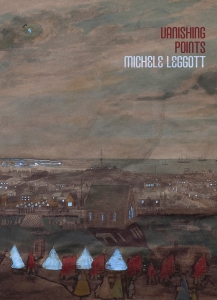
Jack Ross has launched Michele Leggott’s Vanishing Points (Auckland University Press) with similar incandescent word flare. I have read the book twice so far and he is right on point: this is one special poetry collection.


The Speech

Well, needless to say, I felt very flattered when Michele Leggott asked me to launch her latest book of poems, Vanishing Points. Flattered and somewhat terrified. It’s true that I’ve been reading and collecting her work for well over 20 years, and I’ve been teaching it at Massey University for almost a decade now, but I still felt quite a weight of responsibility pressing down on my shoulders!

One thing that Michele’s poetry is not, is simple. It’s hard to take anything in it precisely at face value: what seems like (and is) a beautiful lyrical phrase may be a borrowing from an unsung local poet – a tangle of Latin names can be a reference to an obsolete star-chart with pinpricks for the various constellations.

The first time I reviewed one of her books, as far as I can see, in 1999, I ended by saying “the reading has only begun.” At the time, I suspect I was just looking for a good line to finish on, but there was a truth there I didn’t yet suspect. Certainly, I’ve been reading in that book, and all her others, ever since.

But how should we read this particular book? “Read! Just keep reading. Understanding comes of itself,” was the answer German poet Paul Celan gave to critics who called his work obscure or difficult. With that in mind, I’ve chosen two touchstones from the volume I’m sure you’re all holding in your hands, or (if not) are planning to purchase presently.

The first is a phrase from the American poet Emily Dickinson, referred to in the notes at the back of the book: “If ever you need to say something … tell it slant.” [123] The second is a quote from the great, blind Argentinian writer Jorge Luis Borges: “I made a decision. I said to myself: since I have lost the beloved world of appearances, I must create something else.” [35]

With these two phrases in mind, I’d like you to look at the cover of Michele’s book. It’s a painting of the just-landed Imperial troops, camped near New Plymouth in August 1860. The wonderful thing about it is the way the light of the campfires shines through the painting: little holes cut in the canvas designed to give the illusion of life and movement.

“War feels to me an oblique place,” wrote the reclusive New England poet Emily Dickinson to Thomas Wentworth Higginson in February 1863, at one of the darkest points of the American Civil War. Higginson, a militant Abolitionist, was the Colonel of the 1st South Carolina Volunteers, the first officially authorized black regiment in American history. He was, in short, a very important and admirable man in his own right. Perhaps it’s unfair of posterity to have largely forgotten him except as the recipient of these letters from one of America’s greatest poets.

New Zealand’s Land Wars of the 1860s may have been on a much smaller scale, but they were just as terrifying and devastating for the people of Taranaki – both Māori and Pakeha – in the early 1860s. In her sequence “The Fascicles,” Michele transforms a real distant relative into a poet in the Dickinson tradition. Just as Emily Dickinson left nearly 1800 poems behind her when she died in 1886, many collected in tidy sewn-up booklets or fascicles, so Dorcas (or Dorrie) Carrell “in Lyttelton, daughter of a soldier, wife of a gardener” [75] provides a pretext for “imagining a nineteenth-century woman writing on the outskirts of empire as bitter racial conflict erupts around her.” [123]

There’s an amazing corollary to this attempt to “Tell all the truth but tell it slant” (in Dickinson’s words). Having repurposed one of her family as a war poet, Michele was fortunate enough to discover the traces of a real poet, Emily Harris, the daughter of the Edwin Harris who painted the picture of Taranaki at war on the wall over there, whose collected works so far consist of copious letters and diaries, but also two very interesting poems. “Emily and her Sisters,” the seventh of the sequences collected here, tells certain aspects of that story.

It’s nothing but the strictest truth to say, then (as Michele does at the back of the book), that one should:

walk away from the painting when it is lit up and see how light falls into the world on this side of the picture surface. Is this what the artist meant by his cut-outs? Is this the meaning of every magic lantern slide? [124]

I despair of doing justice to the richness of this new collection of Michele’s – to my mind, her most daring and ambitious work since the NZ Book Award-winning DIA in 1994. There are eight sequences here, with a strong collective focus on the life and love-giving activities which go on alongside what Shakespeare calls in Othello “the big wars”: children, family, eating, painting, swimming. One of my favourites among them is the final sequence, “Figures in the Distance,” which offers a series of insights into the world of Michele’s guide-dog Olive – take a bow, Olive – amongst other family members, many of whom, I’m glad to see, have been able to come along here tonight.

This is a radiant, complex, yet very approachable book. It is, in its own way, I’m quite convinced, a masterpiece. We have a great poet among us. You’d be quite crazy to leave here tonight without a copy of Vanishing Points.

Jack Ross


[Jack and Michele then had a discussion on how the book came into being. I am going to do an interview with Michele so Poetry Shelf readers can also get different entry points into the collection.]


1503612399072.jpg


The poems:


from ‘Figures in the Distance’


18

In he comes, bouncing and sweaty, to borrow a towel and go swimming at Duders. Voice out front, key in the lock, just passing through. A voice on the phone from an airport far away, saying early morning is the time to go and see the ruins outside the city when there’s no one else around. One heading for the beach each morning with a thermos of coffee and that same ragged towel. Breakfast. The other drinking something from a coconut on a beach in Mexico. One in this city, one in that city, two brothers crossing the sea. Camper vans gather down at the bay. Two people sit with their feet in the waves, looking out to sea and drinking wine from glasses they fill from the bottle hung off the side of their aluminium deckchairs. The house at the corner has been flying a tricolore since the Paris attacks. The house next to it is flying a flag that says Happy New Year. Here’s a man walking up the street dripping wet and asking if he can stick his nose into the buzzing magnolia flowers at the gate.


29

I saw the Maori Jesus walking on Wellington Harbour but his pool in the shadow of the museum was drained for repairs and the words were no longer lapped in fishscale light. I saw John Baxter in the pool ecstatic in arcs of water he was splashing over his father’s words on the day the writers’ walk opened. I heard the mihi that was sending Wellington Harbour over the father’s words. I heard the camera catch water light and send it to the eyes of beholders who were a great crowd on the waterfront that day. We took the train as far as Woburn, crossed the platform and came back along the side of the harbour. We took the ferry to Day’s Bay and back riding on the top deck and talking about other excursions. We had a dance at the mardi gras and kept walking along the waterfront to Roseneath. When we turned back there was the young woman walking towards us with bags full of produce from the market. Look, holes, she said.


30

We know what the dog of tears will do next, he who has been trailing the woman standing on the balcony looking up at the sky. She is the woman who wept, he is the dog who licked away her tears. They have gone on like this for some time, the only woman who can see and the dog who is now more human than he wants to be. His nails scratch the wooden floor. His belly is as empty as everyone else’s but he does not mind. He is walking towards the woman on the balcony. When he reaches her she will bring her eyes down to look at the ruined city and become blind. Everyone else will have their eyes back. She will have the dog of tears. The dog will bark holes in the last page of the book and lead her through one of them. There they are, the dog of tears and the woman who wept. His nails click on the rough stones. She who can no longer see begins to tell a story. They pass the street of crocodiles, the pool of tears, the hill of forty days and the hill of forty nights. They pass the little seahorse in its salty pool. They pass a white rose, a black swan, a blue biddy. The dog kills another hen and they roast it over a small fire. They can hear the sea, its fronding on smooth sand, its talking against rocks, its clapotis bouncing off stone walls. What might we not do with the hot bones dripping fat, she says. Two birds rise into the air on wings the colour of ash. Did you hear that she asks the dog licking away the salt on her cheeks.


32

The boy in his green turban the girl in her purple tunic dancing around each other under the old clock on the waterfront. Voices float in the morning air. One says, I had always imagined Paradise as a kind of library. The other replies, It is a bowl that one fills and fills.


©Michele Leggott, Vanishing Points Auckland University Press 2017


Auckland University Press page

Jack Ross’s blog The Imaginary Museum – his extended launch coverage


Poetry Shelf Spring Season’s poetry fans: Ros Ali picks Elizabeth Smither


Spring bulbs

Plant them carelessly. The earth straightens them.
Already they have divided and multiply.
They stand straight up like pencils

among last year’s survivors, also thicker
for a year’s disregard, a feeble weeding
an intention to reform as a gardener

knowing nothing will change: the philosophy
is too broad, too many variants
the huge tree, the little viola

one shivering, the other sending shivering down
on a white head near the ground, sheltering
its tremulousness a little, in its shadow.

©Elizabeth Smither, Night Horse (Auckland: Auckland University Press, 2017).


1497223465774.jpg


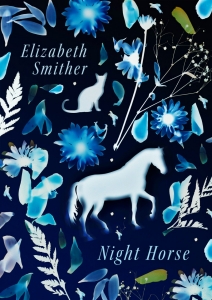
Note from Ros: Delving into Elizabeth Smither’s special new collection, Night Horse, when it was released in June, the poem ‘Spring bulbs’ was an arresting reminder of the fresh green shoots of random bulbs surprising my winter garden, and the all too familiar failure to reform. Significantly, the poem deftly and tenderly shifts its focus, into a deeper contemplation of the vulnerability, beauty and power of the natural world.

Rosalind Ali is a teacher of English and Writing, and Director of Libraries at St Cuthbert’s College in Epsom. She is a member of the Michael King Writers’ Centre Trust and co-facilitates the Michael King Young Writers’ Programme with poet and teacher, Johanna Emeney.


Elizabeth Smither has written five novels, five collections of short stories and seventeen poetry collections, the most recent of which was The Blue Coat (2013).  She has twice won the major award for New Zealand poetry and was the 2001–2003 Te Mata Poet Laureate. In 2004 she was awarded an honorary DLitt from the University of Auckland for her contribution to literature and was made a Member of the New Zealand Order of Merit. She was given the Prime Minister’s Award for Literary Achievement in 2008. In 2016 she won the Sarah Broom Poetry Prize, New Zealand’s most valuable poetry award, judged by Paul Muldoon, and those poems are included in Night Horse.


Poetry Shelf Spring Season’s poetry fans: Elizabeth Caffin picks Allen Curnow


A Busy Port

I

My turn to embark. A steep gangplank
expects me. An obedient child,
I follow my father down.

It happens that the sun will have topped
a black hill beside the time-ball tower,
and found the spot of a fresh

tear on Bob Hempstalk’s cheekbone, whose wet
red eyes blink back seaward where he leans
for’ard at the wheel-house glass;

one hand wipes an eye, the other shakes
a half-hitch loose, unlashing the wheel.
A man’s tears, obscene to me

caught looking. Too late now. The time-ball
drops. Quayside voices (not for my ears)
discuss the dead, bells repeat

ding-ding across the wharf. Brightwork traps
the sun in brass when I next look up,
following my father down,

who made the trip himself many years
past. The old rust-bucket gets up steam.
Frequent sailings from where we live.

II

Winched aboard still warm over the for’ard
hatch the morning’s bread hangs by a breath
of its own. It smells of bed.

An enriched air. The urinal under
the wharf drip-feeds, the main steam below
sweats. Darky Adams, deckhand

engineer stoker bangs his firebox
open, slings in a shovelful, slams
the insulted flame back home,

thick acrid riddance topples the way
smoke rolls by its own weight, in an air
that barely lifts, off the stack.

One jump clear of the deck the plank dips
with a short uneasy motion, deep-
sea talk to the paddler’s foot

out of my depth, deeper yet, off the Heads,
our Pillars. Pitching like a beer-can.
I’m hanging on tight, can’t hear

clashes from the stokehole for the wind
yelling, crossed on the wheel he’s yelling
back, ‘Ay, bit of a stiff breeze’.

Eyes that last I saw in tears can read
abstruse characters of waves, on course
between them, our plunging bows.


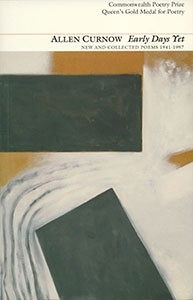
©Allen Curnow Early Days Yet (Auckland University Press, 1997) published with kind permission from the Curnow Estate.


1448418925728.jpg


Note from Elizabeth: This is one of the wonderful poems recalling moments of his childhood that Allen Curnow wrote in the last years of his life. They move me especially because I too had a Canterbury childhood and can also remember sailing out from Lyttelton through the Heads, ‘our Pillars’. Curnow captures the excited anticipation of this birthday treat with his father but at the same time the child’s perplexed and disturbed glimpses of grief and death. (It seems the skipper’s wife has just died.) The voyage becomes the voyage we all make from birth to death; he ‘follows [his] father down’ not only into the bowels of  ‘the old rust bucket’ but also towards death, ‘who made the trip himself many years/ past’.  The famous time ball drops as it always did at 1pm but also to signal the passing of time, the course of his life and of his father’s. The two perspectives of small boy and elderly poet merge; precise details of sight, smell, sound blend with an almost mythic vision in this great poem.

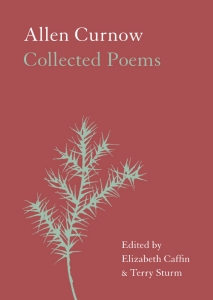
Terry Sturm’s biography of Allen Curnow, Simply by Sailing in a New Direction, and Curnow’s Collected Poems were published at the end of September.


Elizabeth Caffin was formerly director of Auckland University Press, which
published Allen Curnow’s poetry over many years. She is also the co-editor,
with Terry Sturm, of the recently published Collected Poems of Allen Curnow (Auckland University Press, 2017).

Allen Curnow (1911 – 2001) published numerous poetry collections – from his debut with Valley of Decision (1933) to The Bells of St Babel (2001). He also produced criticism, plays and anthologies that contributed at both national and international levels. Among numerous awards, he received the Commonwealth Prize for Poetry and the Queen’s Gold Medal for Poetry.

1505692801947.jpg    1506300705951.jpg

Poetry Shelf Spring Season’s poetry fans: Philip Matthews picks C. K. Stead

Without

Crossing Cook Strait
going home to be
ordained in the

parish of his
father, while seas wished
by and the wind

had its say in the
wires, it came to
him there was no

God. Not that
God was sulking or had
turned His back—that

had happened
often. It was that God
wasn’t there, was

nowhere, a Word
without reference or
object. Who was

God? He was the
Lord. What Lord was
that? The Lord God. Back

and forth it went while
stern lifted, screw
shuddered, stars glowed

and faded. The
universe was losing
weight. It was

then he threw his
Bible into the
sea. He was a

poet and would
write his own. Happiness
was nothing

but not being
sad. It was your
self in this one and

only moment
without grief or
remorse, without God

or a future—sea,
sky, the decks
rolling underfoot.


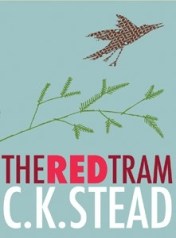
CK Stead from The Red Tram (Auckland University Press, 2004)


Note from Philip:

‘Without’ takes a true story of a crisis of faith and makes it a founding myth of New Zealand literature. Allen Curnow had intended to follow in the footsteps of his father, an Anglican priest, and started his theological training at St John’s in Auckland. Curnow tells the story in Shirley Horrocks’ 2001 documentary Early Days Yet, as Horrocks follows the poet through the wooden Canterbury churches he had not seen since childhood. “I changed my mind about being ordained in the middle of Cook Strait,” he says. “It was rather a stormy night, and I was on my way back from north to south.”

Stead’s poem appeared in The Red Tram in 2004, three years after Curnow died. One of the great legends of New Zealand poetry is that Stead and Curnow lived on opposite sides of the same street in Parnell. They passed each other messages. Sometimes, Stead says in the documentary, they stood and talked in the middle of the road. Maybe Curnow told Stead this story during one of those times, when he popped out to get the mail or a newspaper. I like the idea that the poem is a personal tribute wrestled out of what must have been a time of doubt, disappointment and personal confusion for Curnow. It suggests that literature is worth the personal sacrifices that writers make, and that a kind of destiny drove his decision.
Stead is a rationalist who would view the loss of faith as a personal gain. I don’t know if Curnow’s doubt was as simple or complete as switching from God to no God, but the drama of the poem required something that decisive, as though we are reading a description of the closing scene in the first of three movies about the life of a great writer. It is the origin story. The final shot in that movie would be the black Bible sinking into the dark water. By now it is day, and you can see the emerging outlines of Lyttelton, where his own father had been the local priest. Now everything around him, familiar as it is, seems more present somehow: “This world’s the one you’re in,” as Curnow says in a poem about those times, also titled ‘Early Days Yet’.


Philip Matthews is a journalist and reviewer who works for The Press and Stuff. He lives in Christchurch.

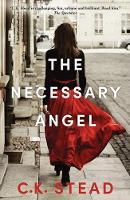
C. K. Stead‘s tenure as New Zealand Poetry Laureate ended August 2017. To mark the occasion, Fernbank Studio, with support from The Alexander Turnbull Library Endowment Trust, published his new poetry collection: In the mirror, and dancing. The limited edition was designed and printed by Bendan O’Brien with drawings by Douglas MacDiarmid. His new novel, The Necessary Angel, was recently published by Allen & Unwin NZ.


1400026620222.jpg       cv_the_necessary_angel.jpg

Poetry Shelf Spring Season’s poetry fans: Morrin Rout picks Fiona Farrell

Daffodils

No words to start. No
names. Trees learned
the land by touching
it with dumb fingers.

The names flew in
and hovered, light
as mayflies, skimming
the river of the white
calf, the hill of gorse,
the crag of the cat.

They shifted shape,
became other things.
The river is black
now and deep, the
hill is the hill of
hanging, and the
cats have been
butted from the
crags by shaggy
saints.

As my house
stands on the lip
of the bailer of a
black canoe.

And on a heap
of broken timber.

And on a green shoot.

And on the rocky
point of a man.

Or named Long Bay,
plain words,
printed out
in daffodils.

But already, look:
they’ve multiplied.

Gone wild.

Danced over the lines.
Invaded the field.

They are popping up
in odd places, as if they
have forgotten completely

how to spell.


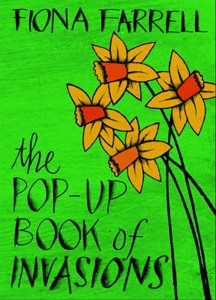
©Fiona Farrell, The Pop-up Book of Invasions (Auckland: Auckland University Press, 2007).

1400031286961.jpg

Note from Morrin: Fiona’s poem continues to delight me and reward each reading. I too live on Banks Peninsula and feel at times precarious. Words and names mutate and the landscape continually reminds us that we are newcomers and much has gone before. I love the image of the daffodils being bidden to spell out the name of the bay but over time breaking free and defying human intent.

Morrin Rout has co-produced and presented ‘Bookenz’ on PlainsFM 96,9 for over 20 years and is the director of the Hagley Writers’ Institute in Christchurch.

Multiple award -winner, Fiona Farrell writes across a variety of genres; she has been a finalist in all three categories at the NZ Book Awards, for fiction, non-fiction and poetry. The critically acclaimed, The Villa at the Edge of the Empire, the factual half of a two-volume work, examines the rebuilding of a city through the twinned lenses of non-fiction and fiction. The accompanying novel, ‘Decline and Fall on Savage Street’ has just been published.

Poetry Shelf Spring Season’s poetry fans: Gina Cole picks Selina Tusitala Marsh

In Creative Writing Class

the pākehā man
calls the kailoma Fijian woman
the Māori woman
and the ‘afakasi Samoan woman
privileged
because they have the experience
of being doubly oppressed
at a time when they qualify
for certain scholarships
when their demographic
is fashionable and interesting
their life experiences
make their writing more convincing
their stories are rich and deep
hot chocolatey and steamy
his are staid, North Shore-ish
lukewarmish gumboot tea

the los atrevido
wait for him to finish
his first world problems
in their global village
their serpent tongues aim
for the space above his collar
they fire simultaneously
no one even hears him holler

©Selina Tusitala Marsh from Tightrope (Auckland: Auckland University Press, 2017)


1502933415430.jpg


Note from Gina: I love this poem because I have attended many creative writing classes. I am also a kailoma Fijian woman, and I have been in a creative writing class with Selina. In most writing classes that I have attended, I have been one of a minority of Māori and Pasifika writers in the class. I love how the title reads as a play on each word in all their different meanings, especially “class”. I love the last stanza and the description of the women as “los atrevido”. I had to look up what that meant. I found that it translates as – the daring, the badass, the bold. I love that daring in the poem, and that Selina is the new daring, badass, bold Poet Laureate for Aotearoa.

Gina Cole is of Fijian, Scottish and Welsh descent. She lives in Auckland. She writes fiction and poetry. She is a Barrister specialising in Family Law and has a Master of Creative Writing from Auckland University. In 2016, Huia Publishers published Gina’s debut book of short stories Black Ice Matter. Black Ice Matter won the 2017 Hubert Church Prize for Best First Book Fiction at the Ockham New Zealand Book Awards.

Selina Tusitala Marsh is of Samoan, Tuvaluan, English and French descent. She was the First Pacific Islander to graduate with a PhD in English at the University of Auckland where she currently is an Associate Professor. Her first collection, Fast Talkin’ PI, won the Jessie Mackay Award for Best First Book of Poetry in 2010. As Commonwealth Poet (2016) she composed and performed a poem for the Queen at Westminster Abbey. She is New Zealand’s current Poet Laureate.

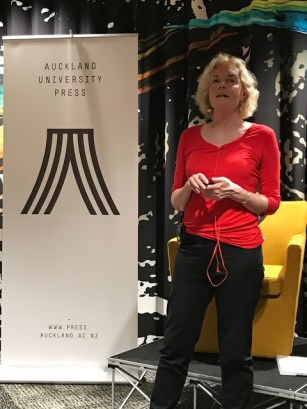
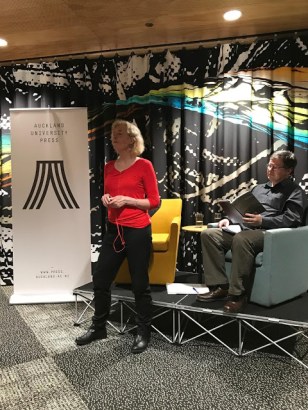
Auckland University Press invites you to the launch of Tightrope

1497493006148   1497493006148

On National Poetry Day 2017, please join us in celebrating the launch of Selina Tusitala Marsh’s new poetry collection, Tightrope.

Cat Ruka in collaboration with COVEN will activate ‘Tightrope’ – koha appreciated for these talented dancers!

Maori and Pasifika books sold on the night to celebrate Reading Brown! Teachers in particular are most welcome!

4.30 pm, Friday 25 August 2017
Fale Pasifika
University of Auckland
Auckland, 1010

Poetry Shelf Winter Season: Chris Price off-piste


Six Thinkers


Six thinkers


Anne thinks that Brian should stop pestering her to marry him.

Brian thinks if only Anne would only stop worrying about how they were

going to live.

Catherine thinks that Dean would be a far better choice for her daughter.

Dean thinks that Erica is the hottest thing since Elvis Costello.

Erica thinks that accountancy students may be the most boring people on

earth.

Frank thinks that Catherine should just leave Anne alone to make up her

own mind.


Brian thinks it looks like rain as he hesitates on the porch.

Catherine isn’t sure, but she offers Brian an umbrella.

Dean sees that drip Brian leaving Anne’s place as he pulls into the next-door

 driveway in his Ford Capri.

Erica has been ready for ages but she still goes to the mirror to check her

make-up when she hears the car.

Frank thinks That boy’s got his head screwed on the right way, Erica’s a real

 doll, if I were his age . . .

Anne thanks God (in whom she no longer believes) that Brian’s gone at last,

and wonders what her father is looking at through the kitchen window.


Catherine says Would you like to join us for a barbeque, Dean?

Dean leans over the fence and says No thanks Mrs Franklin, I’ve got some

serious studying to do.

Erica says Yes, he’s got exams next week.

Frank says Gotta get your priorities straight eh Dean?

Anne says Well, maybe after exams, then?

Brian says nothing, he’s halfway to Forrest Hill, grateful that the rain’s held

off, whistling, not a clue in the world what a no-hoper he is.


Dean passes that git Brian on his way home and pretends not to see him so

he won’t have to offer him a lift.

Erica wonders whether Dean really is the man for her, when accountants

 are so uncool, even if he does have a Ford Capri and a flat on his own

with a view of the Harbour Bridge.

Frank lingers at the window, which affords him a good view of Erica’s

 cleavage as she stands at the fence talking to his wife.

Anne finally twigs to the reason for the amount of time her dad spends at the

kitchen window.

Brian gets home and puts on a cup of tea for his mum, who is asleep over

the racing pages, radio cantering on in the background.

Catherine wonders why her daughter doesn’t get out more, meet a few

boys like Dean.


Erica thinks Dean just wants to get into her pants, he’s like any other boy,

in the end.

Frank thinks he wouldn’t mind getting into that girl’s pants, if he were a

 younger man . . .

Anne thinks I know what you’re thinking you dirty old bastard.

Brian thinks I wonder what’s for dinner?

Catherine thinks that young women today just don’t know how easy

they’ve got it.

Dean thinks about slipping his hand down Erica’s jeans as he slides into

the bath with Elvis Costello up loud on the stereo.


Frank starts guiltily as his daughter clatters the knives and forks onto the

tray with unnecessary force.

Anne decides she’s never going to get married, at least not until she’s finished

her degree and got a few year’s work behind her.

Brian sets the table, and puts the steaming cup quietly down where his

mother can’t knock it over when she wakes.

Catherine comes inside and says, Well, time to light the barbeque, eh Frank?

Dean flings some Brut about his steaming person, wraps a towel round his

waist, strolls into the lounge and flicks through his address book.

Erica walks in her parent’s front door and sits thoughtfully by the

telephone in the hall.


Anne begins buttering the bread, but her mind is elsewhere, and she butters

the teatowel thoroughly before she realizes.

Brian finds some fish fingers and frozen peas in the freezer and thinks

that’ll do us as his mum’s snore begins to ruffle the pages of the paper,

 ever so slightly.

Catherine wonders if her daughter might be pregnant, she’s been so vague

lately, and now this thing with the teatowel.

Dean finds Glenda’s phone number and begins to dial.

Erica decides it’s time to begin again.

Frank begins to build up a nice wee blaze.


©Chris Price, from Husk (Auckland University Press, 2002)


‘Six Thinkers’ was a response to an exercise Bill Manhire set the IIML’s MA workshop of 1998. The exercise was simply to write a poem in the form of a list (although Bill did hand out a couple of example poems along with that instruction, one a recipe poem by Gary Snyder, the other an Allen Ginsberg poem that used anaphora – every line began with the word ‘Because’).

My initial idea was simple: I would write down the first six letters of the alphabet, in order, a bit like a multi-choice test, and use each letter to begin a new line. The next step was to assign a name to each initial, so I found myself with a cast of characters whom I needed to set in motion.

The added constraint was that I applied the rotating end-word pattern of the sestina to those six names at the beginning of each line, which gave me a template for a story in six six-line stanzas plus a three-line tailpiece that also had to (once again, drawing on the sestina) use all six names. I may have had the formal pattern in place, but the poem itself came to me very early one morning, and I got out of bed to write it down. I’ve never repeated the mongrel sestina form, nor have I produced another study of multiple characters like this one. It’s the first and last time that I’ve tricked myself into writing a story in poem form.


Chris Price‘s latest book is Beside Herself (AUP,2016). She convenes the Poetry and Creative Non-fiction MA Workshop at the International Institute of Modern Letters. ‘Six Thinkers’ appeared in her first book, Husk (AUP, 2002).


From Paula: For Poetry Shelf’s Winter Season, I invited 12 poets to pick one of their own poems that marks a shift in direction, that is outside the usual tracks of their poetry, that moves out of character, that nudges comfort zones of writing. It might be subject matter, style, form, approach, tone, effect, motivation, borrowings, revelation, invention, experimentation, exclusions, inclusions, melody …. anything!


Poetry Shelf Winter Season: Anne Kennedy off-piste


Die die, live live
1.

A puff of air
like a lover’s
sweet speech
bubble, blue
as sky. A brown
horizon turning
fast into tomorrow
and tomorrow, etc.
Mud and leather
and a man
who runs like rubber
drawn from itself
over mud
born from
its muddy
mother field.
A kick-off
and the howl of
a moon’s dog.
They kick
the tender thing and kick and kick the tender thing
and wail and sing.
Five-nil to them.
Fuck. And fuck
the conversion
too. More
points for them.
The ball sings.
The wind
sings a hymn
down the Saint
Patrick’s Day
parade-length
of field
and the wind
blows the ball
where it shouldn’t
go. You have to
hope these idiots
grasp softness
the idea of it
its air and
innocence.
Twelve-nil to
the other side.
Conversion? No.
A rose blooms.
The fullback
there he goes
into a scrum. He’s
in the scrum
for his girlfriend
the girl he loves.
A torn ear a red rose the love-song of the fullback
a big man a
fucking giant
look at him
run. A lot of blood.
He runs for the
invisible woman.
He’s a moving tree
a flowering
tree. The Aussie
should be sin-binned.
Oh. He is.
Penalty. Twelve-
three. Tenderness
and the terrible
wind-sound
necessary for
play. They kick the tender thing and kick and kick
the tender thing
and wail and sing.
A man jumps
to his feet
throwing the hand
of his girl into
the sky. He flails
and beseeches.
Go go go go go!
It’s her envoi.
A guttural
call Moss has
never heard before
coming from
here and here
a beating on
the edge of seagull
i.e. clarinet.
There’s a rolling
maul, players
scragging faces
with sprigs. The referee
runs and blood
runs like tears.
Penalty. Twelve-six.
Go man boot
the groaning
air cradle it
as your child.
Don’t fucking
drop it idiot.
A moan goes up.
It rests in
the bodied
stadium staying
there, living on
among the people
as damage.
They kick the tender thing and kick and kick the tender thing
and wail and sing.
Rain starts. Good
for the home team
(used to it).
The visitors gnash
their teeth. Mud
sprays men
into fossils
memento mori.
They’re covered
in the game
head to foot.
Outrageous penalty
fifteen-six. Fuck.
A scrum in mud
and more rain.
The field is
ankle-glass
sometimes shattered as a dance once seen moved in water
a splish and trail
like scarves.
Half time
(FW).

2.

The land shaved
of trees made
useful by
its nakedness
and water. Men
stand as if cattle
mirrored at
a trough. A whistle
like a cast
in a roving
eye roving
over the field.
The men swarm
towards the ball
flicking earth
and sky.
The Centre’s
butchering
down the field
as a lion hunts
prey in the late
afternoon.
As a boy he
loved animals.
Off-side. Fuck.
Blood and
sweat and blood
and the crack
of bones. They kick the tender thing and kick and kick
the tender thing
and wail and sing
and wail and sing.
A man is carried
off by St John’s
Ambulance. Ah well
Fifteen-eleven
but missed the
conversion the
egg. Another
kick-off and
before long
a line-out whatever
that is. A player
hurling himself
into infinity
running and falling
and not caring
his body everything
and nothing
hovering
on the brink of
his death, death
of a small
nation. He is
a carcass
or palace. He’s carried off by St John’s Ambulance.
But there’s a penalty.
Fifteen-fourteen.
They kick
the tender thing
and kick and kick
the tender thing
and wail and sing.
Howl and a face
coated in the season
and the game
is a season
imperative
compulsory
gone again and
a girl who walks into a woman. And rain drums length
of rain
drumming.
It’s late
and the sun dips
below the cap
of cloud touching
the heads of
the crowd limning
a moment blue.
They kick
the tender thing
and kick and kick
the tender thing
and wail and sing.
On the field
blood squelches
underfoot.
Twenty-fourteen.
Paul weeps
on her shoulder.
They’ve lost.
If they’d won
there’d be
just the same
weeping like a
well a stream
or cataract. She holds his bones under her hands
his back
where wings
might once
have been.
A good man
full of tenderness
giant i.e. a lot of
tenderness.
The small mercy
of no conversion.
A minute to go.
A man runs
down the field
like a doctor
in a field hospital.
A try to us!
Forty seconds
to go. The
half-back
lines up the
wet egg
of the universe
and after some
deliberation kicks
the tender thing.
And wails.
And sings.
Converted.
The sun sinks
The whistle blows.
They won!
(i.e. We won
apparently)
Paul and his mates
leap to their feet.
Hell we won.
They leap one
by one. Fintan
leaps to his feet.
Look even
Forest is leaping
to his feet. Moss
carried away with
the win and
Paul weeping
and giants leaping
and without thinking
she stands.
She looks down
at the long body
her old favourite.
And glances up
at the great giant
there beside her
a head taller
(no matter, he will
soon go away now
the game is over
and there is just
Finnegans Wake
to read or whatever
tall tale it was).
Light from
the tall lamp casts the giant shadow of the girl over Paul.
He is bathed
in a quick new
coolness, as
dusk falls suddenly
in the Tropics
and feels it
and stares up
at the girl and
backs and backs
(the love song
of the full-back).

© Anne Kennedy from The Time of the Giants (Auckland University Press, 2005)


Author note: Writing poetry at all was a jumping of the tracks for me, and although my prose was ‘poetic’ and my poems prosey, the change still felt enormous, like doing something other than writing. (I still think of it as not really writing, more arranging.) Boiled down, the change to poetry for me was to do with noticing the cool juxtaposition between freedom of language (a poetry reader is more likely to make leaps with you), and the restraint of form that is always there on the page in front of you.

The poem here (which I call my ‘rugby poem’) is from a verse novel, The Time of the Giants. It represents for me a few realizations. The first is the power of line breaks. They are marvellous things! Always have been, but with this poem I began to regard them anew, not just aurally, but visually – as a means to isolate words like stones in a Japanese garden.

With Giants I also realized I wanted to use a quite honed three-act structure to tell the story. In this poem, I knowingly brought together the whole cast at the end of Act III.

But why use this form to tell this part of the story? (I ask myself.) Because it’s fast, and the narrative is on full-throttle at this point; and because I wanted it to be high-energy like a pre-match haka, and a bit funny, and the line-breaks are ludicrous. (When you think about too much, all line breaks are ludicrous.)


Anne Kennedy‘s last book was the novel, The Last Days of the National Costume. Among other awards she has won the NZ Post Book Award for Poetry and the Montana Book Award for Poetry. In 2016 she was writer in residence at the IIML. Anne teaches creative writing at Manukau Institute of Technology.


From Paula: For Poetry Shelf’s Winter Season, I invited 12 poets to pick one of their own poems that marks a shift in direction, that is outside the usual tracks of their poetry, that moves out of character, that nudges comfort zones of writing. It might be subject matter, style, form, approach, tone, effect, motivation, borrowings, revelation, invention, experimentation, exclusions, inclusions, melody …. anything!