Tag Archives: Ashleigh Young

Finalists for The Sarah Broom Poetry Prize 2015


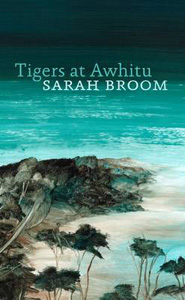
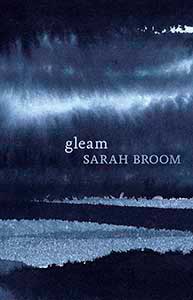
    cp-tigers-at-awhitu cp-gleam

The judges are delighted to announce the three finalists for the Sarah Broom Poetry Prize 2015.


The prize attracted almost 200 entries from across the spectrum of New Zealand poets, from the new and emerging to the established and the iconic. The shortlist was chosen by the 2015 guest judge, Irish poet Vona Groarke.


The finalists are:

Diana Bridge: a Wellington-based poet, the author of five collections, including aloe & other poems (2009).

Alice Miller: a New Zealand poet based in Vienna, whose first book The Limits was published in 2012.

Ashleigh Young: a Wellington-based editor, essayist, and poet, whose first collection of poetry, Magnificent Moon, was published in 2012.


“The Sarah Broom Poetry Prize is about celebrating poetry,” says judging panel member Sarah Ross. “The diversity of the entries received, and the tonal and formal complexity of the best work, its deftness, its moments of insight, poignancy, and humour – all of this has made the judging process enormously rewarding. So too has working with the generous and perceptive Vona Groarke.”


The Sarah Broom Poetry Prize aims to make a substantial ongoing contribution to supporting poetry in New Zealand. The value of the prize is $12,000 in 2015.


The three finalists will read in a free session at the Auckland Writers Festival on Sunday 17 May from 1.30-2.30pm in the Upper NZI Room, Aotea Centre, Auckland. Vona Groarke will announce the winner at this event

Queries should be emailed to: enquiries@sarahbroom.co.nz

For photos or other details of finalists please email sarahceross@gmail.com

For more information about Sarah Broom or the Poetry Prize visit www.sarahbroom.co.nz


FINALIST DETAILS:

Diana Bridge

Photo credit: Simon Woolf

Diana Bridge has published five collections of poems, the latest of which, aloe & other poems, came out in 2009. She was awarded the Lauris Edmond Memorial Award in 2010, for her distinguished contribution to New Zealand poetry, and her essay, ‘An attachment to China’ won the 2014 Landfall essay competition. Diana is based in Wellington.

Vona Groarke writes: “Whether it is the violence of medieval history, the engagement with nature, or a re-imagining of Ovid that is the subject, Diana Bridge’s poetry has authority and elegance. Technically sophisticated, this work is complex but never obscure; lyrically charged but never sentimental. It is unflinching in its observational commitment, but also enjoys its ability to fashion unusual and arresting imagery. There is a kind of fierce beauty to this work, alongside its rigorous intellect and formal grace. In a description that rings true of much of her work, her poem ‘Prospero’s Stones’ notes, ‘driven phrases that lap /around each other’: this is a poetry that is linguistically alert, but that also remembers to ply sound and meaning into the kind of poetic weave that is colourful and playful, but also careful, thoughtful and wise.”



Alice Miller

Photo Credit: Dylan Whiting

Alice Miller’s first book The Limits was published by Auckland University Press and Shearsman in 2014. She is a graduate of the International Institute of Modern Letters and the Iowa Writers’ Workshop. Last year she was a Grimshaw Sargeson Fellow, a Visiting Writer at Massey University, and a resident at the Michael King Centre. She is based in Vienna.

Vona Groarke writes: “The ‘I’ and ‘We’ of Alice Miller’s poetry are rarely familiar and never predictable. The same is true of her poems, which are fully-charged and teem with surprises of imagery, narrative and language. Nothing moves in a straight line in this work: instead, the poems tend to turn on small pockets of beguiling mystery. Characters emerge out of an apparent nowhere and do the darndest things before they slip off again, as if in secret, out of the sightline of the poem. It all makes for an intense and intensely involving experience: the lines are so well managed and the narrative so deftly and subtly manoeuvred as to leave one ruffled, but pleasantly so. What might seem like aphorism turns out to be a strange and complicated proposition, as in ‘Saving’ where, ‘some of the moments we cling to most / are the futures we never let happen’. This is work that turns on a sixpence, and that manages each of its fascinating turns with assurance and aplomb.”
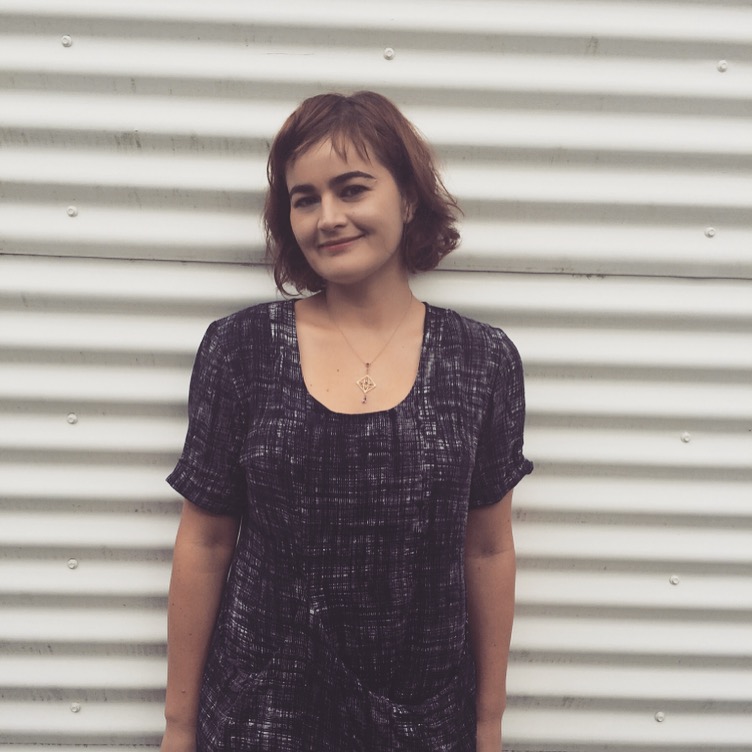


Ashleigh Young

Ashleigh Young is an editor, essayist, and poet. Her first collection of poetry, Magnificent Moon, was published by Victoria University Press in 2012, and recent work appears in Sport, The Griffith Review, Five Dials, and Tell You What. She co-teaches a workshop in science writing at Victoria University with science writer Rebecca Priestley, and she blogs, mostly about cycling, at eyelashroaming.com. Ashleigh is based in Wellington.


Vona Groarke writes: “Ashleigh Young’s poems defy their tight spaces to offer expansive and resonant narratives. Hers is a poetic world that derives great charge and vigour from proper nouns – named people and places -and specific, beautifully delineated detail that, as in flash fiction, sparks an entire world to life. People talk to each other in these poems, and whole lives get encapsulated in the kind of language that is as exact as it is vivid, as careful as it concise. Take for instance, ‘Electrolarynx’ with its arresting line: ‘Then our silence made a condemned building of us all’, or the opening of ‘Become road’: ‘When the car stops we are beginning already to become road’. These are poems that begin with the familiar, and then carefully walk it to the edges of perception, where it catches the light in arresting, singular and finely memorable ways.”
Ashleigh Young finds much to admire in the poetry of Tim Upperton and that admiration is infectious!

Ashleigh Young has posted an engaged reading (a not-review) of a poetry collection by Tim Upperton on her blog, eyelashroaming. It makes you want to go and buy the book, and read the book, if you haven’t already. It is a matter of semantics what you call it when you share your enthusiasms and entry points into poetry books. In my mind the best reviews do in fact ‘talk’ about the writing and the effects of the writing in a way that re-illuminates the content and its myriad possibilities. Bravo Ashleigh!

You can see Ashleigh’s full post here.

would-you-eat-your-family

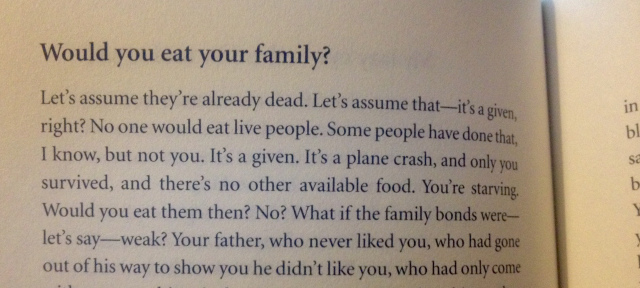
‘Tim Upperton is the kind of poet who tends to have his poems shared without people asking his permission or paying him money. They’re the kind of poems that you want to share with another person immediately. So you do, which I can’t help but feel is a kind of stealing. I have done it often. I tell people they should buy the book, but how can you be sure they’ll follow through? When it comes to poetry, people don’t follow through. I need to repay my debt to Tim Upperton somehow, and rather than giving him money like a decent human being, I am going to write about his book The Night We Ate the Baby, like a writer. His book has been reviewed in only one place, briefly. Why hasn’t it been reviewed elsewhere? Probably because of shrinking arts review coverage on all fronts, or maybe because it was published by a small press, but a more interesting theory is: because it’s too good.

This isn’t a review. If it was, it would be effusive and dull. I actually just wanted to talk about the book. The first time I read these poems I thought of Larry David saying to Jeff Garlin that the Larry of Curb Your Enthusiasm is a fantasy – an embodiment of the things the real Larry would like to say. ‘I cannot tell you the pleasure, the pleasure that it gives me to have a moment of honesty in my life, albeit fictional. There is nothing that feels better to me!’ I’ve always thought there’s beauty in the way this honesty is delivered on the show, and watching it feels cathartic at the same time as it feels slightly unbearable. Because outside of that moment of honesty, ‘We’re full of shit all the time! It can’t be helped, you have to get along in this world, that’s the way to do it.’ In the end it’s always Larry against the world, holding his small triumphs close and being swallowed by a mob of Michael J. Fox fans. Anyway, my point is, it sometimes feels a bit like that in a Tim Upperton poem, especially when he’s not going easy..

Poets at Te Papa

   
WRITERS ON MONDAYS: Best New Zealand Poems 2013

What better way to anticipate National Poetry Day* than with a line-up of nine of the best? Come along to hear Kate Camp, Mary-Jane Duffy, Dinah Hawken, Anna Jackson, Therese Lloyd, Greg O’Brien, Rachel O’Neill, Chris Tse and  Ashleigh Young read their poem selected for the annual online publication Best New Zealand Poems,  plus a favourite NZ poem. The editors of this year’s selection, Mark Williams and  Jane Stafford, will introduce the poets.

(*National Poetry Day is on 22 August).

Writers on Mondays is presented with Museum of New Zealand Te Papa Tongarewa, the New Zealand Centre for Literary Translation, and National Poetry Day.

DATE:    Monday 18 August
TIME:     12.15-1.15pm
VENUE: Te Papa Marae, Level 4, Te Papa
(please note that no food may be taken onto the Marae).

Poem Friday: Ashleigh Young’s ‘The bats’ resonates with such clarity

Ashleigh_Young (1)

Photo credit: Matt Bluett

Poetry Shelf now has a new feature. I always wanted to post poems on the site but I wanted to give everything else a chance to settle in first. I was on the judging panel recently for the Sarah Broom Poetry Award and assembled a list of suggestions for Sam Hunt. It seems fitting for an  award that honours such a fine poet as Sarah that I was so invigorated by the range and vitality of local writing from established writers to writers new to me. Moved in fact. I had around 65 names in my notebook under the heading : ‘want to read the book!’ Glorious. But in this tough environment for poetry publishing, I wondered how many would end up getting into print and getting the wider audience they deserve.

Poem Friday (like a sister to Tuesday Poem) is where I get to pick a poem that l have loved in my reading travels and with permission post it (so no submissions please). I am also taking a cue from Best New Zealand Poems and inviting the poet to write a sentence or two about their poem.

I have invited Ashleigh Young to launch the new feature (which seems apt in the light of her recent good news).


The bats

There is a kind of person who locks your shoes

inside of their house, and that is a person who is distracted


and who you see now through the window talking to his wife,

his face a protective shell grown fast around the phone.


The rush of not knowing someone at all lifts you

into the trees with the cicadas, your body too a bright clapping.


These are the situations through which you’ll get older

when you would like to walk home but your shoes are locked


in someone’s house, when you imagine sprinting down a driveway

as your back is pelted with rocks. These are unnecessary situations


because maybe you would have grown older anyhow, and likely

you do not need to cut your heart into two soft slippers to wear;


should need only to blot it with a paper towel as if it were

a bloody nose, all that blood turning to cold breath soon. Notice how


this person’s dog shows its affection by exploding into dangerous

shards in your arms. How much time do we have? None, very little


only some. But let yourself be lifted into the applause of the trees.

Let the applause be in anticipation of the slow motion


of him coming out of the house, quietly as a road cone

placed on a statue’s head at night.


Let his body be held, and graffitied, and prised apart.

Let the applause continue, even when it’s getting dark


even when it is dark

even when the bats come out.


© Ashleigh Young


Ashleigh works as an editor in Wellington and is currently working on a new collection of poetry and also a first collection of essays. Her debut collection was entitled Magnificent Moon. She has just been appointed Editor at Victoria University Press.

Author’s note: I have a fixation with cicadas, specifically with the way cicadas sound at the height of summer. It’s an urgent, panicky, overwhelming sound, always on the edge of total chaos. I was interested in how that sound might translate into a human feeling, and set out to write a scene about one possibility, when a kind of strange personal situation becomes amplified out of all proportion. And the bats? Well, I got to thinking about what the opposite of cicadas might be. I arrived at bats.

Note from Paula: Every now and then you fall upon a poem that fills you with such heart-stopping awe you just have to sit awhile and wait. That’s how I felt after reading this poem. Ashleigh’s poem leads you into the trees with the cicadas—into that glistening moment when the pitch of the cicada hits its summer zenith and all manner of subterranean feelings get to work on you. Yes, it leads you there, but then it leads you, surprisingly, lithely, into the jaw of difficulty. Where things go awry. And this is where the poem is glorious and light—in its movement into the enigmatic shade (an oxymoron I know). Its layers radiate out from the veiled situation, a bad situation you suspect. I love the gaps, the strangeness, the idea of someone locking someone’s shoes in their house. There were lines in this poem I wanted to hold in my mouth until they dissolved because they resonated with such clarity, beauty and deft phrasing (‘your body too a bright clapping’ ‘situations through which you’ll get older’). I also loved the lullaby-like repetition at the end that provided a point of solace along with a point of surprise (the bats).

Ashleigh Young goes biking!

Check out this terrific post from Ashleigh Young:

A bike ride with James Brown


I’ve been a big fan of James Brown’s poems for a long time. The first poem of his I read was ‘Loneliness’, in 2001. It’s probably still his most well known poem, all these years later. I wonder if James is a bit tired of it now, has made a real effort to leave it behind, the way Radiohead have left behind ‘Creep’ but a stubborn faction of people still want them to play it and wish they’d go back to their roots. Anyway, after I read it and Lemon, his second book, I became preoccupied with tracking down a copy of his first book, Go Round Power Please. It was out of print, but that eerie crowd of little pottery faces on the cover haunted me, and eventually I stumbled across a copy in a secondhand bookstore, and when I read that book, I knew that James’s poems would end up being permanent fixtures in my head.

The full post is here

Twitter Poetry Night NZ is a way of happening, a mouth

This is from Ashleigh Young:

Twitter Poetry Night NZ

People read poems and other people listen to them

A way of happening, a mouth.

Poetry Night doesn’t happen that often, but sometimes it does happen. Winter is on the horizon, deadlines are clamouring, the wind wand sculpture on the waterfront keeps gyrating suggestively, the future keeps leering at us from its speeding vehicle. One thing to do under these circumstances is read some poems and listen to other people reading poems. A man with some opinions called Karl du Fresne recently quoted that famous line by Auden: ‘Poetry makes nothing happen’, but du Fresne didn’t quote the next lines, in which poetry:

flows on south
     From ranches of isolation and the busy griefs,
     Raw towns that we believe and die in; it survives,
     A way of happening, a mouth.

He forgot to mention that it flows, it survives. That it’s a way of happening. It’s a mouth, Karl, a mouth.

I think also that du Fresne forgot that in the wider context of the poem, ‘nothing’ is a value in itself (Auden wrote those lines in a poem, after all, and to eulogize Yeats). I think he (and everyone) should read this great essay about isolation, communion, and poetry, by A. F. Moritz. I like these lines from the essay very much:

When we turn isolation into solitude by being creative and seeking ways to make this the basis of social life, we are poets.

The next Poetry Night will be on Sunday 20 April at 8pm on Twitter. If you’d like to record a poem or listen in, see here. Please note that the request to join me in an effort to get celebrities to read poems still stands.

Let’s make nothing happen, together.

@PoetryNightNZ (@ashleigh_young)

Poetry books I have enjoyed in the past year 1/2


As promised, I am launching this blog with a taste of some of the books I have enjoyed in the past year (it is coming in three parts). Part three I am linking to two books I reviewed in The  Herald.

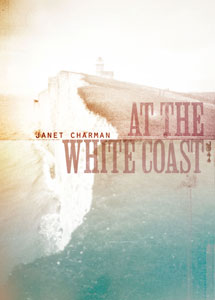
Janet Charman At the White Coast Auckland University Press 2012

cp-at-the-white-coast  cp-at-the-white-coast

An award winning poet, Janet Charman’s new collection is dedicated to her grandmothers and this book does seem like a gift for women. At The White Coast is a collection of travel poems – here, abroad and through the past, whether invented or true. Charman’s continual flair with words translates into enviable lines, sweet rhythms, elastic syntax, experience rendered into economical delights. She moves from bedsits to ferry stops, from trains to social work, from picket lines to boyfriends, from girlfriends to spaghetti-authentico (‘always in besidedness/ more than a couple’). Or ‘i think/ before sailing into orchard and paddock/ she had the breathless crush of metropolis’. This is my favourite Charman book to date – the poems are both moving and marvellous.

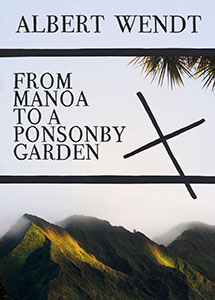
Albert Wendt From Mãnoa to a Ponsonby Garden Auckland University Press 2012

cp-from-manoa-to-a-ponsonby-garden  cp-from-manoa-to-a-ponsonby-garden

Albert Wendt’s latest collection, From Mãnoa to a Ponsonby Garden, is a joy to read. The poems reach out into the stretch of the Pacific with their heart very much in the present. They navigate birthdays, love, death and growth. The terrific sequence of garden poems is like a memoir or diary in the form of a garden narrative; the flowers, the vegetables, the family, the generations, the life cycles are hued with tenderness, vulnerability, strength, humour, wisdom. The love that the poet feels for his partner, Reina, is a poetic drumbeat –essential, moving, steady. These poems come out of quietness, contemplation, experience. Our poetic elder has delivered a masterpiece.

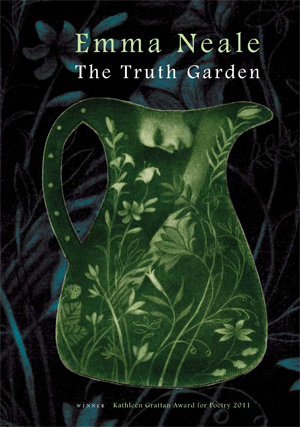
Emma Neale The Truth Garden Otago University Press 2012

Neale 2-1 Neale 2-1

Emma Neale’s collection, The Truth Garden, deservedly won the Kathleen Grattan Award for Poetry in 2011. The book features an exquisite cover image by Kathryn Madill, but I found the small, tight font didn’t do justice to the poems. If Neale’s poetry were a tapestry it would be cast in rich threads – luminous phrases catch your eye repeatedly and make you linger. Poems carry you through family, rivers, cycling, time, night, dreams and musings with tenderness, attentiveness and imagination (‘Night, and the study window burns/ not like a beacon, but as if to warn/ late travellers from some hidden reef/ of thought’). Or ‘how to stockpile time, how hoard its shine/ when time is the very stuff that seeps inside us.’ There is a magnificent sestina on fidelity that, with its repeating rhymes, echoes the tidal flux of trust and love.

Kerrin P Sharpe Three Days in a Wishing Well Victoria University Press 2012

wishingwell300dpi__97252.1351543335.220.220 wishingwell300dpi__97252.1351543335.220.220  wishingwell300dpi__97252.1351543335.220.220

Kerrin P Sharpe was awarded the New Zealand Post Creative Writing Teacher’s Award in 2008, and now this Christchurch-based writer has released her first poetry collection, Three Days in a Wishing Well. It was one of my top debuts for 2012. Sharpe brings a raft of poetic tools into marvellous play: economy, rhyme, omission, mystery. Reality corkscrews in a fairytale like manner; subjects range wide from hats to monks, from mother to father, from lighthouse keeper to sewing needles. Each poem is utterly flavoursome as it combines music, anecdote and emotional lift: ‘to hug my father was/ to know the sky: the/ voices of soldiers the/ families that squeezed/ him inside.’ Stunning.

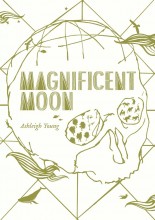
Ashleigh Young Magnificent Moon Victoria University Press 2012

magnificentmoon300dpi__43800.1351470952.220.220  magnificentmoon300dpi__43800.1351470952.220.220  magnificentmoon300dpi__43800.1351470952.220.220

Ashleigh Young, winner of the Landfall Essay Competition, also has a debut collection out (Magnificent Moon). Her poems bring together anecdote, an everyday that is off beat, stretching metaphors, gorgeous rhyme, swooping anecdote and the best found poem I have read in awhile (Buttons). For me it is a vibrant collection, and enough poems stand out to make it stick and flag this writer as one to watch.


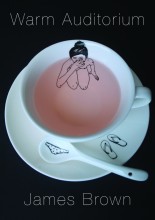
James Brown Warm Auditorium Victoria University Press 2012

warmauditorium300dpi__87807.1351542581.220.220  warmauditorium300dpi__87807.1351542581.220.220  warmauditorium300dpi__87807.1351542581.220.220

James Brown lets you into his workspace in his new collection (Warm Auditorium). It’s a great title that stands in for poetry if not life — his auditorium is packed with people, ideas, talk, wit, confession, story, aphorisms, provocations, warmth, sidetracks, playfulness. Brown likes to make things up, break rules, move you, challenge you, divert you. His poetry is so good you want to linger in the dark reading space and lean in towards the light and lift of his lines. As he says: ‘poetry/was running round my head like marbles over linoleum.’

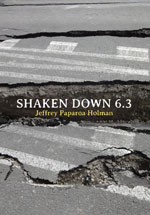
Jeffrey Paparoa Holman Shaken Down 6.3 Canterbury University Press 2012

shakendownmed  shakendownmed  shakendownmed

Jeffrey Paparoa Holman, like Fiona Farrell, has responded to Christchurch’s earthquakes in writing. His thoughtful endnote considers whether poems have any worth in the aftermath of catastrophe. He suggests that ‘a poem can send us back out into this troubled and marvellous world prepared to live more fully.’ A big claim, but his new collection, Shaken Down 6.3, does just that. These fine, troubling, beautiful poems are a window for us all. The photographs are a bonus.