Tag Archives: Airini Beautrais

Poetry Shelf, Poet’s Choice: Airini Beautrais makes some picks


1415925155755    7485719

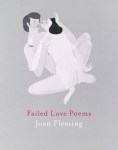
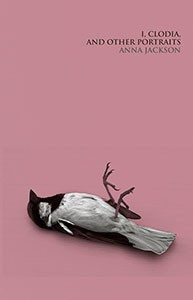
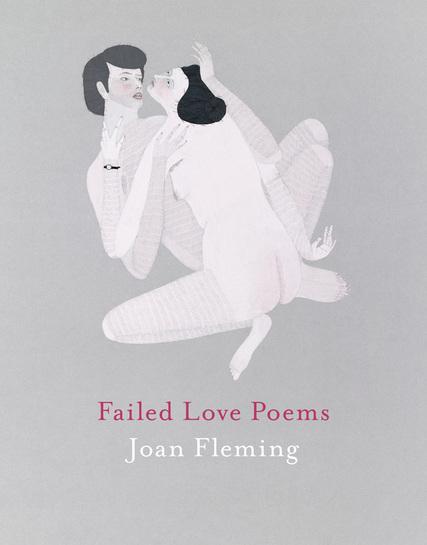
Once again it’s been a thesis-related year of reading. I’m looking forward to catching up on all the great local poetry which has been coming out over the past year. Books I have enjoyed which came out towards the end of last year or early this year include Anna Jackson‘s I, Clodia, Fleur Adcock‘s The Land Ballot, Kerry Hines‘s Young Country and Chris Tse‘s How to be dead in a year of snakes. One of the books I’m most looking forward to reading is Joan Fleming‘s Failed Love Poems. What a fantastic title. I really loved her first collection too.

The giant of my reading list this year has been four translations of the Divine Comedy. The one I liked best so far was Allen Mandelbaum‘s California Dante, partly because it was a beautiful production with amazing, simple ink drawings. Of course there are a whole heap more one ought to read. I think I will have to learn Italian next. I am turning 33 on New Year’s Eve and am conceptualising how I might make a Divine Comedy cake – or maybe a Purgatorio cake with 9 layers.

This obsession was generated by a chapter I was writing on John Kinsella‘s Divine Comedy: Journeys through a Regional Geography (University of Queensland Press, 2008). Kinsella imagines heaven, hell and purgatory as co-existing in modern-day Australia, and politicians are skewered Dante-style. It’s a bold, perhaps over-bold project, but if not compared too heavily to its model, an interesting work in its own right. Kinsella’s anarchist, environmentalist, pacifist politics are evident throughout, as is a sense of wonder at nature but also unease at living in a colonised, modified landscape. I spent a lot of time making tables and mapping Kinsella’s work against Dante – I doubt if anyone else will ever do this, but it was a fascinating exercise.

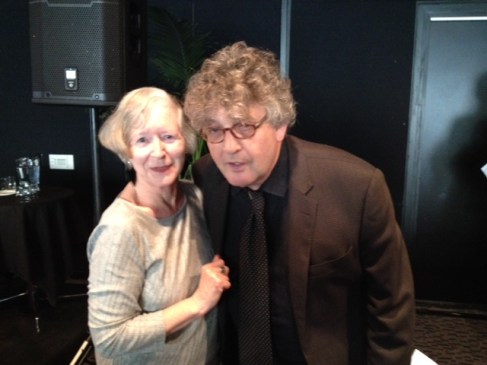
Airini Beautrais

Poem Friday: Airini Beautrais’s ‘The thing is, Neil, you are all of us’ –It is a poem that haunts me, and in that haunting, I keep returning to the lines to reflect upon ‘why.’

2015-02-28 21.01.36


The thing is, Neil, you are all of us


You are the old rocker in skinny jeans

who is mumbling in the corner

you are the punk who fixes bicycles

at two o’clock in the morning.


You are the comic book girl in combat boots

whose breasts are drawn too large

you are the feminine librarian

who wants to go on a rampage.


You are the community gardener

with home-cut hair and knee holes

you are the bespectacled chicken rescuer

the guitar player and the police mole.


You are the tofu thief made to work

for the local Salvation Army.

They throw away about half of their clothes:

take as many as you can carry.


©Airini Beautrais Dear Neil Roberts  Victoria University Press 2014


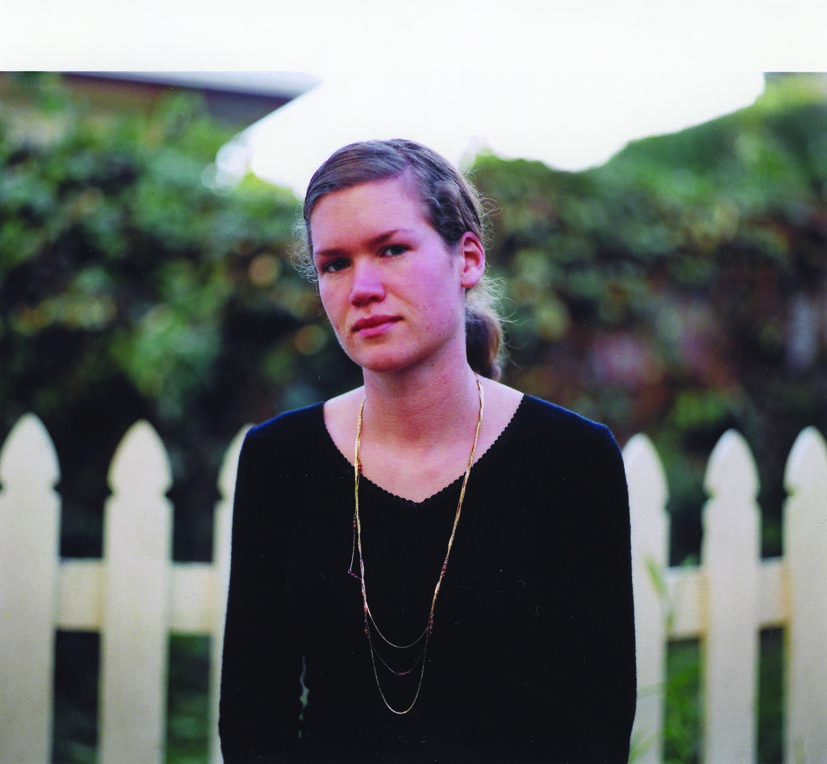
Author Bio: Airini Beautrais lives in Whanganui with her partner and two sons. She is currently working on a PhD in creative writing through the IIML at Victoria University, on the subject of narrativity and verse form in contemporary long poems. Dear Neil Roberts is her third book.

Author note: ‘The thing is, Neil, you are all of us’ is one of the first parts of the book I wrote, back in 2011. I had known Neil Roberts’s story for some time and it had occurred to me it would be interesting to write a long poem about the incident. One of the things that struck me early on in my research, from reading various anarchist/ libertarian communist web entries, was the sense of ownership amongst these radical left communities for the story. It was as though each person who had re-told the story, while not endorsing Neil’s act, could identify with the way he must have felt. In this poem I drew on my own experience within the Wellington anarchist scene – although not every detail is ‘true’, the characters in this poem do approximate real people, myself included.

Within this poem the ghost of an accentual meter can be heard, and the metrical scheme, while loose, is something near the traditional 4, 3, 4, 3 ballad stanza. And it is off-rhymed, xaxa. Perhaps the ballad was lurking behind the scenes all along. It has been mentioned that Dear Neil Roberts is rhythmically close to prose. I think this is true (as it is for a wide range of contemporary free verse), but I also think that writing to a regular stanzaic shape can lead to some interesting effects. For instance, rhymes frequently occur at line-ends. And there are lines in the book that are straight iambic pentameter. It has to be remembered that poetry is a genre, and can be written in verse, prose, or any combination of the two. Writing Dear Neil Roberts as a poem allowed me to present, juxtapose and interpret information in a different manner, than if I had set out to write an extended essay or a work of New Zealand history.


Paula’s note: Not having read Airini’s note before I wrote this, I didn’t have the back history (which is fascinating!). The poem is placed near the end of her collection, Dear Neil Roberts, and traverses Neil’s story with a foot planted in the realm of invention and another within the scope of research. Forming some kind of arc across—or conversely a simmering stream below—these two choices, is the personal. Airini allows herself, her own history and predelictions, to enter the poems.

What struck me about this particular poem is its ability to move, to raise issues and to offer delight at the level of technique. The parade of chalk-and-cheese characters turns the narrative impulse over and positions you as reader squarely within the frame. The poem now addresses ‘you.’ Yes, you might be any one of these characters that, like Neil, might test boundaries or go to extremes, but there are other issues at work here too. We are all destined, in the main, to occupy the shadows of history (as did Neil) as opposed to being a key player. If there is a potential Neil at work in this parade, there is also the way in which the parade is at work in Neil. We occupy many roles, play many parts, with varying degrees of visibility and attachment. These possibilities move me, as they return me to the complicated, contradictory, and at times unfathomable make-up of what it means to be human.

If the poem flips your placement as reader, the final two lines flip your placement within the poem. Again the resonances are multiple.The cheap clothes. The bag to be filled. The societal waste. Yes we have roles but we always have needs. We are linked by common needs whatever complications are steering our lives: warmth, shelter, food.

You can read this poem as prose-like in its poetic intentions yet, as is so often the case with Airini’s poems, there is more at work here. For me, I was hooked by the aural chords that make different semantic connections. For example, I loved pursuing the ripple of ‘m’s’ (mumbling, morning, feminine, community, home, mole, army, many) and the way they are honey for the ear yet forge a buried story. This poem, as does the book, relishes the white space, the gaps, the ambiguity alongside the more prosaic intent of telling a story, bringing someone closer, circulating ideas. It is a poem that haunts me, and in that haunting, I keep returning to the lines to reflect upon ‘why.’ Marvelous.


Airini Beautrais’s Dear Neil Roberts: Connections and disconnections forge poetic static that makes that lamp crackle, that bald wire hiss

airini beautrais      dear_neil_roberts_210x165__56483.1408338557.140.215

Airini Beautrais’s debut poetry collection, Sacred Heart was a little beauty and won Best First Poetry Book at the Montana New Zealand Book Awards in 2007. This was followed by the superb, Western Line. Her latest collection, Dear Neil Roberts, explores an inclination to prose-like poetry in a new way. You could say this is a long narrative poem or you could say this is a series of individual poems that contribute to a narrative arc.

Neil Roberts was a real person, an anarchist. In 1982, he blew himself up outside the Whanganui Police Computer Centre in the middle of the night. Airini’s new book has a central thesis at its core: history belongs to the shadows as much as it does to the great men and the great women. In other words, individuals who get misplaced and misremembered in the side lights of the grand historical narratives do have something to contribute to the way we view the past. The poetry is in part surrogate documentary but generic boundaries are blurred as the poet uses tools of invention and imagination as much as she uses tools of research and political inquiry. What gifts the book another fascinating layer is the way the poet steps into the narrative herself. She shows us how time and place and event affect her. This choice is reinforced in the title, ‘Dear Neil Roberts’; this poetry collection is also part epistle. Letter writers leave traces of their own lives as well as addressing the life of the recipient.

The poems draw upon story-telling techniques but these poems are primarily driven by poetic options: white space, building rhythms, terrific line breaks. Together the poem-pieces form a mosaic that you can step back from and view as an intriguing whole (exploring notions of history on one level, and the life of individual on another, along with the effect of an event like a stone rippling through time and place). ‘Time’ sets the scene with keen detail of a historical moment from the Falklands unrest to protests in Poland, from Rocky III to redundant clothing workers. Then, the ironic reference to a newspaper editorial that suggests fireworks will one day be banned.

If this book is a poetic mosaic, it is a mosaic sumptuous in detail and issues raised. Both moving and provocative. In ‘Clean-up’ the body never becomes more than the gory detail to wash away from the street. Or in ‘Monuments,’ testimonies from Pacificism and from war jostle (Norm wrote in jail, ‘What I have done with my spared life/ while better men lie dead?’; or the veteran war pilot, ‘War is useless and achieves nothing.’). Beneath the surface of this poem lies questions on the merits of war, the necessity or war, the cost of the dead. In ‘Investigation’ (this in 1982), the explosives Roberts used dominate the news, while the anarchist, ‘with razor blades in his ears’ and steel-capped boots’ is chiefly missing.

[ .. ] There is a dryness in the news,

like grief has been squeezed out,

As a mosaic, it is a glinting selection of points of view, invented, factual and personal. ‘By way of an explanation,’ for example, is composed of quotes from Senior Sergeant Rob Butler that Airini gleaned from various newspapers of the time. Brought together in the form of a poem they disturb.

He was one of those people whose human frailty

leads them to join a cult or sect like the punk rockers.

They do some very strange and unusual things by our standards.

He did not seem to have any great concern for his own life.

Another example is the poet’s confession to her own line crossing which in turn subtly rubs against the grain of Neil Roberts (in ‘Out the window’):

Here I am, with blond-haired child,

with my rounded belly, in my hand a set of car keys —

the remote-locking kind, which I never would have imagined.

It’s been awhile since I did anything subversive

with a can of spraypaint, with a billboard, with a naked human body,

with anything. But I’ve known Jonah since the days

when I did. I wonder out loud, what it would be like

if you kept living the same life you lived at twenty-one.

Or the way the contemporary writer makes room for different stories from the past in ‘History books’ in a way that recovery is uncertain, dangerous, shadowy, with faulty connections:

Room is made in the present.

The past is just left traces; paper, newsprint, film, tape, silicon.

The old lamp of the past clicks and crackles;

bald wires, an overheated bulb.

Or the way in ‘Waiting for death/ waiting for birth’, as the poet is waiting for the birth of her second child (‘The first time, I thought I was dying’), she retreats momentarily into her history of protest (‘Protests gave me something to exist within’). This complexly moving poem is aching with overlap:

and seeing cyanide pellets, or crossing an overbridge,

hearing trucks roar, thinking, ‘This is my chance.’

I am here because I didn’t take it.

On Pyramid Farm, you found your chance

in the back of a truck: the gelignite

and accessories. To go out with a bang.

Airini’s new book takes risks as it unstitches a sutured wound of the past, of self even, and dares to imagine grey lines, the long reach of historical events, small or otherwise. The poet is boundary crossing as she overlays historical transparencies, blurring this version upon that version upon that version and in that overlay getting deeper into who and how we are (humanity). You can admire the swing and shape of each poem, but the impression that makes the deepest most affecting mark is the book as a whole. Connections and disconnections forge poetic static that makes that lamp crackle, that bald wire hiss. This is narrative poetry at its very best.

Victoria University Press page

Airini’s thoughts On Poetry for Poetry Shelf

On Poetry: Airini Beautrais relishes the fulfilment of intent

secretheart.9780864735416__29659.1347922938.140.215       westernline.9780864736499__89622.1349055507.140.215

Airini Beautrais is currently enrolled in a PhD in Creative Writing at the International Institute of Modern Letters, where she is exploring Australia and New Zealand narrative poems. Airini has a background in ecological science and has worked as a secondary-school teacher. Her debut poetry collection, Secret Heart, was awarded Best First Book at the Montana Book Awards in 2007. Her second, standout collection, Western Line, filled me ‘with joy – through what words can do and through the avenues poetry makes available’ (my NZ Herald review).  The initial sequences of love and charm poems took miniature, imaginative leaps, trailed footprints in the everyday, relished musical lifts and were unafraid of humour. As I said in my review, there was no other New Zealand collection quite like it: daring, fresh, agile.

Airini has generously agreed to contribute to the ongoing series of small pieces ‘On Poetry.’

Here is a quote I came across recently:

“Poetry is the fulfilment of intent; what dwells in the mind is intent, what comes forth in words is poetry. Emotions move in the core of one’s being and take form in words. When speaking them does not suffice, then one sighs them or chants them; if sighing and chanting do not suffice, then one sings them; if singing them does not suffice, then unconsciously one taps them out with the hands, dances them, treads them and stamps them

Emotions come forth in sounds, and when the sounds fulfil patterns they are called musical tones. The musical tones of an age of peace are tranquil and incline to joy; their regulation is harmonious. The musical tones of an age of disorder are dissonant and incline to anger; their regulation is perverted. The musical tones of a kingdom in ruins are mournful and incline to nostalgia; their people are suffering. Therefore, to keep order in success or failure, to move Heaven and Earth, to touch the feelings of ghosts and spirits, nothing can approach poetry.”

This was written in the 1st century AD, in a preface to the Shih Ching anthology of Chinese poetry. It is attributed to a writer named Wei Hung. The translation above is by Dore Levy, and I found it in her book on Chinese narrative poetry.

The first thing that struck me about this passage was the statement “Poetry is the fulfilment of intent.” I had never thought of it like that, but the idea made sense. We do bring our intent forth in words – for better or worse. Intent is the beginning of the poem – but where might a poem end up? What work will it do? Moving heaven and earth, touching the feelings of spirits; these are no mean feats. Would we attempt such things?

Recently I have been thinking a lot about the work of poetry. Largely based on my own experience, I have a suspicion that as poets we have a tendency to make too many rules for ourselves, or to internalise the rules we interpret from what we read. Often these rules seem to involve the work poetry may or may not do. Such as: poetry may involve clever word-play. It may be obscure. It may be unintelligible. It may be funny. It may confess. It may not articulate an opinion. It may not teach. It may not preach, prophesy, challenge, condemn, tell, etc.

Maybe these are what have been my rules. I like to tell people I only have one rule in my poetry: Never write about cats (a rule I am of course prepared to break if the right occasion arises). But underneath are the bigger rules. In my work at the moment, I am staring them down, and it terrifies me. I am terrified of two things: If I break those rules, I will never be a poet. If I don’t break those rules, I will never be a poet.

I am not a chanter or a dancer. I write with a page, and silent reading, in mind. If I write anything that stamps, it will be in a metaphorical sense. But I do, in spite of my rules, have intentions. Are they honourable? I’m not sure. I feel that poetry needs a 1980’s bumper sticker: Poetry can do anything!

Victoria University Press page

Twenty-three love poems

Poetry With Airini on National Radio

On Tuesday Poems

Otago Daily Times review

NZ Books review

IIML student page