Can we still give peace a chance? Can we walk to the end of our home road and give peace a chance? Can we teach our children to give peace a chance? Can we swim in wild oceans to give peace a chance? Can we feed the hungry and nurse the sick to give peace a chance? Can we share wealth and knowledge to give peace a chance? Can we stand on mountain tops and breathe in clean air to give peace a chance?
Can we sign petitions and sing songs to give peace a chance? Can we love our neighbours to give peace a chance? Can we listen harder and hold hands to give peace a chance? Can we place sixties flowers on millennium borders to give peace a chance? Can we praise good leaders to give peace a chance?
Can we plant our gardens to give peace a chance? Can we refuse supremacy to give peace a chance? Can we call out greed and ignorance to give peace a chance? Can we teach our hearts to give peace a chance? Can we stand together to give peace a chance? Can we stand strong together to give peace a chance? Can we stand strong and creative together to give peace a chance? Can we stand strong and creative and live together to give peace a chance?
Can we still give peace a chance? Can we still give peace a chance? Can we still give peace a chance? Can we still give peace a chance?
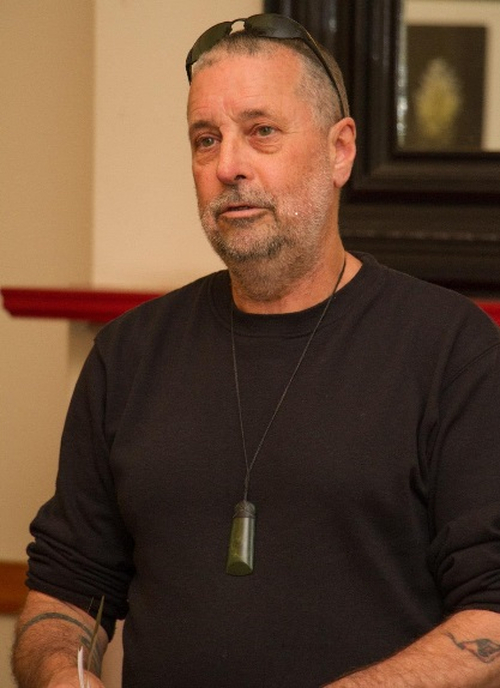
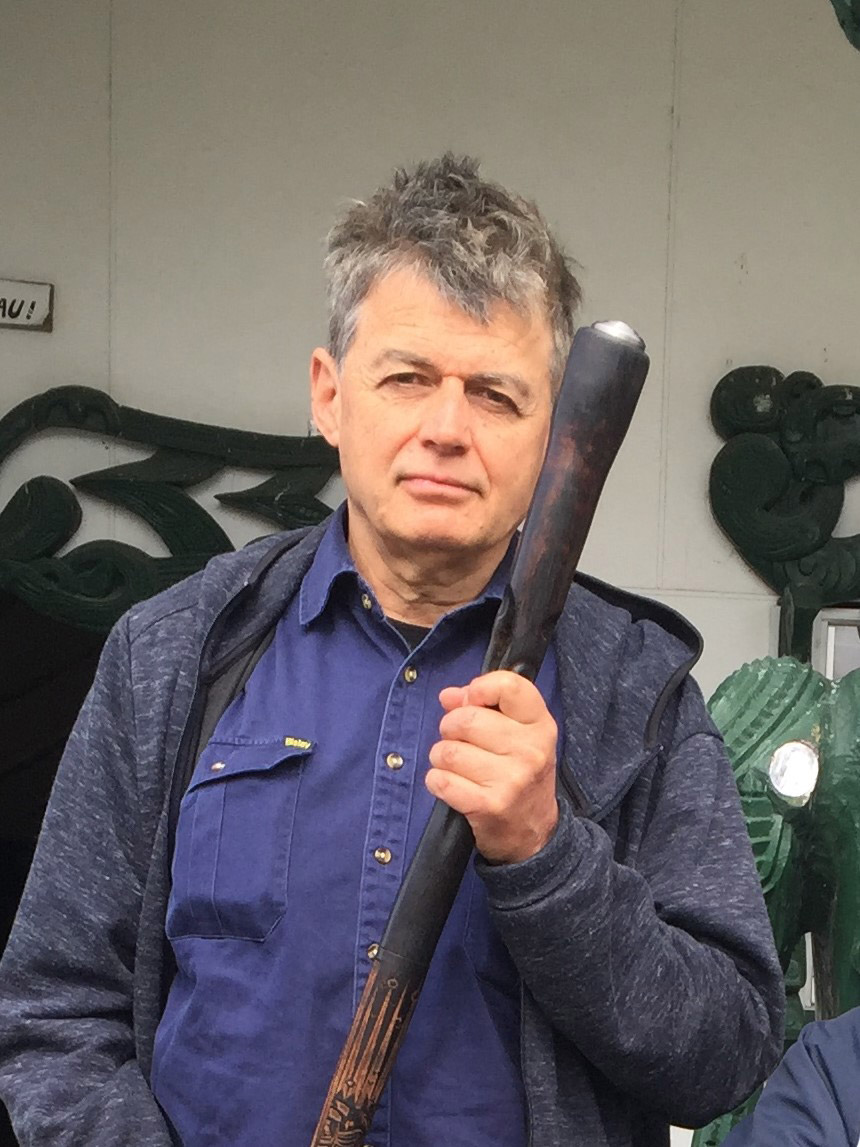
Vaughan Rapatahana, Te Ātiawa, commutes between Aotearoa New Zealand, Hong Kong and the Philippines. He writes across genres, in both te reo Māori and English, and his work has been translated into multiple languages. He has published eight poetry collections and has a PhD from the University of Auckland (a thesis on Colin Wilson). His collection Atonement was nominated for a National Book Award in Philippines (2016). He was awarded the inaugural Proverse Prize in 2016. He appeared at Poetry International Festival at London’s Southbank (2019) and at Medellin Poetry Festival Poetry (2021).
Vaughan reads at Medellin Poetry Festival Colombia
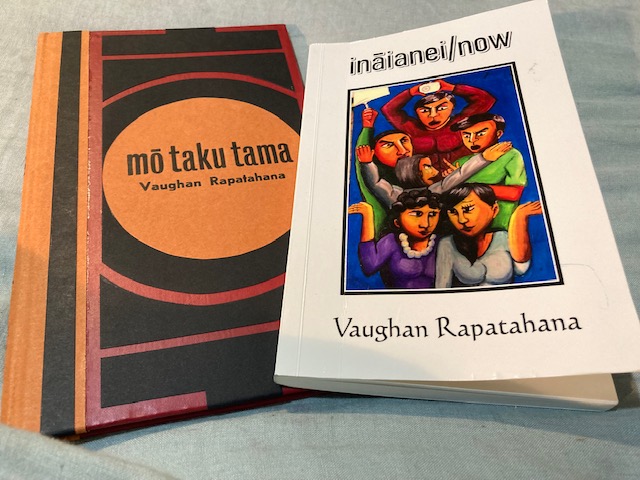
Paula: In 2022 I am running a series of email conversations with poets whose work has engaged me, often over a period of time. In these jagged and uncertain days, it is a welcome chance to talk books, writing, reading, hearts and minds. And in our case, an opportunity to discuss your two new books (ināianei/now, cyberwit, 2021; mō taku tama, Kilmog Press, 2021). Has reading offered uplift, solace, diversion? Have certain books really stuck?
Vaughan: Tēnā koe mō tēnei Paula. Reading has certainly offered ‘busyness’, if there is such a word. I am fortunate to be involved in several projects right now and am doing a lot of reading. Of poetry, of short stories, flash fiction, creative non-fiction in both my main languages – te reo Māori rāua ko te reo Ingarihi. I have been very aware that ngā wāhine Māori especially are right at the forefront of current Aotearoa New Zealand writing. And I am impressed. Very impressed. Several collections have recently been published. Tupuranga Journal, Kei te Pai Journal, Saltwater Love Journal, Te Whē, Awa Wāhine, Atua Wāhine have all impressed me greatly, while I know that Cassandra Barnett has a new collection (which I have read) and Anahera Gildea and Alice Te Punga Sommerville also have collections out this year. And Briar Wood of course. I am also looking forward to Robert Sullivan’s new poetry collection, which I have just received. And Michael Steven’s too, eh. Then essa may ranapiri will impress us all with their own new set! Wow, this country has a mighty rich vein of poets.
Reading becomes religion.
Paula: If you made a roadmap of your own poetry writing, are there any significant presences, guides, lamps that you would mark?
Vaughan: To be honest, I did not get into poetry writing until about 2007, when I started to get into the craft more. I was well into my fifties. I do recall getting good advice from my old schoolmate, David Eggleton, and from James Norcliffe – we first met in Brunei Darussalam last century – about the poems I was learning to write back then.
I had always been very aware of Sam Hunt, as a poet, and had a few dealings with him over the years before I got serious about writing poetry myself. To a degree he and James K Baxter had kept poetry in the public eye for a long period. Two distinctive Cancerians, eh. To digress, I remember drinking at the Kiwi Hotel with Baxter. Way back when. Hone Tūwhare was also a favourite of mine. And Jacquie Sturm became one, when I ‘discovered’ her work. There are a couple of her poems that really impressed and – probably – motivate the ‘political’ poetry I often find myself writing. And Hinewirangi too. I knew of her Moana Press collections and got what she was saying. As I noted earlier I am also very impressed by the wave of wāhine Māori poets right now. I won’t name more names as there are several, but I am sure you will see a lot of their work over the next few years.
But, on reflection, you know, the poet who really drove me, from waaaaay back when I never wrote poems, was Sylvia Plath. Too many pained shared echoes for me and I can always read some of her lines and be instantaneously moved.
ināianei/now, cyberwit, 2021 and mō taku tama, Kilmog Press, 2021
Paula: I think, among many things, I am drawn to your poetry because of the strong presence of te reo Māori. Yes it is music that adds to the poems, but it is also individual words that are like gold beacons on a musical staff – maunga, kōrero, manaaki whenua, manaaki tāngata, whakarongo. They take me back to growing up in Tai Tokerau. It is like being welcomed onto the marae that is poetry. What does it mean for you?
Vaughan: E tuhituhi ana ahau ki tāku reo tuatahi ināianei, i te reo Māori. Nā te aha? Nā te mea e pīrangi ana ahau kia whakapuaki whakatepe ngā mea katoa i tāku hinengaro, i tāku mānawa, i tāku wairua. Kāore e taea e au te tino whakapuaki ahau i tētahi atu reo.
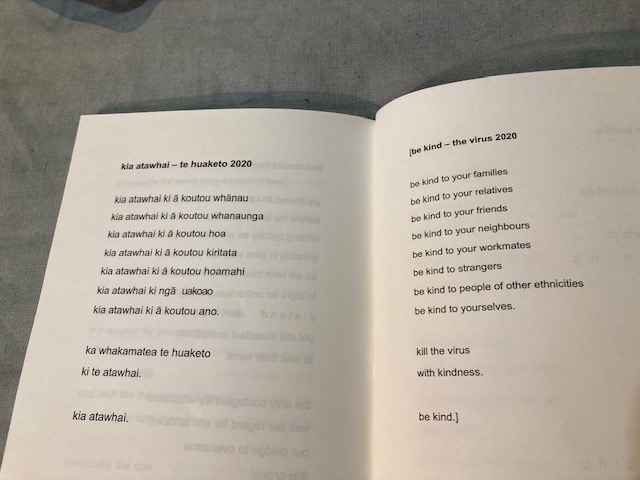
[I now write in my first language, the Māori language. Why? Because I want to fully express everything in my mind, in my heart, in my soul.
I cannot express myself fully in another language.]
I think that the sentences above express why I now write a good deal of the time in te reo Māori. While at the same time utilising te reo Ingarihi [English] to twist back upon itself as a sometime circumlocutive, certainly dominating, even duplicitous tongue – or at least its fiscally motivated agents!
Paula: Thank you. Your two new collections, ināiane/now (2021) and mō taku tama (2021) both pulse with vital heart. Especially because you bring a deep-seated pain to the surface of your writing: the tragic loss of your son. The second collection gathers poems you have written to and for him since his death. The first includes some. At times I feel like a trespasser but, at other times, I am reminded why poetry matters to me. A poem can draw me deep into human experience and affect how I live and write my own life. This is what your poetry does. I am reminded of the gift of reading Iona Winter’s Gaps in the Light, who also tragically lost her son. mō taku tama is such a loving tribute and so beautifully crafted by Kilmog Press. The poetry says your grief. How was it, choosing to write this? Putting it out in the world?
Vaughan: Tēnā koe mō tēnei pātai. A good question.
I write in the introduction to mō taku tama (for my son) that composing poetry about him, his far too early demise, and my resultant various mixed feelings about this, keeps him alive – at least for me. In the end that collection, despite the sorrow imbued across the pages, is a celebration.
For Blake was a great guy and I miss him, even although I do often sense his presence. I want others to share not so much my grief , but my love for a wonderful son.
And I guess that I will at times write more poems which relate to him.
Thank you to Dean at Kilmog Press too. He mahi tino pai tēnei.
talking to my son in a funeral home [tiwhatiwha pō tiwhatiwha te ao: gloom and sorrow prevail, night and day]
I spoke more authentically to you during those thirty estiolated minutes than I ever did when you were alive.
the stark room, shaped more like a coffin than what you lay in quite composed, unmoved by my ascesis of angst, my agenda of guilt.
the wooden floor an eavesdropper bouncing back a farrago of belated apologies, an echolation of mea culpa.
those faded walls, the fake flowers in a neutral vase and the box of tissues supplicating for the tears I could no longer summon during that one-sided confession to myself.
Paula: I was thinking about the way you bring knitting into a couple of poems. I especially love ‘knitting a poem’ (read here). What we knit into poetry and ‘what exists beyond it’, and took me back to Blake. I have an uncertain year ahead and your beautiful two books made me hold my daughters closer. What do you think of the idea of poetry to keep us warm? Of poetry that is craft and heart gift? Or a different thought, a net even?
Vaughan: Yes, I guess we – as poets anywhere – are knitting and weaving and sewing together a final tapestry of sorts. It could be a long shawl to warm us up, to keep us snug. It could be some showy patterned piece to display our cleverness. It could be a blanket to stir up a fiery blaze within us – perhaps about an injustice. Equally it could be a fire retardant blanket created to quell raging conflagrations also within us.
I think many of my own poems have elements of these. In the end though, I guess I do like to knit poetry into a coverall that – although it may be angry and sad and clever-dick at times – shares emotions, stirs up thinking, yet can comfort and console even in times of doubt and disaster. After all, eh –
ko taku mahi kia tuhituhi te tika kia wewete ngā roimata mō katoa ō tātou ki te tangi. nō te mea, ki muri ngā roimata anake tātou kia kata.
[it is my task to write the truth to release the tears for all of us to cry. because only after the tears can we laugh.]
Paula: Oh I love that riff on knitting and poetry, that ends with ‘coverall’! Did any poems surprise you when they reached the page? Were there some poems where you felt the stars aligned?
Vaughan: Yes, sometimes – but not often – a poem will arrive, if not ‘fully formed ‘at least well on the way. This usually happens when I am emotionally connected and the emotions have been brewing for some time. The stars aligned for example when I wrote ‘to my wife overseas during lockdown’ and ‘sixteen years’ (both in ināianei/now). I was surprised by the strength of my own feelings and the words just tumbled tightly onto the pages. Almost in perfect alignment.
Other poems are a travail. I can spend a lot of time and make several return trips to a poem before I am content with it. Especially if there is historical research associated with the kaupapa.
And then there are poems which never get completed. Despite many revisits. I guess that they just do not want to be written. Yet, anyway.
Paula: I sometimes think this is how it is as reader too. Sometimes the stars align, you cross the bridge and you are in the poem, and it is utterly wonderful. At other times you cannot sight the bridge and it is travail. But then the next day, the stars do align and you find your way into the poem.
Your poems are personal, but there is also a strong political spine. It seems to be a growing trend in Aotearoa. I welcome this. How important is this presence in your poetry? How does it connect with the poetics? How to write political poetry is wide open!
Vaughan: I don’t consciously write ‘political’ poems. Not in the sense of mainstream party political discourse.
However, when I feel, see, research injustice, whether contemporary or historical I write poetry that depicts the injustice and calls for recompense, recognition, realisation. In this way the poems are personal too. And so, important.
In the end, then, I write poetry from inside, and bugger the (political) ramifications.
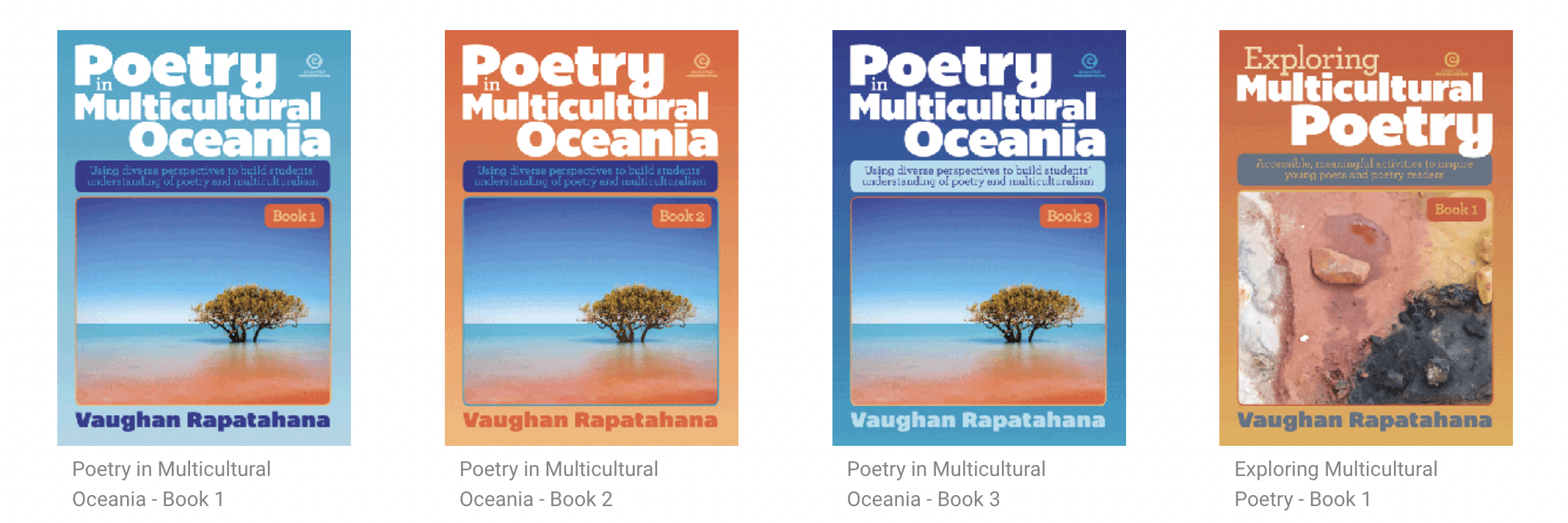
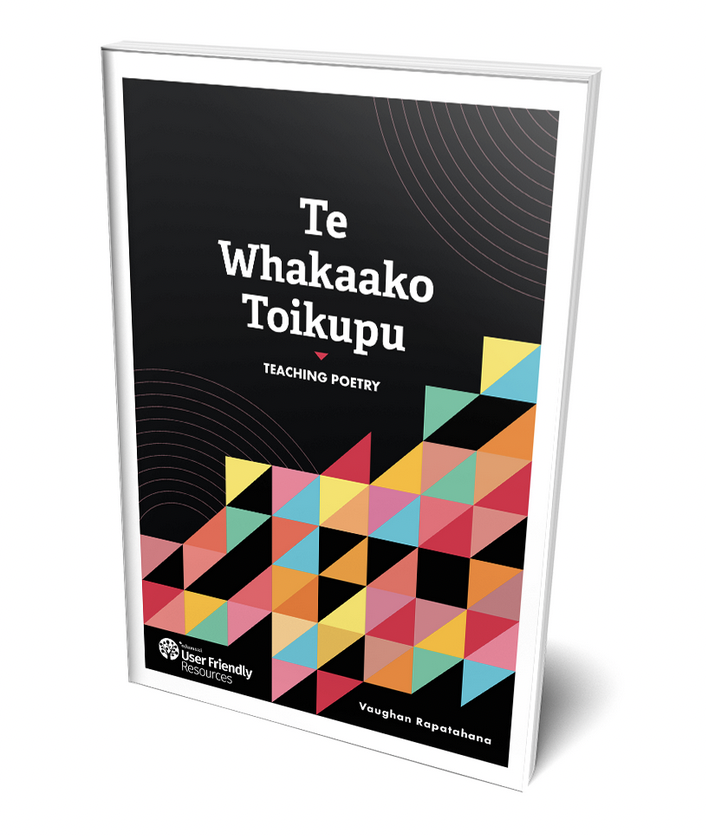
Paula: Yes! The political is most definitely personal. You have produced a number of excellent teaching resources (including Poetry in Multicultural Oceania 1-3, Exploring Multicultural Poetry, Te Whakaako Toikupu: Teaching Poetry, Essential Resources) that open up poetry bridges for secondary school students. What prompted you to do this? And what are your aims?
Vaughan: You know – or maybe you don’t! – I was never any ‘good’ at poetry when I was at school.
I only started to ‘get’ it much later when I was overseas teaching English as a foreign language and I needed to somehow simplify the ordeal of comprehending how a poem was structured and only then any comprehension of what it might be ‘all about’ came through.
So all of these poetry teaching resources, commencing in Brunei Darussalam last century and carrying through Hong Kong SAR, to Aotearoa New Zealand and beyond nowadays, are designed to assist an EFL/ESL/poetry lost student – whether adult or at school somewhere – to open the poetry car door, start the engine, and then career down the highway of comprehension, switching gears up to appreciation and then writing their own. Not an automatic this vehicle: you got to work on the gears a bit, eh.
More than this, I want multiculturalism presented as part of the entire package. This country is increasingly multicultural and I am fortunate to have many international poetry contacts to draw on when sourcing material. It is also why I produce bilingual resources, i roto i te reo Māori rāua ko te reo Ingarihi. Such as Te Whakaako Toikupu.
There you go, then. These resources started off to help me work out poetry was ‘all about’ and then grew well beyond.
Paula: Such important resources. I have been wondering about our own personal poetry resources, the poems we have written over time. The poems that stick, whether sweet or sharp. I sometimes wonder: how did I write that? Can you share one of your poems that has stood out for you, for whatever reason?
And thank you Vaughan, for this warm and generous poem kōrero.
Vaughan: Sure, here is a poem. Sort of says a lot about what we have been talking about –
he waiata kai
at times, writing a poem is like beans on toast. easy to apply, in cheap economic actions & reasonably tasty. especially if garnished with melted chyrons; some cognoscenti cheese.
never anodyne if served hot, straight from the pot, eaten with relish & digested in short, sharp bites.
the aftertaste l I n g e r s well after you’ve scanned the can in the cupboard, the lines on the page.
a grey clingfilm swathes the Sky Tower. apartments lean in to cradle daffodils small yellow eyes sleeping. a giant D frames the sky.
II
rain like sudden laughter splashes chalk against bus stops umbrellas walk upside-down.
III
stiletto-clattered sidewalks breathe cappuccino fumes strum the beating heart of a man feeding pigeons in the square.
IV
rub sushi licked salt into kimchi kebabs smoked with fish and chip pie and bubble milk tea. serve with pizza with everything on top.
V
they say it’s the sun, the blue sky the lick of pōhutakawa flaming up the beach. I say it’s drinking too much of the limpid green harbour, sweet abalone soup.
Auckland
I wrote these well before pandemic times, but recently found them, plus a recording I’d made for a ‘Poetry Walk’ put together by a friend, poet Anna Kaye Forsyth. Now, reading them back, I’m struck by their simple naïveté: they were written in a world where, in Aotearoa at least, there was a feeling we were safe. Isolated from the world’s contagions.
I guess that illusion has been well and truly stripped away, along with my habitual wanderings through Albert Park, foraging on familiar pathways to my favourite food places or bookshops. We’ve lost many of those physical shops – everywhere are glass-fronted gaps. But we’ve also lost the ability to roam without attention to physical proximity, clean air, fellow roamers who might be hoarding contagion. These days I circumscribe a wide berth around others, stitching over social awkwardness with looks or a smile wide enough to show in the eyes.
But reading these poems back, I also see how it’s only us that’s changed: the physical world remains the same. The light, the colour of the sea. The way the features of the land stab into the sky and warm our hearts. There is still so much to enjoy in our world.
Renee Liang is a poet, playwright, paediatrician, medical researcher and essayist. She is the Asian Theme Lead and a named investigator on landmark longitudinal study Growing Up In NZ. As an established writer, Renee has collaborated on visual arts works, film, opera and music, produced and directed theatre works, worked as a dramaturge, taught creative writing and organized community-based arts initiatives such as New Kiwi Women Write, a writing workshop series for migrant women, and The Kitchen, a new program nurturing stories in local kitchens. Her work The Bone Feeder, originally a play, later adapted into an opera, was one of the first Asian mainstage works to be performed in NZ. Renee has written, produced and toured eight plays. In 2018 she was appointed a Member of the NZ Order of Merit for services to the arts, and won Next Woman of the Year for Arts and Culture.
David Eggleton at Matahiwi marae, 2021 Image credit: Lynette Shum
Wild Indigo: five poets reading the weather
Celebrated Aotearoa poets join current Poet Laureate David Eggleton to explore the spirit of Oceania in our time of climate crises. Join us in person or online for an evening of poetry.
New Zealand Poet Laureate David Eggleton with Selina Tusitala Marsh, Gregory O’Brien, Dinah Hawken and Kate Camp read the weather. An event which doubles as the closing of the exhibition Trouble in Paradise: climate change in the Pacific. The title of the reading is from David’s poem, ‘A report on the weather’.
David Eggleton is the Aotearoa New Zealand Poet Laureate 2019 – 2022. His most recent book is The Wilder Years: Selected Poems (Otago University Press, 2021). Recent poems online can be found at the New Zealand Poet Laureate blog.
Selina Tusitala Marsh was recently made a full Professor at the University of Auckland. She is currently working on Mophead: KNOT Book 3, the latest in her series of award-winning graphic memoirs. In KNOT Book, Selina helps loosen and untie the real-life knotty questions kids of all ages send her by answering with Moppy creative exercises.
Kate Camp is a poet, essayist and literary commentator, born in 1972 and currently living in Wellington. Widely anthologised and critically acclaimed, she is the author of seven collections of poetry with Te Herenga Waka University Press: Unfamiliar Legends of the Stars (1998), Realia (2001), Beauty Sleep (2005), The Mirror of Simple Annihilated Souls (2010), Snow White’s Coffin (2013), The Internet of Things (2017), and How to Be Happy Though Human: New and Selected Poems (2020), published simultaneously in Canada and the United States by House of Anansi Press. Her memoir You Probably Think This Song Is About You is published in 2022.
Dinah Hawken was born in Hawera in 1943 and now lives in Paekakariki. Her first book won the Commonwealth Poetry Prize for ‘best first-time published poet’ in 1987 and her ninth collection Sea-light was published by Te Herenga Waka University Press in 2021. It was long-listed for the Ockham New Zealand Book Awards.
Gregory O’Brien‘s most recent book is a collection of poems and paintings, HOUSE & CONTENTS (Auckland University Press, March 2022). Other recent publications include his book-length meditation on the Pacific, ALWAYS SONG IN THE WATER (2019) which is the basis for an exhibition at the New Zealand Maritime Museum, Auckland, early next year. Currently, he is completing a monograph on the painter Don Binney, to be published in summer 2022-23.
‘…your weather patterns of wild indigo, your blue starfish, your purple thunderheads, your forked stabs of lightning, your hammering rain shape-shift in the lagoons of your latitudes…’
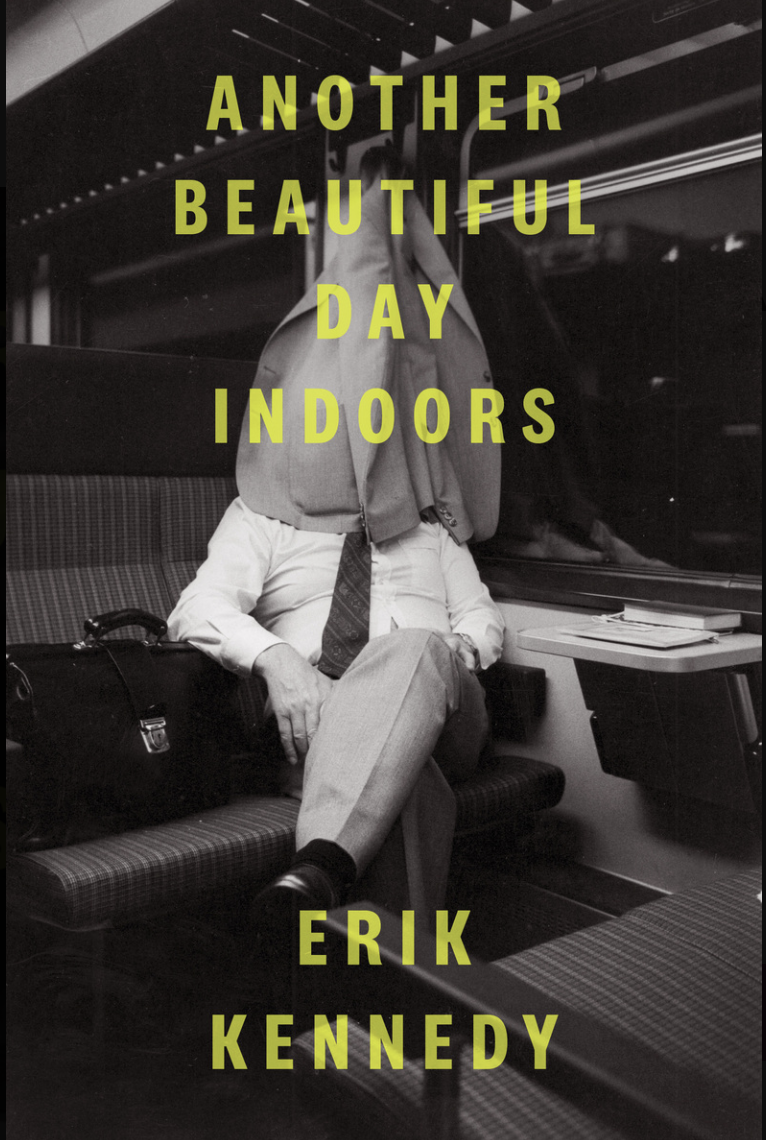
Another Beautiful Day, Erik Kennedy, Te Herenga Waka University Press, 2022 (Cover photograph: Max Oettli, ‘BLS train, Switzerland: man with jacket over head (dark)’, Museum of New Zealand Te Papa Tongarewa (O.048413).
If I was capable of learning lessons or believed in human nature I could learn some lessons about human nature
from the bits of themselves people have lost on the pavement or in a hallway
from ‘Picking up Pieces of Paper Other People Have Dropped’
Erik Kennedy’s exuberant new poetry collection is in debt to life! I am talking reading, imagining, reacting, engaging. In a recent piece in The New York Times, Elisa Gabber asks what poetry is: ‘I think poetry leaves something out’. That is of course a starting point for discussion. Poem omissions amplify what is present. No question. The bits and pieces on the page strive for cohesion, fragmentation or some miraculous alchemy in between. Bill Manhire suggested in my recent paragraph room on poetry: ‘What do I want from poetry in 2022? I still want the poem itself. I want the thing that can’t be paraphrased.’ And Amy Marguerite says: ‘Poetry should be there for you, even if it isn’t touched, even if it is resisted, it should be there like a shoulder, or a spine.’
Is writing about a poetry collection a distillation or an opening out? An impossible reach to paraphrase? A joy?
Another Beautiful Day‘s opening poem, ‘Out on the Pleasure Pier’, serves the reader well. It is a terrific and surprising threshold into a collection that plants vignettes, conversation, essential ideas while giving the poems space. Think the white page, room to breathe and pause, masked appearances, the unspoken. Already I am asking myself if reading Eric’s book is akin to a jaunt on the pleasure pier. I can run with that. The details are pungent, jagged, funny, deadly serious, surprising. Anything can happen. Just like the pleasure pier. Here is the first stanza:
Out on the pleasure pier on that benign afternoon, the air heavy with the blossom of vinegar and old tyres, you asked what was the closest I had come to death.
Erik Kennedy is perhaps the wittiest poet on the block. The collection is infused with all the big worries – climate change, capitalism, wastage, consumerism, violence – because silence is a form of consent. Even in a poem. The poet cannot stay mute when the world is so awry and I love that. I find myself recalling: for decades Italian writers wanted political messages to be clear in their work (in the face of fascism, women’s subjugation, climate change, corrupt power and so on). We have scant history of political writing in Aotearoa New Zealand, and perhaps jaundiced responses by critics. Even when you rightly claim the personal as political. But new generations are changing this – out of personal experience, and out of concern for the world and crippling hierarchies that perpetuate cultural / gender / class ignorance. This new wave of poetry is political, and it is so much more than that.
The Vegan Poem, or It’s Not a Conversion Narrative Because I Was Already Converted
Whatever you do, don’t watch the shocking undercover video of how we treat the things we eat. It’s all shit and squeals and pus and teats. The only thing spared is the status quo. When I watched the video (so you don’t have to) I turned grey and shadow-beaten like a hill beset by gusty westerlies. I shrivelled like fridge celery, leaking a long slick of sympathy. I willed myself through my anger, a crab plodding through treacle towards the crab-fighting ring. If I never do anything else, let me do no harm, I say, in my best breathless ethicist voice, and I mean it, come hell or high water or a wasting disease. Today, once again, caring seems to be the less debilitating option, but it’s hard to believe there’s hope for any animal-affirming utopia when people hate even each other with the violence of a sneeze.
Erik writes with infectious humour, yet he is also deadly serious. What good is poetry that lands beauty but neglects its vulnerability? Ha! What a hornet’s nest this line of questioning is. Some days I crave a beauty poem as self tonic and I am full of gratitude for the person who wrote it. Other days I want poetry’s harsh spotlight on the ruinous state of play. And then again, agile movement where a poem is a thousand things. Erik makes me laugh out loud, do a wry inside grin, muse on microplastics, being a vegan, satellite insurance, pandemics, killing the planet, roads rolling out clogged traffic and pollution.
The middle section of poems in the book resembles a compendium of curious vignettes. I am thinking: no ideas but in vignettes. I am searching for a word where the real becomes ultra real (not magic realism), as though you have amped the focus and the volume, and everything is strange and larger than life (not tripping). And then you are transported back to the gritty real, the need to work and eat and love.
Reading a poetry book at the moment affects me like a necessary excursion. I have travelled and picnicked and dream-drifted within the dazzling pages of Another Beautiful DayIndoors (the title fits my current self isolation), and in my travels poetry is restoring empty larders. This is a book that offers foyers, resting bays, overhead bridges for you to furnish, linger in, traverse. Read it. Think it. Feel it.
I get so distracted by the excitement of ‘not going back to the way things were’ that I accidentally went back to the way things were. I meant to continue working remotely but instead I book a commercial flight whenever I go to the office or the supermarket. I thought I was letting nature heal but I find myself chasing bees away from flowers wearing a hornet onesie. I’m only human— extravagantly, embarrassingly human— using my breadfruit-weight brain and opposable thumbs to keep things the same or change them, whichever one benefits me personally.
from ‘Post-Pandemic Adaption’
Erik Kennedy lives in Ōtautahi Christchurch. He recently co-edited No Other Place to Stand, an anthology of climate change poetry from Aotearoa and the Pacific (Auckland University Press, 2022). His poetry chapbook Twenty-Six Factitions was published with Cold Hub Press in 2017, and his first full collection, There’s No Place Like the Internet in Springtime, was shortlisted for the Mary and Peter Biggs Award for Poetry in 2019.
Te Herenga Waka University Press page Poetry Shelf: poem ‘Lives of the Poets’ Poetry Shelf: poem ‘We’re Nice to Each Other After the Trauma’ Poetry Shelf: Erik reads ‘Another Beautiful Day Indoors’ Poetry Shelf: Erik reads ‘To a Couple Who Had Their Rings Brought to the Altar by Drone at Their Garden Wedding’
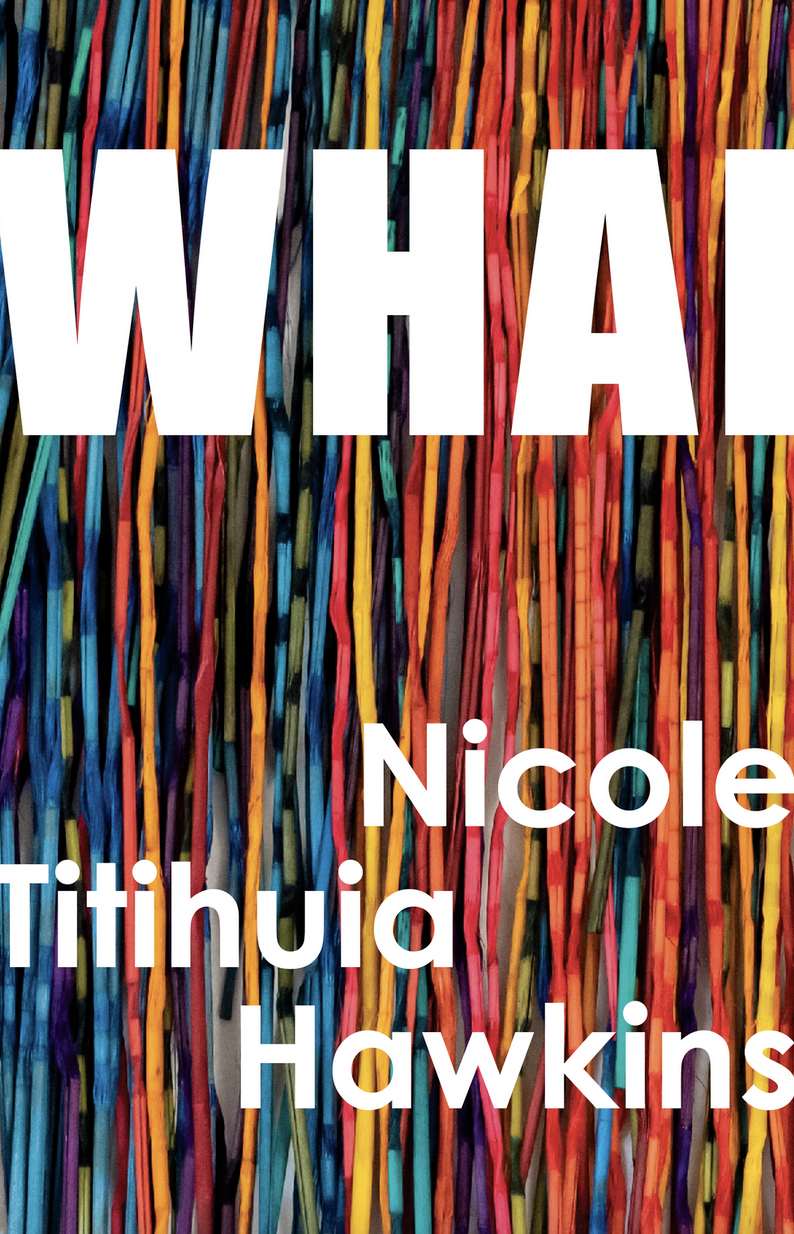
Whai, Nicole Titihuia Hawkins, We Are Babies, 2021
One of my hopes for Whai is that it shares a message that we aren’t ever just one thing. We are as expansive as Te Moana Nui a Kiwa and beyond.
Nicole Titihuia Hawkins, VERB Wellington Q & A
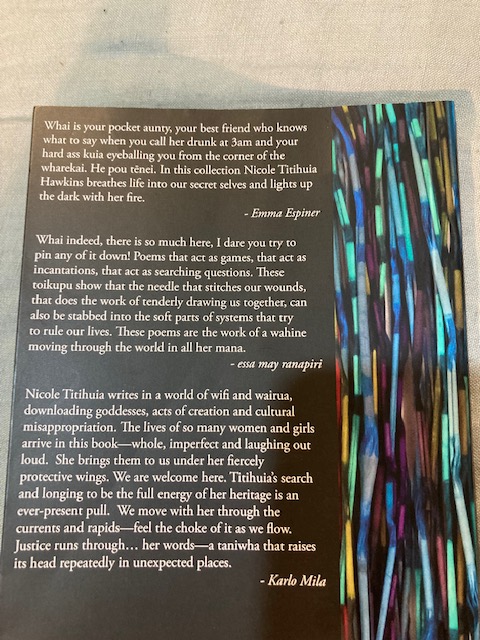
I never used to read endorsements on the back of books but now I do. Once I have finished reading my own paths, bridges and delights. I read them because in the past year or so, they have been astonishingly good. Little kegs of poetry community boost. If I put them together in a book it would underline why I read, write and comment upon poetry in Aoteraroa New Zealand. Eye-catching reminders on what poetry can do. Above all: short, tangy, sweet windows that send you back to read the collection again (in my case), with gusts of refreshing new air.
Emma Espiner, essa may ranapiri and Karlo Mila take delight in Whai
I have things to share about Nicole Titihuia Hawkin’s debut collection Whai, but one part of me wants you to find a quiet nook and find your own bridges and poem trails. I love it so much – the way from the first page the rhythm pulls me in, a rhythm that is life and that is writing. We are welcomed into a space that is whanau, marae and connection. That is breathing the past, the present and the future. That is fed upon potatoes from warm earth, and by words that are nourished on warm tongues. It is discomfort, it is scars and it is let down. It is to be held close and it is to sing. Oh so much to sing, with waiata the energy force, the structure, the passed-down precious melody that sings mother father ancestors, the earth, sings names and naming, singing out in protest, singing in te reo Māori.
Nurture the hypothetical cultivate an organic perennial to grow, to tend, to prune, to water
Even in the longest days sun can come shining in
Looking at you marks a change of the seasons my heart on the precipice of full bloom
from ‘Companion Planting’
Ah, so much to say and feel. There is light and there is dark. There is the hidden and there is the out in the open. It is blazing and it quiet and it is movement.
I have been thinking how certain poetry books catapult you from the everyday – where the wifi streams, kina shells gleam, periods arrive, bulbs are planted – and moves you to interior realms. Intimate, hard to pronounce, a heart pulse. How the occasion of reading becomes both personal and necessary.
On my blog, my poetry engagements often send me into luminescent poetry. Luminescent because poetry shines multiple lights on humanity, and this matters. It might be one woman writing and living, transforming and translating: navigating experience, existence, ideas, sensations. Getting political. Embracing the personal. Staying sharp, tender, deeply relevant. Nicole does exactly this in Whai, and it’s sublime.
I don’t know enough about the tipuna I’m named after but when I read she was a weaver I feel her stitching tāniko into the bodice of my insides
She says it doesn’t hurt that much When I breathe in hundreds of tiny holes expand but her pattern holds its place like the ocean holds the stars that got us here
from ‘Rainbow Piupiu’
Nicole Titihuia Hawkins (Ngāti Kahungunu ki te Wairoa, Ngāti Pāhauwera) is a novice writer, avid home-baker and proud aunt. She lives in Pōneke and works at a local high school teaching English, Social Studies and tikanga Māori. Nicole is also involved in pastoral care and facilitates Kapa Haka. Nicole has collaborated with other writers to host ‘Coffee with Brownies’, which are open mic events for people of colour to share their work in safe spaces. She co-hosted ‘Rhyme Time’, a regional youth event, with Poetry in Motion, to encourage a diverse range of youth to perform their incredible poetry. Nicole has work published by Overland, Capital Magazine, Blackmail Press and The Spinoff Ātea and credits her courageous students with inspiring her to write.
Whai was longlisted for the 2022 Mary & Peter Biggs Award for Poetry.
a swarm of wasps took your veil & hissed it down the overbridge under which you were once a temporary thing spinning your guileless gossamer & spitting your lies vermillion like an accidental cayenne pepper paprika situation
you were so committed then to prising other anatomies apart savouring their surrender as though they wereactuallygivingthemselves up as if you weren’t just undressing a nostalgic aroma so as to feel a bit new
Amy Marguerite
Amy Marguerite (she/her) is a poet and creative nonfiction writer based in Pōneke. She is currently doing the MA in Creative Writing (Poetry) at the IIML.

 NZ Poetry Shelf