Poetry Shelf review: Frances Samuel’s Museum

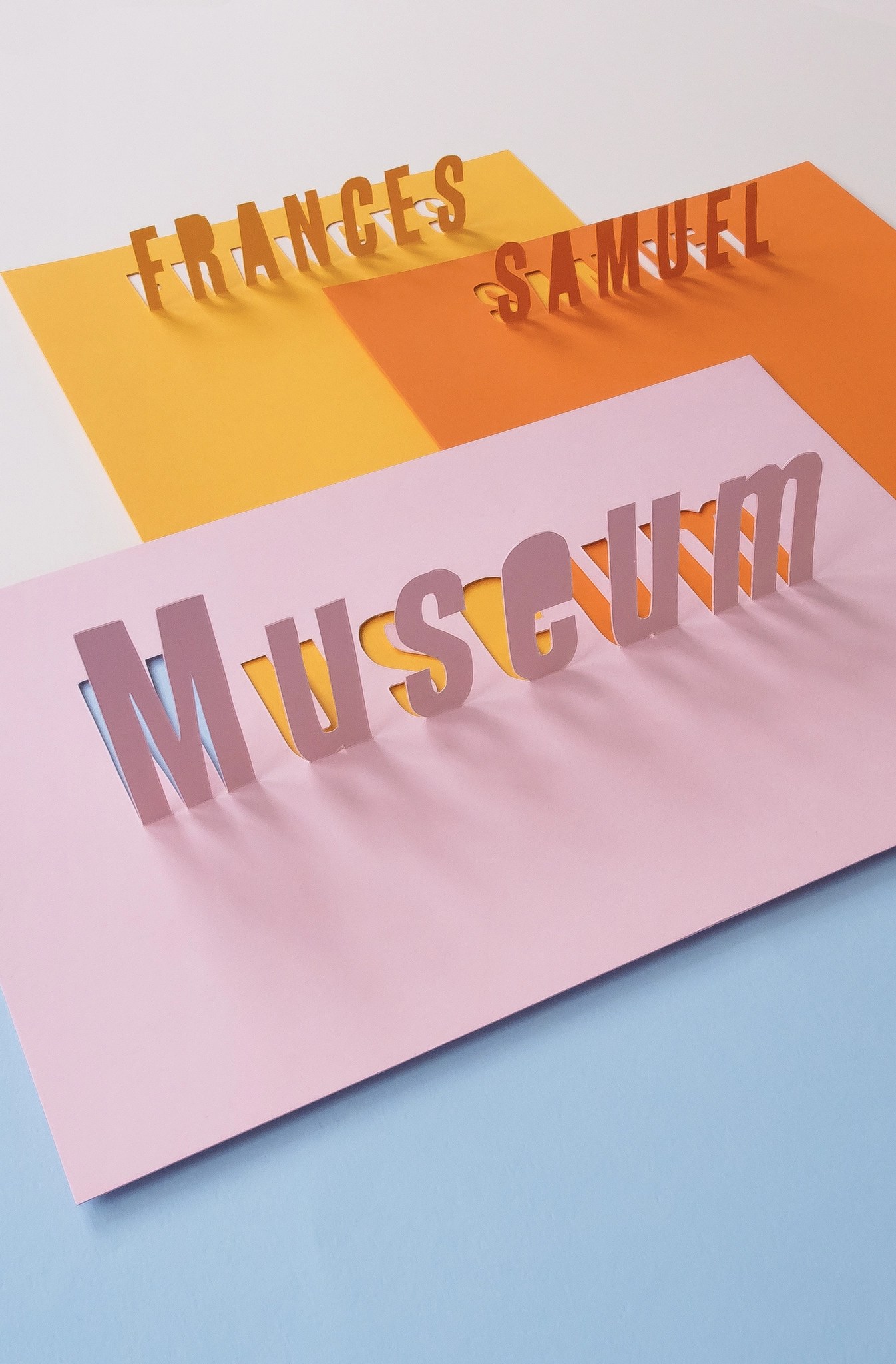
Museum, Frances Samuel, Te Herenga Waka University Press, 2022

Up here in the thin green air,
I’m feeling the wind on my face
with the joy of a dog on a family car trip,
head out of the window.

from ‘Exhibition (DNA)’

Frances Samuel worked in a museum writing texts for exhibitions for many years. For me, museums are an endless source of fascination and marvel. I wrote about the intoxicating thrill of museums in New York Pocketbook. Standing, for example, before a pair of child’s boots in Ellis Island’s Immigration Centre or moving with the wonders of the Natural History Museum. Or the roll call of museums that fed my Italian degrees. There are the hungry gaps of the past that you seek to fill by studying scuffed toes, wrinkled leather, the uncanny emptiness, the child that once ran or skipped or hid. In my self-imposed lockdown, picking up Frances’s new collection felt like a trip to a museum and, as happens on the threshold of any museum space, I felt a heady mix of anticipation, joy, curiosity. Where would this book take me?

I pass through the book’s opening poem, ‘Exhibition (Security)’, and then move through three exhibitions: ‘SUPER(NATURAL) WORLD’, ‘(IM)MATERIAL WORLD’ and ‘OBJECT LESSONS’. I am following the poet, the museum maker, but the museum on offer is porous. It reaches out beyond walls and still life into the air we breathe, and with each poem I track twist unfold pursue peruse fold untwist. Just like I do on Ellis Island. Or in Roma. It is discovery and it is magical.

The poem ‘Climate Change’ proposes a change in perspective. Inventive in its start:

Since we are all made up of atoms and vibrations,
let’s rearrange ourselves.
You be a bird and I’ll be a buffalo,
stand on my back and off we go, carefully
stepping over our discard clothes

And utterly moving, when you reach the final stanza. I keep bouncing back to the poem’s title, just as I might switch and flick between museum diorama, museum label and someone else’s shoes:

From above, we watch travellers on the trails
tying and retying their loads to donkeys’ backs.
They take a few steps and the load slips again.
Over and over again, agreement can only come
when the bird in me bleats
to the buffalo in you.

Frances writes lightfootedly. It’s not just a matter of weight but a matter of luminosity. If the poems were written in ink, the ink would be imbued with a wonder that slips in and out of view. You need to read each poem whole to get the effect of fitting together, but certain lines stand out and settle on you, little talismans, little points of fascinations.

‘Rain is hole-punching its way in.’ from ‘Moonhopppers’

‘My friend wears a grass jumpsuit / teeming with ants and worms.’ from ‘Fashion’

‘A poet explodes at a kitchen table / taking everything else with her.’ from ‘Pottery’

‘The words are falling from him like seeds.’ from ‘Fast Forest’

‘If one hundred thousand leaves / can make a clean break every day / then what are you waiting for?’ from ‘Seed/Leaf/Tree’

In the first section/exhibition, you enter forests, mountains, deserts, fields, physical exhibition spaces. In the second section/exhibition space, the immaterial shifts my view on existence. Ghosts and trees jangle eyes. Things leap off the page, the canvas, out of the shadows, or from the anecdote, to gain provisional flesh, and you are back in the invigorating and mysterious air of the world.

And suddenly it’s a good thing
you extinguished your shoes
because now you are walking on air.
And when you are walking on air
you can go anywhere.

from ‘Exhibition (Shoes)

And then poet becomes mother, and the maternal role, reframed time and fatigue, chores and the tendering, are made visible. The mother is still of course poet, and the third section/exhibition refuses to keep the world confined in glass cases. The domestic enters and still the writing mind roves and creates and muses. In such an airy space, the wonder and discovery expands. For both reader and writer. In ‘Coin Rubbings’, the speaker finds buried civilisations and buried self elusive, so she tries this:

(…) So maybe it’s as easy
as placing the paper over your own face
and rubbing to see what impression
you are making on the world.

In each section/exhibition space, you turn upon notions of perspective, ways of absorbing and reacting, seeing and feeling. Your place(s) in the world comes into question, or into view, or dissolves, and you turn the page and keep reading. This sublime stanza appears in ‘The Kindness of Giants’ and appears in other guises or translations throughout the book.

Your feet are shod in cruise ships, and your eyes
look though spectacles made of frozen lakes.
Trapped fish obscure your vision.

When I first visited foreign museums in my twenties, I found them dead. Nothing jumped out and poked me in the eye or heart. Yet all these decades later, both poetry and museums are alive to me. I get to carry bits of humanity, song, epiphany, storytelling, dread, mystery, roadmaps, possibility atlases, the real, the unreal. The power of words, in both locations, along with the power of objects, get to sing in heart and mind. I finished France’s new collection and, how can I explain it, I was bursting with gladness and sadness. Maybe because instead of listening to the 11 am announcement on Covid changes yesterday, I read the book. I reread the collection today, writing this on one breath, on the wire of living, on the lightning rod of uncertain times, and as I put the book on my shelf, I am busting up with joy. That is what poetry can do. Read this book.

Inside your heart, a museum
and not the free-entry kind,
not the kind with a rollercoaster
and a cafe and a shop.

from ‘Museum Without an End’

Frances Samuel‘s first book was Sleeping on Horseback (VUP, 2014). Her poems have appeared in many print and online publications, including Sport, Best New Zealand Poems, Short Poems of New Zealand, and the National Library exhibition The Next Word: Contemporary New Zealand Poetry.

Te Herenga Waka University Press page
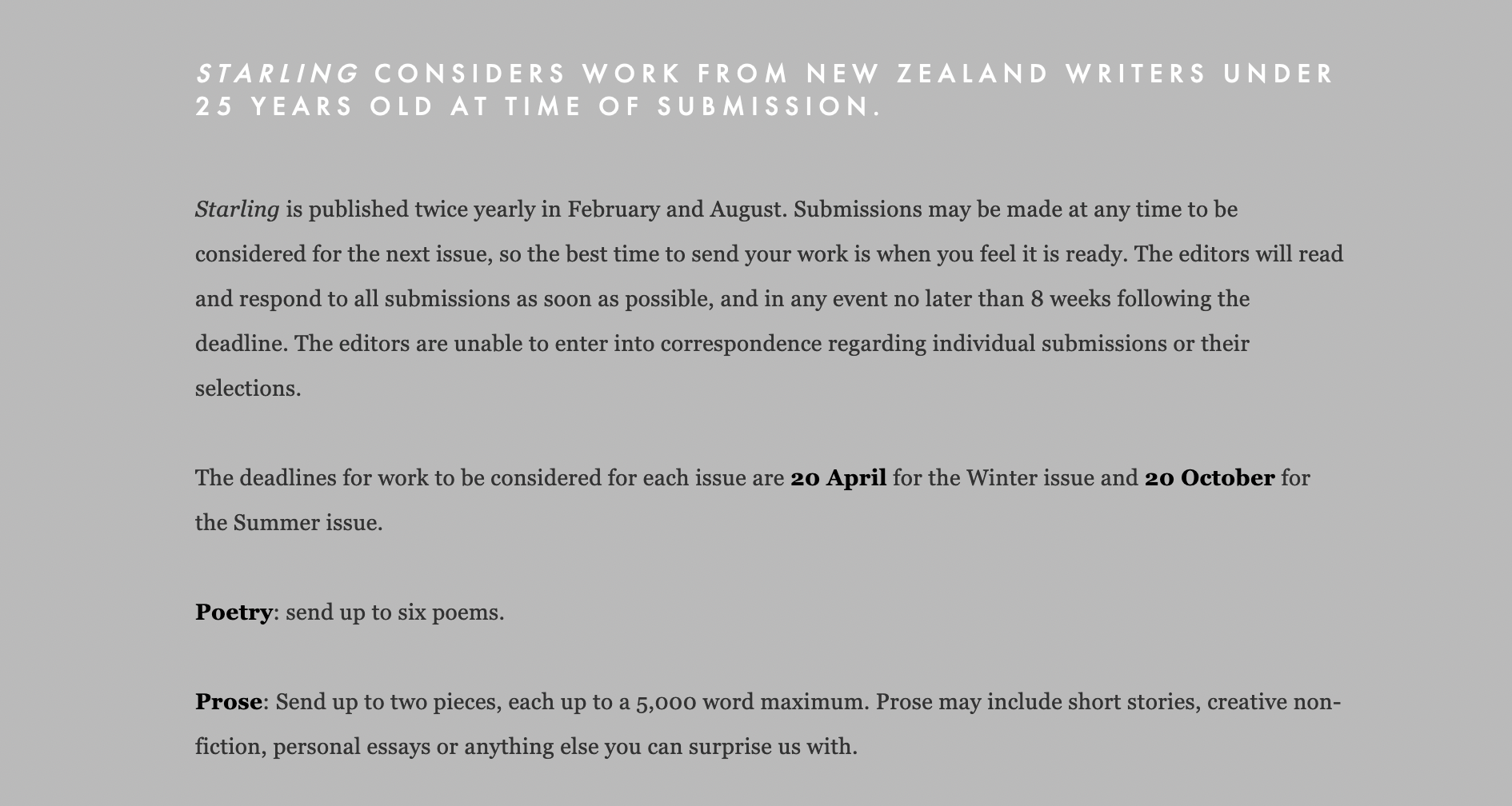
Poetry Shelf noticeboard: Submissions open for Starling

New Zealand writers under 25, we are seeking submissions for the 14th issue of Starling! Send us your best poetry, prose, and anything in-between by 20 April 2022.

Full details here

Poetry Shelf noticeboard: Registrations open for participation in the 25th National Poetry Day on 26 August

Aotearoa’s countrywide celebration of poetry is preparing to mark its 25th anniversary with plans for the broadest range of events and promotions yet, as registrations open today for participation in Phantom Billstickers National Poetry Day on 26 August 2022.

National Poetry Day co-ordinator Erica Stretton says that after two years of largely online events, the NPD team, poets and organisers are all eager and optimistic about a return to the usual feast of in-person and community events across the motu.

She urges organisers to register their interest early in hosting an event on or around 26 August, in order to access the seed funding available and to be included in the heavily promoted official calendar of NPD events.

“We’ve all learned so much in the past two years about the power of the digital reach in showcasing poets and poetry, and online will continue to play an important part in our promotions. But we can’t wait to see poets and enthusiasts unleashing the power of poetry again in theatres, cafes, marae, bookshops and libraries, in parks and on beaches, pavements and public transport, anywhere and everywhere!”

In 2019 a massive 160 events took place nationwide, bringing together acclaimed poets, new voices, young writers and poetry enthusiasts of all ages.

This year also marks the 40th anniversary of NPD sponsor, Phantom Billstickers. CEO Robin McDonnell says the company has plenty planned to mark its special milestone, but that poetry will always be at the heart of what they do. “Phantom’s founder Jim Wilson was sharing the works of New Zealand poets on posters in New Zealand and around the world well before the company was even formed. We can’t wait to take the power of poetry to the streets of Aotearoa again in our 40th year, in a nationwide poster campaign in the lead up to National Poetry Day 2022.”

Interested organisers can access registration documents, templates and a full range of planning and promotional resources via the NPD website.Registrations for seed funding close at 5pm on 1 June 2022. The official Phantom Billstickers National Poetry Day 2022 calendar will be announced on 1 August.

For further information contact Erica Stretton at poetryday@nzbookawards.org.nz and to keep up with plans for NPD 2022, follow NZPoetryDay on Facebook, Instagram and Twitter.

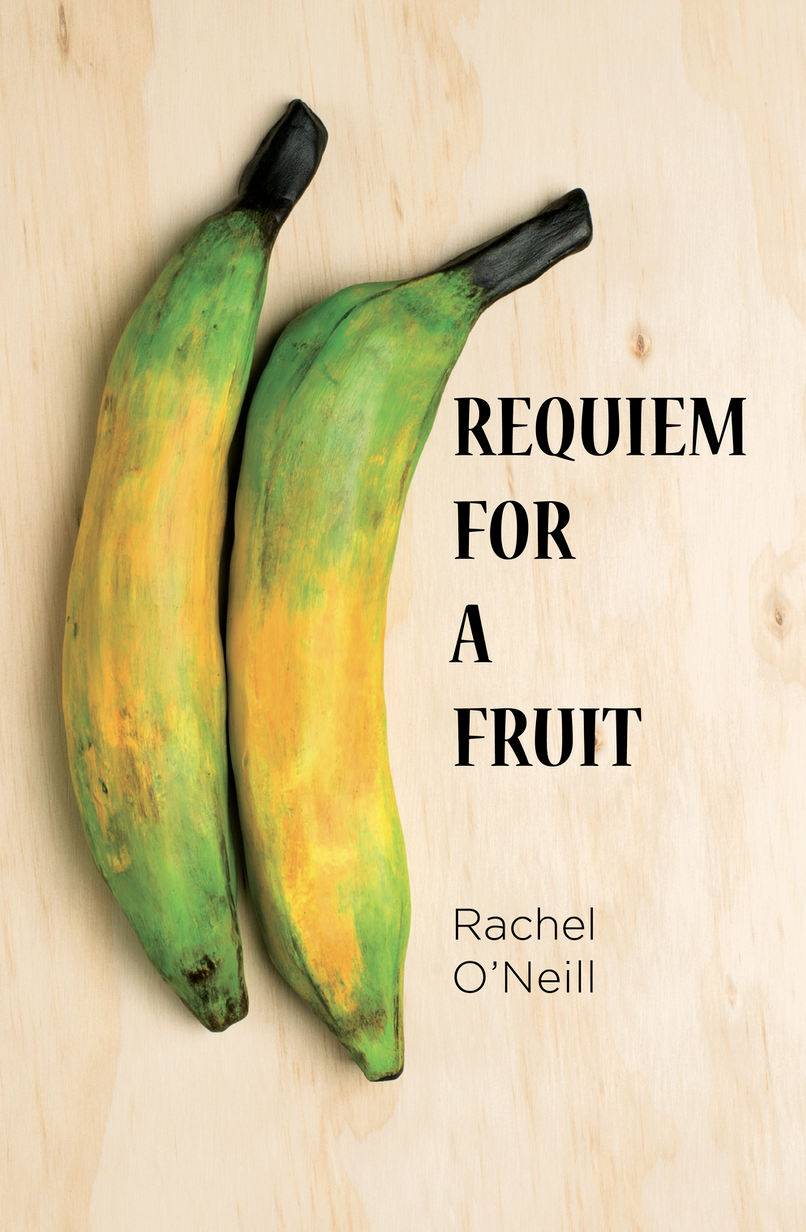
Poetry Shelf review: Rachel O’Neill’s Requiem for a Fruit

Requiem for a Fruit by Rachel O’Neill, We Are Babies, 2021

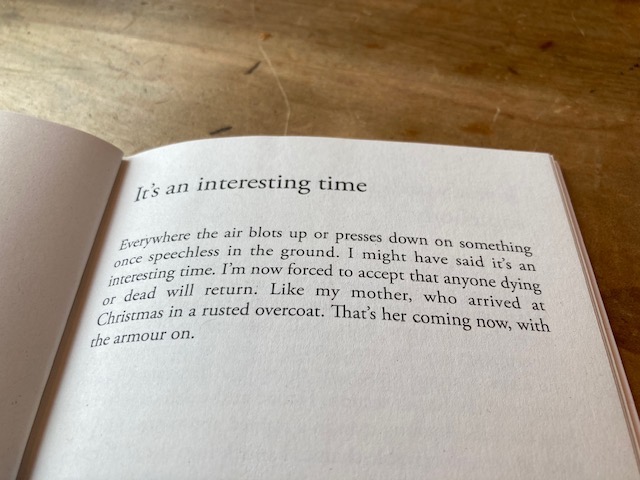
Rachel O’Neill’s second collection Requiem for a Fruit continues a preoccupation with prose poetry that resonated in their debut book One Human in Height. The opening poem, ‘It’s an interesting time’, epitomises the delight that poem compression offers. Revelation jostles alongside the unspoken. The image of a ‘rusted coat’ startles, and then pokes and prods as ‘amour’.

In an endnote, Rachel acknowledges readers who are at home in their imaginations. They quote a grandmother’s line from a poem: ‘life is a great mystery, and then that mystery ends’. Mystery, Rachel suggests, is the magnet tug of storytelling. Storytelling reflects and feeds who we are, our origins, where we are going, with an imperative to listen. Listening helps us to ‘reason and act with humanity’, they suggest. This feels overwhelmingly important; this need for us to bend in and listen, to keep recounting who and how and where we are, past present and future, no matter the genre or subject matter.

‘From the homely catacomb in the living room my mother can see the stars.’ from ‘I dream I bury a machine’

And yes, mystery matters in Rachel’s prose poems. The real shimmers then moves to become off-real, startling and strange; and then slips and slides back to the everyday, the usual, the humdrum. I read each poem and see it as a startling painting, or a short film where the mise en scene trembles and quakes and expands the set with mystery connections. There is anecdote, revelation, fantasy, wit, confession. In ‘The commonplace’, a woman is dressed in a ballooning skirt, and she may be part woman and she may be part boulder. The aunt invites the woman/boulder to help herself from ‘the earth in the bowl where the potatoes should be’. What an image! Mystery in the commonplace. It’s also where the seeds are, according to the uncle. The aunt needing to locate the commonplace with its seed bounty: ‘Where’s that?’ What delicious ripples. What a way to be held to a page.

You can move through the book tracking the mystery whiffs, debris, clues. You can also pick up a thread and follow different routes through the narrative maze. Try love for example. Or the mother. Try wit. You can revel in the character festivity. Track and stop awhile with wives husbands love interests mothers fathers a Church of England clergyman children a companion a guest. In fact you are a guest in these poetry alcoves, bringing your own disposition, your own craving to absorb and expand, hum and ah ha.

Put this book in your tote bag or leave it on the kitchen table. You can pick it up and read a single poem, then let that poem drift and settle as you move through the day. It’s magnificent. Electrifying. I recommend it highly as Bernadette Hall does on the back of the book.

‘The relationship is new, yet the love is a stone.’ from ‘The love interest’

Rachel O’Neill is a Pākehā storyteller who was raised in the Waikato and currently lives and works in Te Whanganui-a-Tara/Kāpiti Coast. Rachel enjoys collaborating with writers, artists and filmmakers on publications, exhibitions and works for screen, and they are a founding member of the four-artist collaborative group, All the Cunning Stunts. A graduate of Elam School of Fine Arts (BA/BFA) and the International Institute of Modern Letters (MA), Rachel was selected for the 2017 Aotearoa Short Film Lab, received a 2018 SEED Grant (NZWG/NZFC) for feature film development, and held a 2019 Emerging Writers Residency at the Michael King Writers Centre. Their debut book, One Human in Height (Hue & Cry Press) was published in 2013. As a queer non-binary storyteller Rachel strives to represent the longing for connection and the humour and strangeness that characterise human experience.

A version of ‘Almost exactly the love of my life’ appeared on Poetry Shelf

We Are Babies site

Poetry Shelf Monday poem: Jane Arthur ‘Motherchild’

Motherchild

We see the bones through the skin.
In some lights, they’re like baby birds,
so delicate it scares us. In other lights,
they’re machines. Built to take over the world.

We see the skin that thickens, thins,
thickens, thins all the way till the end.
We see the bones that train the muscles,
then relent, redundant. So many

bones to be broken, so much skin to be torn,
delicate hearts to be ruined 
by an accumulation of errors.
I was the child for most of my life. 

I never felt able to give that up, to stop 
writhing, in constant search 
of the manual for living. 
I’m not sure when I was at my most resilient

but it isn’t now, now you can’t
show me anything because it all
sucks my organs to the outside of me,
freezes skin, ruins heart.

Jane Arthur

Jane Arthur is a poet who lives in Pōneke, where she co-owns a small independent bookshop. Her first poetry collection, Craven (VUP, 2019), won the Jessie Mackay Prize for Best First Book of poetry in 2020.

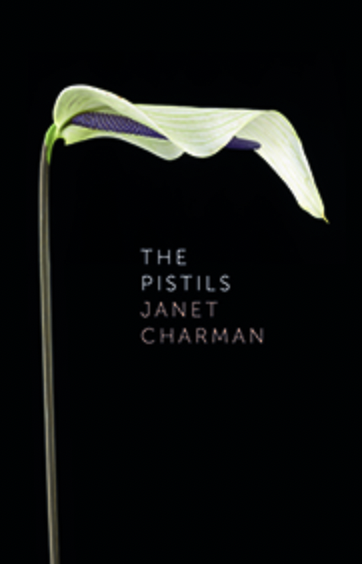
Poetry Shelf noticeboard: Janet Charman launches new collection, The Pistils

The launch of will be part of The Whau Arts Festival.

Dr. Mary Paul, specialist in Aotearoa NZ Literature, will officiate.

Here is the festival link where you can register to attend

Due to Covid gathering restrictions there will only be room at the venue for 25 guests, but the festival will keep a waitlist and advise people on it of any cancellations. 

Venue: 

All Goods community art gallery – behind the Avondale Library carpark.
99 Rosebank Rd 
Avondale

Date: Thurs 31st March

Time: 5.30

All refreshments served individually.

Vax passes and registration checked at the door.

If you can’t attend but would like to know more about the collection here is a link to it at the OUP website

Janet Charman is one of New Zealand’s sharpest and most subversive writers. In 2008 she won the Montana Book Award for Poetry for her sixth collection, Cold Snack. In 2009 she was a Visiting Fellow at the International Writers’ Workshop of Hong Kong Baptist University. In 2014 she appeared as a Guest Reader at the Taipei International Poetry Forum. Her collection 仁 Surrender (2017, OUP) chronicles her writing residencies in Hong Kong and Taiwan. This is her ninth collection of poetry.

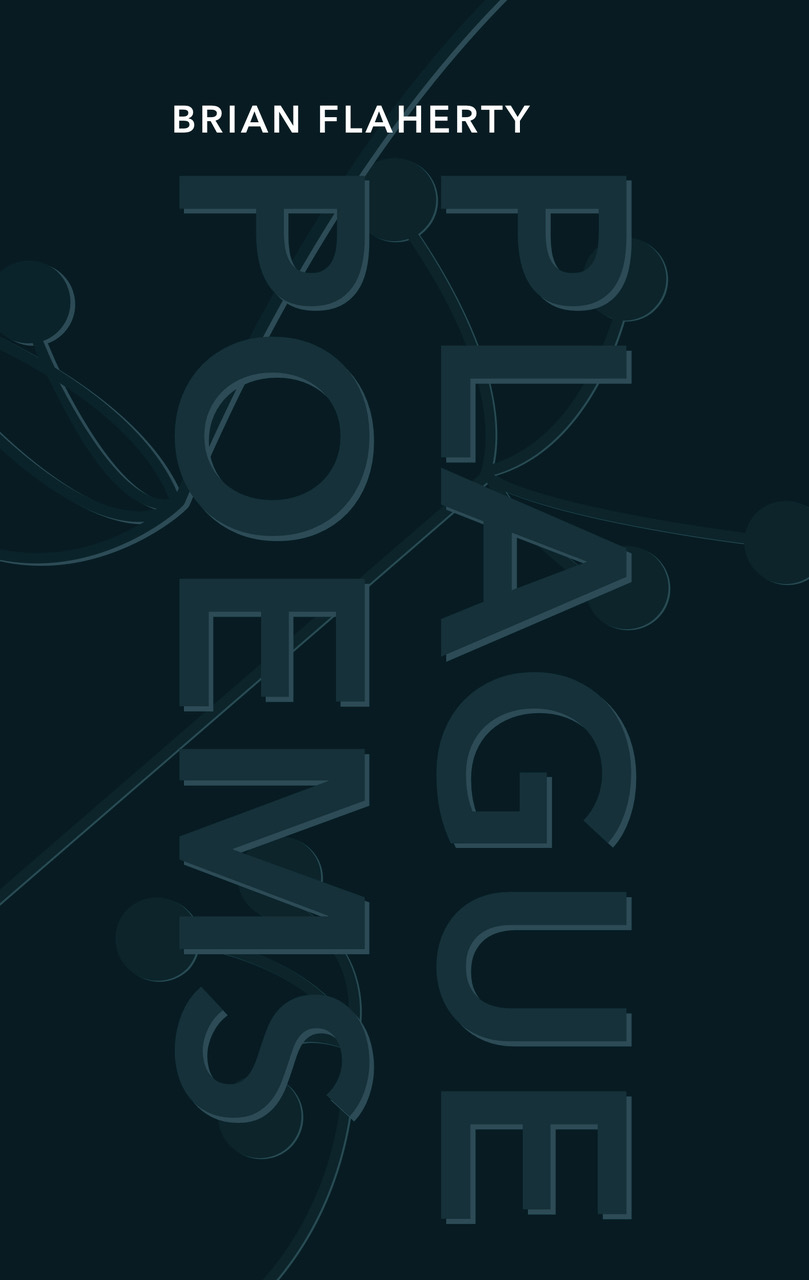
Poetry Shelf review: Brian Flaherty’s Plague Poems

‘Chewing the nails of just one hand, the right

Silence falling back on us

With all its weight of sky and stars.’

Plague Poems, Brian Flaherty, Little island Press, 2022

10.

Fingering the page of statistics in your pocket
You are still trying to find the right words
It’s not a matter of painting a black picture
It’s a matter of taking precautions
Even to express such simple emotions
Costs an enormous effort
Most of all you like a certain bell in the neighbourhood
That rings softly around five in the evening.

Rather than knit or bake sourdough, Brian Flaherty wrote a poem a day after Aotearoa went into its first lockdown, just before midnight on 25 March 2020. The next morning, he took Albert Camus’s The Plague (La Peste). He read five pages each day, and ‘used them to sample and shape a poem’ that echoed our pandemic situation, and that he emailed to a friend. Plague Poems represents the fifty poems he wrote. It is a slender, dark-covered book that sings out of dark and life, the unknown and the recognisable.

A reshaping, a sampling, a translation, a poetic transparency laid over our pandemic time. As I read the book in one slow sitting, entranced, captivated, the poetry forms a transparency over my own lockdown experience. Here and then, the empty city, the empty streets, the hijacked and reinvented daily routines, these poems like those days, offer new and surprising sustenance.

Brian slows down in the empty city, in Camus’s novel, and in his slowness of daily pace, observation is heightened. There are posters demanding hygiene, a droning radio, a glass of warm beer, people on balconies and people walking the boulevards. In the ambulation, whether physical, emotional, cerebral, the poet’s mind is adrift, collating and collecting. The poem is thinking with new eyes. It is contemplating the strange and the estranging. I am personally returned to my own drift through the house, up the country road, without anchor and then again with a different anchor. Reading the collection it feels like the objects on the mantelpiece of the mind were taking time to settle. They still are.

14.

To make the trains run again in our imagination
The only way to escape this unbearable holiday
To speak more particularly at last of lovers
Those one sees wandering at any time of the day
Subservient to the sun and the rain
Handed over to the whims of the heavens
To go back through the story
And examine its imperfections
It must be said that people are drinking a lot
You have the impression that cars
Have started to go round in circles.

Time is elongated, meaningless, endless, meaning rich, meaning astray, meaning hungry, questions compounding.

I adored reading this elegant suite of poems, with its silence, its epiphanies, its unexpected resonance, its sweet craft. I am returned to a time that was body-displacing off-real, like a film noir set, a dystopian novel from past or future, as we grappled to reshape our days, our relationship with today. Two years later, it feels altogether noisier, edgier, more divisive, less connected and less connecting. Brian’s poetry takes me back to a time where, against all odds, life felt precious, when we worked together to make it so. We walked through the empty city, observing, collating, harvesting, recognising, celebrating, and being alive to and for what matters. I love this precious book.

33.

After eleven, plunged into darkness
Under a moonlit sky
The town is like a monument
A necropolis in which disease and stone
Have finally silenced every voice
Night crouching in our hearts
The myths that are passed around
Black shape of a tree, the howl of a dog.

Brian Flaherty is a poet librarian. He is co-founder of the New Zealand Electronic Poetry Centre  with Michele Leggott, and was co-editor of the poetry journal Trout. Poems have appeared in Turbine, Best NZ Poems, Blackmail Press, Ika, Ka Mate Ka Ora, and Trout. Recordings of some of his poetry are at Six Pack Sound.

Little Island Press Plague Poems

Little Island Press Brian Flaherty

Poetry Shelf review: Eileen Merriman’s Black Violet

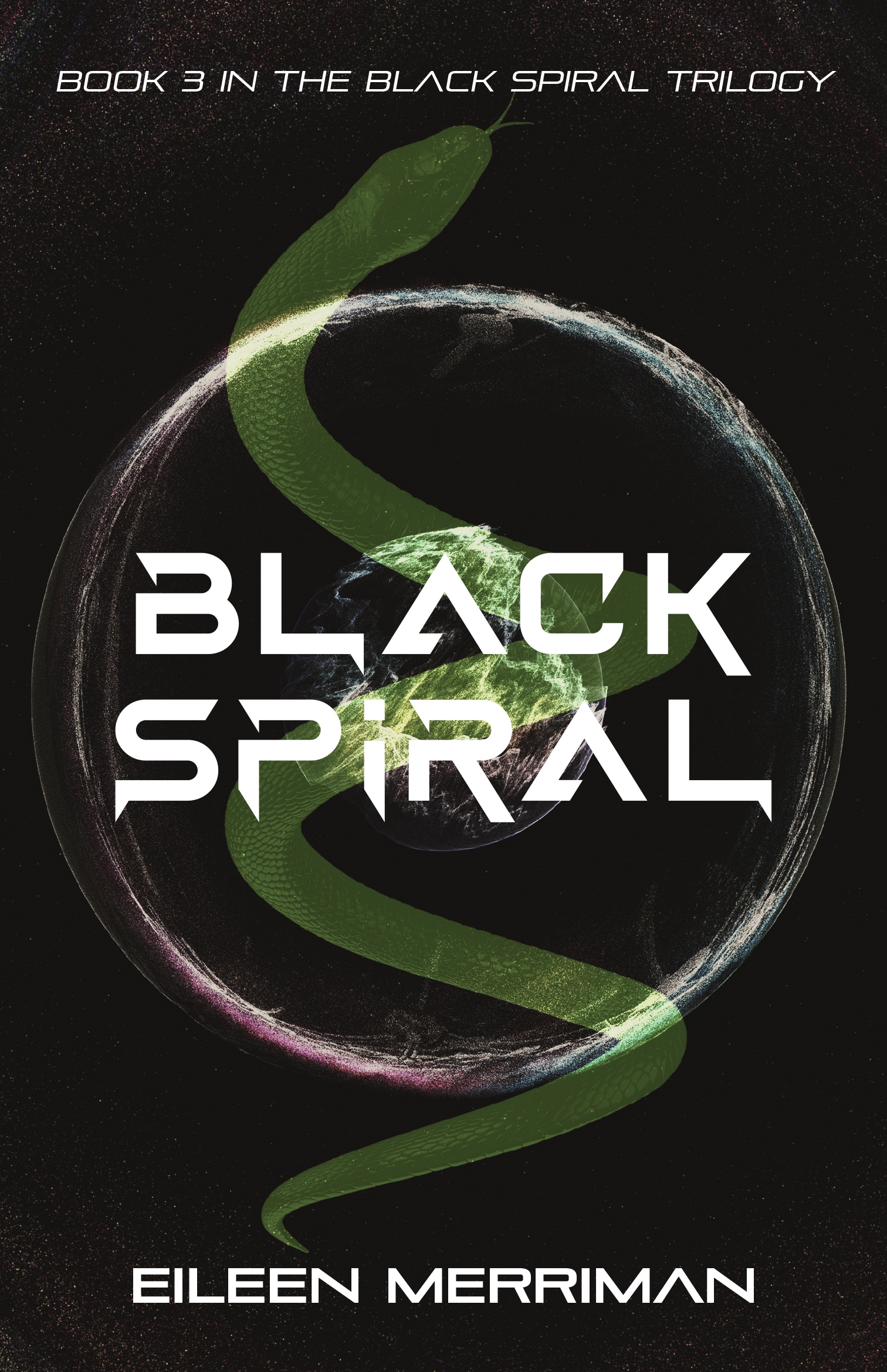
Black Spiral, Eileen Merriman, Penguin, 2022

I choose my books carefully in these tumultuous times. I want a book that transports, uplifts, lingers long after you put it down. A book that raises questions, that offers edge, but that leaves you anchored. That draws you in close to what is good in humanity as much as it might signal what is bad. I adored reading the first two volumes in Eileen Merriman’s The Black Spiral trilogy. My words grace the back of the third volume:

Characters matter, dialogue matters, real-life detail matters, significant issues matter and you are always held in the grip of a perfectly pitched narrative …This YA fiction at its life-crackling best.

This appraisal also applies to the third and final volume, Black Spiral because it resonates and grips on many levels. Like the first two books, it is exquisitely crafted at the level of both sentence and architecture. Violet and Johnno/ Phoenix have escaped the Foundation and what the Foundation might do to them, in its devastating commitment to virus experimentation on humans. The Foundation is especially keen to track the escapees down, to harness (hijack, manipulate) their skills at shape-shifting, astral travelling, telepathy. Especially as Violet is pregnant.

What makes the novel strike so deeply are the ideas. Follow the stench of corruption wherein those in power (not just the Foundation but across Governments and other organisations) use power to serve themselves as opposed to multiple communities. To serve the well-off, to dupe the vulnerable. What price human life? was a question running through my mind as I read. Ideas on biological warfare, vaccines, pandemics, human greed, percolate above and below the narrative surface. I am reminded how we need to insist on scrutiny, on speaking out, on maintaining solid, useful and indeed loving human connections.

Yet what also makes the novel are the characters. The way good and evil are not clear cut, easily discernible divisions. For example, Violet’s father’s choices. Or the way some characters are absolute, unadulterated evil and must be stopped. The protagonists, Violet and Jonno, along with the supportive crew that gathers around them, are prismatic. You look through their eyes, actions and thoughts, and see and feel the world differently. You feel their love and courage, their determination to never give up. And yes, this determination to continue and face all the challenges and sideswipes, no matter how tough, is gripping. I couldn’t put the book down.

Black Spiral clung to me as I ate, did chores, did my own writing. After I read the final page, I dreamed of the novel that night, and it stuck with me the next day. Like a shape shifter before my eyes. Like a phantom cloud of ideas, plot and epiphanies. The relationships, the connections. Eileen’s medical background adds gritty layers, ethical choices, questions about the babies we carry, medical interventions, using humans as guinea pigs, being transparent.

Black Spiral still clings as I work on my own novel, as I read the next poetry book, as I hang out the washing, listen to the latest Covid numbers, the catastrophic events in Ukraine, the twisted choices of the protestors. Novels as good as this offer retreat, reinforcement and uplift. Glorious.

Penguin page

Eileen Merriman’s first young adult novel, Pieces of You, was published in 2017, and was a finalist in the NZ Book Awards for Children and Young Adults and a Storylines Notable Book. Since then, she has published another nine novels for adults and young adults and received huge critical praise, with one reviewer saying: ‘Merriman is an instinctive storyteller with an innate sense of timing.’ In addition to being a regular finalist in the NZ Book Awards for Children and Young Adults, Merriman was a finalist in the 2021 Ngaio Marsh Award for Best Crime Novel and Moonlight Sonata was longlisted for the Jann Medlicott Acorn Prize for Fiction 2020. Editions of some of her young adult novels have been released in Germany, Turkey and the UK and three have been optioned for film or TV, including the Black Spiral Trilogy.

Her other awards include runner-up in the 2018 Sunday Star-Times Short Story Award and third in the same award for three consecutive years previously. She works as a consultant haematologist at North Shore Hospital.

Poetry Shelf Monday Poem: Stacey Teague’s ‘family name’

family name

After Kaveh Akbar

1.

find the legitimate.
part of the skin.
claim it or.
don’t claim it my.
bad exchange.
my pale belonging the.
way the word.
identity makes you.
spit.
what’s in there.  
the visible
thing curled.
in the mouth.
exact like biting.
the blood.
speaks the quantum.
splits.
my favourite.
colour is white.
-passing.

2.

my cousins and I don’t.
have any.
brothers we don’t know.
about men don’t.
want to.
we connect at the.
colour of bruises.
open our drinks view.
pain as an ash-like.
diminishing.
we can imagine.
a sudden deep optimism.
in the face of utter.
calamity.
I will devote myself.
to its water.
develop a silken.
empathy.
harm is better.
dismantled.

3.

make me a weaver.
I will wait.
to stop bleeding.
to harvest.
the flax in my.
backyard cut.
away from the. 
heart at an. 
angle scrape off. 
the skin with a. 
shell my ancestors. 
also waited.

4.

to be on an earth.
that turns is to.
exist around crisis.
like looking into.
a non-human eye.
my visions are alive.
with me like an.
empress I.
untouch the insides.
I make something.
fit that does.
not want to.

Stacey Teague

Stacey Teague (Ngāti Maniapoto, Ngāpuhi) is a poet, editor, and teacher living in Te Whanganui-a-Tara.