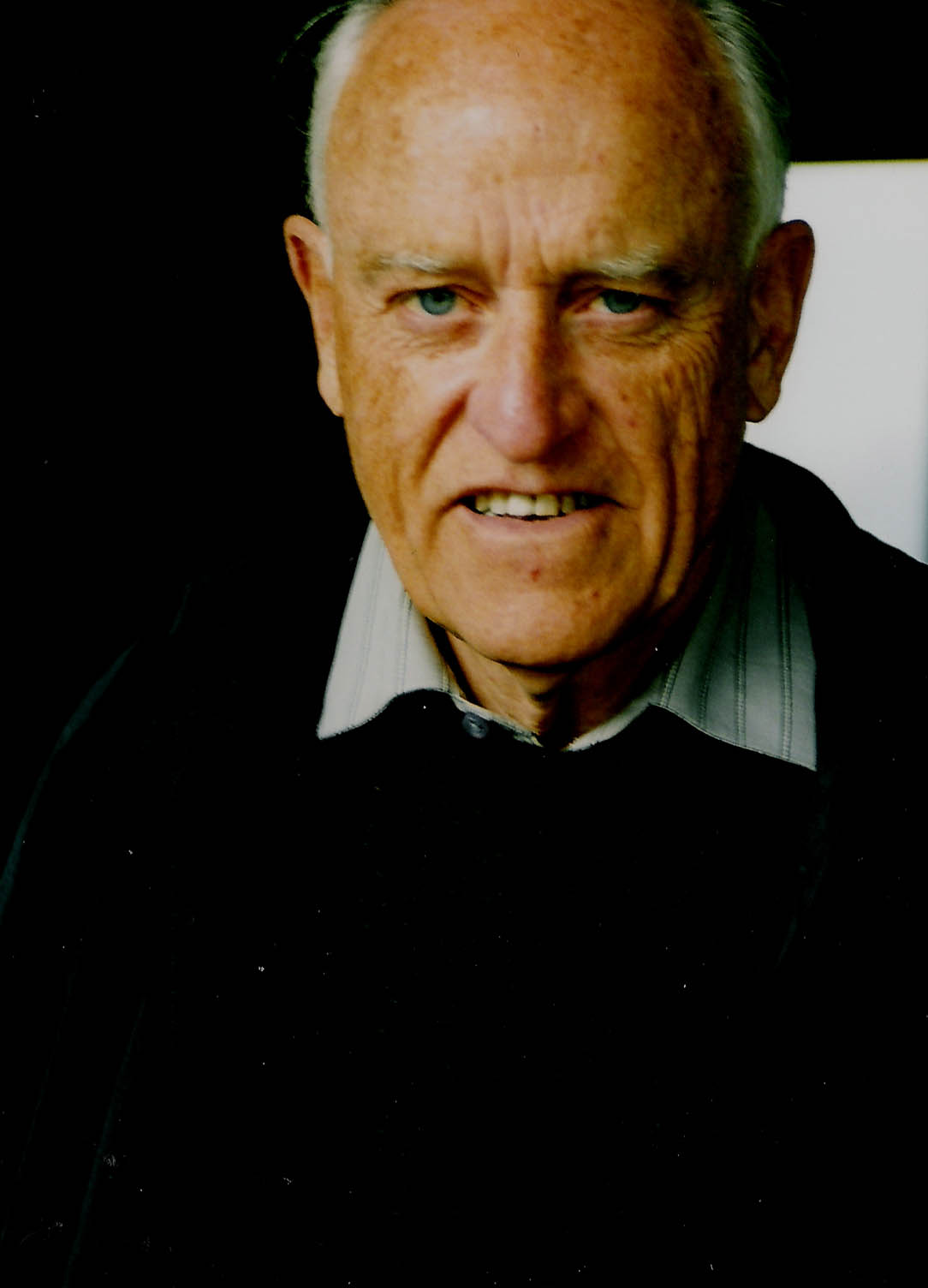
Poetry Shelf interviews the finalists for the Sarah Broom Poetry Award: Today Kirsti Whalen

IMG_4591

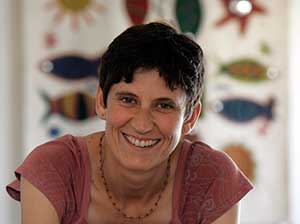
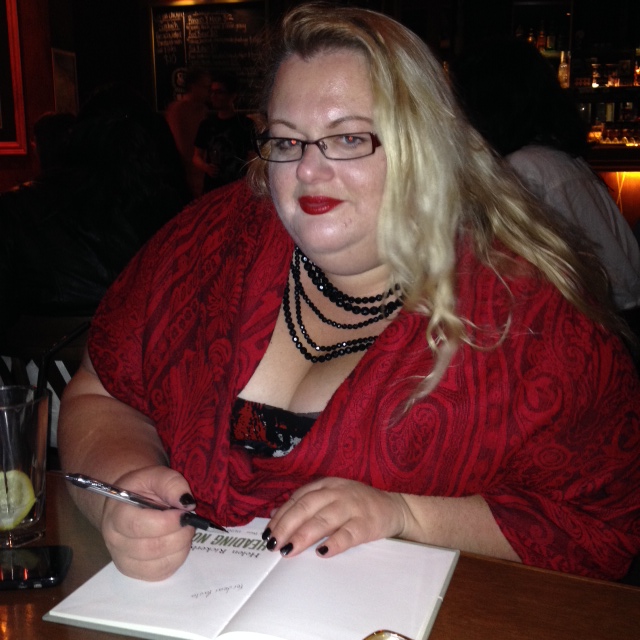
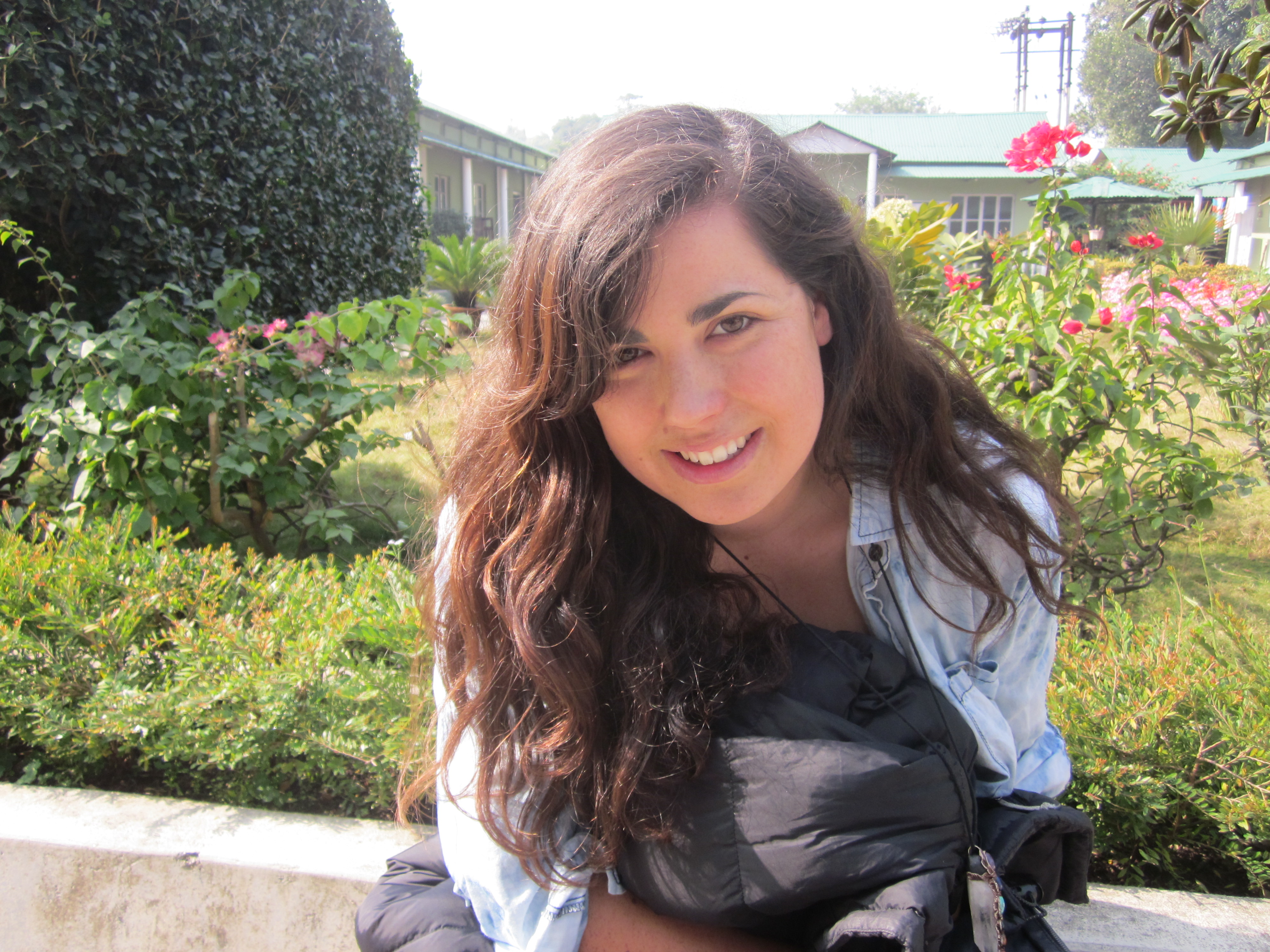
Kirsti Whalen is a poet and disability advocate currently studying Creative Writing at Manukau Institute with Robert Sullivan and Eleanor Catton. She has written and read poetry since she was a child, and has won both the Katherine Mansfield Young Writers Award and the Bell Gully National Secondary Schools Poetry Award. She has published poems in various journals.

My reaction to Kirsti’s poems: ‘Kirsti is a fresh young voice on the poetry horizon line. Her submission indicates she has an astonishing ear for the way sounds soar on a line, the way they dip and fall. Her syntax is bold and on the move, but she is unafraid of neither simplicity nor silent beats. The poems take you into the heart of family from a mother’s x-rays to kitchen dinners to a grandmother’s quince trees. Each poem is brought alive to a startling degree with sensual detail, electric connections, canny ellipsis, judicious repetition. It is a voice that feels original, that is willing to take risks and that exudes a love of writing in every nook and cranny.’


Did your childhood shape you as a poet? What did you like to read? Did you write as a child? What else did you like to do?

I was lucky enough to be part of a writing group from primary school, run first by my principal and then, after he left the school, my mum, who was a teacher. So I was taught from the start that writing is important, and a valid way to be spending one’s time. My parents always emphasized the value of creativity and never questioned my whims, for which I am very thankful.

My grandparents lived on a farm in the King Country, and this was my haven. I spent all the time I possibly could there, even catching the bus on weekends and holidays when Mum wouldn’t drive me. I am, in fact, a prize winning chicken breeder, taking out the pet category at nine years old! I think poetry is the opportunity to study life and the intricate world in one’s own time; I spent many hours a day with the baby chicks, and many more hours with dying cattle, parched with drought, trying to ease them out of this world. I gardened beside my grandmother and ran with the dog pack, rode my horse bareback and swam with eels so old they turned into legends. I baked bread with my grandfather. I made paper and scrapbooked with my mum. I went for pre-dawn walks with my brother, and cracked the ice over the chickens’ water bowls. I picked wild mushrooms and stewed them and I mustered cattle all day with my uncle, who taught me that girls are strong too. A good education in poetry.

And yes, I read. I was a bookish little thing, and started primary school with few friends except those I found in books. The first book I truly obsessed over was Starbright and the Dream Eater, by Joy Cowley, which Mum ended up confiscating so I would read something else, after my twentieth re-read. And from my fifth birthday my parents would buy me a hefty poetry anthology, from which I read my bedtime stories. Poetry was always fiction’s equal, to me.

When you started writing poems as a young adult, were there any poets in particular that you were drawn to (poems/poets as surrogate mentors)?

I fell in love with Janet Frame from an early age, who was introduced to me by my creative writing teacher at high school, Ros Ali. I have always loved her poem ‘Rain on the Roof’ above all others, except maybe ‘High Country Weather’ by James K. Baxter. The first book of poetry I bought with my own money was The Adulterer’s Bible, by Cliff Fell. Probably an odd choice for a young teenager, but I think it taught me a lot about language, risk and experimental work. I have always been fed a healthy diet of New Zealand poets and writers, so my influences tend to be local, though I was also a pretty hard-core Keats fan, and my cat was called Shakespeare.

I love the way your poems take risks. Your syntax is fidgety, your poems have an electric pulse, there is a deep-seated feeling but it is not over-baked, you don’t give everything away. What are key things for you when you write a poem?

Thank you! A key part of my writing process is having just the right song on repeat, to lend consistency to the tone. And I read each work aloud, over and over again, and then examine the structure to see if the punctuation offers the same rhythm. But the most important thing is making sure that the imagery pinpoints my intentions precisely, in a way I’ve never read before. I try to surprise myself. And if I get sick of the poem, I ditch it. A good poem should last forever. And it has to open a door to something bigger, even if it’s only about something small. I imagine poems like rooms, and if I can’t walk through that poem and into an adventure, it’s not working.

What poets have mattered to you over the past year? Some may have mattered as a reader and others may have been crucial in your development as a writer.

The last year has been a big one for my writing as I moved back to New Zealand, with the intention of giving myself the chance to really focus on my work. So the main influences have been my tutors and lecturers, Robert Sullivan, Ellie Catton, Witi Ihimaera and Anne Kennedy. Despite my contention with his politics I’ve read a lot of Ezra Pound of late and have also had a renaissance of my love of Kerouac, who is a heavy, though possibly invisible, influence.

You are studying Creative Writing at Manukau Institute of Technology with Robert Sullivan and Eleanor Catton. What do you take from this experience? Has it changed your writing in any way?

I think the biggest lesson I’ve been taught is that I cannot rest on my strengths. Ellie is a highly perceptive and her influence has forced me to examine what is self-indulgent, and what is necessary for the reader’s experience. I have learnt that fortes must be challenged, and that pushing oneself and being pushed by others can uncover new fortes, which would remain hidden if friends and family continued to tell you how great you are.

I’ve also changed in my approach to my work, treating it as a profession, rather than a hobby. And I am grateful for the highly instructive workshop format of the programme, as well as the gift of such excellent mentors.

What irks you in poetry?

When poetry exists to serve the poet’s ego. Appropriation of stories that don’t belong to the poet. The presence of pity. The presence of the patriarchy. Cliché. Collections that haven’t been edited well.

What delights you?

When poetry exists to serve the reader’s experience of the world. Stories being told by voices that haven’t previously held a platform. The presence of empowerment. The presence of the strength of women and their stories. Originality. Collections so sleekly edited that they hold a better narrative that a young adult novel.

Name three NZ poetry books that you have loved.

There are so many! I love Brown Girls in Bright Red Lipstick by Courtney Sina Meredith, anything by Lauris Edmond and 99 Ways into New Zealand Poetry, which I have found incredibly instructive. I also really love New New Zealand Poets in Performance, which is a spectacular anthology. It really captures the voice of New Zealand’s contemporary poetic scene.

The constant mantra to be a better writer is to write, write, write and read read read. You also need to live! What activities enrich your writing life?

I’ve travelled a lot and lived in Scotland and Australia, as well as working as a camel farmer in Austria, a nudist laughing yoga instructor in the south of France and living with families in Tahiti, Nepal and India. I think being exposed to all kinds of lifestyles and engaging with things that take my breath away for both their beauty and their humanity is extremely important. I also work in the disability world, and am lucky to spend time with kids who see things in a very fresh way. One of my little boys told me my arms were like peaches and his tummy was made of lemonade, because he loved me. That’s poetry!

Some poets argue that there are no rules in poetry and all rules are to be broken. Do you agree? Do you have cardinal rules?

My mentor Robert Sullivan, in the words of Ezra Pound, has drilled my cardinal rule into me, by way of a bright poster on our workshop room’s wall. Make it new! And in the works of Katherine Mansfield: Risk. Risk anything. If I’m doing these two things, and not appropriating anyone else’s story in a way I consider disrespectful, then every other rule is there to be challenged. I don’t really draw a line between poetry and prose, either. I like to think that poetry is more a feeling that a set of rules, though I do like to honour the tradition of poetry, and the challenge of structure, metre and various other devices.

Do you find social media an entertaining and useful tool or white noise?

I find it very distracting! And I think social media has taught us to expect quite instant feedback and gratification, which is somewhat demoralising when working on a project which requires a private, long-term investment, like a book. I wish I was brave enough to leave social media, to be honest, but I also see its importance in terms of engaging with an audience, and building a network of like-minded people. I try to be very careful, however, to promote my work, rather than myself. Social media’s influence can shift this balance to a more ego-based place, so I try to be very careful. I am also careful not to underestimate social media’s influence and infiltration of our collective conscience.

How do you envision your debut book?

I like beautiful things, so I’d like to have a book that someone could hold in their hands, feeing like what they’re clutching is special. I think I have one story I need to tell before I am free to tell other stories. I was my mum’s carer for years during her battle with cancer, and I want to write something that other young carers can read, and feel less alone than I did. And if there’s one line in there that makes someone gasp, as if something has changed for him or her… well, that’s the dream!

That seems to me like an important book to write. I see that commitment to life and to humanity in your writing. What were some key influences in your submitted poems?

The women of my family are the crux of my submission, particularly their strength, and their absence. I’m a feminist, and I hope that my work has subtle echoes of the influence of Marilyn French; Eve Ensler; Kate Millett. I have also spend the last few years engaging with spoken word, and I do write my poetry to be voiced by the reader, so I am influenced by the musicality of poets like Ursula Rucker, and the idea of voice and resonance.

Brava! With overt and covert misogyny still at work, and a culture of bullying still entrenched in our society, it is refreshing to hear young women speak out (like Lorde for example).

Are you happy to talk about what you are currently writing and what you hope to write soon, or do you prefer not to?

I try to keep things close to my chest but I’m a pretty open book and tend to dish too quickly about the things I’m excited about! While I’m an atheist I also have this romantic notion of the universe, and that some things need to be released into the world to be realised. Sometimes speaking to something makes it real. I’m also very lucky to have two best friends, one of whom is a poet in Melbourne and the other completing her MFA at the Michener Center in Austin, Texas, so we talk work a lot!

Do you like performing your work?

I used to. I like reading my work, but I have recently ‘retired’ (at 25!) from performance poetry as a vocation, so to speak. I think that for me, personally, it encouraged complacency. There is something quite dangerous about the immediacy of feedback and the tendency towards cliché that large audiences inspire. I enjoy elements of performance but I’m trying to let the page be the stage, and the words hold the spotlight.

What gives you pleasure when you write and read poetry?

I think all good writing is in pursuit of a definition of what it means to be human. When I can understand that, read that, or write something that makes me feel like maybe we’re all the same, and maybe that’s beautiful, that’s where I find the pleasure in it all.

Do you write in any other genre? Why poetry?

I have a particular penchant for creative non-fiction (which any fiction I ostensibly write actually also is, if I’m honest). I’ve had a lot of strange and challenging things happen to me or around me, sometimes by accident, sometimes by choice. I think as a writer it’s almost a good thing to have a rather difficult life, because it fuels your work. It gives you stories to tell. And I enjoy the intellectual aspect of creative non-fiction, as it allows me to incorporate my readings and discussions into less of an experience, and more of a comment. It challenges me to be a little more perceptive and to think deeply, which I value.

But poetry, to me, is the closest thing I have to prayer. I wish I could say something profound about why I write poetry, but I do it because it doesn’t feel right not to. It’s a discipline: I have to put my poetry hat on daily to ensure that I am training my brain into accessing that other place that some people call a muse. But it comes, and I let it come, because it’s who I am. I wonder what would have happened if I hadn’t been introduced to poetry at such an early age, and instructed in it all through my schooling. I like to think I would have written poetry anyway.

Finally if you were to be trapped for hours (in a waiting room, on a mountain, inside on a rainy day) what poetry book would you read?

Probably Peter Bland’s Collected Poems. It’s a fairly hefty book, so it would keep me occupied, and his writing is so hopeful, somehow, that whatever drab place I might be trapped in would become gently infused with the magic of the every day.


Kirsti on YouTube
Poetry Shelf interviews the finalists for the Sarah Broom Poetry Award: Today CK Stead

K4a

Photo credit: Marti Friedlander

To celebrate the inaugural Sarah Boom Poetry Award, Poetry Shelf has interviewed each of the finalists. First up is CK Stead.

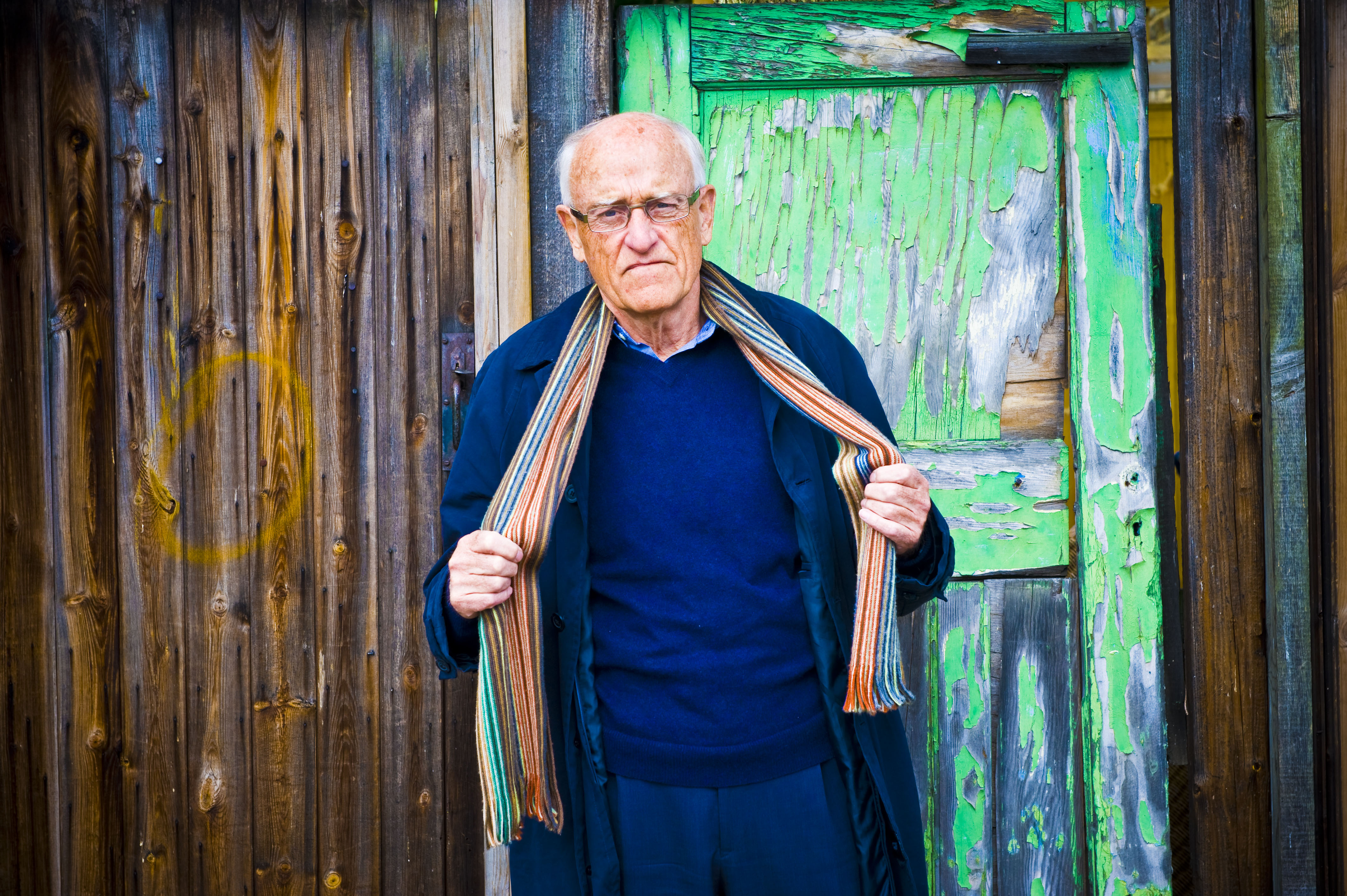
Karl has published over forty volumes of poetry, fiction, memoir and criticism. Along with New Zealand’s highest honour (the Order of New Zealand), he has received the 2009 Prime Minister’s Award for Fiction, a 2009 Montana Book Award for his Collected Poems and the esteemed Hippocrates Prize for Poetry and Medicine in 2010, amongst numerous other awards. Karl’s latest collection is The Yellow Buoy (published by Auckland University Press in New Zealand and Ark in the United Kingdom).

My reaction to his poems: ‘Karl’s poems embrace a vision that welcomes both an intellectual life and an everyday life along with a joyful attentiveness to sound. There is the characteristic wit, reflection and irony, but there is also tenderness, empathy and acute insight. Karl’s poems radiate such a contoured experience for the reader through their layering of ideas, self-confession, musical agility and location within a history of reading and thought. The subject matter shifts from the intimacy of a love poem to his wife, Kay, to a cheeky eulogy to Derrida (‘the enemy of plain sense’) to a hilarious case of mistaken identity. These poems have an unwavering strength to pull you back again and again to fall upon new discoveries.’


Did your childhood shape you as a poet? What did you like to read? Did you write as a child? What else did you like to do?

Who said ‘the child is father to the man’? Wordsworth, probably, who has a lot to say about the shaping of the sensibility in childhood. Poetry itself didn’t figure much at all in my childhood; but I think the poetic sensibility was shaped in relation to the natural world – the bush, the beaches, the out-of-doors, the cousins’ farm at Kaiwaka where a lot of holidays were spent: a very NZ childhood.

When you started writing poems as a young adult, were there any poets in particular that you were drawn to (poems/poets as surrogate mentors)?


At the age of 13 or 14 my sister was given the poems of Rupert Brooke which I borrowed from her and never returned (and still have). He was the first poet I read seriously, and began at once to write poems more or less in imitation I suppose. That started me.

Your poems are delightfully complex packages that offer countless rewards for the reader—musicality, wit, acute intelligence, lucidity, warmth, intimacy, playfulness, an enviable history of reading, irony, sensual detail, humour, lyricism. What are key things for you when you write a poem?

It has to be a meeting of words and feeling, in which the words are at the very least equal in importance, and the feeling can be of any kind, not just one kind. I like wit, think laughter can be tonic, but of course it doesn’t fit all occasions.

There were a number of significant poets in NZ from the 1940s onwards and you have interacted with many of them (Curnow, Mason, Glover, Baxter and so on). Were there any in particular whose poetry struck a profound chord with you?

Curnow was always the most important for me. But when I was young Fairburn’s lyricism seemed very attractive; Glover at his rare best (the Sing’s Harry poems); Mason likewise (‘Be Swift O sun’); Baxter – especially in his later poems: they have all been important to me.

Do you think your writing has changed over time? I see an increased tenderness, a contemplative backward gaze, moments where you poke fun at and/or revisit the younger ‘Karls,’ a moving and poetic engagement with age, writerly ghosts and death. Yet still there is that love and that keen intelligence that penetrates every line you write.

You are very kind! I certainly feel ‘older and wiser’ in the sense that things don’t matter so much, one accepts the fact of human folly and one’s own share in it. Indignation doesn’t stop, but there is a kind of weary acceptance, and laughter. I still feel embarrassment – especially when looking back – but I recognize that as not only a safeguard against social mistakes, but also as another manifestation of ego, as if one feels one should be exempt from folly.

There have been shifting attitudes to the ‘New Zealand’ label since Curnow started calling for a national identity (he was laying the foundation stones that we then had the privilege to use as we might). Does it make a difference that you are writing in New Zealand? Does a sense of home matter to you?

When I was young I was a literary nationalist. Now I regard nationalism as a form of tribalism and the result of genetic programming no longer suitable or safe in the modern world. So I have changed a lot. But I still recognize regional elements as important, even essential, in the poetic process. I think Curnow himself became more a regional poet and less a nationalist one; but the arguments that had swirled around all that had had the effect of committing him to positions which he didn’t want to resile from, so he remained the committed nationalist, perhaps after the need had passed.

What irks you in poetry? What delights you?

I suppose any kind of excess, of language or of feeling; and solemnity – especially the sense that poetry is taking itself too seriously and asking for special respect.

There are many kinds of delight in poetry, but almost all of them involve economy. If an idea or an experience or a scene or a personality or whatever can be conveyed as well in 10 words as in 20, those 10 words will be full of an energy which the more relaxed and expansive version lacks. They will be radio-active.

Name three NZ poetry books that you have loved.

Singling out living poets might be invidious, but here are three by poets now dead: You will know when you get there (Curnow); Jerusalem Sonnets (Baxter); Pipe Dreams in Ponsonby (David Mitchel).

What international writers are you drawn to? Now and over time? A variety of writers make an entry in your most recent book, The Yellow Buoy.

I grew up at a time when T.S. Eliot was the dominant figure both as poet and critic, so my mind was partly shaped by his, though never in the sense of being a slavish follower – and in fact my temperamental differences, and intellectual distance from Eliot, have always been clear. Yeats was always important. Pound I came to an understanding with a little later. Wallace Stevens was an influence. Philip Larkin, a little closer in age, was admired, though his limitations were always recognized. But these are all 20th century poets. I have always read widely among the poets from Shakespeare and Donne through to the present. Among living poets I am now pondering Anne Carson (Canadian) with interest, admiration and sometimes impatience. I keep up a lively correspondence with Mike Doyle in Canada – a New Zealand poet for a period of 10 or 15 years – and we exchange and comment on one another’s poems. Similarly with Alan Roddick in the South Island. I read recently in London and Oxford with Fleur Adcock and Kevin Ireland and felt with them the kinship of more or less exact contemporaries.

The constant mantra to be a better writer is to write, write, write and read read read. You also need to live! What activities enrich your writing life?

In no particular order, interaction with family (Kay, our 3 children and 7 grandchildren – and a large extension beyond); friends and former colleagues; movies, swimming (almost daily through 7 or 8 months of the year), music (including opera where possible), travel abroad (France and Italy especially, London always); the bush at Karekare, politics… The on-going party that life is, and that I’ll be sorry to leave.

Some poets argue that there are no rules in poetry and all rules are to be broken. Do you agree? Do you have any private cardinal rules?

There are a few rules, none unbreakable. If you choose to write a sonnet you choose a rule and then may observe it strictly or loosely or in such a way as to make the nominated choice only ironic. Poems do not succeed or fail by observing rules.

Eleanor Catton recently suggested there is no reviewing culture in New Zealand in The Guardian. Do you agree?

No, I don’t think I do agree – but it’s not like the UK where if one paper gives you a tanning for sure the next will tell you you’ve written a work of genius. The papers that review here are too few and consequently each counts for too much. And there is not a strong sense of literary critical practice here; a kind of authoritative back-up (behind the reviews) of informed opinion such as the universities used to provide. Now (but this is probably typical of everywhere) we have breathless academic devotees of Mansfield or Frame or Hyde or Curnow (safe options), and… Creative Writing! Neither of these amounts to what I would think of as distinguished literary criticism.

In your entry letter you stated, ‘Poetry has been my life, and all the other literary endeavours, criticism, scholarship, fiction, circle around and out from it.’ Poetry is like your gold nugget. I love this notion, particularly as your endeavours in these other areas have been so strong. Take your wonderful novel, My Name Was Judas for example. What were the satisfactions in writing this daring and utterly engrossing work?

I do feel that any success I’ve had as a critic has been from understanding the creative process at its fundamental level, in having written poetry. Fiction has a range of possibility, narrative and sociological, beyond what poetry permits – so my novels have been (as A.S. Byatt says they are) ‘a poet’s fictions’. My Name was Judas was a novel that took me by surprise and was really an attempt to retell a story we all know, the Jesus story, in a way that made it intelligible and believable to a modern persona such as myself, apprised of scientific facts, which have encroached so far on religious faith that there is, in truth, no room left to share. But I wanted my Judas (who incidentally does not betray Jesus but does not believe he is divine and tries to save him from himself) to have an extra dimension beyond ‘fact and reason’ and he has that in being a poet – so I was able to mix whatever skills I have in fiction and poetry in a single book.

Is there a particularly poetry book of yours that matters more than the rest?

Usually the most recent is the one I like best. But looking back I think Geographies is one that comes at a good time in my life when I was beginning to shake off the pressures of being a University Professor, and range about the world both physically and intellectually – and I think that shows in the poems.

Do you find social media an entertaining and useful tool or white noise?

At 81 I come to these things rather late, and sceptically. White noise mainly.

Finally if you were to be trapped (in a waiting room, on a mountain, inside on a rainy day, waiting for a decision) for hours what poetry book would you read? Actually I think the context would affect which book to a large degree!

I might just resort to the poetry in my head – there’s a lot – I’ve always had that kind of memory, so there’s a bit of everything from Shakespeare and Donne, through Wordsworth, Coleridge and Keats, on up to Yeats and Gerard Manley Hopkins.

Sweet Mammalian: A new NZ literary journal seeks submissions

You are invited to send work to a new literary journal.  More details here. I am really intrigued and can’t wait to see their first issue. Check out their aims on the site. As they say, ‘We are all sweet mammalians.’

SUBMISSIONS

Send us your writing, be it a roar, purr or pip-squeak.

We will be launching our inaugural issue in early spring and are taking submissions of poetry and short prose work.

Send us your original, previously unpublished work, by June 21.

Submit up to 5 poems of any length, and/or up to 2 short prose pieces. Please send your work in a word doc attachment to sweetmammalian@gmail.com

Please include your contact information and a short bio note in the body of your email.

On the Shelf: May picks by Tina Makereti, Helen Rickerby, Bernadette Hall, Damien Wilkins


1. Tina Makereti:

large_97818696931901844712931book.qxd

Three Collections

I’m putting together the course reader for my Victoria University course, Te Hiringa a Tuhi – Māori & Pasifika Creative Writing Workshop, so I’ve been reading a fair bit of poetry, as well as non-fiction and fiction. Here are three that are particularly interesting me at the moment (I seem to be only part way through everything!)

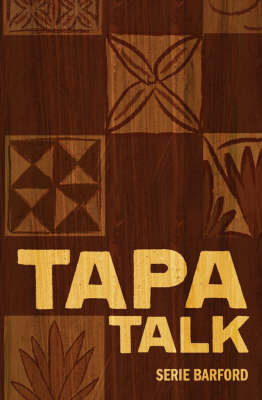
1. Tapa Talk – Serie Barford (Huia Publishers, 2007)

There is something wonderfully rich in this exploration of tapa or siapo. I also find Samoan / Pasifika concepts of va powerful territory for creativity. This excerpt is a good example:

‘Connections’

on Sunday the priest said teu le va

make presentable the distance

between you and the other


there’s no such thing as empty space

just distances between things


made meaningful by fine lines

connecting designs and beings

in the seen and unseen worlds


distances can be shortened

made intimate or dangerous


or lengthened

until the connection weakens

finally withers away […]


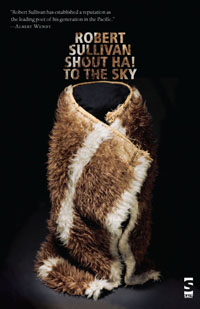
2. Shout Ha! To The Sky – Robert Sullivan (Salt Publishing, 2010)

I’m much more familiar with Star Waka, but have always wanted to look at this. It is full of Sullivan’s astute, witty, wry yet sensitive approaches to vast topics that range from academic and political to intimate. I often find his books, though poetry, are suited to being read beginning to end like a novel, and that some of the poems might be read almost like personal essays (which for me makes them even more enjoyable). This collection is full of references to books, histories and writers, and Sullivan’s trademark sharp humour:

‘15 Review’

When I was a lot younger I was reviewed by someone

who said that I should stop paying homage to other writers—


you know what? I listened to that reviewer so for a long time

I wouldn’t pay my respects—I’d pretend I was writing in a vacuum,


That there was no history of reading inside me, that everything

Was original breath unaffected by the airs and graces of my elders […]


3. The Cartographer Tries to Map a Way to Zion – Kei Miller (Carcanet Press, 2014)

This collection by a Jamaican writer is very specific yet speaks universally, as does his other writing. I particularly like the way he calls the idea of knowing into question by having two speakers in this collection, the Mapmaker and Rastaman, who question each others’ reality. Both points of view are simultaneously true and not-completely-true. Seeing this poet in performance is also a moving experience.


Tina Makereti’s debut novel, Where the Rekohu Bone Sings, was published recently by Random House. I have so much to say about this glorious book, I am going to bend my rules and review it on Poetry Shelf as soon as possible!


2. Damien Wilkins:

NelsonIAWebsiteNelsonIAWebsite


I’d like to cheat on the brief slightly and recommend a critical work which I think poets should read: Women, The New York School, and Other True Abstractions by Maggie Nelson (University of Iowa Press, 2007). I tell my PhD students about this one because it’s a model of critical prose – accessible and enjoyable without stinting on knotty theoretical issues. With a focus on New York poets from the 1960s and beyond, including Barbara Guest, Bernadette Mayer, Alice Notley and Eileen Myles, as well as the blokes (Schuyler, O’Hara, Ashbery), the book offers engrossing readings of individual works but also a thrilling argument for rethinking what poetry is and does. One of Nelson’s triumphs is to revise the division between representation and abstraction in literature. ‘Abolishing partitions’ is how she describes it. Hers is a generous, capacious mind. Kim Gordon of Sonic Youth also blurbs it, so this book is really cool too.

Damien Wilkins is Director of Victoria University’s International Institute of Modern Letters. He will introduce rehearsed readings from his novel, Max Gate, by five actors (directed by Murray Lynch) at the Auckland Writers Festival (Friday May 16th, Lower NZ, Aotea Centre). He has several new poems in the latest issue of Sport.


3. Helen Rickerby:

Hoopla_covers_A4

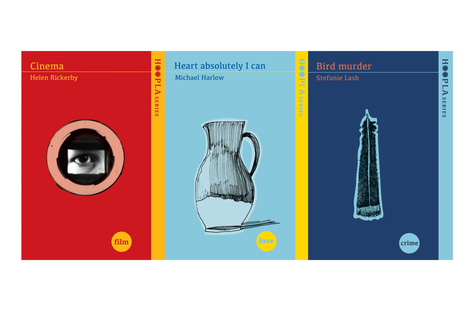
Bird Murder, Stefanie Lash (Mākaro Press, 2014) This debut collection was published in a set of three, along with my own Cinema and Michael Harlow’s Heart Absolutely I Can. I got to read it before it went to print, and was blown away by its originality and accomplishment – I’ve never read anything quite like it. It’s a gothic murder mystery set in the not-quite fictional West Coast town of Tusk, and features taxidermy, extinct birds, a cast of characters with extraordinary hair-colours and beautiful poetry. It manages to be, by turns, grim, funny, surreal, magical and historically accurate, but not all at the same time.

The Odour of Sanctity, by Amy Brown (VUP, 2013) This is still a work in progress for me – it’s a long book, but I’m enjoying it. It’s so ambitious – this isn’t just a book-length poem sequence – it’s a very-long-book-length poem sequence about six candidates for sainthood, from Aurelius Augustine to Jeff Mangum of the band Neutral Milk Hotel. The form and tone change with each section, each candidate. So far my favourite is the beautiful and surreal first, ‘The breakdown of the time machine’, about, and in the voice of, Jeff Mangum.

Bloodclot, by Tusiata Avia (VUP, 2009) I’m organising a conference on biographical poetry with Anna Jackson and Angelina Sbroma, and Anna had mentioned this automythographical book as one that would be interesting for someone to talk about at the conference. I don’t know quite how it is that I hadn’t read it before, but I’ve rectified that now. Like the two previous books I’ve mentioned, it has an overall narrative – in this case it’s about Nafanua, the Samoan goddess of war, who is also a ‘half-caste girl from Christchurch’.

Poems, by Anne Michaels (Alfred A. Knopf, 2000) This is actually three books in one: The Weight of Oranges (1986), Miner’s Pond (1991) and Skin Divers (1999). Michaels is a Canadian poet who is probably best known for her novel Fugitive Pieces (which I have to confess I have never read because I think it will be quite hard going, emotionally). I first read this book almost a decade ago, and I sought it out again because of the aforementioned conference, because I remembered being struck by biographical poems in here, particularly one about expressionist artist Paula Modersohn-Becker and another about astronomer Johannes Kepler. When I first read it, I remembered it being hard-going poetry, and it’s true that it’s rather serious, but it seems much lighter to me now, and just beautiful. It’s full of beautiful images and affecting and true lines: ‘desire/clinging like windy paper to legs’, ‘Only love sees the familiar for the first time’, ‘I wanted badly that truth be a single thing’. I’ve been reading the library’s copy, but I know I have to own this now – these are poems I’ll want to return to.


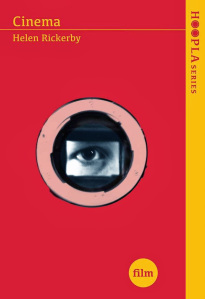
Helen Rickerby runs Seraph Press. Her most recent poetry collection, Cinema, was published by Mākaro Press. See my review here.


4. Bernadette Hall:

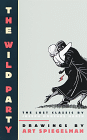
cov-wildparty   cov-wildparty   cov-wildparty   cov-wildparty

≈

‘Queenie was a blonde, and her age stood still,

And she danced twice a day in vaudaville.’

These are the opening lines of ‘The Wild Party’, a lost classic by Joseph Moncure March (1928). Reprinted, uncensored, with drawings by Art Spiegelman (1994). It came my way, 111 pages of ‘hard-boiled, jazz-age tragedy told in syncopated rhyming couplets’, when I was in Iowa in 1997. It sizzles, it’s of its time, it could be a bit of a shock today. I should be ashamed to be so fond.

Bernadette Hall’s current project is ‘Maukatere: floating mountain’ – an experimental text with artwork by the Wellington poet/artist, Rachel O’Neill. An extract appears in the latest edition of Landfall.


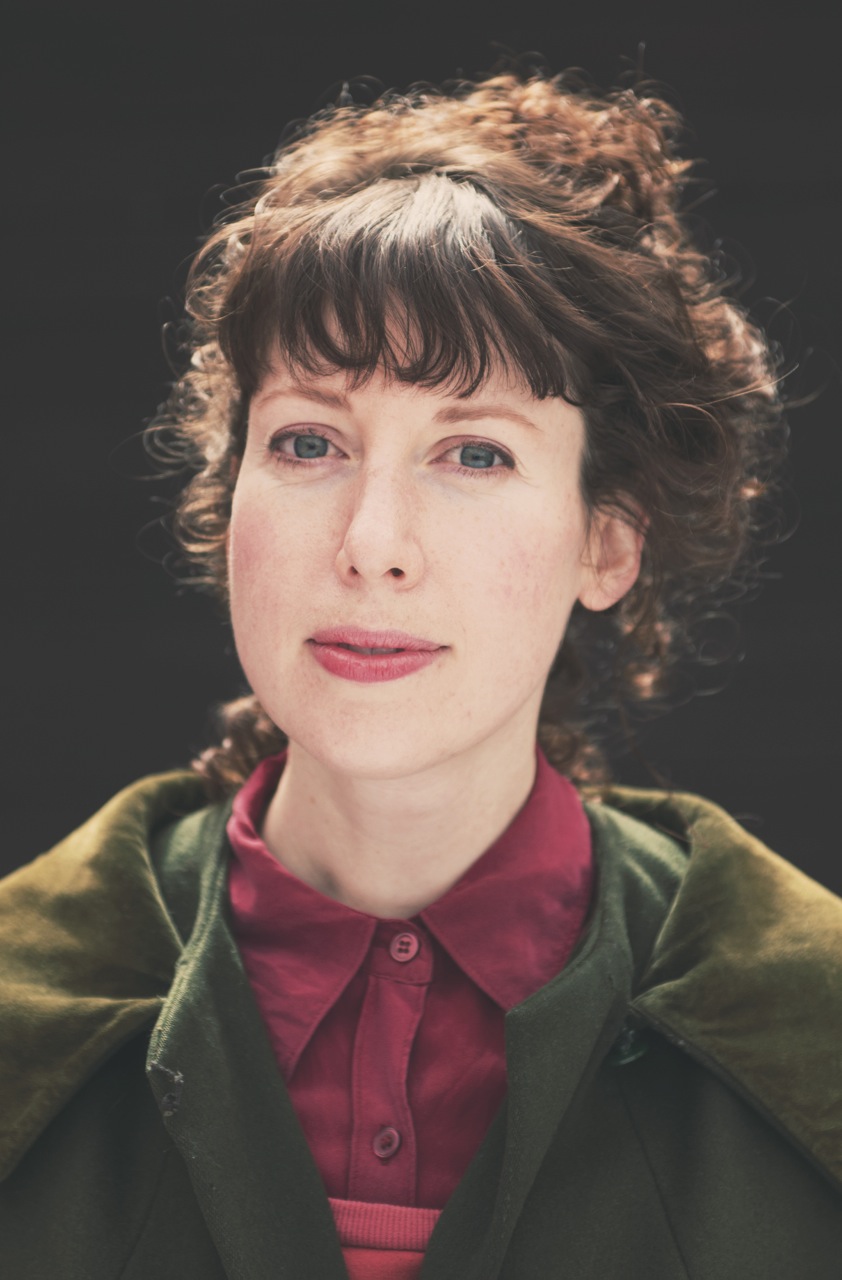
An Occasional Series on Poetry: Joan Fleming on poetry as a child on fire who is trying, and failing, to pronounce itself

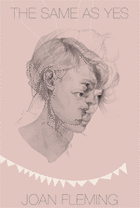
joanfortuesdaypoem (2)  sameyes.9780864736987__33157.1347922933.140.215   sameyes.9780864736987__33157.1347922933.140.215

Photo credit: Kate van der Drift

Poetry as a child on fire who is trying, and failing, to pronounce itself.

My current relationship is so not a failure that I have to find ways to lie about it, poetically speaking. We have parallel occupations and preoccupations. We are the same age, at the same stage in our lives. And things with us are great. Really great. Things with us are gorgeous and brindled and hot and warm and lukewarm and cool, and often not perfect, and I guess I wouldn’t have it any other way.

But because I am writing a book of failed love poems, I have had to invent a set of constraints so that I can write about what is foremost in my life — this relationship, this successful love story — and still keep the project moving. So love becomes loss, pleasure becomes cruelty. I make the words switch places. I tell a lie, and I make a failed love poem.

It makes sense to lie, as what we have is not True Love, in the way I understood it when I was younger. When I was younger, I idealised love as a total, perfected, suited thrumming: two people so in tune, so in love, that any twinges of disconnection and doubt were disavowed. In my Disneyland romance-cosmos, these feelings were not okay. There was no place for them in forever. And if they ever came up so strongly that they demanded to be talked about, it meant I had failed, we had failed, the relationship had failed.

My poetry reflected this, and it was terrible. High abstraction married jumbled metaphors in a house of rigid metre, where I rhymed deep with weep and sleep and endowed the sea with an embarrassing number of abilities, including the ability to weep and to fall asleep, and none of it was ironic or subtle or interesting. I thought the poems I wrote were “true.” I thought I was being honest about how perfect and total my love-feelings were for the guy, and how utterly painful it was to be away from him. But the result could not have been more of a lie. Bad poetry on the page, no matter how sincere the intention, can never access the paradoxes and slant colourings of emotional truth.

Now, of course, I understand love to be a knottier and richer and more self-confronting thing than new relationship energy, where it seems the beloved can do no wrong. And now I wonder if my early hyperboles and my grand rhymes were another kind of lie: a way of trying to convince myself that I still felt for the guy what I had felt at first, despite the inevitable anxieties, disconnections, discomforts, and doubts.

I no longer believe in True Love. Instead, I believe in hard work, communication, and mistakes. I believe in wringing the joy out, in being giving and game. I am interested in writing about the gaps between people, the drifts, the miscommunications, the evasions, and the near-misses. At the moment, it feels more worthwhile to spend time with what is difficult, than with what works.

But now there are new problems. Some of my failed love poems are straight-up fiction. But many are based on my own experiences, or the experiences of those I am close to.When writing about my sister’s ten-year marriage, for example, or a difficult year I spent with an ex-partner, I experience crises of conscience: that I am not being fair, that my necessary selections and orchestrations will betray those who have trusted me with their stories, that a poem’s fierceness is overbalancing its tenderness, that my extreme subjectivity is a form of violence. I worry that I am not giving voice to the other. I worry that my inventions are musical but mean. I am no longer deceiving myself into a celebration of impossible perfection, but this is tricky territory. I don’t know what the rules are. Some poems have already offended people I care about, and I am heavy with the weight of that.

The kinds of poems I like are rich with ambiguity and grounded in intense situations. I like the feeling of language refracting the facts of experience and casting a spell made of itself. But even with a problematised understanding of the relationship between language and experience, there are ethical concerns in a project like this. The sign and the signified might not speak the Truth, but language is still powerful. It moves people. It tells their stories. It is a volatile and dangerous tool.

These are the things I am learning. I still have many questions. How to retain my poet’s naïveté, to follow an impulse along a charged path, while being sensitive to those who have gifted me the impulse? It’s a tightrope walk, a magic trick. How to make the lovely-and-talented assistant disappear, and keep the puff of smoke, the flash of light, make the audience gasp? For answers, I look to masters like Elizabeth Bishop, whose poem “Casabianca” remains one of my guides in the writing of the failed love poem. The poem is concrete, grounded in experience. It writes back to an earlier poem about a genuine historical event. And yet, it is perfectly mysterious. It is both a truth and a lie. It tells a kind of story, but more importantly, it resonates with something untellable. It is a portrait of a child on fire who is trying and failing to pronounce itself.

Joan Fleming is currently studying towards a PhD in ethnopoetics at Monash University, Melbourne, and working on her second book. Her debut poetry collection, The Same As Yes (2011), was published by Victoria University Press.  In my review in The New Zealand Herald’s Canvas magazine, I wrote that the poet is open ‘to the world in all its strangeness, absurdities, loveliness and wonder. The poems are a meeting ground for the surreal, the offbeat, the magical and the ordinary.’ It was one one of my favourite debut collections of the year. Joan won the Biggs Poetry Prize in 2007. She has recently started blogging here.

Victoria University Press page here

A poem on Tuesday Poem here

Poem in Snorkel here

Announcement of the finalists for The Sarah Broom Poetry Award 2014


cp-gleam    cl-sarah-broom-1

Photo credit: Shane Wenzlick/Fairfax Media

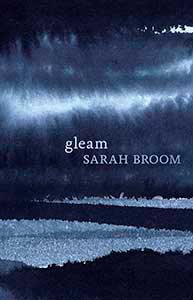
The Sarah Broom Poetry Award aims to provide recognition for an emerging or established poet, and to provide financial contribution to support their work. The prize was established in 2013 in honour of New Zealand poet Sarah Broom (1972 – 2013), the author of Tigers at Awhitu and Gleam (published by Auckland University Press).

In 2014 the judging panel included Sarah’s husband Michael Gleissner, Sarah Ross, Paula Green, and guest Head Judge, the much loved poet, Sam Hunt.

The inaugural Sarah Broom Poetry Competition attracted around 300 entries from throughout New Zealand. The submissions included established poets, emerging poets and poets at all stages between, and clearly reflected a writing landscape that is in very good heart. The entries demonstrated a stunning range of complexity, subject matter, tone, style and form. The quality and breadth of submissions created a tough job for the judging panel with at least thirty poets deserving a spot on the shortlist. The selected finalists will read in a session at the Auckland Writers Festival where Sam Hunt, will announce the winner (Sunday 18th May, 1- 2pm, Upper NZI Room ).


The three finalists are:

Emma Neale

GWPimg_0715

Photo Credit: Graham Warman

Emma is a Dunedin-based poet (four collections published), novelist, teacher, mentor and anthologist. She has a PhD in English Literature from London’s University College, received the inaugural Janet Frame Memorial Award for Literature (2008), the Kathleen Grattan Award for Poetry (2011) and was the 2012 Robert Burns Fellow at the University of Otago. She was the Summer Resident at the Pah Hometead in 2014 (supported by Sir James Wallace Arts Trust/ University of Otago). Her latest collection is entitled The Truth Garden.

Emma’s poems often find a starting point in her domestic life—with her exquisitely tuned ear and her roving mind producing lines of singing clarity. The musicality is enhanced by a sumptuous vocabulary, by single words that stand out in a line and a rhythm that gives each poem startling breath and movement. What struck us particularly is the way each poem is made more complex—through an unfolding pocket narrative, meditative strains of thought, aching confession, political sharpness, the rollercoaster ride of maternal feeling. These were definitely poems with an aftertaste that kept you wanting more.

Emma: ‘I wonder if the rhythms of everything from nursery rhymes to an old tape of Yehudi Menuhin playing Mendelssohn violin sonatas, which I used to listen to obsessively as a teenager, are as deeply embedded in my sense of poetic music as my love of certain poems.’


CK Stead

Author C. K. Stead in London

Karl has published over forty volumes of poetry, fiction, memoir and criticism. Along with New Zealand’s highest honour (the Order of New Zealand), he has received the 2009 Prime Minister’s Award for Fiction, a 2009 Montana Book Award for his Collected Poems and the esteemed Hippocrates Prize for Poetry and Medicine in 2010 amongst numerous other awards. Karl’s latest collection is The Yellow Buoy (published by Auckland University Press in New Zealand and Ark in the United Kingdom).

Karl’s poems embrace a vision that welcomes both an intellectual life and an everyday life along with a joyful attentiveness to sound. There is the characteristic wit, reflection and irony, but there is also tenderness, empathy and acute insight. These poems radiate such a contoured experience for the reader through their layering of ideas, self-confession, musical agility and location within a history of reading and thought. The subject matter shifts from the intimacy of a love poem to his wife, Kay, to a cheeky eulogy to Derrida (‘the enemy of plain sense’) to a hilarious case of mistaken identity. These poems have an unwavering strength to pull you back again and again to fall upon new discoveries.

Karl: ‘Poetry has been my life, and all the other literary endeavours, criticism, scholarship, fiction, circle around and out from it.’


Kirsti Whalen

IMG_4591

Kirsti is a poet and disability advocate currently studying Creative Writing at Manukau Institute with Robert Sullivan and Eleanor Catton. She has written and read poetry since she was a child, and has won both the Katherine Mansfield Young Writers Award and the Bell Gully National Secondary Schools Poetry Award. She has published poems in various journals.

Kirsti is a fresh young voice on the poetry horizon line. Her submission indicates she has an astonishing ear for the way sounds soar on a line, the way they dip and fall. Her syntax is bold and on the move, but she is unafraid of neither simplicity nor silent beats. The poems take you into the heart of family from a mother’s x-rays to kitchen dinners to a grandmother’s quince trees. Each poem is brought alive to a startling degree with sensual detail, electric connections, canny ellipsis, judicious repetition. It is a voice that feels original, that is willing to take risks and that exudes a love of writing in every nook and cranny.

Kirsti: ‘I have been working to tell the story of my family, which is about women’s resilience and the ways of winning the most subtle and internal of wars.’


Award website: http://www.sarahbroom.co.nz/poetry-prize.html

Helen Rickerby’s Cinema: an aperture into the magically fizzing world we inhabit

cinema-front  cinema-front

Helen Rickerby, Cinema, Mākaro Press, 2014 (part of the Hoopla Series)

‘With a whirr and a click/ we’ve conquered distance and memory’

There is an anecdote that the Italian film directors, the Taviani brothers, saw a movie when they were adolescents that rebounded a version of their world back to them (the constellation and collision of worlds that we know as Italy) and they dramatically said, ‘Cinema or death!’ Such boldness in the light of this shared epiphany.

Helen Rickerby’s terrific new poetry collection takes you into the world of cinema. Fittingly, the first poem is entitled ‘When the Lights Go Down.’ I immediately stalled on the title and pondered on the shared experience of reading poetry and watching a film. Even in the public space of a cinema, there is something intimate and private about your immersion in the cinematic world. It is comparable to entering a splendid poem and letting the world fade to pitch black along with the barking dog and the wet laundry— it’s just you and the poem.

In this book, ‘cinema’ is a thematic glue that gives the collection cohesion, but it is also the ingredient that animates at the level of detail. If you love film, and you have a history of film viewing, then this collection offers abundant rewards.

An early poem, ‘Revolutions,’ leads you into various meanings of the word from the click and whirr of the camera and the projector to the daring work of pioneer filmmakers. And so it is with the poems– the poetic effects are various, whether humorous, confessional, inventive, challenging, insightful, quirky.

There are a series of wry poems that re-imagine the life of a friend or Helen herself as directed by a particular filmmaker (Ken Russell, Sergio Leone, Quentin Tarantino, Stanley Kubrick, Jane Campion, and so on). ‘Chris’s life, as directed by Ken Russell’ is particularly witty. When Chris awakes to find ‘an anteater on my chest/ tearing at my throat’ it is , as Ken says, ‘the anteater of self-doubt.’

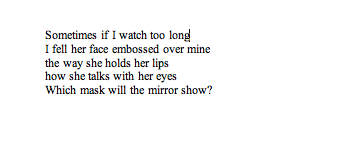
There is the way cinematic life has the ability to seep into and become saturated in your own (or vice versa) as the title of one poem suggests (‘Impressionable and impressed’). Thus the last verse of this poem hooks you:

Screen shot 2014-04-29 at 11.35.27 AM

What these poems do, too, is capture the magical, mysterious pull of cinema where there is a physical interplay between light and dark that then shifts beyond the material to an interplay between intellectual and emotional levels. Light and dark’s electric connections become the connections between life and death, desire and indifference, ghosts and humanity, real life and fantasies. In ‘Camera’ there are numerous such ripples —and the opening lines signpost the burgeoning magic: ‘There are lots of different stairs to be climbed/ each with a different kind of railing.’

The collection has an intermission! As though we can make our way out of the dark to collect popcorn or ice cream. I have never thought of this before, but I feel like I install a miniature intermission after each poem I read (if it is any good!) in order to absorb the poetic complexities or savour the poetic simplicity.

I love the way Helen’s collection pulls you into a poetic mis-en-abyme—into layers and levels of translucence, symbols, self exposure, tangible details, ephemeral details and above all a contagious love of film. Not that it’s a terrifying vortex! It is just deliciously complex.

Several longer poems stood out for me. I love the glorious ‘Two or three things I know about them’ which carries you along the white-hot tension between Jean-Luc Goddard and François Truffaut, and their different approaches to making a film. I also particularly loved ‘Symbols that make up the breaking up girl,’ a lush poem in parts where each part exudes a joy of language.  Then there is the wonderful density and intensity of detail, with shifting tones and fitting repetition, in ‘A bell, a summer, a forest.’ I also delighted in ‘Nine movies,’ a sequence of poems that filter love and personal life through somebody else’s movie plot, incidents and discoveries.

Each poem in this collection is like an aperture into the magical world of cinema which in turn is an aperture into the magically fizzing world we inhabit—in all its shades of light and dark. And this then becomes poetry. As a big cinema fan, I loved it.

photo

Helen is a poet, publisher and public servant with three previous poetry collections to her name. She runs the boutique Seraph Press and is the co-managing director of JAAM. Along with Anna Jackson and Angelina Sbroma, Helen is organising Truth or Beauty: Poetry and Biography, an upcoming conference at Victoria University. Details here.

Mākaro Press website Hoopla page

Helen Rickerby’s Seraph Press

Helen’s blog Winged Ink

An interview with Helen


a lovely, lovely launch for two lovely, lovely books– Lee Posna and Steven Toussaint

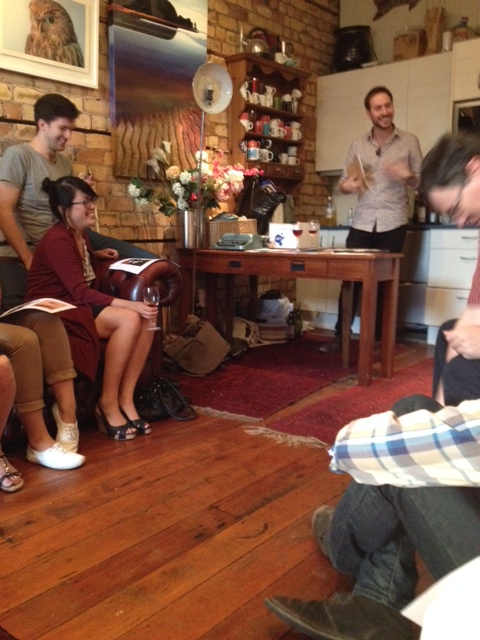
Two beautiful chapbooks were launched by Compound Press on Saturday at Timeout Bookshop in Mt Eden (how I love this flurry of poetry presses the length and breadth of New Zealand). For a moment there, when Lee Posna started reading his ant poem it felt like I was sitting back in Frank O’Hara’s New York apartment listening to the lilt and lift of American poetry (only done that via YouTube!). There is something to be said about an intimate audience leaning forward intently into the pleasures of poetry.

Lee didn’t read from his book, Arboretum, but instead read a longish poem about ants that took you from Salvador Dali’s ‘The Persistence of Memory’ to Luis Buñuel‘s Un Chien Andalou and made various other sidesteps. His book has delicate artwork that brought to mind the painterly gestures of Judy Millar– here in black and white. Beauty may be a suspect word when it comes to poetry and  the ability of language to transmit such a concept, yet reading Arboretum, I do get a transcendental, beauty effect. It is a matter of absorbing the layer of simplicity (‘I die right now./ I am past.’) that then unfolds and refolds the rebounding layers of complexity. The syntax buckles. The vocabulary challenges and soothes. There is the insistent hook of death that keeps up appearances. There is the strange difficulty of life (a life in passing glimpsed in shards).

Steven read a brief extract from his book, Fiddlehead. Again, I felt transported at the level of beauty — through a concatenation of physical detail and musical litheness. This long poem takes its starting point from Dante’s geographical world view in The Divine Comedy and in Questio de acqua et terra. Steven re-imagines the island left when the southern lands fled to the Northern Hemisphere (sighted by Ulysses in a distant haze just before his ship sunk) to Rangitoto. Listening to an extract from Fiddlehead and then reading the complete poem is reading poetry at its musical fullest. I have not read poetry like this in an age—poetry that startles the ear as though each word is a note picked or threaded as chord in a musical composition. The listening experience brings to mind the joy of hearing Michele Leggott read. Or reading Susan Howe. Lisa Robertson. There are aural contours that shift you from difficult word to exquisitely simple phrase along syntactical shudders. The physical detail grounds you. And then moves you on. Elsewhere. Into an ambiguous but moving  ‘I.’ At times the detail is sensual and a locator of place, at other times it is off key and slightly surreal. A foothold into the local landmark. A foothold into Dante’s circles.


Steven Toussaint

photo

Lee Posna

photo

photo