Launching Essential NZ Poems to a capacity crowd

Good to see so many Auckland poets and fans of poetry turn up to the launch of this updated anthology. A new anthology! It was a lively reading with a mix of poetry elders and new voices. Each poet read their own poem plus one other. Some chose to read one by someone else in the anthology. Albert Wendt read Tusiata Avia’s edgy ‘Wild Dogs Under My Skirt. ‘ CK Stead read Allen Curnow’s terrific ‘You Will Know When You Get There. ‘ two highlights plus Riemke Ensing’s gorgeous love poem that I had never heard before. I picked Bill
Manhire ‘Kevin’ to read. Just love this poem and have a strange anecdote about the first time I read it.

This is a beautiful book to hold in the hand. I have loved falling upon favourite poets and favourite poems and then those I am less familiar with. This is book of myriad doors and windows. A chocolate box of reading treats.

It was a lovely occasion and it reminded me how much we continue to open arms to poetry. To a hubbub of poem talk.

Cheers Siobhan Harvey, James Norcliffe, Harry Ricketts, and Nicola Legat and her dedicated team at Penguin Random House.

Happy to post accounts of the other two events. Dunedin and Wellington.

Congratulations!

Poem Friday: Lynley Edmeades’ ‘Imperial’ Sometimes an object in a poem reverberates with such exquisite frisson


s200_lynley.edmeades


Imperial

There goes London with its scattered lights.

Like a bag of marbles spilt out onto concrete,

they’ve rolled towards fissures, pooled together

in conduits. They are the arteries

of this land-bound leviathan.

From the air, I can see it’s almost finite,

and feel the way a child might,

when her marbles have been counted, put away.


Author’s bio: Lynley Edmeades is currently writing a doctoral thesis on sound in avant-garde American poetry, at the University of Otago. Her poems, reviews and essays have been published in New Zealand and abroad. She lives in Dunedin.

Author’s note: I wrote this poem while I was living in Belfast. It was prompted by a conversation with poet Sinead Morrissey, in which she applauded the power of first lines. Put your readers straight in there, she said. No ideas but in things.

Paula’s note: Sometimes an object in a poem reverberates with such exquisite frisson the hairs on your arm do stand on end. In Lynley’s poem, marbles promote a grid of shivers—from the allure of the physical toy to the dips and peaks of childhood. That time of endless summers and wild darings. To overlap the potential of this ‘thing’ with the aerial view of London at night is genius. Magic slips from one to the other. The allure of night. The way a city’s particulars are soaked up into the unknowable dark (or apprehended from a different point of view). The way the city borders are at the edge of psychological unease. Then you get taken back to the moment of the child where the smallest moment can be utterly sharp. The game is over. Fleeting yet intense. What I love about this poem (and indeed other poems by Lynley) is the way ear, heart and mind are in harmony—words are deft on the line, images are fresh, simplicity partners complexity.  And the way, in this example, one word, ‘Levethian,’ can unsettle and add to the subtle discomfort (the engagement with the long-ago child, loss, larger-then-life cities, the unknown). Or the the way the poem catches hold of that child trespassing on the glittering lights of night. The complexities and possibilities of this small poem are enormous. I have barely started.

MEGA-READING AT OGH LOUNGE 6 August, 5.30-7 PM ALL WELCOME!

MEGA-READING AT OGH LOUNGE 6 August, 5.30-7 PM
ALL WELCOME!

LOUNGE #39 WEDNESDAY 6 August
Old Government House Lounge, UoA City Campus, Princes St and Waterloo Quadrant, 5.30-7 pm

Featuring  performances by:
Colin Basterfield
Amanda Eason
Murray Edmond
Sisilia Eteuati
Brian Flaherty
Gregory Kan
Fiona Melrose
Alice Miller
Peter Simpson & Jonathan Besser
Penny Somervaile
Free entry. Food and drinks for sale in the Buttery. Information Michele Leggott  m.leggott@auckland.ac.nz  or 09 373 7599 ext. 87342. Poster: http://www.nzepc.auckland.ac.nz/events/lounge39_poster.pdf

The LOUNGE readings are a continuing project of the New Zealand Electronic Poetry Centre (nzepc), Auckland University Press and Auckland University English, Drama and Writing Studies,  in association with the Staff Common Room Club at Old Government House.

LOUNGE READINGS #39-41: 6 August, 17 September, 22 October 2014

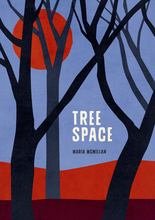
Maria McMillan’s Tree Space: a treasure trove of poetic connections—combinations that continually jumpstart the reader

Maria McMillan     TREE_SPACE__40939.1398819236.220.220    TREE_SPACE__40939.1398819236.220.220

Maria McMillan, Tree Space, Victoria University Press, 2014

(Thanks to VUP I have a copy of the book for someone who likes or comments on this post)

Maria McMillan’s biography tag on the back of her new book, Tree Space, fascinates me: ‘Maria McMillan is a writer, activist and information architect who lives on Kapiti Coast.’ Fascinating in the way these four key elements rub against each other.

Maria’s debut poetry book, The Rope Walk, was published by Helen Rickerby’s Seraph Press in 2013. It was a terrific arrival, and the sorts of joys that I fell upon there have been carried through into her new collection. As I wrote in my review for Poetry Shelf:

‘The poems are observant, musical, reflective and measured. The collection signals the craft and joy of small poems, words that are gathered together in a minor key where time stalls and you relish a moment. Maria knows how to write with the perfect degree of emotional seasoning and revelation (I will tell you this, but I will not tell you that). There was a sense of hide and seek for me as I read (and indeed there is a poem called ‘Hide and seek’).’

Tree Space is Maria’s first full poetry collection, and the poems have been written over more than a decade. Yes, there is a range of subject matter, style and inclinations, yet there is also a satisfying degree of cohesiveness. The poems step out from diverse starting points, yet frequently that starting point is a pivot for meditation. To me the poem provides an opportunity to delve deeper, to sidetrack and to offer slithers of anecdote.

What binds this book more than anything (although the deft ear comes close) is the way these poems, as poetic space, host relations. One of the delights of poetry is the way a poem reproduces and produces a series (‘set’ is too limiting a word here) of relations—whether aural, semantic or via tropes. There are relations amongst sounds, images, ideas and feelings. Some poets want to activate movement amongst all, others less so. You might fall upon relations between the real, the cerebral and the imagined. Relations between people, places and things. In my view, Tree Space is a treasure trove of poetic connections—combinations that continually jumpstart the reader.

The collection opens with ‘Song.’ An opening that is punctured, punctuated, startling. An opening that links sparrow to poet, the voice box to breath, the voice box to concealment (‘a parcel’) and revelation (anatomic). Pronouns tremble with ambiguity. Whose heaving chest? Hidden in the crevices is the ability to sing, the yearning to sing and the doubt ‘she’ can sing. And thus we enter the collection that sings.

The starting point as a pivot for poetic excursions is beautifully realised in the poem ‘salt marsh and tidal inlet.’ These words caught the poet-reader’s eye while ‘The other words get/ sucked back into the paper.’ It is as though the poet daydreams and we are caught up in her reverie, the words folding back upon each other, the nostalgic trip wires, the little spotlights on where you are and where you’ve been. Glorious!

In ‘Hairy Star,’ it is the breathless wonder at seeing the comet that the poet wants to preserve and remember for her sleeping child that hooks me, and the stepping stone between that sleeping form and the poet’s own little self. The own self: ‘Or my own self, carried to the steps by the back door/ to see a hedgehog. Milk in the saucer. Small noises.’ The sleeping child: ‘You were. In bed covered in pen marks and plum./ Sleeping. Outside your closed curtain/ half-painted trellis.’

I love the way the teapot in the poem, ‘In the very middle,’ transports you to all things strange, and the way ‘a polished cake spoon’ can show you yourself as ‘monsterish and wary.’ Again the pivot, the relations and the meditations.

There are so many poems that stand out for me (perhaps a tiny cluster at the back that don’t)—poems that generate myriad notes in my notebook. Maria is able to capture the luminous instance, a moment in time that becomes imbued with heat or longing or youthfulness. A moment that might be autobiographical or on the other hand invented. She steps into the shoes of others as adroitly as into her own.

‘Paradox’ finds  truth in the way sunflower seeds are both fast and slow growers and the way pumpkins are both heavy and light (and more examples). Maria’s poems are like that paradoxical pumpkin—exuding a tantalising simplicity of form and line yet embracing space that is sweetly fertile. Her poems are quick to the ear and a slow release to the mind. You save the room to move and the detail that sticks. These poems take exquisite flight whilst keeping toes in the soil. I loved this collection.

Victoria University Press page

Seraph Press page

VUP interview

Maria’s blog

Poetry Shelf interview with Maria

Interview with Janis Freegard

Congratulations to all the poetry finalists at The NZ Post Book Awards

This is such a strong list! Bravo Victoria University Press and your strong support of New Zealand Poetry. These books are uniformly marvellous.
Poetry 
  • Gathering Evidence, by Caoilinn Hughes, Victoria University Press
  • Heartland, by Michele Leggott, Auckland University Press
  • Horse with Hat, by Marty Smith, Victoria University Press
  • Us, then, by Vincent O’Sullivan, Victoria University Press

See my review of Gathering Evidence here

See my review of Heartland here

See my review of Horse with a Hat here


Poem Friday: Jessica Le Bas’ ‘Aroa Beach’ Its opening lines are effervescent with possibilities

Photo 21


AROA BEACH


            dealing sheep

            the ace of moon


The first night the tiny ants came

like a weak shadow. They drew lines on the wall

In the light that visited with part of a moon

you read their stories


The sun crept in during the night

Had its eyes closed tight, but it was there

never letting the day go. Simmering heat, a chorus of bugs

By dawn the sheets were abandoned


The second night was naked

Limbs cast off from your wet body, sailed ashore

in search of a cool zone. The morning light

came without land


The third night was opened under dusk

And inside, wrapped raw and true was the lightweight relief

of new dreams, and a ‘see through blue’ ocean

as soft as a song.


Bio Note: Jessica Le Bas’s first collection of poetry, incognito (AUP) won the Jessie MacKay Award. Walking to Africa, about mental health in adolescence, was a finalist in the Ashton Wylie Book Awards. She also writes children’s fiction, Staying Home (Penguin), and lives in Nelson

Author’s Note: I recently lived and worked in the beautiful Rarotonga for a year. The week I arrived the temperatures were in the high thirties, with little reprieve at night. I couldn’t sleep, as much from the heat and excitement, as from a fascination with new light and shadows, new sounds, and an army of ants that came nightly to watch over me. It took a while to find the ebb of my new life, at which point it felt like I had been dealt the ace, the top card!

Paula’s Note: Jessica’s poetry has always caught me, whether in terms of lithe sounds or missing pieces or shimmering images. This poem is no exception. There is a delicious movement between a facade of simplicity and a billowing knot of complexity. There is equally delicious restraint. The luminous details represent a world at a slight tilt where everything seems marvellous, strange, significant, legible, illegible. The poem is like a pocket narrative that gains life through its startling images. Its opening lines are effervescent with possibilities—as is the poem. You could move in any direction. That is the joy of poetry. You are led into the blurred edges of night, of a dream state where topsy turvyness (the sun in the night) underlines the relentless grip of heat. Or where dreams, against all odds, lay down (‘the lightweight relief’) the tracks to epiphany. Wonderful!

Auckland University Press page

Blackmail Press poem

Radio NZ interview

Jessica on rhythm for The Nelson Mail

NZETC page


DSC_5977

The website of New Zealand’s Poet Laureate has moved.

Website can be found here.

Here is a taste of Poet Laureate, Vincent O’Sullivan’s latest post:

Until a few months ago, all I knew of Mexican poetry was from a few international names like Octavio Paz, a selection of translations by Samuel Beckett, and a number of fine poets from anthologies. Then my discovery that in fact Spanish American poetry was being written a few kilometres from where I live. Rogelio Guedea has been in Dunedin for almost a decade. He teaches at the university, an intellectual who contributes regular political columns to papers in Mexico, a former legal prosecutor, a writer of crime novels, and a prolific poet. El crimen de los Tepames, the final volume of a fiction trilogy, last year was a best seller in Mexico, and his poetry has won Spain’s Premio Adonais. The enterprising Roger Hickin, whose Cold Hub Press is the only New Zealand imprint that brings out collections in foreign languages, is about to publish Si no te hubieras ido/If only you hadn’t gone, with his own finely pitched translations. The set of thirty four poems was written while the writer’s wife and family was temporarily back in Mexico. As I’ve noted in an Introduction to the volume,

‘Ordinary,’ I expect, is the first word that may come to you, should you ask, what kind of world is this, that these poems are part of? For that is the ultimate grace, you might say, that the poet’s wife bestows on a house and a suburb while she is there, and that seems so distant, so unlikely, when she is not. (…)

Visit site to read the rest of the piece.


Joan Fleming’s notebook is wonderful: ‘I admit I am a better cartographer of the human heart than of any actual landscape’

joanfortuesdaypoem (2)

This candid piece by Joan Fleming on doing research in a desert is just wonderful. It is a fascinating view of the way the academic brain and the poet brain absorb, reflect and refract both experience and location, ideas and feelings, beauty, an unfamiliar world, an insistent heartbeat.


‘For the last few weeks, my out-of-office reply told anyone who tried to contact me that I was on an academic research trip in the Tanami desert.

Sleeping in swags, cooking on fires, chatting, laughing, wandering about the desert in a convoy of four-wheel-drives, taking photographs of the dunes and the sunsets.

Can I convince you that this is research? I realise it sounds a bit suspect. I took a stack of books with me, and hardly opened a single one. All my field notes are impressions and poetry. In fact, I think I left my critical language brain entirely behind.

I found myself so caught up in the moment-to-moment practical and emotional demands of the trip, that I couldn’t find the space or time to translate what I was experiencing into Thesis Language. What academese might gloss as gauging bicultural responses to postcolonial narratives through embodied auto-ethnography was really bouncing along through unmapped spinifex country with the audiobook of Alexis Wright’s Carpentaria playing through the rented hilux speakers, with three generations of Warlpiri women in the back seat, and leaning into the discomfort when the novel’s most despicable Uptown characters indulged in a vomit of racial slurs.’

For the rest of the post visit here.

The Emma Press (UK) Seeks Poems about Myths and Legends for Children (and more!)


The Emma Press Seeks Poems about
Myths and Legends for Children

The Emma Press has launched an open call for poems about myths and legends for an anthology aimed at children, publishing in spring 2015. The independent publisher is looking for poems which ‘tell myths and legends in fresh, engaging ways, and which give new spins to old stories and characters.’

The book will be edited by Rachel Piercey (Newdigate Prize, 2008) and Emma Wright, who have collaborated previously on The Emma Press Anthology of Mildly Erotic Verse, A Poetic Primer for Love and Seduction and The Emma Press Anthology of Motherhood and Fatherhood.

Publisher Emma Wright said: ‘This will be our first children’s book, and we’re very excited about reaching a new audience of writers as well as readers. I’ll be interested to see which stories poets choose and how they approach writing for children. I grew up reading stacks of treasuries of fairytales and myths, so I’m looking forward to producing my own fun, subversive and sumptuously illustrated book.’

The Emma Press was founded in 2012 and has since published three themed poetry anthologies, including The Emma Press Anthology of Fatherhood in May of this year. Anthologies about homesickness and exile and female friendship are scheduled for autumn 2014, and the publisher has just launched a further call for poems about age and ageing, as well as proposals for poetry pamphlets.

Poets are invited to submit up to three poems to myths@theemmapress.com. Entry is free, but all poets must be members of The Emma Press Club, whereby the purchase of a book from the publishers’ website allows entry to all calls for anthology submissions within the calendar year. the deadline for submissions is 3rd August 2014. For more details, visit the publisher’s website at http://theemmapress.com/about/submissions/

About the Emma Press

The Emma Press is an independent publisher dedicated to producing books which are sweet, funny and beautiful. It was founded in 2012 in Winnersh, UK, by Emma Wright and the first Emma Press book, The Flower and the Plough, by Rachel Piercey, was published in January 2013. The Emma Press was awarded funding from the National Lottery through Arts Council England to run the 10-date Mildly Erotic Poetry Tour around the UK in Autumn 2013, to coincide with the publication of The Emma Press Anthology of Mildly Erotic Verse. For more information about The Emma Press, please contact Emma Wright at editor@theemmapress.com