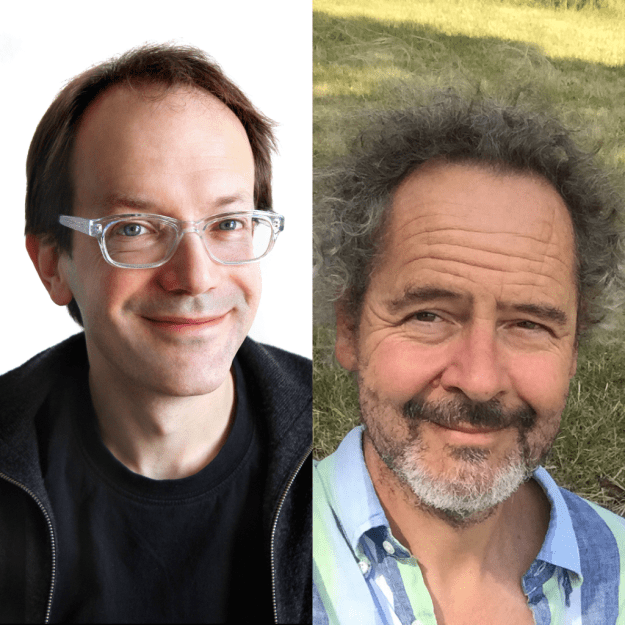
Nick Ascroft and VUP launching Back with the Human Condition – dips so far, very tasty!

0b3bedb4-eac1-4441-a2e8-44cd666aa290.jpg

Victoria University Press warmly invite you to the launch of

Back with the Human Condition

by Nick Ascroft

on Monday 10 October, 6pm–7.30pm
at The Guest Room, Southern Cross Bar
39 Abel Smith St, Te Aro, Wellington.

Books will be available for purchase courtesy of Vic Books. p/b, $25.

Michael Harlow’s Nothing for it but to Sing – This is poetry of the unlived as much as it is of the lived

LS3316_55_SUP_Nothing-For-It-But-To-Sing.jpg


‘Sometimes there is nothing for it but to sing;

to discover what there is in you to attain, when the light

comes stealing in’


from ‘Nothing but for it Sing’


Nothing for it but to Sing, Michael Harlow, Otago University Press, 2016


Michael Harlow has published ten poetry collections, one of which, The Tram Conductor’s Blue Hat, was a finalist in the New Zealand Book Awards. He has held numerous fellowships and residencies and his latest collection, Nothing for it but to Sing, won the Kathleen Grattan Award for an unpublished manuscript.

This shiny, ethereal collection, full of paradox and light, follows curved lines, follows song. The poems are written out of being and unbeing, out of the unconscious and the dreamed world, out of lived experience. More than anything, it almost seems like there are no things but in ideas, because this is poetry of an itinerant mind, of a heart absorbing a world that is hypothesis, abstract thought, love, attachment and continuity.

This is poetry of the unlived as much as it is of the lived.

The poetry is of strangeness to the point it delivers philosophical relations to the oxymoron: ‘What it was he saw ‘beyond’/ where his looking had gone, there’s no telling.’ ‘I’m looking for nothing/ you could put a name to right now.’ ‘[M]y mother died before she was born.’

Some of the poems are like songs for the departed:

‘And you know,

drawing the ‘short straw, you are finally

going to have a crack at the silky darkness.’


‘Until one morning when no birds sang,

emptied of all that can be said,

soul-window open—he woke up dead.’


More than anything, Michael sings his poetry into being. Song is there, steering the line, but it is also there as an echoey and insistent motif:


‘All his life

he kept looking for the one song

to sing him. A high-wire troubadour

on air, he said that writing

is the painting of the voice.

His wish that not one word be unsung.’


Elizabeth Smither writes on the blurb: ‘His poems ask the hardest questions we are capable of and answer them in fables, discourses and unquenchable curiosity.’

The book did set me thinking about my attachment to things in poetry. Is it necessary? Do I want the grit and the everyday settling along with the mind daydreaming along the course of a line? This collection overturns our contemporary insistence on locating feelings, ideas and human activity in the world of physical things. It is what I am so often pulled towards as I write. It is what I am drawn to as I read.

This is a very lovely, overturning, uplifting collection.


Extraordinary Anywhere: Essays on Place from Aotearoa New Zealand – a vibrant, heart-boosting, head -juddering collection


1a7dc58b-4dce-4d60-842a-c6116a3d3487.jpg


‘To investigate something properly we need all three: archives, dreams, memories …”

Martin Edmond


Extraordinary Anywhere: Essays on Place from Aotearoa New Zealand (VUP, 2016), edited by Ingrid Horrocks and Cherie Lacey, is a collection to linger over. That the essays are in debt to the personal heightens the effect on the reader because place matters to all of us. One reviewer suggested that New Zealanders are obsessed with place to an unusual degree. I find that hard to believe. We may all have different relations with place whether shaped by cultural, familial or historical factors. We may talk about place in different ways and how it shapes who we are as both as individuals and nations. But place matters.

What I love about this vibrant, heart-boosting, head-juddering collection is that it heads off in a thousand directions—both in view of what is said and how it is said. The recent (and not so recent trend) to filter scholarly thinking through the personal tethers abstract thought to the gritty real world we inhabit on a daily basis, and intellectual thought is all the better for it (although the sublime joy of following abstract argument is still an appealing option).

I love the feel of the book in my hand, the shape and internal design.


Ashleigh Young’s opening essay, ‘The Te Kuiti Underground’ revisits a place from her past and it is like refreshing a home page in your head. When she was young, Ashleigh thought, despite her father’s forensic knowledge, that this home place was vacant. The essay opens on a gravel road with a view of paddocks, a sewage pond and the airport. Ashleigh bumps into Paul McCartney, a mutable figure who morphed into George and then later Beck. This warm, wry account of teenage yearnings and adult returns finds effervescent detail to make the threads between home, place and people glow. Yes, the writing is lucid, and that is a certain kind of glow, but the essay delivers such an open and moving insight into familial roots, I got a readerly glow. And that’s gold, if you will forgive the pun.

Other writers take different tacks. Sally Blundell uses quotes from children’s books and characters (Alice, AA Milne, Dr Seuss, the Mock Turtle, Where the Wild Things Are) to structure a moving account of the revival of Christchurch, post-earthquakes: ‘There should be a place where only things you want to happen, happen’ (Sendak). Place and space are questioned and are participants in processes, proposals and discussions that both disconnect and connect the city. This essay is an essential reminder that this place is rebuilding and the grassroots activity is extraordinary. The gap between blueprints and the people is equally so.

Lydia Wevers approaches the Brancepeth Library archives through dirt (they arrived at Victoria University Library in a filthy state!). Much to think about. That image sent me reeling upon the purity of the archives and our relationship with what we read. Lydia sees the drive to find ‘original archival truth’ as somewhat deluded (she borrows this notion), but underlines the way the archival dirt of the Brancepeth collection established a flash of overlap between past and present. This essay was compulsive reading with my current status as researcher. I loved her admissions. This is the final sentence: ‘At some points of recognition, it would be untruthful to remove yourself from the narrative you are trying to make.’

Ingrid Horrocks goes out walking with Creative Writing students on campus and near campus  as part of a research project set up by Massey University ‘in response to a perceived “thinness” of place within the 21st-century multi-campus university.’ The project asks ‘how experience in a particular place might be “thickened” by making connections to that place’s contested histories, its topographies, its inhabitants and uses, its origins.’ Fascinating.

Cherie Lacey was a discovery and I can’t wait to read her memoir (of a failed psychoanalysis). She takes us to reclaimed land behind her dad’s place in Napier. She had been studying psychoanalysis in Melbourne and felt a real aversion to key underpinnings. Chiefly, that ‘we are not the authors of our own texts.’ She ached to be poet rather than poem. The essay, in the spirit of what essays ought to do, puts things on the line in a risky way:

‘This text-that-was-not-my-own didn’t work when it was overlaid on this place. It demanded a different story be made, one that included dog’s brains and a taniwha and a buried lagoon, an earthquake, shards of ceramic and the complicated life of a family.’

Glorious!  ‘This place only exists for me, as me.’


Alex Calder stayed in a small Southland lodge, miles from anywhere. He wanted to work on a piece on classic new Zealand fiction of the 1930s and 1940s. Harry Ricketts, having lived in numerous places, admits he doesn’t have a standing place of his own. He has imaginary places (borrowed from Rushdie) and reminds us of the ‘here’ hidden in elsewhere. Lynn Jenner places two texts side by side, in pieces, with dialogue and sideways tracks, in  a way that feels like poetry, uncertain, drawing on the past, with a taniwha hovering. This: ‘I think the place and time of one’s birth act like anchovies in a sauce; not discernible as themselves but present as a salty essence, deep and influential.’

For Alice Te Punga Somerville, place ‘folds and unfolds dynamically.’ The essay is both personal and political as it keenly draws close to the names of places, and then to Māori writers, not just where they come from but where they have gone. This essay is essential in the way it mourns the lack of visibility of Māori writers in all our media and publishing platforms.

Annabel Cooper looks at childhood haunts and lives that lived and loved them: ‘In all these lives, places were “passings that haunted” leaving their imprints in the adults who were one children there.’ Annabel makes the vital point that places are impermanent yet conversely act as anchors.

Tina Makereti responds to the insistent question: ‘Where do you come from?’ Tina cannot give ‘a direct or simple answer’ to the query so the essay, in its pathways through, is fascinating, moving, vital. She returns to a place where her tupuna are. ‘I can’t remember who said it first. We could live here. We should live here. Look at the hills. Look at the sea.’


I haven’t finished the book. I have still to read Giovanni Tiso, Martin Edmond, Ian Wedde, Jack Ross, Tim Corballis and Tony Ballantyne. Ha! Looks like I picked out all the women first reflecting my current focus on women’s writing.

This is a terrific collection of essays and I cannot recommend it highly enough. An absolutely productive reading experience for me. Bravo Victoria University Press for publishing it.

A must-go book launch: Sarah Laing’s Mansfield and Me

58259589-4613-48dd-b8db-36a95a091c62.jpg


Victoria University Press warmly invites you to the launch of
Sarah Laing’s new graphic memoir

Mansfield and Me

on Thursday 6 October, 6pm–7.30pm
at Unity Books, 57 Willis St, Wellington

All welcome!
About Mansfield and Me

From Better Off Read – Episode 36: Nick Ascroft and Pip Adam talk about Throwback 2007

nick-ascroft024-small.jpg


From Pip Adam’s excellent podcast series:

‘Nick is an amazing poet and he has a new poetry book, Back with the Human Condition coming out on October 13 this year.

However, what 2016 is proving is that Nick can also tell you How to Win at 5-a-Side and that he is pretty awesome to talk to and read about music.

Throwback 2007 comes out later this year and is the first in series which celebrates the yearly mix tapes and play lists Nick has been making for ages.’

You can listen to the playlist for 2007 here


Here’s the podcast and more links

Announcing Ka Mate Ka Ora Issue #14

Ka Mate Ka Ora: A New Zealand Journal of Poetry and Poetics issue #14 is now live.

This issue features:

John Newton on Allen Curnow: ‘Running with the Fast Pack.’

Michele Leggott on soldier poet Matthew Fitzpatrick: ‘Touching the Taranaki Campaign: The Poems of Matthew Pitzpatrick August-November 1860.’

Makyla Curtis on bilanguaging in poetry: ‘Ngā Toikupu o Ngā Reo Taharua: e Tākiri ana te Aroā Pānui/The Poetics of Bilanguaging: an Unfurling Legacy.’

Vaughan Rapatahana discusses his theory and practice: ‘Writing Back (to the centre): practicing my theory.’

Ricci van Elburg on Second World War poets in Holland: ‘Pekelkist: some poets’ responses to war.’

Brian Pōtiki remembers Rowley Habib/Rore Hapipi: ‘The Raw Man’ and also provides an account of Rowley’s tangi.

AND PLEASE NOTE:

Issue #15 of Ka Mate Ka Ora will be devoted to work by postgraduate student writers and scholars. This is a first call for essays, discussions, theory and polemic from postgraduate students. Please send contributions to:

Murray Edmond, Editor, Ka Mate Ka Ora:  m.edmond@auckland.ac.nz

Congratulations to this fine writer: Tina Makereti wins NZSA Peter & Dianne Beatson Fellowship

28443973-9a48-47bd-806b-cda6b4baf677.jpg

MEDIA RELEASE  from NZSA

13 September 2016

Kapiti Coast writer Tina Makereti is the recipient of the New Zealand Society of Authors Peter & Dianne Beatson Fellowship 2016.

The NZSA Peter and Dianne Beatson Fellowship of $7,000 is awarded each year to a mid-career or senior writer to work on a project that shows a high level of literary merit and national significance.

Tina Makereti will use the fellowship to work on her fiction project the Imaginary Lives of James Pōneke. Tina said “I’m so very grateful to receive the NZSA Peter & Dianne Beatson Fellowship as it means I’ll be able to take valuable time out to complete this novel. The Fellowship not only supports the project financially, but provides crucial encouragement and just the right amount of time pressure to get things done! Ngā mihi nui ki te whānau Beatson mō tēnei taonga miharo.”

Selection panel convenor Joan Rosier-Jones commented: “there were a number of most worthy applications for the fellowship and the final eight applications were so close in merit that the task of choosing one was enormous. The panel were eventually unanimous in their choice of Tina Makereti for The Imaginary Lives of James Poneke. It is very fine writing and an entertaining concept which should guarantee a wide market”.

This annual award is made possible with grateful thanks to the generosity of the Beatson’s. In 2015 the fellowship was awarded to Michael Harlow who used the time to work on his manuscript All the Pianos in the Wood. He also used the stipend to accept an invitation to represent NZ at the ‘Europa in Versi’ Poetry Festival at Lake Como, Italy. Previous recipients have included Emma Neale, Mandy Hager, Carl Nixon, Glenn Colquhoun, Sue McCauley and Marilyn Duckworth.

We congratulate Tina Makereti and also the applicants who were shortlisted.

Three cheers for Going West’s 21st


IMG_3531.jpg

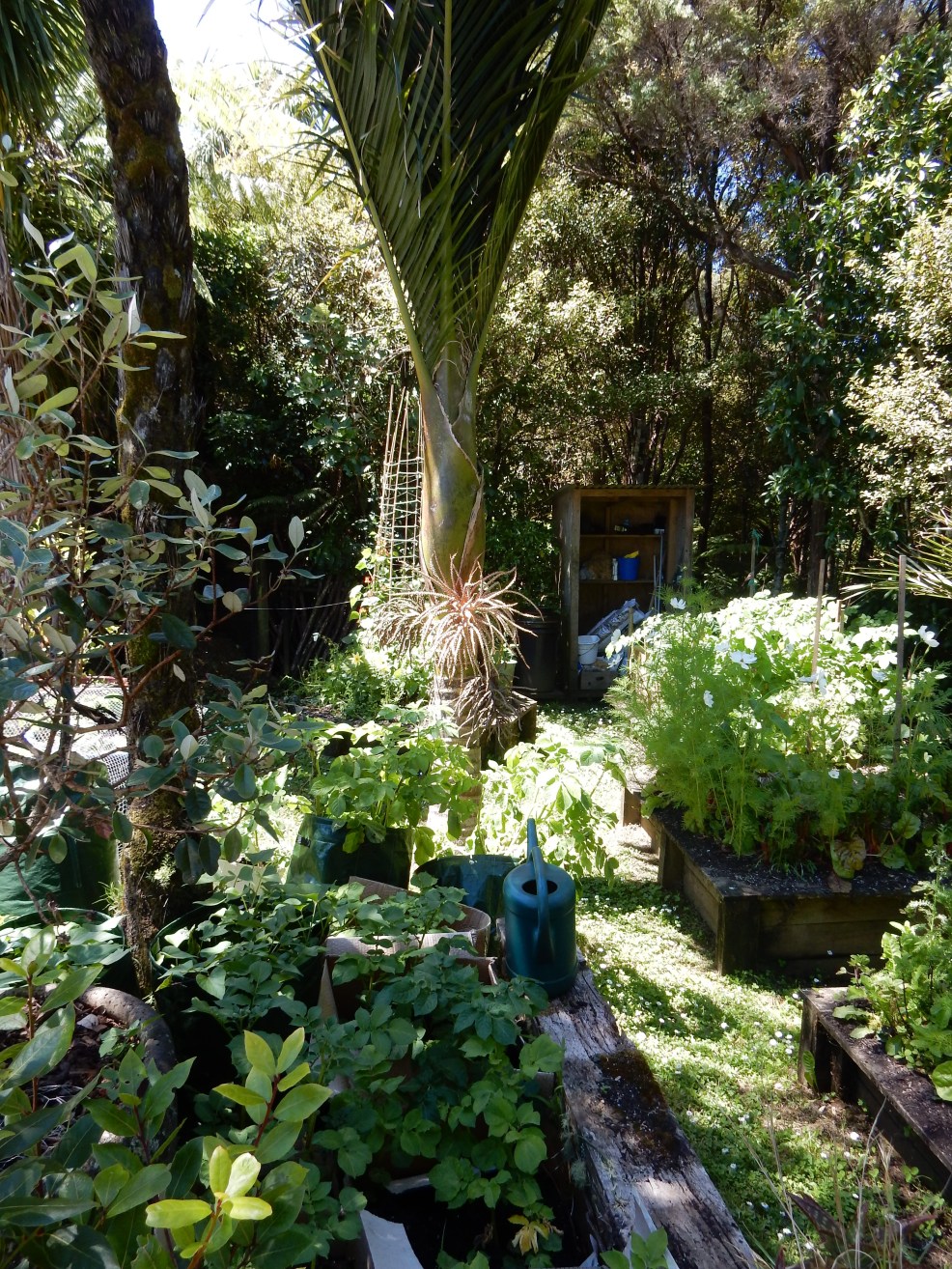
My Place/ View

‘Now our literature shapes how we see ourselves and our cultures – challenging stereotypes’

Albert Wendt Going West 2016


There was a lot of talk about place and where you come from at Going West this year. I live in West Auckland but seem to come from many places so don’t think of myself as a West Aucklander. I have anchors here and anchors elsewhere, but I have strong attachments to my local literary festival. I like the way it embraces a literary whanau. We share very good food and we share stories.


Like other New Zealand writers I am very grateful for the local festivals that celebrate local writing no matter the degree of international presence. Earlier this year I flew to Wellington to see The National Library’s fabulous Circle of Laureates event. It was a very special occasion but I was hard-pressed to find many other local fiction or poetry events at the festival. I see this as such a loss – not just for Wellington readers and writers but for all of us.

Auckland seems to be upping its game at their major festival. The dedication to New Zealand writing of all ilks is tremendous. It is a huge festival, overwhelming in terms of crowds and choice, but every year I come away rejuvenated as both reader and writer.


Going West is one of our key local festivals —  100 per cent devoted to New Zealand writing that crosses a range of genre, subject matter and format. This year was no exception. With new programme directors (Nicola Strawbridge and Mark Easterbrook) things were slightly different but the end result immensely satisfying. My only regret was the little poetry slots that used to pop up between longer sessions. I missed those.

The sun shone, the food was as good as ever, and I came away with a stack of books to read. Hearing Damien Wilkins read from Dad Art (two extracts) and share ideas and anecdotes with Sue Orr was so good, I raced to get the book. I loved the detail, the humour, the premise of the book, the absolute warmth and human pulse. This book deserves a wide readership.

I got to hear Emma Neale read as the Curnow Reader with her pitch-perfect melody, tender eye and acute detail of family  (among other things). Emma was also in conversation with Siobhan Harvey about her new novel, Billy Bird, and again an extract from the book and a fascinating conversation made me race to get the book. Already I am drawn to this curious boy who thinks he is a bird. Emma will also read from this at The Ladies LiteraTea in October.

Albert Wendt gave a terrific speech on Friday night that rattled our literary complacency. Where are the Pacific voices? he asked with both fire and poetry in his belly.

I missed the Poetry Slam but saw Robert Sullivan in conversation with Gregory Kan and Serie Barford. Thoughtful questions that included rocks, sediment and the thorny issue of revealing family. I came away thinking if I were a book-award judge this year I would honour This Paper Boat as it resonates so deeply with me.

Then there are the sessions you have no familiarity with. I loved a session on NZ rivers, for example, and came home with books on that topic (Dr Marama Muru-Lanning).

I ended the festival (I missed the beer session sadly) with the conversation between John Campbell and Roger Shepherd. A perfect close for me because it took me right back to listening to music in Auckland in the 1980s when I wasn’t listening to music in London (82-86). It was funny and sad and surprising and nostalgic and inspiring. How lucky we are to have John on National Radio bringing us stories that matter and ask questions that matter even more.


Thanks Going West. It was a privilege to be a small part of your festival on stage and a member of the audience over three days. I came away exhausted yet full. Festivals like this ( I am thinking of the ones in Nelson and Wanaka too) matter. Congratulations team – it was a fine occasion – like a family picnic in a way. There was warmth, prickly questions, delicious connections, challenging ideas, good stories told, a generosity of ear and mouth. Bravo!


PS I went early one morning so I could breakfast on delicious Turkish eggs at Deco, the Lopdell House cafe. Great view. Very good food and coffee! Highly recommended.