Read the 2015 & 2016 NZBC Lectures – Witi and Selina


Capture.135517.PNG

 
from NZBC:

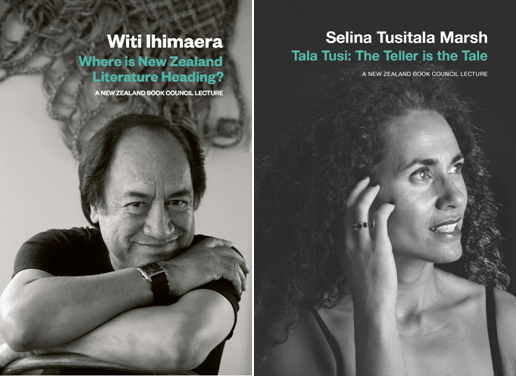
The New Zealand Book Council Lecture has become a prominent part of the literary landscape in Aotearoa New Zealand. It provides an opportunity for one of our country’s leading writers to discuss an aspect of literature close to their heart.

The Lecture seeks to enlighten – and also provoke. As James K. Baxter said: “It is reasonable and necessary that… every poet should be a prophet.”

Our 2016 prophet is Pasifika poet and scholar, Selina Tusitala Marsh. Not only is she an accomplished writer and teacher on the national and international stage, Selina is a feisty, restless, generous, collegial and unique contributor to Aotearoa New Zealand’s sense of itself – as a culture and as a country.

This is the third recent Book Council lecture. Eleanor Catton gave the 2014 Lecture, and in 2015 Witi Ihimaera confronted us with the question: What new New Zealand will our writers write into existence? Selina, in her 2016 Lecture, gives us the beginning of an insightful and original answer.

Read Witi and Selina’s NZBC Lectures here.

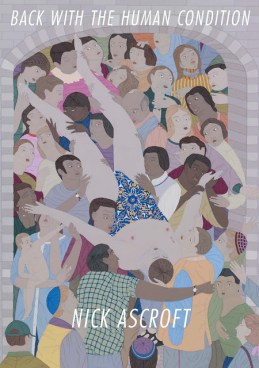
Pantograph Punch reviews Nick Ascroft’s new poetry collection

backwiththehumancondition

for the full review by Airini Beautrais go here

Junctures and Meaning: A review of Back With the Human Condition by Nick Ascroft

Nick Ascroft has garnered a reputation as a comic poet, and rightly so: anyone who’s seen him in performance can attest to the hilarity of his lines.

Back With the Human Condition, Ascroft’s third collection of poetry, is studded with highly entertaining and performable pieces. There’s ‘Juju,’ an ode to a fabulous haircut; ‘The Lord of Work,’ a list or litany poem with a punchline ending; ‘Five Character Descriptions I Am Too Lazy to Novelise,’ which shifts between the nonsensical and the macabre; and ‘Waiting For the Toast to Pop,’ the best poem on the subject of toast I have come across.

Comedy’s not the only string to Ascroft’s poetic bow. While many of the poems are clearly the work of a humourist, I also had the strong sense throughout of being in the company of a semiotician. This feeling continued with the poem titled ‘Never Was a Semiologist.’ With a background in linguistics, Ascroft is clearly interested in signifier and signified, and many poems in the collection eschew accessibility for complicated plays-on-words.

Still keen to do a feature on LitCrawl – contributions very welcome

This week feels like a wave of body and heart blasts. Yesterday I was in the no-sleep zone having stayed awake while my daughter headed to the hills alone to take up the tsunami warning so she could keep in touch with me.

But I still want to do a feature on LitCrawl as I think is such a good thing!

If you feel like sending me thoughts on anything you heard or saw or photos please send to paulajoygreen@gmail.com.

I will try and pull this together tomorrow if I get a few more pieces.

My thoughts are with everyone anywhere the ground is unpredictable – and those like me whose loved ones are in such zones.


Arts Foundation Awards – and Kate Camp is off to Menton

So delighted to see Kate Camp is off to Menton and two writers recognised: Eleanor Catton and Dylan Horrocks. Congratulations.

 
Eleven artists, two philanthropists and four arts organisations are recipients of awards and donations at the 2016 New Zealand Arts Awards. Come and celebrate the Laureate and New Generation Awards, Harriet Friedlander New York Residency, the Award for Patronage and the Katherine Mansfield Menton Fellowship with us.

Congratulations to:

2016 Laureate Award Recipients
Each Laureate Award includes a cash award of $50,000:

Eleanor Catton – Writer
Lyell Cresswell – Composer
Dylan Horrocks – Cartoonist/Graphic Novelist/Writer
Peter Robinson – Visual Artist
Taika Waititi (pictured above) – Film Maker

About the Laureate Award:
The Laureate Award is an investment in excellence across a range of art forms for an artist with prominence and outstanding potential for future growth.  Their work is rich but their richest work still lies ahead of them.  The award should recognise a moment in the artist’s career that will allow them to have their next great success.

2016 New Generation Award Recipients
Each New Generation Award includes a cash award of $25,000:

Parris Goebel – Choreographer
André Hemer – Visual Artist
Alex Taylor – Composer

About the Award:
New Generation artists are the hot shots, the ones to watch, and the ones who have an X-factor that sets them apart from their peers. They have assured potential. Their work is exciting. They are independent, individual and show outstanding promise. They also display a depth of thinking and consistency that gives their work strength.

Harriet Friedlander New York Residency
This residency enables an artist(s) to live in New York for as long as $80,000 lasts them:

Chris Pryor and Miriam Smith – Film Makers

About the Residency
Michael and Jason Friedlander asked the Arts Foundation to assist with the selection and promotion of an artist to receive up to $80,000 to have a New York experience every two years. The Residency is being made possible by a legacy gifted by Harriet Friedlander, who was a dedicated supporter of the arts. She also loved New York. She believed that any young artist exposed to the city would learn and grow in unimaginable ways.

2016 Katherine Mansfield Menton Fellow

Kate Camp – Poet/Writer

About the Katherine Mansfield Menton Fellowship
For the past forty-six years, the Katherine Mansfield Menton Fellowship has enabled a selected New Zealand writer to live for up to six months in Menton, France. There, they have access to the writing room in Villa Isola Bella where one of New Zealand’s most famous writers, Katherine Mansfield, once lived.

Award for Patronage Recipients

John and Jo Gow – Philanthropists

The Award for Patronage Recipients are given $20,000 to distribute to artists or arts organisations of their choice to celebrate the occasion of the award. All recipients to date have chosen to donate $20,000 of their own so they can give away $40,000 to artists, organisations or projects of their choice:

John and Jo’s chosen donation recipients are:

•    The Big Idea
•    Tautai
•    Q Theatre
•    Sculpture On The Gulf

$480,000 will be awarded to the recipients at the New Zealand Arts Awards event night on Wednesday 23 November. With the majority of the funds awarded on the evening being generated by private donations, the Awards are also a celebration of philanthropic support for the arts.

The awards are the highest value, multi-discipline arts awards in New Zealand, and since the inaugural Laureates received their awards in 2000, the Arts Foundation has awarded life-changing monetary and honorary awards to over 190 of New Zealand’s finest artists. By the end of this year, the Arts Foundation will have awarded New Zealand artists $5.2million.

We are very much looking forward to seeing those that have purchased tickets at the Awards next week. If you would like to come and celebrate the achievements of this year’s recipients then select your tickets from our website now.

The 2016 New Zealand Arts Awards
From 6pm, 23 November 2016
Shed 10, Auckland Waterfront

Pre and post ceremony canapés are served with Gladstone Vineyard wines and Yeastie Boys beers

A Reserve $75.00
B Reserve $68.00

Dress: Cocktail/Business

Invitation to send small postcard pieces or photos on Wellington’s LitCrawl for a Poetry Shelf feature

Masses of fans can’t be in Wellington to join the crawl so I would love to share highlights of the LitCrawl

anyone who wants to contribute a few sentences or a paragraph or photos ….

send to paulajoygreen@gmail.com

…. that would be      w o n d  e r f u l


thanks, Paula


The Guardian: Anne Carson’s fragmentary writing and its rewards

Full piece in The Guardian here

9781101946848.jpg

Refreshing breaks: how fragmented stories can be fulfilling reading

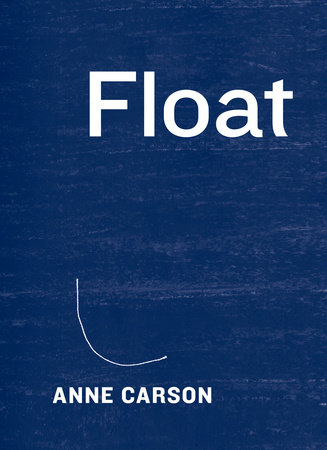
“Reading can be freefall,” runs the blurb on the back of Anne Carson’s new poetry collection, one of several recently published books to offer readers a more interactive way to engage with the printed word. Historically, fragmentation has been used as a troubling effect, or to indicate a subject under stress. These books, however, attempt to unleash the fragment’s liberating force. The effect can be exhilarating.

If the title of Carson’s collection, Float, suggests a lack of direction, so does its format: a transparent slipcase housing 22 chapbooks that we are invited to read in any order. Does that mean the collection doesn’t, then, possess an overall unity? Or is it possible for we readers to supply meaning ourselves?

In 2002, Carson published her translations of Sappho’s poetry, a body of work that, bar a single poem, only exists in fragments because the papyri on which they were written are so damaged. As Carson writes in Float of one work by Sappho: “Half the poem is empty space.” Her translations communicate this fragmentation to the reader, using brackets to convey where the source texts are torn or disintegrated. “Brackets,” she writes in her introduction to the poems, “are exciting. Even though you are approaching Sappho in translation, that is no reason you should miss the drama of trying to read a papyrus torn in half or riddled with holes or smaller than a postage stamp – brackets imply a free space of imaginal adventure”.

Charles Brasch Young Writers’ Essay Competition celebrates Landfall’s 70th Birthday

Charles Brasch portrait by Clifton Firth.jpg

(Charles Brasch was a strong supporter of other writers, notably women poets, who were overlooked elsewhere!).


Press release:

In 2017 Landfall will celebrate its 70th birthday. To mark the occasion, editor David Eggleton and Otago University Press are pleased to launch the Charles Brasch Young Writers’ Essay Competition, open to writers aged 16 to 21.

The competition is named after Dunedin editor, poet and patron Charles Brasch, who founded Landfall in 1947 and was its editor for the next two decades.


Brasch’s influence on New Zealand literature and art is significant and far-reaching: as well as being a meticulous and demanding editor, he was a philanthropist and (often anonymous) patron of the arts. He gave generous support to individual artists and writers, was involved in establishing the University of Otago’s Burns, Hodgkins and Mozart arts fellowships, and bequeathed his extensive collection of New Zealand art and literature to the Hocken Library.

As founding editor of Landfall, Brasch aimed to forge links between literature and its social and political contexts. He published imaginative writing and literary criticism alongside social and cultural commentary, and wanted the journal’s perspective to be ‘distinctly of New Zealand without being parochial’.


Current Landfall editor David Eggleton says the purpose of the competition is to encourage young writers towards achieving the highest standards of literary expression in the art of the personal essay. ‘The ability to write in a sparkling, informed, questioning, self-aware way on any subject — to make it new all over again — is the mark of the finest writing. Landfall wants to receive essays that show this promise from the next generation of emerging writers.’


The Charles Brasch Young Writers’ Essay Competition will be an annual award. Entries will be judged ‘blind’ by Landfall editor David Eggleton. The winner receives $500 and a year’s subscription to Landfall.

Entries for the inaugural competition open on 1 December 2016 and the closing date for receipt is 31 March 2017. The winning essay will be published in Landfall 233 in May 2016.


For further details about the competition visit our website


Escalator Press debuts its first poetry book


Everything-is-here-Web-Cover-72dpi-202x300.jpg

Not just some poetry hack

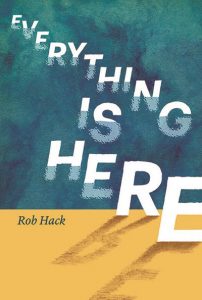
Everything is here is Rob Hack’s first collection of poems. It explores his relationship to his Rarotongan heritage as well as his connection to Niue and New Zealand, and the places where his family lived when he was growing up.

Award-winning New Zealand poet Dinah Hawken describes Everything is here as: “…stories from Porirua East, Niue, Paris, Rarotonga, Sydney, the Kapiti Coast; stories told in spare, accessible poems that are both strongly placed, and full of people and day-to-day things. What delightfully holds everything together is Rob’s easy tone and his characteristic, understated humour.”

Hack is a graduate of the Whitireia Creative Writing Programme and completed his Masters at the International Institute of Modern Letters, Victoria University, and is also a jack-of-many-other-trades.

This is the first book of poetry from Escalator Press. The cover is designed by internationally renowned graphic designer Sarah Maxey.


About the author

Rob Hack was born in Invercargill. His mother was from the Cook Islands and his father from New Zealand. He’s worked as an insurance salesman, greenkeeper, builder, night shift worker, personal trainer, cattle station worker and more. He currently spends his handyman earnings on petrol to visit his grandchildren each week and on second-hand poetry books. He’s lived in Paekakariki since 2005 and has performed his poems in Kapiti and Wellington for 15 years. Rob hosts a poetry show on Paekakariki FM called ‘Not at the Table: poetry and stuff ’.

About Escalator Press

Escalator Press is an imprint set up by the Whitireia Creative Writing Programme, and publishes work by new and established writers associated with Whitireia. With production and marketing by the Whitireia Publishing Programme – New Zealand’s highly regarded training course for the publishing industry – Escalator Press is built on traditional publishing values, whether in print or digital media, while developing its own distinctive model and publishing exciting new voices.