Poetry Shelf interviews Sue Wootton: ‘interweaving and texture in a poem is an effect I love’

Sue_Wootton-092012-300dpi.jpg

The Yield, Sue Wootton, Otago University Press, 2017

Sue Wootton’s latest collection of poetry is a sumptuous read, a read that sparks in new directions while clearly in debt to everything she has written to date. The cover is so very inviting. I have been a fan of Sue’s poetry for a long time and was delighted she agreed to share thoughts on poetry and the new book.

Sue Wootton lives in Dunedin, where she is the selecting editor for the Otago Daily Times Weekend Poem column and co-editor of the Health Humanities blog Corpus: Conversations about Medicine and Life. She is a PhD candidate at the University of Otago, researching connections between creative practice, literature, and medicine. Sue’s debut novel, Strip (Mākaro Press, 2016), was longlisted for the fiction prize of the 2017 Ockham NZ Book Awards. The Yield (Otago University Press, 2017) is her fifth collection of poetry. Sue’s website. Find Corpus here.


The+Yield.jpg  The+Yield.jpg


and you wonder if unspooling is, will ever be, your forte,

a question you will never answer since it never ends,

this casting your line on gale or water

from ‘Unspooling’


PG: Let’s begin with the world of books. What books affected when you were young and what books have affected you as an adult poet?

SW: My mother used to take us to the Whanganui library every Saturday morning to collect an armful of books for the week, and we were lucky in having a family friend who used to give books—lovely hardback illustrated books—for birthday and Christmas presents. I still have the one I received from her on my sixth birthday: Candy and the Rocking Horse by Gwyneth Mamlok. Oh Candy, how I loved your red hat, your bright pink tights, your long boots, and the way you and your dog Peppermint did everything together, just the two of you! Other beloved books included Hubert’s Hair-Raising Adventure by Bill Peat, Patrick by Quentin Blake and Horton Hatches the Egg by Dr Seuss. A little later I fell big time for Roald Dahl with Charlie and the Chocolate Factory. Ian Serraillier’s The Silver Sword made a huge impression on me, and there was a novel set in the crypt of Winchester cathedral about which I remember nothing except the sinister feelings it evoked and the grip it had on me. By then I was hooked on books that stirred my imagination, especially by describing other possible worlds. I chewed through the Narnia series and Lord of the Rings, and in my teens went through a major science fiction phase, devouring books by authors like Ursula K. Le Guin and Isaac Asimov. Poetry hit me as a force in my final year of secondary school, when we were given poems by Dylan Thomas. We studied King Lear that year, and I remember being well and truly woken up when I heard Richard Burton bring those words to life. And I discovered e e cummings around the same time, and was amazed to see what can happen when syntax and word are unpacked and put back together askew, strange, and suddenly with so much more verve than “ordinary” language.

As an adult, I would credit Harmonium by Wallace Stevens for jolting me forward in terms of realising what the ‘blue guitar’ of poetry can do: “Things as they are / are changed upon the blue guitar”; they become “A tune beyond us, yet ourselves”.  There have been many other influences, too many to list in full, but probably my most thumbed volumes are by Emily Dickinson, W. B. Yeats, W. H. Auden, Czeslaw Milosz, Louise Glück and Elizabeth Bishop.


PG: Your latest collection is a sumptuous feast of sound and image amongst other things. Several poems feature knitting and I decided that knitting is a perfect analogy for the way your poems interlace the aural and the visual to produce sensual patterns. Your poems have enviable texture and that texture engages both mind and heart. What matters most when you write a poem?

SW:  Thanks, interweaving and texture in a poem is an effect I love, so I’m pleased if you find it in some of my work. I can get very absorbed in the pattern-making. I like the way Glen Maxwell describes words and phrases as being capable of giving up at least four types of meaning: solar (the daytime, dictionary denotation), lunar (dream and shadow-sense), musical, and visual. Some words are particularly richly endowed with these extra layers, so they can act as portals to interlacing patterns inlaid within the poem. It’s the intertwining, the entanglement, that matters most, because it’s only through connection and relationship that we can experience life. Or, as Emily Dickinson much more succinctly wrote: “The mind lives on the heart / like any parasite”.


PG: As I read, the poetry of David Eggleton and Michele Leggott came to mind.  They both write out of their own skin in ways that are quite unlike the local trend to write conversational poetry. I could see a similar idiosyncratic pulse driving your poems as though you were pushing your boundaries, resisting models, playing and challenging what you could do as a poet. I am wrong to think this?

SW:  I suppose this is something to do with my sense that writing poems is an embodied process. How could a poet not write out of their own skin? It’s a matter of probing language for a response, and following what happens. And then paying attention to how that feels. Is it good on the tongue, does it sing in the ear, does it resonate in the heart and mind? Does it intrigue? Has it got heft and mass, or is it a ghostly drifter? Is it slow or swift? Is it eager or melancholy? Quiet or noisy? I can only start shaping the poem properly once I have a sense of these things.


Measure my wild. Down to my last leaf,

my furled, my desiccated. This deciduousness,

this bloom. Calculate my xylem levels,

my spore count, fungal, scarlet

in a bluebell glade. Whoosh,

where the foliage closes on a great cat.

Test me: how many tigers in my jungle,

how many lions at roam? Map my rivers,

deltas, estuaries. Mollusc, whelk, worm.

from ‘Wild’


PG: I am really struck by the heightened musical effects in these poems. You have always had an attentive ear to the way poems sound but this collection almost feels baroque in the leapfrogging alliteration, assonance and sweet chords. Was this deliberate or an unconscious progression?

SW: I’m not overly conscious of working the musicality of poems as I’m writing them, but undoubtedly I do love sound and lyrical effects in language and this seems to naturally surface in my work. Sometimes I consciously decide to use a poetic form as a template to get started on something, because it can be helpful to have an incubating frame. Whatever words I’ve got, I’ll push them around within the frame until something starts to happen. That something is a gut feeling that the gears have meshed, and things are underway. It’s about then that the poem starts to generate its own peculiar hum. I’ll find myself wanting to shape or enhance that fundamental pulse, and that seems to involve going deaf to the outside world in order to listen to the language itself, word speaking to word, image to image, sound to sound. But it’s an instinctive thing mostly—although there is also a constant back and forth between being immersed in the poem and zooming out to ‘hear’ and ‘see’ it more dispassionately.


PG: Some of the poems (‘The needlework, the polishing,’ ‘Pray,’ ‘Priest in a coffee shop,’ ‘Graveyard poem,’ ‘Poem to my nearest galaxy’) engage with the spirituality either through a church building or prayer. Do you see poetry as a vessel to explore the divine? I am also thinking of the way the landscape frames beauty and you as poet tender your version of that (‘Central,’ ‘Hawea,’ ‘A day trip to the peninsula’).

SW: I am not religious in the sense of believing in a god or gods or in cleaving to any institutionalised religious belief or practice. I resent being told what to think and I am allergic to dogma (she says dogmatically). “I like an empty church”, as I say in ‘The needlework, the polishing’. But I do think life is marvellous, in the sense that it’s a marvel, and I think that remembering to marvel at life is hugely important, and in this way I definitely consider myself to have a religious sensibility. Paying attention to nature and landscape, that’s one way to transcend the petty personal and recall the awe-fulness of being alive. In the human world, I do like buildings like churches or mosques or some art galleries and museums that have been designed to facilitate attention, reflection and reverence. Sacred spaces, if you like. And yes, some poetry can also open such a space: architectural, composed, a place of formal dignity.


PG: That’s a lovely way to think of the poetic space. To take notions of the landscape further, place does resonate strongly in the collection, particularly the allure of Central. What local poets offer sustenance when it comes to the poetry of place?

SW: I find myself thinking of poets of waterscape, actually, rather than landscape – poets like Bob Orr (especially his poem ‘The Names of Rivers’), Rhian Gallagher’s poems about creeks and rivers and salt marshes, Cilla McQueen’s poems that quietly celebrate Otago harbour and lakes, Brian Turner’s odes to rivers, and Hone Tuwhare’s Tangaroa poems.


Some words dwell in the bone, as yet

unassembled.

from ‘Lingua incognita’


The bones that lie around Black Lake are lichen spotted.

They do not gleam. They are not white.

Not the idea of bone, but bone itself, scattered, split.

from ‘Black Lake’


PG: Are there places in particular that are deep in your bones (to borrow your recurring motif) and call to be written?

SW: Going back to the water poems above, and to quote Bob Orr, there’s a creek near Whanganui that ‘runs through my life’. We used to visit it when I was a small child, and although I’ve never been there as an adult, I keep finding echoes of it elsewhere, as when I was walking along the Omarama stream in North Otago just last week. The Otago peninsula, and several beaches north and south of Dunedin are in me too. And I like the repetition of walking my Dunedin neighbourhood, how (as Charles Brasch wrote) “I walk my streets into recognition”. But it’s the water-places in my life that really haunt me and keep calling to be written.


PG: There are traces of the personal in the poems—deaths, a family picnic, illness, a declaration to live life to the utmost, friendship—but I would suggest you hide in the crevices. I am also fascinated by the way the personal does not necessarily mean self confession or family anecdote. What is your relationship with the personal when you write poetry?

SW: I hope that’s so, that the writer is hiding in the crevices and the poems are standing in  the foreground. That seems the right way round to me. I feel that my task when I write a poem is to construct an artefact out of language. The results are always much more interesting if I can get my personal self out of the way of my writing self. My personal self has the usual limited preoccupations, whereas my writing self has much wider vision. I think this is because my writing self tends to be always in conversation with dead and living writers, and they often have interesting things to say, and that make me stretch my own pen beyond mere anecdote or autobiography. There’s a lot more out there to write about, things much more intriguing, more puzzling, more important. And along the way, poets are allowed to make things up. Indeed, this is a very liberating approach. For example, the picnic poem you mention describes a completely imaginary picnic. Then again, many poems in The Yield do have personal resonance, but being poems they have all been through that ‘blue guitar’, and become changed. Not false, mind. Never untrue!


PG: I was utterly delighted and moved to see you dedicated a poem to me. Thank you! In my debut book, Cookhouse, I dedicated poems to women who played a role in my writing origins. I called them my ‘afternoon-tea poems,’ because I imagined my poem stood in for this beloved ritual. Which poets, significant in your writing origins, would you invite to afternoon tea?

SW:  This would need a long table and I hope it wouldn’t end in a bun fight, but let’s see: Emily Dickinson, Emily Bronte, Elizabeth Bishop, Louise Glück, Carol Anne Duffy, Adrienne Rich, Amy Clampitt, Kathleen Jamie, and a few blokes: James K Baxter, Gerard Manley Hopkins, Bob Dylan, Leonard Cohen, Hone Tuwhare and William Shakespeare.


PG: So many poems in the collection stand out for me (and indeed there are a praiseworthy number of award-winning poems here). I especially love ‘Calling,’ ‘Wild,’ ‘Lunch poem for Larry,’  ‘Admission,’ ‘Picnic,’ ‘Unspooling,’ ‘Strange monster,’ ‘A treatise on the benefits of moonbathing,’ ‘The crop,’ ‘Daffodils.’ Oh a much longer list than this – I deliberately left off most of the award winners. Do you have a favourite because of its origins? Or the way it formed itself on the page?

SW:  Maybe ‘Strange monster’ because it was a surprise to me in every way—it was one that seemed to generate its own heartbeat from the get-go; it just galloped away. And ‘The crop’, for the opposite reason, because it cavilled and bitched and moaned about being written, and took years to find its final shape.


Let parasols be wrecked in soonest storm and let them drop.

Tree be tree and branch be branch. Lean, lean, into the spaces between.

from ‘Wintersight’
Two poems from Kate Camp’s sumptuous new collection


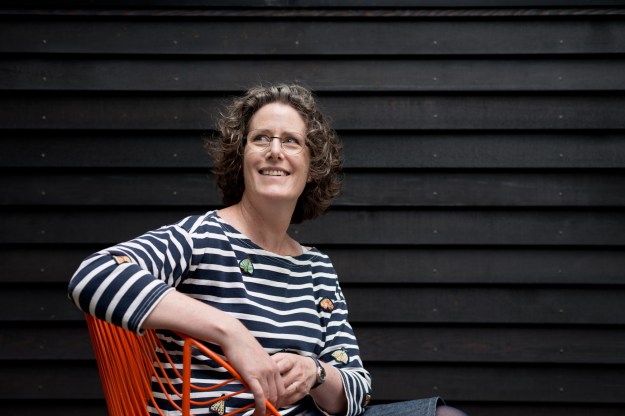
Kate Camp22 copy.JPG

Photo credit Grant Maiden


Woman at breakfast

for Alice

This yellow orange egg
full of goodness and
instructions.

Round end of the knife
against the yolk, the joy
which can only be known

as a kind of relief
for disappointed hopes and poached eggs
go hand in hand.

Clouds puff past the window
it takes a while to realise
they’re home made

our house is powered by steam
like the ferry that waits
by the rain-soaked wharf

I think I see the young Katherine Mansfield
boarding with her grandmother,
her duck-handled umbrella.

I am surprised to find
I am someone who cares
for the bygone days of the harbour.

The very best bread
is mostly holes
networks, archways and chambers

as most of us is empty space
around which our elements move
in their microscopic orbits.

Accepting all the sacrifices of the meal
the unmade feathers and the wild yeast
I think of you. Happy birthday.


©Kate Camp, The Internet of Things, Victoria University Press, 2017


Detail

Mr Tumnus, the neighbours’ guinea pig
out in his triangle run. Beside him
the daphne: it’s almost embarrassing
to fall for its charms in yet another winter.

This garage was the stable of the taxi horses
when they pulled their way, steaming,
up from the coast. There was a racetrack there
but they weren’t those kind of animals.

From here I’m looking down on our roof
its grey, regular valleys like a well behaved ocean
and the stairs, their cracks
luminous with pine pollen.

And I’m looking down on buses—
methodical yellow envelopes—
and on the lights changing from red to green,
the black shadows of the pines.

You are not to tell me to be careful but I am,
with all my bags in one hand.


©Kate Camp, The Internet of Things, Victoria University Press, 2017


The Internet of Things.jpg


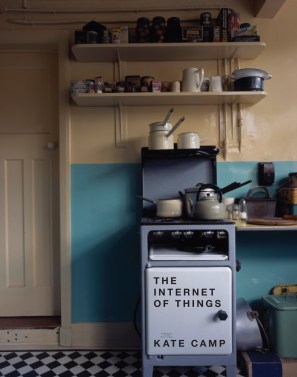
A sumptuous cover for a sumptuous read that is full of nooks and crannies, things in plain view, just off the edge of the page to track, or exquisitely placed on the shelf of the line. There is a sense of slow contemplation, of lingering and then releasing. For the first time ever, as I perused my list of poems that stuck to me, I couldn’t decide, so cheekily asked permission to post two. ‘Woman at breakfast’ takes the simplicity of an egg to mark the value of life, connections, friendship, memory. Inside and beyond the pulsing image, there are rich layers to dawdle over. It is dedicated to Alice Leila Chidgey. ‘Detail’ borrows the title  from Ursula Bethell’s poem about a garage. Again the aromatic detail, the movement that is andante rather than allegro, and the layers that are brought into life by the terrific ending.

Kate Camp has published five collections of poetry. She won NZSA Jessie Mackay Award for Best First Book of Poetry in 1999 and NZ Post Book Award for Best Book of Poetry in 2011 for The Mirror of Simple Annihilated Souls. You can hear her discuss classic literature with Kim Hill on Radio NZ with Kate’s Klassics. She is the 2017 Katherine Mansfield Menton Fellow.

Emma Neale’s terrific Friday Poem at The Spin Off


Big Bad


She cried wolf but she was the wolf

so she slit sad’s bellyskin

and stones of want rolled out.


Full poem here

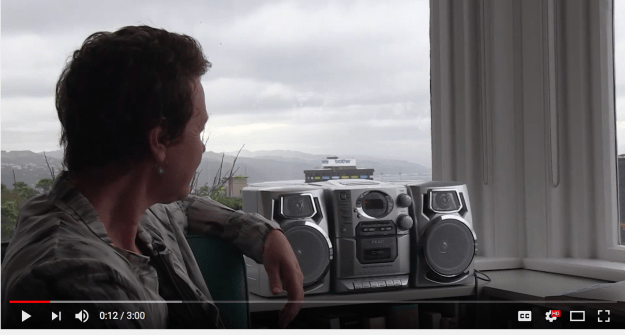
Chris Price shares a New Zealand poem on World Poetry Day 2017

 Screen Shot 2017-03-22 at 5.10.32 PM.png
Great choice!
Published on Mar 20, 2017

Victoria International Institute of Modern Letters senior lecturer and New Zealand poet Chris Price shares one of her favourite New Zealand poems for World Poetry Day 2017, written by Sonia Yelich and published in Clung (Auckland University Press, 2004).

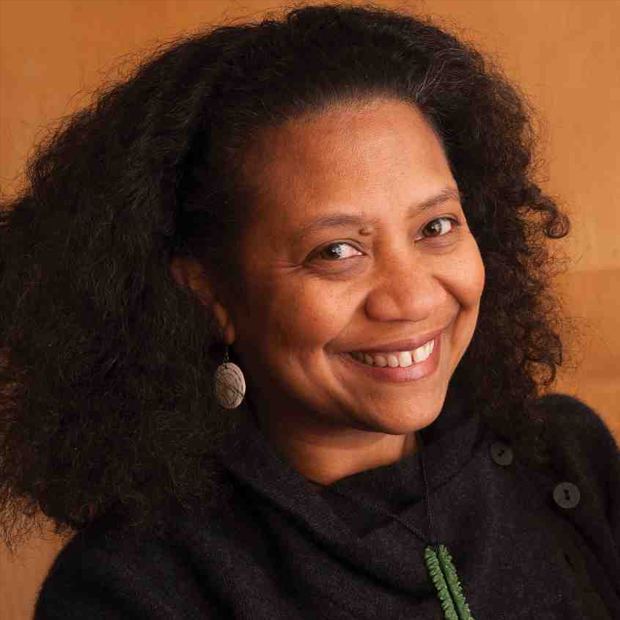
The news of Teresia Teaiwa is a sad loss for family, friends, teaching colleagues and students … and poetry


Teresia Teiawa 001.jpg


Mother by Teresia Teaiwa

The sky that
Makes possible
A lightening storm

The earth that
Makes possible
A volcano

The ocean that
Makes possible
A tidal wave

The parent
Who endures…outlives…
The child

(Searching for Nei Nim’anoa)


Poet, academic, and the director of Va’aomanu Pasifika at Victoria University in Wellington, Teresia Teaiwa, has died following a short illness.


Some links:

Victoria University page

A poem tribute from Lagipoiva Cherelle Jackson, contributor at Huffington Post


An E-Tangata interview in full  here:

‘Teresia Teaiwa is a poet and award-winning teacher at Victoria University, where she lectures in Pacific Studies — a field she’s described as “literally oceanic in proportions”, covering a region with 1,200 indigenous languages and 20,000 islands spread over a third of the earth’s surface. Here, she talks to Dale, about the complexities of the Pacific, why Pacific Studies matters, and her own complicated cultural heritage — as the child of an African American mother and a Banaban and I-Kiribati father whose community was relocated to Fiji because of British phosphate mining.

Teresia — a nice place to start, often, is names. So could you tell us about your whanau, your aiga, your mum and dad and where you were when you grew up?

I was born in Honolulu, Hawai‘i, but I was raised in Fiji.

Teaiwa is my grandfather’s first name. In Kiribati (pronounced Kiri-bas) it wasn’t customary to have last names. That was a colonial introduction. So my father took his father’s first name as his last name. My father is John Teaiwa. John wasn’t his birth name — that was the name the priest gave to him when he went to school.

Teaiwa is a name from the island of Tabiteuea in Kiribati, which is the largest island in the Gilbert Islands group. Teaiwa is composed of te meaning “the”, ai meaning “fire”, and wa meaning “canoe”. I like to interpret it as the fiery canoe. But when you look for the word aiwa in the dictionary, it has a less poetic rendering — agitation is one of the interpretations that comes to mind.’

An idea for NZ Poetry Day anyone?

PAY WITH A POEM 2017

AWAKEN YOUR INNER POET!

paywithapoem2017

We’re all different. We have different jobs and different habits. We live in different parts of the world. But even if we speak different languages, there’s a powerful voice inside us that never gets lost in translation. It’s the voice of our feelings.

Because we are all poets at heart.

On World Poetry Day, come to Julius Meinl participating locations across the globe and write to brighten your day!  Let’s make today better. Let’s change every day for the better. Write down your feelings over a cup of coffee or a tea and pay it with your own poem for the 4th global edition of Pay with a Poem!

Join us on March 21st. Get a coffee. Get inspired. Pay with a Poem.

See here

My SST review of the refreshed Poetry NZ Yearbook

Book review: Poetry New Zealand Yearbook 2017 edited by Dr Jack Ross

Dr Jack Ross.

Supplied

Dr Jack Ross.

Poetry New Zealand Yearbook 2017

edited by Dr Jack Ross

Massey University Press, $35

Poetry New Zealand Yearbook 2017 
edited by  Dr Jack Ross

Poetry New Zealand Yearbook 2017 edited by Dr Jack Ross

Wellington poet Louis Johnson established the Poetry New Zealand Yearbook in 1951. It has just received a well-deserved makeover by Massey University Press. The new design is eye-catching, the writing has room to breathe and the content is eclectic. With Victoria and Otago University Presses publishing Sport and Landfall, it is good to see a literary magazine finding a home in Auckland. It is the only magazine that devotes sole attention to poetry and poetics, with an abundant measure of poems, reviews and essays.

Editor Dr Jack Ross aims to spotlight emerging and established poets and include “sound, well-considered reviews”. There are just under 100 poets in the issue, including Nick Ascroft, Riemke Ensing, Elizabeth Smither, Anna Jackson, Michele Leggott and Kiri Piahana-Wong. When I pick up a poetry journal, I am after the surprise of a fresh voice, the taste of new work by a well-loved poet, the revelatory contours of poetry that both behaves and misbehaves when it comes to questionable rule books. The annual delivers such treats.

A welcome find for me is the featured poet: Elizabeth Morton. Morton’s debut collection will be out this year with Makaro Press, so this sampler is perfect with its lush detail, lilting lines and surreal edges. My favourite poem, Celestial Bodies is by Rata Gordon (‘When you put Saturn in the bath/ it floats./ It’s true.’). Fingers-crossed we get to see a debut collection soon.

Mohamed Hassan’s breath-catching poem, the cyst, is another favourite: “In the small of my back/ at the edge of where my fingertips reach/ when I stretch them over my shoulder/ it is a dream of one day going home for good.”

You also get the sweet economy of Alice Hooton and Richard Jordan; the shifted hues of Jackson and Leggott (‘She is my rebel soul, my other self, the one who draws me out and folds me away’); the humour of Smither.

To have three essays – provocative and fascinating in equal degrees – by Janet Charman, Lisa Samuels and Bryan Walpert is a bonus.

Ross makes great claims for the generous review section suggesting “shouting from the rooftops doesn’t really work in the long-term”. A good poetry review opens a book for the reader as opposed to snapping it shut through the critic’s prejudices. However on several occasions I felt irritated by the male reviewers filtering poetry by women through conservative and reductive notions of what the poems are doing.

Ross’ review of Cilla McQueen’s memoir In a Slant Light highlighted a book that puzzled him to the point he did not not know exactly what she wanted “to share”. In contrast I found a poignant book, ripe with possibility and the portrait of a woman poet emerging from the shadows of men.

Poetry New Zealand Yearbook, in its revitalised form, and as a hub for poetry conversations, is now an essential destination for poetry fans. Not all the poems held my attention, but the delights are myriad.

 – Stuff

Bravo! Poetry at the Auckland Writers Festival is an eclectic mix

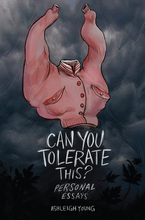
can_you_tolerate_this__31811-1464841060-220-220

You will also get a chance to hear  Ashleigh Young with her fabulous essays!

AWF programme here.


Lots of these events are free entry so get there early if you want a seat. Such an innovative inclusion of poets and clear demonstration that NZ poetry is in very good shape. So many excellent books out in the past year  and only so much room to showcase them here. That surely is testimony to the dedication of local publishers and local poets. Sure there are voices I am sad not to be hearing – but this is a poetry feast! Congratulations Anne O’Brien and team.


Tuesday 16th May, 7 until 8.30pm Go see who wind the poetry section of the Ockham NZ Book Awards

Friday 19th, 2.30pm. Catch Courtney Sina Meredith in Pacific Tales.

Friday 19th, 4pm. Poets Hera Lindsay Bird and Anne Kennedy joined three other writers at Auckland War Memorial Museum to seek inspiration for a piece of writing. Hear what they came up with.

Friday 19th, 5pm. Hear the book-award winners.

Hear Carol Ann Duffy with John Sampson on 19th at 6pm or do the World’s Wife on Saturday 20th 7pm until 9.30pm.


Friday 19th 6.30 until 8pm. Walk on High looks like a poetry smorgasbord:

Walk on High is an intimate meandering journey, featuring a sampler of Festival talent on a word trail along High Street in the CBD. From 6.30pm to 8pm choose from four fifteen-minute events, repeated four times across the ninety minutes, individually crafted and each as delectable as the next. Formats take in games, Insta-essays, music, spoken word and theatre. Over 20 writers and performers take part, including: Jess Holly Bates, Anthony Byrt, Teju Cole, Glenn Colquhoun, Jonothan Cullinane, Mei-Lin Hansen, Ali Ikram, Simone Kaho, Sarah Laing, Last Tapes Theatre Company, Michelle Leggott, Lana Lopesi, Selina Tusitala Marsh, Doug Poole, Randa, Rosabel Tan, Apirana Taylor, Tourettes, Steven Toussaint, Ian Wedde, Rewa Worley and Sonja Yelich. A full schedule and event descriptions will be posted to our website early April so check it out and start planning your Walk on High: writersfestival.co.nz/walk-on-high


Check out the Old Guard New Guard with Bill Manhire and Hera Lindsay Bird 4.30 Saturday 2oth.


There is an electric group on offer at the Spoken Word Showcase Saturday 21st 7.30 until 9.30pm:

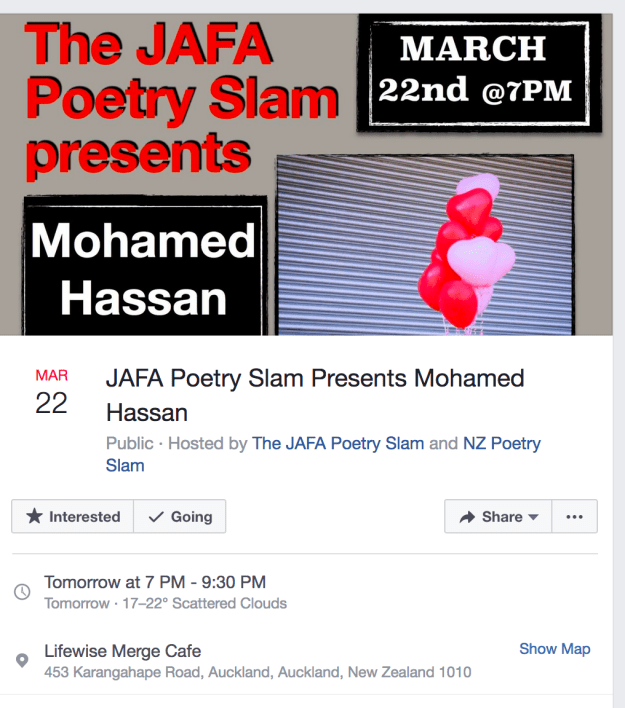
Five of the brightest spoken word artists take to the stage in an unprecedented showcase of talent from Tamaki Makaurau, including Marina Alefosio (Rising Voices, South Auckland Poets Collective), Mohamed Hassan (New Zealand Poetry Slam and Revival Sessions), Tim Heath (Poetry Idol finalist), Jennifer Rockwell (Word the Front Line) and Rewa Worley (Rising Voices). Former Poetry Idol winner and judge Zane Scarborough hosts an evening of signature pieces, improv, and a little crowd participation with international guests Paul Beatty (The Sellout), Ivan Coyote (Tomboy Survival Guide) and Rupi Kaur (Milk and Honey) punctuating the evening with performances. A special night not to be missed.


You can hear Apirana Taylor on Sunday 21st at noon.

Bill Manhire joins in Questions of Time (with the fabulous Frances Hardinge). Sunday 21st 10.30.


Ian Wedde is in Family Dynamics with his new Selected Poems. Sunday 21st at noon.

Simone Kaho and Rupui Kaur are in Those Were the Days. Sunday 21st at 3pm.


Check out the winner of the Sarah Broome Poetry Award on Sunday 21st at 4.30pm.


Fiona Kidman is the 2017 Honoured New Zealand  Writer. Sunday 21st 6pm until 7pm.


Ian Wedde is launching his Selected Poems  on Friday 19th 3.30pm until 5pm.

Plus Ian Wedde is doing this intriguing workshop you can be part of:

The poetic Bob Dylan won the 2016 Nobel Prize in Literature, and rap, poetry slams, and online publications have expanded the definitions of and audiences for poetry. In some countries – in Palestine, for example, with Mahmoud Darwish – the form has long been a vital aspect of public discourse. Bring your work to this session with Ian Wedde, for a practical investigation of the porous borders of poetry.

Limited to a maximum of 40 participants.


Finally you can see Pop Poetry in the Square each evening:

Festival week sees a corner of Aotea Square come alive each night with text projections. Every evening a
combination of curated and live writing will emanate from the mysterious Pop Poetry hut, inspired by the theme ‘Love Letters’.

A sparkling collection of intrepid writers join the fun, with one a night writing live but anonymously and only revealing themselves as they sign off… expect poems, letters, lyrics and other treats.
Pop is an annual series of public art projects made for and by Aucklanders, supported by Auckland Council and the Waitemata- Local Board. Its mission is to create unexpected experiences in Auckland’s neighbourhoods; creating surprise, making fun and forming communities. Pop Poetry is in its second year of activating urban sites around the city though large-format, typographic projections by night. Pop Poetry is designed by Alt Group.

Pop Poetry will take place each evening from 6:00pm – 9:00pm, from Tuesday 16 May until Sunday May 21.


Jesse Mulligan and Simone Kaho in conversation (in case you missed it because it is excellent!)

13 Mar 2017

Poetry: Lucky Punch by Simone Kaho

Auckland poet, Simone Kaho, is from New Zealand and Tongan ancestry. She earned her MA in creative writing from the International Institute of Modern Letters. Her poetry has been published in journals such as JAAM, Turbine, and The Dominion Post. She joins Jesse to read from her book Lucky Punch.

Lucky Punch, Simon Kaho