


Birdman in Aotea Square by Anita Arlov, Auckland
Gunshots are too common by Patrick Pink, Auckland
It Won’t Happen Again by Shani Naylor, Wellington
Kinaesthesia by Allan Drew, Auckland
Peace and Quiet by Derek Jones, Auckland
Scar Tissue by Nikki Crutchley, Cambridge
Scout by Robyn Maree Pickens, Dunedin
Shipboard Romance by Fiona Lincoln, Lower Hutt
Spindrift by Janis Freegard, Wellington
The Chlorinated Mermaid by Nikki Crutchley, Cambridge
The Math of Me by Jessica Thompson, Dunedin
Three Dresses by Jessie Puru, Auckland
When Winter Comes Again by Rachel Smith, Christchurch
*
Cake and Ice Cream by Jana Heise
Dear Satan by Asha Clark
Excuses by Joy Tong
Interchange by Freya Kelly
Ode to Joy by Monica Koster
The Brass Angels by Russell Boey
The Carnival by Dominic Botherway
The Cold by Joy Tong
The Worry Troll That Lives in a Cave in My Head by Annick Laird
What Happens Next by Jacinta van der Linden
The winning stories will be published in the special winter edition of Flash Frontier: An Adventure in Short Fiction –– forthcoming in July/August.
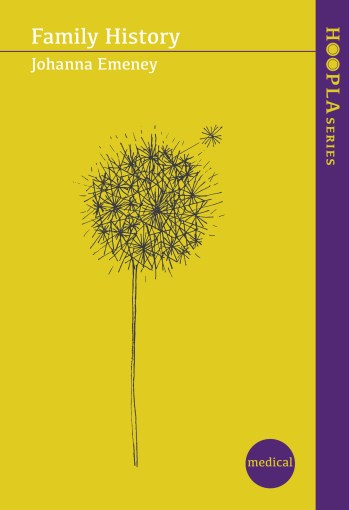
Johanna Emeney, Family History, Mākaro Press, 2017
My darling, this afternoon, I found three white parachutes
from a dandelion on my shoulder, seeds stuck in,
wings waiting – little angels of your imprint, your leaving.
from ‘Dandelion’
What you bring to a book affects the way you read it – as though already established trenches or crevices are more receptive, more alert to shared experiences. Johanna’s new poetry collection is a family history but the mother is placed centre stage; we are brought close to her breast cancer and shocked by her premature and unexpected death. The collection begins with gaps in the family photograph album and ends with blurry photos; it is as though these poems are held up to the gap, where light and dark dazzles and where edges blur. Early on a poem stalls me, as I too watch the ducklings ‘that cats dare not disturb.’ The snapshot tingles because I have never thought of ducklings this way, and it is as though I am seeing the world as something that must not be corrupted or thrown off course. The pathos lies in the way the poet is thrown off kilter; her family not ‘off limits.’
Even if one were to straggle,
to drop off the end
like a misplaced preposition,
lost for a moment in the long grass,
no cat would mess with it
because today belongs
to the ducklings
and all the other
spring things
that on some mornings
and some afternoons
are just plain off limits.
from ‘Ducklings’
You never know how you will react when faced with life-threatening illness, or when someone close to you is; you never know which details will stand out to elbow and nudge and stick. Johanna’s book traverses the sweet and the sour, the coordinates of illness, the pain, the anger and the way things can be luminous, sharp, elusive, blunted. ‘Undertaking’ is a sestina, the perfect form to catch the undulations of grief that repeat and slap an attack of feeling – a little like the book does as a whole.
Things are palpable: gateways to grief, memories, a relationship presence, a relationship absence. ‘Ham bag’ was a humorous code for handbag between mother and daughter; when the poet (I am boldly granting the first-person pronoun autobiographical status) catches sight of a calico bag, she misses her mother again:
Ready to go? Got your hambag, darling?
And I say:
Yes, Mum, all the better to put my ham in,
and we’re beside ourselves again.
from ‘Ham bag’
I am sitting in a cafe at AWF17, a table of writers next to me, conversations adrift because I am adrift on the currents of this book. The writing stitches me and I feel the needle prick and sew, prick and sew, as I read. There is a fluency of writing, a lightness of line as the shadows swell and the hurt pulses. It is not the first time writing poetry stands as a keepsake, for the sake of mother, family, friends and self. For the sake of a reader who keeps reading the same lines over.
The final poem, ‘Glass bowl with pink swirls,’ is so simple yet so sharp, I think I am going to cry, despite the writers I know laughing and conversing at the next table. This is what writing can do. It can pull you down to the very tiny gestures that mark a day, that mark a life so that everything shifts a little. You can feel those internal trenches and crevices tremble. The glass bowl holds the mother’s hand, a last image, a last desire, as she feels the warm soap suds. The glass bowl, a keepsake; and the poem.
To perceive you seeing nothing and everything
to watch the loop of your hand in its benediction
or to sit at your feet with my hot cheek tilted
to meet the roll and stroke of soft fingers,
was to be most steady and most moved
by your tender infinitive. That keepsake.
from ‘Glass bowl with pink swirls’
This book is a breathtaking startling soothing toppling skin-shaking eye-pricking heart-skipping glorious read.
Johanna Emeney lives in Auckland where she tutors at Massey University and co-facilitates the Michael King Young Writers Programme. She has been placed third and been commended in the Hippocrates Prize for Poetry and Medicine and shortlisted for the International Montreal Poetry Prize. Her debut collection was entitled, Apple & Tree (2011).
Mākaro Press page
The collection is part of the 2017 HoopLa Series that also includes Jeffrey Paparoa Holman’s Dylan Junkie and Elizabeth Morton’s Wolf.
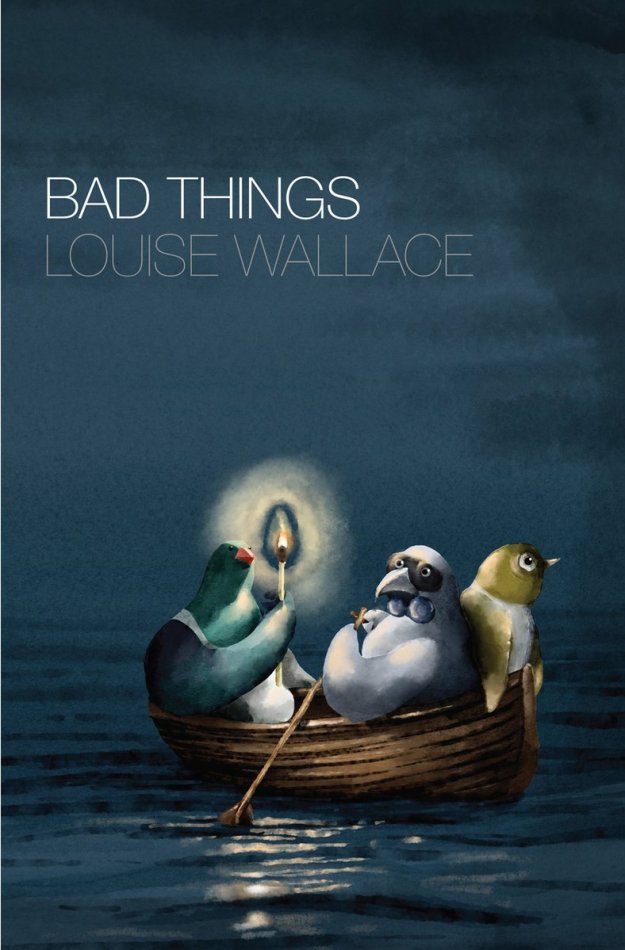
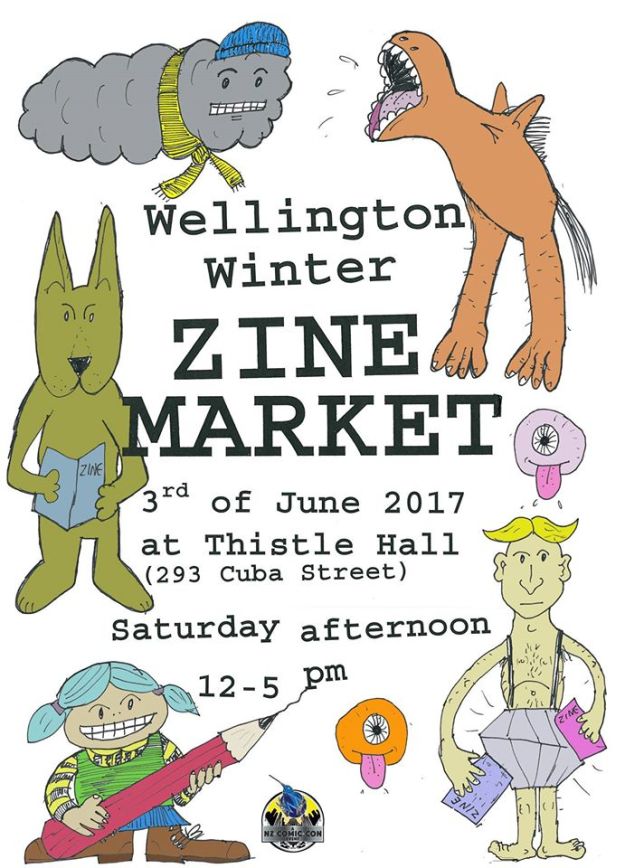
POETRY | CHOCOLATE

The taste of poetry, the sound of chocolate and the sense of books. We’ve matched medieval humours with contemporary New Zealand poets and some of the best chocolate you’ll find, ever.
Join us at Ekor Bookshop for a multi-sensual, medieval-medicine-inspired poetry reading and chocolate tasting.
Featuring: Nick Ascroft, Hannah Mettner, Louise Wallace, and Freya Daly Sadgrove.
Chocolate curated and introduced by Luke Owen Smith (The Chocolate Bar).
Chocolate (and poetry) included in ticket price.
by Stephen Burt
complete piece here at PN Review May-June, 2017
‘To live in Christchurch at the end of 2016 is to encounter, daily and seemingly everywhere, construction: cranes, scaffolds, burly workers in lemon-fluorescent vests, bright orange cones, PVC pipes jutting up from the ground, all of it part of the ongoing, city-wide multi-year recovery after the earthquakes of 2010-11. The fences and pits are a great inconvenience, a melancholy sight for those who grew up in what was (I’m told) the most sedate and stable of NZ cities. For me, on the other hand, the construction is mostly inspiration: I see a city that’s putting itself back together, a nation that has recognised (and chosen to pay for) a shared public good, while my own home country, the United States, is tearing itself apart.’

 NZ Poetry Shelf