
Rachel McAlpine’s new collection of poems will be published next year, and may be called Elsie’s Book of Strategies.

Rachel McAlpine’s new collection of poems will be published next year, and may be called Elsie’s Book of Strategies.
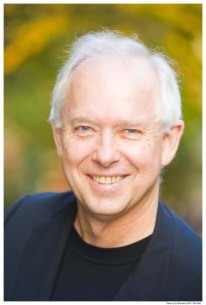
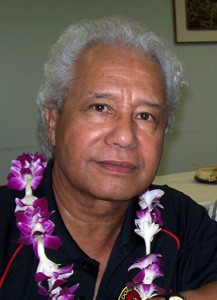
Last night The Arts Foundation recognised Bill Manhire and Albert Wendt as Icons. Both Bill and Albert have produced writing that is a significant part of our literary landscape, yet both have done so much more. Their mentorship of and generosity towards other writers is noteworthy. Their writing stands as uniquely theirs, offering nimble and wide ranging voices, an ability to tap into the humane, the surprising, the musicality of the world. I find their poetry utterly nourishing.
Congratulations from Poetry Shelf on this well deserved honour.
See here for more details. The other Icons were: artist Billy Apple, composer Dame Gillian Karawe Whitehead and sculptor Fred Graham.
Albert’s poem ‘New Coat’
Bill Manhire talks to Poetry Shelf
Three of these poets are featured in Best NZ Poems 2017

To check up on the state of your heart you must lie back
with your tits out so a warm-handed stranger-
technician can run a small device across your ribs
like a barcode scanner. She seems not to see your skin,
is only concerned with looking beneath it. You want to ask her,
What is it that makes me different
from others who’ve lain here, does my heart hide deeper
in my chest, do my nipples watch you cock-eyed, disturbingly,
am I more beautiful than 50% of others or.
On a black-and-white screen there’s something grainy
and pulsing, trapped in a wedge frame
like an embryo, unheard. This is your heart, twitching.
Watching it you can’t tell what from what, all you know is
the image is moving and you are alive. What a miracle
of existence, you now understand, to have a life inside you
and you want to clutch the technician and rejoice.
Now you can hear it, too, your heart—thumping, muffled,
like listening with your ear pressed up against a wall,
the white-noise hiss of the ocean trapped behind.
But that’s not ocean, not white noise,
it’s blood noise. That’s blood pumping through your heart
to your veins. You hear it through a wall
of veins, bones, fat, flesh, skin keeping all this life inside you
like one big intricate loving dam.
©Jane Arthur
If you were to map your poetry reading history, what books would act as key co-ordinates?
Formatively, I was a music-obsessed teen, so the liner notes of the angsty ’90s: Kristin Hersh, Tori Amos, R.E.M.. Patti Smith. Before that: the poems of Leonard Cohen and Pam Ayres. More recent inspirations: Jenny Bornholdt’s Miss New Zealand; Geoff Cochrane; Kim Addonizio’s What Is This Thing Called Love; Louise Glück’s Vita Nova; random editions of Sport; A Hole is to Dig by Ruth Krauss and illustrated by Maurice Sendak. Online poetry journals, including Sweet Mammalian, Starling, Turbine/Kapohau. The Poetry Foundation website. And most recently: essa ranapiri’s incredible Twitter thread of great NZ poems.
What do you want your poems to do?
I guess I want them to be intellectual exercises that end up appearing thoroughly non-intellectual. I want them to be approachable, definitely messy and imperfect, a bit funny but completely heartfelt without being gross? At least, that’s what I want them to “be”. What I want them to do is … reassure awkward readers that we’ve all been there and it’s cool, don’t worry about it.
Which poem in your selection particularly falls into place. Why?
“To check up on the state of your heart you must lie back” is one of those rare poems that burst out of me in one sitting (having been rolled around my brain for a day or so) and didn’t change significantly after that. An earlier version was published in Ika and two years later only a few words have changed. I wish I knew why some poems come out easily, it’s much more efficient. I am typically the world’s most painfully slow and fussy writer … more of a deleter.
There is no blueprint for writing poems. What might act as a poem trigger for you?
Standing in the shower. Brushing my teeth. Trying to write a different poem. Reading fiction. Going for a walk. Restless nights. Pretending to be someone else. Deadlines.
If you were reviewing your entry poems, what three words would characterise their allure?
Familiar, surprising, dorky
You are going to read together at the Auckland Writers Festival. If you could pick a dream team of poets to read – who would we see?
HRH Selina Tusitala Marsh as MC because I want her to be everywhere at all times. Some of the finest new, super-young poets like Tayi Tibble, Nina Powles and Freya Sadgrove – I’d ask the Starling eds to organize that bit. With interludes from Faith Wilson, Coco Solid, Hera Lindsay Bird, Chris Tse and Fleur Adcock. With a surprise VIP encore from Margaret Mahy during a round of whisky.
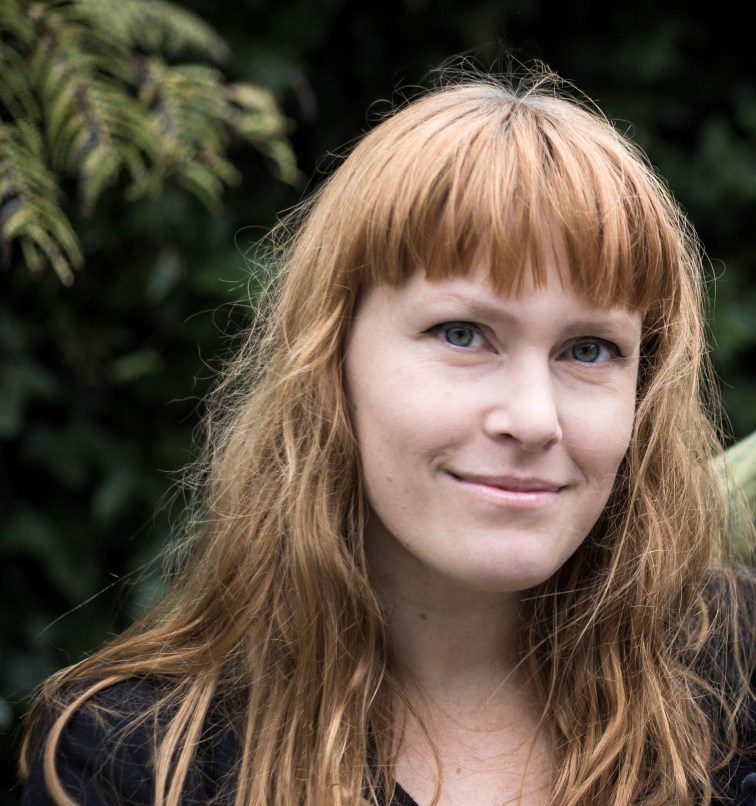
Jane Arthur was born in New Plymouth and lives in Wellington with her partner, baby and dogs. She has worked in the book industry for over 15 years as a bookseller and editor, and is a founder of the New Zealand children’s literature website The Sapling. She has a Master’s in Creative Writing from the IIML at Victoria University, where her supervisor was Cliff Fell, a 2017 Sarah Broom Poetry Prize finalist. She also has a Diploma in Publishing from Whitireia Polytech and a Master’s in English Literature from Auckland University. Her poems have appeared in journals including Sport, Turbine, Ika, and Sweet Mammalian.
The four finalists will read from their work at the Sarah Broom Poetry Prize event at the Auckland Writers Festival on Sunday 20 May, 3.15-4.15pm.
Sarah Broom Poetry Prize page.
OK I love the idea of a poetry survival pack.
‘When my sister and I were little, my grandma would pack us survival packs for the ride home from her house. Filled with food and toys and little notes, they made me feel like I could carry safety with me. As an adult, and as a not-rich mentally ill black traumatized queer person, leaving home feels close to impossible. But building and carrying my own survival pack helps me remember that even if you can’t leave, you don’t have to always be stuck.
In times of chaos, I often forget what helps me feel safe. For most of the past year, I’ve worked to remember how I’ve survived all of my worsts. In every memory, I’ve reached for a book. Being abused? Read a book. Worried about damnation from being gay? Read a book. People popped up and talked to me even though they weren’t supposed to be there? Read a book. Therapy and therapy and more therapy? Read a book, read a book, read a goddamn book. Poetry doesn’t save the world, but poetry could save you.
Poetry is my survival pack.’
Horse on the Ice
at first horse and rider rode easily
it was cold and bright across the ice
the frozen lake
we can’t feed you all
you’ll have to go to New Zealand
the next ride was still clear
a little mist hugged the surface
perhaps joinery carpentry building
then a little icy fog formed on the brow
some sort of motorcycle racing
a fall at night and a broken wrist
permanently numb fingers on one hand
now the rider dismounted halfway across
knelt down to get a closer look
if you peered carefully there were fine cracks
a web of spidery blue veins
a small stone bridge in the Lake District
uncle Franks boat accelerating an arc
to test the waterskier
but not last week last month last year
the horse and rider snorted steam
riding faster the crack of hooves on ice
the sure clip of memory
its web of fissures and creaking pressures
he was sure we were sure i was sure
we were all nearly quite certain
it could take the weight
©Stuart Airey
If you were to map your poetry reading history, what books would act as key co-ordinates?
In primary school I loved Louis Untermeyer’s Golden Treasury of Poetry especially the limericks and ‘The Highwayman’. There’s a fair bit of a lull after that until my brother passed away and then I turned a lot to The Oxford Book of English Verse – particularly Thomas Hood’s ‘The Sea of Death’. A few years back I discovered the Bloodaxe ‘Staying Alive’ trilogy which opened up a whole new world of modern poems and poets, particularly shorter ones. (Poems that is). I started writing more seriously about this time. Favourite writers would be Carol Ann Duffy, Wislawa Szymborska, Stephen Dunn and especially Alden Nowlan – a Canadian genius and earthy, accessible poet.
What do you want your poems to do?
I think that first of all I write for myself. I have discovered that quite often the poem is telling me something about myself that I couldn’t get to another way – a sort of self-therapy I guess. If I’m writing about an idea or a feeling it’s a way of turning it over and looking at all the edges. Sometimes it’s the poem that tells me how I’m feeling. After that though I definitely enjoy sharing (mostly) the poem with others and seeing if it touches some vital part of being human. It’s a real kick when others find layers of meaning that I was unaware of or hadn’t really intended. Some are written just to be enjoyed, a bit of a laugh or even more visceral.
A few to provoke though this rarely raises much angst.
Which poem in your selection particularly falls into place. Why?
I find this quite a difficult question. As none of my poems have (yet!) been published I had quite a few to select from for the competition. I have submitted to a few journals and competitions, as yet unsuccessfully, so I found it really hard to gauge which poems I should put in – actually I think I got a little cavalier with the entry. I think ‘Mercury’ fell into place as the last to be picked as it’s one of the earliest poems I wrote and got excited about. I love the word Mercury so much I’ve written several poems all with that title but the one I’ve included is the original.
There is no blueprint for writing poems. What might act as a poem trigger for you?
I’ve found that poems come to me in quite different ways. Usually the best or at least easiest to write is when a first line comes out of the blue, closely followed by the last line. I’m not sure exactly what the prompt in these instances is, whether a scene or a feeling or just a thought. Perhaps a glimpse into someone’s life. Then there are poems that start with an idea or a feeling I want to convey. These are a little harder to write but if the idea or feeling is quite solid they carry through and if they don’t they often morph into something else. I love it when the poem ends with so much more than it started with. I have also written a few poems to a particular theme (one was borders) – these are usually a little slower to start but once momentum kicks in they get there. There’s a lot of polishing that goes on. It’s a real high when a poem is finished.
If you were reviewing your entry poems, what three words would characterise their allure?
So I think you mean if I could detach myself from the poems in a sort of impartial way? In that case variety, accessibility and aftertaste.
You are going to read together at the Auckland Writers Festival. If you could pick a dream team of poets to read – who would we see?
Carol Ann Duffy, Paul Muldoon, Carolyn Forche, Stephen Dunn, perhaps John Burnside. Would have loved to have heard John O’Donohue live but at least we have Youtube.
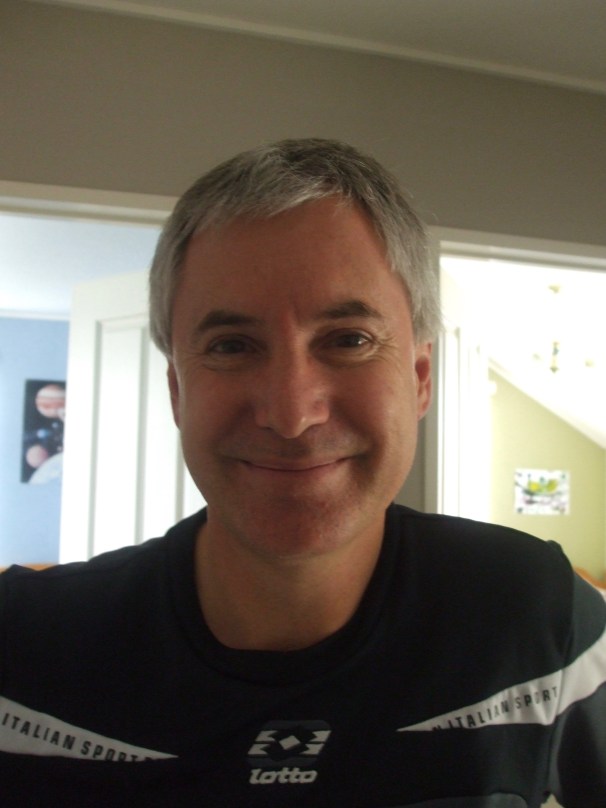
Stuart Airey graduated in Optometry from Auckland University in 1986 and has worked in this role for over 30 years. He also has a post-graduate Diploma in Theology from Laidlaw College. He is married with three children and lives in Hamilton. Apart from dabbling in short stories in high school Stuart began writing poetry more seriously after the Christchurch earthquake which resonated with personal loss in his family. Stuart has enjoyed performing some of his poetry in a series of dedicated evenings featuring a mix of drama, audio-visual, lighting and special effects. His poems are currently unpublished and he feels he is very much on the threshold of an unknown yet inspiring path.
The four finalists will read from their work at the Sarah Broom Poetry Prize event at the Auckland Writers Festival on Sunday 20 May, 3.15-4.15pm.
Sarah Broom Poetry Prize page.
My Uncle Tommy
‘In the end they had to put him
in a home
Tommy had grown too heavy
for Dad to carry
Dad worried about it
till he went to visit
tried to hug him
Tommy didn’t know him
was not aware
of where they were
it was my mother
I was sorry for
she thought she was to blame
for having him
my brother shared a room
with him
all night he’d rock
inside his cot
one winter he got sick
and never spoke
again
no-one
could visit us
because
of Tommy’
©Jack Ross 2018
Jack Ross is the managing editor of Poetry New Zealand, and works as a senior lecturer in creative writing at Massey University. His latest book, The Annotated Tree Worship, was published by Paper Table Novellas in 2017. He blogs here.
Lifesaving
They don’t do it anymore,
breathe into the mouth to save.
We had learnt it reluctantly,
lined up beside a recumbent dummy,
waiting to take our turn to kneel at that mouth.
The simplest things disturb –
at night when the fluoros shut off and the cover is pulled,
the tiles swabbed – there it lies open,
not even a ventriloquist’s dummy
is so exposed.
©Wes Lee ‘Lifesaving’ won second place in The London Magazine‘s 2015 Poetry Competition
A conversation:
If you were to map your poetry reading history, what books would act as key co-ordinates?
I have always admired truth-tellers: Anne Sexton (The Awful Rowing Toward God), Raymond Carver (All of Us), Denis Johnson (The Throne of the Third Heaven of the Nations Millennium General Assembly), Dorothea Lasky (Thunderbird), Sharon Olds (Satan Says), Rachel Wetzsteon (Sakura Park), Claudia Rankine (Don’t Let Me Be Lonely), Douglas Wright (Laughing Mirror), Alice Anderson (Human Nature). To name a few.
One of my favourite poets at the moment is a Lovelock Paiute writer from Nevada, Adrian C. Louis (Ceremonies of the Damned), who blows my hair back, and makes me laugh out loud! He speaks such truths, I am in awe of him.
I also recently loved Michel Faber’s first book of poems on the subject of his late wife’s struggle with cancer: ‘Undying’. Brilliant book.
I am waiting to receive (through the mail) the Collected Poems of Jane Kenyon.
What do you want your poems to do?
Sharon Olds has said that she wants her poems to do something useful. I agree with that.
I want my poems to be brave, to connect, to surprise. I want to trust my voice, to resist self-censorship; to learn something each day about my own drama, as I learn each day from other poets. A journey of surprise and discovery.
Which poem in your selection particularly falls into place. Why?
I suppose a poem like: ‘Mania Come Back!’ which goes against the grain of the prevailing idea that the stable world is the desired world. It’s a poem that grinds against the flat plane of balance.
There is no blueprint for writing poems. What might act as a poem trigger for you?
I read poetry every day, and often other people’s writing is a trigger. Not only poetry but articles, essays, interviews, world news, movies, etc. And of course lines come up from “nowhere” and set the thing off.
If you were reviewing your entry poems, what three words would characterise their allure?
Resilient.
Ordnance.
Sly.
You are going to read together at the Auckland Writers Festival. If you could pick a dream team of poets to read – who would we see?
Probably poets I would like to meet, reading from the following collections:
Julian Stannard (The Parrots of Villa Gruber Discover Lapis Lazuli)
Michel Faber (Undying)
Vicki Feaver (The Book of Blood)
Elspeth Smith (Dangerous Cakes)
John Burnside (Black Cat Bone)
Martin Figura (Whistle)
Wes Lee is the author of Body, Remember (Eyewear Publishing, 2017), Shooting Gallery (Steele Roberts, 2016), and Cowboy Genes (Grist Books, University of Huddersfield Press, 2014). Her work has appeared in the Poetry New Zealand Yearbook 2018, New Writing Scotland, Westerly, The London Magazine, Landfall, Cordite, Poetry London, Irises: The University of Canberra Vice-Chancellor’s Poetry Prize Anthology 2017, and many other journals and anthologies. She has won a number of awards for her writing including the BNZ Katherine Mansfield Literary Award; The Short FICTION Writing Prize (University of Plymouth Press); The Bronwyn Tate Memorial Award. She is currently working on her third poetry collection, By the Lapels.
The four finalists will read from their work at the Sarah Broom Poetry Prize event at the Auckland Writers Festival on Sunday 20 May, 3.15-4.15pm. Guest judge Eileen Myles will introduce the finalists and announce the winner.
Sarah Broom Poetry Prize page.
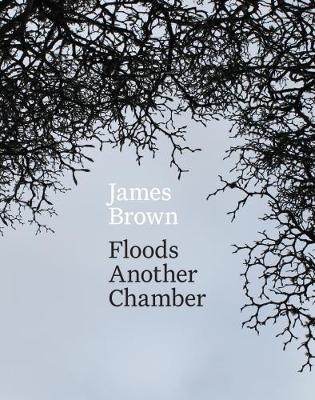
James Brown’s latest poetry book is Floods Another Chamber (VUP, 2017). You can find ‘Soft Returns’ in this collection.
Victoria University Press page
 NZ Poetry Shelf