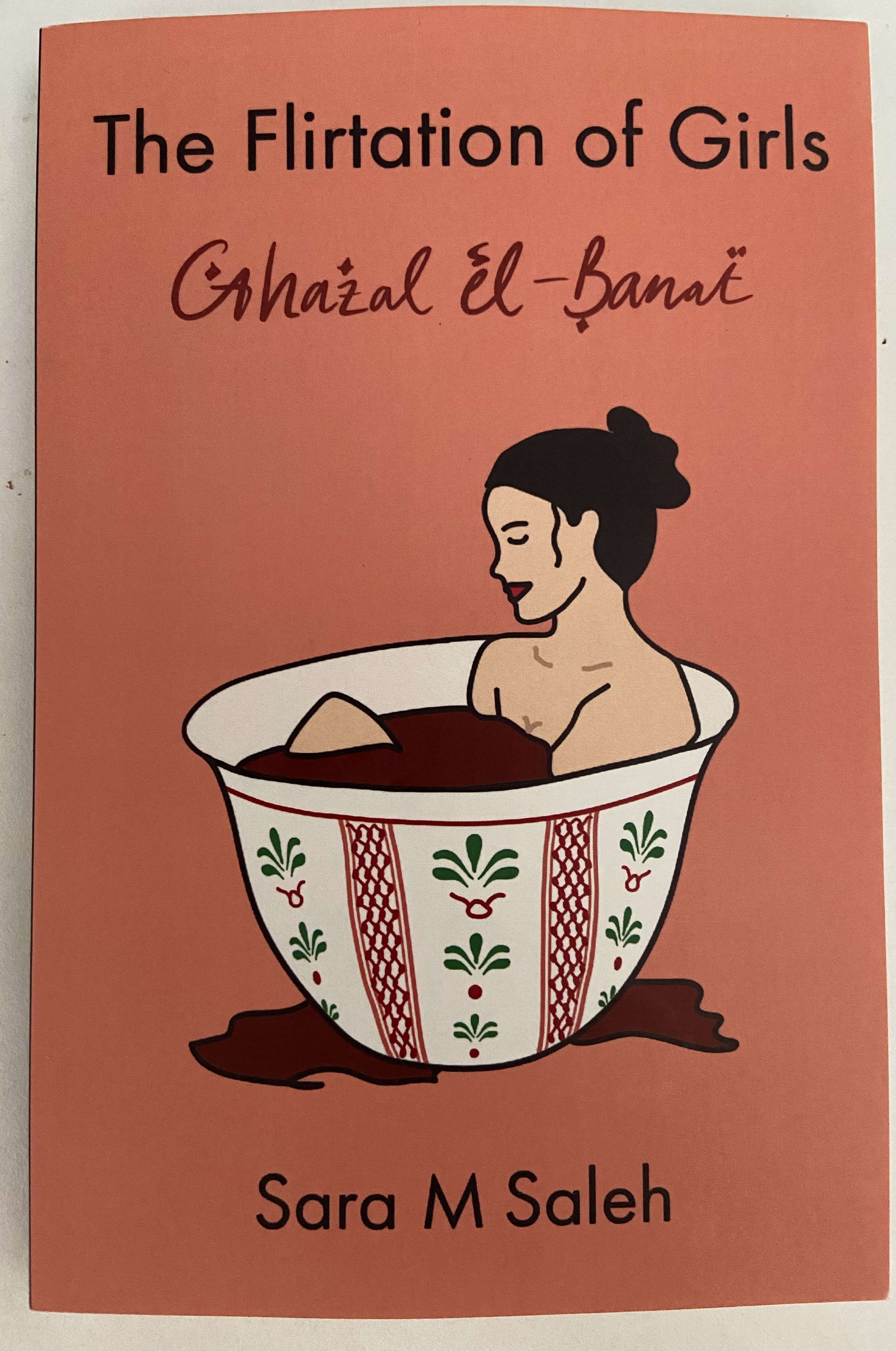
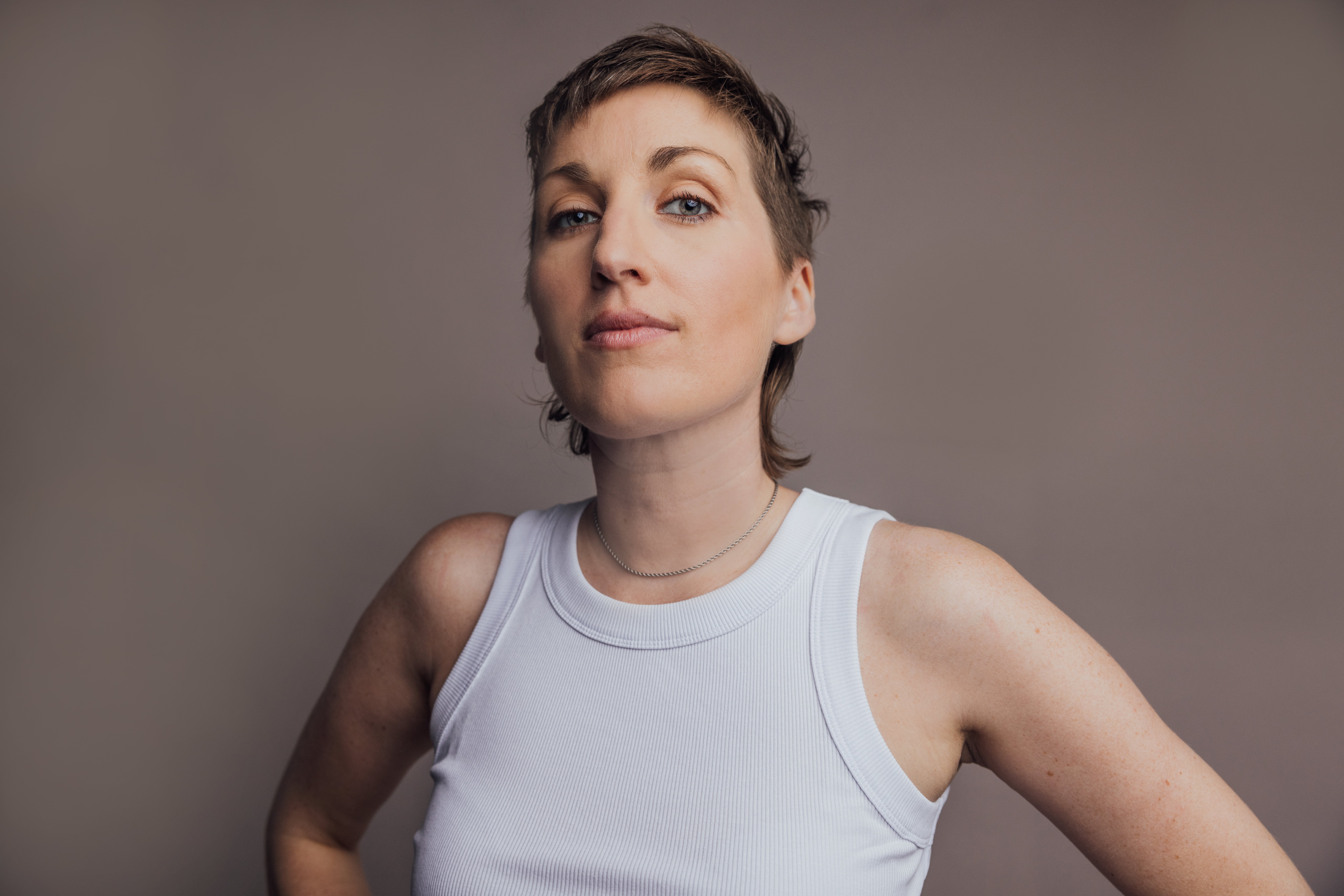
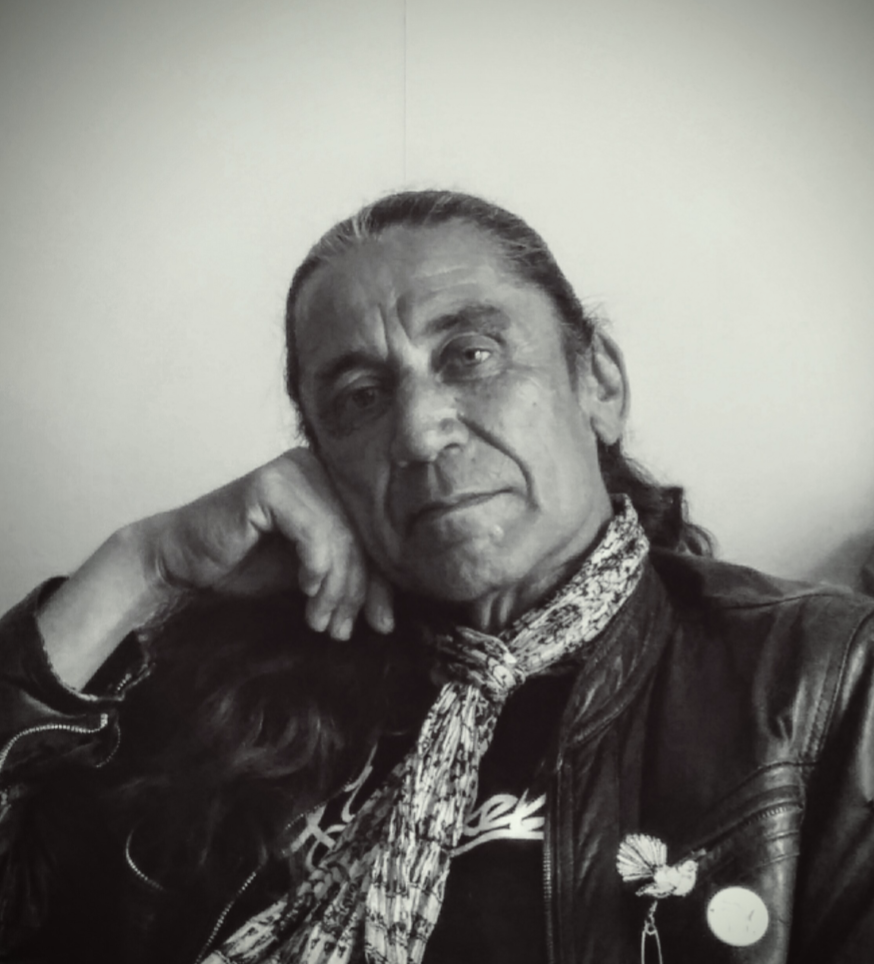
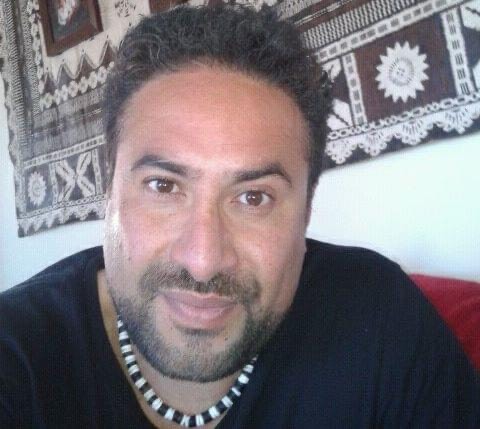
‘Live from Gaza’ Sara M. Saleh, from The Flirtation of Girls (UQP, forthcoming 2023)
Sara M. Saleh is a human rights lawyer, organiser, writer, and the daughter of migrants from Palestine, Egypt, and Lebanon. She has been anthologised widely and her poems, short stories, and essays have been published in English and Arabic in Australian Poetry Journal, Overland, Meanjin, Cordite Poetry Review, Red Room Poetry, Kill Your Darlings, Rabbit Poetry Journal, and SBS, amongst others. She is co-editor of the groundbreaking 2019 anthology Arab, Australian, Other. She has run poetry workshops in countless classrooms, community spaces, and festivals across the country.
Sara made history as the first poet to win both the Australian Book Review’s 2021 Peter Porter Poetry Prize and the Overland Judith Wright Poetry Prize 2020. Her debut novel Songs for the Dead and the Living (Affirm Press) is out in August this year and a full-length poetry collection, The Flirtation of Girls (UQP), is forthcoming. Sara lives on Bidjigal land with her partner and their cats, Cappy & Lola.
This is the first time I have posted poems by children on Poetry Shelf. I post a monthly poem challenge on Poetry Box for children from Year 0 to Year 8. I pick some favourites to post and give some books away. For my last challenge for 2023 I invited children to write Earth poems – poems that celebrate what they love about Earth but that might also speak about a world under threat.
I commissioned three terrific young artists to do illustrations for it and for my wrap-up post for the year (Postcards 2023). Oscar and Max, both aged 12, have sent in magnificent artwork for the posts (Earth poems up next week and Postcards 2023 the week after) … but they also wrote their own Earth poems.
I felt so moved to read these, to be transported to their rural scenes, to find infectious joy in family life, and to be aware of the tough world challenges from war to hunger to climate change. I felt so moved that these two young writers offer hope in a time when we crave it. This is what poetry can do.
Hope
White flowers bloom in summer wind. A quiet hum blows throughout a different kind of kin. A breeze, a gale? Another kind of hail, or just a veil? From where we are, the plants will grow, cats and birds live in tow. Summer days and summer laughs, for most of us good times are free, but for some just putting food on the table is a hefty fee. Life isn’t all bad though, the sun shines and people grow, good triumphs over evil and…I hope happiness will show.
Yet! … On the other side of the world, people fight, bombs blow up, children have to wonder if they’ll see another night. Wars fuelled by hate, racism, and enemies of the state. But don’t just sit there, don’t just mope, don’t just blame the person in power. For we’re the ones who let them devour. So act… Don’t let people fight, don’t let the world end tonight! Climate change is round the bend. Our world’s beautiful don’t wait till the end!
But, what can this poem do? I’m just me, and you’re just you.
Yet, I have a hope of a world of peace and prosperity, free of the fear and hate that could and can be our fate. Racism and stereotypes fade away. And while the future seems to be paved in an endless sea of darkness and doom for you and me. I hope that my vision will come true,
And you’ll see where happiness can be.
Oscar Davis
Oscar Davis is aged 12 and in Year 7, Mission Heights Junior College. He likes drawing, reading, being out on the farm with all the birds and the animals. And he love being with his cat, Meeno. His favourite thing about 2023 has been drawing.
I am from ….
I am from a big old home With lush valleys all around. Far as the eye can see. Fences piercing up the land. Creatures and trees in every crevice.
I am from the country with long white clouds overhead. Sandy hot beaches everywhere you look. A distinct culture like no other. Enormous forests everywhere, glistening with animals.
I am from an amazing place with loving people all around. Aunties, uncles, cousins, grandpas, grandmas crazy, cool, amazing, funny, enjoyable. Endless laughter all around. The best family around because it’s mine.
I am from an endless banquet of delicious food. A sea of exquisite food for me to devour. A flavour explosion happening in my mouth. It is always the best when it’s Mum’s home cooking.
Max Davis
MAX, is aged 12, and in Year 7 at Mission Heights Junior College. He likes drawing, thinking of stories to write, hanging out with his friends, having adventures on the farm with his pet cat, Meeno. His favourite thing about 2023 has been listening to creepy and spooky stories.
At the Point of Seeing, Megan Kitching, Otago University Press, 2023
Once, when I asked a boy from Hong Kong what new things he’d seen here,
he answered, ‘the moon’.
from ‘Dark Skies’
I recently reviewed Giselle Clarkson’s dazzling children’s book, The Observologist (Gecko Press, 2023) on Poetry Box. I love this book for a universe of reasons, including the vital relationship between observing and writing poetry:
I love the idea of being an observologist – a person who makes tiny scientific expeditions every day. It taps into notions of looking, of slowing down to observe, wonder, take note of. To see and discover the world up close with fresh and fascinated eyes. To be a conservationist. One part of me thinks a poet is an observologist because every day when I write a tiny poem it is like a tiny expedition and as I look and listen I discover surprising things.
Megan Kitching’s debut collection, At the Point of Seeing, as the title so aptly suggests, is a book of observation, a handbook on slowing down to see the world. Reading Megan’s poetry splinters immunity to the daily view, the window vista, the routine route. Looking becomes poetry and poetry becomes a source of fascination, nuances, wonder. It might be poetry as contemplation, whether reading or writing, and in that contemplation, in that slow and steady homage to the physical world we inhabit, we are returned to its beauty. In this time of unbearable inhumanity, planet selfishness, personal profit, ugly behaviour, At the Point of Seeing, is a reminder of hope.
In ‘Volcanic Harbour’, the speaker might “sit on a stone and let time work”. I become participant as I too find a “stone” to sit on, and let the poetry work along with time. I move from shells in a museum, to pūhā musings, to a rounded hill, the prevailing wind, horses in a paddock, an albatross curving, muslin rain, macrocarpa that “claw the sky”.
Megan is deft with words. I am trying to think of a poet who achieves such surprise and wonder on the line. Perhaps Emma Neale, perhaps Bill Manhire, Bernadette Hall. So often the next word is not the expected word, it takes me by surprise and that is reading delight. It might be adjective, verb, image evoked, trope. And that is in itself a performance of the awe of seeing through word selections. The way the albatross arc catches our breath, the crawling bee mesmerises.
A morning rain of muslin, hardly there except in the pinprick flicker, a thickening of the air.
from ‘Mornington
I also read this sumptuous collection as musical sound track, and again it produces wonder, delight, sonic surprise. It is a sweetly mixed playlist as we move from assonance, to rhyme, near rhyme, alliteration, aural dip and lift and slide. It is writing on the wire. It is scoring the world, it is intricate melody, it is open tuning.
Ah. I am pitching this book to you, when against all odds, poetry is a lifeline, the source of joy, the connecting force, the point of contemplation. We are at the point of seeing, we are at the point of speaking, sharing, hoping, and poetry such as this, poetry as good as this, makes all the difference.
In that wavering horizon, where the merest snap loomed I found a dull, sedate beauty, an abundance of swans.
Yes, despite the red fire flush tipping the succulent wort and a stilt’s elegant flight the marsh was flat, almost poetry.
from ‘The Inlet’s Shore’
Megan Kitching was born in Tāmaki Makarau Auckland and now lives in Ōtepoti Dunedin. She holds a PhD in English Literature from Queen Mary University, London, looking at the influence of the natural sciences on eighteenth-century poetry. She has taught English and creative writing in the UK and at the University of Otago. Her poetry has appeared in The Frogmore Papers (UK), takahē, Poetry New Zealand, and Landfall. “The horses,” published in takahē 95, was nominated for Best Small Fictions 2020. In 2021, she was the inaugural Caselberg Trust Elizabeth Brooke-Carr Emerging Writer Resident. At the Point of Seeing is her debut collection.
The year after I left school like a spinning top adrift from lessons, I went back at night to learn te reo Māori because I wanted to hear the word ‘table’ and speak the word ‘ground’ in the language closest to home, and to make my own way south.
The year I went to university I chose Italian because I wanted to read Se una notte d’inverno una viaggiatore in Calvino’s words and it didn’t feel right then to speak the word ‘whenua’ in my Pākehā skin.
This year when I have learnt how to plant broccoli and savoy cabbages a stone’s throw from the city, I will go back at night to learn te reo Māori because I want to hear the word ‘table’ and speak the word ‘ground’ in the language that is home.
Paula Green 2013 from The Baker’s Thumbprint, Seraph Press, 2013
I duck my head when the moon is low. my hushed-counterpart takes shallow breaths I fracture, dig, accelerate, allow I eat the idea of him & it cuts my stomach
I laugh & I lose. the yellow-bellied horizon is bursting with wildflowers and intestinal storm clouds my body is a raw, exposed nerve pink in a nest of dark, curling leaves and branches.
Elliot Harley McKenzie
Elliot McKenzie (they/them) is a poet who lives in Tāmaki Makaurau Auckland. Their poems have previously been published in Starling, Tarot, Sweet Mammalian and Ōrongohau | Best New Zealand Poems. This year their poem won the given words National Poetry Day competition. Their poetry is inspired by love, heartbreak, queer identity, ecology and visual art.
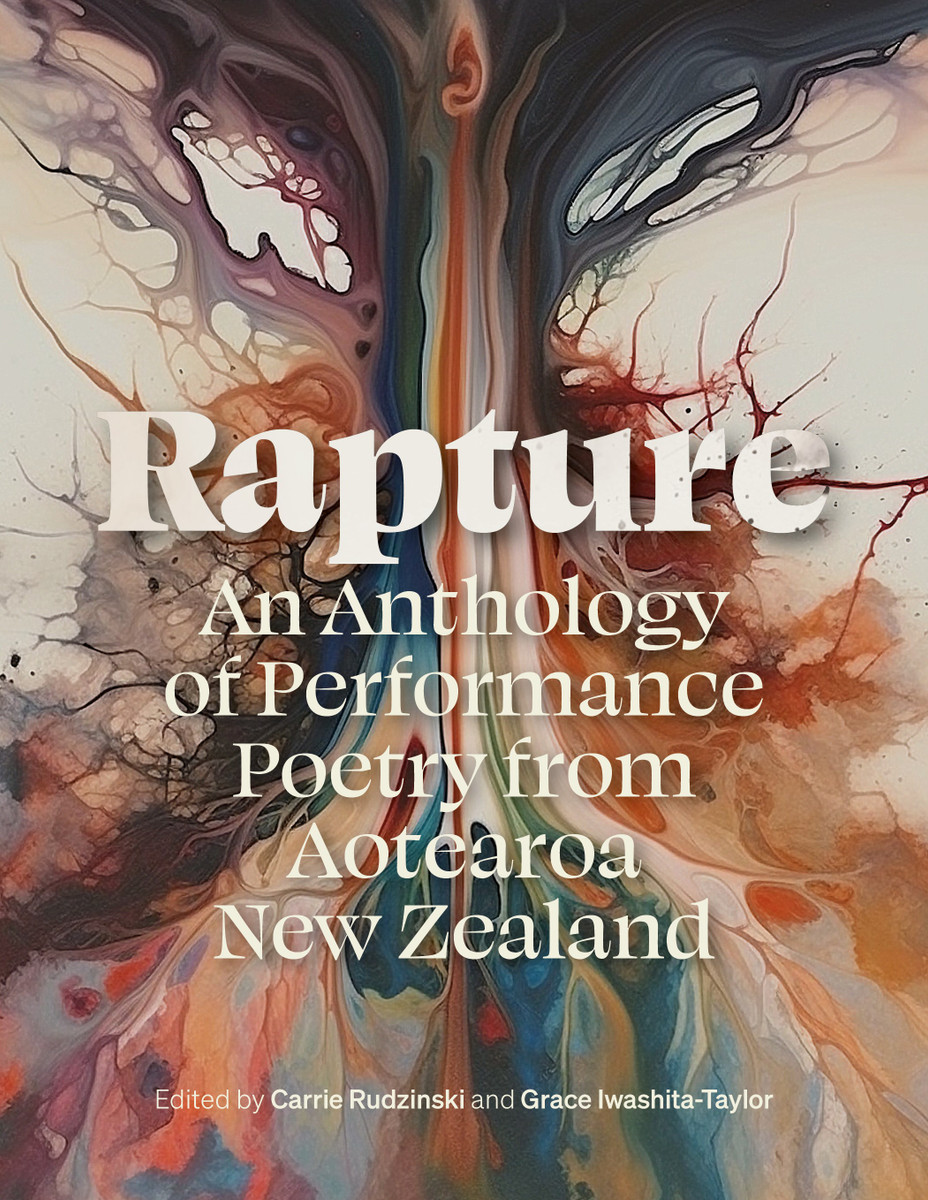
Rapture: An Anthology of Performance Poetry in Aotearoa, edited by Carrie Rudzinski and Grace Iwashita-Taylor Auckland University Press, 2023
Rapture: An Anthology of Performance Poetry in Aotearoa, edited by Carrie Rudzinski and Grace Iwashita-Taylor, includes poems by almost 100 poets. So what is performance poetry? Performance poetry brings poems off the page whether under the tags: performance or slam (think slam competitions) or spoken word. It might be personal, it might political, or a mix of both. It might be out-to-the-edge-of-the-solar-system radical or rebellious. It might be holding-the-hand-of-the-person-next-to-you heartbreaking. It might make you laugh out loud or move your hips in time to the beat.
Listening to performance poetry is a means of transportation, elevation, challenge, reconfiguration, pleasure, world and self expanding … and yes! POETRY JOY!
Performance poetry in Aotearoa ranges from the exuberant dazzle of Show Ponies to the skin tingles of Tusiata Avia’s Wild Dogs Under my Skirt to poetry at festivals such as WOMAD, those in the big cities, those in the small towns, slams, open mic nights, to supportive communities such as Rising Voices Youth Movement, South Auckland Poets Collective, New Zealand Young Writers Festival, Stand Up Poetry and many many more. Performance poetry is alive, vital, wide ranging in Aotearoa.
“These poems riot in harmony,” Carrie and Grace say in their introduction. The editors invited poets to send in poems and then selected those that leapt off the page for them. Carrie and Grace remind us that performance poetry has been the poor cousin of published poetry, but that poets such as Sam Hunt, Tusiata Avia and Selina Tusitala Marsh have taken poems off the page and shared with the world in electrifying and heart catching ways. The anthology is in three sections: Burn it down / Float / Re-earth your roots.
The result is a means of body and heart transportation, elevation, challenge, reconfiguration, pleasure, world and self expanding … POETRY JOY!
Current New Zealand Poet Laureate Chris Tse has written a foreword that resonates with me on a number of levels. It is personal and it chimes with my view of reading, writing, creating and performing poetry. He talks about a Facebook comment that stuck when someone claimed Chris’s poem was more like a story! The comment got him musing on what poetry is. In the end, and it is what guides me as a poet and as a poetry reviewer, the key thing is what does poetry do. For me, it is an open space, an invitation to discover, experiment, play, to take risks, to find comfort. There are ZERO rules. Working with children over the past decades, I know the power of poetry to nourish self, to open windows, build travel routes, self confidence, self bloom. When Chris writes this, my heart moves: “Poetry has been that lifeline for me at various points in my life, and while I write mostly for the page, there’s no denying that getting to perform my work has played an important part in my growth as a poet and as a person.” Yes!
Auckland University Press has produced a sweet book to hold in the hand, great paper stock, striking cover and perfect internal design (by Seven.co.nz), with a hard cover and plenty of photographs and posters.
What better way to celebrate the arrival of this stunning anthology with a reading in the Poetry Shelf Cafe. This morning I have been in my cafe listening again, in the time when I most need poetry, and here I am boosted by the power of poetry performance. Thank you for your mahi, your aroha, your joy. Take a listen! Then take a read!
The editors
Carrie Rudzinskihas performed her work over the past 17 years in six countries and has been featured in Bustle, HuffPost and Teen Vogue. She ranked 4th in the world at the 2014 Women of the World Poetry Slam, won the 2019 Pussy Riot Award at Auckland Fringe Festival, and co-founded Auckland’s JAFA Poetry Slam. Her poems have been published in Landfall, The Spinoff, Stasis Journal, Catalyst and Muzzle, among others. She is the author of seven books and five spoken word albums, and from 2016–2020 she taught the only spoken word course offered at a tertiary level in Oceania at Manukau Institute of Technology. Carrie is the co-creator of three poetry theatre shows – How We Survive (2019), The Bitching Hour (2023) and Hysterical (2022) – the latter of which won Best New Aotearoa Play at the Wellington Theatre Awards and Outstanding Performance Poetry at Auckland Fringe Festival.
Grace Iwashita-Taylor, breathing bloodlines of Samoa, England and Japan, is an artist of upu/words on the page, digital storytelling and live performance, and is dedicated to carving, elevating, and holding spaces for storytellers of Te Moana-nui-a-Kiwa. She is a recipient of the CNZ Emerging Pacific Artist 2014 and the Auckland Mayoral Writers Grant 2016, and highlights of her work include holding the visiting international writer in residence at the University of Hawaiʻi in 2018, and being a co-founder of the first youth poetry slam in Aotearoa, Rising Voices (2011–2016) and the South Auckland Poets Collective. She has published two collections, Afakasi Speaks (2013) and Full Broken Bloom (2017) with ala press, is the writer of My Own Darling commissioned by Auckland Theatre Company (2015, 2017, 2019), and curator of UPU (Auckland Arts Festival 2020 & Kia Mau Festival 2021). Alongside Dr Lana Lopesi, she is co-director of Flying Fetu Festival, dedicated to building abundant futures for Moana artists of upu/word. Grace is currently working on her next body of work, ‘Water Memories’.
Tamara Tulitua flows from the villages of Safa’ato’a, Gagāifo, Matāutu, Sapāpali’i, Vailima and Tanugamanono in Sāmoa to her birthplace Aotearoa New Zealand. Tamara writes across fiction, poetry, essay forms. She is a graduate of law and politics from Te Herenga Waka|Victoria University of Wellington and holds a Masters in Creative Writing from Te Pūtahi Tuhi Auaha o Te Ao|International Institute of Modern Letters (IIML). She was the IIML Emerging Pasifika Writer in Residence in 2022. Her reviews, fiction, prose/poetry have appeared in anthologies, literary journals and other online publications including Pantograph Punch, Turbine|Kapohau and the Post. Tamara is the founder and facilitator of Vāhui, a collective of Māori/Moana writers.
Hala Nasr
Hala reads ‘To death, we crawl’
Hala Nasr is an Egyptian poet born and raised on the coastal North Shore of Tāmaki Makarau, Aotearoa. Exploring themes of diaspora, solidarity, womanhood, and difference, her poems appear in We Call to the Eye & the Night – Love Poems by Writers of Arab Heritage and Rapture: An Anthology of Performance Poetry from Aotearoa New Zealand. In a past life, Hala performed her poetry solo and with DECOLONISE poetry collective (co-founded with Jahra Wasasala and Logan Dobson) at events including Pasifika, Auckland Fringe festival, Auckland Art Gallery, Auckland Town Hall, and Herald Theatre.
Amber Esau
Amber reads ‘Shapeshifter’
Amber Esau is a Sā-Māo-Rish (Ngāpuhi / Manase) writer of things from Tāmaki Makaurau Auckland. She is a poet, storyteller, and professional bots. Always vibing at a languid pace, her work has been published both in print and online.
Carrie Rudzinski
Carrie reads ‘Always a Godmother / Never a God’ from her album Goddess Bound with original music by Jason Anderson. Photo credit Andi Crown.
(see bio above)
Renee Liang
Renee reads ‘Chinglish’
Renee Liang is a poet, playwright and essayist. She has toured eight plays and collaborates on visual arts works, dance, film, opera, community events and music. Some poetry and short fiction are anthologised. A memoir of motherhood, When We Remember to Breathe, with Michele Powles, appeared in 2019. In 2018 she was appointed a Member of the NZ Order of Merit for services to the arts.
Ben Brown
Ben reads ‘A silent poem’
Ben Brown (Ngāti Mahuta, Ngāti Koroki, Ngāti Paoa) was born 1962 in Motueka, which is further away from him now than he cares to think about. He has been writing all his life for his own enjoyment and published his first children’s book in 1991. He is an award winning author who writes for children and adults across all genres, including poetry, which he also enjoys performing. Generally, if pressed, he will have something to say about anything. In May 2021 he was made the inaugural NZ Reading Ambassador for Children – Te Awhi Rito. He is also a father of two, which he considers his best work to date. He lives in Lyttelton.
Daren Kamali
Daren reads ‘Con-olized’
Daren Kamali – Fijian born New Zealander – lover of words – art – family and Pacific culture. A researcher and multidisciplinary revival artist – poet. Worked in the GLAM sector for over a decade now.. published several poetry collections and recorded musical albums since 1998. writers residencies include – Pacific Writer in Residence at University of Hawai’i -Manoa – 2012 and International Writers Festival 2014 at University of Iowa. Masters in Creative Writing – A Class Honours – University of Auckland 2016. Senior Librarian Pacific – Public Engagement 2017-2023.
There is a mountain There is a river There is a lake
Hold the weeping child to heart Hold the thirsty and the wounded to heart Hold the dead and the fearful also to heart Hold the rubble home and the broken bones
We speak the mountain We speak the blood river We speak the grief lake
Marching peace Marching heart Marching out
There is a mountain There is a river There is a lake
Yesterday I was devastated to read reports that Palestinian poet and writer Mosab Abu Toha was missing after being detained by Israeli forces while he was trying to leave Gaza with his family. Abu Toha is a celebrated poet and scholar who won the American Book Award for his 2022 poetry book, Things You May Find Hidden in My Ear and he is the founder of Gaza’s first English-language library. He was also writing a regular column for The New Yorker describing daily life in Gaza under siege. In a recent essay, Abu Toha wrote: ‘One idea in particular haunts me, and I cannot push it away. Will I, too, become a statistic on the news?’ This morning when I woke up and checked for any further news about him, there was an update. After an international outcry that spanned news outlets, his publishers, freedom of expression groups and press freedom advocates, Abu Toha was released. Latest reports are that he has been returned to Gaza, reunited with his family and is receiving medical treatment. He is thirty years old.
Kiri Piahana-Wong
What is home?
What is home:
it is the shade of trees on my way to school before they were uprooted.
It is my grandparents’ black-and-white wedding photo before the walls crumbled.
It is my uncle’s prayer rug, where dozens of ants slept on wintry nights, before it was looted and put in a museum.
It is the oven my mother used to bake bread and roast chicken before a bomb reduced our house to ashes.
It is the café where I watched football matches and played –
My child stops me: Can a four-letter word hold all of these?
You can hear Arihia read form the collection here.
(ii) Hiwa hopes
This morning in memory, my boots crunched my name into the blades of grass frozen with yesterday’s anxieties. Today I started asking for things from a star and wondered if that was a bit entitled, a little whiny. Hiwa-i-te-Rangi, the most likely star to take on celebrity status as all of our human hopes flutter to the edge of the atmosphere like floating coins. Wishing, she was probably wishing we were better descendants. But the hopes I had prised from the mitochondria of my cells and drawn out of the chromosomes I hummed with. Not interstellar but cellular. The hopes I had were silent.
from ‘Takapō’
Each poetry review I write this year becomes a way of folding and refolding what a poem is and what a poem can do, in new and surprising shapes, like an origami boat ready to set sail.
Ah … the end of year looms and I am not going to get through all the must-read Aotearoa poetry books in my stack because origami reading and reviewing moves like a lake.
Arihia Latham’s debut poetry collection Birdspeak features the perfect cover with art by Natalie Couch. It is an alluring mix of cloud and bird, texture, mixed media, colour, harmonies, balance, depth. I am gazing deep and it is transcendental viewing as mood and connections surface.
A little like origami looking.
Arihia dedicates her collection to whānau and the dedication is poignant: “you are the sky and my safe landing place”. Her acknowledgement page underlines how her poetry nestles and is nurtured within a community of loved ones, other writers, readers, mentors. It is an important template, so very important at the moment.
The presence of te reo Māori enriches the unfolding sense of self, yes the relationships, along with the musicality of the line, braided narratives, the recalled and the imagined, the magnetism of place.
Think of the land as rhythm, think of our relationships with others as rhythm, and the rhythm of poetry becomes crucial. In Arihia’s deft writing hands, rhythm is storytelling, bird song, beginnings, breathings.
Think of the joy when you fall upon multi-layered poetry that draws you into a single lucid image, place or moment, into the braid, the weave. Arihia builds mood, muscle, meditative effects that lift me off the surface of my day.
Whānau is also a thematic presence as mother, daughter, son, granddaughter. It might be aroha, it might be mourning, it might be love-rage and violence, but whānau produce the pulse of writing. Writing would struggle to exist without them.
Think of balance, how poetry can be both physical and uplift, weight and lightness. How it can be “rubbed red hands” and “mana”. “The muddy bones of mountains” and “human hopes”. “Clean stockings” and “wave language”.
I experienced disillusionment in the day-long whānau hui on the marae when we talked about taking the old names back and leaving the one given by the church. And the dust rises and settles, and I need to know my place and my privilege. I am not here to step forward and tell anyone they are colonised. I am here to step back and listen carefully, to walk slowly, and to pull out the fry bread when it is just puffy enough and golden brown.
from ‘Dust rises’
Above of all think of breath, because this is breath poetry. It is connecting breath, it is breath between sky and earth, time and place, this person and that person, this love and that loss, this heart and that heart and this heart.
I want to sit under a shady tree with eyes shut, hearing the bush bird song, and listen as Arihia reads the whole collection, listening as it arrives in sweet spiky succulent waves. This is poetry to breathe in and hold.
Arihia Latham (Kāi Tahu, Kāti Māmoe, Waitaha) is a writer, rongoā practitioner and cultural advisor. Her work has been widely published and anthologised. She lives with her whānau in Te Whanganui a Tara.
the heart muscles its way out makes it way along the seafloor
towards the trawler towards the island
the heart has a head and sends out pain signals
the heart is governed by legislation that only goes so far
the heart is an octopus too clever for its own good
the heart has eight limbs puzzling, pining
when i fight i fail
my brain is big but my teeth are small
i die like an octopus so i may as well live like one
hiding from sharks mounding up home
A. M. Keeble
A descendant of UK, Austrian and German immigrants, Michaela grew up on Wurundjeri land, and is now lucky to live in Aotearoa. She has just published Paku Manu Ariki Whakatakapōkai with her son and co-author Kerehi Grace (Ngāti Toa Rangatira, Ngāti Porou), and with illustrator Tokerau Brown. Her full-length poetry collection surrender was published in 2022. The poem “like an octopus” comes from her art+poetry collaboration “The heart is an octopus” with painter Emma Hercus, on at Railway Street Studios in Auckland from Tues 10th – Sat 28th October.
Paku Manu Ariki Whakatakapōkai is reviewed on Poetry Box