Category Archives: Uncategorized

Poetry Shelf update

One day this week I was feeling so steamrollered, unable to answer emails, to post the review of Morgan Bach’s poetry collection, a book I had spent two weeks loving and reviewing. It took every ounce of strength to move. I could barely function. But then I read an interview with Sam Neill where he talked about his cancer experience, his new memoir and more importantly his life experience. I connected with so much he said, resparking, rebooting. I also did this with Dai Henwood when he talked about his cancer experience on the radio recently. Sam said he was more interested in talking about life than about his time with cancer. Living. Doing things. I get that.

For ten years I never mentioned my health issues publicly, and rarely to friends. But when I was about to have the transplant, I decided it was time to speak openly. Partly as an explanation for reduced activity and partly as a way of sharing my choices and challenges with others also facing tough health situations. I did the Listener interview and I’ve posted updates on the blog. I have acknowledged deep gratitude for the stellar team who care for me at Auckland Hospital’s Haematology Department.

Since my bone marrow transplant last year, and the subsequent onset of Graft Versus Host Disease, I have held some key daily mantra close: live one day at a time, focus on what you can do, find things to do that give you joy each day, mute toxic voices, say no. I find it hard saying no to requests, not answering emails promptly, and I find it even harder not being able to review all the poetry and children’s books I get. Especially when it feels like both categories get less review attention (children’s books and authors especially so!). So many sublime books are being published in Aotearoa, and I so love finding and sharing my idiosyncratic pathways through them. Some days I yearn to work at my old pace.

Toxic voices are an equally hard challenge. I’m also finding it heartsmashing to think a nation of families might die through enforced thirst while unbearable bloodshed is escalating on all sides. I find it hard to bear politics that are blind to the wellbeing of our planet, to the wellbeing of people across all cultures, societies, classes, locations. The word community feels like a key word.

This week my body has carried the weight of such heavy thought and grief and speechlessness. How to weather my myriad symptoms that are on an indefinite timeline and that pin me to a state of disfunction? How to weather global grief?

I am going back to the notion of one precious day. Here I am this morning reading Ruby Tui’s picture book for children and it is so darn uplifting as she writes of her child self, reaching out to the girl crying next to her with her spilled ice cream, picking up the rugby ball and running. I am grateful to Sam and Dai for speaking and sharing their stories with us, I am grateful to the aid workers, the cancer researchers, the peace brokers, the writers and publishers in Aotearoa who lift our hearts, the musicians who share the gift of music, the people who have sent me kind and gentle emails, the nurse on the end of the phone, the health workers working such long tough hours, the writers who contribute to both my blogs, the people who are so very patient with me, for my partner and daughters.

Poetry Box and Poetry Shelf are a joy patch in my day, along with reading and baking bread, cooking simple meals, and daydreaming. I may not keep to my schedules, but I will keep celebrating what words can do. One precious day at a time.

Poetry Shelf review: Middle Youth by Morgan Bach

Middle Youth, Morgan Bach, Te Herenga Waka University Press, 2023

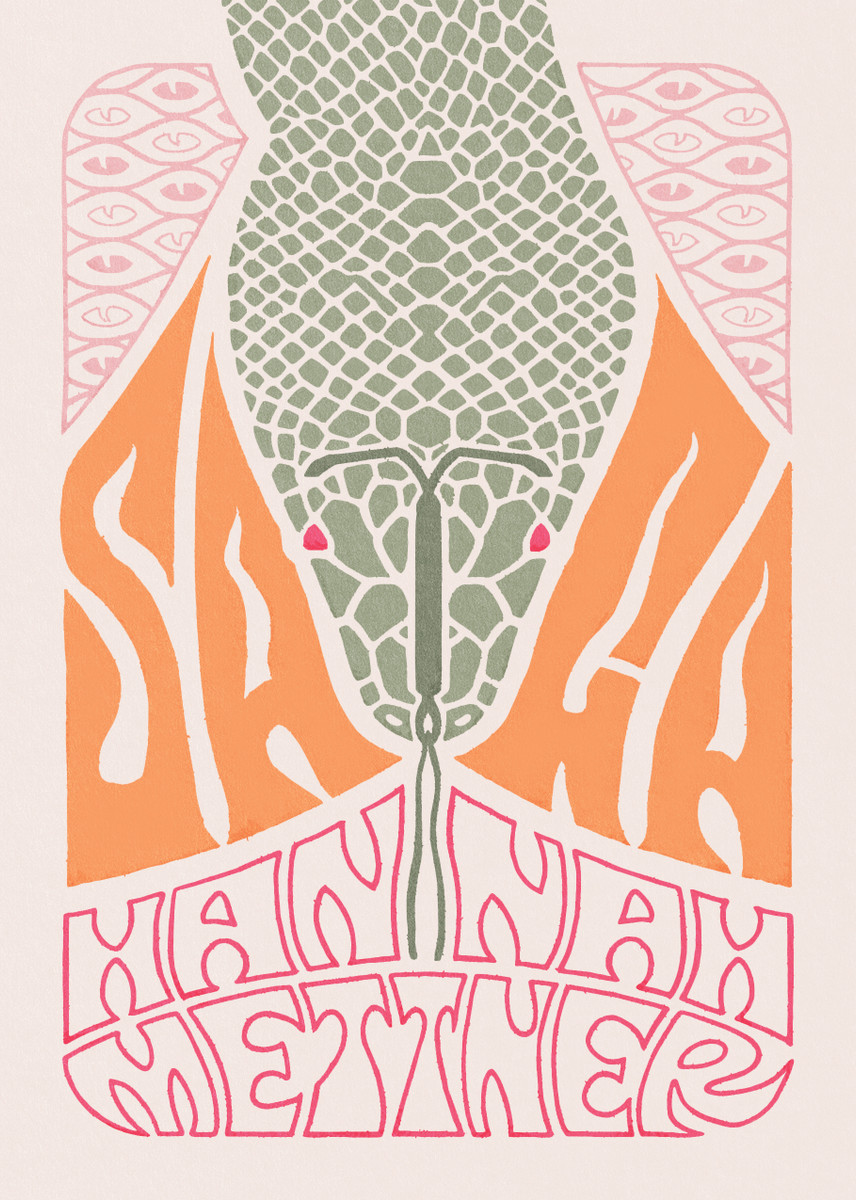
Each poetry collection I read at the moment seems to widen the scope of what poems can do. When I read Hannah Mettner’s collection Saga, I began musing on poetry as mesh. Fascinating. Yet poetry can be and do a universe of things, and it is incredibly limiting to anchor a book in one framing device. But here I am captivated by how Morgan Bach’s new collection is, amongst other things, poetry as fire. And there it is in the blurb on the back: ‘The poems of Middle Youth look directly into fire’.

Middle Youth is driven by the searing blaze of a world under threat. Think global warming, war, plague, floods, famine, the rich and the poor, the dispossessed and the the abused. Hierarchies, downright ignorance, racism. Such a global blaze, such sharp edges of catastrophe, but Morgan embeds the flame in hints, sparks, tongues, as well as widening the molten implications of climate change.

I read: ‘a business man’s burning fingers’, ‘peripheral glimpses of fire’, ‘a woman breathes fire’, the ‘extinguished flame’ in a cocktail, ‘our unwanted thoughts / just below combustion point’, ‘California is burning’, ‘In Iceland people have gathered / to watch fire pouring from a fissure’.

The heat creeps up on you. It becomes a shared rage along with a wallop of hopelessness and veins of hope. I am reading the astonishing poem, ‘I could love you for a moment /but there is a democracy / to think of’, and I am in awe at the searing marriage of understatement and knife in the heart, ellipsis and the brutal present, exquisite melody and piercing image.

the dark
is no longer
dark
but spotted
in gold
like the hide
of a cheetah
fast approaching

The ubiquitous presence of fire is traced in motifs and subject matter, but it also becomes a form of tone, the heat of speech, the self under threat, the refusal to look away. And now I am reading poetry as skin, the skin of my reading singed, a barometer, a register of helplessness. The skin of the poem, that scaldable barrier, that fragile layer, sunburnt, allergic. In ‘heat death‘, Morgan writes: ‘Within weeks / my skin is dust on the shelves / of my new room’.

I haven’t had a poetry collection affect me like this for an eon. You could also see this through the lens of mesh. There are layers of connection and connecting. The speaker has her tarot cards read and goes driving in the country to eat sandwiches by a lake with friends. She celebrates a birthday, gets vaccinated, pays her pension, furnishes her living space, loves and is loved. The penultimate poem, ‘to proceed within a trap (v)’, begins with the speaker and three generations of her family watching the Beatles documentary. It ends with an approaching New Year, the conundrum of how to live the weeks leading up to it, and before marking the new year as ‘fresh silence’, we read:

Did the future always gape? An empty
room, requiring a rhythm, a melody

to appear from somewhere, the air to fill
with a scaffolding from out of the minds

of people with enough ego
to give the rest of us something

to look at, to sing along to.

Middle Youth (yes as opposed to middle age) got me musing on whether I can view flame as beauty, comfort, warmth, light or as devastation, discomfort, disintegration, darkness. Or both. Is it possible to look upon the future as the empty room that we will furnish with words and actions, restoration and healing? Ah. What to do when we wake up and step into the vociferous rooms of the day? Middle Youth is poetry at its skin tearing, provoking out of slumber, flame sparking best.

Morgan Bach was the recipient of the 2013 Biggs Family Prize in Poetry, and her first book, Some of Us Eat the Seeds, was published in 2015. Some of her recent work appears in Turbine, The Spinoff and Best New Zealand Poems. In 2014, with Hannah Mettner and Sugar Magnolia Wilson, she co-founded the online poetry journal Sweet Mammalian.

Cover painting: Karla Marchesi, The Sense of an Ending

Te Herenga Waka University Press page

You can hear Morgan read from the collection

Poetry Shelf Monday Poem: The Lonely Poet by Bill Manhire

The Lonely Poet 

I love the evening when the dark must lose its blue. 
I love the way the world just takes its time . . . 
There’s no one here to tell me what to do. 

Clouds and the moon play peek-a-boo; 
they come and go, then can’t be bothered trying.  
I love the evening when the dark must lose its blue – 

though sometimes there’s this squeak inside my shoe, 
it makes me stumble when I mean to rhyme. 
I wish there was someone could tell me what to do. 

I folded my wings before I flew, 
then wandered along behind the firing line, 
believing the sky would never lose its blue. 

And now I can see the sky has better things to do: 
it’s losing its faith in things divine, 
it’s done with the days of honey-dew. 

I don’t know where to start with missing you. 
I write a line and then I end up crying. 
There’s no one here to tell me what to do. 
I love the evening when the dark must lose its blue. 

Bill Manhire

Bill Manhire‘s last collection of poems, Wow, was published in 2020, and was a Poetry Book Society Selection. An interview subsequently appeared in PN Review. A recent collaboration with Norman Meehan and others, Bifröst, has been released by Rattle.

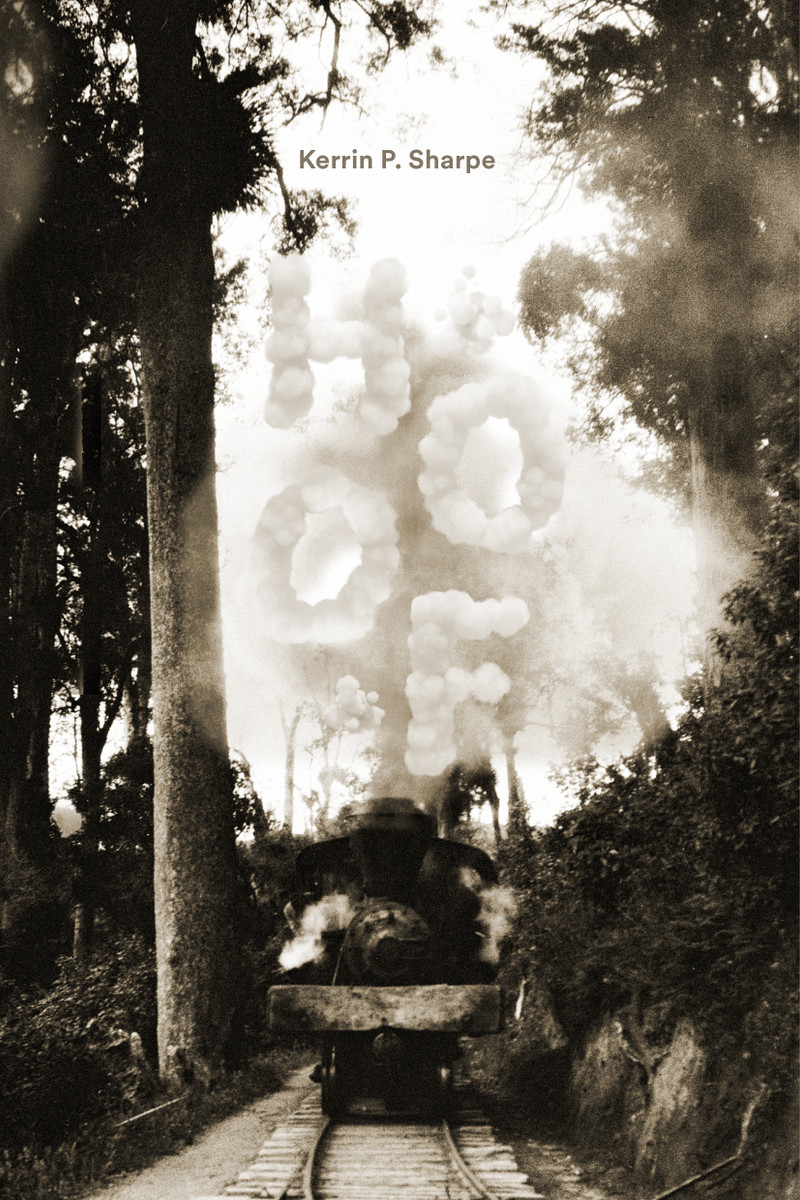
Poetry Shelf Cafe: Kerrin P. Sharpe reads from Hoof

Readings from Hoof, Kerrin P Sharpe, Te Herenga Waka University Press, 2023

‘blue’

‘If you’re looking for Leonard’

‘On a night angry enough’

‘Kalene Hill 1948: the baby won’t turn’

‘In loco parentis’

Kerrin P Sharpe: I have published four previous collections of poetry (all with Te Herenga Waka University Press, Wellington, NZ). My latest collection of poetry, Hoof, published by Te Herenga Waka University Press, October 2023. I have had poems published in a wide range of journals both in NZ and overseas including Oxford Poets 13 (Carcanet Press), Blackbox Manifold, Poetry (USA), PN Review, berlin lit, and Stand. In 2020 I was shortlisted for the Alpine Fellowship Writing Prize and in 2021 I was awarded a Michael King Writers Centre Summer Residency. 

Te Herenga Waka University Press page

Poetry Shelf review: Saga by Hannah Mettner

Saga, Hannah Mettner, Te Herenga Waka University Press, 2023

[…] My aunt reports
that we used to be Vikings, but it is clear that
that was a very long time ago. For example
all my hobbies are activities that involve sitting
down and not being killed. I only learn these
things as I learn that it is rude to introduce
myself with nothing more to offer than a name.
My history tightens around me like a knot and
there is a wild blackberry growing through it
like everything here.

final stanza in ‘Saga’

The first stanza of ‘Saga’, the opening poem in Hannah Mettner’s new collection, Saga, is utterly intriguing. The kind of experience where if you read it in a bookshop, you know you’d simply have to buy the book, knowing the poem could move in myriad fascinating directions. The speaking ‘I’ draws you into enigma, penetrating questions, revelations, the unexpected.

I have adored spending slow-motion time with Saga, letting its layers and voice, crevices and bloom, take root as I read. I get to the end of the collection and I have written a phrase in my notebook: poetry as mesh. It feels apt.

In the acknowledgement pages, Hannah makes it clear she writes within a nourishing community; think other writers, writing clubs, her Poetry Pals, her friends, editors and journals. This matters. This makes a difference.

Hannah writes within a history of reading and viewing, and this also makes a difference. Some of the poems are written in direct response to the work of others. The brilliant opening poem, ‘Saga’, is a direct response to Mary Ruefle’s ‘Saga’ from her book Trances of the Blast. You can also follow links to bell hooks, Tolstoy’s Anna Karenina, Kristen Ghodsee’s Why Women Have Better Sex Under Socialism, Radclyffe Hall’s The Well of Loneliness, sonnets by Elizabeth Barrett Browning, Eavan Boland’s ‘Atlantis–A Lost Sonnet’, Fleur Adcock’s ‘for a Five-Year-Old’. Add in Buffy and the Vampire Slayer, ‘Three times a lady’, Werner Herzog. A cultural and literary mesh that sustains and extends.

The poems also feel embedded within a mesh of personal history. Although I can’t draw a definite line between fiction and autobiography, I found myself viewing the poetry as a vehicle for self conservation, even self recognition. The subject matter roves from sexuality to love, mothering, daughtering, marriage, not marriage, physicality, longing, hunger, friendship.

Relationships are key to poetry as mesh: friends, family, lovers, child.

Unsleeping in the dark, I count my friends
for reassurance, rather than sheep.
I turn to them like the dog-eared pages
of a favourite book. Each with their own
reliquaries of chaos and glory.

from ‘Coven’

Then there is the necessary mesh of a world under threat, disturbing, question raising, action provoking.

If only the world was a brain that could rinse herself as we sleep.
Really, there is no ultimatum we might offer except our own extinction.

from ‘Poem while watching the world burn’

Saga is a magical, thought-provoking, heart-boosting read that sticks to your skin, dances on your eyeballs, trembles in your eardrums, circles in your mind. It is complex and full bodied and haunting. It is mesh. Glorious poetry mesh.

You can hear Hannah read two of the longer poems here

Hannah Mettner is a Wellington-based poet from Gisborne. Her first collection, Fully Clothed and So Forgetful, won the 2018 Jessie Mackay Best First Book Award for Poetry. Her poems have appeared widely in literary journals, including Sport, Turbine and Cordite. In 2014, with Morgan Bach and Sugar Magnolia Wilson, she co-founded the online poetry journal Sweet Mammalian.

Te Herenga Waka University Press page

Poetry Shelf Monday Poem: Goblin Mode by Rebecca Hawkes

Goblin Mode

For Scott, after Rosaleen Norton’s drawing of Pan shown at the Dowse ‘Sisterly’ show

Remember when I painted you as Pan? A pair
of twisted horns emerging from your temples, 
unkempt beard curling to the thicket on your chest.

I could still needle-felt a doll from all your fallen hair, 
the coiling brows and pubes that form dark snowdrifts 
in every corner of our apartment. Other men 

sneered openly when I went home to you, said 
do you really want to go on living like an animal? 
Little could they smell that’s all I want, nesting 

in the funk of our den, piling up the floordrobe
and the Sisyphean dishes, the inner damn, bitch
you live like this? only warbling background noise, 

a scold not spoken in our bowerbirds’ burrow, 
lined with my shining stones and your toy soldiers.
Remember when I couldn’t see you were an artist?

But here you are with the tiniest paintbrush
gilding the epaulettes of a barbarian kobold. You daub
dainty eye sockets in the skulls at his belt, delicately

render shadows amid his loincloth rags. I love you
because you are still somehow mysterious to me,
when you clear the dishes away 

to spread out your incomprehensible games
about buying and selling shares in 1800s trains.
Just like I love when we go goblin mode

in the ultimate closeness of mutual delusion,
two animals domesticated but not tamed. Pest-pilled,
you may become a ferret in a wizard’s hat

crawling up my pant leg, and I will be the fingers
buttoning your sequinned cape. Or I’ll be the musky mustelid
pulled from the beanbag, spike-furred and staticy

in a clingy cloak of polystyrene balls, while you are the hand
holding me up by the scruff of my neck. Others have held
my jaw open to check there were good even teeth 

in my mouth. But you behold my ragged fangs, my unkempt fur
and feathers. You kiss my hoof and hold my bloodied talon – 
even when my idea of romance is a purpled fairy ring round your wrist,

a perfect imprint of my teeth. Whomst among us doesn’t 
get rambunctious? Gremlin king, we give each other wildness. 
Bless the strangeness we permit each other, the liberation of this love

in which you never took it upon yourself to make me better – 
adopting a pet mess as a home improvement project,
like all the boys who told themselves I could fix her.

No, you thought when you fell, just as I did, 
for the ultimate promise – 
I’ll make you worse. 

Rebecca Hawkes

Rebecca Hawkes is currently pouring out the dregs of her youth in America and missing you all dearly. She edits the journal Sweet Mammalian and co-curated the Antipodean climate poetry anthology No Other Place to Stand. Her book Meat Lovers won Best First International Collection in the Laurel Prize and was a finalist in the Lambda Literary Awards. She has recently abandoned her garden of carnivorous plants to pursue an MFA in poetry at the University of Michigan as a Fulbright grantee, where so far she is mostly prowling the woods in search of edible fungi.

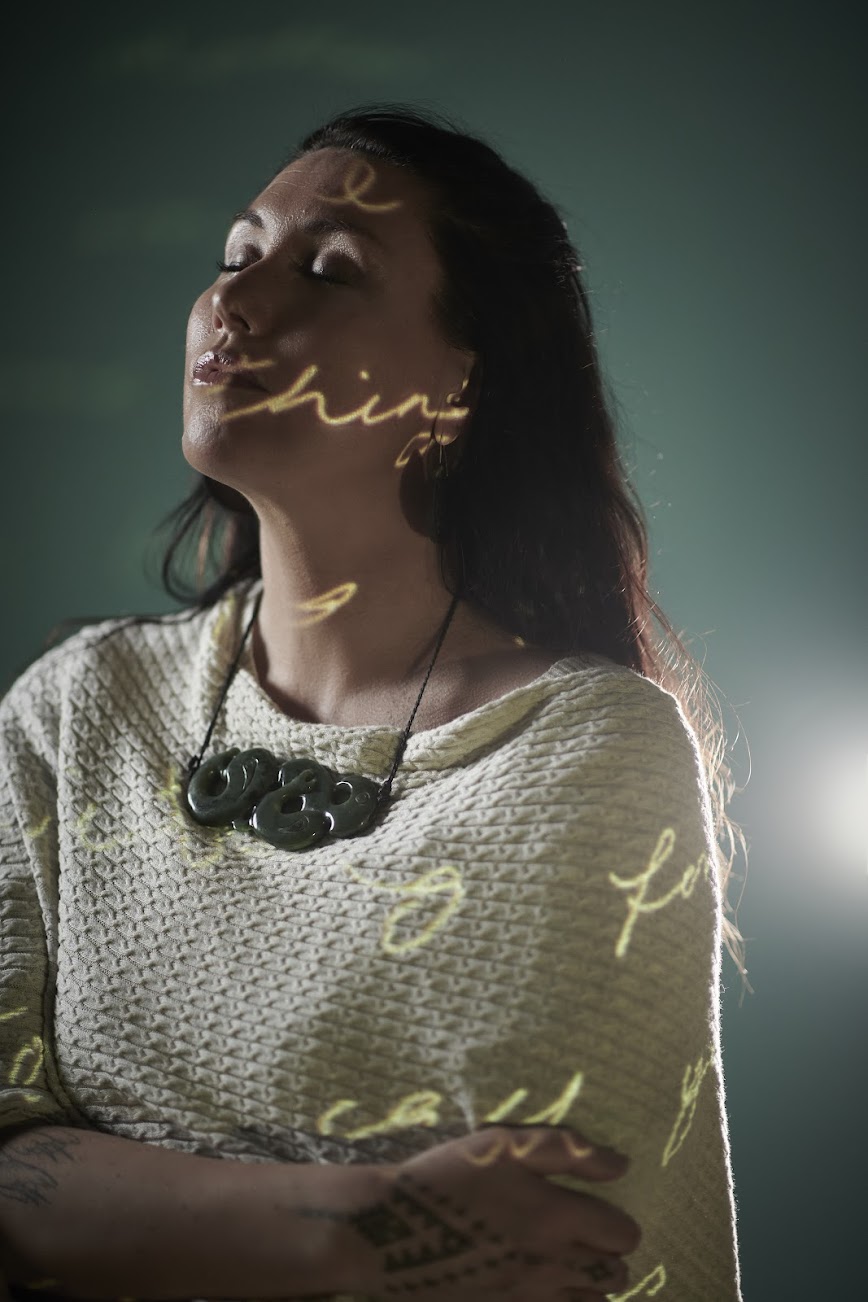
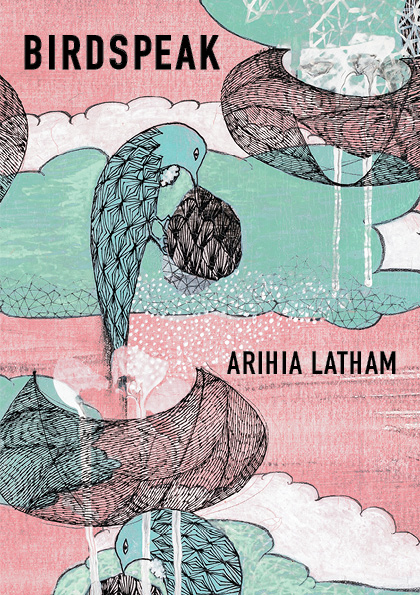
Poetry Shelf Cafe: Arihia Latham reads from Birdspeak

Photo credit: Amber-Jayne Bain

Birdspeak, Arihia Latham, Anahera Press, 2023

Arihia reads ‘Birdspeak’

Arihia reads ‘Defying death’

Arihia reads ‘Koia’

Arihia reads ‘New island’

Arihia reads ‘Spring passage’

Arihia Latham (Kāi Tahu, Kāti Māmoe, Waitaha) Is a writer, creative, and rongoā practitioner. Her poetry collection Birdspeak is just out from Anahera Press and her short stories, essays and poetry are published and anthologised widely. She has been an arts columnist for The Post and presents often at arts and writers festivals. She lives with her whānau in Te Whanganui a Tara.

Anahera Press page

Poetry Shelf Monday Poem: ‘THE MOTHER IS SPEAKING TO HER CHAIRS by Sam Duckor-Jones

THE MOTHER IS SPEAKING TO HER CHAIRS

The mother was born in a large city in 1956
The father was born in a small town in 1957
They met each other in a third place in 1979

They got married in the large city in 1980
They moved together to the small town in 1981
Their first child was born there in 1982

Their second child was born there in 1984
Their third child was born there in 1986
The mother’s uncle died in 1988. He left her six good chairs

Over a period there are approximately
2 cats, 3 mice, 4 rats, 5 fish, 6 birds & 1 dog
By 2003 the mother & father have split up

By 2004 all the animals have died
By 2005 all the children have moved out
& the mother has the six chairs recovered

It was expensive, but, she argues, it has been such a long time
& the first child gets a pet. He phones the mother to tell her
He says how he talks with the pet & how nice it feels

The mother says well I talk to my chairs so I understand yeah I get it
I say hello chairs, I love you chairs, you are so beautiful, chairs
& the first child says, good Ma that’s good, well talk to you soon

Ok bye hon, she says & they hang up

Sam Duckor-Jones

Sam Duckor-Jones is an artist and writer from Te Whanganui-a-Tara now living in Mawhera.

Poetry Shelf review: A Garden is a Long Time by Annemarie Hope-Cross and Jenny Bornholdt

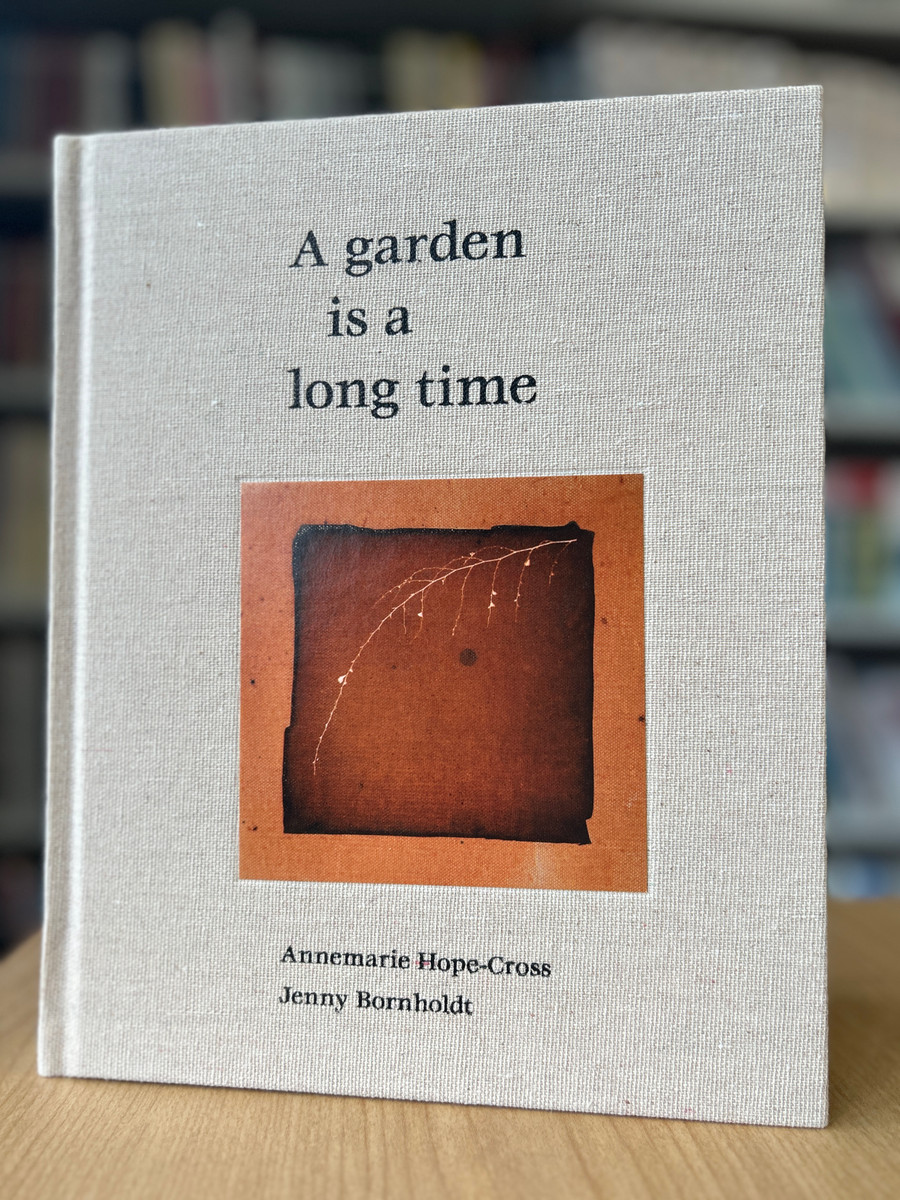
A Garden Is a Long Time, Annemarie Hope-Cross and Jenny Bornholdt
Te Herenga Waka University Press, 2023

View

You’re up to your knees
in grass, bent
for scent or form
framed by the window, held—
as a cellist might draw
a note to the end
of sound.

Jenny Bornholdt

A Garden Is a Long Time brings together photographs by Annemarie Hope-Cross (1968 – 2022) and words by Jenny Bornholdt. It is a sublime book. It is a book generating admiration and wonder.

Firstly the title. The title resonates so beautifully, like a tiny poem held in the palm of your hand. I am moving in all directions, along multiple paths, holding the ideas and mood it generates: seasons, attachments, necessity, beauty, growth, the power of the senses.

Secondly the cover that features Annemarie’s photogenic drawing on canvas is placed on natural linen (from ‘Tupare Leaves’, 2016). I run a finger over the smooth surface of the photograph and then delight in the textured surface of the linen. There is no blurb on the back of the book, no sales pitch, just the linen expanse. The book, so lovingly created, is a work of art. I prolong the moment before opening the book.

Thirdly the words, at times biography, at others art appreciation, art ideas and processes, a photography manual, Jenny’s poetry. Annemarie’s father used to develop photographs at the kitchen sink (later had a darkroom) while her mother sang in a choir. Annemarie was driven to create photographs from a young age, resisted digital photography at Art School, studied various photographic techniques at Fox Talbot Museum in the United Kingdom. She went to live in Alexandra, fell in love with Eric Schusser, had an ambulance job, gardened, and kept exploring her favoured medium.

Jenny writes with the deft touch of a poet, her words drawing us into a life and into the photographs. Jenny’s exquisite poems, penned with a handful of elements reverberate so sweetly for ear and eye, holding out a scene or a fleeting moment. I find myself lingering over each one, letting the poem shimmer and grow. Each a touchstone for contemplation. i have included a whole poem with permission for you to absorb. In your own way. In your own time.

And fourthly the photographs. My daughter currently has a fascination with extremely old cameras she finds in junk shops. Her black and white photographs are sublime. I can’t wait to show her the book because Annemarie’s photographs are inspiration staircases. Touchstones. She used old cameras, printed by hand on paper, had a long engagement with the work of Anne Noble, and was inspired by William Fox Henry Talbot, claimed as the British inventor of photography. His aim was ‘to reproduce what he saw’. Perhaps seeing is like a vibration, where what we see is both fleeting and unstable, the oxymoron of looking.

Annemarie’s photographs are a form of bliss, a cousin of contemplation, a grandmother of wonder. Shadows fall. Light catches. We are viewing an object, a leaf, a flower, a bottle, through misted veils. There is an eerie feel, heightened by the shadowy texture, the blurry lines, the smudged solids, the indefinite horizon, the silhouetted forms. The ‘Cloister’ series brings to mind the interior of a chapel, the shape of the nuns. Again the artwork offers multiple tracks to contemplation, as though we are seated beneath the stained glass window. Jenny writes this: Or the shape might suggest nuns holding the peace of a garden within themselves’. And I am caught up in reverie. The Italian painter and printmaker, Giorgio Morandi (1890 – 1964), whose paintings smudged vases, jars, occasionally fruit, comes to mind. Annemarie was also captivated by this artist, dedicating works to him. I am also catapulted back to Jude Rae’s still lifes.

I am snared on the idea that poems can do this too. A poem might blur or smudge or waver and offer you an uplifiting sense of objects, still life, place, even narrative. I am thinking of the poetry of Dinah Hawken, Sue Wootton, Kiri Piahana Wong, Bill Manhire.

And fifthly, the effect upon me as reader and viewer. The glorious lingering effect that brings together fragility, the uncertain, anchors and stalled time, veils and hints, light and dark, movement and stillness. And yes the sweet peace of viewing and reading, the peace of a long-time garden that is an inner touchstone. This is a breathtaking and precious book.

Annemarie Hope-Cross was born in Upper Hutt in 1968, obtained a Diploma of Photographic Arts from Whitecliffe Art School in 1989, and in 2011 and 2013 studied photogenic drawing, wet and dry plate collodion and the daguerreotype technique at the Fox Talbot Museum in the United Kingdom. Between 2010 and 2021, she held 13 solo exhibitions at public and private galleries in the Otago region, and her work has been included in numerous group exhibitions in New Zealand and internationally. She held an artist’s residency at the Fox Talbot Museum in 2013), and her series of ‘Still’ photographs is in the collection of the Museum of New Zealand Te Papa Tongarewa. With Eric Schusser, she produced two photo-books, Still Intrusion (2019) and Dissolving Margins (2020).

Jenny Bornholdt has published over a dozen books of poems, most recently Lost and Somewhere Else (2019). She has edited a number of anthologies, including Short Poems of New Zealand (2018), and has worked on numerous book and art projects with artists including Pip Culbert, Mary McFarlane, Noel McKenna, Mari Mahr, Brendan O’Brien and Gregory O’Brien. In 2018 she was the co-recipient, with Gregory O’Brien, of the Henderson Arts Trust Residency and spent 12 months in Alexandra, Central Otago, during which time she met Annemarie Hope-Cross.

Te Herenga Waka University Press page

Poetry Shelf Cafe: Bill Nelson reads from Root Leaf Flower Fruit

Root Leaf Flower Fruit, Bill Nelson, Te Herenga Waka University Press, 2023

Excerpt from Root Leaf Flower

Bill Nelson is the author of Root Leaf Flower Fruit (2023) and Memorandum of Understanding (2016). His poems have appeared in Best New Zealand Poems, Sport, Landfall, Hue & Cry, Shenandoah, The Spinoff, Minarets and The 4th Floor, as well as in dance performances and art galleries and on billstickers. In 2009 he won the Biggs Family Prize in Poetry from the International Institute of Modern Letters, and he is a founding editor of Up Country: A Journal for the NZ Outdoors. He lives in Te Whanganui-a-tara Wellington with his partner, two children and his dog, Callimachus Bruce.

Te Herenga Waka University Press page