
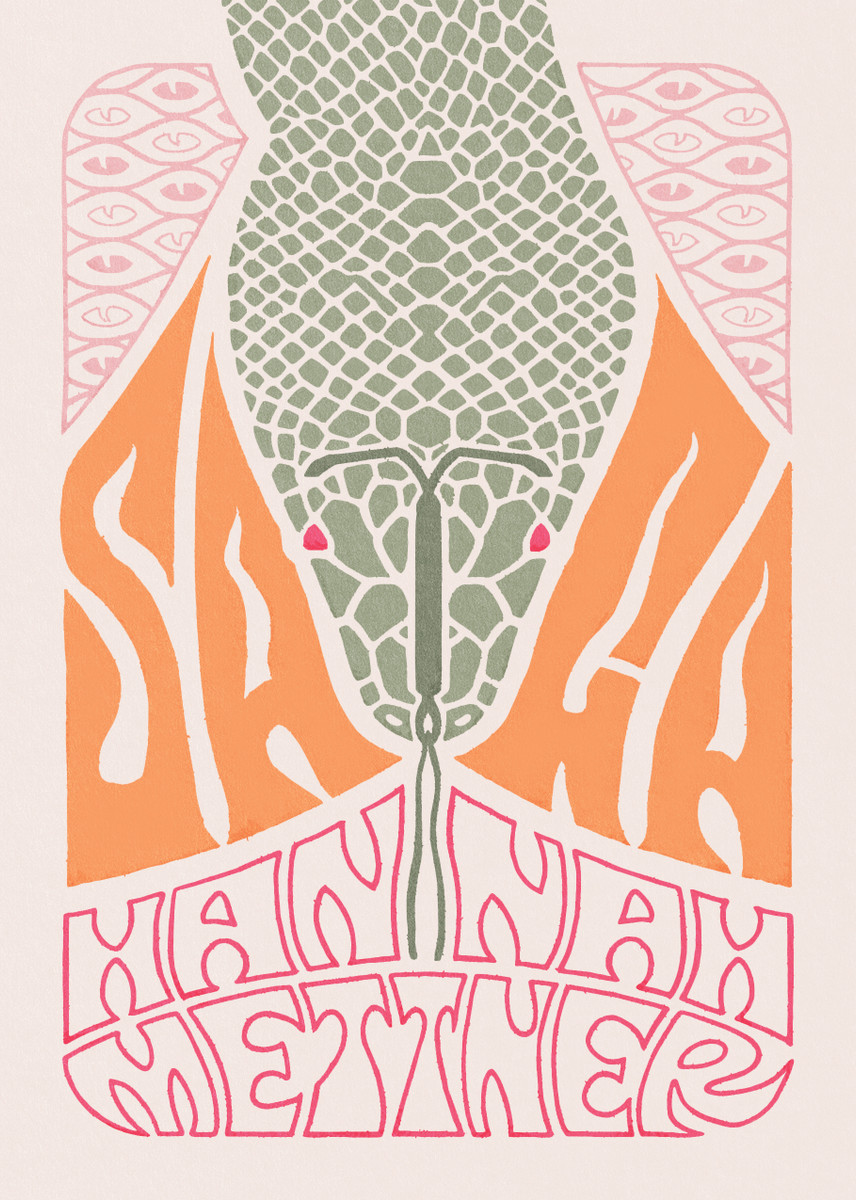
Saga, Hannah Mettner, Te Herenga Waka University Press, 2023
[…] My aunt reports
that we used to be Vikings, but it is clear that
that was a very long time ago. For example
all my hobbies are activities that involve sitting
down and not being killed. I only learn these
things as I learn that it is rude to introduce
myself with nothing more to offer than a name.
My history tightens around me like a knot and
there is a wild blackberry growing through it
like everything here.
final stanza in ‘Saga’
The first stanza of ‘Saga’, the opening poem in Hannah Mettner’s new collection, Saga, is utterly intriguing. The kind of experience where if you read it in a bookshop, you know you’d simply have to buy the book, knowing the poem could move in myriad fascinating directions. The speaking ‘I’ draws you into enigma, penetrating questions, revelations, the unexpected.
I have adored spending slow-motion time with Saga, letting its layers and voice, crevices and bloom, take root as I read. I get to the end of the collection and I have written a phrase in my notebook: poetry as mesh. It feels apt.
In the acknowledgement pages, Hannah makes it clear she writes within a nourishing community; think other writers, writing clubs, her Poetry Pals, her friends, editors and journals. This matters. This makes a difference.
Hannah writes within a history of reading and viewing, and this also makes a difference. Some of the poems are written in direct response to the work of others. The brilliant opening poem, ‘Saga’, is a direct response to Mary Ruefle’s ‘Saga’ from her book Trances of the Blast. You can also follow links to bell hooks, Tolstoy’s Anna Karenina, Kristen Ghodsee’s Why Women Have Better Sex Under Socialism, Radclyffe Hall’s The Well of Loneliness, sonnets by Elizabeth Barrett Browning, Eavan Boland’s ‘Atlantis–A Lost Sonnet’, Fleur Adcock’s ‘for a Five-Year-Old’. Add in Buffy and the Vampire Slayer, ‘Three times a lady’, Werner Herzog. A cultural and literary mesh that sustains and extends.
The poems also feel embedded within a mesh of personal history. Although I can’t draw a definite line between fiction and autobiography, I found myself viewing the poetry as a vehicle for self conservation, even self recognition. The subject matter roves from sexuality to love, mothering, daughtering, marriage, not marriage, physicality, longing, hunger, friendship.
Relationships are key to poetry as mesh: friends, family, lovers, child.
Unsleeping in the dark, I count my friends
for reassurance, rather than sheep.
I turn to them like the dog-eared pages
of a favourite book. Each with their own
reliquaries of chaos and glory.
from ‘Coven’
Then there is the necessary mesh of a world under threat, disturbing, question raising, action provoking.
If only the world was a brain that could rinse herself as we sleep.
Really, there is no ultimatum we might offer except our own extinction.
from ‘Poem while watching the world burn’
Saga is a magical, thought-provoking, heart-boosting read that sticks to your skin, dances on your eyeballs, trembles in your eardrums, circles in your mind. It is complex and full bodied and haunting. It is mesh. Glorious poetry mesh.
You can hear Hannah read two of the longer poems here
Hannah Mettner is a Wellington-based poet from Gisborne. Her first collection, Fully Clothed and So Forgetful, won the 2018 Jessie Mackay Best First Book Award for Poetry. Her poems have appeared widely in literary journals, including Sport, Turbine and Cordite. In 2014, with Morgan Bach and Sugar Magnolia Wilson, she co-founded the online poetry journal Sweet Mammalian.
Te Herenga Waka University Press page
 NZ Poetry Shelf