Category Archives: Uncategorized

Poetry Shelf classic poem: Tracey Slaughter picks Fleur Adcock’s ‘Composition for Words and Paint’


Composition for Words and Paint


This darkness has a quality

that poses us in shapes and textures,

one plane behind another,

flatness in depth.


Your face; a fur of hair; a striped

curtain behind, and to one side cushions;

nothing recedes, all lies extended.

I sink upon your image.


I see a soft metallic glint,

a tinsel weave behind the canvas,

aluminium and bronze beneath the ochre.

There is more in this than we know.


I can imagine drawn around you

a white line, in delicate brush-strokes:

emphasis; but you do not need it.

You have completeness.


I am not measuring your gestures;

(I have seen you measure those of others,

know a mind by a hand’s trajectory,

the curve of a lip).


But you move, and I move towards you,

draw back your head, and I advance.

I am fixed to the focus of your eyes.

I share your orbit.


Now I discover things about you:

your thin wrists, a tooth missing;

and how I melt and burn before you.

I have known you always.


The greyness from the long windows

reduces visual depth; but tactile

reality defies half-darkness.

My hands prove you solid.


You draw me down upon your body,

hard arms behind my head.

Darkness and soft colours blur.

We have swallowed the light.


Now I dissolve you in my mouth,

catch in the corners of my throat

the sly taste of your love, sliding

into me, singing;


just as the birds have started singing.

Let them come flying through the windows

with chains of opals around their necks.

We are expecting them.


Fleur Adcock


From Poems 1960-2000 (Bloodaxe Books, 2000). Subsequently published in Collected Poems (Victoria University Press); originally published in Tigers (Oxford University Press, 1967). Posted with kind permission from Bloodaxe Books and Victoria University Press.


Note from Tracey Slaughter:


When I read Fleur Adcock’s ‘Composition for Words and Paint’ I get a feeling like I’ve just stepped from glaring sunlight into a dim cool room, a blinking transition where objects shift their edges, textures and sensations blur. Things cross the retina that shouldn’t coexist – heat and cool, shade and sheen, disorientation and sharp awareness – as the dazzled eye tries to pull focus on outlines, shadows, glints. I’ve read it so many times now I could start to break down how its sheer mastery does this to me – but first I’d rather just surrender, step over that threshold, and let it return me to that liminal space it evokes, that experience of sensory eclipse.

Charted in a present tense aquiver with nowness, it’s a poem that wants to keep you in that state of dissolve, that hazy receptivity. Stanza through stanza as it tracks the movements of lovers drawing close in an intimate room, it guides the senses through concrete details that both cloud and illuminate, define and veil, observing the couple’s actions through sustained brushstrokes of metaphorical paint. It’s a poem that watches the act of love with an eye for its composition on the canvas, using the artist’s gaze to render the encounter in visual strokes and shapes, bringing bodies to slow light through questions of perspective, surface, angle, plane. As if conducting an ekphrastic exercise, analysing imagery already framed, it envisages the elements of this love scene in terms of its visual field, lining up the lovers in a studied play of light, curve, pose, dark, parallel, emphasis, depth. But if it employs the methodical and intricate tone of the artist approaching the canvas at the same time it applies the motif of paint to evoke the flooded senses of the lover lost in the work-at-hand’s erotic experience. Issues of surface, extension, colour, focus are at once used to underline the artist’s trained gaze and to wash the scene with a sensuous physical impression of the lovers’ work in progress. ‘I sink upon your image’ the speaker says – the borders of the canvas collapse. It pivots on a repeated play on ‘drawing,’ a practice which moves both brush and body – from a white line sketched around a figure, a head is drawn back, another tantalisingly down – using the term to figure both the tactile capture of the painted line and the gestural seduction of bodies, the pull and call of the lovers pacing and exploring each other in the shaded room. In that elided term, the hand that draws cannot sustain its ‘measured’ distance, it’s too coated in the palette of touch, too absorbed in lust for each line it envisages. Each brushstroke shivers on the painter’s own skin as it orders and colours objective space. It’s part of the mystery I love in Adcock’s language throughout the piece, that it can be at once controlled and lush, clinical and intoxicating – when I read it over I’m always searching for how it extracts such pulse from precision, such glistening intensity from poised restraint. Heat and chill, dark and gleam, it always keeps me blinking for how she keeps that threshold so skilfully blurred.

From an eye scrutinizing the shades and planes of love, the perspective slips to a place where the deeply implicated speaker can only ‘melt and burn’; I imagine that Adcock must have known the work of other women trying to depict female desire around this era: I always hear a tinge of Plath and Sexton in that phrasing. Perhaps there’s an echo of those poets present in the voice of this piece too, its commanding first-person, an ‘I’ intent on fixing and tracing the interaction with ‘you’ in a potent, honed, hypnotic tone. The slow processional sound of each line moves like brush or fingertip savouring the detail, like an entranced hand lingering on the contours of all it draws to light, tasting and positioning each syllable that ‘discovers’ the body with its palpable paint. It is unconventional glints of the lover that are touched upon too, the odd raw details an ordinary love-poem would read as flaws lifted into luminosity – flashes like ‘thin wrists, a tooth missing’ stand in contrast to the points of perfection a love ode would usually pick out, but the ‘tactile reality’ of this encounter sets them alight with ache and lustre. The final blur is ultimately the blur of fusion, of bodies merged and dissolved in such a close-up all sense of scale is lost from the visual field: ‘We have swallowed the light.’ The paint of the scene now spills into the speaker’s throat as she drinks in the lover: it’s a slyly rapturous depiction of orality which could have been a terrible paean to pleasure, but which Adcock’s lyric language manages to sculpt to a sultry and mutual release. Could any other poet pull off the miracle of birdsong ‘flying through the windows’ at climax? Sometimes I wonder if there’s a tint of darkness caught in the opal chains around the necks of those birds – but if there is, it is set against the tender domination of the voice, its soft imperative immediacy: ‘Now I dissolve you.’ It’s been said that a love poem always appeals as much to the reader as it does to the lover, using its language to pull and lure their senses too into a sweet-talking thrall. Consider me dissolved. ‘Composition for Words and Paint’ always has me at ‘This darkness…’


Bloodaxe Books page

Victoria University Press page


Tracey Slaughter‘s latest work is the poetry collection Conventional Weapons (VUP, 2019). She is the author of the acclaimed short story collection deleted scenes for lovers (VUP, 2016), and her work has received numerous awards, including the 2015 Landfall Essay Competition and the 2014 Bridport Prize. She works at the University of Waikato, where she edits the journal Mayhem.

Fleur Adcock, a New Zealand poet, editor and translator, resides in Britain. She has published numerous poetry collections, her most recent being The Land Ballot (2014) and Hoard (2017). This year Victoria University Press published her Collected Poems. She has won many book awards and has received notable honours including an OBE (1986), the Queen’s Gold Medal for Poetry (2006) and a CNZM for services to literature (2008).
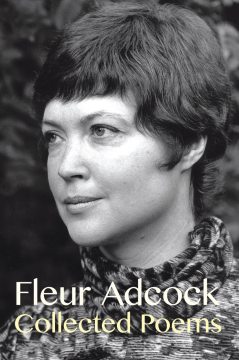
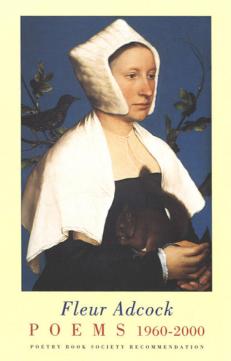


Adcock_Collected__47517.1544061847.jpg     5582f5dd597e7.jpg

Poetry Shelf noticeboard: Poet Laureate Award call for nominations

Kia hiwa ra!
Kia hiwa ra!


The National Library of New Zealand Te Puna Mātauranga o Aotearoa is seeking nominations for the New Zealand Poet Laureate Award.

Poetry is a quintessential part of New Zealand art and culture, and through the New Zealand Poet Laureate Award the government acknowledges the value that New Zealanders place on poetry.

The Chief Librarian of the Alexander Turnbull Library will appoint the New Zealand Poet Laureate after reviewing nominations and seeking advice from the New Zealand Poet Laureate Advisory Group.

Nominees must have made an outstanding contribution to New Zealand poetry, and be an accomplished and highly regarded poet who continues to publish new work. They must also be a strong advocate for poetry and be able to fulfil the public role required of a Poet Laureate. The role includes engaging with a wide range of people and inspiring New Zealanders to read and write poetry.

Candidates are expected to reside in New Zealand during their tenure as Laureate.

The term of appointment for the next Poet Laureate will run until August 2021.

Nominations close on Wednesday, 24 July 2019 at 5pm.
Please email your nomination to Ruby.Yee@dia.govt.nz

Email is preferred, but you can also mail your nomination to:

Alexander Turnbull Library
Attention New Zealand Poet Laureate Award
PO Box 12349
Wellington.

Send any enquiries about the New Zealand Poet Laureate Award can be directed to Peter.Ireland@dia.govt.nz


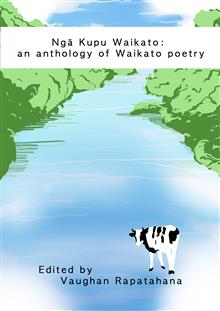
Poetry Shelf review: Ngā Kupu Waikato: An anthology of Waikato poetry


9780473465018.jpg


Vaughan Rapatahana is a terrific champion of poetry in Aotearoa – he shines a light on poetry and poets that deserve far more attention than they currently get, particularly in his articles posted at Jacket2. He has also edited multicultural books of poetry with poetry exercises for secondary schools (Poetry in Multicultural Oceania – Book 1 and Book 2); and he is a much admired poet in his own right.

Vaughan’s latest project is a much-needed anthology of poetry from the Waikato region. As editor his criterion for submission was that the poet had lived in the area for a minimum of one year. Themes are multiple but the river is a strong presence in the collection as a whole, while the 41 poets are stylistically and culturally, as well as politically and poetically, diverse. They range from our poetry elders (poets whose work we have loved across decades) and the electricity of emerging voices; from Bob Orr, Murray Edmond and Vincent O’Sullivan to Aimee-Jane Anderson-O’Connor and essa may ranapiri. There is an introduction by Dr Mark Houlahan from the University of Waikato.

Here is a tasting platter:

Stephanie Christie’s poem, ‘H-town’, is aware she lives on ‘land that was taken’, that like her parents she tried to leave but she has returned:


but here I am

writing poetry, prospering

in the city’s glittering vision

and the milk in my coffee

the twisting river –

O, jewel of the Waikato.


I’m the child of the future

in whose name the work

was done. History persists

in every one of us.


Many of the poems are home or origin anchors. Olivia Macassey’s is like a song, held together by the repeated line – ‘I am from’ – that opens each stanza, the physical detail gleaming:


I am from the dry hollows

below the cabbage tree and the mahoe

where other trees wait with us to grow up, the rātā

curling its thoughtful fingers;

and like the fat female eel,

I swim out and return.


Other poems evoke a sense of place to such a degree you become embedded in place as you read; the way a physical location reverberates with such intensity you are transported to a version that builds in your head. Again it forms a physical anchor. In ‘Frost’, a skinny backbone of a poem, Mohamad Atif Slim does just exactly that:


the river in

town


will be steaming

like hot soup.


the neigbour’s horse

grunts. his breaths are


puffs of

spun sugar.


a dog

barks.


inside my house

it’s still,


and still

dark.


For Bob Orr, in ‘Waikato karakia’, the river becomes glorious song, a chant, a loving homage that calls the river rhythm into being on the line.


Here is the river

here is sunlight on the river

here sunlight weaves harakeke patterns on the river

here by the unending course of the university of the river

I saw a broken branch waving a green leaf on its way down the river

Fairfield Bridge up to its concrete knees  in the river

a museum of dreams reflecting the mysterious fact of the river


Murray Edmond, in ‘Matakitaki, 1822’, draws back into the region’s heartbreaking massacres, a queen’s visit, a rugby club.


here was the place of our greatest slaughter

an old green shed in a field of grass

an old green shed in a field of grass


MUSKET OVERCAME THE MERE

bronze words on a monument


And some poems are fiercely political – shifting our view point so we may no longer carry disabling historical narratives. Reading the collection is like sitting by the river through all seasons, feeling the way it runs through the blood of the poet writing, a lifelong current, carrying anecdote, beauty, history. It is both the spine and heart of the collection that draws me in closer again and again. A Waikato treasure.


singing the old songs

This is the way the old story keeps passing though


Reihana Robinson from ‘O Moehau Mountain (How much can you take?)’


Poetry Shelf noticeboard: Applications open for the Katherine Mansfield Menton Fellowship

Katherine Mansfield at her work table, tea tray bes…rary 1-2-011985-F  .jpg


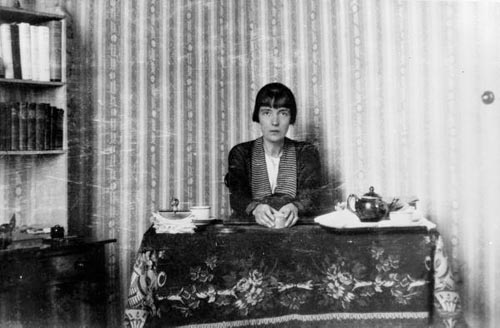
Applications open for the Katherine Mansfield Menton Fellowship, with the successful fellow travelling to France in 2020.

Founded in 1970 it has been awarded to some of our most successful writers including Maurice Gee, Carl Nixon, Kate Camp, Anna Jackson, Mandy Hager, Greg McGee, Bill Manhire, Janet Frame, Witi Ihimaera, Elizabeth Knox, Lloyd Jones, Dame Fiona Kidman, Roger Hall, Marilyn Duckworth, Michael King and Allen Curnow.

Katherine Mansfield Menton Fellowship allows the successful fellow to live for up to six months in Menton, France with access to a writing room beneath the terrace of Villa Isola Bella, where Katherine Mansfield did some of her most significant writing.  They receive a $35,000 grant to cover all costs including travel to Menton, insurance, living and accommodation costs.

The fellowship is generated by a fund managed by the Arts Foundation of New Zealand, which was made possible by generous donors including many individuals, the Winn-Manson Menton Trust, Creative New Zealand and the New Zealand France Friendship Fund.


Detailed information about the fellowship and how to apply is available at the Arts Foundation’s website:

Applications open Monday 27 May and close 5pm Monday 1 July. The recipient will be announced at new Arts Foundation event, NZ Arts Ball on Saturday 31 August in Auckland.

Poetry Shelf Monday Poem: Aimee-Jane Anderson-O’Connor ‘Signal’


Signal


The crossing signal twitches

like it’s filled with hot

crickets

and they whisper

touch touch touch

and so you reach out

press the cold metal button

press the cold metal

just to say:

I’m here,

I’m here, please,

let me cross safely.


Aimee-Jane Anderson-O’Connor was awarded the 2018 Charles Brasch Young Writers’ Essay Prize, and the 2017 Monash Prize for Emerging Writers. Her poem ‘Instructions’ was named by The Spinoff as the best poem of 2018. Her work has appeared in a number of literary journals, including Starling, Mayhem, Poetry New Zealand, Landfall, Mimicry, Turbine, and Min-a-rets. She writes thanks to some of the best people on this great watery rock.

Poetry Shelf Friday talk spot: Johanna Aitchison on anagram poems


Anagram Poems


Like many obsessions, my preoccupation with anagrams began by accident. I am writing my doctoral thesis at the moment, and had been struggling with my topic: alter egos in elliptical poetry. To put it bluntly: all of the alter ego poetry that I was writing for the creative section of my thesis was terrible; not so terrible that it was not even recognisable as poetry, but that uglier low level kind of terrible you get when you’re mining an area that has been all mined out and the work that results is simply boring. So I was on the lookout for inspiration, trawling for ideas that were more interesting than my thesis “starter idea”, when U.S. poet Dora Malech’s latest collection of poetry, Stet (2018), landed on our veranda in an Amazon package. My first thought on reading the poems was, “Huh?”; second thought, “What even is this?”; and then a series of thoughts that tumbled out on top of each other such as, “How does she do this?” “This is amazing!”, and “Wow, I’m so jealous, I wanna write anagram poems, too.”

Stet is a book of poetry which is composed primarily of anagrams, with a side of erasures. Malech states that she is influenced by the German artist and poet, Urnica Zurn, who wrote a series of vivid and disquieting anagram poems in the 1950s , as well as the French school of poetry Oulipo, which uses various restrictive forms to enable creativity, of which the anagram is one.

Thus began my obsession with this form–and the way that you can mine a single sentence or word or, in the case of the third section of Malech’s book, an entire poem (she writes a series of poems which are anagrams of the Sylvia Plath poem “Metaphors”)–and resulting questions (some of which Malech explores in Stet), such as:  How can lyric subjectivity survive within such a tight machine? Is this kind of poetry too sterile and fragmented to really connect with a reader? I am at the beginnings of my explorations in this area, so don’t have any firm answers yet. But writing anagram poems (in which, for example, an entire poem may be made out of a single line, re-arranged) is kind of like build-your-own-nightmare. You get to choose the particular brand of nightmare, and that ambit of it, but within very tight parameters. To put it more another way, it’s like performing back flips in a very tight space; but if you pull it off, the thrill is real.


Johanna Aitchison


Johanna Aitchison is a doctoral student at Massey University, Palmerston North, examining anagrams and erasures in hybrid poetry. Her most recent volume of poems, Miss Dust (2015), was described by reviewer Sarah Quigley as “Emily Dickinson for the 21st century”. Her poetry has appeared in anthologies such as Best New Zealand Poems 2008 and 2009, and Best of Best New Zealand Poems (2011). She was a 2015 resident at the International Writing Program at the University of Iowa and the 2012 Visiting Artist at Massey University.