This is my sixth comfort book list – lists that use comfort as a starting point and then veer off as the contributors make selections. To date: poets, fiction writers, non-fiction writers, children’s authors and invited New Zealanders. The books are much loved and are as likely to startle and provoke as they are to soothe and provide solace.
I have been musing on how my reading habits have changed. My usual focus has shattered and whereas I would spend whole days in the grip of a book I can’t seem to do that at the moment. I graze. Poetry works for me. Literary journals are good grazing ground. A single poem can hold my attention for ages.
For some reason I am compelled to write. I have poems turning in my head like little snowballs. They are there in the middle of the night when I can’t sleep, and they are with me during the day.
But books are essential. I am still reading Richard Powles’ magnificent The Overstory at a snail’s pace and just loving it.
This week I invited Publishers and a few others involved in the industry. Very fitting when bookshops will be able to process online sales next week.
Harriet Allen (Fiction Publisher, Penguin Random House)
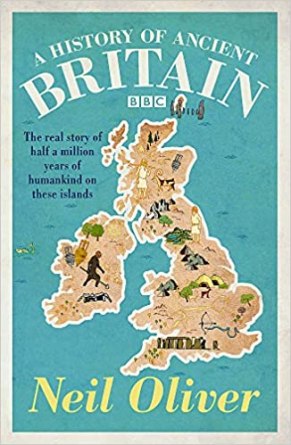
Despite history reminding us that we never learn, I also find it a solace that we persevere and continue to connect. I’m not the first person to have made that observation, nor will I be the last; that’s the nature of history. But because of it, Neil Oliver’s A History of Ancient Britain has been much in my mind recently. This is partly because it is such an excellent book and partly because it explores how humanity has come together and been distanced in varied ways for millennia. I read the book over the Christmas break while in Britain. During the lockdown, I have had more than enough manuscripts to keep me occupied, but have also been turning to other books on ancient history, but only to be disappointed – Oliver has set a high benchmark.
I’m no doubt falsifying by oversimplifying, but he shows an interesting fluctuation in the social interaction between ancient people in Britain. Hunter gatherers had ventured into what was a peninsula before an ice age chased them out. When it eventually receded, new generations travelled north, hunting and gathering. Because there were so few people, Oliver believes that special places such as Stonehenge developed to bring them together, to observe the winter solstice, to meet up, trade, find spouses and celebrate.
The discovery of bronze resulted in more effective tools, which improved farming and led to larger settlements and an increasing population. When iron was discovered, these populations created better weaponry as they fought over land, food and resources. This was the time that hillforts were built, complete with their grain pits, so tribes could lock themselves in and shut others out.
Then came the Romans, some tribes welcoming them in, others trying to repel them. But throughout all these periods, although the peninsula had become an island, people were crossing the sea, intermarrying, trading with civilisations far afield, sharing ideas, art and skills.
There are many fascinating observations in this book, such as who controlled the changing resources at different times and how that influenced social interaction. You can appreciate this book from a safe hemisphere away, but I loved reading it while visiting some of the places mentioned (from Stonehenge to Danbury Hill Fort to Bath Roman baths – all impressive structures in different ways). I took it for granted then that (if I saved enough money and leave) I could travel there, but that was BC-19. Now things have changed, even my visit, although only a few months ago, was to a Britain that no longer exists: the virus has now scarred it.
At one point, Oliver talks about Stone Age hand axes, saying that until you can hold one you cannot appreciate how perfectly they fit the hand at rest. All very well for you to say that, I thought, knowing the chance of me ever holding one was next to zero.
About a week later, we were at Fishbourne Museum in Chichester, viewing the stunning Roman mosaic floors. They also had a tour of their archives building, where all archaeological finds in the region are sent to be cleaned, catalogued, stored and loaned to museums. As this process was explained, we were handed around objects from the collection, such as an exquisite Samian-ware dish.
But what sent me tingling were two Stone Age hand axes. Oliver’s book leapt off the page. Just as he had described, each axe fitted exactly within the palm, letting my fingers rest in descending notches. One had been made for the right hand, the other for the left. Each had once fitted snuggly in a Stone Age hand, as it was knapped into shape and wielded as an everyday tool. Although we may have been separated by millions of years, I felt an incredible connection to the makers. It was a temporally distant handshake. The distance made it all the more miraculous.
Fergus Barrowman (Publisher, Victoria University Press)
My comfort reading is serial crushes – over the past year, Patricia Beer, Julia Blackburn, Alice McDermott, and since February when the significance of Covid-19 began to come into focus, Natalia Ginzburg. The tipping point was All Our Yesterdays, a novel set in internal exile in WW2 Italy. It’s teenage Anna’s story, but this is a sentence that especially moved me to Twitter: ‘Cenzo Rena poured himself out some more brandy and slipped on his waterproof and went out into the bright morning, with the bells ringing loudly and little shining aeroplanes high up in the sky.’ You’ll have to read it to appreciate the significance. The memoir Family Lexicon and the essays in The Little Virtues are vital – especially ‘Winter in the Abruzzi’ and ‘My Vocation’. In lockdown, the first book I was able to forget myself in was The Manzoni Family, a long non-fiction epistolary novel about the author of I promessi sposi and his family. Manzoni’s glittering career and the Risorgimento play out in the background, but the book’s substance is what the family wrote to one another about over 150 years – constant illness and occasional epidemics. We should all read whatever gives us comfort.
Sarah Bolland (Creative Director, The Cuba Press)
When I’m in need of solace, there’s only one reliable way to achieve it: murder.
Only of the literary sort, of course, and preferably cosy. The first book I read during this lockdown was The Pale Horse by Agatha Christie. Growing up, half a shelf of the hall bookcase was devoted to her, so she comes with a sense of safety and familiarity, even if it’s a book I’ve never read before. You know there’ll be a body (of someone you’re not very attached to), you know there’ll be clues (that you could theoretically work out) and you know that by the end everything will make sense and the world between the covers will be restored to order. It’s comforting to believe things can be that easy, once in a while.
There’s a great episode of the Allusionist podcast that delves more into ‘the literature of convalescence’ – not just for illness, but all kinds of wanting to feel better.
Sam Elworthy (Publisher, Auckland University Press)
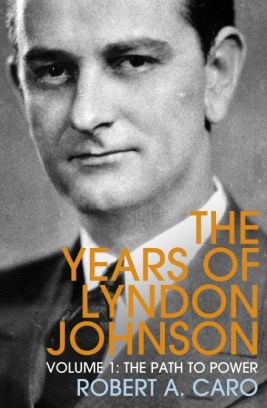
For comfort right now, believe it or not, I reckon the first volume of Robert Caro’s biography of Lyndon Johnson, The Path to Power (just finished) does the job. It’s just a deep insight into real politics – how it works; how it can help people; how it goes wrong. What we’re dealing with right now requires political solutions. We’re fortunate in New Zealand to have the politics we do; the US is unfortunately right now to have the politics they do. The LBJ biography shows how to tell one from the other.
Catriona Ferguson (Directory Publishers Association)
The dark and knotty novels of Agatha Christie have regularly offered me safe haven in troubled times. They provide both distraction and comfort; I think it’s the combination of sharp plotting, absorbing characters and the way in which they invoke a slightly remote world that it’s easy to escape into.
Another crime writer I lean towards is Sophie Hannah who has been handed Agatha Christie’s literary baton and so far has produced four new mysteries featuring the much-loved moustachioed detective Hercule Poirot.
If you prefer your crime more contemporary then I recommend any of Hannah’s other novels; I’m currently deep in Haven’t They Grown, a tricksy, compelling book that plays with truth and logic.
Sally Greer (Director, Beatnik Publishing)
That was a difficult task because there are a number of titles that readily fulfil that brief of books that have given me comfort. I’d have to say the upcoming Wild Kinship: Conversations with Conscious Entrepreneurs by Monique Hemmingson is a book that’s given me quite a lot to think about going forward. It’s not only inspiring but yeah comforting, knowing that you can do something yourself to make a difference. There’s a quote by the writer and philosopher Aldous Huxley on the back of the book – ‘There is only one corner of the universe you can be certain of improving, and that’s your own self.’
I think in New Zealand we’re definitely living that, everyone pitching in during this incredibly tough time. Monique Hemmingson has met with all these inspiring conscious small business owners. The bottom line isn’t purely about profit and margins, competition and greed. The focus is on community and collaboration, it really is an amazing conversation about social capital. It’s so timely for what’s happening here and around the world.
Jenny Hellen (Publisher, Allen & Unwin)
To be honest, when lockdown was announced I instinctively felt I needed to read something ‘easy’, engrossing and escapist and so I bought Marian Keyes’ Grown Ups. It was perfect. Assured writing, laughs, dramatics, tension. It distracted me from the horrors of Covid. Not sure I would call it soothing. Books that fall into that category for me are The Year of Magical Thinking by Joan Didion, Lanny by Max Porter, Someone’s Wife by Linda Burgess: all exquisite writers who have the power to take you away from where you are right now. Oh and in the middle of the night when you can’t sleep, I can heartily recommend Bill Bryson’s The Road to Little Dribbling – gently amusing walking tour of England, along with The Dutch House by Ann Patchett and Olive, Again by Elizabeth Strout.


Roger Hickin (Publisher, Cold Hub Press)
In Water for Days of Thirst, a selection of poems by the Nicaraguan poet Blanca Castellón, which I translated and published in 2016, there is a poem which seems particularly appropriate in any consideration of literature as a storehouse of solace:
Birth
In the midst of today’s death
a poem was born
alone
so alone
its cactus body
stores water
for days of thirst.
But the book I’ve returned to again and again over nearly fifty years is Hear us O Lord from heaven thy dwelling place, a posthumously published (1961) collection of stories by Malcolm Lowry: mostly for the lyrical, meditative 68-page story, ‘The Forest Path to the Spring’. Intended by Lowry as the Paradiso of a never-realised Dantesque trilogy, itself part of an even grander design, this was an attempt “to write of human happiness in terms of enthusiasm and high seriousness usually reserved for catastrophe and tragedy”. Largely autobiographical, like much of Lowry’s writing, it is an account of an alcoholic ex-seaman/jazz musician’s life with his wife as squatters in a shack on Vancouver Inlet in the 1940s and early 50s; an evocation of simple virtues in the face of destruction; a record of the epiphanies and exultations of a man who learns through suffering to simplify his life. Even if the writing is sometimes a little too lush & teeters on the brink of sentimentality, from its opening sentence–– “At dusk, every evening, I used to go through the forest to the spring for water”–– ‘The Forest Path to the Spring’ is a profoundly comforting work.
Chris Holdaway (Publisher, Compound Press)
American poet Douglas Crase published The Revisionist in 1981: a book of such utterly sweeping poems that must have been almost impossible to read for their dazzling sincerity in a time of devoutly post-modern irony. His writing has been available only marginally for decades, but last year Carcanet reissued (as it were) The Revisionist so now you too can experience reading the first lines and getting your breath knocked out so hard that everything seems possible:
If I could raise rivers, I’d raise them
Across the mantle of your past: old headwaters
Stolen, oxbows high and dry while new ones form,
A sediment of history rearranged. If I could unlock
The lakes, I’d spill their volume over the till
I know you cultivate: full accumulations swept away,
The habit of prairies turned to mud. If I had glaciers,
I’d carve at the stony cliffs of your belief:
Logical mountains lowered notch by notch, erratics
Dropped for you to stumble on. Earthquakes, and I’d
Seize your experience at its weakest edge: leveled
Along a fault of memories. Sunspots, I’d cloud
Your common sense; tides, and I’d drown its outlines
With a weight of water they could never bear.
If I had hurricanes, I’d worry your beaches
Into ambiguity: barrier islands to collect them
In one spot and in another the sudden gut
That sucks them loose to revolve in dispersion with
The waves. If I had frost, I’d shatter the backbone
Of your thought: an avalanche of gravel, a storm
Of dust. And if I could free volcanoes, I’d tap
The native energies you’ve never seen: counties
Of liquid rock to cool in summits you’d have to
Reckon from. If I could unroll a winter of time
When these were done, I’d lay around your feet
In endless fields where you could enter and belong,
A place returning and a place to turn to whole.
Nicola Legat (Publisher, Massey University Press, Te Papa Press)
I wasn’t going to read the new Elizabeth Strout. I loved Olive Kitteridge and My Name is Lucy Barton but, you know how it is, there are lots of other authors and books to get through. But then, the day before lockdown, I rushed into The Women’s Bookshop to grab some books for the weeks ahead. Carole’s book shelves had been pretty well cleaned out in the stampede of the days before but there was still a modest pile of Olive, Again on the centre table and so I bought one. The next day lockdown began, and my street’s newly established WhatsApp network sprang to life as we asked each other questions: Has anyone been to Countdown yet, and how long is the queue? Do you have flour? Yeast? How do we help the residents in the halfway house? Don’t forget to bang pots outside at 7pm on Saturday night. Slowly distinct personalities revealed themselves: practical people, compassionate people, creative people, jokey people, sometimes cranky people. We were all in this together. What we had in our street was what we had and we would get through. A lot like Crosby, Maine, where Olive Kitteridge is advancing into old age, still blundering through life, irascible, disappointed, scornful, lonely. But also capable of compassion, her roots down deep in the soil of her complex little community. Over the years she had given a good deal to it, and for all its flaws and shortcomings it could still sustain her. A lot like us.

Julia Marshall (Publisher, Gecko Press)
Normally as a publisher I would be careful not to choose a book we have published ourselves, but at this moment, if we are talking comfort at a time when I swing between optimism and despair, I want to remind myself of why we do this. For me, there are some key books that I think the world is better with than without: All the Dear Little Animals is one, by Ulf Nilsson and Eva Eriksson, Duck, Death and the Tulip, by Wolf Erlbruch, Seasons by Blexbolex – all good for slowing me down, encouraging a bit of breathing perhaps, as good for me as a glass of water or a cake. (If I wanted cake, I would read Detective Gordon.)
The fact that I am reading at all is a comfort as I sometimes worry about not being able to see – but I don’t read for comfort. I use food for that. I just read, often whatever is next on the shelf. I do like something different to what I read last. At the moment I would like next, if I had it, some Dickens, for the pace, humanity and the writing. I am also reading cookbooks.
Mary McCallum, (Publisher, Mākaro Press and The Cuba Press
Sincerity by Carol Ann Duffy (Picador)
My son Paul gave me Carol Ann Duffy’s Sincerity for Christmas. She was UK poet laureate until last year. The book is bright and sparkling and I started to read. Then news came through that my uncle Nigel had died on Christmas Eve. I’d just read a line that spoke of ‘The small o in love and loss.’ It felt like the perfect line, the perfect compression. I shared it with my grieving aunt and cousins. I said it when we raised our glasses at the family Christmas toast.
At Easter, my aunt Chrys, on the other side of the family, died in her rest home in Devon. Not from Covid-19, but the virus meant she couldn’t be hospitalised. Just after my dad rang with the news, it started raining hard, and then it hailed. Sincerity was sitting on my piano, where the music goes. I opened it randomly to (I kid you not) a poem called ‘Garden before Rain’, which ends: ‘It is like love, / the garden yearning to be touched / by the expert fingers of rain.’
And there’s another poem too I’ve found, which I read when I’m missing my two children living in the UK, especially at this time. It’s called ‘Empty Nest’ and includes the lines: ‘I knew mothering, but not this other thing / which hefts my heart each day.’ It ends, as this poet so often does, with an uplift: ‘From a local church, bells like a spelling. / And the evening star like a text. / And then what next …’ Somehow Duffy always has the words for it, whatever it is. And consoles in the telling.

Catherine Montgomery (Publisher, Canterbury University Press)
Books give me comfort. Full stop. It’s a blanket statement about my favourite form of security blanket. Reading in bed offers the greatest comfort (even if frowned upon as poor ‘sleep hygiene’), preferably hemmed in by a couple of cats (even worse sleep hygiene).
My stockpiling before the lockdown was focused less on the pantry and more on the bookshelves – it’s not that I don’t love to eat too, but it seemed that supermarkets would still be open and bookshops wouldn’t. Lyttelton’s second-hand bookshop, a local treasure, had contributed to my sense of ‘reading security’ by providing the four volumes of Anthony Powell’s Dance to The Music of Time, and from the University Bookshop, in those surreal frantic minutes before the doors were locked for an indefinite period, I picked up a reassuringly hefty copy of Hilary Mantel’s The Mirror and The Light. There was comfort even in the anticipation of reading them.
There are so many other times when books have been a particular support to me. I arrived in Christchurch from the UK in late 1995, completely ignorant of Aotearoa’s culture and history, and of everyday Kiwi customs and idioms. Developing a sense of belonging is a long journey, and reading contemporary fiction is one of the ways in. I’ll always be grateful to New Zealand authors for being my guides at the start, amongst them Patricia Grace, Kirsty Gunn, Paula Morris, Emily Perkins and CK Stead. As we’re often told, an interest in other people and their lives is a great antidote to shyness and anxiety, and while I read them purely for pleasure these writers fuelled my curiosity and gave me a chance to start connecting with my new home quietly and at my own pace.
Despite that opening generalisation, I admit that books aren’t a panacea. (See Karen Hay’s advice on Poetry Shelf last week that when you need solace or comfort the best thing is to write something yourself.) Books weren’t able to comfort or even distract me from the acute pain of grief when my mother died; perhaps that’s as it should be. (I’ve since found a book about compassion as a path through suffering which has helped in the aftermath – A Fearless Heart by Thupten Jinpa, principal English translator for the Dalai Lama.) Even when the grief had modulated some years later, it was still asking a lot of fiction to provide enjoyment, let alone comfort. Now, as then, when I can’t cope with anything too serious or too flippant or too poignant, in the words of the late Clive James, ‘I thank heaven for small mercies. The first of these is Rumpole’.
During my long ‘convalescence’ after bereavement, John Mortimer’s comic stories about the crumpled, cynical, wise and witty defence barrister were wonderful comfort fare. There’s an underlying melancholy to the stories, too, but kindness and fairness are at their core. While each story is discrete, there was comfort in developing a deep familiarity with the characters and their environs as I progressed through the two omnibus editions. Sam Leith’s introduction to one collection puts it much better: ‘One of the great joys of these stories – like Wodehouse’s, setting a time and place in aspic – is the deeply consolatory joy of familiarity. You settle into Rumpole’s world with the same easeful sigh you imagine Rumpole emitting as he settles into his place at Pommeroy’s. Each story is different, but each story is also, deep down, the same. Each twists in an eminently satisfactory way’.
And in a sort of reverse-Proustian response, reading the stories connects me with comforting childhood tastes and smells – tomato soup (canned) and buttered toast (sliced white loaf): it’s lunchtime in the mid-70s, I’m ‘off sick’ from school, propped up in front of the TV, with the soup and toast on a tray, completely absorbed in an episode of the BBC’s ‘Rumpole of the Bailey’.
Waimatua Morris (Sales and Marketing Manager, Huia Press)
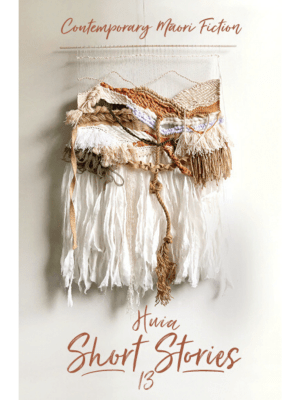
The first book I chose is Huia Short Stories 13 which is a collection of short stories from the 2019 Pikihuia Awards for Māori writers. I chose this book because it reminded me that we have a huge talent of local Māori writers that we should continue to support. This collection of superb storytelling will touch your feelings, make you think, open up new understandings and entertain you.
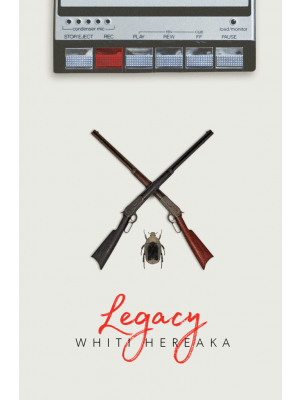
The second book I picked is Legacy by Whiti Hereaka. This is a thrilling and realistic novel that follows a modern-day teenager, Riki Pūweto, back in time to World War One where he finds himself serving as his great-great-grandfather in te Māori Contingent. This story reminds us of our tipuna who stood on the front line for Aotearoa. During this lockdown, front line staff have also played a crucial role to ensure our safety and comfort. I chose this story to acknowledge those who have made a sacrifice for the sake of others.
Helen Rickerby (Publisher, Seraph Press)
A few years ago my father was told that he was going to die within one to three years, depending on what kind of a rare disease he had. He phoned me up immediately to tell me, and of course I immediately burst into tears. I happened to be in a café with my friend B having an after-lunch coffee. B told me later that the waiting staff gave him really dirty looks, assuming that he was the cause of my grief.
My dad has passed the three year mark, and we’re pretty sure now he never had either form of that disease at all, but in the weeks following his ‘death sentence’ I found the worst time for me was that time between going to bed and falling asleep. That time when there is nothing to distract you from your fears. Except I did find something to distract me. I started reading books on my Kobo, which has a backlight, so I could read in the dark while my husband slept beside me. What I mostly read was books by Richard Holmes, a biographer. I focused on his books that collect shorter biographical essays – especially Footsteps: Adventures of a Romantic Biographer, Sidetracks: Explorations of a Romantic Biographer and This Long Pursuit: Reflections of a Romantic Biographer. These were the perfect things for me to relax into in the dark, little thoughtful windows into other people’s lives, guided by a warm and calming voice. Those times in the dark came to be a joy to me, something I looked forward to.
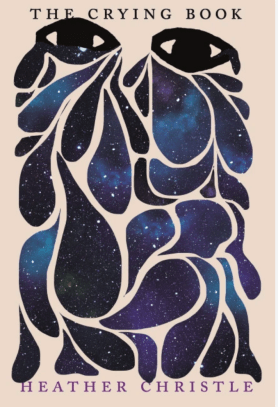
More recently, when sad, an understanding friend gave me a wonderful gift: The Crying Book by Heather Christle. It’s a sort of hybrid – kind of poetry, kind of essay, kind of memoir. It goes deeply into crying – the emotions and the science and the stories, without ever straying into self indulgence. I tried to read it in snatches – it was so beautiful I didn’t want it to end, but still I devoured it. It gave me comfort, and the hope I might be able to make something beautiful too.
Rachel Scott (Publisher, Otago University Press)
Looking at what others have written I realise I’m not really doing books-for-solace. No doubt there is something deeply wrong in my psyche. Jigsaws and chocolate are solace. My reading is escapist – transporting me to a completely different world that sucks me right in. I’m currently halfway through the third in the Wolf Hall trilogy by Hilary Mantel – The Mirror and the Light. The writing is original and searingly evocative. Not all of it is comfortable – Tudor times were tough, make no mistake – and real life assaults all your senses as the story unfolds. Solace it is not. Most memorable line so far ‘… the air as damp as if the afternoon had been rubbed with snails’. Marvellous stuff.

Roger Steele (Publisher, Steele Roberts)
Twenty years ago I was interviewed on the radio about being a publisher and mentioned inter alia that if I was marooned on a desert island, two books I’d like with me would be a comprehensive dictionary, and the complete works of James K. Baxter. Listening in, Jacquie Baxter (aka J.C. Sturm) was well pleased. Despite all the raruraru he caused her, she remained a staunch advocate of Jim to her dying day.
Nowadays I wouldn’t take either book; I know enough words, and enough Baxter, to get by. Instead, I’d take Jacquie’s complete works. They don’t exist as a single volume yet, but will in the not-too-distant future. There’s so much to admire and reflect on in Jacquie’s stories (e.g. House of the Talking Cat) and poems (e.g. Dedications). They’re always rich and refreshing to come back to, and they say so much about her life, and the Aotearoa New Zealand she knew. Not that it’s always comfortable reading, of course, but that’s part of the point.
Another book I’d take is a favourite children’s one, The Conquerers by David McKee. It’s an entertaining allegory about a general who takes his army to conquer all the countries around him. Eventually there is only one small country left to vanquish, but this one does not resist, instead welcoming the soldiers – with unexpected results. It’s a story that gives hope, so could hardly be more timely at the moment.

Mary Varnham (Publisher, AWA Press)
I’ve been spending whatever spare time I have in lockdown (while still working full-time from home) reading Serhii Plokhy’s book Chernobyl, which won the Baillie Prize in 2018. It may seem masochistic to read a book about a disaster during a disaster but it’s oddly reassuring since, 34 years after that horrendous nuclear meltdown, life goes on in the former USSR. And that Chernobyl led to the break-up of that repressive society, just as Covid-19 will shake our world into new patterns and power structures. However, I still can’t get this sentence out of my mind:”If the other three reactors of the Chernobyl power plant had been damaged by the explosion of the first, then hardly any living and breathing organisms would have remained on the planet.” Thank you to the brave and wise people fighting Covid 19 for all of us – for life.

Melanee Winder (Director, Hatchette NZ)
I spent the first week of lockdown in a tailspin and was completely unable to concentrate on anything for more than five minutes. I did, as always, have a bedtime book on the go but I would be hard pressed to tell you what it was called (it was crime, there was an unreliable narrator- and reader). I then played kindle roulette for a few days where I read whatever I stumbled upon on my kindle – lots of manuscripts for books publishing in 2021 and beyond. If I didn’t recognise the author or title it was even more of adventure and I’d often read a couple of chapters trying to work it out; is it commercial (will she kidnap him), is it crime (will she cut him up into tiny pieces) or is it literary (will she paint him and fall in love with his daughter)?
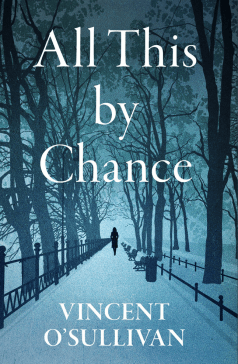
Once my brain had calmed down I then started on my TBR pile with gusto. Where the Crawdads Sing by Delia Owens was the perfect isolation read – clever enough to focus my thoughts but not so clever that it was exhausting. Owens took me out of my world and into that of a feisty woman surviving in the North Carolina marshland. I loved it but weirdly then found I had a real need to read a NZ author. Vincent O’Sullivan’s All This By Chance was every bit as good as the reviews had promised, the story moved around the world and spanned many years, I loved that the writing demanded my attention and in turn this book completely grounded me.
I am currently back in the world of feisty women and grisly crime, my happy place.
kia kaha
keep well
keep imagining








 NZ Poetry Shelf