Category Archives: Poetry

INSIDE.OUT Open Mic for Writers June 11th

Wednesday 11th  JUNE

INSIDE.OUT Open Mic for Writers

OneTwoOne Cafe Ponsonby Road

All writers welcome to read their work, or come as audience
Bring your fiction/poetry/non fiction/memoir/flash fiction
Guest musician: Otis Mace – guitarist, singer, songwriter

Five word competition: incorporate these words into a short piece <50 words:
breath(e) – groove – flash – string – intense
Random prizes awarded. Bring on the night or email to MC Anita

7.00 – 10 00pm, koha for musician
anitaarlov@hotmail.co.nz
facebook: inside.out open mic auckland

Poetry Live on KRD June 3rd

Tuesday 3rd June Poetry Live

Guest poet: Rachael Naomi
Guest musician: Kieran Cooper
MC: Kiri Piahana-Wong
Open mic poetry
The Thirsty Dog, 469 Karangahape Rd
8 00pm, koha for guests
http://www.poetrylive.co.nz

Kirsti Whalen in fine form on National Radio

Kirsti Whalen, an Auckland poet, had a terrific conversation with Wallace Chapman on National Radio this morning. I just loved hearing the Tim Finn poem again.
And I loved the tribute to women poets who have preceded us, Janet Frame especially: ‘My whole high school ended up writing poetry in the vein of Janet Frame.’ Yes, we are shaped and in debt so very much to those pioneering women writers who preceded us (speaking as a woman poet here of course).
There was a well deserved nod to English teacher extraordinaire, Ros Ali, too!
Kirsti is currently studying at Manukau Institute with Robert Sullivan, Anne Kennedy and Eleanor Catton. She was shortlisted recently for The Sarah Broom Poetry Award.
Listen to Kirsti Whalen with Wallace Chapman here.

.

an invitation to secondary school poets in Dunedin

An invitation to Dunedin’s young poets
– celebrate National Poetry Day 2014

National Poetry Day has long been celebrated in Dunedin by a public event featuring well-known poets. This year the event will be held on Friday 22 August and feature:

  • Vincent O’Sullivan (New Zealand’s Poet Laureate)
  • Majella Cullinane (2014 Robert Burns Fellow)
  • Owen Marshall (esteemed novelist, story-writer and poet)

We want to hear from Dunedin’s talented young poets. All secondary school writers (years 9-13) from Palmerston to Dunedin to Milton are invited to submit poems to the Dunedin Secondary Schools Poetry Competition.

Three poems will be selected to be featured on billboard posters distributed as part of National Poetry Day celebrations to shops, libraries and all Dunedin intermediate and secondary schools.

The three winning poets will each receive a $50 book token from the University Book Shop. In addition each winning poet will have the opportunity to read their work alongside the ‘Big Names’ – Vincent, Majella and Owen – as part of Dunedin’s premiere Poetry Day event (Friday 22 August, 6-7.30 pm at the Dunningham Suite, Dunedin Public Library).

Entries will be judged blind by award-winning New Zealand poet Sue Wootton. For more information about Sue, visit her website at suewootton.com.

Entries close 5pm
Friday 4 July 2014

Download A4 flyer (PDF)

Email to:

poems@writenow.org.nz

Post to:

Write Now

C/- University Book Shop

PO Box 6060

Dunedin North

Include:
  • poem title
  • your name
  • school
  • year
  • email address
  • contact number
  • postal address
Read full conditions of entry …
Generously sponsored by University Book Shop (Dunedin)

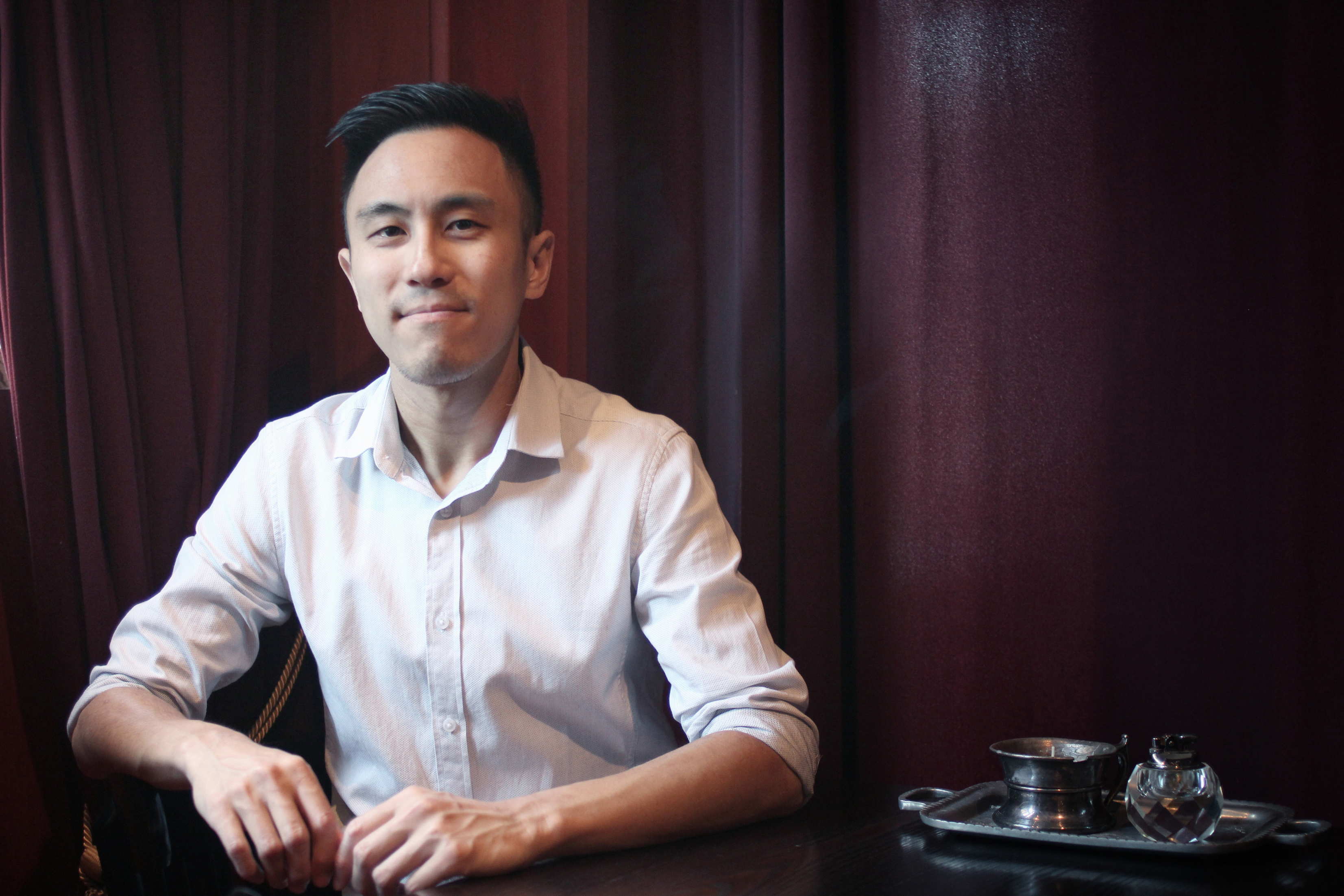
Poem Friday: Chris Tse’s ‘The saddest song in the world’ sweeps you into folds of sadness that in turn become folds of joy

Chris Tse - author photo - 2014 - resized

Photo credit: Sklee

Today, two sections from a longer, unpublished poem by Chris Tse.


The saddest song in the world

1.

I can fit the saddest song in the world in my carry-on.

I can fit the saddest song in the world in my right-side brain.


But I can’t fit it in my lungs or hold on to it with confidence

when underwater.                 And I can’t fit the saddest song


on one side of a 90-minute cassette tape without

an uncomfortable silent interlude cutting into its breath.


There is only so much space I can allocate to the saddest

song in the world;                   the weight is unbearable.


4.

Once, a lover exhaled my name in ecstasy and transformed it

into the saddest song in the world       all bolting nerves


and tender skin       pulling at the roar of the avalanche

in me.     By morning his name had taken another form


one freed from the haze of giddy crush     though it still rings in me

a stubborn joy.       The room in which we sung each other’s names


is now an altar with no idol.           Likewise, when I was once lost

in the company of foreign tongues       every new word shared


to describe the sorrow of joy   shook me like the saddest song

in the world.   A list of first loves.   An index of loss.


The saddest song in the world was kind enough to pull me back

into comfort               its reassurances a cool blade of sound.


© Chris Tse.doc

Chris lives and works in Wellington. His first full-length poetry collection, How to be Dead in a Year of Snakes, will be published by Auckland University Press in September.

Chris’ note: I have a playlist on my iPod of my all-time favourite songs (embarrassing fact: the playlist is called “Awescool”). The majority of these songs are touched with tragedy and sadness, so it’s been a personal quest of mine to find the saddest song in the world (any leads will be gratefully accepted). Many of the poems that I’m writing at the moment explore the role of music in our lives and its relationship to memory. I’m particularly interested in how music functions as a conduit for shared experiences. With that in mind, this poem ponders what ‘the saddest song’ (in whatever form it might take) could mean to different people.

Paula’s note: With no idea of its genesis, when I originally read this poem, it read like an extraordinary incantation of sadness. It struck me as part list poem, building delicious momentum in surprising pieces and productive links, and as part song, exuding bitter-sweet lyricism. For me, the first section became more than how and where you carry sad songs, because it exploded into how and where you carry sadness. The song (the poem) became a bridge to melancholic luggage for a cast of characters. As you absorb the rhythms and details of each section, there is an ambiguous sway between invention and the real. You get pulled through memory, anecdote, confession, epiphany, and it is this glorious movement that diverts you from sadness as a distancing abstraction. Music has the power to mimic and affect you, and so too does poetry. I love the surprise and the fresh touch of this poem, the way it sweeps you into folds of sadness that in turn become folds of joy. How does the poem’s genesis change my reading? I am not sure. I love the mission. I love the way that mission becomes poetry.

Siobhan Harvey’s Cloudboy—You read these poems and something in you shifts

photo

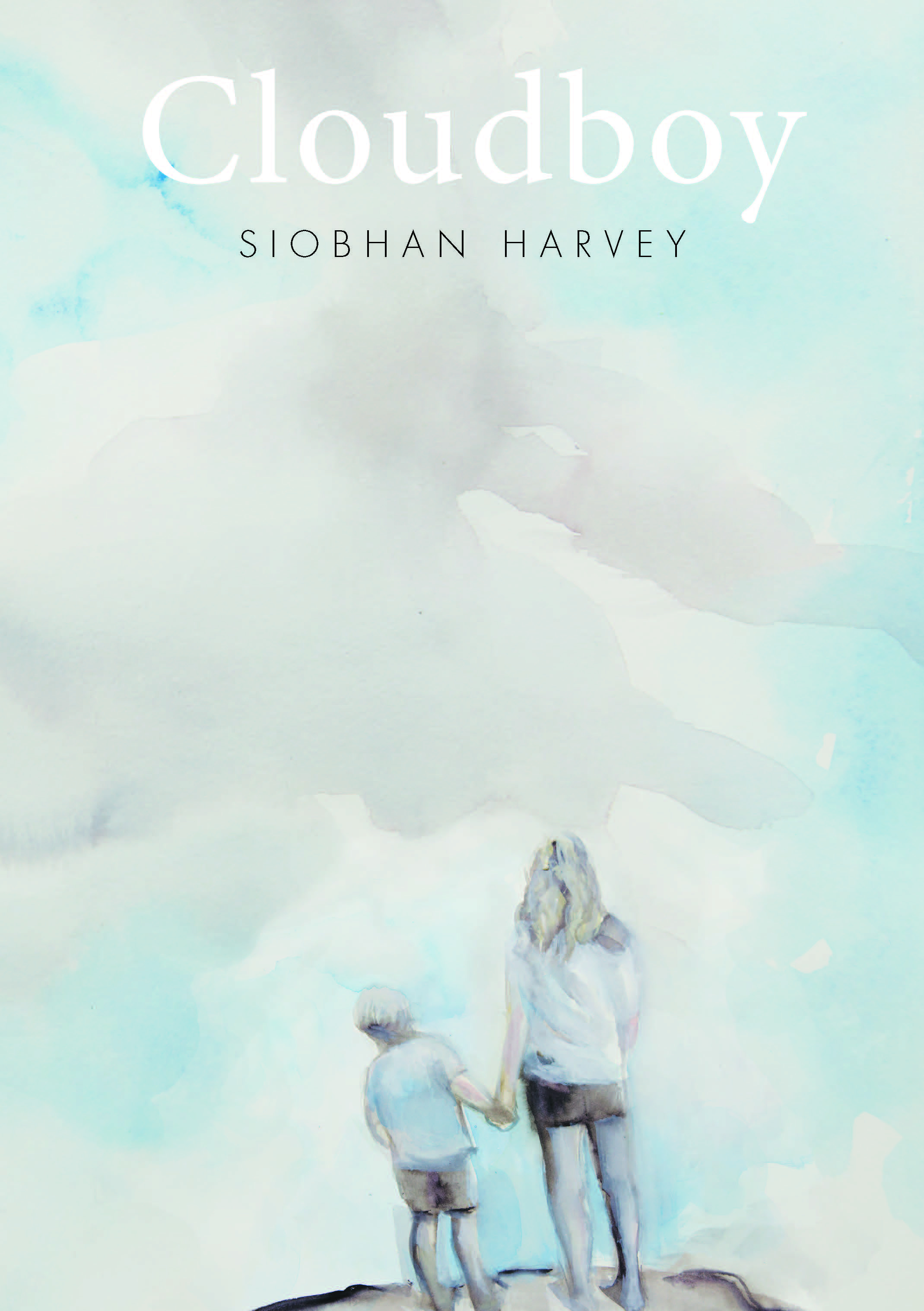
Siobhan Harvey’s new poetry collection, Cloudboy (Otago University Press, 2014), won the Kathleen Grattan Award for Poetry in 2013. The collection navigates Siobhan’s experience as the mother of an autistic young son. Without knowledge of this governing theme, the title of the collection summons something fablesque, fairytale-like and wondrous and conjures an ability to read clouds as well as exist in the clouds. Either way, the title is a magical entry point. With knowledge of the book’s genesis however, the title is even more resonant. Poignant. There is a sense that the tough, earthy detail is going to be tempered by threads of the ethereal. The beautiful cover painting by Allie Eagle was painted specifically for the book.

harvey_cover-1    harvey_cover-1

When I think of clouds, I think of the ephemeral, but that notion slips into a fertile chain of thought—to an ability to be full, to add beauty to an ever changing skyscape, to cast shadows, to release life-sustaining water. The first section of poems is entitled ‘The Autistic Child Considered as a Cloud,’ and it is as though the boy is filtered thorough these cloud attributes (or clouds are filtered through the boy’s attributes). The poem ‘Stratus’ brings together acute personal detail: ‘Just out of our reach is the Cloudboy, we know,/ who dances in heavy rain, wets himself, mutters/ complaints like madness, and is a bogeychild/ other mothers warn their darlings about.’ This is real. This is uncomfortable. This is at a distance from most of us. It is as though he is aloft with ice crystals forming about him.

Sometime the collection feels like a survival kit for the mother as she writes into and out of her son and her patience—he, fathomable, unfathomable, close, distant, complicated, much and ever loved. The poetry seeps and grows and amasses what it must be like to be the anchor, to be constantly motivated by care and concern. How then to translate such an experience into poetry? These poems offer insights into the autistic experience, yet it is not a matter of judging the autistic condition or the choices the poet made in how to represent it. As John Marsden said in his stimulating presentation to school students at the Auckland Writers Festival—we need to learn ‘to throw rule books up in the air and to find the way that suits us as writers,’ to be marvellously creative and not depend upon paradigmatic choices or models that constrain (are we becoming more and more regulated at every educational turn and less able to take risks in writing endeavours at any level?).

Siobhan offers poetry—a multi-pronged engagement with her subject matter—that unsettles and resettles rhythms, images, juxtapositions, syntax, motifs, stable ground. Tropes radiate out from the son. Each poem has a white-hot heart that grips you tight and shifts the way you see things. There is the lyrical lift of line and the difficult narrative thread. This, a musical tapestry (yes ear and eye hooked!) at the beginning of ‘Arcus’:

‘Arcus is a coal-lick Cloudboy slinking its way

back to the nights its mother, pregnant

with being, prowled from cold bed

in dead of dusk to drop before bunker, hands clasped

to dark gold, her lap-lap-lapping drawing out

tastes of liquorice, truffle and salty balsamic

beneath the comfortless cry of morepork and moon’

Siobhan shows us the ability of poetry to take you deep into human experience that is fugitive, unrepresentable, unfathomable. You read these poems and something in you shifts; the way we face both the difficult child and the mother of the difficult child. The way we exist within systems that encourage us to conform, contain, confine, manage and control. The way we have notions of the child as a platonic ideal; ever unattainable, this perfect version, in the swamping dark. Cloudboy, like the sky itself, is changeable and hard to grasp; he doesn’t fit here but he fits perfectly there. He knows this and misses that with his ‘hungry mind.’ He frustrates and confuses and absorbs. He becomes more than an idea (the austistic child), he comes aching real through the vital detail Siobhan gathers: ‘On day one, he sits in a chiton, of white tape/ reading Republic.’ ‘His hair was a hat shaped/ from the fleece of karakul sheep.’ ‘Studying Aberhart, Cloudboy takes up a camera, empties land/ of everyone except his mother’ ‘These are the rare days/ when the child is quiet and compliant,/ when there’s no translation of Russian/ or Sanskrit, no constant questioning, no/ forceful negotiations at the dinner table/ (I only eat broccoli at weekends …) no devouring soap,/ being Superman, writing acrostic poems’.

The poems move through experiences that demand the fortitude of the mother, but there are also moments of joy. Touchingly so: ‘the sound of Cloudboy singing will be more/ than enough to lay down the lines of this poem.’ Siobhan’s new collection is a collection that takes daring and necessary flight in order to lay down loving anchors, and it reminds me why poetry matters. There are a thousand ways this experience could be transformed into poetry. This is just one of them and it moved me profoundly.


NZ Book Council page

Poetry Archive page

Otago University page

Otago University Press page


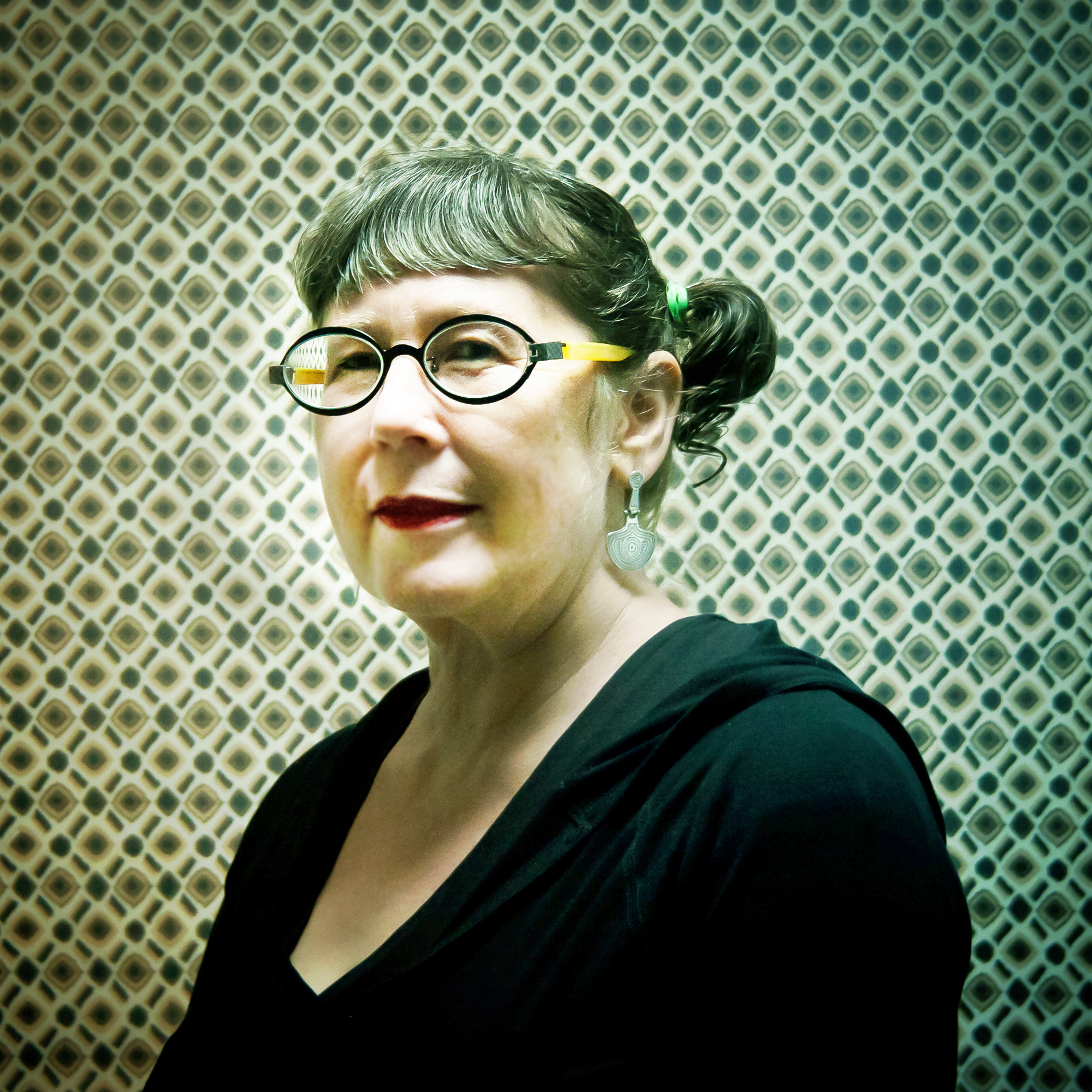
Poem Friday: Vivienne Plumb’s ‘As much gold as an ass could carry’ deliciously fablesque

Viv Final

This week an unpublished poem from Vivienne Plumb.


As much gold as an ass could carry.

One endless summer when I was fourteen

I began to speak with a great arrogance

as wide as a river mouth, imagining I was

witty and charming and full of my own cream.


I refused to continue laying the fire

or to cook supper in the tiny croft-house.

Instead, I was dreaming of ten-foot palaces, a crop of corn,

my own chambermaid, and as much gold as an ass

could carry.


I was sent to learn how to cut willows

and weave, but I allowed the meats

in my basket

to become cold and infested with worms.


I breast-stroked far away

in my twenty-league boots, under the delusion

I was moving fast, when in truth

I had remained stock still.


© Vivienne Plumb.doc


Vivienne Plumb presently holds the 2014 Ursula Bethall writing residency at University of Canterbury. She is a poet, a fiction writer, and a playwright, and has recently completed a Doctor of Creative Arts. New published work includes Twenty New Zealand Playwrights (with Michelanne Forster) published by, and available through Playmarket (N.Z.), and a collection of short fiction, The Glove Box, (Spineless Wonders, Sydney).


Author’s note: The language of this poem was influenced by the language and content of stories such as those the Grimm Brothers collected. The poem attempts to give some instruction in a similar way to those kind of stories, where the advice was hidden in the text, such as Little Red Riding Hood (i.e: watch out for lone wolves). Apart from that, the piece is also about youth: the narrator wants to ‘breast-stroke far away’ but will later discover that for all her wild swimming she ‘remained stock still’; as how can we truly get away from what we actually carry inside us? The title, As much gold as an ass can carry, reflects our youthful dreams, so full of ‘cream’ and conjecture.

Note from Paula: When I first read this poem it struck me as deliciously fablesque—a poem that would fit perfectly in Italo Calvino’s mammoth and brilliant collection of Italian folk tales. Vivienne’s poem has the momentum and structure of a folk tale where the morals and messages lurk in the seams. You have, for example, to keep your eye on the world, on the small details in order to nourish the bigger picture (otherwise your meat will rot in its basket). And then, the old proverb: less haste, more speed. Yet what elevates this poem into something exquisitely more, is the layered movement— not just in the semantic and visual reverberations but also in the aural kicks and echoes. Take the phrase, ‘full of my own cream.’ It’s semantically and visually surprising (gives flesh to the girl on the cusp of womanhood) and aurally active (the ‘eam’ and ’em’ sounds leapfrog through the poem like aural glue or a vital backbone: summer, imagining, charming, dreaming, chambermaid, much, become, moving, remained). That phrase just bounces and bounds at the end of the line. The poem also stands as a rite of passage—the young girl exhibits the youthful need to flounder and laze, to break away from constraint into the magical, dangerous unknown. I loved, too, the way Vivienne is unafraid of tropes (‘a great arrogance as wide as a river mouth’). I loved the confounding somersaults that verge on oxymora; the breaststroker in her twenty-league boots, the girlhood activity that leads to stasis. Glorious!


What I loved about the Auckland Writers Festival

photo

John Campbell called to the audience to applaud Eleanor Catton’s publisher, Fergus Barrowman. Terrific!

Some musings ….

1.This year I was part of the programme for schools and families at the festival and what a joy that was. I have already written about this on my blogs but the two School Days are a gift to Auckland City. To have the ASB Theatre packed to the brim with students ranging from Year 7 to Year 13 (over the course of the days) was extraordinary. I sat in the audience on Day 2 and was surrounded by a hubbub of book chat on what had been seen and what was coming up. These students were inspired not only to read and write and think and puzzle and ponder and feel and laugh– but also to face the big issues on how to exist in the world as a human being. This is the power of words—the way they can move and transport and shape us. The way we can be challenged. To have a long snake of a queue of students telling me they LOVED poetry with such enthusiasm after my session was a tick for NZ poetry. As Rick Stein says about local food producers: ‘We need more of this!’  See my post here.

2. The inaugural free family events in The Herald Theatre were a hit. Children clustered in the foyer to hear my favourite picture-book author read (Kyle Mewburn) and more! And pack into the theatre itself to witness the word wizardry of the Etherington Brothers along with others. I made up poems of the spot with the 5 to 10s and it was oohs and aahs from the parents as magical words spilled out into the air. It was fun and warm and energising.

3. The number of free events is also a gift to Auckland City. It is an open invitation to everyone to join in this celebration of ideas, stories, experiences, traditions, discoveries in conversations at local, national and international intersections.

4. The extraordinary opportunities to see some of the world’s and New Zealand’s most beloved writers- think Alice Walker for a start, then Keri Hulme, Eleanor Catton, Lloyd Jones, Sam Hunt, Patricia Grace.

5. I missed sessions—if only I could zip back in time and see them but here are some of my highlights (you just can’t see everything and it was such a gloriously eclectic programme!). What stood out for me were the electric combinations of chair and interviewee– that moved the interview into the realm of conversation. And some outstanding readings.

Eleanor Catton in a scintillating conversation with John Campbell. The blood pumping through was fueled by a shared passion and deep engagement with books, ideas, humanity. John started by saying, ‘The morning you won Ellie, there was a spring in the national step.’ Ellie had correctly guessed his star sign off stage (Libra) which was a terrific way to start. When John asked if she believed in astrology she said she was cautious about dropping an A Bomb too soon in case she lost the audience’s respect! These were some of Ellie’s standout comments: I value wonder, curiosity, belief. People who trust in relations are strong people in the world (that ties in with Patrica Grace’s view!). The difference between precision and pedantry is one of my dinnertime conversations. A mark of true feeling is if you speak it and people feel uncomfortable. Good ideas are always born out of bad ideas. I am grateful for the way Maori enable a connection with ritual. I’ve learned on the road how few forums there are for conversation (she is not asked to develop any strong statements she makes such as the way women are interviewed differently). Nobody can feel creative unless they truly believe there’s no right answer. Screwing up is impossible. You get older but the novel doesn’t; it’s funny, a snapshot of how you thought. You give pieces of the conscious, subconscious, unconscious. John wrapped it up by saying, ‘None of this seems to have corrupted you and we are really proud of you.’ It was one of those sessions where you walked out uplifted.

Elizabeth Knox was in dazzling form (rightly so, Wake and Mortal Fire are magnificent) and in conversatin with David Larson. Some gems include: In a YA novel you can’t deprive readers of hope. Wake is Mortal Fire‘s dark twin. When you put people in difficult situations, they can be amazing. My underbrain does a lot of thinking. As a girl I was very awake; now I am much more muted. I was always trying to flee from what the critic said. Silly. But now my toolbox is very big.

Cornelia Funke and I had a wonderful day exploring my favourite west-coast haunts. These two gems from her session stuck with me: You have to bottle up the magic and let it brew. The best things are not always loved by the majority.

Jim Mora to Alexander Smith-McCall: ‘You are very unusual writer because of your warm heart.’ Indeed! This was a session that filled us with warmth and laughter.

Hearing Caoilinn Hughes read from her terrific poetry collection (sadly I missed Alice Miller‘s reading as I was out west). It’s not just the Irish accent that gets you but the heavenly tilt of the words themselves. I did not want her to stop. See my review of Gathering Evidence here. Listen to her read on Kim Hill here.

Going to Siobhan Harvey‘s poetry launch. See my write up here.

I only got to hear half of Alice Walker in conversation with Selina Tusitala Marsh as I had to dash to the green room but it was utterly moving. This is some of what I took with me: The subjugation of women is what drew readers to The Colour Purple and the question, Who is God? At 70, I have been working for 50 years for women. The feminine is lacking in global power– we need a radically different system. Revolution has to start in your heart with tenderness; you have to feel your own pain, as John Lennon said– not just blood, bombs, name calling.

Hearing Adam Johnson read. He started by saying, ‘I am going to read this from deep in the novel so it won’t make sense.’ He started reading and you were immediately transported. Astonishing.

Hearing Tina Makereti read from her wonderful novel where The Rēkohu Bone Sings. How I love this novel–so to hear her read in her melodic tones was such a treat. See my review here. Then Fiona Kidman read from hr new book, The Infinite Air. I got so caught up in it, in the voice and the pace–I could hear poetry running through the bloodline of the words (as I had with Tina’s). This is now on my must read list. I missed the other two readers sadly.

AM Holmes and Paula Morris was a genius pairing. Effervescent conversation that took you in countless glorious directions. Here are some of my favourite gateways to thought: I just gather the outsiders and hold them close. I think of myself in positive and negative ways as a very American writer. The future is going to be what you can imagine (on teaching writing). I eat more if I inhabit a man (on writing male characters) — I like writers different from me. I will not run away from what a character brings up (on self censorship); I take risks.

Eimear McBride was a startling wondrous discovery. To hear her read from A Girl Is a Half-Formed Thing was to hear what extraordinary things fiction can do when the writer is bound by nothing beyond her desire to tell stories. This from Eimear: I want to bring language back to before thought becomes clear. There is a wider truth you tell about yourself when you write fiction. They are anonymous– and they are anonymous to themselves (on her characters lack of names). A good healthy sense of failure is an important part of being a writer. My interest in poetry is in its licence and how it’s bigger than the words on the page. I had to make language something else to try and express emotions and feelings (on women’s writing).

Finally Patricia Grace provided a high note as an end note. She read beautifully and engaged in a delightful conversation with her former publisher Geoff Walker. What a fitting author to honour. The room filled with her warmth and wisdom– her humanity. Some high points for me: I like to write about communities, relationships. For a long time I didn’t know what writing was as we didn’t have a model. I really appreciated Katherine Mansfield but she was removed from me by time and class. Ever since I have started writing, it has been about ordinary, everyday lives of people — and I still do this. Everything belongs to the characters- the themes, language, setting, stories. Having a lot of characters is a feature of indigenous writers. We belong in families and in the community of ancestors. I was aware I was going to write about people who had rarely been written about. Writing is very important to me– if I couldn’t write I’d be much poorer.

And there it is. If we couldn’t engage with stories as both readers and writers we would be all the poorer. If we couldn’t hear our poets sing and if we couldn’t trace the pathways of our thinkers and our ever changing knowledge we would be all the poorer.

It is a gift to Auckland that the festival hosts such a fertile occasion where we come to share and engage with one another. As both a reader and a writer, I thank Anne O’Brien and her hardworking, visionary team from the bottom of my heart. Thank you!


Emma Neale on being shortlisted for the Sarah Broom Poetry Award

This is a terrific piece of writing. Emma offers us a moving tribute to Sarah, her love of her poetry and a poem– amongst other things.

‘Now that I am settling down a bit from the giddy whirl of the Auckland Readers and Writers Festival, I want to repeat here how much admiration I have for Michael Gleissner and the other trust members who set up the Sarah Broom Award. To do this so soon after losing Sarah must have taken an enormous amount of energy and focus at a very raw and vulnerable time. I know from all the positive feedback and well-wishing I was lucky enough to receive even as a short-listee, that the wider poetry community has been highly aware of the award and the chance it offers to local poets.

It was a hoot to meet Sam Hunt at the session, and Kirsti Whalen showed really professional slam-background confidence. I’ve owned Sam’s poems since I was 13: though back then I didn’t have a clue what all the fuss about love and desire was. Adults seemed tortured by such bizarre emotions. Sam not only takes poetry to the people but also does a mean tap dance — look him up on YouTube. Also his interview on National Radio about the Sarah Broom Award is a marvellous recording. It’s the kind of radio that makes you forget how to multi-task. You just end up frozen in place, dishcloth at the window, struck in an attitude of intense distraction.’

See the rest of Emma Neale’s post here.

My thoughts on the Sarah Broom Poetry Award

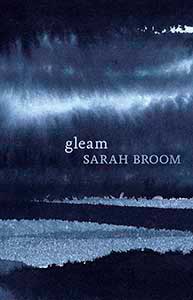
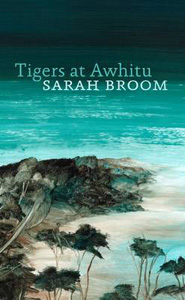
cp-gleam cp-tigers-at-awhitu

At the Auckland Writers Festival on Sunday, Sam Hunt announced the winner of the inaugural Sarah Broom Poetry Award.

Michael Gleissner spoke about the genesis of this award in his introductory remarks. He wanted to create something in honour of his wife, poet Sarah Broom (1972-2013) that would benefit the poetry community. This award is his invention with the help of various friends of Sarah’s from around the world. He worked hard to get funding and to put the award in place.

On the entry form, Michael made the aim of the award clear: That the award was to honour a NZ poet whether established or emerging and to provide a financial contribution towards writing a poetry manuscript. This then is an award open to any NZ poet regardless of age, style, experience or location.

I was delighted and moved as a friend and admirer of Sarah and her work to be part of the award panel. More than anything I wanted to help get this award off the ground in any way I could. My background role was to make suggestions for Sam Hunt, and to do any jobs that cropped up (such as filming Karl). It was an absolute pleasure to read all the submissions and as I have already said on this blog it prompted me to start a new feature, Poem Friday. I want to put you in touch with some of the astonishing poetry I have come across and will come across. NZ poetry is thriving.

On this occasion, Sam Hunt was Head Judge (or Chief Judge as he wittily said on Sunday) and it fell to him to pick the winner and indeed have the final decision on the shortlist–no easy task.

What blew me away about the Sunday session was hearing three very fine poets read. I am already a long-time fan of the poetry of Emma Neale but to hear the musicality of those poems  lift and soar through the air again made my skin prickle. I had not heard Kirsti before (bar a YouTube clip) but I now have her voice in my head with all its gorgeous intonations and I cannot wait to see her get a book out. I had filmed Karl but found myself catching my breath as he began to read. At his home I had been wondering if his cat was going to leap onto the couch (just as he read the word ‘cat’) but she settled back on the floor (or he!).

In my School Session on the Wednesday, I talked about two NZ writers who have shaped me as a poet. Yes, we were doing ‘sound’ and I was exploring the way poetry hits and hooks the ear– so to talk abut the aural delights of Margaret Mahy and Bill Manhire was so perfectly apt. But these two writers have also gifted us with a generosity that is humbling– a way of inhabiting the world with empathy, attentiveness to those around, an ability to listen to others, to support and promote, to be good and to be kind, to be gracious, to celebrate the power and versatility of words. It seemed to me I saw this in Emma and Kirsti. They embraced the ethos of the award to honour, celebrate and promote poetry. I was in awe of their graciousness and aplomb. And I found Karl’s speech very moving, particularly when he said he hoped the award would keep the name and poetry of Sarah alive to us all (off the cuff, a second after I told him he had won!).

Awards are tricky things– they bring out the best and the worst in people (thus the barrage of aggressive texts, emails and face-to-face comments I have endured over the past weeks and yesterday).

I want to thank everyone who has, in the spirit of the Award, remembered Sarah (and her poems!), who has opened up to the glorious poetry of the three finalists, and who has witnessed the way poetry can touch us. I did feel a little sad at the end of the session, I was holding onto my memory of Sarah, as I was hugging my publisher. I cannot thank Michael enough for the extraordinary amount of work he has had to do in what must have been a demanding and difficult year for him and his three young children. And to the real treat of getting to know Dr Sarah Ross, the other panelist judge, from Victoria University. The poetry community has benefited from this– not just the winning poet and not just the three finalists.

Thank you.

from my IPhone on the day (just learning!):

photo