Luminescent is one of my favourite poetry reads in 2017. Check out this new interview with Helen Rickerby.


Luminescent is one of my favourite poetry reads in 2017. Check out this new interview with Helen Rickerby.
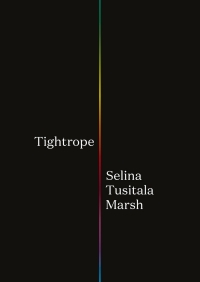
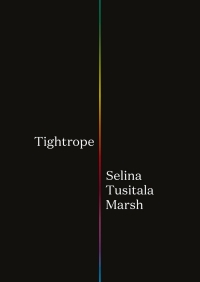
Tightrope, Selina Tusitala Marsh , Auckland University Press, 2017.
Let’s talk about unity
here in London’s Westminster Abbey
did you know there’s a London in Kiritimati?
Republic of Kiritibati, Pacific Sea.
We’re connected by currents of humanity
alliances, allegiances, histories
from ‘Unity’
To celebrate Selina’s new poetry collection, Tightrope, and her appointment as our current New Zealand Poet Laureate we email-conversed over several weeks. Selina is of Samoan, Tuvaluan, English and French descent. Her debut collection, Fast Talking PI, won the Jessie Mackay Award for Best First Book of Poetry. She was the first Pacific Islander to graduate with a PhD in English from the University of Auckland. Last year as Commonwealth Poet she performed ‘Unity’ for the Queen at Westminster Abbey.
‘I leapt for joy when I found out our new Laureate was Selina. Firstly because I am in awe of what she writes and she is a good friend. Her latest book catches you from first to last page on so many levels. Secondly I follow behind her at schools and I can see how she has utterly inspired teachers and students, whatever the level. This is poetry gold. Thirdly I leapt for joy because that now makes it 5 women poets out of the 11. Did it matter to me that a woman was picked -yes it most certainly did. Selina has talked about the way she wants to have 1000 hands touch the tokotoko – how she wants to bring the poetry of brown faces to the spotlight. When I look about and see how whitewashed we are in so many ways – what gets published, what gets reviewed (check out the latest list of best poetry books 2017 in The Listener), what gets put stage centre at festivals, journal content etc – I leapt for joy that we have Selina. Hone Tuwhare and Sam Hunt are the two poets that are so beloved by our nation. I predict Selina is our third. I am currently writing a book on NZ women’s poetry and while my aim is to showcase the poetry that so often gets eclipsed by theory and dogma and bias, I also, at times, talk about the woman holding the pen. She has existed in the shadows. She has been maligned and misunderstood and devalued. I want to give women poets presence where it seems apt because their stories have so seldom been told. So while I think the poem is the first most paramount thing, I also think it is important to navigate the difficulties and triumphs women have faced as poets over the past century in New Zealand; how their poetry has been denigrated and erased due to gender or race. To have Selina given this golden opportunity to write further into our sightlines is heartwarming.‘
Paula Green 10 October 2017 on Facebook
Our conversation
Paula: I have spent a stormy Sunday morning lying in bed reading your new poetry collection, Tightrope, from cover to cover, and now I want to read it again slowly as an email conversation unfolds between us. The reading experience moved shook soothed challenged diverted me with the ooh and aah of recognition pain delight. In other words, the poems take you so many places in so many ways. I love it!
Gran’s jasmine
delicate pink
heavy and sweet
clings to the bone
from ‘Kiwitea Street in the ’80s’
The cover is striking with the tightrope moving from top to bottom rather than stretched taut across a horizontal line. I had held up my piece of red wool at your book launch, but it is only now, I am wondering why it holds a vertical line. It as though the rope stretches from the sky (heavens) to the earth (grounding), or from earth to sky. It is like an upturn, an overturn, and is infinitely resonant in its red to green glow. Why this placement?
Selina: Instinctively insightful as always Paula. In part, it references the living conditions of what I think of as the first poem of this land – the poetic parting of Papatuanuku, Earth mama and Ranginui, Sky dad, and the struggles of living before, during and after their separation. What does it mean to live in between such aroha, such passion, such angst? Sometimes, like this morning, it means submitting to Tawhirimatea’s restlessness in the driving wind; other times, it means tuning into a mist-like longing in the light after-rain. I’m often in between. As a middle child I’m used to it and have finely honed skills of negotiation. Inbetweeners possess tightropish qualities: a tender balance between joy and pain; the toe inching forward of a line that demands feeling before seeing. That’s why the line is raised (much to Michele Leggott’s joy, who proclaimed at the Devonport Library launch recently that it was one of few books which she could hold up to an audience and know it was rightside up!) Because I feel my lines. Because that’s what brings me out of the abyss. It’s also what gives depth to the abyss.
Unity is an underlying theme in the collection, as well as being the title of the poem for the Queen. Unity is what’s needed in ‘the struggle’, however you define it in your life at that point (evoking the brothers’ struggle against the darkness imposed on them by their parents). Unity is what my poetry seeks to create. Unity of the multitudinous stories that constitute our memory, which in turn, form our history, ‘the remembered tightrope’, to quote Albert Wendt. The morphing colours of that beautiful vertical rainbow line (thanks Katrina Duncan and Spencer Levine) evokes the many hues of our lives that refuse to be forgotten.
Al,
I’ve taken a black vivid marker
pressed it against your page
and letter by space by word by phrase
inked across your lines
streaking pouliuli pathways
wending in and out of the Void
from ‘The Blacking Out of Pouliuli (1977)’
Paula You climb reverse-wise through Albert’s quote, so to speak, in your three sections: from the abyss to the tightrope to the trick. It seems the poetry pollinates the inbetween space between forgetting and remembering. He places this in view of history, but is it also personal?
‘We are what we remember, the self is a trick of memory … history is the remembered tightrope that stretches across the abyss of all that we have forgotten.’ Maualaivao Albert Wendt
Selina: History is deeply personal, after all, it’s ‘written by the winners’, as I first saw in my undergraduate years graffettied under Grafton Bridge as my bus was heading out to Avondale (and later attributed to Churchill). I’m reading a delicate collection of poems titled ‘Luminescent’ by Nina Powles at the moment (PG: my review here). 5 chapbooks are stacked in a fold out box (Seraph Press does a beautiful job) and each of them speaks back to women figures – some famous (I especially like the poem ‘If Katherine Mansfield were my best friend’) and some lesser known (to me), like ‘The Glowing Space Between the Stars’ responding to the award-winning New Zealand cosmologist Beatrice Tinsley (1941-1981), who ended up at Yale University teaching on galaxy evolution. Where was her history in school? Nina’s personal, poetic connection with five (early) New Zealand women is helping to build this history.
I think that’s why I so love Al’s line ‘the self is a trick of memory’, because that’s the personal self (‘Queens I Have Met’, a way to memorise moments), the communal self (‘The Dogs of Talimatau’ – how did all those dogs really die?) and the national self (from the New York poems, see for example ‘Inward Hill, New York’ – what happened to the indigenous people of Manahatta? – to Oceania’s ‘Atoll Haiku Chain’ – Tahiti’s stories fan the flames of its history of colonisation, nuclear testing, and protest. That inbetween space between forgetting and remembering though, is probably most potent in the abyss of death, but ‘Essential Olis for the Dying’, the poem written for my beloved colleague and ‘shooting black star’ Teresia Teaiwa (1968-2017), to whom this collection is dedicated, appears in the ‘Tightrope’ section. That’s because, to quote Al again, ‘we are what we remember’, and we choose to capture moments of relationship that are ephemeral by nature, that’s the act of tightrope walking.
We choose, inch by inch, what we will feel beneath our toes, how we will balance ourselves in the air and keep our centre of gravity so that we can keep moving forward. Certain moments, particular memories, we will throw across the abyss of time in order to reach back while moving forward. Other things will recede into the background – we think we’ll never forget, but then we do. We lose shades of it, pieces of it, and even though the loss stays, even that, the depth of it, the pain of it begins to diminish over time. Maybe it’s meant to.
Take this cardamon
to ease you into the next plane
not the one taking you back to Santa Cruz
or Honolulu or Suva
but the next plane.
from ‘Essential Oils for the Dying’
Paula: I also love Nina’s collection and the way she is casting light on these five diverse women. That you dedicate your collection to Teresia Teaiwa resonates deeply, on an individual level, but also because you are part of a weave of women writing, speaking, sharing. You don’t write out of a vacuum.
I was particularly moved by, ‘Apostles’ and the way it challenges on so many levels. Alice Walker lays down the first challenge:
Alice Walker said
before placing a red
cushion in the middle of the road
that poetry is revolutionary.
You recount events that speak to such a claim. I am musing on way you highlight the example you accidentally found when googling lime; a brown skin woman mob tortured for sorcery. Not famous; one woman suffering. Do you think poetry can make a difference?
A brown woman is sitting
her back to us
bare on a corrugated
iron dock
noose round her neck
wrists bound
machete bites
mar her back
one gash so deep
its creviced meat
blackens
in the smoking air.
from ‘Apostles’
Selina: ‘Apostles’ is my answer to that question, which is answered by a question back to Alice Walker, poet, writer and activist extraordinaire: ‘Alice, how can a poem possibly revolutionise?’ Then Kepari Lenara, the name of the young woman murdered by mob, appears and fades over the following lines. These visually echoing whispers evoke the power of orality at the heart of poetry. Poems are meant to sit on the tongue, be spoken and sung, flung into someone’s ears.
One of my favourite lines of all time is by poet and lyricist Rangitunoa Black: ‘A fire burns on the tip of my tongue, I should cry to put it out.’ That’s the power of poetry, that it matters, that it creates fire and movement out into the world. It’s why the Poet Laureate Matua Tokotoko (parent tokotoko) is so gorgeously poetic. The parents have three detachable sections to them (to enable easy travel!). It comprises of a mama section (which has a hand written poem by Hone Tuwhare in its belly) and a papa section (which has a grooved tip). When you rub them together – ahi! Smoke! Isn’t that what poetry is about? It’s why I’d love love love to have a flint embedded in my own tokotoko so in performance, I can strike it and create that spark. A living metaphor. A heightened engagement with the audience. An interactive poetry. That’s the difference poetry can make. And poetry has made a tangible difference in my life. Poetry enabled me to articulate my turangawaewae (standing place) at university as nothing else could. Poetry can make a difference. That’s why I take it out to schools, community halls, corporate boardrooms. For the difference it can make.
Paula: And you take it to your sons in ‘Warrior Poetry’. It is like a letter coming from the gut, saying this is what I do, but it also feels like an energised song-chant-poem for teenagers, especially boys, who skirt books and poetry.
Putting together a poetry collection, boys
is like the NLR nines
Eden Park, 45,000 packed
you’ve got 90 pages of lines
to work the eclectic crowd
into some kinda synthesis – some kinda wonderful
from ‘Warrior Poetry’
Poetry does many things in your collection – even act as a little spot of revenge! Ah! the revenge poem.
Selina: Poetry for all occasions right? You see, often in a difficult, embarrassing, confronting, uncomfortable situations, my first reaction is to smile (my kickboxing trainer used to call me the ‘Smiling Assassin’). It’s only later when the brilliant retorts, the intellectual one-liners, the sardonic replies, come to the tongue. Or I should write, the pen. And poems can carry the weight of my anger or angst; they can take the push-pull of my righteousness and ambivalence (at the same time); they can turn a moment of indecision about what just happened or shock at someone’s rudeness or felt gut-disempowerment and re-story it ways that return power to me. Call it ‘the revenge poem’ or call it ‘the re-storying painful or uncomfortable events poem’, whatever you call it, its at all of our fingertips!
My moana blue Mena
My Plantation House shawl
My paua orb
My Niu Ziland drawl
My siva Samoa hands
My blood red lips
My va philosophising
My poetic brown hips
from ‘Pussy Cat’
Paula: Five poets were Te Mata Estate Poets Laureate, with Bill Manhire (1996) and Hone Tuwhare (1997), the first two. In 2007 the National Library took over the administration and appointment process and selected Michele Leggett as the first New Zealand Poet Laureate. You are the sixth Laureate appointed by the National Library with the change in title.
Looking back across the Laureate blogs and tenures, each Laureate seems to shape the role to fit him or herself, just as the tokotoko is carved by Hauamoana artist, Jacob Scott, to fit the individual. I love the idea that you will shape the role to fit – what matters to you as Poet Laureate?
Selina: In 2 weeks I leave for Samoa where I’m judging the Pan-Pacific Tusitala Short Story competition, giving the keynote for the Pacific Arts Association, running two writing workshops, and performing on opening night. While this was arranged well before becoming Poet Laureate, I am taking the Matua Tokotoko with me and ‘they’ (the parents) will feature. Usually behind lock and key in a glass case at the National Library in Wellington, I have instinctively known, as a person from the Pacific, the taonga, the national treasure, that I have in my possession.
Polynesians know the mana such taonga possess. Material objects become taonga as they are passed on and down; as they pick up the stories, histories, and genealogies of those who possess them. I will have reached my goal of a 1000 pairs of hands touching the Matua Tokotoko in Samoa (I’m currently at 977) since the Award was announced on August 25th. Everywhere I go people are enthralled with the story of its making – but it’s not really common knowledge. That’s what I want to do, at least among the diverse communities I engage with. Most are not aware of what the Poet Laureate is, nor what the tokotoko represents. Each Laureate has helped increase awareness in their own circles, in their own way. That’s what I’m doing now.
After visiting Hawkes Bay and finally having a korero with carver Jacob Scott from Matahiwi Marae, we’re really excited about bringing my tokotoko into the world. This trip to Samoa will also enable my Samoan treasures to be included in its making. One idea was that I source (that means ‘cut’) some wood from my grandfather’s house in Elise Foe, the original ‘Tusitala’, to include in the carving. Then when I visit Vailima, Robert Louis Stevenson’s plantation house, I do the same there (with permission from the owners) and source material from the other ‘Tusitala’ to somehow incorporate. I’d like to bring home a stone from the river my mother used to bathe and play in. I’d like to include some other historical objects. As poets are wont to do, I will wait for synchronous moments to come – I know these material stories will make themselves known to me.
This is part of a journey and Mike Hurst, along with his film-mate Andrew Chung, and Tim Page are the guerilla film / photo crew capturing formative moments in order to make a lovely documentary – more on that later!
I guess this is a round-about way of also addressing the question: ‘What does it mean to be a Pasifika Poet Laureate?’ It means doing this stuff. Taking the Laureate-ship along in my Pacific-infused life (we are, after all, in the middle of the Pacific), not just in incidental ways, but in deliberate, epistemologically-informed ways that centre Pacific worldviews, at least, as far as I see and experience them in my life as a Pasifika poet-scholar.
So, as the Poet Laureate, people matter to me, stories matter to me, especially when those stories have existed on the margins of mainstream consumption. Creativity and freedom matters to me, honoring my own unique poetic voice, and continuing to grow it matters to me. I have two years to work on these things that matter to me: to continue taking poetry ‘to the people’ and to continue growing poems!
We are about to step
on stage at Aotea Centre
in front of a sold-out
crowd of two thousand
I ask
How would you like to walk on –
before me or after me?
You say
Let’s just do this
and take my hand.
We stroll on
side by side
to a standing ovation
your hands become doves
from ‘Alice Walker’ in ‘Queens I Have Met’
Auckland University Press page
Poet Laureate blog
NZ Book Council page
Watch Selina perform ‘Unity’ at Westminster Abbey here
Gina Cole picks ‘In Creative Writing Class’
‘The Dogs of Talimatau’ at The SpinOff
Selina picks Tusiata Avia’s ‘This is a photo of my house’
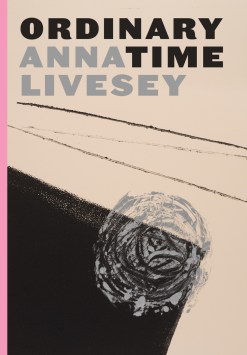
Ordinary Time Victoria University Press, 2017
‘I want a little quiet, a piece of the day
where the baby and I soak in our own silent language.’
from ‘Speech and Comprehension’
Anna Livesey has published two previous poetry collections, Good Luck (2003) and The Moonmen (2010). She graduated with an MA in Creative Writing from Victoria University and was the Schaeffer fellow at Iowa Writers’ Workshop in 2003. Her new collection, Ordinary Time has just been published by Victoria University Press. With these new poems, personal experience is paramount because this book, with its roots and wings in the miracles and challenges of parenting, is an intimate exposure. Lines are agile, things pulse, gaps pollinate, and the glorious, challenging, curvatures of motherhood are brought searingly close.
The interview
Paula:
‘Having not been out for days I have very little to add—
save that the house is sweet and clean, the baby safe and fed.’
from ‘Synthetic Thinking’
Before I enter your new collection of poems, I stall on the title: Ordinary Time. Poets have often used ordinary things as a gateway to the less ordinary, as a way of refreshing little patches of the world about us, whether experience, sensation or physical object. Yet the title goes deeper for me, particularly having read the word ‘parenthood’ in Jenny Bornholdt’s quote on the back cover. It feels like you are boldly staking the domestic space and the mothering role as a necessary and fertile springboard for writing. How does the title resonate for you?
Anna: One of the things I think about a lot (for whatever use it is), is our moral responsibility to the world we live in – who we should care about, who we should care for. What events – horrors and wonders – should we allow to get under our daily carapace and work on us? Especially in this world where the news of disaster is never far away. There’s that phrase about extreme weather events: “the new normal”. Hurricane Irma – the new normal. Degradation of democracy in the States, Spain, parts of Latin America where it was once thought it be bedded in – the new normal. The end of Francis Fukuyama’s “the end of history” – the new normal.
The book starts with Peter Singer, a moral philosopher who basically says – “we are all equally valuable so we are wrong to value ourselves, our families, our tribe above those who are ‘other’…”. And I believe that, but I also believe it is an impossible and inhuman doctrine. To me this is the puzzle at the heart of this book and the title. My beautiful, blessed, mundane life of glorious domesticity and early motherhood with my children, husband, friends and family and warm dry house with full cupboards exists in the same reality as Syria. Where children as beautiful and as beloved as mine are dying. Both of these realities are “ordinary”.
To survive and function and care for those who are most immediately our responsibility we need (or at least I need) to take refuge in the shared human mendacity of closing up our carapace and giving an emotional shrug. And in fact I think this is not really the “new” normal, but just normal – the Hobbesian description of the human condition – “solitary, poor, nasty, brutish and short” – continues to hold true. (And as I type this I think – and what is the point of poetry in all this anyway?)
And then on the other hand – the title poem talks about the late winter time when the magnolias all around Auckland are covered in their magical flowers. They look like aliens or supermodels, all lanky grace and outrageous decoration. Then the flowers fade and the “green leaves of ordinary time” appear and the magnolias just look like normal trees for another year. So yes, the title is also a nod to the magic and mania of those first early weeks with a new baby, and how they refine and change one, as a parent and inevitably as a writer.
‘(…) Across the road two magnolias, one pink, one white. In the days
since we came home I’ve watched their stark flower-spiked branches
soften and go pastoral—the green leaves of ordinary time climbing out
of the wood.’
from ‘Ordinary Time’
Paula: That nagging doubt about the value of writing poetry is a tough one. What difference does it make to the Syrian crisis, the ordinary families there that love their babies, eat, sleep, celebrate and mourn? Perhaps one response is that in translating your experience you contribute to a global poetry conversation that opens windows on how we live with our different hungers, failures, connections, kindnesses.
‘I am a person in love with nostalgia
and this unfits me for every moment of living but the one just past.’
from ‘I Am a Person in Love with Nostalgia’
You record the early weeks of motherhood and the poems undulate through fatigue and joy, routine and insistent questions. I love the way you pull things from the past into the patterns of the present. I particularly love ‘I Am a Person in Love with Nostalgia.’ It feels like there is nostalgia for former selves, but you also make a precious baby moment glow that might be a future nostalgic memory hub. What kind of returns does poetry represent for you?
Anna: The returns of poetry. Let me first be contrary and take returns in the sense of “what you get back”. In my previous book, The Moonmen, there is a poem called “Bonsense”. Bonsense means “good sense” – ‘bon’ as in the French “bonne”, for good (and indeed the Scots “Bonnie” – beautiful, cheerful – which is my daughter’s name). The poem is about the returns of poetry, and of art, the non-essential, in general. It is addressed to a dear poet friend who had a job caring for a very very small library in a small town in Montana, and ends:
“From the chest of your books
you enjoin belief
in outposts of minature sense or nonsense,
or going further, antonym, bonsense—
the elaborate folly of the heart and brain,
built curlicued, baroque.
What bonsense is this, a tiny horse, a tiny library?
The great iced cake of relationships,
the ornamental pony of compassion,
the perennial shout (SHOUT) of shared exclamation.”
The central idea here is that compassion and art spring from the same core impulse. Imagination/transportation/identification/recognition/the marvellous… these are human characteristics and lead to our greatest baroqueries – the welfare state, poetry, breeding horses too tiny for any purpose but to be admired. I don’t feel that poetry needs to “do” or “contribute to a conversation”. I think the return of poetry is merely for it to be.
And the returns in the sense of nostalgia. Every time I have published a book I have felt a part of myself caught in amber. And through my three books the amount of “me” that is there like an insect in the settled gum is greater than before. And in this book, as you observe, “me” has expanded out and encompasses my babies. As I am writing this to you, it is day one of Bonnie being fully weaned. Yesterday she had her last ever feed and five years of being pregnant, breastfeeding or both came to an end for me. So to have that moment at the early cusp of our relationship captured and kept in a way that I love, that moves me back into that moment perfectly, is infinitely precious. A memory outside myself. That is the personal return of poetry.
Paula: I loved that. For me, it is exactly why poems that venture into the domestic or the personal are utterly productive for reader and writer.
‘When my mother died she had spent
a long time in darkness.
When my grandmother died she had spent
a medium time in darkness.
When my daughter was born she had spent
a short time in darkness.’
from ‘Quotation’
That phrase ‘caught in amber’ really resonates, and that poems can be an intimate way of catching a present moment to savour the future. Is there a poem in the collection that particularly resonates with you? I found myself haunted and, as that word rightly implies, returning to ‘Quotation’. I was entranced by the generations of women and by the distinctive dark and light.
Anna: That’s like asking if I have a favourite child! I’m pleased you asked about “Quotation”. It’s a funny little poem – the opening lines include a quotation from William Calos Williams, of course — “Danse Russe”. In that poem, Williams is talking of himself, dancing naked, singing (go and read the poem now…! Such an image it is), waving his shirt around his head. His poem ends “Who shall say I am not/ the happy genius of my household?”. My grandma was a brave woman (a WREN, among the first five WRENS to be choosen to go on a troop transport as decoders), but also a modest, genteel, English/Irish Catholic of her time. And so the image of her secretly dancing naked, admiring herself as Williams does, is part of the joy of that poem for me. And then there is the word “genius”. In my poem, as in Danse Russe, it means, essentially, “the soul of a place” – the genius loci, the ancient Roman concept that all places have a soul. So my poem is saying… who shall say that this modest woman, looking like a snuggly grandmother to me, her little grand-daughter, was not in fact a wild dancing creature, the secret, gleeful soul of the old farmhouse.
And then I just miss her so. And the farmhouse that had every aspect of a fairytale farm – my Grandpa made all the bread, there were hens and herbs and a sheepdog, a shy white cat, treasures from India (war service), a dressing table with mirrors that folded out and could be made to reflect themselves into infinity. Winegums in the pantry for story time. Easter in the garden. Woollen blankets. Grandpa’s blue farming overalls. Sunday roast – “from our own sheep”. I want every single part of it back, including and especially them.
(I should note here my family have a terrible weakness for writing books. My mother was a published historian with several books to her credit. My Grandpa wrote several local histories of the Wairarapa and a five volume self-published autobiography (Yes. Five volumes. And very interesting they are, at least to me). My grandma trained as a speech teacher in her 60s and then wrote plays which her students performed in the garden at Perrymead. She also wrote short stories for us, her grandchildren, and several of them were read on radio. So I am not just missing the rural idyll and the unstinting love of Grandparents, but also missing a formative place, where books and language and storytelling and performance were part of everyday life.)
In this poem, and in ‘Privacy’, and several other poems in the book, I was thinking about a passage from Simone de Beauvoir’s memoir of her mother’s death, A Very Easy Death. In the book she is looking for keepsakes for her mother’s friends, after her mother has died. She writes: “Everyone knows the power of things: life is solidified in them, more immediately present than in any one of its instants.” (C.f. Williams: “no ideas but in things”). So that’s the desire behind taking their house and putting it in my house — I want to “quote” their life in my life through their things.
The poem ends with another quotation, from Yeats, “John Kinsella’s Lament for Mrs Mary Moore”. Again, if you don’t know the poem, go and read it. It’s a song of grief for a witty, wise, sexy old woman (I have always loved this poem and it continues to appeal as I grow a little older myself and hope to be appreciated in the round, (even and despite my flaws), as John Kinsella appreciates Mrs Mary Moore). The repeated refrain is “What shall I do for pretty girls/ now my old bawd is dead?”. Mrs Mary Moore is, literally, a bawd. And so again this is a naughty joke on my part. My grandmother was a witty, wise, sexy older woman. She absolutely die to see that written down! But I love having that thought about her.
Paula:
‘is this how my mother felt
this fear, this,
bewilderment?
I want to mother better than I was mothered.
I can say this because she is dead.’
from ‘Bay Leaves’
I like the idea of a poem as keepsake. A way of preserving familial relations in the manner of a photograph album, a daily journal or a shoebox of mementos.
The collection offers myriad rewards for the reader. It is a bit like peeling back layers of living to expose the challenges along with the miracles or joys. I am drawn to the way the world rubs into the private life: the child washed up on the beach makes the mother hold her child that much closer. Perhaps the poems that struck deepest faced the mother, the mother no longer here, the mother who prompted the poet to look at her own mothering. Were these difficult poems to write?
Anna: No they weren’t. The difficulty was in the long years of decline. My mother was a writer, so writing feels like a very real way to honour her. Making art felt like salvaging something.
Paula: Do you think, in this move to the overtly personal, other things such as musicality, changed a little too?
Anna: I deliberately wanted some of these poems to be clumsy. Awkward subjects deserve an awkward sound. That’s not something I would have been comfortable with in my earlier work.
Paula: Were you tempted to include endnotes as some poets do? I can go either way. Endnotes open up poems in ways I don’t necessarily anticipate, adding avenues of delight, but conversely might limit my own freedom to explore and delve within the myriad possibilities of a poem.
Anna: My first book, Good Luck, had endnotes. There was a lot of found poetry and I wanted to reference where it had come from. With this book I thought about end notes, very briefly. And then I thought: who has the time??? And also I didn’t want to explain the poems – either they do their own work or they don’t.
Paula: Did you read any books while writing this that affect how and what you were writing?
Anna: Czeslaw Milsolz’s Roadside Dog – a little book of prose poems, limpid, narrative, engaged, straightforward, complicated, personal and full of the world. The best bits of Ordinary Time are really just a crib of Roadside Dog. Raymond Carver – again, the direct voice of his poetry. The beautiful poem, “The Haircut”, of his referenced in “Because I’m a Human”. Kate Atkinson’s Life After Life is the book that “Reading Books About the War” lifts off from. Tove Jannsen, the Moomintrolls – moments of recognition in literature affect me profoundly, especially when they are parent/child, and Tove Jannsen does these so beautifully. I am always reading Janet Frame’s poetry, and hoping for a little of her perfectly awkward insight to rub off. And then also the manuscript of my dear friend Lauren Levin. Her work is quoted in the last poem in the book. She has just had a truly wonderful book published – The Braid. If you care about poetry and about women and about the world and about justice and about beauty you should order it. And Heather Tone’s Likenesses. There are several poems for Heather in The Moonmen, and she and her luminous, curious, outsider-mind writing are a constant inspiration to me – how to live, how to write.
Victoria University Press page
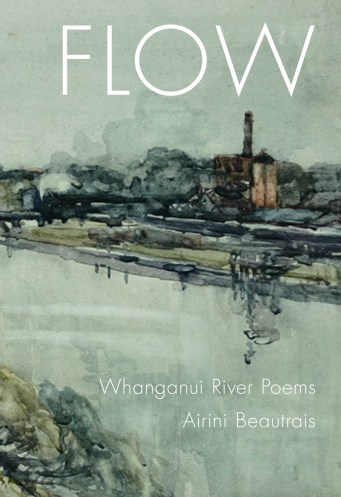
Flow: Whanganui River Poems, Airini Beautrais, Victoria University Press, 2017
Airini grew up in Auckland and Whanganui, studied both ecological science and creative writing at Victoria University and has worked as a science teacher. Her debut collection, Secret Heart, won Best First Book of Poetry at the Montana New Zealand Book Awards in 2007. She has also published North Western Line and Dear Neil Roberts.
To celebrate the arrival of Airini’s fourth poetry collection, we embarked on an email conversation over the course of a week.
Paula: After reading the first few pages of your new collection, Flow: Whanganui River Poems, I felt the kind of spark that travels like electricity through your body as you read: heart, mind, ear, eye, everything on alert. When I was doing my Masters in Italian I read the fragmented fiction of Gianni Gelati. His writing was poetic, strange, addictive. With Narratori delle pianure (Storytellers of the plains), he travelled the length of the River Po, collecting stories from people who lived there. His people, his river, yet while the river dictated the itinerary, it was less of a protagonist. Instead the people he met flourished on the page in their out-of-the-ordinary ordinariness.
I had the idea at page 24 of Flow to have an email conversation with you as I read. I wondered how my relations with the poems might change over the course of reading; the reading would act as my surrogate river with its various currents and tributaries. I wondered how I would shift in view of the poetics, the ideas, stories, characters and the river itself. The book fills me with curiosity and delight at what poems can do.
My first curiosity. How did you prepare for the river poems beyond the craft of writing? Did you travel the river, visit communities, trawl the archives or rely on memory and books?
Airini: It’s interesting to hear about Gelati’s writing. In my case, I couldn’t say ‘my people, my river’ because I’m Pākehā, and the Whanganui is definitely a Māori river. My connection with the river is different. I see it often – I drive over it at least twice a week – but it still has this sense of mystery about it. I’ve never travelled the middle reaches, although one day I hope I will.
When I began writing Flow I had two preschoolers. It was tricky to get out and about, and I was writing/ researching in short bursts while they slept, or during minimal crèche hours. I did do a little bit of travelling, which is depicted in places in the book (poems like ‘Confluence’, ‘Tributaries’ and so on). I read a lot of local histories. I read Waitangi Tribunal reports. I visited museums and galleries. I talked to a few people, but I generally feel quite uncomfortable about the prospect of interviewing someone for a poem. Also, some of the people I contacted never responded – the whole idea might have sounded too strange. There are some of my own memories in there too. When I was twelve I went on a trip with my family’s church (Quakers) and we visited a number of the marae along the river. We were guided by Morvin Simon, who passed away in 2014. That trip made a lasting impression on me. A few months later the occupation of Pākaitore happened, and we went down there to support it. There’s a villanelle in Flow called ‘Pākaitore’ about the day the police came to arrest the protestors and a group of people held hands in a circle around the park. At my book launch, local Quakers and Treaty workshop facilitators David James and Jillian Wychel told me that in fact there hadn’t been quite enough people to stretch right around, so the poem exaggerates things. I feel like that’s acceptable, in a poem. It goes for the sense of a story rather than the cold hard facts. I think all histories do this to some extent.
Paula: I was thinking about the fertile relationship between history and poetry when I read the first poem, ‘Confluence’. It seemed especially apt that the merging of two rivers also conjures the coming together of voices from the past in the poems to follow: Māori or Pākehā, a farmer, a surveyor, the surveyed.
Standing at the confluence
you can see the join in the rivers; either side
a different colour and speed.
Like standing at Cape Reinga watching two oceans
seam together.
from ‘Confluence’ (21)
Exaggeration can intensify a scene, but as I am reading, it also feels like I am reading some kind of truth. The representation of history produces multiple contesting truths, myriad confluences. Did you develop ‘how you represent history’ as you wrote? Did faithfulness or truth play a part?
Airini: I think we can only ever write an individual version of events, when it comes to history. We all come with our own interpretations. What happened happened, and there are things that are non-contestable. But how we approach these things in writing is something a little different.
I knew from the outset I couldn’t attempt anything like an authoritative history. It wasn’t my place to do that. I wanted to weave together lots of different threads, like the many tributary streams of the river. I also wanted to write something polyphonic, so I incorporated lots of different voices from different times and places. Some of these are inanimate objects talking – a fence, a shipwreck, a playground dinosaur. This is, of course, far from the ‘truth’ in the conventional sense. There are episodes I’ve narrated in the first person, from my imaginings of what it might have been like to be present. The Ongarue Rugby Club really did stage Antony and Cleopatra in the 1950s, and that just seemed so incongruous to me, but also so appropriate, that I wanted to imagine myself there. There are voices in the collection that are entirely made up, and most of them are female. The historical record is a record of privilege, and it’s largely male and largely Pākehā. Early on, another woman writer commented that most of my characters were male. I thought ‘shit, they really are,’ and the process of writing women in began. Some of them are based on real people and some of them aren’t. Some are myself and some are alter-egos.
Paula: That we enter the voices of the river, and that those voices are no longer dominated by the authoritative status of mainly white men, is exactly what makes the collection so absorbing. On the inside blurb, James Brown asks whether ‘verse is the future of history?’ For me, I got transported, as though on the river currents, by voice; not so much fact and not so much analysis but by way of immersion in time and place. I guess fictional narrative can also immerse you in an historical elsewhere, but poetry does it without plot momentum, character development.
In the first section of poems, ‘Catchment’, I got a strong sense of voice housed within poetic predilections of the past. I got an ‘air’ of Jessie Mackay and Blanche Baughan, with ballad-like rhythms and spine-like rhyme. Yet the poems are not exact replicas of early settler poetry; there is a different kind of economy, line length, degree of description and sentiment.
Did you read some of our early poets to infuse style of writing into place and voice? Particularly the women?
Airini: Yes, I did read some colonial poetry, including Australian poetry. Unfortunately for my purposes, a lot of it is also by, and about, men. Blanche Baughan’s poem ‘The old place’ was one that was floating around in my head. I knew I wanted to evoke the ballad tradition because I thought that if these pioneer ghosts talked in poetry, that would be the form they would choose, the form they’d be familiar with. I wanted there to be a sense of these ghosts in the book. Then again, there are some other four-line forms in the first section, ‘Catchment’, which aren’t traditionally associated with settler poetry – like the Sapphic stanza. I used that in a few poems with female narrators. It’s a very feminine and very emotive form. I’d read over and over that it was impossible to approximate classical quantitative metre in English, because English is a stress-timed language. But then I wrote these things and performed them and something strongly rhythmic came out and took me by surprise.
With the ballads and Tennysonian and Keatsian stanzas there’s an element of pastiche, but I also wanted to push beyond that. I think when traditional or inherited forms are mixed with more contemporary diction, points of view and so on, there’s tremendous potential for language to be stretched and to be weird, which is something I strive for in writing poetry.
Paula:
The first snow falls
like sugar, sown
breath-thin
on each blank mountain’s face.
The rock
pricked
apart by needling ice
like shattered bone
bears
down, and wears
down to fine scree.
from ‘Snow’ (80)
I think the playful pastiche of form and diction produces another hallmark of the book: its musicality. I was thinking this is history as music with various chords and keys, rhythms and aural densities. Did you listen to music as you wrote? When you perform the poems is the musicality significant?
Airini: I don’t listen to music when I write, because I find myself focusing on the music too much, and being distracted from what I’m trying to write, or having the emotion of the music trick me into thinking what I’m writing is moving or meaningful when it might not be. The ‘music’ in the poems is probably mostly due to the use of forms that derive from song lyrics. The poem you’ve quoted, ‘Snow,’ is modelled on a song by the troubadour Arnaut Daniel, called ‘L’aura amara’ (The bitter air). I owe a debt to Ezra Pound’s translation here. It’s a love song, but I felt the tone of loss and longing was suited to a poem about a damaged landscape. I’m really interested in complex and repetitive rhyming forms, and how the form shapes the material. The history of the lyric is a fascinating one – that poetry has its roots in music, but there’s been a divergence of the printed word and the song. In some ways it’s a great loss for poetry, but on the other hand there are different possibilities opened up by the page, and the lyric tradition can feed into these.
Some of the poems in Flow could probably be quite easily set to music, particularly the more rhythmic forms. There’s one in particular, ‘Surveyor’s grave,’ which I always hear in my head with a tune. But when I perform the poems, I just read them.
You couldn’t wield a pair of secateurs
to save yourself. And what use is a man
of unsure grip? But still, that soft hand-span
enters my thoughts, down where the ocean blurs
the land, repeatedly. The hot sand stirs
under our feet; we climb to where the tan
of pīngao, grey of marram holds what we can
be held. We’re silent, and the wind concurs.
from ‘Gathering the berries of Pimelea turakina’ (162)
Paula: Oh gosh I love the idea of Flow performed to music – the whole thing. I also love the idea of ghost forms hovering behind the poem as I read, and the way the musicality of form is like a set of lungs, stretching and receding, stretching and receding, with replenishing oxygen, over time.
I walk the baby to sleep along the bank,
among the disposable nappies, circles of bourbon bottles.
Tea from a thermos, talk of our grandparents.
I’ve bought Joe a kilo of frozen peas, to take a fish north.
from ‘Confluence’ (22)
At the start of the book a baby is being walked by the river, your baby perhaps. In my readings of New Zealand women’s poetry across the past century, for many women, but not all, writing poems fits into domestic spaces. Life intrudes and disrupts and nourishes writing. Do you think it makes a difference that you are a woman writing Flow, a woman with a family? You talked about gathering and inventing the voices of women as a counterpoint to the privileged men. How else might it matter? Or change things?
Airini: It makes a huge difference that I’m writing as a woman, and as a radical feminist woman. It makes a difference that my ‘domestic spaces’ during the writing of this book were not supportive or safe, and that by the time it was published I was re-negotiating life as a single parent and as a survivor of intimate partner violence. Writing was an act of resistance on a political level, on an artistic level, and on a personal level. I managed to write because I had a supportive extended family, particularly my mother, and I had a strong network of writing colleagues, many of whom were also women and mothers. It’s 2017 and amazing things have happened over the last century, but I still think there’s a battle involved in women’s creativity that men don’t experience in the same way. Children and child-rearing complicate this picture further.
Then there was the wonderful support of my two PhD supervisors, Harry Ricketts and James Brown, who nourished this collection from the first tentative drafts through to the final cut. I have immense respect for both of them. Our three-way conversations always felt friendly and collegial, and I feel lucky to have had this mentorship.
It’s hard for me to step back and look at the bigger picture when I’m working through the issues, but I feel that there’s so much work to do at every level, from global to individual. New Zealand women’s writing is flourishing, but there’s a way for us to go. It still feels to me like there’s a dominant maleness in our literature, which comes through in reviewing, in prizes, awards and grants, and in who we revere. What I would like to see are networks of supportive communities, where all the barriers of privilege are broken down. We live on islands and we have to find ways to work together.
Paula: It makes huge difference to me too. So far we have had five women out of fifteen Poet Laureates! The question, though, is why I am writing a whole book on New Zealand women’s poetry. I have just been writing a section on Robin Hyde and Joanna Margaret Paul – both produced poetry that was deemed too hysterical or too feeling-indulgent by men. I strongly disagreed. In fact I felt quite wrung out writing the piece, knowing that women’s writing still gets denigrated for domesticity or feelings or departure from a provisional (in my view) paradigm. I actually felt both women, and I am sticking my neck out here, wrote to counter the dark of their lives, not replicate the dark.
Reading Flow as I wrote about their poetry was so satisfying. The sumptuous choral effect produces so many layers, it is a book that demands multiple attentions. I love the fact I can’t leave this book yet. I need to spend longer with it.
Is there a book of New Zealand poetry that has had a profound effect upon you in the past year or so?
Airini: I’m happy you mentioned Joanna – she was a family friend and a great inspiration to me. Living in Whanganui, I often wish she was still around so I could drop in for a cup of tea. At the launch of Flow, Jenny Bornholdt read one of Joanna’s poems, ‘Blue Fleur.’ It meant a lot to me to acknowledge the work of those who’ve gone before. One of the things patriarchy does is pit younger women against older women or women of the past, like ‘You’re hip and sexy and we like you, but we don’t like her, she’s stuffy and old fashioned.’ This isn’t, of course, confined to poetry. But I think as women writers we have to find women role models as well as, or in place of, men. Joanna is someone I think of as a quiet trailblazer, an amazingly self-assured and independent woman, who lived her life, did her own thing and made the art she wanted to make, without being governed by the approval of the establishment. I think of Jenny as someone who has in part continued and extended Joanna’s poetic projects.
There have been lots of books that have affected me this year, in lots of different ways. One that stands out is Cilla McQueen’s In a Slant Light (Otago University Press). It made me laugh and cry. It’s written in a simple, often prose-like style, and the weight of it is absorbed almost subconsciously. I was moved by reading about Cilla’s journeys through motherhood, relationships, work and life, to creative success. It’s the story of a woman doing creative work against the odds. There’s a familiarity about a lot of the material, but also the differences that come with time, place and other circumstances. Reading her story gives me strength.
Paula: In my chapter on Joanna, I also said I would like to have tea with her and talk poetry! I think there is a strong community of women poets across New Zealand with different kinds of support. Michele Leggott, our first Poet Laureate under the National Library, continues to shine a light in the shadows so we may see women writing in the past. Sarah Jane Barnett, literary editor at Pantograph Punch, devotes significant attention to what women are doing. And I was delighted to see Selina Tusitala Marsh appointed as our new Poet Laureate. I see her becoming as beloved a national poetry icon as Sam Hunt and Hone Tuwhare.
I also loved Cilla’s memoir and was disappointed that a number of the reviews felt it missed the mark in terms of the life it revealed. I loved the way it showed, in poetic form, with as much white space as it desired, a woman coming into being as both poet and mother. Just as in Joanna’s poetry, the hints are there.
Were you tempted to use ‘Endnotes’ to signpost the layering of the poems? I can go go either way on this. I actually liked the fact there were none because it means the poem will linger and haunt me with possibilities for longer. On the other hand, a road map does satisfy curiosities and can send you in new and unexpected directions as reader.
Airini: I thought about notes, and I also thought about a timeline of events. In the end I decided against it because I thought it might over-explain things, or be something readers just skip. There’s a common idea that we have to explain ourselves in a notes section, or people might not know what the poems mean – I’ve done this before, I think most of us have done it. In this case, I wanted to let the poems stand alone, and retain a sense of mystery. I thought of them as being like objects washed up on a beach: some are identifiable, some not. I have included a selected bibliography of my main print sources so that anyone who happens to be interested in regional history can go and check it out for themselves.
The maps in the book give a visual indication of where things happened. These were kindly made for me by my brother Joe, who’s a geographer. While I was writing, I spent a lot of time looking at maps. I’d get an old topomap or a park map and spread it out on the floor and pinpoint the places I was writing about. I drew sketchmaps of the region and of where the poems fitted in.
I hope that each reader will bring their own interpretations to the work. I don’t think one always has to know exactly what’s going on, in order to enjoy a poem.
Paula: For me, that is one part of the pleasure in reading the collection. It is a bit like reading Bill Manhire’s glorious Tell Me My Name. I don’t know when I will ever check the answers to the riddles at the back. I love the mystery, the lure of the gap.
This collection formed part of your doctoral thesis. What did you navigate in the academic piece of writing?
Airini: I wrote about narrativity in long poems and poem sequences. By ‘narrativity’ I mean the extent to which a text is narrative, or, does it tell a story and how might that story satisfy conventions such as plot, character etc. I focused on how sequences are divided: into sections, poems, stanzas, lines, units of metre, and so on. I was looking at recent poetry by Australian and New Zealand writers, like Dorothy Porter, John Kinsella, and Tusiata Avia. I argued that the division into individual poems was the most significant in terms of narrative. This division allows the poet to make abrupt shifts in chronology, geography, between points of view, and so on. These shifts can support narrative or undermine it. There have been a lot of poem sequences written over the last century with a decidedly anti-narrative bent. Then in the last few decades we’ve seen a revival of the novel in verse, which often falls back on traditional narrative conventions (albeit juxtaposed with the departure from convention that comes from writing in verse). I think Flow falls somewhere in the middle of the spectrum: it’s not a single plot-based narrative but there are strongly narrative elements in it. I’m not trying to be wilfully incoherent, but I’m also not trying to attempt an exhaustive history with a chronological structure.
Paula: Was there an anecdote or voice that particularly surprised you – either in the finding or the invention?
Airini: There were lots of surprises. There was material I wasn’t expecting to include that I couldn’t let go of. I wanted to write a poem about my children playing in the river mud – which they do reasonably often. Then I read accounts by elders of growing up at Kaiwhaiki and learning to swim in the river almost before they could walk. And I stumbled across a story about a pregnant woman who drowned her four-year-old child in a high flood. This particularly haunted me. The three stories are quite separate but they came together in a poem called ‘Three mothers.’ I probably won’t ever read this one aloud because I can’t read it without crying. I think every parent has had moments of utter desperation and darkness, and we respond to those times differently, but it’s possible to see how things can go wrong in difficult circumstances. I put these stories together to reinforce the idea of interconnectedness in our lives – past and present, in bad times and in good.
The pang, the push, the slide,
the stretch, the yawning wide,
your supple form uncurled
into the waiting world
and water was your guide.
from ‘Children in the mud’ (122)
Paula: I love that poem! I think there is river-like coherence and momentum in the collection which is built on story. What animates the reading, is the interlocking sense of a provisional whole, and the gleam of the small pieces.
I was thinking, as a way of concluding our conversation, we could each pick a poem from the book that particularly resonates. Does this change when you pick a poem from the page and a poem you have favoured on your tour?
The book runs to almost 180 pages so there is such an array of poems to choose from. I have greedily decided to assemble a tasting plater of some of the poems I love.
In the first section, one poem, ‘Final whistle’, kept pulling me back, maybe because it doesn’t play with rhyme as the others do, so aurally it breaks the sound arc. But it is like a three-dimensional snapshot of emptiness: the landscape denuded along with the men, the weather taken over human activity. My partner spent part of his childhood at Te Wera, his father running a forest. We went back to visit and saw the the village was like a ghost village. As we walked up to the shop at noon, the owner was turning the sign to CLOSED. He said it was for the last time. Their stories then rang out across the valley. It seemed so melancholic.
(…) Well, I don’t know
why I am crying,
thinking of the bush and its eerie sadness,
rain collapsing all of the things we made here.
Still, I know they’ve sawn every dip and ridge, left
nothing of value.
from ‘Final Whistle’ (63)
I loved the rich, pungent detail in ‘Seed’, its list-like qualities and the way it also becomes song as you read.
You are in the wildness, wild with song and honey.
You are the beak and tongue and claw.
You are in the rock face, weathered by the freeze-thaw,
in the summit sulphurous and stony.
from ‘Seed’ (82)
Repetition is such a drawcard for me – it evokes the river current but also the currents of history, personal lives, stories being shared. I especially like it in the title poem, ‘Flow’, with its rippling rhyme.
To the stone, to the hill, to the heap, to the seep,
to the drip, to the weep, to the rock, to the rill,
to the fell, to the ash, to the splash, to the rush,
to the bush, to the creep, to the hush
from ‘Flow’ (84)
The river often finds its way into the poems aurally and visually. In ‘Map-making’, I love the white space that cleaves through the middle of two poems like the river.
The chain clanking, the clouds closing
we waded through wetness. Wastex is the word for it.
Feeling each footfall, scenting the foetid
slurry of shrubbery sliced with the slasher.
The fog had a freshness I felt through the flannel
cloth of my shirt: it clung to me, clammy.
from ‘Map-making’ (88)
‘Shingle beach’ is resembles a song two keys; it reminds me of the way the beach is always in a state of flux. When you visit every day you get to know those moving sands and lights. This is the second stanza:
To even out
to open space
the stone removed
its roundness cracked.
A straighter course
a blotted spill
a metalled road
a deeper hole.
‘Shingle beach’ (90)
Some poems are luminous with sensual detail; they are a bit like establishing shots for the narratives and voices the precede and follow.
Wet tang of sheep shit, mass of trees
releasing plant-scents in the angled sun,
those smells of summers been and gone,
bruised sap, ripe humus, rising to the nose.
from ‘Kauarapaoa’ (120)
If I had to pick one poem, though I would pick ‘Pour’, the penultimate poem in the collection. The poem tips out a list of similes that snap on the line; then when you get to the end there is that sweet echo, mysterious, ambiguous, gloriously fertile. Here are the last three stanzas:
like a steamer stack
like a sudden break
like an afterbirth
like the restless earth
let it all pour out.
Let it all pour out.
from ‘Pour’ (176)
Airini: The poem I’d like to pick is ‘Plotlines’, which is kind of meandering, but sums up the main preoccupations of the project. It also links to what I was thinking about in terms of narrativity. I’ll quote the last two stanzas:
My son always wants a story. Tell me a story about a T-rex
who was far away. Tell me a story about a spider
who was lonely. And if the plotline doesn’t develop:
‘That wasn’t a story! I want a proper story!’
Obstacle, obstacle, obstacle, solution.
Even a three-year-old knows the basic devices.
Obstacle, obstacle, obstacle, attempted solution, failure.
The greatest stories of all time are geological.
from ‘Plotlines’ (23 -24)
Victoria University Press page
VUP interview with Airini
Emma Shi’s review of Flow
‘Flow‘ in Overland Journal
For the complete interview see here.
Jonno Revanche: One of the things that stands out from your poetry collection is not just how funny it is, but it’s a very precise kind of humour, one that allows for introspection, sentimentality and emotional involvement. For example, in ‘mirror traps’ you declare it’s ‘love that plummets you down the elevator shaft.’ Sort of blunt, but still honest and witty in its own way. Do you find it hard to accommodate all these things? If so, do you feel like it took a lot of practice to get there?
Hera Lindsey Bird: This is a hard question to answer because it’s so second nature to me now, and I don’t mean to sound like I’m dashing off poems while laughing in a stolen Cadillac, but that particular hybrid of humour with a base of emotional honesty or engagement is almost all I care about in writing these days. There was a period when I first started, and I was writing a lot of controlled, aesthetically rigid poems but I quickly became bored of that, and when I get bored I get reckless, and when I get reckless I send a lot of joke poems about oral sex to my masters supervisor. But most of the work was admitting to myself what kind of writing I truly had the energy and enthusiasm for, and giving myself permission to write that way. My favourite writers in every genre always straddle the line between comedy and emotional engagement, George Saunders, Chelsey Minnis, Mark Leidner, Frank O’Hara, Lorrie Moore. It was just a matter of admitting that to myself, and then hot-wiring Cadillacs became a lot easier. I never write well when I’m sombre. Even my greatest personal tragedies I like to turn into a joke, which might be a personal failing but I don’t think has been a poetic one at least.
The Starling Issue 4
Ok, I am a big fan of this.
This is an excellent issue. Featured writer, Chris Tse’s poems are rich in direction and effect.
Most importantly, the editors are adept at selecting fresh young voices that make you hungry for poetry (and short fiction ) and what words can do. I was going to single a few out – but I love them all! Eclectic, energising, electric, effervescent.
Bill’s interview is a good read:
On rhyme: ‘On the other hand I think sound patterns are at the heart of poetry – they tug words away from meaning and towards music. And one bizarre thing is that the need to find a rhyming word can force you to move in directions you might not have otherwise imagined. Rhyme can make you surprise yourself.’
On needing a dose of humour: ‘The greatest danger for poets is self-importance. Some poets really do believe themselves to be wiser and more perceptive than the rest of the human race.’
On getting students to bring poems by published poets to share in class: ‘The main thing would be that no one in the class would have their minds made up beforehand; or be trying to bypass the poem in order to find out ‘what teacher thinks’. It’s much better for the students to bypass the teacher and get to know the poem directly. Paradoxically, a good teacher can help this happen.’
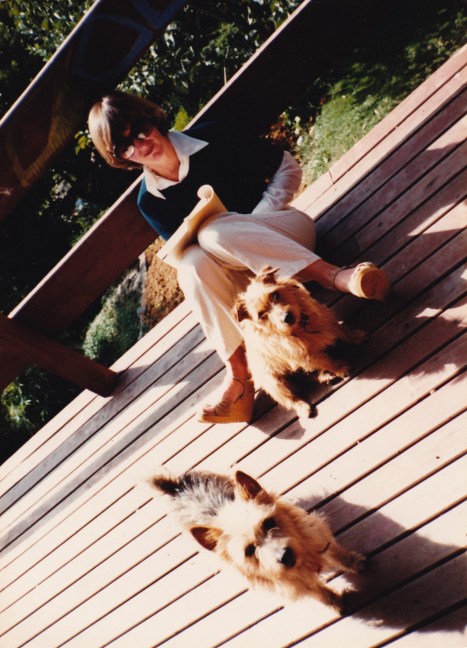
Elizabeth Smither with Rusty and Sneaky
‘The Labradors have made nests already
simply by lying in the long grass
sucking the green into their bodies’
from ‘Lying in the long grass between two black Labradors’ in Night Horse
I recently read through the alluring stretch of Elizabeth Smither’s poetry; from Here Come the Clouds published in 1975, to the new collection, Night Horse, just released by Auckland University Press. I was drawn into melodious lines, pocket anecdotes, bright images and enviable movement. Harry Ricketts talked about the transformative quality of Elizabeth’s poems in an interview with Kathryn Ryan, and I agree. As you follow reading paths from the opening line, there is always some form of transformation. The poetry, from debut until now, is meditative, andante, beautiful.
Elizabeth Smither has written 18 collections of poetry, five novels, five short story collections, journals, essays and reviews. She was New Zealand’s Poet Laureate (2001-3), was awarded the Prime Minister’s Award for Literary Achievement in Poetry in 2008, the same year she received an Hon D. Litt from Auckland University. She has appeared widely at festivals and her work has been published in Australia, USA and UK.
To celebrate Night Horse (Auckland University Press, 2017), Elizabeth agreed to answer a few questions.
‘You can run as fast as Atalanta
who bowled three apples at her suitors
Double Red Delicious’
from ‘An apple tree for Ruby’ in Night Horse
What sparked your imagination as a child? Was reading a main attraction or did you also write? Did particular books endure?
Reading and writing. I liked to say long sentences to myself as I walked. The first thing I can remember writing about was my pet New Zealand White rabbit. All the usual books of the period: Anne of Green Gables, Little Women, A Girl of the Limberlost which I found faintly terrifying. I can see these are the precursors of George Eliot and Jane Austen. As a teenager I had a crush on French writers: Colette, Gide, Mauriac, Sartre, de Beauvoir, Simenon. My father was a great novel reader and he impressed on me the sacrifices made by writers like Charles Dickens. I was scared of Quilp in The Old Curiosity Shop and never got past the page on which he appeared.
‘The cats are out by the letterboxes
at the ends of long driveways
waiting to see how the night will shape itself.’
from ‘Cat night’ in Night Horse
Your debut poetry collection, Here Come the Clouds, appeared in 1975, your eighteenth volume, Night Horse, was published in June this year. I see the same poetic attentiveness and ability to assemble detail that both stalls and surprises the reader. Do you see any changes in the way your write poems, or what you bring to poems, over the past decades?
Elizabeth Caffin wrote of an assured voice but I am unaware of it. I think it is more a question of a philosophy: Keats being lost in the leaves of a tree; being most ourselves when we are unconscious of what the self is; not feeling we are the centre of the universe but one of its parts. It is also a balancing act: the outside world meeting the interior; the sad existing alongside the pleasing, our mixed motives and our inability to ever know more than a fraction. In compensation we have the lovely leap of the imagination. I think poetry in many ways is a dare.
Have any poets or books affected or boosted your poetic directions?
Wallace Stevens was a huge discovery. I used to spend a year reading a major poet. Stevens, Roethke, Berryman, Plath, Sexton, Bishop, Lowell, Synder, The Beats, Black Mountain. Now I am less of a swot and read wherever I please. And when I am tired and jaded I re-read Hercule Poirot.
‘More moon tonight. 14 per cent bigger
and closer to the earth. The whole sky
seems to leap to greet a visitor.’
from ‘Perigee moon’ in Night Horse
In 1975, very few women poets were getting published in New Zealand. Did you feel you were writing within a community of poets? Men or women? Was it difficult to get your first book out?
Part community, part social movement: Greer, Friedan, Steinem, Kedgley, Mead. The United Women’s Convention. We were all swallowing American poets at that time, looking for a freer way forward. My first book I owe to Sam Hunt who was visiting and found a folder of poems he gave to Alister Taylor. After Alister came McIndoe and then AUP.
‘Fast the pulse of the music, every beat
clear as a little stream running over stones’
from ‘At the ballet’ in Night Horse
Your new collection is a delight to read and offers so many poetic treats. I was thinking as I read that your poems are like little jackets that can be worn inside out and outside in. In stillness there is movement and in movement there is stillness; in musicality there is plainness and in plainness there is musicality. In the strange there is the ordinary and in the ordinary there is the strange. What do you like your poems to do?
I want them to do everything. Everything at once. I want them to feel and think (and feel the thinking in them as you read). I want them to be quick, in the old sense of the word: the opposite of dead. I want them to not know something and try to find it out – I would never write a poem with prior knowledge – I think ignorance can be bliss or at least start the motor. And as I write more I find out more and more about musicality. Isn’t one of the loveliest moments in music when harmony breaks through discord as though it is earned and you know that discord, instead of being a thicket or a dark wood, is part of it?
‘Down their sleeves (his jacket, her blouse)
run currents the early evening stars detect
and whose meaning is held in great museums’
from ‘Holding hands’ in Night Horse
I love that idea! What attracts you in the poetry of others?
Boldness, form (the pressure of it), language as clear as it can be, given the difficulty or otherwise of the content, not being self-centred, engaging the reader. Visceral was the quality Allen Curnow looked for when I had the temerity to leave a poem in his letterbox. ‘I poked it with a stick and it was alive.’ James Brown does it in ‘Flying Fuck’ (‘The Spinoff, June 9, 2017); Stephen Romer in some lines about cleaning a barn (‘Carcanet Eletter: Set Thy Love in Order)
‘Perhaps in our cool northern air
you rose some echelons
being lighter, the barn empty’
while Carol Ann Duffy excoriates Theresa May with lines that reach back to the roots of poetry:
‘The furious young
ran towards her through fields of wheat.’
‘Morals that are so pure they blaze
the sunlight back into the air’
from ‘A landscape of shining of leaves’ in Night Horse
Janet Frame worked hard to get the rhythm right in her poems and she wasn’t always satisfied (ah, the rogue self-doubt! I adore her musical effects). I find you are able to slow down the pace of your poems so that I linger as reader upon an image, a word, an anecdote, a side-thought to see what surfaces. Does this reflect your process as a writer?
I think, since I write in longhand, it may echo the pauses during composition.
Do you, like Janet and countless other poets, have poetry anxieties?
Just the big anxiety, the generalised one. To be better, to get closer, to go deeper, knowing that a rigorous equation awaits. I particularly felt this in ballet: any advance, even within the safety of a spotlight, opened a further and equivalent unknown. My other anxiety is that, having embarked on a poem at speed and decided on a stanza form, the stanzas won’t add up when I have finished.
‘Eggs in foil were hidden everywhere
until the taste of sweetness palled.
She sits in an armchair with her bear’
from ‘Ruby and fruit’ in Night Horse
Your poetry does not slip into a self-confession or grant a window on your most private life, yet it acts as an autobiographical record of your relations with the world, people, animals and objects. How do you see the relationship between autobiography and your poems?
Some of the recent autobiographical poems remind me a little of Elgar’s ‘Enigma Variations’. Ruminating portraits of friends or events illustrating a friend. The ‘Enigma Variations’ are tender but well-defined, different in tone. Autobiography, to me, has many hazards. We all excuse ourselves and even the most honest and analytic among us favour some perspectives over others. I feel confident that something of ourselves always gets in and reveals more than we can imagine. ‘Am I in this poem?’ has never worried me. I know I am.
Are there taboo areas?
No, never. It’s just a case of what you can handle.
‘It was all those unseen moments we do not see
the best of a friend, the best of a mother
competent and gracious in her solitude’
from ‘My mother’s house’ in Night Horse
‘Later you’ll scrub individual stains
from the white field: the rim of someone’s glass
down which a red droplet ran, a smear
of eggy quiche, a buttered crumb.’
from ‘The tablecloth’ in Night Horse
I especially love the ongoing friendship and granddaughter poems, but I particularly love the first poem, ‘My mother’s house.’ Kate Camp and I heard you read this at the National Library’s Circle of Laureates and were so moved and uplifted that we asked for copies! Unseen, you are observing your mother move through the house from the street (you gave us this introduction) and see her in shifting lights. The moment is extraordinary; are we are at our truest self when we are not observed? There is the characteristic Smither movement through the poem, slow and attentive, to the point of tilt or surprise. The final lines reverberate and alter the pitch of looking: ‘but she who made it/who would soon walk into the last room/of her life and go to sleep in it.’ Do you have a poem or two in the collection that particularly resonate with you?
I’m fond of ‘The tablecloth’ after I observed my friend, Clay, scrubbing at a corner of a white damask tablecloth in the laundry after a dinner party. It reminded me of the old-fashioned way of washing linen in a river. It’s both a doll-sized tablecloth and something almost as large as the tablecloth for a royal banquet around which staff walk, measuring the placement of cutlery and the distance between each chair. ‘Ukulele for a dying child’ tumbles all over itself in an incoherent manner because the subject is so serious and no poet can do it justice. The grandmother poems will probably be ongoing because it is such an intense experience: something between a hovering angel and a lioness. Going back to your remark about ‘My mother’s house’ I agree with the truth that is available in our unobserved moments. Perhaps there is a balance between our social and our private moments which might comprise something Keats called ‘soul-making’.
‘Next morning she was called again
to undo the work of her marvellous wrists.
“Miss Bowerman, can you let out the water?”‘
from ‘Miss Bowerman and the hot water bottles’ in Night Horse
There is no formula for an ending but I often get an intake of breath, a tiny heart skip when I read your poems. What do you like endings to do?
The endings I like best have some extravagance in them, like the ending of ‘Cat Night’ where the road which still retains the day’s warmth turns into carriages and cocottes on the Champs-Elysées.
‘Let the street lights mark
the great promenade down which love will come
like black carriages on the Champs-Elysées.’
There’s a big difference between the size of a cat and a carriage but the emotion is the same.
Which New Zealand poets have you read in the past year or so that have struck or stuck?
Diana Bridge, Claire Orchard, John Dennison, yourself in New York, Michael Harlow, Geoff Cochrane and all the laureates.
Or from elsewhere?
Lots of Australians. I’ve just read Rosemary Dobson’s Collected Poems.
Do you read widely in other genres?
Yes, I particularly like hybrid forms – travelogues that turn into miniature poetry collections, diaries, memoirs that admit to no rules as if they understand the psychology of the reader who is liable to become bored, and also the limits of being an author. My main love remains the novel, followed closely by the short story and the detective story.
I was once asked to pick a single New Zealand poem I love to talk about on Summer Noelle. What poem would you pick?
Since Allen Curnow: Simply by Sailing in a New Direction, a biography by Terry Sturm, edited by Linda Cassells and Allen Curnow: Collected Poems, edited by Elizabeth Caffin and Terry Sturm are being published by AUP later this year, and since our pohutukawa are threatened by myrtle rust, I would pick ‘Spectacular Blossom’.
‘ – Can anyone choose
And call it beauty? – The victims
Are always beautiful.’
Auckland University Press Night Horse page and author page
Booksellers review by Emma Shi
Radio NZ National review by Harry Ricketts with Kathryn Ryan

With Donna in Berlin, New Year 2013/14.
You have to start somewhere
in these morose times,
a clearing in a forest say,
filled with golden shafts of sunlight
and skirmishes. A little later
your itinerary will take you past
weathered churches on plains that stretch
as far as the eye can see.
from ‘The lifeguard’ in The Lifeguard (2013) and Selected Poems
To celebrate the arrival of Selected Poems (Auckland University Press, 2017), Ian Wedde agreed to talk about poetry with me.
Born in Blenheim (a twin of Dave) in October 1946, Ian has lived in Bangladesh, England, Jordan, France, Germany, now lives in Auckland with his wife Donna Malane, a screen-writer and novelist, they have five children and five grandchildren, has published seven novels and sixteen collections of poetry as well as books of essays and assorted art books and catalogues. Most recent book is Selected Poems (AUP, 2017) with marvellous art work by John Reynolds. New Zealand poet laureate 2011-12, Prime Minister’s Award for Literary Achievement (poetry) 2014.
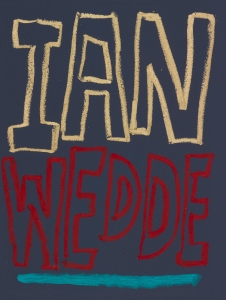
Cover and internal art work: John Reynolds
The Interview
PG: Did poetry feature in your childhood? What activities delighted you as a young boy?
IW: There wasn’t a lot of poetry in my childhood, though my father chanting John Masefield’s ‘Cargoes’ as he rowed across Waikawa Bay in the Marlborough Sounds was memorable – the rhythm was right but the words were deeply weird to me, which was what I liked.
Quinquireme of Nineveh from distant Ophir,
Rowing home to haven in sunny Palestine,
With a cargo of ivory,
And apes and peacocks,
Sandalwood, cedarwood, and sweet white wine.
PG: What were some key influences when you first started writing?
IW: A link between the deeply lost-in-it world of reading stories and the hypnotic secret ecstasy of writing things, or trying to. Also the fascination of not understanding either what I was reading sometimes (I happened on Browning’s ‘Sordello’ by accident) or why writing was so mesmerising. Also Kipling, because of the poems associated with the Jungle Books, which I was addicted to.
PG: Or at university?
IW: At university I was obsessive about getting my hands on contemporary American poetry after or off the shoulder of the great modernists – post Pound-and-Eliot if you like. Post-Beats, for that matter. William Carlos Williams above all, though of course Spring and All and Kora in Hell were published in the 1920s – but those early books like Spring and All and Kora in Hell incorporated prose and poetry, they seemed to be experimental and interesting in ways that the accredited modernist masters were not. I loved Williams’ humanity and love of sparrows and weedstalks, but also the marvellous delicacy of thought that articulated his lines. Robert Creeley was important, his frugal counterpoint; Denise Levertov’s makeover of the exhausted lyric; Gary Snyder’s ecological ethic that made for a new kind of eclogue; Frank O’Hara’s urbane vernacular and before long Ted Berrigan, especially Berrigan’s Sonnets. John Ashbery’s ‘The Tennis Court Oath’ amazed me. Also French poets, but always sheeting back to Rimbaud. Pablo Neruda in bulk, his marvellous relish for the sensuous world and its political demands on our responsibilities. Elizabeth Bishop’s The Complete Poems. John Wieners because he broke so many rules without showing off.
I study my son’s face, to treasure it.
Each day (now, & now) it’s changed & I’ve lost
what I love, loved.
from ‘Paradiso Terrestre’ in Earthly Sonnets for Carlos (1975) and Selected Poems
PG: The birth of your first son prompted Earthly: Sonnets for Carlos. While some New Zealand men have written fatherhood poems (notably Graham Lindsay) I cannot think of another extended sequence such as yours. The prolonged contemplation allows greater complexity when facing what might at first seem unsayable – the miracle of a new-born baby. Did your son’s arrival throw your relationship with writing in the air?
IW: I usually threw my infant son in the air. It was a time of wonder. I also walked around with him quite a lot at night, those rhythms shaped how I thought and how the poems moved.
PG: What draws you to the longer sequence?
IW: A disinclination to get to the point in timely fashion or to admit there is one worth ending with. There are dear friends whose conversations and phonecalls I love because they do go on. Mostly I like giving in to the drifts and swerves of language that takes me to places I can’t get to by intention. A tendency rapidly to lose interest in the self-centred, anecdotal lyric in which a certain kind of modesty often strikes me as sham.
PG: Have other things elbowed your writing—refreshed, transformed, derailed, sent askew in good ways, sparking in new directions? A book or theory or idea or chance encounter or unexpected experience?
IW: Probably art more than anything, and music. The ways in which our perceptions of phenomena trigger thought I find fascinating and seductive. I’m an easy weeper – I’ve been known to sniffle during the opening credits of movies just because it’s so amazing that we can do this stuff. I love art in its many guises because at its best it can be so capable of subversion – of subverting representation as mimesis, subverting personal testament, or markers of class and taste – and because at its worst it can be all those things, and boring to boot, especially as cultural capital. Music perhaps because it’s just off the camber of what language does in poetry, unless of course we’re talking about poets as song-writers, that fabulous ancient lineage. During the time I spent in Jordan in 1969-70 the poetry of Mahmoud Darwish and others was a revelation – how it had a vast, loyal, politically disenfranchised radio audience of Palestinians and at the same time reached deeply into classical histories, reached the audiences of the Egyptian singer Oum Kalsoum and spoke to intellectuals such as Edward Said.
(..) If trees &
suchlike don’t tell on me I understand
my son will & soon, too. His new blue eyes
see everything. Soon he’ll learn to see
less. O the whole great foundation is sand.
But the drought has broken today, this rain!
pecks neat holes in the world’s salty fabu-
less diamond-backed carapace & doubt comes
out, a swampy stink of old terrapin.
What shall I say? ‘I hid nothing from you,
but from myself. that I dream, little one,
from ‘for Rose’ in Earthly Sonnets for Carlos (1975) and Selected Poems
PG: For me Sonnets for Carlos is a collection imbued with love deep within the roots of the line. Yet when I regard the expanse of your writing across the decades, love seems to be an active ingredient whether it is for the dead poet Horace, blistered peppers on the hot plate, the beauty of a city street, family or the wide stretch of home. Do you agree? What do you see as active ingredients that have endured?
Late autumn’s good up around
The neighbourhood mountain’s misty flank in the morning
When the piss-trail of the morning’s promenade’s fresh
And even an old dog can still feel
The sac of earth trembling under his running feet.
from ‘5.4 To Mount Victoria’ in The Commonplace Odes (2001) and Selected Poems
IW: ‘Love’ is an easy word to utter and an even easier one to claim. Looking at what’s in this new book of selected poems, what I think I see repeated quite often is a claim that I ‘love’ the commonplace world – William Carlos Williams’ world of sparrows and weedstalks, if you like. I love appetite and enjoyment and relish and so the preparation of meals and so forth. I love thought that has a vigorous appetite, that enjoys tasty discussion. But I think you have to love this kind of ‘love’ knowing it comes at a cost, that grief or anger are its stalkers. I think there’s quite a lot of anger and frustration in my poems.
PG: In your introduction, ‘Enjoyment,’ you talk about the joy of writing poetry. That feeling must be contagious because in my view your poetry is a joy to read. For some writers, writing is a dark and painful process while for others it is energising. Do you also have patches like these? Do you have writing patterns, routines or rituals?
IW: For me writing – or thinking about writing – poetry really is a tremendous pleasure, at once a kind of rapture or abeyance of self, and a complete deployment of the self’s capacities. I’d never describe it as painful, though it can be tough when the critical phase kicks in and you realise that your rapture has generated a steaming heap. But then there’s a certain pleasure in consigning the pile of shit to its bucket. Much of what I write starts with walking around with a little notebook, and in a sense nothing in the notebook is ever wasted, even if what happens to it ends up getting chucked.
PG: You refer to the pleasure generated when ‘a poem veers off, carried along by a momentum that’s not quite mine, towards a direction neither I, nor the poem’s reader, is anticipating.’ There is a sense of writing into the unknown, but could you conversely say you write into into the known in unpredictable ways?
IW: No, I’m really talking about how my let’s call it ‘overarching concept’ can be highjacked by language itself – I go along with that, in a sense, and try to keep a very light hand on the tiller (as in that mixed metaphor).
PG: I am thinking, for example, of The Commonplace Odes and Three Regrets and a Hymn to Beauty where home infuses the poems in searing physical detail along with home-nourished states of mind. I rate these two books in my handful of sublime New Zealand reading experiences ( I am thinking too of the way your books have been long-term, book mentors along with those of Michele Leggott, Bill Manhire, Bernadette Hall, Cilla McQueen). The language is pitch perfect but it is that glorious tension between the known and the unknown that elevates me—along with the roving intellect and the physical beacons. I am reminded of Kafka’s yearning to read books that, like an axe, cut through the frozen sea within us. Do you have a book in your oeuvre that has particularly worked for you?
IW: Do you mean books I’ve read? I think there have been lots of them, over time. Perhaps the one that keeps on being non-negotiable is Rimbaud’s Oeuvres complètes (Gallimard, 1972) and subsequent translations, including those by Samuel Beckett, John Ashbery and Jeremy Harding, among others. Rimbaud’s pronouncements in May 1871 at the age of seventeen in letters to Georges Izambard and Paul Demeny that ‘I is somebody else’ (Je est un autre) remains for me one of the most potent codes with which to approach the way in which the poet (at seventeen) can become a ‘drunken boat’ that morphs into the child the poet was ten years earlier, playing with his toy boat on a pond, and finally the ship that swims under the frightful gaze of the prison hulks that incarcerated the Communard prisoners of 1871 that were the seventeen year old Rimbaud’s heroes. But if you mean one of my own books that I think has come close to that kind of sorcery, then pass.
Beauty
you’re the trouble I’m in
because there’s a lot of sweetness in my life
with that rude kind of magnificence
as when they hung Le Bateau upside down,
unusually animated and sparkling.
Happy birthday Montgomery Clift:
where did I see this guy – in Red River
or From Here to Eternity?
Accept and you become whole
bend and you straighten.
from ‘A hymn to beauty: days of a year’ in Three Regrets and a Hymn to Beauty (2005) and Selected Poems
PG: The allure of language in its slippery elusive glory, its ability to make music and bear all manner of freight, is a potent force for the poet. When a poem succeeds for you, or comes close, what is language doing? Do you have a poem or two that continue to resonate at the level of language? For me, there is an ongoing musicality, an enviable musicality, that provides shifting keys harmonies and chords.
IW: I think any poem that’s worth reading ‘resonates at the level of language’, which is to say the language doesn’t just do what it’s told to, rather it subverts or distracts the task of making itself understood. ‘Musicality’ in the language of poems can be a distraction or, at worst, an indulgence, an invitation to the categorisation ‘poetic’. I like the idea of meaning-chords as riffs, vertical rather than linear.
(..) the lovely world has everything I need,
It has my kids, my sweetheart, my friends, it has a new book
With mouth-watering risotto recipes in it,
The kind of plump rice you might have relished,
Horace, in the Sabine noon, yellowed with saffron.
‘The zen poet’ is another of you, he wrote a poem
About making stew in the desert which changed my life.
A good cookbook is as good as a book of poems
Any day, because it can’t be any more pretentious
Than the produce you savour with friends as night falls.
from ‘1.2 To the cookbook’ in The Commonplace Odes (2005) and Selected Poems
PG: In ‘To the cookbook,’ we read that ‘A good cookbook is as good as a book of poems.’ Women have long been denigrated for domestic traces in their writing. I take issue with this on so many levels. Food, including the cooking of food, adds a sensual zest, like finely judged salt and pepper, to your poetry, and indeed opens fascinating windows upon relations between food, life and writing. How do these connections work for you? Are you offended if I describe some of your poems as mouth-watering?
IW: Not in the least offended. It’s a compliment, thank you. And then, Neruda’s ‘Ode to Tomatoes’ is one of the most slyly political poems ever written, as is Gary Snyder’s ‘How to Make Stew in the Pinacate Desert’.
PG: The word subversion crops up in your introduction. You relish subverting expectations of what language ought to or can do. Do you see other subversions at work?
IW: I try to subvert myself, not always with much success.
PG: The Selected Poems underlines how important your reading life is and how it has sustained and infiltrated your writing life. Name three books from any time or any place that have mattered deeply.
IW: Geoff Park’s Nga Uruora: The Groves of Life; May Gibbs, The Complete Adventures of Snugglepot and Cuddlepie; Ovid, Metamorphoses.
PG: Name three New Zealand poetry books that have resonated with you.
IW: Nga Moteatea (4 vols.); R.A.K. Mason, Collected Poems; take your pick of poets who are also song-writers, we have some great ones: Hinemoana Baker, Teremoana Rapley, Bill Manhire, Dominic Hoey known as Tourettes, the Dam Native crew, lots more in this country.
PG: Have you been attracted or influenced by any poetry movements? Or conversely repelled?
IW: Constantly.
If I wanted to translate
silence I would have to be
deaf, to remember silence
I would have to recognise
its opposite, for instance
singing, a miracle, not
too much to ask I hope, and
why wouldn’t I hope, why not?
from ‘Shadow stands up’ in The Lifeguard (2013) and Selected Poems
PG: In your introduction you suggest it is over to the reader to make sense of the way your writing has changed—over to us to decipher the recurring motifs and predilections, the side steps, the shifts in attention and concerns. Time and age are under the spotlight right from the start, in the first poem addressed to Matisse. Just one question then. Do you feel you have greater freedom at 70 when you pick up your writing pen?
IW: I have less compunction about putting the pen down and going for a walk. With or without my notebook.
Henri Emile Benoît Matisse je vous salue!
Let me tell you a secret.
Your work goes on.
I’d only seen your things in art books
bite sized. I dreamed there was a bright room
in my head somewhere
which you were making real stroke
by counterpointed stroke
& where I would some day retire
to an armchair in the corner:
the final element of a composition
that perfectly described itself.
from ‘Homage to Matisse’ in Homage to Matisse (1971) and Selected Poems
Auckland University Press page
Radio NZ review
Herald piece with Greg Fleming
Discussed in Anna Jackson’s essay on the Epistle Poem
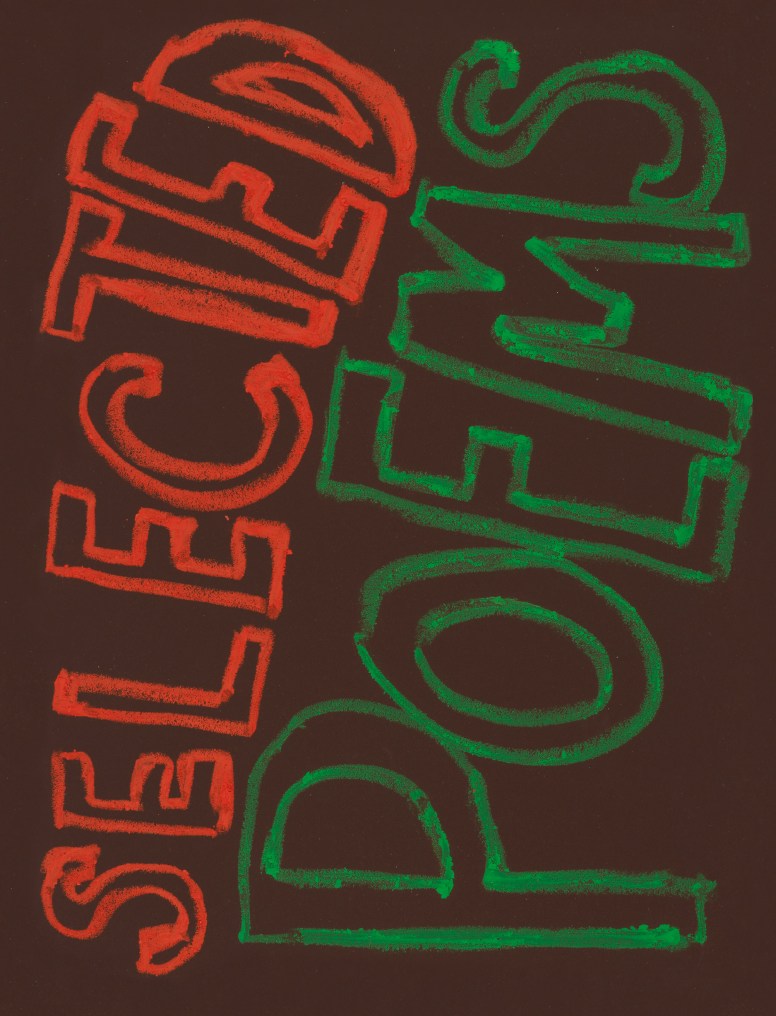
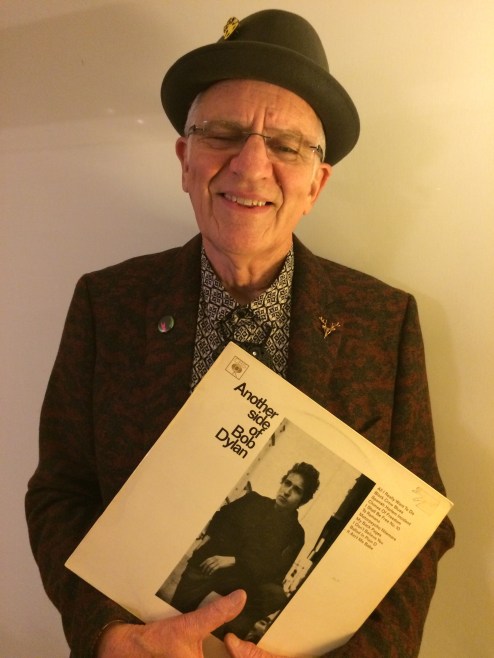
Preparing for death is a wicker basket.
Elderly women know the road.
from ‘Memoir II’ Blood Ties
To celebrate the arrival of two new poetry books—Blood Ties: New and Selected Poems 1963 – 2016 (Canterbury University Press, 2017) and Dylan Junkie (Mākaro Press, 2017) —Jeffrey Paparoa Holman agreed to answer some questions for Poetry Shelf.

Jeffrey Paparoa Holman was born in London in 1947. He writes poetry, memoir and history. His most recent works are The Lost Pilot: a memoir (Penguin, 2013); Blood Ties: New and Selected Poems 1963-2016 (Canterbury University Press, 2017); Dylan Junkie, a collection of His Bobness fanboy poems (Mākaro Press) is released in May 2017.
Pantograph Punch review of Blood Ties by Vaughan Rapatahana
Two Poems at The SpinOff
Radio interview
Dylan Junkie will be launched in Wellington at 4pm Sunday 21st May as part of the 2017 Hoopla Series
Mākaro Press page
Canterbury University Press page
The Interview:
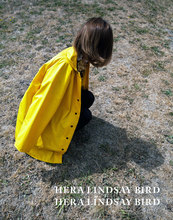
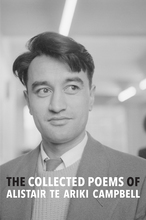
PG: Name a poetry book you have read in the past year or so that has really inspired you.
JPH: I think Tusiata Avia’s Fale Aitu/Spirit House is the book of the past year for a myriad of reasons and you’d have to create a special category for Hera Lindsay Bird’s eponymous dark horse sensation – but I’d give my heart to The Collected Poems of Alistair Te Ariki Campbell. Trying to review the book for Landfall reminded me that no-one can really capture a life in letters that spanned such width and such depth; in his generation, he was the Pasifika pou in a house of words held up for Māori by Hone Tuwhare, and for Pākehā by James K Baxter.
Squid-fat chicks in the baleful wind hunker
and wait, outwitting winter on Taiaroa’s
broad back.
from ‘Toroa feeding – Tairoa Heads’ Blood Ties
PG: Your poetry is musical, thoughtful, sustained by deep attachments and thematically active. What matters when you write a poem?
JPH: I don’t know if I can answer that easily, as many poems that speak to me come from a wide compass; whatever hits me when one of mine is coming might depend on mood, or some conviction, an itch or good old fashioned heartache. I do have to restrain myself sometimes from getting overtaken by insistent metrics (some would say not enough), but I am affected by music. I think poetry is embodied, it’s physical to me. On my own at home, sometimes I’ll play a Dylan track and make my own kind of dance moves. There’s a poem in my latest book from Mākaro, Dylan Junkie where I’m riffing on his World Gone Wrong album from 1993, when I was still in London and he was seen wandering unannounced around Camden, mere blocks away from where I lived. In the series of poems that take biographical snapshots in the first part of the book, that moment in his life and mine is remembered with me dancing around our council flat, “croaking away to those Akai speakers/with blood in my eyes for you”.
I guess that’s an example of a deep attachment to a man whose music and songs, whose poetry, kicked me off in 1964; then the mining town of Blackball where I heard songs like Only a Pawn in Their Game is another deep strata for me, the bookish boy in a tough, outdoor workingman’s world where women did it hard to just to survive, like my mother and her friends. I got a lot of my songbook from the request sessions on 3YZ (no TV, thank God!) and my politics just from living in that consciousness, of a history of struggle to get fair conditions in a dangerous world underground.
We had a Hospital Request on Sunday morning, in the days when there were no private rest homes and the old people’s homes were attached to the four West Coast hospitals. Many of the oldies were Scots, Irish and English, born elsewhere in the 1880s and the 1890s, so we got lots of longing for lost homelands, melancholy ballads and such like. I was schooled in true nostalgia, meaning “the pain of exile”. And we were an immigrant family too, though I hardly realised it at the time.
It’s all down there somewhere when I write, like the Irish song, Galway Bay: “So the strangers came and tried to teach us their ways/And they scorned us just for being what we are…”. The women gathering potatoes in the song, “speak language that the strangers do not know”, I was hearing the bitterness of the Cromwellian history, the seizing of Ireland by the English and the cruel history of colonisation that followed. The Coast was a sectarian domain, the Catholics, the Protestants, the Communists and all.
I suppose today I’m a bit of a throwback. I hate it when I hear ingrates who have no idea of where we come from, forget the sacrifices my parental and grandparental generations made to get kids like me a house, a hospital, a school, a job and three square meals. That’s the root of a lot of my thinking and it comes out in some of the poems, true – but I’m a broken human too, I can do love, loss and laughter. One of the things that got to me about John Key was how he – a Bryndwr state house kid like me, at one time – fashioned his story as a kind of rags to riches, self-made man, yet seemed happy to watch the culture that sheltered him degrade. For me now, it seems like the reverse: from enough security for all to ensure social cohesion back then, to now, every one for themselves, insecurity, inequality and selfies all round. I guess that makes me a political writer in many ways, but not all.
memory is
the braille of buildings
threading the labyrinth
from ‘Memory is a place’ Blood Ties
PG: I am drawn to the shifting musical effects in your poetry. Which poets catch your ear?
JPH: You’d have to find Baxter and Hone Tuwhare in there for sure, and later on, Jack Gilbert, who all get a nod in Blood Ties, the new selected. Back in the ’70s when I was starting off, I was reading Lowell and cummings, studying Eliot and Pound, falling in love with Neruda and Vallejo, very few women poets then I confess, Emily Dickinson and a nodding acquaintance with Sylvia Plath, overshadowed by Ted Hughes. We had a small group of writers and actors in Christchurch in 1973 and we did public readings in the new Town Hall and out at Teachers’ College. I got to love the idea that page and stage could work together; I always test what’s written with reading, as the poems come on in the making.
I heard Baxter read here the year he died, outside the old UCSA at the town site, early ’72. He was a prophet. I think I picked up the sermonising aspect of some readings I heard and never liked it. I wanted a kind of handmade vernacular, you know, what I found ten years later in Raymond Carver. Poems that were poems that didn’t look like poems, but when you read them aloud, they came alive. Hearing the Czech poet Miroslav Holub read in London in 1991 blew me away: a second language speaker of English, the accents of his Czech made the surreal poems he articulated with some effort simply transfixing, like you were being marinated in a thick black coffee soundscape.
I’m well aware now that what is merely personal “soon rots, it must be packed in ice and salt”, as Yeats told us – but that’s more than just technique he’s talking about, that’s a soundprint of the self the poet has got down somehow, whether it’s Jenny Bornholdt’s subtleties or Glenn Colquhuon’s list variations. Anyone who has heard David Eggleton read has got the whole package: intelligence with invisible guitars, a scalpel for a baton.
There’s always been something ineffable in the English translations of Osip Mandelstam that makes me sad I have no Russian; but he’s always in my heart, since I was pointed his way in 1971 by my American mentor and friend, the late David Walker. “What has held out against oxidation/and adulteration, burns like feminine silver,/ and quiet labour silvers the iron plough/and the poet’s voice.” 353, Voronezh (1937), trs. Clarence Brown and W.S. Merwin. I have no way of knowing what it cost this man and his devoted wife and editor, Nadezhda (who memorised his entire body of work to save it for the future), to survive as long as they did as internal exiles in the midst of Stalin’s purges. His poetry has remained with me ever since my first readings, a tutelary angel of courage and brilliance.
Knit me back together
when time stops to roar
for eternity and everywhere
is water and all is an ear –
resurrect me in the rain.
from ‘ Resurrect me in the rain’ Blood Ties
PG: Your new Selected Poems is arranged in thematic clusters rather than chronologically. What factors were important in collating the book? What difficulties did you face?
JPH: The collection has a history of changes. I roughed out the idea in early 2012 with the working title, My Culture is my Songbook – which is still an implication in what we have now. Then in my time in Iowa at the IWP later that year, I worked up a draft list of poems from the previous collections and some published elsewhere, some unpublished. I also wrote an essay to preface the collection, which hasn’t survived.
One publisher looked at that iteration in the following year and kindly declined; another in 2014 said maybe it was a bit early for me to be doing a selected. Nil desperandum: I was busy with The Lost Pilot, my Japan kamikaze memoir at the time, so probably wasn’t as focussed as I needed to be. But I had an idea, and was happy to wait. I gave the collection a new title (Paparoa Hotel) and shelved it. Working with John Pule and Catherine Montgomery of Canterbury University Press in 2013 for the re-issue of his great poem, The Bond of Time gave me the impetus to approach her in the following year and see if she was interested in looking at the manuscript.
Once Catherine agreed, I had another look, dropped the essay, gave it a new title and winnowed some, added a few others. Her reader came back to us with a positive report but suggested the thematic structure instead of chronology alone as a guide. She also felt that given the amount of darkness in much of the subject matter, ending on some of the more intimate and tender works might be helpful. I thought about this and decided, why not?
That left me to decide where the pieces fitted into which jigsaws, which wasn’t that difficult and resulted in poems from different collections now sitting side by side. The aeroplane poems selected from Fly Boy now found themselves in the opening section on childhood, Only Yesterday; the bird poems from the same 2010 book sat much later with the love poems near the book’s end, in Lovers and Feathers. Ancestors of the flesh and those of the written word rub shoulders: we see my terrified grandmother watching V-1 flying bombs streaking overhead, while on the next page, a salute to the composer and onetime Spitfire pilot John Ritchie takes off in Old Flyers, then a page or two on, an elegy on the death of Hone Tuwhare.
So it goes: the mining poems in Old King Coal, the poetry of wounding in Traumata Dreaming and Other Tongues where work on Māori language and history sits alongside a lament to dead kamikaze and their families. This will work for some and not for others, as the times of composition are necessarily out of joint (the editors did suggest dating the poems in the Acknowledgements, so it is possible to get a timeline, if one is bothered).
I do not want another father: old man, now
dead, cancer faded
and swelled you, speechless at the door, yellow
feathered fingers.
from ‘Father and son’ Blood Ties
I lost him the first time
before I could grasp
who he was, what he did, where
he fitted with her
from ‘As big as a father’ Blood Ties
PG: Do you think your poetry has changed over the course of time?
JPH: I can see it has changed even more so than was obvious before, now we have this group to ponder. Just take one set of poems for example: my father and his war. I’ve been aware that my elegy for Dad, ‘Father and Son,’ written in 1973 in the year following his death was echoed in many respects by what seems to have become a signature poem, 1993’s ‘As Big as a Father,’ written in London twenty years later.
The early poem has little in the way of formal structure, held together by the force of feeling and a linked set of images: starving children and cancer patients, the RSA and the bottle of port, the toilet flushing, the doctor leaving after pronouncing sentence. As Big as a Father, two decades later, grief having subsided into regret and amputation, falls back onto form and metaphor: my father is a lost ship that finally sinks when torpedoed by death itself. The stanzas are regular and repeat, the conceit playing variations on the four times loss of a father, each descending tercet ending with “father”.
Yet none of this was consciously planned, any more than was the early poem; it all arose from an idea of the impossibility of losing anything as big as a capital ship (I was musing on the expression, “one of our battleships is missing”). Yes, so how could you lose anything as big as a father? The thought just slid across my bows. The poem ran from there. It seems that the less apparently personal of the two elegies, the more distanced one, has the greater power to reach others who know what is being spoken of here.
Two later poems – ‘Father war, 2012’ and ‘Wall, 2013’ – are similarly distanced and even more stripped down, unplugged. Father war eschews musicality for a series of jabs to the body, like a boxer hitting over and over in the region of the heart, to demonstrate the brutal ongoing effect of PTSD, kicking survivors of combat when they are down, returned home, but never free of the invisible wounds. Wall, the poem just stares into the abyss of addiction, alcohol, gambling and invisibility.
On this subject at least – warriors and their wounds – I can clearly see changes. I’m more confident now to have a go, try something, a ballad if one is called for, or something more playful like ‘The Writing Teacher.’ I’ve been reading Max Sebald’s poetry: given his sense of history and landscape, both regarding us from their buried secrets, I’ve written some work in imitation.
(iii)
the fieldfares
of Norfolk
flock on autumn
stubble, on the old
airfields
from ‘After Sebald’
It helps to know that the great German novelist – a migrant, to England in the 1960s – lived and died in Norfolk, teaching for many years at the University of East Anglia. He was a frequent walker and wanderer; he would often have seen this large migratory thrush, the fieldfare, wintering over in Norfolk on the flint speckled fields after harvest. The area was the home of other migratory birds: the bombers of the 8th Air Force in World War Two and their crews, American airmen who came to bomb Sebald’s Germany where he was born in the midst of their raids in 1944. So yes, I am aiming now at a little more indirection, suggestion, aware the world is writing me as much as the reverse.
It’s not every day you can find a guide
to show you around a working graveyard.
from ‘Inferno (Strongman Mine 1967)’ Blood Ties
PG: The title is particularly resonant. How important are blood ties as you write? Do they go beyond the familial?
JPH: The title as I mentioned earlier came late and so is retrospective. I think I was looking for something that caught the feel of what was gathered, but it was pretty instinctive. The poems in the book do relate stories of whakapapa, some of blood, others of influence. I can feel some kind of familial connection to writers who connect with me, many of them dead of course, others I’ll never meet.
There are also a number of poems that come out of the connections my family has with war and survival: my father, mother and grandmother especially, but also the poems about mining disasters and that community where I grew up. Relationship as in a shared culture: to me they are ties of blood, as much as those of immediate family members. Noel Prescott, one of my classmates at high school died in the Strongman Mine disaster in 1967, he was 19 years old.
I went to the 50th anniversary of Strongman in Greymouth and up at the mine site itself, earlier this year. Pike River hung over the whole three days, but nobody mentioned it publicly, as if that would take away from the solemnity of this gathering. Pike is so raw still, seven years on in November. This is where my heart is, down in the roots of childhood and adolescence where blood ties equal whakapapa to me.
We had a West Coast launch for the book after Christchurch, in the Bonzai Café in Greymouth a few weeks ago; again, I had family there and miners as well. Two of the people who were the last to leave were a father and son: Les Neilson, retired miner – son of my old neighbour in Blackball, Les senior – and Kirk, his son, a fourth- generation miner. Les had worked in Strongman after the explosion and was one of those who closed it down in 1993. Kirk is working for Solid Energy, closing Pike River. These men know about blood ties and coal; I was honoured they came for the poetry that night.
PG: I like the design of the book with the left-hand side generally blank. Tell me about the design choices.
JPH: I should pay tribute here to the staff of CUP, the reader and my editor, Emma Neale who saw all this through, as well Aaron Beehre and Gemma Banks who designed and printed the book at Ilam Press, based in the University’s School of Fine Arts. They made this format work with their outstanding production values: it is a beautiful artefact, like all the books they make. The reproduction of John Madden’s painting from Karekare on the cover is a crowning glory for me; he too is a West Coast coal miner’s son.
They do this special thing with one page poems getting a whole sheet to themselves; poems that run over do get printed on both sides, but it means a fatter than average poetry book. It’s on art paper too, and then you have section inserts in another colour and the titles picked out in red: classy. The title on the cover is strip overlaid by hand, all finished off with the folding flap.
It makes me feel privileged to have this workmanship where I’ve chosen the poems I think I want to remain behind me when I’m gone. It’s like a waka huia, those intricately carved treasure boxes where Māori kept the precious feathers of rank. I deliberately included my earliest published poem and a couple of juvenilia, because this is my life: the production here is a joy to me. He tino taonga te pukapuka nei!
The last time I lost him
I lost him for good:
the night and the day
the breath he was breathing
and death’s head torpedoes
blew out of the water
the skiff of my father.
from ‘As big as a father’ Blood Ties
PG: The father poems are so beautifully textured, both emotionally and musically. What are the difficulties and what were the joys in writing of your father?
JPH: People might rightly observe that I’ve made a career out of mining my father’s and my relationship, but you have to play what’s in front of you. In some ways, I had little choice, as we were so entangled. I spoke a bit earlier about how my writing him changed over time; as for emotions, I guess I felt cheated by his early death and our all our unresolved stuff. I know I’m not alone here.
I’m writing this on Anzac Day and I was down at the Dawn Service in Cranmer Square this morning (where in early 1973 I’d stood up and read a poem of James K Baxter’s in the memorial service held there for him). I know I was grieving my Dad’s death and my broken marriage too that day, reading ‘He Waiata Mō Te Kare,’ Baxter’s love poem to Jacqui Sturm.
This morning, watching the sailors march in with the other armed forces, singing The Sailors’ Hymn, “Eternal Father, strong to save,/ Whose arm has bound the restless wave…”, I was touched by his memory again, through the metrics of the hymnody and those bloody uniforms! I cried a bit: not even I’m sure, just for him but like in a poem I read years ago and forgot the writer, “we weep for our strangeness”.
I’m a writer, it’s what I am and what I do, however well, however badly and so if I need to address somebody or something that’s got to me deep down, I have to find a language for it. I might forget the odd name these days, but I don’t forget people, the ones in my life that have touched me. Dad is top of the list, mostly because he was there but not there, always, like I write him in the poem Father war, “gone but not gone/back but half cocked/alone and alone/the war for a self”.
It makes me cry when I think of how alone he was, addicted to alcohol and adrenaline, how I have come to understand him a little more now, inheriting his tendencies to run on chemicals (I have long since sought help, but he never did). The dead are just the dead at first, our parents who disappear, but over time they become stories we tell to keep them alive and finally, they’re mythical beings. Poverty, depression, war, migration, addiction, it’s a God-given epic, isn’t it? It would be churlish not to sing about my parents’ lives and times, to refuse the gift.
After the tremor the neighbour
after the terror the stranger
after the stranger the doctor
after the doctor the soldier
after the soldier the looter
after the looter the vulture
from ‘After the tremor’ Blood Ties
PG: Your earthquake poems are also very affecting to read. I was pondering over the way catastrophe can either freeze or impel writers. How did the quakes affect your writing?
JPH: Well, the quakes were affecting, that’s for sure, but I guess it doesn’t follow writing about them will be. Your observation about catastrophe having the power to “freeze or impel” is very true – of everything, not just writing. You get the adrenaline to react, the fight-or-flight booster, but it’s how you use it, I think (well, in the moment at least).
I know some people freeze so hard they can’t think; so far, I’ve managed in the aftermath to stay focused, but I wonder if that’s partly because as you age, your system is slower anyway? I learned to put my shoes on before blundering around a darkened house (broken glass); to photograph everything right away, for insurance purposes; to text loved ones (and by extension, in a series of quakes, keep your phone charged).
Lots of learned experience, yes, but when it comes to writing about it, I was slow to do anything much, really. I wrote one poem about our cat disappearing, which The Press published shortly after the September event; that ended up opening what became Shaken Down 6.3. The title tells you that the book really begins after the deadly 22 February quake in 2011 that killed 185 people, including my dear friend and neighbour, Tetaki Tairakena, an English teacher killed in the CTV building collapse with many of his Asian students.
That year I’d been awarded a University of Waikato Writing Fellowship, so I spent much of it coming and going, including a trip to Japan in April in the course of writing The Lost Pilot memoir. I managed to come home regularly and caught many of the major shakes, including the February killer and a bad one in June. We were all PTS, shaken up and burned out over that year, including for many of us, our broken impoverished sleep.
That was how the poems arrived, in the middle of my wakeful nights in Hamilton. I’d wake at one, two or three in the morning and it was hard to go back to sleep. My vestigial childhood hyper-vigilance, formed in response to my father’s late night home-from-the-pub rages woke up again: I’d be on the alert automatically, ready to run if another shake came.
how can I find
my way through myself
with the past torn down
the road of dreams
with my compass
smashed
from ‘Memory is place’ Blood Ties
Your brain doesn’t care if you’re in another city, another country – this is what we’ve come to call in Christchurch “quake brain”. As I woke and lay there, sometimes a line would come, a half-conscious thought, as in the poem, ‘Memory is place.’ I’d be in my deep mind somewhere and words would come to match a stumbling thought, like how with the city half destroyed and broken down, we didn’t know where we were anymore. It was disorienting to feel you no longer knew your own city, or knew where you stood.
Some of the poems came as broken pieces (when all you) or chants and incantations (after the tremor), and for most, they were night birds, except for the three I wrote in Japan reflecting their experience of tsunami horrors in Fukushima, back in March. In some ways, the book is like reportage, written under pressure in one year and published the next; the use of photographs was a choice there too, giving readers visual information, along with a reflection, an essay that ends the book.
Jim Norcliffe, one of our kaumātua in the poetry scene here for years was at the time poetry editor of The Press and he tells of how he was inundated with up to a thousand poems by Christchurch citizens, over the next year or so. It seems that when the chips were down and we wanted to tell each other what it felt like, a poem was the weapon of choice. I used to say that we all, with our quake stories were now characters in a giant multi-faceted novel, never to be quite finished, authored by Papatūānuku herself.
I found no trace of your vital signs.
I stopped the car at Poerua.
Your image stained the lake.
Your signature dripped in the bush.
from ‘Re-reading you (Peter Hooper, 1919 – 1991)’ Blood Ties
PG: There are a number of poems that pay tribute to poet, Peter Hooper. Are there other poets that have sustained you in view of both reading and conversation?
JPH: Yes, Peter my high school English teacher and later, a lifelong friend was always going to figure. I mentioned a few earlier in answer to another question, but I think the next influence was David Walker, who taught literature papers in the American Studies programme at Canterbury when I came back to study in 1971 after dropping out in 1966.
I was starting to write again after what I might like to style as my “Woodstock years”, when I ran away to country (not to escape fame of course, just growing up). I met Gary Langford who had a flat downstairs and he was writing and publishing, very much a presence in the university lit scene. It was David though who helped me step up to the mark. I saw he was publishing poetry in Canta, so after a tutorial one night, I gave him a few of my ‘prentice efforts.
The cold bath he gave them should have put me off, but I persevered; he pointed me towards the Russian and South American writers I mentioned earlier, as well as rarities like Georg Trakl and Goncharov. I guess he steered me into the wider world, out of the claustrophobic Anglophilia which still gripped the English Department in those days (Patrick Evans is good on this subject).
David and I corresponded, were published together by Fragments Press in 1974 in a shared volume (Two Poets: Fragments 5) and stayed friends thereafter, swapping poems and books. He kept the flame alive for me, I think that’s true; after I dropped out of university again, I wrote fitfully but published nothing until 1998, back at varsity for a third time lucky, self-publishing a stapled booklet called Flood Damage.
I met a few poets working in London bookshops in the 1990s (I even heard Stephen Spender read, in a tiny community centre for the arts in north London, in Torriano Avenue, N7). I took a course at the legendary City Lit adult education centre in Stukeley Street not far from my work in Charing Cross Road, tutored by Alison Fell.
I was reading everything I could get my hands on and writing daily, even if only a diary entry: short stories, an abandoned novel and poetry, poetry, poetry. That’s where As Big As A Father came from, that time; like fishing, if you bait a line and cast every day, sooner or later, you’ll get a bite. I was reading Raymond Carver and I think in the end, it was the example of his life, even more than his style that empowered me. Carver was a recovering alkie like me, a working-class kid from the sticks, who’d found the self-belief to keep writing.
Back in New Zealand, at university in 1998, I took Rob Jackaman’s creative writing paper for poetry. I got to know him well and he helped me – along with Patrick Evans – take writing seriously and look to publication, long term. The year before, As Big As A Father had won the Whitirea poetry prize so I had Sam Hunt cheering me on after that (he was the judge).
James Brown I met that night in Porirua was writer in residence at Canterbury in 2001 and he read a manuscript I’d got together, edited by Bernadette Hall and encouraged me to send it so Roger Steele of Steele Roberts. That was breakthrough I needed. The resulting book, As Big As A Father (2002) was shortlisted in the Montana New Zealand Book Award the following year and the faith, the support of all the foregoing writers had a public reward. What matters though as always is the next poem, the being awake in the moment.
I filled my heart with as many tears as I could
possibly carry and saving them for life, skedaddled.
In the pub in Dunoille, knocking back beer after beer
celebrating a visit to hell with a man who works there.
from ‘Inferno (Strongman Mine 1967)’ Blood Ties
PG: Is there a poem that has really lasted the distance for you?
JPH: I thought about this and while it seems obvious ‘As Big As A Father’ will survive me, for a while anyway. I still have a heart for ‘Inferno (Strongman Mine 1967).’ I wrote it in London, during those years when I was isolated from all it speaks of physically and culturally and not getting published much at all, seemingly whistling in the dark.
Somehow, it just turned up and rolled out: the first couplet is a memory of my old Blackball friend David Hibbs in 1978 when I was back living on the Coast, in Runanga, offering to take my wife and me down into Strongman. It was a potent journey: her father had died there in the explosion with eighteen other miners, 19 January 1967.
The image of Virgil guiding Dante down into the underworld just sat there for me and everything else seemed to follow. This is where reading informs and sustains us; without thinking, I was diving down into the Western tradition for guidance. The memory of our trip to Greens Dip where the explosion took place, and the final point where you can go no further in that section, where two bodies still remain buried deep, spooled out of me like a film.
I knew I had it almost straight away. I know it will stay around as it relies on whatever power it has for the buried emotion in the measured pauses at of each couplet. It was well that we took that trip back then; the mine was finally closed and sealed up in 1993; there is no way down there now, to offer alms to the dead.
But I would put in an honorary mention for one lesser known: The Iconography of Birds (for Les Murray). I wrote this I think in 1998, after hearing Les Murray read at the university, where he spoke of birds perching on a dead tree in a dam on his farm in New South Wales. The poem he read was a graphic dramatization on this scene.
I love birds, I’ve been watching them all my life. I went home and wrote this poem as if in reply, fuelled by my studies in medieval iconography and a recent essay on stained glass windows in the great cathedrals. I was in full flight in Rob’s poetry classes, writing on steroids, so the imagery of Christ as a pelican feeding his young on blood from his own breast came straight from my essay, reflecting on a window that held this image.
From there, the sky was conceived as “the Gothic vault” filled with migratory birds, especially the godwits, who had not long departed the Heathcote Estuary on their incredible, world-girdling flight to Alaska and summer feeding grounds. The birds became Greek voyagers in Homer’s myths and without thinking too much, I’d joined the two great streams of Western literature: the pagan Greeks and the biblical writers, the Jews.
The birds fly out into the Pacific night, driven by that mysterious migratory instinct that tells them it is time to go, star-farers as wise as those who navigated their way here to Aotearoa, Māori first, and later, Pākehā. I was a late arrival to these southern waters, a migratory bird like these early travellers, albeit I sailed here on my mother’s back, so to speak. Below the line, I think the poem was trying to tell me something and I like that.
it started out of sight and out of mind
too dark to see too hard to think
it began with the world made flesh
on the backs of tiny bones
from ‘Child labour’ Blood Ties
PG: Which new poem especially delights you?
JPH: I like ‘Child Labour’ in its simplicity and its rage, and ‘Dark With Nouns’ too. Very different offerings and both pretty fresh, they were written last year. Catherine Montgomery encouraged me to include something recent. That reading at the ICA with those giants of poetry on a raised stage in front of me: phew! Like Mount Rushmore in the flesh, and I try and capture something of that in the salute to Brodsky, who made the remark somewhere I was reading about how if you covered all the adjective and verbs, a poem should be “dark with nouns”. I like poems to be full of the material world, the word made flesh (small ‘w’).
But I’ll go for ‘Child Labour,’ because it’s a song, like one of William Blake’s Songs of Innocence and Experience: here, the innocent get to have a cruel experience, the kind of image I saw in my fifth form history books, tiny, emaciated kids pulling coal tubs in tunnels little more than burrows for moles. It still goes on today, everywhere children and those with less power are exploited for somebody else’s profit, for my smart phone, my T-shirt.
I’ll put my hand up: the poetry of witness is necessary still, whether we look back to Chaucer pointing out ecclesiastical corruption, fast forward to Neruda skewering US companies and their tame dictators enslaving peasants in South America, or Miroslav Holub holding his nose over the rotten Communist bureaucracy in Czechoslovakia, while seemingly talking about a Chinese emperor embalmed stinking fish – we can speak up, when it matters.
It’s great to see that Emma Neale and Philip Temple have just published the anthology Manifesto with Otago University Press, a collection of political and protest poetry. We have a broad church to speak into, it doesn’t have to be one thing or the other; let’s not miss the chance to stand up and be counted.
Look what happened when Eleanor Catton made her opinions known on the back of her public profile, post-The Luminaries afterglow. She took a serve from John Key and a few others, but good for her. That meant was she’d hit them where it hurt. How the hell did we get to be a country where families sleep in cars?

so anger pushed you back to the river/back again to
the fish that flew/a world made by words over
from ‘When the thin wild mercury music came’ Dylan Junkie
Dylan Junkie is a tantalising weave of Bob Dylan and Jeffrey Paparoa Holman. When you caught Dylan’s first single, ‘Subterranean Homesick Blues,’ on the radio in 1965, it struck a chord. What initially gave you the Bob-Dylan goosebumps?
JPH: Whew, that’s tough to recall. I say in the first poem, ‘When the thin wild mercury music came,’ “sixty can’t call back sixteen”, an admission that when I’m trying to source the feel of those goosebumps, it’s kinda too late? So in the poem, I make it up, “hearing him was like wind over water” – it was shocking in a way, exciting.
When we did the Christchurch launch at Scorpio Books on Thursday, I gave a brief mihimihi and for my waiata, played that song from my iPhone through a very small battered twin speaker set the size of a TV remote. It was tinny but loud, a bit like the primitive PYE record player we had at the time in Blackball, or the Columbus valve radio. I really wanted to jig about for the two minutes sixteen seconds it took to blast it out to the audience.
I think it was just the sheer energy of the stolen Chuck Berry riff and the beat rap of lyrics fired off like machine gun volleys, with a sneer. It was like somebody had let a noisy opinionated teenager into a room full of retirees, he was running around swearing his head off, warning the kids his age that the squares and their thought police were out to get you. It was the sound of somebody smashing the window of the Readers’ Digest HQ, throwing a brick through the windows of respectability. Yeah, I’m making this up now: I was damaged goods and pubescent right then, so his arrogance and his confidence were intoxicating.
PG: Were you writing at the time?
JPH: In 1963, I’d written that poem for Peter Hooper that starts off Blood Ties, and one about the Great War after reading A.J.P. Taylor’s The First World War: an illustrated history. I was a good history student and the book, richly illustrated with often sarcastic photo captions affected me deeply. That one got in the School Magazine the following year, when I met Dylan’s music. I wrote one about my grandmother’s ageing too, since lost but snatches remembered.
PG: Did Dylan influence your poetry when you first began writing?
JPH: The high school poetry didn’t follow me beyond the classroom. I was in sawmills and shearing gangs by 1965 and can recall clearly listening to Like A Rolling Stone on jukeboxes in Pahiatua (I was the only one playing it). That’s in the first poem too, “in a jukebox milkbar chasing a girl/the shock of the snare drum smashing!”. The music, the organ, the sneer, the howl of the chorus, “how does it feel, how does it feel?” bypassed the brain’s resistance and shot you in heart. But it didn’t make me write then; I kept a few diaries and wrote to my mother, that was about it.
A brief romance had me writing to the girl a declaration of something I felt, but nothing like Dylan was doing. He was an inspiration amongst many others: the Beatles, the Stones, Procul Harum, Manfred Mann, the Animals. Once I got out in the country away from the towns, I somehow lost contact with his music after Bringing It All Back Home in 1965. I’d eaten up Mr Tambourine Man and the ‘B’ side, Subterranean Homesick Blues (I bought the single). I’d heard ‘Only a Pawn in Their Game’ from The Times They Are a-Changing album, an angry, powerful song about the 1963 murder of Mississippi civil rights’ activist, Medgar Evers – and many others.
if not for
Only a Pawn in their Game
ripsaw hillbilly prophet man
West Coast white boy like me
from ‘If not for you’ Dylan Junkie
That’s in the poem, ‘If Not For You,’ in the History Lessons sequence in the book, where I have poems for songs that sing into years of my life, in sequence. I somehow worked backwards in discovering Dylan: I never knew the songs in the eponymous first album, and only a few in The Freewheelin’ Bob Dylan of 1963, like Blowin’ in the Wind. A lot Dylan fans tell this story: how they picked him up somewhere along his career, got hooked and worked back through the catalogue.
My first – unforgettable – album purchase was Another Side of Bob Dylan, in early 1965 after Subterranean shot me through the heart. I never bought another Dylan album till 1973, I missed the entire explosion of genius from1965 onwards for one good reason: I was out of town in a world of farmers, shearers and petrol heads. I heard Lay Lady Lay plenty on airplay in West Australia, but I always associate it with the Vietnam War – how weird is that? Feminists hate it, but to me it carries the melancholy of death. Local Aussie farmers’ sons were getting killed over in Vietnam, so the two things are locked my memories of that time, 1968 to 1970.
Dylan left the country behind just as I went out there to find and test myself, I guess. But the early songs never left me and once I took him up again, back in the city in 1972, he’s never been far away. Somebody gave me Pat Garrett and Billy the Kid in 1973 and flatmates were playing Blonde on Blonde. I bought Planet Waves, a forgotten album now as he’d left Columbia and it came out on Asylum; it’s a favourite with me as it plugged me back; that one did influence my poetry in ’73-74 as I was getting a collection together. Once Blood on the Tracks got to me in 1974 that was it, then I went back and bought more, including the despised Self Portrait from 1969. The Basement Tapes was a revelation in 1975, and then Desire. I was crashing and burning all through the 70s and so was he.
PG: On the one hand, the collection delivers traces of Dylan so you replay lines in his gravelly, off-pitch voice, while on the other hand you are transported back to the younger self where certain experiences shine out along life’s uneasy learning curve. Do you think this fertile knit has produced poetry in a different key?
JPH: I think if you asked my long-suffering adult kids they would say Dylan is in my DNA; my first wife and I would sing songs or recite lines on long car trips or anywhere, really (my son is a fan now, my daughter’s agnostic). I could probably do a medley of lyric snippets anytime, a mashup. I know he tunes my voice somewhere, deep down. There’s plenty of other people’s songs and poems and sounds down in the mix, too.
But it’s kinda physical, you know? I sensed in some way how these poems might go. The first series I wrote, Lines from Hard Rain comes second now in the book we see here. I riffed on single lines from A Hard Rain’s a-Gonna Fall just to kick things off. I wanted to do a Dylan album, if you like – for example, his “twelve misty mountains” became my “twelve mountains” – but I filled his line out with my world, my take on things. It’s the West Coast, it’s the Paparoa Range, but it’s also Old Testament prophets and a battered wife – a world I knew, transformed into an incantation with rhymes. So it’s a song, really.
Some are biographical – like, poet in gutter, a sweet little wordplay about kids floating sticks in a ditch in the rain – but many are chants, or rages, a weeping that wants to be singing. The lifelines, the bios are in the History Lesson section but there too, as with Most of the Time and Tempest, there are lyric forms and rap sheets like the ones in Hard Rain.
Long slow bend, I’m nursing sixty, the world
just rips in half. water that’s flat as the eye can
bear meets sky, meets air, a blue that leaps
without perspective, seas of space stretch
out to nowhere and throw the world aside.
from ‘Heading to Hibben’ Dylan Junkie
‘Heading for Hibbing’ is a road poem, vignettes of a journey I took to his hometown 500 miles from Iowa City where I was in residence for the International Writers’ Program in the autumn of 2012. It’s much more prosey and conversational, like where I fill up with gas just north of the town of Zimmerman (yes!) on I-169 and the blonde counter clerk loves my Kiwi accent, she wants to go to Hobbiton.
A note of the surreal is the undercurrent in this sequence but not the language, the form. Dylan is a storyteller, a klezmerin, a wandering Jewish minstrel deeply linked to that European tradition beyond American folk, country and rock. Lasting classics like Desolation Row (the all-American nightmare), Brownsville Girl (America the Movie) and Blind Willie McTell (the curse of race and slavery) make this man what I called him at a welcome party for the overseas writers in Iowa City that year, “The American Shakespeare”. They seemed to look at me blankly, in reply.
It’s a little like the concept in the Blackball bridge sonnets of 2004: a visit to another world, a lost time, a different kind of people to those in cities and suburbs today, where the land and rivers and the mountains rule and the music has roots in those immigrants and radicals who worked the mines. I felt deeply, subjectively, that in hearing Dylan as a teenager, I’d somehow heard where he came from, a place not unlike my tūrangawaewae. Is that wishful thinking? Who knows.
PG: I rather liked the fact there are no endnotes. Were you tempted to include any? Like a Dylan song-map to overlay the poems?
I wrote blogs on the four days of the Hibbing trip and planned to include one, like the essay appended in the earthquake poems in Shaken Down 6.3, but Mary wasn’t keen so it fell off. That was good thinking, in retrospect. The songs are flagged in the History Lessons section and the lines from Hard Rain become titles, edited so they’re not quotes and we don’t risk the wrath of Sony. Highway 61 Revisited shows up at the end of Heading for Hibbing, but I don’t think endnotes or anything like that were considered.
Some of the History Lessons poem have the names of songs for titles (No time to think, that’s from Street-Legal, 1978), others have albums (Time out of mind, 1997). Often, it was a mood or a memory I was hooking into: Bill Mathieson in 1978 grief-stricken at the drowning of Abel Salisbury near White Horse Bay on the Coast Road; or my best friend Frank Pendlebury who loved the 1997 album, especially Not Dark Yet. Sadly, he killed himself ten years later; we played the song for him as we said goodbye at his funeral.
some roads I’m cruising like a king
on some she’s boiling dry again
some hills the clutch just slips so bad
in the rain the vacuum wipers stall
from ‘Time out of mind’ Dylan Junkie
PG: Is there a poem that particularly resonates for you either in terms of experience of the Dylan connections? (can we post it?).
There are a few with deep, ongoing hooks, but if I was going to choose one, it would be ‘Time out of mind.’ The album was another of his “back from the dead” records, like Oh Mercy (1989) and World Gone Wrong (1993). He was always being deserted by one group of fans or declared dead and buried by the industry, then popping up later, reborn: electric, country, born-again, Americana, and now, the crooner of standards.
The poem itself is a kind of West Coast hillbilly movie short with its two-line bridges, couplets maybe Bob might like? It’s a road poem too, so he’d be into that. Ikamatua: a nowhere town you drive through heading to Reefton and almost never stop, except for petrol and tobacco. It’s where I drove my old Chev in 1968 on a pub crawl with my mother’s boss from Internal Affairs in Greymouth, the old man who ran a string of cleaners in all the government buildings. Must have been before I headed off to West Australia, just me and Mr Cosgrove on the car’s vast leather bench seat, getting high. He loved his beer and whiskey chasers, Cossie did, another true Coast original straight out of The Basement Tapes cast list.
Time out of mind
1997
everybody’s got a different brain
mine’s an old juke box
some days it plays you Frank running
like a frightened deer in the dusk
across the flood-wracked Blackball bridge
buckling underneath
everybody’s got a twisted heart
mine’s a ’52 Chevrolet
some roads I’m cruising like a king
on some she’s boiling dry again
some hills the clutch just slips so bad
in the rain the vacuum wipers stall
everyone gets a shot at beauty
everyone sees a distant star
here we are on a dusty road
something nagging maybe grace
low on petrol out of smokes
heading for Ikamatua
©’Time out of mind,’ from Dylan Junkie, Jeffrey Paparoa Holman, Mākaro Press (Eastbourne, 2017). Used with permission.
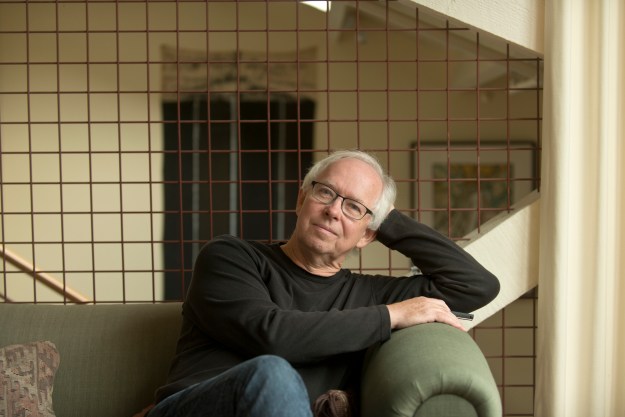
Photo Credit: Grant Maiden
‘Did you all survive?
On that first day of school, I mostly remember
being terrified: the dark interior, the children in rows
at their separate desks, and I was now to be one of them.
In a field by the school, there were bales of hay.
I remember inkwells.
That was perhaps a harder day.’
from ‘The Question Poem’
Some Things to Place in a Coffin Bill Manhire (Victoria University Press, 2017)
Bill Manhire’s new collection of poetry offers the reader a sumptuous reading experience: there is coolness, heat, air, movement, suspension. There are some poetry books that maintain a cavernous distance as I read, but I just click with Bill’s poems. My review of Bill’s book of riddles, Tell me My Name, is here.
Bill lives in Wellington, and is an emeritus professor at Victoria University. His first book of poems, The Elaboration, with drawings by Ralph Hotere, appeared in 1972.
PG: What challenges you most when you write a poem?
BM: Getting properly underway. I’m quite good at finding phrases that nag away at me, and I keep them in my head or on paper – but finding my way forward from them can be a problem, or even knowing if I can find my way forward. I seem to know how long a poem is going to be, roughly what its shape will be and so on, but things often collapse about two thirds of the way through. I suspect there are quite a few poems over the years where it looks like I’ve landed on my feet near the end but I’ve actually broken my ankle.
PG: What delights you most?
BM: Knowing that a poem is actually there, but that it needs some work to be fully itself. Doing that last little bit of work – so different from whatever inspiration is supposed to be – is strangely exhilarating.
PG: Your new collection, as with Lifted and Victims of Lightning, refreshes what poetry can do: how it can soothe and challenge and prompt wonder. Initially the Zen-like movement of the poems struck me (or you could track an oxymoron effect): silence yields music, stillness leads to activity, simplicity yields knots, economy yields richness. Such movement prolongs contemplation. Have you ever thought of your poetry in this way?
BM: I don’t think I think very deeply or coherently about poetry, especially my own. I don’t have any aims when I write, even with a commissioned poem like ‘Known unto God’. But I get great pleasure from a poem when at some point it pushes me sideways from myself, pushes me out of habitual assumptions, changes the pace of my inner life. I like it when a poem starts off quietly and then starts resonating – a sort of ripple effect – and I certainly like it when a poem looks innocent and amiable then suddenly gets dangerous and agitating. Tonal shifts – code-switching, logopoeia – seem to be key to individual poems, too; and maybe even more, inside a book, to the way poems keep each other company.
The window waits for light.
The path to the river waits
for twigs and stones ands feet.
The day hopes to be successful,
a prose day really, nothing untoward
and so it, too, waits. Also the car waits.
from ‘Waiting’
PG: There are several ‘waiting’ poems and it seems to me this book has benefited from a different relationship with time (a little like your Menton sojourn did for Lifted). Away from your hectic university life, has your time with poetry changed to the degree you are able to wait with a poem differently?
BM: It’s not in the least relevant, but I think Waiting for Godot is the great poem of the 20th century.
I don’t think this is what what you’re getting at either, but we all start out in the world full of appetite and desire and with a strong sense only of the immediate moment. And then I suppose there’s that troubling, invigorating phase later that mixes memory and desire, to borrow the start of Eliot’s The Waste Land. Your past and future are fighting it out in the present. And then if you last the distance there’s a lot more past and much more of this thing called memory, which as someone said is pretty much the imagination in reverse. I think I’m in this last time zone. I’ve even prefaced the collection with a little poem about memory.
PG: I found the ‘waiting’ poignant because it felt both philosophical and political.
BM: That’s a generous way of putting it. I suspect it’s more that I’m very much a fatalist. This probably has something to do, someone once told me, with being the child of an alcoholic – you’re totally under the circumstances. The great human beings are the ones who change the circumstances, or have a shot at doing so. But my feeling is that most of the time most of us are under the circumstances, and so how you behave is what measures your worth as a human being.
They dug me up in Caterpillar Valley
and brought me home –
well, all of the visible bits of me.
Now people arrive at dawn and sing.
And I have a new word: skateboarding.
from ‘Known unto God’
PG: The collection seems open to anything (Chairman Mao’s impersonator, surveillance notes, the school bus, the trenches, a Sunday School mural, a body blown to bits, war, Ralph Hotere’s coffin). Do you have no-go areas as a poet?
BM: I’m pretty protective about my personal life. No one could accuse me of oversharing. If you were to try and turn the first-person I in my poems into someone called Bill Manhire, it would all be pretty baffling. Sometimes it’s someone else altogether, sometimes someone with some of my features, sometimes (but rarely) the full myself. As Emily Dickinson says, ‘When I state myself, as the representative of the verse, it does not mean me, but a supposed person.’
Of course the life is there in certain poems, but displaced or approached obliquely. ‘The Question Poem’ deals with the aftermath of an event like the Christchurch earthquake, but the speaker in the poem, trying to deflect the very direct questions about catastrophe, reaches back to memories of his first day at school – and I guess that’s essentially my own first day at school. Likewise, ‘The Schoolbus’ is fairly true to a particular patch of my childhood.
But I’m never a completely missing person. I’m there in every poem in some form or other, even if it’s just via a small tonal inflection or a tiny hesitation.
How Memory Works
Come over here
we say to the days that disappear.
No, over here.
PG: You are the master of the miniature poem—I liken your examples to a drop of wine that dances on the tongue. What attracts you to this form? What holds your attention in a small poem?
BM: I think I’m drawn to the short poem for visual rather than auditory reasons. There’s nothing more wonderful than a few words, just two or three lines, sitting in the middle of a white page. The words and letters start to grow out into the space around them – which I guess is what you also want the reader’s imagination to do. In some ways the words look vulnerable, but to me they’re powerful.
I like putting little poems on Twitter, and that’s partly because I miss the days when I could type out a handwritten poem and see it as it as itself without my protective care. You need to find ways of making poems remote, independent – there they are on the screen, out in the world. But there’s something undermining about the way Twitter clutters the screen, so it’s not the same.
Soon enough the enemy will come,
limping out of a place that will not heal.
And soon enough it will be gone,
this world that you once woke into.
from ‘The Enemy’
PG: Initially I view your poetry as steered by a mind drifting, stalling, looping. I was watching the surprising lines of a gull at the beach this morning, the way it arced and stretched, hovered with such grace, landed with light feet. I was fascinated by the beauty and the unpredictability and began to compare it to the way your poems move. Which led me to the way politics also feed the poems. There are subtle entries and there are toothpicks: ‘That is why China waits,/ and America waits.’ ‘You cannot reach the beautiful world.’ In this world under threat, is it now more important that political views are visible, whether overt or subtle?
BM: There are poems in the new book with a political dimension, and maybe there are more of them than there used to be. It’s highly satisfying to make a local-body politician say, ‘I do not think that I am rubbish’! And sometimes a political element’s there but a little oblique. ‘Poem in an Orchard’, for example, is about rendition. I don’t set out to write politically. I’m not into palpable design. But I’m a citizen who votes and signs petitions and tries to pay attention. And I’m a human being, so I can do gasping and outrage and anxiety and distress – and sometimes hopefulness – in poetry just as others can. I think the US invasion of Iraq intensified some of those things for me, and that’s probably evident in some of the poems written since then.
I’ve always felt slightly ashamed that I let the Listener mildly censor a poem I wrote years ago called ‘Wellington’. It was a piece against Muldoon, and included the lines ‘the boys from Muldoon Real Estate / are breaking someone’s arm’. They wanted to change it to ‘Beehive Real Estate’, and I weakly said yes. Was it better for the doctored poem to appear in the Listener than not? I don’t know. I restored the true reading when the poem appeared in a book. But I don’t imagine either version would have hastened Muldoon’s downfall. Labour’s Grant Robertson once told me that there was briefly a Dunedin band called ‘Muldoon Real Estate’, which is nice. Probably one of those stories that’s too good to check.
PG: The poem, ‘Falseweed’ was originally published as a little pamphlet by Egg Box Publishing in Norwich. It has a different feel to your other poems. The words are scattered like seeds on the expanse of white page. There is linguistic inventiveness that boosts both music and image, particularly in compound words:
leafcandle pencilheart wintertwig scribblegrass anchorwhite tongue-true.
What are the origins of this poem? Did it feel like you were shifting your musical key in terms of the words on the line?
BM: Yes. there’s some sort of musical shift – in some ways back to poems like ‘The Seasons/If I Will Sing There’ or ‘Wulf’. Your seeds image is a good one, as the poem is pseudo-botanical. I started noticing, a bit obsessively, just how many poets in the UK and North America were using the vernacular names of plants in their poems: poets like Jen Hadfield, Alice Oswald, Robert Hass. It’s maybe connected to Robert Macfarlane’s Landmarks project recovering regional and dialect landscape terms. For a pakeha New Zealander like me it’s possible to feel envious of these language troves. About a year ago the English poet Sasha Dugdale tweeted: ‘Path on Seaford Head through restharrow, agrimony, moon carrot & selfheal.’ Now there’s a lyrical outing!
Anyway, I thought I would try to make a poem that teased that whole fashion – seed-packet poetry, I’ve heard it called – along with my own language inadequacies, by inventing my own weeds and grasses. But then as I wrote I found myself producing a poem very much about writer’s block and a kind of world-weariness.
Now darkness brings out
the little paperclip
plus a clump or two
of scribblegrass –
*
If we had seeds
we would scatter them
scatter them –
*
oh pencilheart –
oh smudge-of-lead.
PG: Is there one poem in particular that really works for you in this collection?
BM: I’d have to say ‘Known unto God’ – in part because of publisher generosity with formatting. I like the way it’s been able to sit like a small chapbook inside the larger book. Each speaker in the poem gets their own page – so that that thing I was talking about earlier in terms of small poems, the mix of vulnerability and powerful presence, is made visible. The fact that the sequence effectively opens with a double-sided black page sets up the elegaic mood, too. The whole thing looks right.
PG: Which poem took you by surprise?
BM: Again, ‘Known unto God’. I want to say I didn’t know I had it in me, but of course I didn’t have it in me – it was always out there in the world. My work was to catch it, edit it hard, and get the choreography right.
Victoria University Press page
Susanna Andrews shares her review on Radio NZ National
Bill describes his writing day for The Listener
‘This Reading Life: Bill Manhire’ for NZ Festival
 NZ Poetry Shelf