Category Archives: NZ poetry book

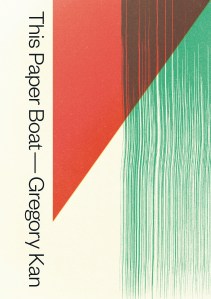
You are invited to the launch of Gregory Kan’s This Paper Boat

Kan_this-paper-boat   Kan_this-paper-boat

Auckland University Press and Gregory Kan warmly invite you to the launch of

This Paper Boat

6pm, Thursday 25 February
Time Out Bookstore
432 Mount Eden Road
Mount Eden Village
Auckland

My mother used to make up stories in the darkness that no one knew the endings to. It was a kind of permission to have imperfect and beautiful plans.

Please join us in celebrating the publication of Gregory Kan’s debut poetry collection, launched by award-winning poet Michele Leggott.

6pm, Thursday 25 February 2016
Time Out Bookstore
432 Mount Eden Road
Mount Eden Village
Auckland, 1024

RSVP not essential but helpful for catering
Phone 09-373-7528 or email pressmarketing@auckland.ac.nz

Poetry Shelf review: Jamie Trower’s Anatomy – it is poetry as reboot

Anatomy-front-cover-final-183x300   Anatomy-front-cover-final-183x300

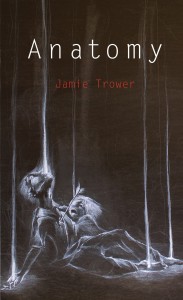
Jamie Trower  Anatomy   Mākaro Press 2015


At the age of nine, Jamie Trower suffered a traumatic head injury when skiing on the slopes of Ruapehu. After months in a coma, he spent two years at the Wilson Centre in Auckland. Jamie is currently based in Auckland where he is studying English and Drama at the University of Auckland. Anatomy is his debut poetry collection.

Anatomy rebuilds anatomy. The word ‘disability’ (disabled, disable, disablement) is like a shadow protagonist that Jamie pitches against and from. It felt like a physical presence, an entity to interrogate as Jamie navigates his recovery paths. To read our way into and out of ‘disability’ is to thwart ‘unable’ and latch upon ‘enable.’ It is to follow Jamie from the accident and rocks to his cloud nine.

I felt a little nervous opening the book, as in the middle of my PhD, I smashed into a glass door and suffered the effects of post-concussion syndrome for about a year. Everything was thrown in the air as I struggled to make sense of the world let alone my academic research. My ability to speak and write and c0mprehend (and hang out the washing, cook dinner) was utterly compromised. Once I started reading Anatomy, the twitchiness at revisiting the memory of my vulnerable head faded.

This book is poetry as record, it is poetry as reboot and poetry as rehabilitation. Writing becomes a way of refurbishing self and moving through. You are carried along by the fluency of the line, so lyrically, yet there is the white space of hiccup. Some words are stretched out as though we say them slowly ( d i s a b i l i t y,   t h i n g). Some words drop down the page like a teetering step ladder to cloud nine or back down to earth. The poetic choices heighten the struggle to recover, and to face what recovery means.

This is a poetry collection that moves and elevates you, that records a devastating experience at the most personal of levels, and that plays with what words can do (from the first clacks and clatters on the old typewriter he was given by his teacher). Wonderful!


from ‘( m a y b e ,   t o m o r r o w )’


m i g h t

hybridize

from teenage boy

in

n a p p y      &      pacifier,


to a mighty sea bird –

to a juvenile juggernaut

– dancing

in the wild …


to whistle

in rainbows

of thistles,

(ocean spray) …


Mākaro Press page


Poetry Shelf review: Holly Painter’s Excerpts from a Natural History – This book is a tonic for me as a reader

front-cover     front-cover


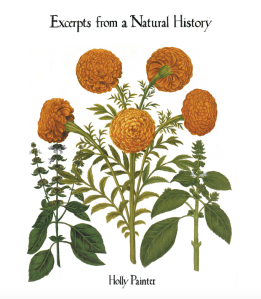
Excerpts from a Natural History Holly Painter  Titus Books  2015


This book is a tonic for me as a reader and a boost in the blood for poetry. I adore it.

John Newton’s endorsement on the back is perfect: ‘Holly Painter is a trickster poet, you never know where she is going next. Sometimes she wants to lick your ear. Over the page she might chew your ear off.’

The launch pad for the collection: ‘When the British natural philosophers of the 17th century founded modern natural history, they proposed finding a poet to compile a poetic account of everything that existed in nature, very broadly defined. Four hundred years later, the work is ongoing, made modern and rigorous with rules and style-guides, managers and research-poets.’

The notion of a research-poet sidetracked me into other poet roles that have existed or might exist: speculative-poet, domestic-poet, Sunday-poet, global-village-poet, experience-poet, travel-poet, theory-poet, heart-poet.

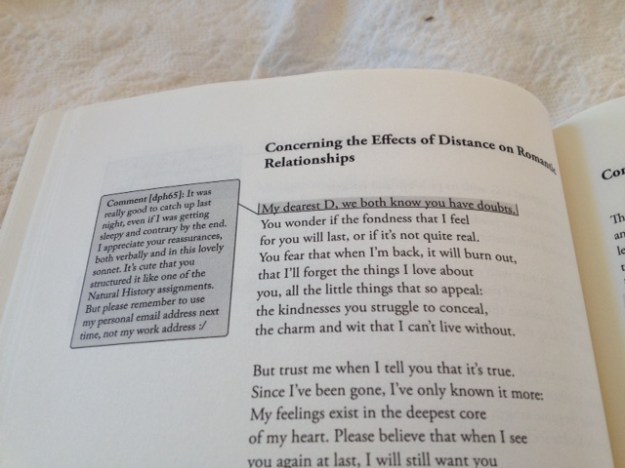
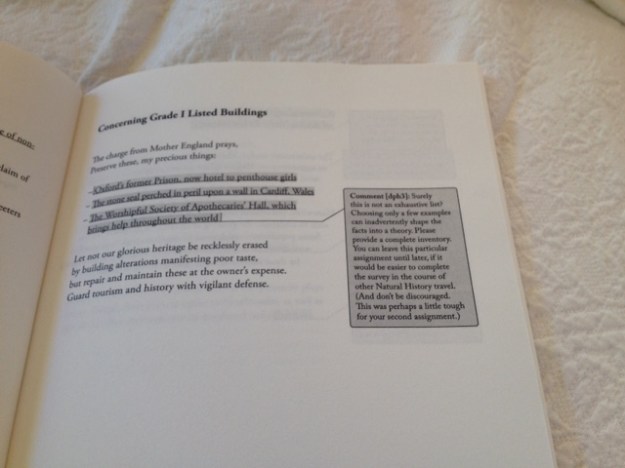
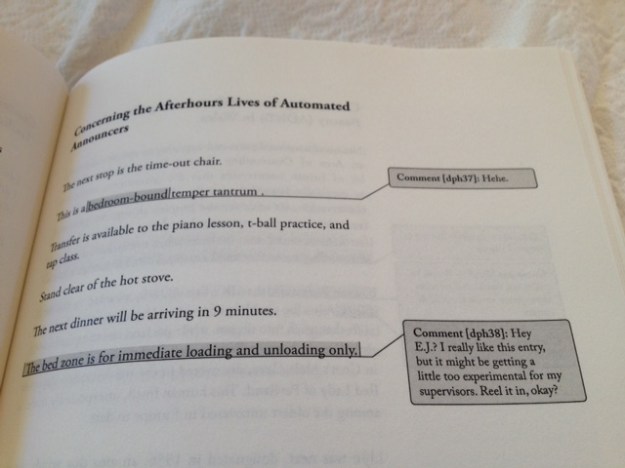
The collection is made up of the submissions of a researcher-poet but made infinitely more interesting by the tracked comments of her supervisor and the myriad ideas and relations that proliferate.

The poet-researcher is set assignments that demand inventories and lists of things that include the natural world (regenerating starfish, the kakapo) but veer wildly into a material world (buttons for sale, ‘Tubular Bells’) and curious things between (flower motifs for teenage courtship).

The supervisor demands the voice of reason, clarity, facts, comprehensive lists, specificity, neutrality and rebuffs anecdotes, adverbs, poetic licence, personal confession.

Sometimes the submissions are laugh out loud as in the light of the recovery work of ‘Tubular Bells’ or the counting of buttons (how long did it take?).

The tracking comments form editorial advice but also trace the relationship between supervisor and researcher-poet(this label keeps slipping in my hands!). The reaction of the supervisor to relations beyond editorial choices is explicit in the tracked comments; the reaction of the latter is buried in the poetry submissions. Love hijacks the cool calculation of inventories. The very guts of ‘natural history’ and what that might embody is reinvented.

Holly employs a range of styles, tones, rhymes, layouts, silences, musicalities as though the heart cannot be penned (excuse the pun!) within a style-guide. The collection is dexterous on its tip toes as it gets you thinking about categories and categorisations, hierarchies and dichotomies, and the way love cannot resist (avoid) anecdote, confession, adverbs.

The book is beautiful. The paper gorgeous to the hand, while the cover’s marigolds almost fill the room with a nostalgic scent.

I highly recommend this book.

Holly is an MFA graduate from the University of Canterbury. Her poetry has been included in Sport, Landfall, the NZ Listener and JAAM. She lives in Singapore with her wife and son.

Titus Books here

Holly Painter’s web site

IMG_3035


IMG_3033


IMG_3034


Poetry Shelf, a little poetry thought: I am currently loving Bryan Walpert’s Native Bird

Hoopla Native bird web   Hoopla Native bird web

‘You see the day as a kind of wind’

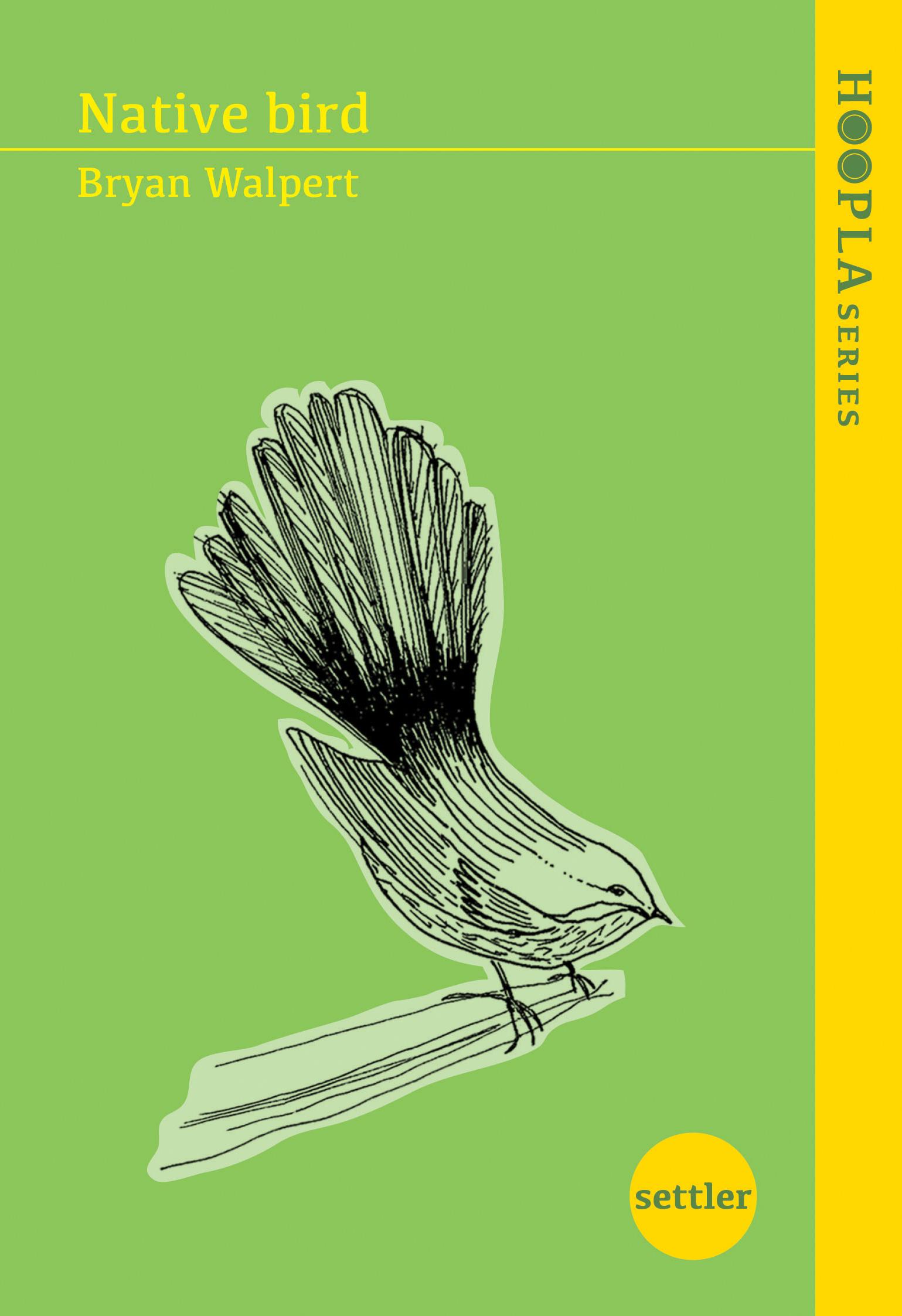
I am currently loving Bryan Walpert‘s Native Bird (Mākaro Press, 2015). Reading this book is like entering a restorative glade. Or a slow paced European movie where the camera takes one long slow delicious pan that sweeps and lingers and stalls and accumulates the faintest detail, the hint of movements, the tremor of action. And out of the long gorgeous sweep of reading, you get place, character, story. Or think of this rhythm as a sticky ribbon to which detail adheres. The detail catches you. Phrases, whole lines, stanzas. The sound of each line strikes your ear – beautifully, honey-like. The world slows because this is one of those books where the poems reach out and hold you in the grip of attention. I adore it.


from ‘Wayward ode’

I’ve rewritten this three times. How many

transformations must it take before you hear me

call through this drafty window of ink?


Congratulations to Nina Powles, winner of Biggs Poetry Prize

Poetry Shelf is delighted to share this news!

Biggs Poetry Prize winner announced

18 December 2015

Collection of poetic biographies wins the Biggs Family Prize

Image of Nina Powles: 2015 winner of the Biggs Family Prize for Poetry. (Photographer: Caitlin Salter)


A collection of five poetic biographies of famous and lesser-known historical New Zealand women has been awarded the 2015 Biggs Family Prize for Poetry.

Written by Nina Powles as part of her 2015 Master of Arts (MA) in Creative Writing at the International Institute of Modern Letters (IIML), the book-length folio, titled Luminescent, has been described by Wellington poet Jenny Bornholdt as ‘engaging and colourful and alive to all kinds of possibilities’.

Although she started writing poems less than two years ago, Nina is already the author of a chapbook, Girls of the Drift, published by Seraph Press in 2014, from which a poem was selected for the 2014 edition of Best New Zealand Poems.

Nina, who went straight onto the MA after completing an honours degree in English Literature and Chinese at Victoria, says the opportunity to study at Master’s level has been a significant boost for her writing.

‘The MA programme gave me the tools and the confidence to call myself a ‘writer’ for the first time. More importantly, it gave me a community.’


For rest of article see here.

Poetry Shelf, Poet’s Choice: Marty Smith makes some picks

9781925240375Jennifer-Compton-cover-170x240

A poem can come into the room quietly but I hope for the ones that sneak up to grab me by the neck and rattle my brains. That’s Anis Mojgani – I love it when you get someone new who is rich, rich, rich. His power keeps on springing out; no matter how many times I read and reread his poems, they refuse to dull and they keep startling up silvery:

‘the sickle makes its own rules

watch

how it glints in the moonlight

how it shines like a one worded whisper’


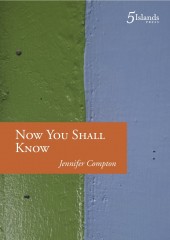
I love also the stinging beauty of Jennifer Compton’s Now You Shall Know (Five islands Press) and her wryly observant voice: now tough, now tender, now distant, now close. She has space and silence and a side-swiping humour and she doesn’t back off from anything, not even her mother-in-law’s dying: from ‘My Mother-In-Law Comes to Poetry Late in Life’

then as the walls of her brain cells broke

scrambled but yes dazzling intimacies

spilt out


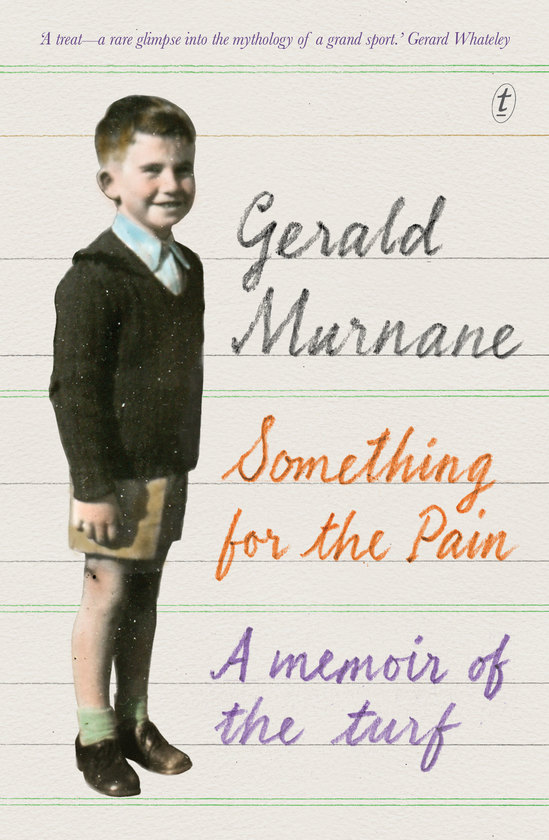
Since I’m currently at work on presenting the people of the racing world through the vernacular, I’m reading non-fiction. Gerald Murnane’s memoir of the turf, Something for the Pain is the last and quietest of my picks. I love his courtly phrasing and his acerbic humour, and his deep love and fascination with the racing world, which for him offers more than religion or philosophy. It doesn’t hurt that when he’s drunk at dinner parties he likes to argue that horseracing has as much to teach us as Shakespeare.


On my waiting list is Voices from Chernobyl, the oral history by Svetlana Alexievich, presented through layers and layers of spoken witness. I was less than a 1000km from Chernobyl when the reactor blew, out in the air eating leafy greens and touching dust in the three days panicked authorities were hard on denial (the radiation levels are normal) and the nuclear cloud passed over, and rained on us. Therefore I have a lightly radiated interest of my own in the particulars, trivial as it is in the face of the terrible and compelling experiences of people who were less than 1km from the reactor and who were also allowed to stay outside.


Anis Mojgani is coming to NZ for the Wellington festival. YouTube clip. Festival details. Full progamme out in January.


Marty Smith

Poetry Shelf, Poet’s Choice: David Eggleton makes some picks


684a89cf-1c7b-4ee7-a686-f3e03271a543    1426649662558


Some of my most intense local poetry reading experiences this year have been as a literary editor, working my way through hundreds of poems and finding something wonderful in many of them, and then cherry-picking from these for Landfall 229 and Landfall 230; but beyond that the stack of new slim volumes looms, and I’ve elected to mention four poetry collections I enjoyed musing over.

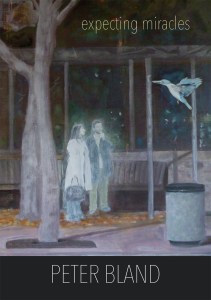
‘No, not Bali or Samarkand. Take/ me down to the Dominion Road . . .’ Peter Bland commands in his collection Expecting Miracles (Steele Roberts), drawing you in immediately with his canon-echoing rhythms and decluttered simplicity. His poems have a casual, conversational tone that belies their craft, bolstered by an oldster’s genial humour and air of wry bemusement at the oddity of the quotidian: he’s a metropolitan in a provincial culture.

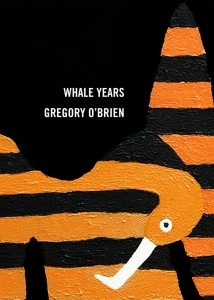
  Gregory O’Brien‘s Whale Years (Auckland University Press) navigates its way around the South Pacific as if following the drift of ocean currents. In this collection, he’s a beachcomber pointing to curious flotsam and jetsam. His poems are mantras, notations, journal jottings, gatherings-together of cadenced imagery, and compelling in the way they combine astrological zodiacs, weather balloons, shipwrecks, islands. Collectively, the sense is of a star-trek odyssey, recapitulating ecological markers of the anthropocene era, Notably, too, the exoticism of travel helps generate a semi-arcane vocabulary, serving to align his verses with the baroque wing of New Zealand poetry: there where Kendrick Smithyman sculls in the sunset.

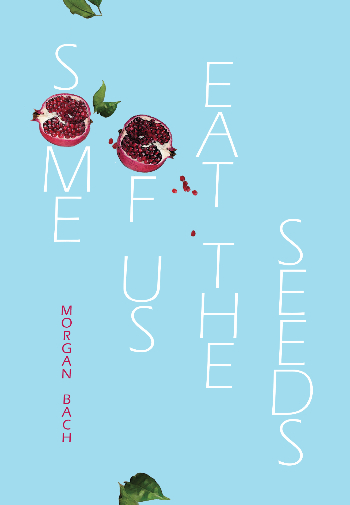
I was also very taken by the skewed reminiscences in Morgan Bach‘s first collection Some of us eat the seeds (Victoria University Press). Spiky, terse, yet also lyrical and tonally subtle, they recount a sense of adolescent awkwardness and estrangement, almost as if at times she’s ogling the outside world and its emotional coldness from her own private igloo, growing up in small town provincial New Zealand and longing to be elsewhere. But if she offers a return to childhood as a rejection of the sugar puff Disneyland of a commodified Nineties environment, she does this by crafting a version of Banksy’s subversive Dismaland: ironic, comic, sharply observant about the advertised ‘great expectations’ we have been led to expect from the product called ‘Life’.

Her poetic intuitions result in a cleverly-written-up sequence of what might be termed out-of-body experiences: the feeling of towering over shuffling Japanese passers-by in Tokyo; watching her screen-actor father die successively in movie after movie; and then ultimately a kind of ecstatic insight that turns her collection full circle: ‘the way you felt swimming/ in the rain that hammered/ when you put your head above water to see/ lightning flash in the pitch of the sky’ (‘The swimming pool’).

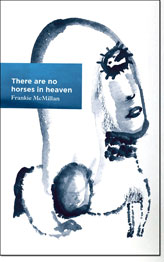
Frankie McMillan‘s There are no horses in heaven (Canterbury University Press) contains a multitude of poems rife with the storyteller’s art, proving her a kind of fabulist, distilling states of enchantment and sometimes states of disenchantment into a few lines ever so lightly and delicately, so that her shortish poems seem to musically chime with one another. And it’s as if you can carry them with you wherever you go. As she puts it: ‘What I want to say is something small/ enough to hold within the crook of my arm/ and that is not the half of it’.

And then there’s her poem ‘Observing the ankles of a stranger’, about a tourist being startled out of her wits when Ruaumoko’s seismic fists of fury pummeled central Christchurch almost into the ground on February 22nd, 2011. Here enchantment— or metamorphosis — takes the form of feeling lost in a familiar habitat as the dust settles. We need more such terrific poems.

David Eggleton

Expecting-Miracles-cover-web    nohorses_catalogue


Poetry Shelf, Poet’s Choice: Olivia Macassey makes some picks

1415925155755  1411440756602


I’m among the many fans of Roger Horrocks’ tour de force The Song of the Ghost in the Machine: Roger’s book is an incredible pleasure to read – thoughtful, questioning, by turns meditative and restless, brimming with intellectual curiosity and energy.

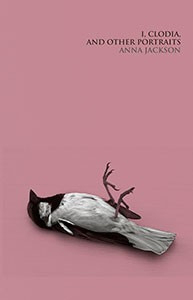
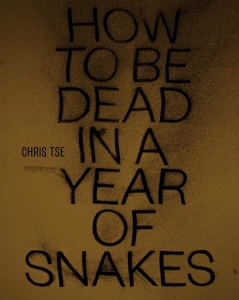
For circumstantial reasons, I often take a while to get hold of poetry, so several of the books that engrossed me in 2015 were published in the previous year. I loved the intelligent, sensitive precision, lyricism and sheer scope of Chris Tse’s wonderful first full collection How to be Dead in a Year of Snakes. Anna Jackson’s I, Clodia and Other Portraits is clever and witty but also intense and strangely moving, with figures whose inner lives haunted me for weeks.

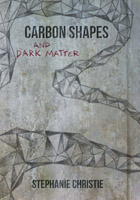
I have enjoyed the sustained, curious voice of Stephanie Christie’s recent Carbon Shapes and Dark Matter, which takes little for granted; and felt rewarded by spending time with Michael Harlow’s selected poems Sweeping the Courtyard and with Leicester Kyle’s posthumously published The Millerton Sequences. I want also to mention the album Desert Fire by The Floral Clocks (White/ von Sturmer), which came out last Christmas – the lyrics are spare, evocative poems by Richard von Sturmer.

Writing this is reminding me that there is so much poetry I’m still trying to get hold of and read. The world is full of poems! It’s a good feeling.

Olivia Macassey

carbonshapes_tnghost_cover_front__73226.1427153026.220.220

Poetry Shelf review: Lynn Jenner’s Lost and Gone Away — Lynn is unafraid to venture upon unstable ground in order to follow her trains of thought

1437428599707   1437428599707


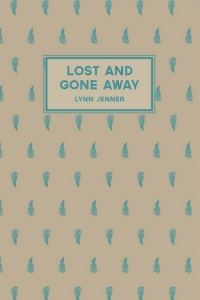
Lynn Jenner  Lost and Gone Away  Auckland University Press  2015


Lynn Jenner’s new book, Lost and Gone Away, is a terrific read, a challenging, thought-snapping, sidetracking, stalling read. A must read. The book, as the title suggests, navigates and stretches towards lost things. It is a hybrid work that started life as a doctoral thesis, and is in turn, poetry, prose, essay, memoir, and a smudging of genre to the point that it is unimportant where one genre begins and another ends. ‘Things’ matter but this is a work that places people at its white-hot core, and from here radiates missing memory, experience, time, place, events.

The book is in four parts. Part One, ‘The ring story,’ pursues Lynn’s mother’s ring that went missing in the Christchurch earthquake. Part Two, ‘The panorama machine,’ is like a stream-of-conscious outflow of that which is lost. Part Three, ‘Point Last Seen,’ focuses on missing people. Part Four, ‘I ring the bell anyway,’ navigates The Holocaust.’ Writing becomes a way of reaching and tethering traces of what has gone. It is, and can only ever be, subjective, elusive, fleeting, partial. The generous white space that gives the text room to waver and shift heightens the allure of fragmentation — yet as you read you identify currents that link: the stream-of-consciousness movement, the concatenation of ideas.


Lynn trawls eclectic places for material: books, anecdotes, conversations with strangers, conversations with friends, museums, personal experience, invented experience, inherited experience, dreams, white space. The thinking and writing process is guided by acute contemplation, critical thinking, doubt, self-defensiveness, thought drifts, accidents, discoveries, questions. As she searches for her way into and through knotty issues, she identifies approaches she connects with and those she does not (Michael King is a stand-out example of the latter). The pieces accumulate and build a thought mosaic as opposed to a thought fresco. Always there is a taut wire to the personal –no matter where thinking leads, no matter how distant in view of time and place, this is an intimate and utterly personal inquiry.

For me, the book is a treasure chest of curious things, fascinating things — but it is not just a novelty box. This book takes you to essential human questions and reminds you that there is no singular response and no singular way to write your response. How do you face individual loss? How do you face national loss? How do you face the Holocaust? Global crimes against humanity? How do you write what you have not experienced? How do you listen to the voice that is other? A waterfall of questions.

The questions stick but little pieces of the book adhere, indelible upon your skin. The suitcase. The empty chair. The man in the Jewish museum telling his story, over and over. Finding beautiful words in the work of a prolific but unknown poet and using them in a poem. A dream’s impact on reading and writing. The carriages. The Polish children. The way you may unwittingly leave traces at a high-pitched frequency that readers may unwittingly pick up. The way Sappho appears and reappears.


Lost and Gone is an extraordinary read because it lays a gossamer net upon missing things and allows you to catch glimpses of what has gone, whether far from your life or close at hand. At work, and intensely present, is a mind foraging, delving, struggling, daring. Lynn is unafraid to venture upon unstable ground in order to follow her trains of thought — at times uncomfortable, at times surprising, always moving and shifting your point of view. This is a special book.


Auckland University Press page

Poetry Shelf, Poet’s Choice: Kerrin P Sharpe makes some picks


Hoopla Native bird web    work_full-cover

Poems on the Underground  edited by Judith Chernaik, Gerard Benson and Cicely Herbert. Penguin Books reprinted 2015
A collection of old and new poems that have appeared in London tube stations and trains since 1986.The books might fit in one hand but the poems are larger than life.

Native Bird Bryan Walpert.  Makaro Press Hoopla Series 2015
Memorably imagery.  An excellent eye and mind at work.

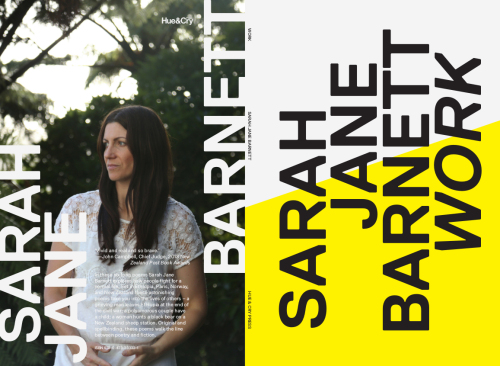
Work Sarah Jane Barnett.  Hue & Cry Press 2015
A beautifully constructed collection of six longer poems and prose poems that empower the reader with powerful lingering themes.

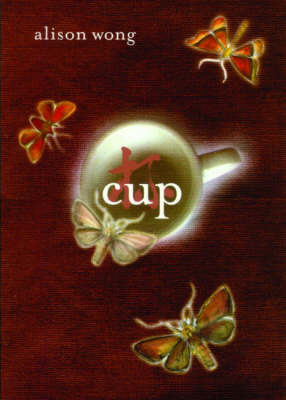
Cup Alison Wong. Steele Roberts 2006
A collection I’ve read often from the library and have finally purchased. Insightful poems about being Chinese in New Zealand. The included notes are both informative and beautifully written.

Kerrin P Sharpe

large_9781877338762