Category Archives: NZ poetry book

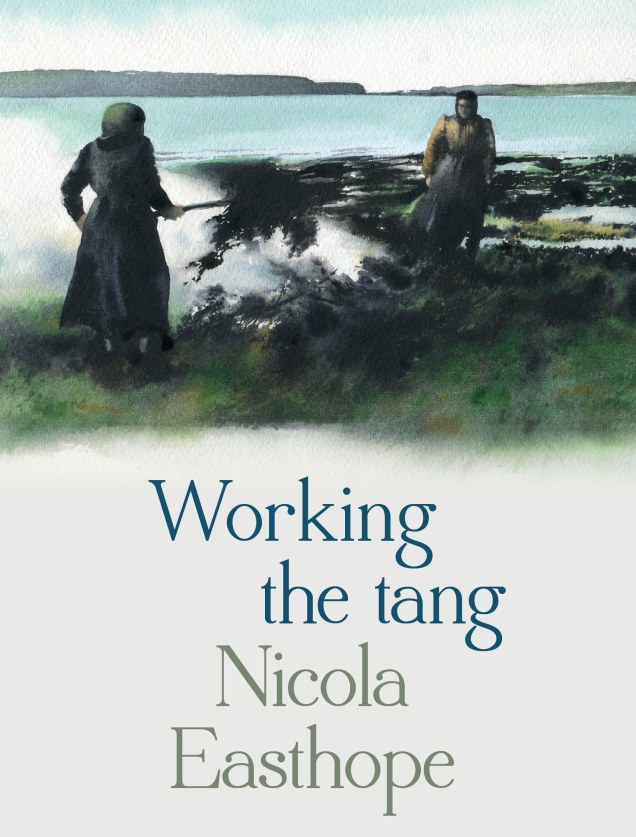
a poem from Nicola Easthope’s new collection – Working the Tang


Working the tang, Birsay


These women are wrapped for the weather.

The fleece of long-nosed black sheep

so knitted into their skin, when their men

undress them there is often a little blood.


The weather wraps in gales of Arctic ice.

They gather seaweed: tremendous heaps

of tang and ware, dragged up the sloping beach

to the dry. These women burn


it steadily, crackling heather and hay in great pits

of stone until the white powder

of potash and soda is all that remains.

The men pound and pound,


cover with stones and turf. Leave overnight.

The ash shifts, cools, and lumps of toil

settle on their backs. They sleep with

the weight of a body on the chest.


Ghost dust drifts into livestock,

limpets. Fish are driven away.

The women are wrapped in the drapery

of ash, the cloak of salt, the taste of tang.


Their kelp-making for the laird’s gain.

Their backs spent for soap and glass.


©Nicola Easthope, from Working the Tang  The Cuba Press 2018


Nicola Easthope is a teacher and poet from the Kāpiti Coast. Her first book of poems, leaving my arms free to fly around you, was published by Steele Roberts Aotearoa in 2011. ‘Working the tang, Birsay’ is inspired by her Orcadian roots and the etymologies and experiences of the Norse word for seaweed (among other things). She was a guest poet at the Queensland Poetry Festival in 2012, and last month, the Tasmanian Poetry Festival.

Working-the-tang-front-cover-updated.jpg


Poetry Shelf audio spot: Saradha Koirala reads ‘Snapshot’

Screen Shot 2018-11-05 at 3.56.08 PM


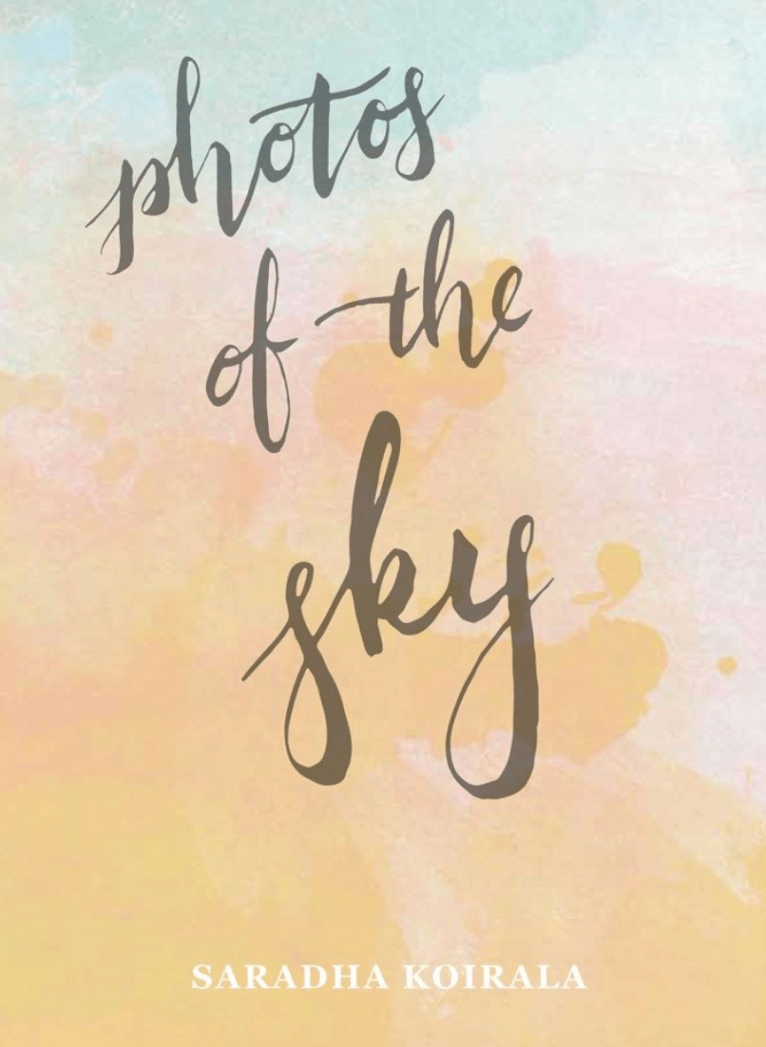
Saradha Koirala reads ‘Snapshot’  from Photos from the Sky (Cuba Press, 2018)


Saradha Koirala is a writer and teacher living in Melbourne. Her book Lonesome When You Go won a Storylines Notable Book Award. She has published two previous poetry collections.


5 readings from VUP’s Short Poems of New Zealand

Short_Poems_of_New_ZealandRGB__74017.1533875435.jpg


Short Poems of New Zealand, edited by Jenny Bornholdt, Victoria University Press, 2018


Angela Andrews reads ‘Grandparents’


Tusiata Avia reads  ‘Waiting for my  brother’


Lynley Edmeades reads ‘The Order of Things’


Brian Turner reads ‘Sky’


Albert Wendt reads ‘Night’


VUP page


A poem from Pat White’s Watching for the Wingbeat: new and selected poems


There’s much more going on here

for Hone Tuwhare


From where we sat talking the hills take on a painter’s

tone, light and dark, valley and ridge, bush at night

with the small owl sounding far enough away. Both of us

a bit deaf, we shout observations across the back porch


two old gramophones not quite used to listening. Today

stumbling across that ridge, half-lit seen at dusk last night

it’s different, each step testing mud-slide sheep track

fallen trees, such subtle geomorphology, rough slopes facing


north, telling how little distant perspective gets to know

of that hare bursting from beside your foot, fooling

with your sharp-eyed observations about literature

of landscape borrowed from an unpaid library book.


Old Bess the bitch would have given chase once, but today

she thinks better of activities meant for puppied bounce

the silliness of charging off up hill when there’s perfectly

good bones back home rotting under the macrocarpa


it’s enough to be out there, reading the breeze. I watch

you stop, lay a flat hand against grass bruised and bent

by the hare’s body warmth, her form hid beside dead thistle

stalks, dry and buff coloured in winter, it is still warm.


This hare has learned to be elusive, still, till instinctive

urge to flight has her bursting away, past the skylark’s nest

through the rusting fence, pushing the heart’s capacity

to run. We romance the hills from our chairs, our beer


out of the sun’s heat, the rain’s beat, knowing

next to nothing. The risk of leaving our bones out there.


©Pat White  Watching for the Wing Beat: new and selected poems Cold Hub Press, 2018)


978-0-473-44420-4.jpg


Pat White is a writer and artist living near Fairlie. He has an MFA from Massey University, and an MA in Creative Writing from IIML Victoria University. In August 2018 Roger Hickin’s Cold Hub Press published Watching for the Wingbeat; new & selected poems. In 2017 his biography/memoir of the teacher, author, environmentalist, Notes from the margins, the West Coast’s Peter Hooper, was published. An exhibition Gallipoli; in search of family story has been shown in museums and art galleries a number of times in recent years.


Cold Hub Press page

Reading CK Stead’s That Derrida Whom I Derided Died: Poems 2013 – 2017

1536809900755.jpg  1536809900755.jpg  1536809900755.jpg

CK Stead, That Derrida Whom I Derided Died  Auckland University Press  2018


Frank and Allen, Robin, Ron and Rex

rode the North Shore ferries, while Rangitoto

pictured itself sunk in a stone composure.

Eeven the Golden Weather would have to end

where a small room with large windows disclosed

geraniums wild in the wet and a gannet impacting.


from ‘That summer cento sonnet, 1950s’


In September I listened uncomfortably as Steve Braunias questioned CK Stead and Charlotte Grimshaw about the truth of happy childhoods in the Stead family. Steve insisted but Karl and Charlotte sidestepped with tact and grace. I have since read and loved Charlotte’s novel Mazarine – I was caught up in both the momentum of a thriller and entranced by the interior struggles of the main character. I savoured the novel for the novel’s sake rather than muse upon autobiographical tracings. In this world on edge the novel felt vulnerable, driven, humane. It was writing I felt as much as I thought.

Here I am writing about the daughter when I have just read the father (his novel waits me).

When I first picked up Karl’s new poetry collection, That Derrida Whom I Derided Died, the title catapulted me back into the gated community of literary theory.  I wanted to open the book and travel lightly but I was carrying the Going West session into the collection; that tension between what you write and what you live. I can’t think of a New Zealand literary figure who has courted greater controversy, maintained lifelong enemies along with lifelong friendships, and who has irked so many writing peers. I scarcely know the details of these relations or want to but I have had a long history of reading and admiring Karl’s poetry and fiction. Really I wanted to banish all this external hubbub from my reading and engage with the poetry on its own terms.


In the dark

of the 15th floor

Bill Manhire woke

thinking the building

had turned over in sleep

and groaned

or ground its teeth


from ‘Apprehension’ in ‘Christchurch Word Festival, 2016’


Karl’s collection is deeply personal; the poetry is a meeting ground for dream, memory, retrieval, old age. It is a book of friendships with the living, with ghosts of the past and with writers that attract such as Catallus. He obliquely and briefly returns to arguments and enmities that persisted but for me it is the love of poetry that is the greatest fuel.

The poetry is deftly crafted – like honey at perfect consumption – with shifting forms, syllabics, subject matter. You move from the exquisite opening poem ‘An Horatian ode to Fleur Adcock at eighty’ to the challenge of writing war poems to the final poem written at ‘ten to midnight’.

The 80 plus poems almost match Karl’s age (86) – and maybe that changes things for me as a reader. I am brought closer to death as I am reading, not because death is a protagonist, but because the long-ago past is returned to the frame. And I have had close shaves. What do we want to bring close and find poetic ways to make present? I am asking myself this as I read. Mysterious, dreamlike, moving; yet there is an intensity about these replayed moments. Perhaps luminosity is a better word for these poems that make things utterly present.


She was, she tells me

the one without a partner

until I came

with a bottle of bubbly and two plastic cups

and a small box of rose petals.

‘You realise my age?’ I ask

(uncertain what it is).

‘Of course,’ she says.

‘This was half a century ago.’

So we danced and danced

until just before midnight

when I walked out

into the Bavarian dark.

‘I’ve never forgiven you,’she says.

‘Where did you go? Where have you been?’


from ‘Ten minutes to midnight’


In one poem, ‘By the back door’, Karl responds to Damien Wilkin’s review that suggests Karl’s writing suffers from a glut of lucidity and that his novels yearn to be poems. I can’t say I have ever felt that but Karl suggests in his endnote he wrote this as a semi farewell to fiction. Ah the way we get thrown off kilter. This is what I mean by deeply personal. We are being brought in close to the man writing, the man living, the man and his little and larger anxieties, the man and his little and larger fascinations. And how this might shift and resettle at ten to midnight. In a footnote Karl tells us that he ended up writing at least one novel (The Necessary Angel – it’s on my pile) but maybe two (Risk) after writing the poem.

As I move through the book, lingering over poems with admiration and feeling uncomfortable at others, the outside stories come clamouring. But I hold them at arm’s length. Even when Karl is doing the signposting. Instead I relish the dreamlike moment that the writer, on this occasion, in this instant of almost urgent return, renders lucid, gleaming. This is a book to be celebrated.


I was the one who believed in poetry –

that it could capture the gull in flight

and the opening flower

and in the blink of an eye

a knock on the door of death.

I believed with Shakespeare

there was a trick that unlocked

the mystery of

the named stars.


from ‘I was the one …’


Auckland University Press page

CK Stead is an award-winning poet, literary critic, novelist, essayist and Emeritus Professor at The University of Auckland. He was the New Zealand Poet Laureate (2015 -2017), has received the Prime Minster’s Award for Literary Achievement in Fiction and is a member of the Order of New Zealand, the highest possible honour in New Zealand.


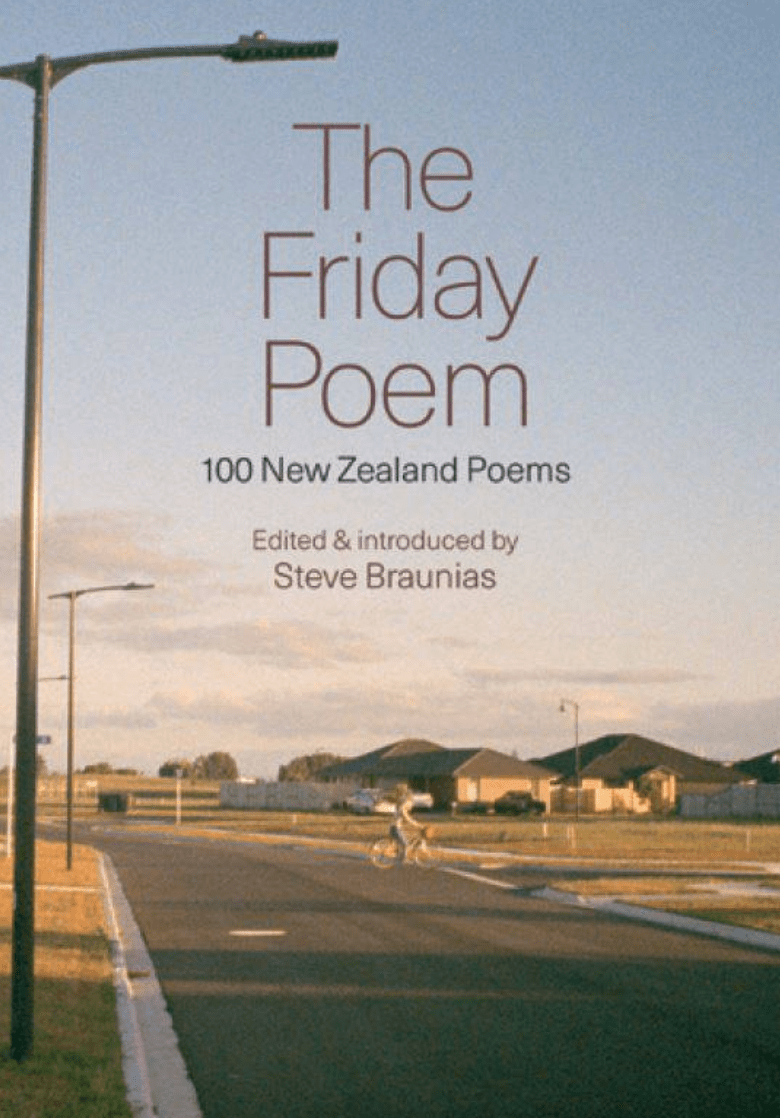
Reading The Friday Poems in a book


cover-1.jpg

Luncheon Sausage Books, 2018


A new poem. Wow just wow

A new poem that no one will forget any time soon.

A new poem. I think it’s important.

I wrote a new poem. You’ll be amazed at what happened next.


Bill Manhire from ‘Thread’


Steve Braunias kickstarted his Friday poem at the Spinoff four years ago – which prompted me to shift my Friday poems to Mondays! Decided to begin the week  with a poem in the ear and have since started an ongoing season of Thursday readings (I really like hearing other poets read, especially those I have never met). More importantly I also like the fact we have more than one online space dedicated to local poems. Steve tends to pick from new books which is great publicity for the poet. I tend to pick poems that have not yet been published in book form and find other ways to feature the new arrivals (interviews, reviews, popup poems on other days).

Steve’s anthology of picks from the Friday-Poem posts underlines our current passion for poetry. I don’t see him belonging to any one club (like a hub around a particular press or city) – unless he is inventing his own: Steve’s poetry club. And there is a big welcome mat out. You will find mainstream presses and boutique presses, established poets and hot-off-the-press brand new poets, a strong showing of Pasifika voices, outsiders, insiders. He is fired up by the charismatic lines of Hera Lindsay Bird and Tayi Tibble but he is equally swayed by the tones of Brian Turner, CK Stead, Elizabeth Smither, Fiona Kidman.


She cried wolf but she was the wolf

so she slit sad’s bellyskin

and stones of want rolled out.


Emma Neale from ‘Big Bad’


Who would he feature at a festival reading? At Unity Books on November 12th in Wellington he has picked: Dame Fiona Kidman, Bill Manhire, James Brown, Joy Holley, Tayi Tibble.

The anthology is worth buying for the introduction alone – expect someone writing over hot coals with an astute eye for what is happening now but also what has happened in the past (especially to women poets). And by hot coals I mean a mix of passionate and polemical. This person loves poetry and that is hot.


Where there’s a gate there’s a gatekeeper, I suppose, but I think of the past few years as an exercise in welcoming rather than turning away. Publishing works of art every week these past four years has been one of the most intoxicating pastimes of my writing life. But I came to a decision while I was writing the Introduction, and commenting on the work of women writers, and adding up the number of women writers: it’s time to step aside. An ageing white male just doesn’t seem the ideal person right now to act as the bouncer at this particular doorway to New Zealand poetry. Women are where the action is: the poetry editor at the Spinoff in 2019 will be Ashleigh Young.

Steve Braunias, from ‘Introduction’


I felt kind of sad reading that. I will miss Steve as our idiosyncratic poetry gate keeper.  Of course this book and the posts are unashamedly Steve’s taste, and there are a truckload of other excellent poets out there with new books, but his taste keeps you reading in multiple directions.

That said it’s a warm welcome to the exciting prospect of Ashleigh Young!


On most drives I like quiet because my mother

had a habit of appraising every passing scene, calling ordinary

things, especially any animal standing in a field, lovely


and this instilled in me a strong dislike for the world lovely

and for associated words of praise like wonderful and superb

but on our drive home tonight the sky is categorically lovely


Ashleigh Young from ‘Words of praise’


A book launch, a reading and a new poem: Saradha Koirala’s ‘Confession, confessed’


Confession, confessed


I’ve been the secret and the secret-keeper

the one from whom the secret is kept.


I’ve been a curiosity of connections that don’t concern me

the cause and effect of all that is curious.


I’ve been right and I’ve been wronged

I’ve been righteously wrong.


I’ve been a cut-out shape where I used to be seen

and I too have cut fleshy shapes from my life.


I’ve been the problem and the solution

the floating object of insomnia, rage


a presence off limits

that has in turn been there for me.


I’ve been the reason and I’ve been the excuse.

I’ve been falsely accused, rightly refused.


I’ve been the obsession

the obsessed.


I had an alibi.

I am the reason you needed an alibi.


©Saradha Koirala, from Photos from the Sky (Cuba Press, 2018)


November 5th Saradha is launching this new collection tonight at The Thistle Inn in Wellington at 5.30 pm (3 Mulgrave St, Thorndon, Wellington). Launched by the wonderful Tim Jones. Come early to the marquee area at Thistle Inn for a glass of bubbly and some vegetarian snacks, stay for the poetry.

Then on Wednesday 7th Nicola Easthope will join Saradha at Unity Books in Wellington at noon until 12.45 to celebrate their two new books with Cuba Press, Photos of the Sky and Working the Tang.

Saradha Koirala is a writer and teacher living in Melbourne. Her book Lonesome When You Go won a Storylines Notable Book Award. She has Published two previous pietry collections.


Cuba Press page


Screen Shot 2018-11-05 at 3.56.08 PM.png


Steve Braunias launches new anthology: ‘The Friday Poem: 100 New Zealand Poems’

Screen Shot 2018-11-01 at 3.31.32 PM.png


Screen Shot 2018-11-01 at 3.31.44 PM.png

Join Unity Books & Luncheon Sausage Books as editor Steve Braunias introduces his new poetry anthology ‘The Friday Poem: 100 New Zealand Poems’.
With readings from Dame Fiona Kidman, Bill Manhire, Joy Holley, James Brown & Tayi Tibble.

ABOUT THE BOOK
An anthology of new New Zealand verse, which first appeared in the popular Friday Poem slot on The Spinoff website. It features some of the most well-known and established names in New Zealand poetry as well as new, exciting writers.


Louder: A conversation with Kerrin P Sharpe on politics, poetry and a new book


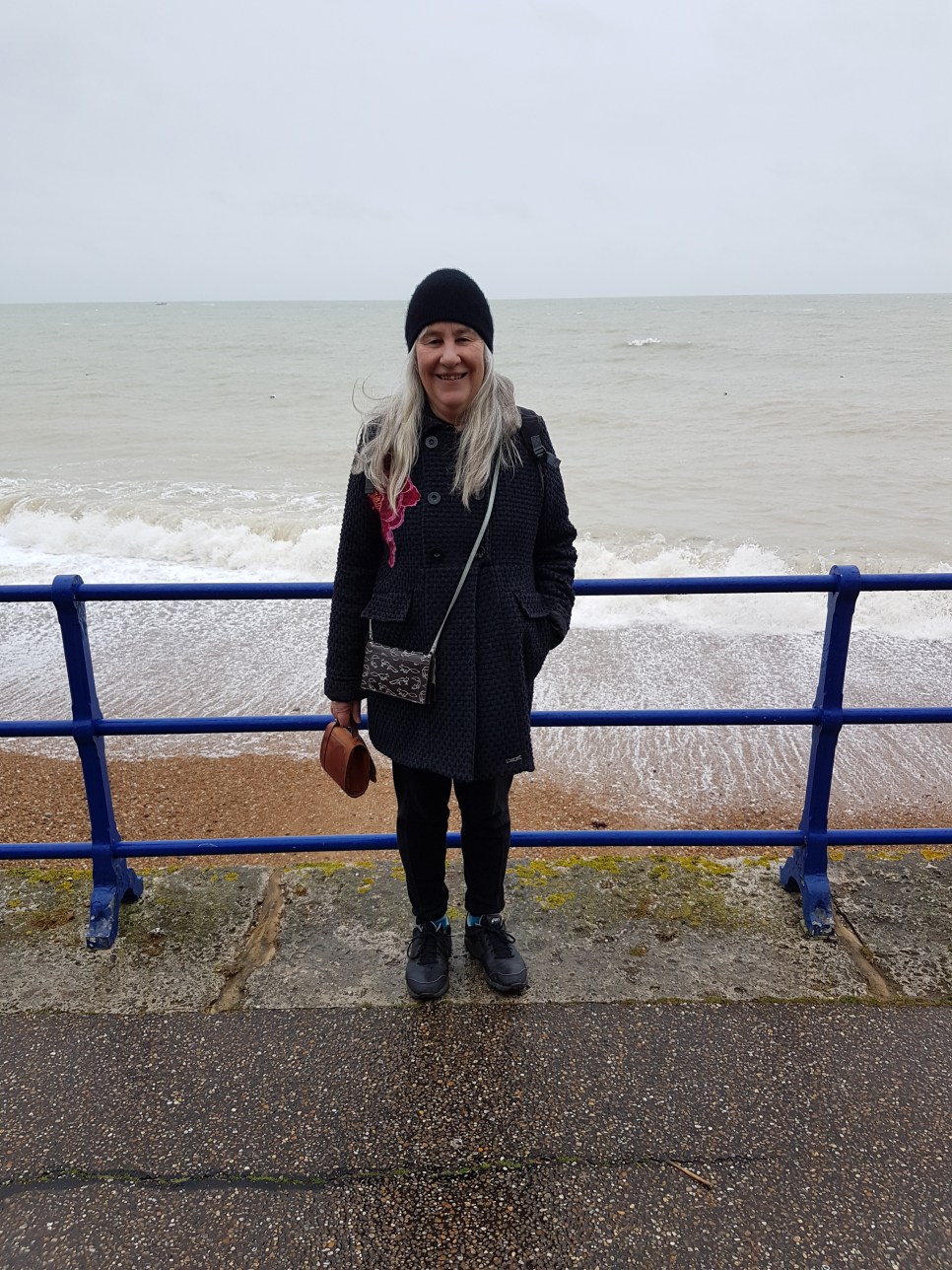
Kerrin Seafront.jpg


Kerrin P Sharpe has published poetry in a wide range of journals, both in New Zealand and overseas. Louder is her fourth collection of poetry (Victoria University Press, 2018). She lives in Christchurch.

I was immediately drawn to Kerrin’s new title because I envisioned poetry that spoke out. Politics and poetry have had a long relationship in New Zealand, with diverse forms and registers, whether on political or personal issues.  When I was doing my Italian studies I encountered politically motivated poets who wanted their message to be clear; tricky poetics were not to get in the way of issues at hand, the message was paramount, particularly with feminist women writing and thinking outside the academy. At the time, I felt that here, we had often addressed political issues in softer voices and in subtle ways; and that poetry that used loud political voices was more open to criticism. Yet the more you look, the more you discover a rich vein of political poetry. I am thinking of the way the political bite of Hone Tuwhare’s ‘No Ordinary Sun’ is sharpened by the solar metaphor, the searing detail.  Or Selina Tusitala Marsh’s various responses to racism in Tightrope. Or Mary Stanley’s 1950s poem, ‘The Wife Speaks’. I loved writing a chapter for Wild Honey on women poets speaking out because the poetry, and the issues, were so diverse. Women have spoken out from the messy knot of the personal and the political since they first started publishing in New Zealand with loud voices, quiet voices, veiled messages, clear ideas.

2108 seems to be a time when we need to speak out from the comfort/discomfort of our lives, from  the shelter/shelterlessness of our own homes, from the fullness/emptiness of our own stomachs, from the embrace/diaspora of our own communities, from the wound of our own healing/abuse, from the shared earth we stand on that is under wide threat.

Kerrin’s reflective book is utterly personal yet entirely political. She leads us from threatened species to unjust power plays to dislocated refugees to the toxic waste of human greed. To celebrate the arrival of Louder, we embarked on an email conversation.
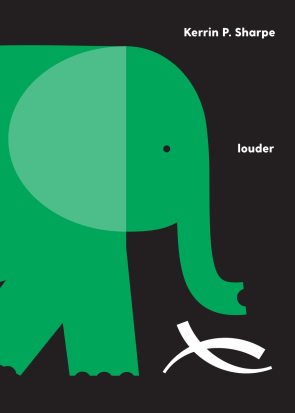


louder_front_cover__89098.1525816965.jpg   louder_front_cover__89098.1525816965.jpg


Paula: Your new collection struck me because it gives voice to issues that affect us all. I am really fascinated by the myriad way politics and poetry meet in New Zealand poems. When I asked if you would like to have this email conversation, you made some important points. I wondered if you would like to share those as I think ‘personal’ and ‘politics’ forge vital relationships.

Kerrin: Though as I said earlier I’m not really a ‘political person’ – not in a party-political sense anyway – I do believe ‘political poems’ in a broader sense of the phrase, have the power to sometimes influence and change thought and even behaviour at times. This was what I wanted my poems in LOUDER to do.

As anyone reading the poems in LOUDER will have noticed, they spring from a personal well of concern for endangered animals, refugees, global warming and pollution. When I came to shape the final collection into specific sections, the poems all seemed to work together and together they became even LOUDER.

The volume of the voices vary of course. Some poems are soft but yet still insistent; others clamour for our attention. But none of them whatever their individual volume, let us forget what we should be doing.


Paula: I really like the title because it suggests you have to speak your concern for these important issues a little louder without necessarily yelling. I was reminded of some of our early women poets who expressed deep concern for issues of the time. I am thinking of the way Jessie Mackay and Blanche Baughan spoke out for the suffragette movement, for prison reform, displaced people, the underprivileged and so on. They wrote poems but they were more inclined to write articles and letters to newspapers. They kept in touch with global issues through letters, journals and newspapers that travelled by ship. How do you keep in touch with the issues your poems navigate, whether global or local?

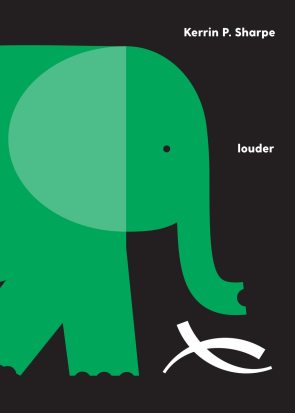
Kerrin: To use the stolen phrase ‘the writer as a thief’, I keep in touch with important issues through reading and watching environmental programmes on TV. I saw the idea for the poem ‘louder’ and the direction of the whole collection, when I was in the barber’s one day waiting for a haircut. In one of the magazines was a picture of an elephant with his tusks cut off. I could hardly look at the picture, but it gave me a powerful image I’ll never forget. Naturally, the barber himself is a recurring character in the LOUDER collection.


Paula: ‘Louder’ is the opening poem in the collection. It makes it clear that the poetry is linked to issues and that the poems move in intricate ways. It moved me as reader. The poem juxtaposes the beauty of a tribe of elephants with the mutilated bodies, tusks removed.


and if you can imagine

thousands of elephants

all in outdoor studios

painting themselves and their tribe

as whole elephants

even as guns are raised

and calves stumble


from ‘louder’


I was also moved by the sequence, ‘where will the fish sleep’. The poem is equally intricate. It looks like water lines, long ripples across the page that connect different places in the world. What prompted this sequence of vignettes? How difficult (or easy) is it to write of issues located elsewhere along with the way we are affected locally?

Kerrin: The fourth and final section of LOUDER offers the reader 10 multi-choice answers to the question ‘where will the fish sleep?’. I like your analogy that they are ‘water lines’ or ‘ripples’ and for me, writing about issues outside New Zealand gives me a greater freedom to explore connections that interest and intrigue me. This group of poems is all concerned with water and its behaviour due to weather events or global warming. We have just seen again the destructive effects both to land and life in Japan and more recently Indonesia. I like to think many of the poems in LOUDER carry on working beyond the covers of this collection. It is deliberate on my part that in the last poem, ‘how they leave the world’, polar bears in their ‘bubbles of blurry fur’ use soft but very firm voices to beg the reader to now act.


he tickles a thick-bodied trout that throws itself

back to unveil the path of the Arahura River

what remains in his square hands?

bones of water enough to mix with shingle

river sand wild grass to grow a daughter

up on the steep riverbank his empty fishing kete

with soft shearwater feathers


from ‘from the Arahura River’ in ‘where will the fish sleep?’


Paula: Water becomes the vital link in this sequence as it highlights such basic human and planetary needs. Selina Tusitala Marsh’s latest poetry collection, Tightrope, is also a form of ‘louder’. She speaks on issues that matter and affect her. In ‘Apostles’, Selina refers to Alice Walker’s claim that ‘poetry is revolutionary’. Selina is not quite sure that she believes Alice but Tightrope becomes a form of speaking out. Do you ever feel helpless when contemplating so many issues, so many injustices? And what point is poetry?

Kerrin: The many obvious injustices in the world inspire me to write with more conviction. They empower me to feel I must try to raise awareness of what is happening around me.

When I am writing I frequently ask of my writing, ‘What is the point of this? What is its purpose in the poem?’ If I have just written a series of word images that have no real or meaningful ideas or concepts underlying them, then I feel this isn’t the direction in which I should be going with this piece of writing.

As a poet I feel poems should be real, urgent and necessary of themselves and evoke a response in the reader. At least this is what I am attempting to do with my writing.


Paula: Did you read any poetry books that explored similar issues in ways that were perhaps ‘real and urgent’ – or simply stuck with you?

Kerrin: The British poet, Alex Houen’s poetry collection Ring Cycle (Eyewear Publishing) impressed me. He explores the world in a real, urgent and innovative way. Another British poet, John Clegg’s Holy Toledo, (Carcanet Press) has also influenced my writing with his poems; they are both playful yet also powerful.

For a long time, George Szirtes, a Hungarian poet living in England, has intrigued me with his writing which is often concerned with social issues. He raises challenges and perspectives that can only come from an ‘outsider’. His latest collection is Mapping the Delta (Bloodaxe).

I met all three of these poets when I was last in England and I talked with them about many of the issues and topics that come up in my poems in louder and I felt reassured by their feedback that I was on the right track. In fact they told me that the social and environmental topics I explore in louder were also starting to emerge in poetry written in Britain and in some cases were being explored by British poets in a very vigorous way indeed.


Paula: How wonderful to have that acknowledgement from writers you admire. There is something quite magical about conversations with people who get what you are doing. Are there any local writers who have caught your attention with issue-inspired poetry?  I was really taken with Airini Beautrais’ Flow: Whanganui River Poems. The politics of the river, the land, the everyday lives infused the work on so many levels. I also wondered whether you have a support crew of local writers in terms of both poetry and speaking out?

Kerrin: Yes, Erik Kennedy a local writer from Christchurch has just released his new collection of poems, There’s No Place Like the Internet in Springtime (VUP) and many of the poems in his collection are quite innovative and fresh in the way they address important issues like war and climate change.

Gregory O’Brien’s two poems ‘Mihi’ and ‘Conversation with a mid-Canterbury braided river’ are clever and strong in the way they challenge us about our threatened waterways.

I tend to do much of my writing alone. I am well known for heading down to a local cafe in Merivale, Christchurch each Saturday and Sunday morning to write. I love the atmosphere and the buzz of people about me.

I often chat with Frankie McMillan a well known Christchurch writer, and we frequently discuss our writing with each other; I read her my recent work and she gives me feedback and suggestions that send me back to refine what I’ve written. I also chat with other writers about my work and theirs and they too keep me grounded and encouraged.


Paula: I really like the shifting tones and forms in your collection, from the little poem breaths in ‘what we hear’ (like haiku) to the personal revelation, the mother’s appearance in ‘my mother darns the windsock’. It suggests there are multiple ways to speak louder and draw attention to issues that matter. Is there are poem that particularly worked for you?

Kerrin: Yes Paula, I do tend to employ changes in tone and form in my poems though sometimes I must admit it is as likely to be unconscious as conscious. One of the ‘drivers’ of this is that I have a fear that my poems will all look and sound alike if I don’t look to innovate in the way they sound, their shape and in their tone and form. Often the changes in my poems arise from ideas I get when reading the poems of other writers who themselves are experimenting with tone, shape and form.

Obviously in the context of my louder collection you picked up that I have experimented on several levels with some poems in an attempt to make them speak louder and more insistently.

To give you an illustration. When I visited England earlier this year, I was shown around the historic chapel designed by Sir Christopher Wren at Pembroke College at the University of Cambridge. Inside this beautiful chapel was a blue cross made from a refugee boat and some votive candles. As I was looking at this fascinating symbol, I began to think of the beginnings of a poem that I began to write in my head and the title of it of course became wick which I later included in my new collection.

I wrote the first draft of ‘wick’ on the train coming back from Cambridge and when it was complete I recognised that it had very strong links to the other poems in the collection about refugees: ‘they are found in the sea’ and ‘the bear’.

It probably sounds a bit quixotic but I like the way that ‘wick’ as a poem seemingly jostles to be heard and to extend itself beyond the written words on the page.


wick


from the flicker of a boat

in the Aegean Sea

they took the heart

they built a cross

a twisted pale blue beak

they sky they followed

still and blue like the toddler

carried ashore by a soldier

carried through our televisions

the terrible cries of his father

that cross and a bowl

of votive candles

in the chapel at Pembroke

every candle a voice

between wick and flame

a Syrian refugee

who never arrived


Paula: You work a lot with school-age writers. Do you think they are concerned with issues that threaten our world? Do you ever explore political and ecological issues with them through poetry?

Kerrin: I love working with school-age writers. And yes, I find them very open and aware of issues that threaten our world and they are not at all afraid to write passionately about many of the things we as adults are concerned about as well.

Recently one of my students designed a set of tea towels each with a haiku she had written printed on the tea towel. Her haiku were from a series of haiku she had written called ‘Haiku for Humanity’. Among her haiku are ones that draw our attention to the sad plight of many refugees in different parts of the world – a subject that as you know, is very close to my own heart. As a postscript, last I heard, her haiku tea towels were very popular with her student customers; I even have a couple myself!

Other creative writing students I work with participate in the Young Poets’ Network, based in London and have had poems on subjects such as global warming published on the Network.


Paula: We have a Prime Minister who uses the word ‘kindness’ in her discussions on governance, she keeps the well-being of children (and a nation) centre frame and resists attack politics and bullying. We have yet to see how Jacinda’s talk is converted into widespread action, but this approach, with the initial welcome moves, gives me hope for people and for the planet. What gives you hope?

Kerrin: As I said earlier, while my poetry in Louder is often about environmental and social issues and can therefore perhaps in that sense be described as political, I don’t have a lot of faith in politicians, whether it be the current Prime Minister or anyone else.

What does give me hope in our world are people, the people I meet every day in my local community, the people I work with, the children I teach creative writing – a creative writing class full of children is a magical place for me – my husband, family and friends.

I don’t expect politicians to bring about a better world. Positive change in our world, if it comes, will come because there are more and more people in our world with open, loving hearts, people who are honest and people who care deeply about others who need caring for.

One of my greatest joys is working with children. When I am in a class of children and we are all working on our creative writing; it’s then that I feel most a sense of hope in our future and what we can become.


Victoria University Press page


Hoopla Poetry 2018 – Auckland book launch


Screen Shot 2018-10-24 at 7.15.38 AM.png


Screen Shot 2018-10-24 at 7.15.51 AM.png

Mākaro Press, Elizabeth, Reihana & Jo invite you to celebrate the Auckland launch of the 2018 Hoopla poetry collections.

Come to the Women’s Bookshop on Saturday 3rd November from 5pm to hear some wonderful poetry from our 2018 poets, have a glass of wine and some nibbles.

Books will be available for purchase at the launch.

HOOPLA aims to entice people to buy and read poetry books through the quality of its poets, the attraction of a series with three books launching at once, vibrant design and the accessibility of a clear narrative or theme. We like strong work that steps onto the tightrope without hesitation and gives the performance of its life.

Hoopla series