Category Archives: NZ poetry

Jesse Mulligan and Simone Kaho in conversation (in case you missed it because it is excellent!)

13 Mar 2017

Poetry: Lucky Punch by Simone Kaho

Auckland poet, Simone Kaho, is from New Zealand and Tongan ancestry. She earned her MA in creative writing from the International Institute of Modern Letters. Her poetry has been published in journals such as JAAM, Turbine, and The Dominion Post. She joins Jesse to read from her book Lucky Punch.

Lucky Punch, Simon Kaho

Three new books by three VUP authors get an art gallery outing

1e7088a3-8807-47c9-a7a6-98f7294cf027.jpg


We warmly invite you to a reading from three new books
by three celebrated VUP writers.

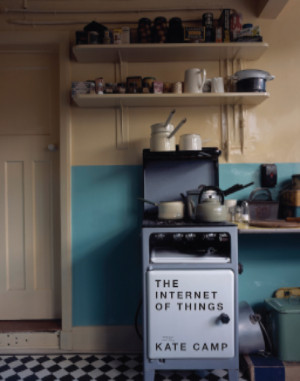
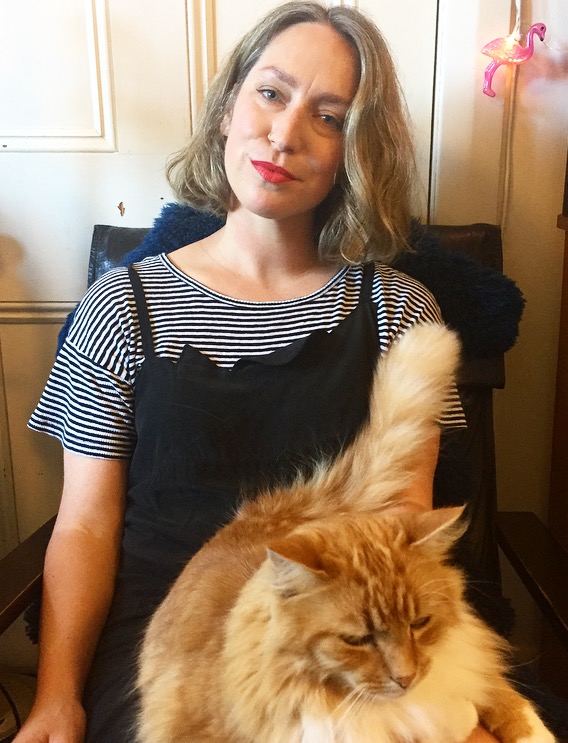
The internet of things, new poetry by Kate Camp
Some Things to Place in a Coffin, new poetry by Bill Manhire
Lifting, a new novel by Damien Wilkins

on Wednesday 12 April, 5.30pm–7.30pm
at Adam Art Gallery,
Gate 3, Victoria University, Kelburn Parade.

Refreshments will be served.

All three books will be for sale courtesy of Vic Books. Guests will also be able to purchase Tell Me My Name, a collaboration between Bill Manhire, composer Norman Meehan, vocalist Hannah Griffin, and photographer Peter Peryer.

All welcome.

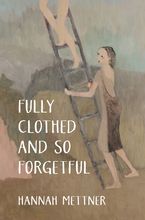
Poetry Shelf interviews Hannah Mettner: ‘I want to be emotionally moved by a poem, and nothing less’


FullSizeRender.jpg


We believe in the steps.

We tell our children and then our

grandchildren about the cool

pond at the top where sun-

carp clean our feet and where

we can sleep. The steps are one of

the beautiful mysteries of

life, like how did we get here,

fully clothed and so forgetful?


from ‘Higher ground’


Hannah Mettner is a Wellington-based poet from Gisborne. Her poems have appeared widely in literary journals, including Sport, Turbine and Cordite. She is co-editor with Morgan Bach and Sugar Magnolia Wilson of Sweet Mammalian, an online poetry journal launched in 2014.

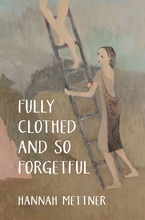
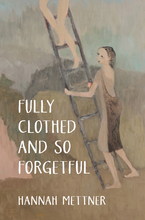
I first heard Hannah read at the Ruapehu Writers Festival last year and I was immediately hooked. To celebrate the arrival of her debut poetry collection,  Fully clothed and so forgetful (Victoria University Press), Hannah agreed to do this interview. As you will see from my comments in the interview, this collection has struck a chord with me on a number of levels. I absolutely adore it.


The book is launched tonight: 16 March 2017 from 6.00 pm – 7.30 pm

The Guest Room, Southern Cross, 39 Abel Smith St, Wellington


PG: You include two quotations at the start of the book—one by Eileen Myles and one by Adrienne Rich—that underline your status as reader, while the book itself is infused with your reading life.  Can you name three non-poetry books that have sparked you any time from zero until now? And three poetry books, from any point in your reading timeline, that have also affected you?

HM: Ah yes, I mean, it wasn’t meant as any kind of political statement, choosing two gay poets to front the book, although it definitely can be, I just love their writing, and those particular poems. And then those parts of those poems stuck out as handy things to highlight at the outset of the book. As to my reading, well, I’ve always liked reading, and I wonder if it’s partly a control thing: I find people quite hard work, they’re so fascinating and unpredictable and needy, with a book you can just shut it when you get to satiety, and come back to it when you’re ready. Then I studied English Lit at uni, and I work at the Turnbull Library now, so books are very thoroughly part of my comfort zone, and I get a bit panicked if I don’t have one nearby, to serve as a social safety blanket. I remember being completely transported by a Margaret Mahy book The Door in the Air and Other Stories, as a young person. Strange little vignettes into other possible lives: very like one of the stories in that book about a girl who meets a wizard with a house full of different windows depicting different worlds. Obviously all of Mahy’s books are fantastic, and that magical realism has definitely been a thing that has kept my interest over the years, both as a reader and a writer, she’s so good at combining the very mundane with the extraordinary. Another book I’ve come back to again and again (a big deal when you’re a bit blind and reading is a pleasure/pain situation like it is for me) is Jeanette Winterson’s Written on the Body, which is scorchingly personal and profound. Those two books are really my sun and moon, there are heaps of other books I’ve read and loved, but nothing quite like those. Poetry books are perhaps too numerable to mention? Though I distinctly remember that James Brown’s first book Go Round Power Please was the book that got me reading and eventually writing poetry. I checked it out from the public library in Gisborne not long after having my first baby, and discovered that poetry was a great way to ‘get more bang from my buck’ when I was too tired and busy to make much headway with novels. Those poems are so humble and personable, and so varied, so I could read a couple, then turn them over in my head until I could get to the next couple (which is a great way to read poetry in my opinion).


Fully_Clothed_and_So_Forgetful__32303.1486956777.220.220.jpg   Fully_Clothed_and_So_Forgetful__32303.1486956777.220.220.jpg   Fully_Clothed_and_So_Forgetful__32303.1486956777.220.220.jpg


PG: Your debut collection, Fully Clothed and So Forgetful, gave me goose bumps as I read and took me beyond words to that state where you stand somewhere wild and beautiful and just stall beyond language to absorb the world. My initial reaction is simply to tell the reader to read your book. But then I start accumulating a list of what I think your poetry is doing: the poems are inventive, unpredictable, melodic, on the move, strange, love-soaked. What key things matter when you write a poem?

HM: Thank you! That is a lovely thing to have someone say about my writing, and quite strange because these poems have become so familiar to me now that I’ve almost become disenchanted by them: you know, the feeling of old outfits you’ve worn too many times and are giving way at the knees or something. The key thing that matters to me in a poem (whether one I’m writing or reading) is that it gets me in the gut. I get very frustrated by poetry that feels empty, or emotionally disengaged or distant, or is teasing the reader or holding them at arm’s length. I just find it boring, I mean, I know that different poems and poets have all sorts of intellectual fare to offer, but I want to be emotionally moved by a poem, and nothing less.


PG: I feel the same way. Your book generated strong emotional engagement for me, which is why it mattered so much. I am particularly excited by the way you create poetic movement. Is this something organic and unconscious or deliberate and cultivated?

HM: I guess it must be unconscious, because it’s not something I’ve gone in thinking about or worked at. Maybe it’s because I’m a chronic fidgeter? Or maybe because lots of my poems come to me when I’m walking. Or maybe it’s because I have a terrible attention span?


PG: The first poem, ‘Higher ground,’ is memorable, resonant and fablesque. I fill to the brim with it and don’t want to undercut the way I absorb its magical effects—the poetic side lanes and underpasses and overbridges—by explaining what I think it is doing. But I would say, as a tiny hinge into the poem, it reminds me how we can so easily become immune to what we see and hear. How do you feel about talking about the poetry you write?

HM: Ah yes, well this poem is an example of one that came to me while walking! In Wellington, as you know, there are lots of hills, and my old house was up one of them, and then up ninety steps. This made walking home from school with my kids kind of a drag, and so this poem, with its promise of glories to come, is really just an exaggeration of the daily bribery of walking home from school up what is basically a mountain. We totally become immune to life, it’s kind of tragic eh? One of the things that was promised to me when I had kids was that “they’d make me see the world with fresh eyes” and more parental romanticisations like that, and I really don’t know if that’s been true or not. But I do spend a lot of time trying to look at things like that anyway. I used to think I was going to be an artist, so maybe it comes from that? Experiencing the world, then deconstructing it in order to be able to reconstruct it on the page?


PG: I loved the oblique appearance of Gertrude Stein and her Tender Buttons in your ‘Gender buttons.’ While your poetry does not replicate the anarchic and playful syntax of a Stein poem, your phrasing is deliciously agile and surprising (‘I wake to you nuzzling into my bed/
complaining of the quick-sand carpet in the hallway’). Do you feel Stein influenced your language in any way or your inventive links between object-self-word-love?

HM: Well actually I’m not a huge Stein fan, I find her poetry difficult to engage with, and I suspect she was kind of a horrible person. In fact, this poem came about because I told the person I was in love with at the time that I thought she looked like Stein (who she also hated), and then I felt so bad that I wrote a love poem by way of apology. But I am interested in Stein’s idea of ‘Cubist writing’, which I guess in my poems isn’t even close to the exaggerated effect she achieves, but I like the idea of multiple things going on, multiple ways to access a work, multiple planes of understanding, gaps in meaning which the mind auto-fills. And I like the idea of language constructing a world, rather than merely referencing it, you know, then I can say each of my lil poems is its own world, like one of the windows in the wizard’s house. I would love it if that’s how they were read, like objects to be picked up and transported by, either a snow-globe or a portkey.


PG: Another reason the collection affected me so much is that is deeply yet originally personal. I felt like making a caption to go over my desk: poetry is personal. Your poems demonstrate that you can dig deep into personal experience and self-scrutiny in ways that are inventive and quiet. There are some big things faced: a teenage pregnancy and not meeting expectations to marry a man.  So many of the poems, with strong personal origins, are effervescent with possibilities. I am thinking of ‘In the Forest of the night,’ inspired by William Blake’s ‘The Tyger,’ but hovers like a miniature, fully-formed autobiography (the fearful child, the maternal embrace, the maternal anxiety, the supressed feelings, the broken relationship). Did you have lines you would not cross in order to protect those close to you?

HM: Well yes, poetry is personal. Very personal. I do hope no one reads these and recognises (a part of) themself, and is upset. The relationship poems are unnamed for this exact reason, but the family ones are probably more problematic. Funnily enough the ones about my parents are pretty tidily summed up by saying they’re about miscommunication (or lack of communication), and I hope they’re grown-up enough to understand that everyone sees things differently, and that this is my version of events, so to speak. The kid-ones are the most worrying, as I don’t want them to be like some shameful or burdensome photo brought out at a 21st party. But there aren’t many of them, and I’ve tested them out on Lucia and Jethro, who seem ok with them. We talked about this a lot in Hera’s TMI course last year: what is too personal, what sorts of things make you a ‘bad person’ for disclosing about someone else in a poem, etc etc. I try to think ‘how would I feel if someone said this about me?’ and bear that in mind, and there are lots of excruciatingly personal disclosures about myself in here, so maybe that balances it out? But also, that responsibility can be a bit crippling and sometimes you think ‘well fuck it’ and just write.


PG: I love the way you place a personal revelation within intriguing and inventive contexts and layer it like an artichoke so that is exquisitely simple yet flavoursome on the tongue. I am thinking of ‘Trip with Mum,’ where you go to Disneyland and take rides with your aging mother—real or imagined—and have difficult conversations until you spin away from probing questions to a far-off planet: ‘I’d try shouting things like, What do you know about pain?! and I’m afraid! and finally, I love you! as I grew smaller and smaller and she grew older and older and everything just kept spinning.’ Is the autobiographical thread a significant part of how you write?

HM: Well I guess so, erm. I don’t know if that’s just narcissistic and unimaginative or what, but I guess I just don’t want to speak for anyone else, or tread on any toes, and other people are better qualified than me to tell their own stories. But also it’s a by-product of the way I think and experience the world: by relating information and experience directly to my personal history and developing self. I remember our MA class having a near-fight early in the year when Chris presented us with a reading which basically posited that people assume poetry is autobiographical, and that the narrator is the writer. We, mostly, railed against this on principle, wanting perhaps to protect our right to mystery, but I think we all secretly knew that the ‘I’ is the I. I’ve been emboldened by the opening poem in Hera’s book, which gives the reader permission to read it as a book about her (and the title), and Greg’s book which is openly autobiographical while looking outward at people and events to hang his history on in the complicated and beautiful way that true life does.


PG: Are you after some kind of autobiographical truth when you write, however elusive that might be? I am wondering if this is why the book has so intricately hooked me.

HM: Autobiographical truth? I guess so, in the sense that I’m prone to self-reflection. I’m quite a socially anxious person, and a major introvert, and one of those people who analyse social interactions excessively as they’re happening and potentially going on for days afterward just in the normal course of things. Looking at your actions in the world so closely is perhaps not healthy, but it is interesting, especially the way different people work in given situations and relations.


PG: Feminism is such a complicated, multifaceted, highly contested set of ideas and practices. It always has been and is especially so today. I think your collection is in debt to a feminist engagement with the world that is mobile and probing. Do you think it makes a difference to your poetry that you are a woman? Does feminism matter?

HM: Of course I’m a feminist, though I tend to think in essence feminism is very simple, actually, which is not to say women and womanhood aren’t complicated and gloriously multi-faceted, or that femininity as an identity within feminism (particular for lesbian, bi and trans women) isn’t highly contested. And yes, for sure feminism matters, and I think it needs to keep on mattering, more loudly and insistently than it has to date, for quite a while yet. I think it’s (perhaps too) clear that it matters to my writing that I’m a woman, it matters that I’m a feminist women, that I’m a mother, that I’m a teenage pregnancy statistic, that I’m bisexual, that I grew up in a working-class Christian family etc etc. Those large facts, plus all the more messy detail of just living—that’s my subject matter. I think every writer’s personal history matters to them in their writing to some extent, whether as information or bias, but not all writers are keen to share that information, or maybe they don’t think it’s interesting enough? But the feminist in me wants it to be enough! I want women to write their stories and for them to be enough! I get the sense that it’s sometimes considered not tasteful to be a bit political in poetry, that poetry should be a respite from the real world, but I want to read more poetry about the intricacies of other people’s lives.


PG: Are you a solitude poet (you keep poems to yourself) or a community poet (you exchange poems with friends for feedback)? Have you had any poetry mentors?

HM: I’m definitely not a solitary poet! If I was, I don’t think I’d get anything done. I’ve been lucky enough to be part of multiple communities of writers at different times: first my Masters class, then “poetry club” as we fondly call it, and Hera’s TMI school last year. All of those places have been so wonderful for being peopled with other humans who want to think and read and write, and I’m so grateful and in love with and in awe of all those humans! My longest-standing ‘community’ are definitely Sugar Magnolia Wilson and Morgan Bach, who are also my co-editors for Sweet Mammalian. Magnolia’s poems are like crystals, each with special powers, which you can pick up and feel humming through your skin, and which leave you altered and fumbling about on the astral plane. Morgan has this incredible gift for knitting centuries’ worth of narrative weight and detail into small and exacting visions which seep into your subconscious and trick you into thinking they’re your own memories. Those two, phoar, I’m so goddamn lucky to know them, to read their things when they’re vulnerable and new, and to have them do the same for me!


I’ve never had an official ‘mentor’, but do you think Anna would be too embarrassed if I claimed her? I think a significant portion of young writers in New Zealand, particularly women, wouldn’t be writing the way that they are if it wasn’t for her. Her writing is so smart, with such a dry sense of humour and openness to silliness too, such a unique voice, such clever observations, but they’re also unashamedly ‘womanly’ poems: they’re about friends and family, they’re domestic and comfortable and they still give you such feels. SO good!


Sometimes in your sleep I hear you roar

and it echoes in the back of my jaw, child,

in the forest of the night.


from ‘In the forest of the night’


Victoria University Press page

Radio NZ  National: Harry Ricketts reviews the book with Kathryn Ryan


Vivienne Plumb and Glenn Otto Launch is tonight – the book is glorious

17190457_10154416660243424_3707795828733151756_n.jpg

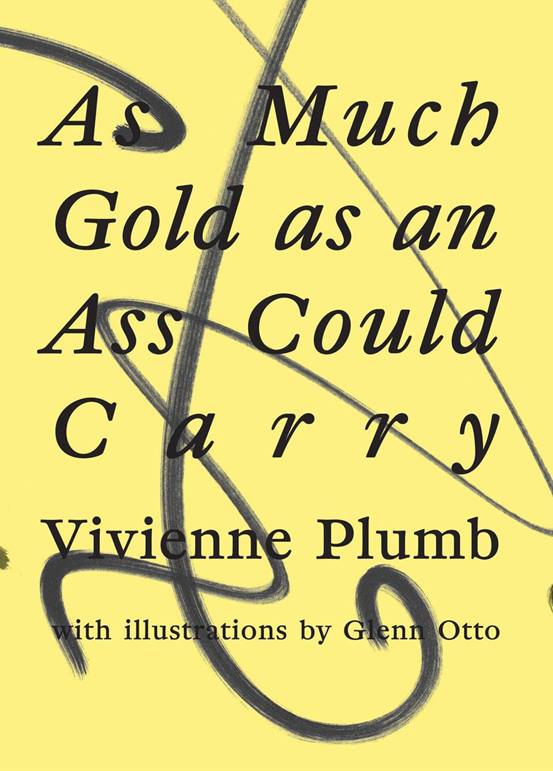
The launch of AS MUCH GOLD AS AN ASS COULD CARRY, by Vivienne Plumb with illustrations by Glenn Otto.

Friday 10 March, 6pm at split/fountain, 3C/23 Dundonald Street, Eden Terrace, Auckland.

Published by Split/Fountain

Split/Fountain page

Reviewing the very fabulous poetry books on the Ockham NZ Book Award short list

I have gained much pleasure from reading the books on the long list. Of course – how can it not be?! – excellent poetry books did not make the cut.  Take Chris Price’s glorious Beside Herself for example. I was transported by the uplift in Chris’s writing and celebrated it as one of her very best. I have said good things about all of the books because they gifted me reading experiences to savour. In my view, the long list was a go-to-point for the terrific writing that we are producing. I could not have picked four if I tried. I would have headed for the hills!

Boutique Presses are doing great things in New Zealand as are the University Presses, but in this showing, and with such noteworthy books appearing each year, and in quite staggering numbers, I am sendingsend a virtual bouquet of the sweetest roses to VUP. Three extraordinary books on the shortlist! Wonderful.

I adored the books shortlisted and will share my thoughts.


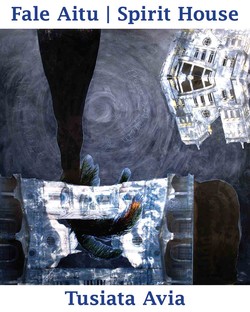
Tusiata Avia’s book is so rich and layered and essential. I have been reading and writing about this book in the past few months, and the more I read and write, the more I find to admire and move and challenge me. I wrote this after going to the launch:

0b1eb042-a027-4f9f-bae5-5ca96dfd4ed5.jpg       IMG_3432

Fale Aitu / Spirit House Tusiata Avia, Victoria University Press, 2016 (VUP author page)

Last night I drove into the city into some kind of warm, semi-tropical wetness —like a season that no longer knew what it ought or wanted to be — to go to the launch of Tusiata Avia’s new poetry collection. Tautai, the Pacific Art Gallery, was a perfect space, and filled to the brim with friends, family, writers and strong publisher support. I loved the warmth and writerly connections in the room. I have been reading Tusiata’s book on planes as poetry now seems to be my activity of choice in the air. I adore this book and have so much to say about it but want to save that for another occasion. I was an early reader so have had a long-term relationship with it.


the launch

The room went dark and an MIT student, bedecked in swishes of red, performed a piece from a previous collection, Blood Clot. Mesmerising.

Tusiata’s cousin and current Burns Fellow, Victor Rodger, gave a terrific speech that included a potted biography. I loved the way he applauded Tusiata not just as a tremendous poet, but as a teacher and solo mother. Her names means artist in Samoan and he saw artist in the numerous roles Tusiata embodies. Writing comes out of so much. He identified her new poems as brave, startling, moving and political. Spiky. I totally agree.

Having dedicated her book to her parents, Tusiata said that it was hard to be the parent of a poet who wrote about family. When she told her mother what she was writing, her mother embraced it. She opened her arms wide. She said the skeletons need to come out. The atua. Tusiata’s speech underlined how important this book is. It is not simply an exercise in how you can play with language, it goes to the roots of that it means to be daughter, mother, poet.  It goes further than family into what it means to exist, to co-exist, in a global family. When a poet knows how to write what matters so much to her, when her words bring that alive with a such animation, poise and melody, it matters to you.

Four poems read. Lyrical, song-like, chant-like, that place feet on ground, that open the windows to let atua in and out, that cannot turn a blind eye, that hold tight to the love of a daughter, that come back to the body that is pulsing with life.

Yes I had goose bumps. You could hear a pin drop.

Fergus Barrowman, VUP publisher, made the important point that these poems face the dark but they also face an insistent life force.

Congratulations, this was a goosebump launch for a goosebump book.


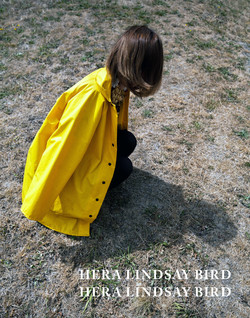
Hera Lindsay Bird’s debut book broke me apart, gushed oceans of reaction through me and quite simply filled me with the joy of poetry. This is what I posted earlier on the blog:
Hera_Lindsay_Bird_final_cover__03325.1460344863.220.220-1.jpg


All I care about is looking at things and naming them’

‘I love life’

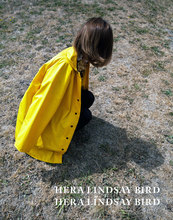
Hera Lindsay Bird Hera Lindsay Bird, Victoria University Press, 2016


For the past week or so, after visits to our key research libraries,  I have been writing about Jessie Mackay, a founding mother of New Zealand poetry. What I am writing is under wraps but my relationship with both the woman and her poetry is not clear cut. She moves me, she astonishes me, she irritates me, but I am always filled with admiration. One question bubbling away is: how different is it for women writing over a hundred years later?  Sure, contemporary poems are like a foreign country, we have changed so much. But what of our behaviour as poets? Our reception? What feeds us? What renders us vulnerable and what makes us strong?

I want to draw a pencil line from Jessie Mackay to Hera Lindsay Bird and see what I can peg on it. But I want to save these thoughts for my book.

Hera Lindsay Bird has attracted the biggest hoo-ha with a poetry book I can recall. It felt like I was witnessing the birth of a cult object. Images of the book cover on the side of a bus or a building (photoshopped?!?!) created a little Twitter buzz. Lorde tweeted. Anika Moa tweeted. Tim Upperton reviewed it on launch day on National Radio. Interviews flamed the fan base on The Spin Off, The Wireless and Pantograph Punch. The interviews promoted a debut poet that is hip and hot and essential reading. Poems posted have attracted long comment trails that apparently included downright vitriol (I haven’t read these and I think just applied to one poem). The Spin Off cites this as one of a number of factors in the shutting down of all comments on their site. The launch was jam packed, the book sold out, and took the number one spot on the bestseller list. Hera is a poet with attitude. Well, all poets have attitude, but there is a degree of provocation in what she says and writes. Maybe it’s a mix of bite and daring and vulnerability. Just like it is with JM, Hera’s poetry moves, astonishes and irritates me, but most importantly, it gets me thinking/feeling/reacting and prompts admiration.


A few thoughts on Hera Lindsay Bird by Hera Lindsay Bird  (VUP author page)


This book is like rebooting self. Each poem reloads Hera. Click click whirr.

At first you might think the book is like the mohawk of a rebellious punk who doesn’t mind hate or kicking stones at glass windows or saying fuck at the drop of a hat.

The word love is in at least two thirds of the poems. It catches you at times with the most surprising, perfect image:

‘when we first fell in love

the heart like a trick candle

on an ancient, moss-dark birthday cake’


‘it’s love that plummets you

back down the elevator shaft’


You could think of this book as a handbook to love because Hera doesn’t just write love poems, she riffs on notions of love:

‘It’s like falling in love for the first time for the last time’

or: ‘What is there to say about love that hasn’t already been’


Some lines are meant to shock you out of reading lethargy:

‘I feel a lot of hate for people’

or: ‘My friend says it’s bad poetry to write a book’

or: ‘Some people are meant to hate forever’


or:

‘It’s a bad crime to say poetry in poetry

It’s a bad, adorable crime

Like robbing a bank with a mini-hairdryer’


Hera reads other poets and uses them as springboards to write from: Mary Ruefle, Bernadette Mayer, Mary Oliver, Chelsey Minnis, Emily Dickinson.

Sometimes the book feels like a confessional board. Poetry as confession. It hurts. There is pain. There is always love.

This poetry is personal. Poems (like little characters) interrupt the personal or the chantlike list or the nettle opinion the honey opinion as though they want a say and need to reflect back on their own making, if not maker.

Love hate sex girlfriends life death: it is not what you write but how you write it that makes a difference, that is the flash in the pan, not to mention the pan itself.

Hera writes in a conversational tone, sometimes loud, sometimes quiet, as though we are in a cafe together and some things get drowned out but the words are electric and we all listen spellbound.


She uses excellent similes. On poetry:

‘This is like an encore to an empty auditorium

It’s a swarm of hornets rising out of the piano’


‘Neither our love nor our failures will save us

all our memories

like tin cans on a wedding car

throwing up sparks’


‘I can only look at you

Like you are a slow-burning planet

And I am pouring water through a telescope.’


Hera likes to talk about bad poems; like the wry punk attitude that says look at my bad style. I am not convinced that there is much in the way of bad poetry here unless you are talking about a vein of impoliteness. It kind of feels like a set of Russian dolls – inside the bad poetry good poetry and inside that the bad and then good and so on and so forth. There is always craft and the ears have been working without fail.

One favourite poem in the book is ‘Mirror Traps’ but I am saving that for the Jessie Mackay pencil line.

Hera’s sumptuous book comes out of a very long tradition of poets busting apart poetic decorum, ideals and displays of self. It’s a while since we have witnessed such provocation on our local poetry scene. What I like about this scintillating writing is that each poem manifests such a love of and agility with words — no matter how bad it tries to be. It is addictive reading. Yes there is a flash that half blinds you and spits searing fat along your forearms, but you get to taste the sizzling halloumi with peppery rocket and citrus dressing.


‘I love to feel this bad because it reminds me of being human

I love this life too

Every day something new happens and I think

so this the way things are now’


PS I adore the cover!

Hera Lindsay Bird has an MA in poetry from Victoria University where she won the 2011 Adam Prize for best folio. She was the 2009 winner of the Story! Inc. Prize for Poetry and the Maurice Gee Prize in Children’s Writing. She lives in Wellington with her girlfriend and collection of Agatha Christie video games.


In a spooky moment of synchronicity, I was walking along Bethells Beach this morning in the crisp gloom hoping Gregory Kan’s book made the shortlist, not realising the decision was out today. I loved the inventiveness, the heart, the attentiveness, the thrilling electricity of his language and so much more:
1455844200262.jpg


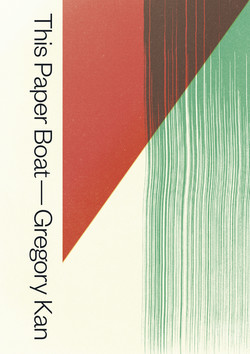
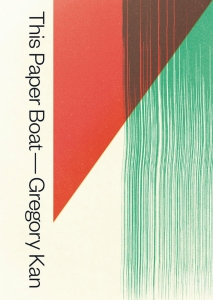
Gregory Kan This Paper Boat Auckland University Press 2016 (AUP author page)


Gregory Kan’s debut poetry collection, This Paper Boat, is a joy to read on so many levels.

Kan’s poetry has featured in a number of literary journals and an early version of the book was shortlisted for the Kathleen Grattan Poetry Prize in 2013. He lives in Auckland.

Paper Boat traces ghosts. We hold onto Kan’s coat tails as he tracks family and the spirit of poet, Robin Hyde (Iris Wilkinson). The gateway to family becomes the gateway to Iris and the gateway to Iris becomes the gateway to family. There is overlap between family and missing poet but there is also a deep channel. The channel of difficulty, hard knocks, the tough to decipher. There is the creek of foreignness. The abrasiveness of the world when the world is not singular.

Kan enters the thicket of memory as he sets out to recover the family stories. He shows the father as son fishing in the drains, the mother as daughter obedient at school. Yet while he fills his pockets with parental anecdotes, there is too, the poignant way his parents remain other, mysterious, a gap that can never be completely filled:


In the past when I thought about people my parents

were somehow

not among them. But some wound stayed


wide in all of us, and now I see in their faces

strange rivers and waterfalls, tilted over with broom.


The familial stands are immensely moving, but so too is the search for Iris. Kan untangles Iris in the traces she has left – in her poems, her writings, her letters. He stands outside the gate to Wellington house, listening hard, or beside the rock pool. There is something that sets hairs on end when you stand in the footsteps of ghosts, the exact stone, the exact spot, and at times it is though they become both audible and visible. Hyde’s poems in Houses by the Sea, are sumptuous in detail. I think of this as Kan muses on the rock-pool bounty. When he stands at her gate:


I have to hear you to keep you

here, and I have to keep you

here to keep coming back.


I think too of Michele Leggott’s plea at the back of DIA to listen hard to the lost matrix of women poets, the early poets. To find ways to bring them close.

Kan brings Iris (Robin) close. His traces. Iris becomes woman as much as she does poet and the channel of difficulty fills with her darknesses as much as it does Kan’s. There is an aching core of confinement: her pregnancy, her loss of the baby, her second pregnancy, her placement of the baby elsewhere, her mental illness. His confinement in a jungle. His great-aunt’s abandonment as a baby.


The strands of love, foreignness and of difficulty are amplified by the look of the book. The way you aren’t reading a singular river of text that conforms to some kind of pattern. A singular narrative. It is like static, like hiccups, like stutters across the width of reading. I love this. Forms change. Forms make much of the white space. A page looks beautiful, but the white space becomes a transmission point for the voices barely heard.

At one point the blocks of text resemble the silhouettes of photographs in a family album. At another point, poems masquerade as censored Facebook entries.Later still, a fable-like poem tumbles across pages in italics.

The writing is understated, graceful, fluent, visually alive.

I want to pick up Hyde again. I want to stand by that Wellington rock pool and see what I can hear. I have read this book three times and it won’t be the last.


In the final pages, as part a ritual for The Hungry Ghost Festival, Kan sends a paper boat down the river ‘to ensure// that the ghosts find their way/ back.’

The book with its heartfelt offerings is like a paper boat, floating on an ethereal current so that poetry finds its way back to us all (or Hyde, or family).


Auckland University Press page

A terrific interview with Sarah Jane Barnett

Sequence in Sport


Finally Andrew Johnston’s book caught me in a prolonged trance of reading. This from my SST review:
Fits_Starts_cover1__39122.1449546458.140.215.jpg

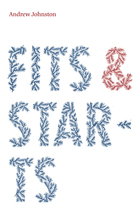
Andrew Johnston, Fits & Starts Victoria University Press (VUP author page)

Based in Paris, Andrew Johnston writes poetry with such grace, and directs his finely-tuned ear and eye to the world and all its marvels. The poems in his new collection, Fits& Starts, luxuriate in white space and they are all the better for it. You want to savour each set of couplets slowly.

The middle section filters Echo through the chapters of the Bible’s First Testament; the final section runs from Alpha through to Zulu and forms an alphabet of exquisite side tracks. With Echo coasting through the sequences, it is not surprising rhyme catches the deftness of Bill Manhire.

Ideas drift like little balloons in and out of poems, experience lies in gritty grains. What is off-real jolts what is real. A taste: ‘How I married distance/ and how close we are.’

This book replays the pulse of living, dream, myth. I am buying it for a poet friend.


Ockham New Zealand Book Award Poetry Short list – Congratulations!

book

  • Fale Aitu | Spirit House

    Victoria University Press

    Tusiata Avia

    This is an urgent, politicised collection, which finds eloquent ways to dramatise and speak out against horrors, injustices and abuses, both domestic and public. The poems are tough, sensuous, often unnerving. Prose poems, pantoums, short lyrics, list poems, hieratic invocations: the passionate voice holds all these together. We teleport between geographies and cultures, Samoa to Christchurch, Gaza to New York. The world we think we know is constantly made strange, yet disconcertingly familiar; the unfamiliar seems normal, close to home.

  • book

    Hera Lindsay Bird

    Victoria University Press

    Hera Lindsay Bird

    The twisty, aphoristic, wrong-footing poems in this striking debut collection play the deliberately crass off against the deliberately ornate: ‘Byron, Whitman, our dog crushed by a garage door / Finger me slowly / In the snowscape of your childhood’. Similes, once a poetic no-no, perform exuberant oxymorons and flamboyant non-sequiturs: ‘I write this poem like double-leopard print / Like an antique locket filled with pubic hair’. Bird’s poems readjust readers’ expectations of what poetry can do, how it might behave.

  • book

    Andrew Johnston

    As the marvellously titled opening poem, ‘The Otorhinolaryngologist’, puts it, these poems ‘hunt[] for something / in the hollow spaces // in the voiceless spaces’. These spaces include: found material from ancestry.com, the thoughts of an Afghani, the books of the Old Testament, the myth of Echo, the radio alphabet. The reader is trusted to puzzle, to fit, to start all over again. This hugely impressive, challenging collection is scored through with a broken music that sings in the head.


  • book

    Gregory Kan

    This ambitious debut collection is built around slivers of life-narrative, principally drawn from the life of Iris Wilkinson (Robin Hyde) and — with moving laconic restraint — from the lives of the poet’s parents, before and after coming to New Zealand. These strands are made to intertwine with, and haunt, each other, not least through the evocation of various Chinese ghosts. The collection aches with bewildered loss, a sense of emotional loose ends and pasts only half-grasped.


  • Full award list here


Terrific interview on Radio National: Kim Hill with Bill Manhire and some new poems


Bill Manhire: collected riddles

From Saturday Morning, 10:35 am 4th March
Bill Manhire


Bill Manhire has two new books out this year – a collection of poetry called Some Things To Place in a Coffin and Tell Me My Name – a collection of riddles along with a CD of songs composed by Norman Meehan, sung by Hannah Griffin.

Bill Manhire founded the International Institute of Modern Letters, which is home to New Zealand’s leading creative writing program. He is now Emeritus Professor of English and Creative Writing at Victoria. In 1997 he was made New Zealand’s inaugural Poet Laureate, and in 2005 he was appointed a Companion of the New Zealand Order of Merit and in in the same year was named an Arts Foundation of New Zealand Laureate. He holds an honorary Doctorate of Literature from the University of Otago and is a Fellow of the Royal Society of New Zealand. He received the Prime Minister’s Award for poetry in 2007. In 2016 Victoria University Press published The Stories of Bill Manhire which collected new and published short fiction.

Wai-te-ata Press artists’ book finalist amongst world’s best: The Wai-te-ata Companion to Poetry

image013.png

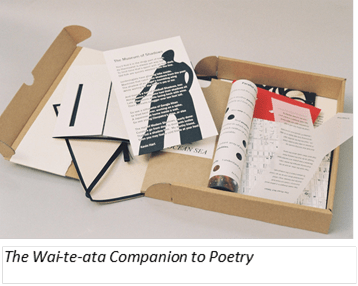
Victoria University of Wellington’s Wai-te-ata Press has been announced as a finalist in the prestigious Manly Artists’ Books Awards, for its artists’ book The Wai-te-ata Companion to Poetry.

An artists’ book is one made by an artist as artwork, and often reinvents the book form and challenges the reading experience.

The award is a biennial prize run by the Manly Public Library, New South Wales, Australia. Winning entries are acquired by the library and entered into specialist artists’ books collections, such as the Australian National Art Gallery collection, which holds more than 1000 artists’ books that date back to the 1970s.

Wellington artist and curator, Paul Thompson, says the success of The Wai-te-ata Companion to Poetry is due to the imagination that has gone into it.

“I had a strong concept for a book, made a mock-up and went to Wai-te-ata Press to see if they were interested in collaboration,” Mr Thompson says.

Dr Sydney Shep, Reader in Book History at Victoria and Director of Wai-te-ata Press says: “We recognised a good idea and have the experience, skills and knowledge to deliver it. The Press is known for its production of both New Zealand poetry and many other high quality and typographically adventurous publications.”

Designer and fellow book artist Glenna Matcham, focused on the opportunity to “bring enthusiasm, design and craft skills to an unusual project”.

“The Wai-te-ata Companion to Poetry is not a book to be judged by its cover,” says Dr Shep.

“The plain brown cardboard box holds 10 poems covering the last 200 years—ranging from well-known classics to poems from contemporary New Zealand and Australian poets. Each poem is treated as a digital handmade object rather than just a nicely designed and printed sheet of paper. Whether a map, a booklet, a cylinder or printed on sandpaper, each poem takes a unique form dictated by the content.”
“In a way it’s like interactive poetry,” says Mr Thompson, “but it works on several levels at the same time. One can read and enjoy the poems or, like any successful work of art, be immersed in an intensive experience of thinking, associating and exploring.”

For more information, and to purchase a limited edition copy, contact:

Dr Sydney Shep on 04-463 5684 or sydney.shep@vuw.ac.nz.

Paul Thompson on 04-913 9045 or museumphoton@clear.net.nz.