Category Archives: NZ poems

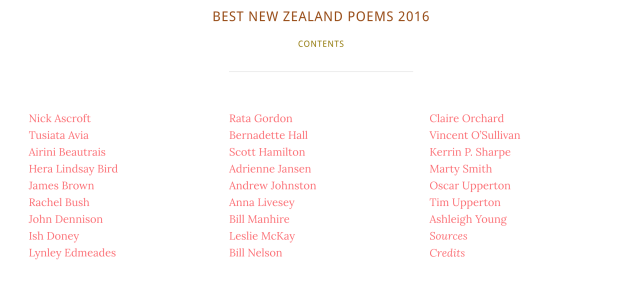
Jenny Bornholdt’s choice of Best NZ Poems 2016 now live

Screen Shot 2017-05-16 at 9.18.56 AM.png


Looking forward to delving into this delectable poetry banquet (sorry AY but I love cooking and writing equally!) An impressive array of mostly Wellington published and Wellington based poets –  poetry must sizzling on the streets there just as it does in Ireland. It blew my poetry socks off. Extraordinary!


Press release:

The latest online edition of Best New Zealand Poems is now available, bringing together twenty-five poems that are rich with place and vibrating with a fierce energy.

The anthology has been published annually since 2001 by the International Institute of Modern Letters (IIML) at Victoria University of Wellington with support from Creative New Zealand.

“Best New Zealand Poems 2016 comes with a brand new look that includes author photos and a search feature,” says series editor, poet and IIML senior lecturer Chris Price.

This year’s edition represents the cream of New Zealand poetry published in 2016, as selected by poet and Arts Foundation Laureate Jenny Bornholdt.

Ms Bornholdt says she picked poems that “made me pause and put a book/pile of paper down; made me want to go to the bakery and buy a cream torpedo then make coffee; or put my gumboots on and go and inspect the compost—the things I do when I need to think”.

Internationally acclaimed and Ockham New Zealand Book Award-shortlisted writers Ashleigh Young and Hera Lindsay Bird, and the father/son duo Tim and Oscar Upperton are among the poets who have made the cut. The anthology takes flight into the past with an ancient Egyptian pharaoh, soars with an orphaned falcon named Avro Vulcan, yet always manages to return to earth in a recognisably New Zealand landscape and culture.

Place is a key theme in this year’s selection, and the poets often find themselves transported—in both senses of the word. Claire Orchard’s ‘Charms’ takes a drive through her childhood neighbourhood to examine her past life, James Brown heads for the trig in a Wellington wind and 2017 Windham-Campbell Prize winner Ashleigh Young is galloped away screaming on a frightened horse. John Dennison meditates on man’s urge to fly; Andrew Johnston travels outside of time and space at the ear, nose, and throat doctor’s; and Tim Upperton visits Kansas, well, kind of.

Other poets find their way around life’s biggest emotions and events. Bill Nelson writes a memorandum of understanding to his love; Anna Livesey examines the death of her mother, the birth of her child and cabbages; Tusiata Avia looks at a photo of her house, and watches it populate with people, spirits and history.

“The poems themselves are as fresh as this morning’s milk. There’s never been a better time to encounter new New Zealand poetry,” says Chris Price.

The new site has been designed by poet Rachel O’Neill.  (looks great Rachel!! PG)

Best New Zealand Poems 2016 can be viewed online

Poetry Shelf Autumn Season: Poets pick a word – Michael Harlow picks light (and dark)


A glancing smile


On a run-down street, its sagging buildings, cracked footpaths

and stunted trees, shadows everywhere and on the move.

And passing by, here’s that someone you will never know,

with a glancing smile in her eyes that’s meant to touch yours,

for no other reason than it must—for the shortest, longest time.

That wakes someone in yourself who wants to say, despite

all the running darkness in the world, that just now, there is

out of the dark the light, inside a glancing smile.


©Michael Harlow 2017


Michael Harlow’s Nothing For It But To Sing, won the Kathleen Grattan Award for Poetry and is published by Otago University Press.  He has been awarded the Beatson Prize for poetry, and in 2014 the Lauris Edmond Memorial Award for Distinguished Contribution to Poetry in NZ.  He has published tens books of poetry, two of which have been shortlisted for the National Book Awards.  In collaboration with NZ-Suisse composer Kit Powell, as a librettist he has composed some thirteen Performance Works, many of which have been performed in Switzerland, Germany, France and New Zealand.  He lives in Central Otago (NZ) and works as a writer, editor, and Jungian therapist.


Poetry Shelf Autumn Season: Poets pick a word – James Brown unpicks


Not Writing

The longer the week drags on, the more I realise I’m not going to be able to write anything creative for Paula. I feel flat and dull. I’d finally handed a poetry manuscript to VUP the previous week and am in a post-hand-in slump.

Paula had provided a long list of words as sparks, but now I couldn’t face the decision I would have to make if I returned to them. The tyranny of choice. I recall there were a lot of poetic words – ‘lilt’ was one – and of course ‘cycling’ had caught my eye. But I don’t want to write about cycling. I’m also not even sure what I’m supposed to produce. Should I be writing a poem?

It’s like I’m struggling with one of the creative writing exercises I set my students at the IIML, and I begin to think about creative sparks – when something takes off and when it doesn’t. And, let’s be honest, mostly things don’t. If I could sit down and write a book of poems like I’m typing this, it would take about a week. My last poetry book took seven years. Not full-time, of course, but I suddenly realise how much of my writing takes place off the page. Gazing around, thinking, reading, listening to music, people, nothing … actually writing is only part of it. I recently read (some of) The Writer’s Room by Charlotte Wood – a book of interviews with writers. I didn’t recognise any poets; certainly the interviewees I read were prose writers and they presented themselves as impressively diligent, rising early to pound out word counts, often leaving off mid-flight or sentence so they could jump straight back into the action the next morning without wasteful floundering.

I wonder how different the process is for poets. The poetry writer’s room, if there’s a room at all, would, I imagine, witness much less keyboard action. For me, poetry writing is beset with guilty spaces. But like the prose writers, I too have to leave off poems and return to them – they’re rarely completed in one sitting – though it may be several days before I can get back to them. Time and space are good for those poems I kid myself are finished, but not for a poem still trying to ignite. The initial spark may go out. Poetry is a bit like lighting a fire: you often have to wander away to gather fuel, but you need to return and keep blowing on it for it to really take hold and raze everything in your suburb – or however far it’s going to travel.

Okay, most poems are more candle than bushfire, but what makes some reach ignition temperature and some not? I’ve come to the conclusion that there’s no special formula for mine (though I can think of things that don’t help), but they generally begin with an idea, phrase or word that interests me. I got a couple of poems out of the word ‘hibiscus’. And this very week, flat and dull as I feel, I tried to get a poem going using a particular kind of word. The result so far has been amusing, but pointless. I also created a small found poem using a couple of sentences from a friend’s email. I wonder if my interest in found poetry stems from being averse to poetry’s emotive and moralistic excesses.

At this point I remember Paula saying something about ‘a couple of paragraphs’. Eek. I was just getting going. Maybe there is something in triggers and deadlines.


©James Brown 2017

James Brown’s new poetry collection, probably called /Floods Another Chamber/, will be published by VUP later in 2017.

Poetry Shelf Autumn Season: Poets pick a word – Nina Powles picks salt

On Salt & Kitchen Poems

I got back into writing poetry by writing about food. I hadn’t written anything in months so I decided to start keeping a food diary of everything I love to eat in Shanghai, where I currently live. Eventually the diary became a blog. I don’t do it for any of the reasons people usually keep track of what they eat. I do it in order to remember, to record and recreate the things that bring me comfort and joy.

Silken tofu cut into the shape of a flower floating in soup, tiny dried shrimps and pickled vegetables sprinkled on top, caramelised spring onions tossed with noodles in a sweet and salty black bean sauce.

When I started writing bits and pieces that resembled poems again, I couldn’t get away from salt and sugar and teeth and skin. I keep coming back to the many food memories that map out my childhood spent partly in New Zealand, in the United States, in Malaysia and in China.

Maybe writing a poem is like preserving something in salt. Like putting a memory or a sensation in a sealed jar and letting a chemical change take place.

A few weeks ago I attended a haiku writing workshop in Shanghai run by the Japanese-American poet Miho Kinnas. I’d never written a haiku before and didn’t know much about them. Miho explained that the form was especially popular with women poets in ancient Japan. The tradition of women writing haiku has continued into contemporary Japan but some of these poems have been scornfully labelled “kitchen haiku”, devalued by literary critics because of their domestic subject matter.

So I decided to try and write some kitchen haiku.

Zongzi


I unwrap lotus leaves

with my teeth

a steamed heart inside

Garlic


spread salt into

the cracks and crush until

our skins break

Canteen


girl sits alone

peeling dragonfruit

with pink fingers

As part of my mission to read more poetry by women of colour from all over the world, I recently discovered the work of Safia Elhillo, a young Sudanese-American poet whose first book The January Children was published this year by the University of Nebraska Press. Her poems often take us deep into the minute details that make up the landscape of her origins, both real and imaginary.

Her work makes me think a lot about tracing my own history—both the things I remember and the things I’m told I should remember—through kitchens, childhood haunts, living rooms, & conversations between grandmothers, mothers, aunts, meals made by hand, spices and seasonings, words I hear passed between them at the kitchen table. Below is an excerpt from Safia Elhillo’s poem “Old Wives’ Tales”:

Screen Shot 2017-03-28 at 9.33.47 pm.png

© Nina Powles 2017

Nina Powles is a poet and writer from Wellington, currently living in China. She is the author of the chapbook Girls of the Drift (Seraph Press, 2014) and several poetry zines. Her poems and essays have recently appeared in The Sapling, Mimicry, Shabby Doll House and Sport. Check out her blog for more.

Listen to Nina in conversation with Lynda Chanwai-Earle on National Radio as she makes dumplings. It is terrific.

Autumn Season Poets pick a word: Bill Nelson picks hybrid


Hybrid


My partner’s bicycle has been rusting away under the house ever since we moved to a hill in Wellington. For a while I’ve been thinking about converting it to a hybrid – a frankenmachine of electric and pedal power. This involves, I think, strapping a battery on the down tube, putting an electric motor inside the wheel and connecting it all to a little trigger on the handlebar. After that she’ll be able to pedal when she wants to and then pull the trigger when going up the hill or when she wants a burst of speed. I haven’t done this yet but I have worked out the new paint job it will need, blue and white, and the new name we will paint on the side, ‘The Dream Camel.’


Hybrids are all the rage at the moment; cars, animals, bicycles, vegetables, language and, yes, even poetry. New Zealand poets like Rachel O’Neill, Hera Lindsay Bird and Hinemoana Baker combine traditional poetics with something unexpected, arguably not quite poetry but not quite the other thing either. This is, well, a hybrid.


Rachel O’Neill is almost exclusively a prose poet. ‘It was worth something to somebody’ is the story of someone who visits a supermarket that was formerly their family home. There are leaps in logic and setting and then a classic rhyme pulls the story to a close – not really a story with a beginning, middle and end; and not a traditional poem either.

‘It was worth something to somebody, my childhood, and I was offered a lot of money for it. They let me keep certain things on the surface. The dogs, the funny shed with spare doors in it and the disco ball. They eventually built a supermarket on the site. I went inside once and walked the aisles. ‘

from  ‘It was worth something to somebody’  full poem at Cordite


Hera Lindsay Bird combines the extravagance of a romantic poet with the rant of an internet blogger. ‘Children are the orgasm of the world’ critiques an insipid metaphor seen on a bus and then proceeds to throw in some outlandish metaphors of her own.

‘This morning on the bus there was this woman carrying a bag with inspirational sayings and positive affirmations all over it which I was reading because I’m a fan of inspirational sayings and positive affirmations. I also like clothing that gives you advice. What’s kinder than the glittered baseball cap of a stranger telling you what to strive for? It’s like living in a world of endless mothers.’

from ‘Children are the orgasm of the world’  full poem at Compound Press


Hinemoana Baker’s poem ‘Home Birth’ combines the technical language of a sound engineer with the experience of supporting a friend through childbirth. This is also a bit of a railing against romanticism and achieves this not by revelling in it, but by looking beyond traditional poetic language to describe something that would usually be dripping in cliche.

A wide band of granular streaming sound
which contains no sudden onset
but emerges and is continuous.
It is dense and continuous
with occasional movement
but appears predominantly
to push.

from‘Home Birth’  full poem at Turbine


There are many others in New Zealand who dabble in hybrid poems. The distrust of tradition and the willingness to risk new forms and language seems to be a feature of New Zealand poetry and is what keeps it exciting and fresh I think. I look forward to seeing the next wave in hybrid poetry.

I fear my own hybrid project may never eventuate. I’ve got too many other things to do, like writing poems for example, and my partner will probably never ride it anyway [she’s read this since and is adamant that she will ride it!]. But mainly, we had our first child six months ago.

Since then we’ve found that grandparents and friends love to spot similarities – when he’s concentrating he looks like me, when he erupts into laughter he sounds like his mother, etcetera, etcetera. I’m not sure about any of this but I do know he’s turned out to be the real Dream Camel; at least half me and at least half her, and a little bit something completely new.

©Bill Nelson 2017


Bill Nelson lives in Wellington. He studied at the IIML where he was awarded the Biggs Family Prize in poetry. His first book of poetry, Memorandum of Understanding, was published in 2016.

Poetry Shelf Autumn Season: Poets pick a word – Elizabeth Smither picks shoes


shoes:  my friend, Viva, had a large number of shoes, upwards of 40 pairs. Myself 12 max.

But in the end it came down to a pair of velvet slippers. Are slippers the soul of shoes?


Slippers  for Viva


 At the last your feet swelled and their shape

changed to a caricature of a foot. How

strangely arched, it seemed, the foot

you lifted from your only fit, the slipper.


All you could wear: slippers befitting a Mandarin

in maroon velvet with embroidered uppers

the widest size for your stiff high arch

to slide into, without a chance of straightening.


Racks and racks of shoes you possessed

boots and stilettos, sandals light as air

buckles, straps, suede, satin. Surely they

could have assembled into one hybrid pair


fit for your poor stiff foot that seemed

like a dinosaur trying to enter a building

the ceiling too low for the neck, the tail knocking

over the walls, the head like your pointing big toe?


© Elizabeth Smither 2017


Elizabeth Smither’s newest collection, Night Horse, will be published by AUP in June.


Poetry Shelf Autumn Season: Poets pick a word


IMG_4248.JPG


For the Autumn Season on Poetry Shelf, I sent a cluster of words to a handful of poets and invited them to consider one in the light of poetry, either reading or writing, and produce a short piece (anything from one paragraph to a page or so).

The responses were both eclectic and electric – ranging from a poem to a musing on writing poetry.

Twelve poets will feature over the coming days.


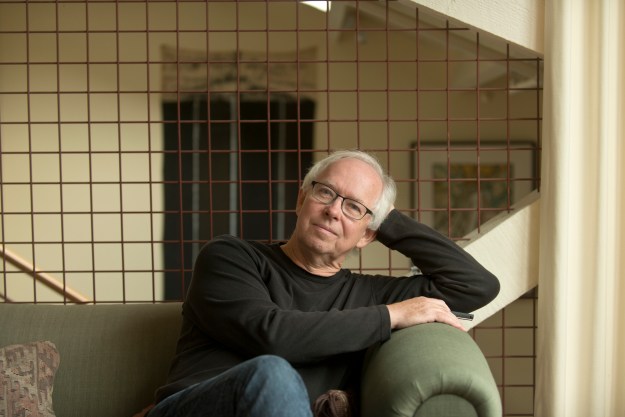
Poetry Shelf interviews Bill Manhire – I get great pleasure from a poem when at some point it pushes me sideways from myself

bill_manhire035-2.JPG

Photo Credit: Grant Maiden


‘Did you all survive?

On that first day of school, I mostly remember

being terrified: the dark interior, the children in rows

at their separate desks, and I was now to be one of them.

In a field by the school, there were bales of hay.

I remember inkwells.

That was perhaps a harder day.’


from ‘The Question Poem’


Somet_Things_to_Place_in_a_Coffin__40224.1482273596.220.220.jpg  Somet_Things_to_Place_in_a_Coffin__40224.1482273596.220.220.jpg   Somet_Things_to_Place_in_a_Coffin__40224.1482273596.220.220.jpg

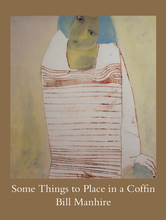
Some Things to Place in a Coffin Bill Manhire (Victoria University Press, 2017)


Bill Manhire’s new collection of poetry offers the reader a sumptuous reading experience: there is coolness, heat, air, movement, suspension.  There are some poetry books that maintain a cavernous distance as I read, but I just click with Bill’s poems. My review of Bill’s book of riddles, Tell me My Name, is here.

Bill  lives in Wellington, and is an emeritus professor at Victoria University. His first book of poems, The Elaboration, with drawings by Ralph Hotere, appeared in 1972.


PG: What challenges you most when you write a poem?

BM: Getting properly underway.  I’m quite good at finding phrases that nag away at me, and I keep them in my head or on paper – but finding my way forward from them can be a problem, or even knowing if I can find my way forward.  I seem to know how long a poem is going to be, roughly what its shape will be and so on, but things often collapse about two thirds of the way through. I suspect there are quite a few poems over the years where it looks like I’ve landed on my feet near the end but I’ve actually broken my ankle.


PG: What delights you most?

BM: Knowing that a poem is actually there, but that it needs some work to be fully itself.  Doing that last little bit of work – so different from whatever inspiration is supposed to be – is strangely exhilarating.


PG: Your new collection, as with Lifted and Victims of Lightning, refreshes what poetry can do: how it can soothe and challenge and prompt wonder. Initially the Zen-like movement of the poems struck me (or you could track an oxymoron effect): silence yields music, stillness leads to activity, simplicity yields knots, economy yields richness. Such movement prolongs contemplation. Have you ever thought of your poetry in this way?

BM: I don’t think I think very deeply or coherently about poetry, especially my own. I don’t have any aims when I write, even with a commissioned poem like ‘Known unto God’. But I get great pleasure from a poem when at some point it pushes me sideways from myself, pushes me out of habitual assumptions, changes the pace of my inner life. I like it when a poem starts off quietly and then starts resonating – a sort of ripple effect – and I certainly like it when a poem looks innocent and amiable then suddenly gets dangerous and agitating. Tonal shifts – code-switching, logopoeia – seem to be key to individual poems, too; and maybe even more, inside a book, to the way poems keep each other company.


The window waits for light.

The path to the river waits

for twigs and stones ands feet.

The day hopes to be successful,

a prose day really, nothing untoward

and so it, too, waits. Also the car waits.

from ‘Waiting’


PG: There are several ‘waiting’ poems and it seems to me this book has benefited from a different relationship with time (a little like your Menton sojourn did for Lifted). Away from your hectic university life, has your time with poetry changed to the degree you are able to wait with a poem differently?

BM: It’s not in the least relevant, but I think Waiting for Godot is the great poem of the 20th century.

I don’t think this is what what you’re getting at either, but we all start out in the world full of appetite and desire and with a strong sense only of the immediate moment. And then I suppose there’s that troubling, invigorating phase later that mixes memory and desire, to borrow the start of Eliot’s The Waste Land.  Your past and future are fighting it out in the present. And then if you last the distance there’s a lot more past and much more of this thing called memory, which as someone said is pretty much the imagination in reverse. I think I’m in this last time zone. I’ve even prefaced the collection with a little poem about memory.


PG: I found the ‘waiting’ poignant because it felt both philosophical and political.

BM: That’s a generous way of putting it. I suspect it’s more that I’m very much a fatalist. This probably has something to do, someone once told me, with being the child of an alcoholic – you’re totally under the circumstances. The great human beings are the ones who change the circumstances, or have a shot at doing so. But my feeling is that most of the time most of us are under the circumstances, and so how you behave is what measures your worth as a human being.


They dug me up in Caterpillar Valley

and brought me home –

well, all of the visible bits of me.

Now people arrive at dawn and sing.

And I have a new word: skateboarding.

from ‘Known unto God’


PG: The collection seems open to anything (Chairman Mao’s impersonator, surveillance notes, the school bus, the trenches, a Sunday School mural, a body blown to bits, war, Ralph Hotere’s coffin). Do you have no-go areas as a poet?

BM: I’m pretty protective about my personal life.  No one could accuse me of oversharing. If you were to try and turn the first-person I in my poems into someone called Bill Manhire, it would all be pretty baffling. Sometimes it’s someone else altogether, sometimes someone with some of my features, sometimes (but rarely) the full myself. As Emily Dickinson says, ‘When I state myself, as the representative of the verse, it does not mean me, but a supposed person.’

Of course the life is there in certain poems, but displaced or approached obliquely.  ‘The Question Poem’ deals with the aftermath of an event like the Christchurch earthquake, but the speaker in the poem, trying to deflect the very direct questions about catastrophe, reaches back to memories of his first day at school – and I guess that’s essentially my own first day at school.  Likewise, ‘The Schoolbus’ is fairly true to a particular patch of my childhood.

But I’m never a completely missing person. I’m there in every poem in some form or other, even if it’s just via a small tonal inflection or a tiny hesitation.


How Memory Works


Come over here

we say to the days that disappear.

No, over here.


PG: You are the master of the miniature poem—I liken your examples to a drop of wine that dances on the tongue. What attracts you to this form? What holds your attention in a small poem?

BM: I think I’m drawn to the short poem for visual rather than auditory reasons.  There’s nothing more wonderful than a few words, just two or three lines, sitting in the middle of a white page. The words and letters start to grow out into the space around them  – which I guess is what you also want the reader’s imagination to do. In some ways the words look vulnerable, but to me they’re powerful.

I like putting little poems on Twitter, and that’s partly because I miss the days when I could type out a handwritten poem and see it as it as itself without my protective care.  You need to find ways of making poems remote, independent – there they are on the screen, out in the world. But there’s something undermining about the way Twitter clutters the screen, so it’s not the same.


Soon enough the enemy will come,

limping out of a place that will not heal.

And soon enough it will be gone,

this world that you once woke into.

from ‘The Enemy’


PG: Initially I view your poetry as steered by a mind drifting, stalling, looping. I was watching the surprising lines of a gull at the beach this morning, the way it arced and stretched, hovered with such grace, landed with light feet. I was fascinated by the beauty and the unpredictability and began to compare it to the way your poems move. Which led me to the way politics also feed the poems. There are subtle entries and there are toothpicks: ‘That is why China waits,/ and America waits.’ ‘You cannot reach the beautiful world.’ In this world under threat, is it now more important that political views are visible, whether overt or subtle?

BM: There are poems in the new book with a political dimension, and maybe there are more of them than there used to be. It’s highly satisfying to make a local-body politician say, ‘I do not think that I am rubbish’!  And sometimes a political element’s there but a little oblique. ‘Poem in an Orchard’, for example, is about rendition. I don’t set out to write politically.  I’m not into palpable design. But I’m a citizen who votes and signs petitions and tries to pay attention. And I’m a human being, so I can do gasping and outrage and anxiety and distress – and sometimes hopefulness – in poetry just as others can.  I think the US invasion of Iraq intensified some of those things for me, and that’s probably evident in some of the poems written since then.

I’ve always felt slightly ashamed that I let the Listener mildly censor a poem I wrote years ago called ‘Wellington’.  It was a piece against Muldoon, and included the lines ‘the boys from Muldoon Real Estate / are breaking someone’s arm’. They wanted to change it to ‘Beehive Real Estate’, and I weakly said yes.  Was it better for the doctored poem to appear in the Listener than not? I don’t know. I restored the true reading when the poem appeared in a book. But I don’t imagine either version would have hastened Muldoon’s downfall.  Labour’s Grant Robertson once told me  that there was briefly a Dunedin band called ‘Muldoon Real Estate’, which is nice. Probably one of those stories that’s too good to check.


PG: The poem, ‘Falseweed’ was originally published as a little pamphlet by Egg Box Publishing in Norwich. It has a different feel to your other poems. The words are scattered like seeds on the expanse of white page. There is linguistic inventiveness that boosts both music and image, particularly in compound words:

leafcandle  pencilheart  wintertwig  scribblegrass  anchorwhite  tongue-true.

What are the origins of this poem? Did it feel like you were shifting your musical key in terms of the words on the line?

BM: Yes. there’s some sort of musical shift – in some ways back to poems like ‘The Seasons/If I Will Sing There’ or ‘Wulf’.  Your seeds image is a good one, as the poem is pseudo-botanical. I started noticing, a bit obsessively, just how many poets in the UK and North America were using the vernacular names of plants in their poems: poets like Jen Hadfield, Alice Oswald, Robert Hass.  It’s maybe connected to Robert Macfarlane’s Landmarks project recovering regional and dialect landscape terms. For a pakeha New Zealander like me it’s possible to feel envious of these language troves. About a year ago the English poet Sasha Dugdale tweeted: ‘Path on Seaford Head through restharrow, agrimony, moon carrot & selfheal.’ Now there’s a lyrical outing!

Anyway, I thought I would try to make a poem that teased that whole fashion – seed-packet poetry, I’ve heard it called – along with my own language inadequacies, by inventing my own weeds and grasses. But then as I wrote I found myself producing a poem very much about writer’s block and a kind of world-weariness.


Now darkness brings out

the little paperclip

plus a clump or two

of scribblegrass –

*

If we had seeds
we would scatter them

scatter them –

*

oh pencilheart –

oh smudge-of-lead.


PG: Is there one poem in particular that really works for you in this collection?

BM: I’d have to say ‘Known unto God’ – in part because of publisher generosity with formatting. I like the way it’s been able to sit like a small chapbook inside the larger book.  Each speaker in the poem gets their own page – so that that thing I was talking about earlier in terms of small poems, the mix of vulnerability and powerful presence, is made visible. The fact that the sequence effectively opens with a double-sided black page sets up the elegaic mood, too. The whole thing looks right.


PG: Which poem took you by surprise?

BM: Again, ‘Known unto God’.  I want to say I didn’t know I had it in me, but of course I didn’t have it in me – it was always out there in the world. My work was to catch it, edit it hard, and get the choreography right.


Victoria University Press page

Susanna Andrews shares her review on Radio NZ National

Bill describes his writing day for The Listener

‘This Reading Life: Bill Manhire’ for NZ Festival

A southern poetry reading and poem sampler: Carolyn McCurdie on Rhian and Robyn

rhian.jpg


Rhian and Robyn

You know that something is going on when the café is not just packed, but has a crowd three-deep along the back wall. The Dog with Two Tails Café and Bar in Dunedin is usually full for the Octagon Poetry Collective’s monthly readings. But for the March readings, I was the host, and I knew that the word had gone out. I knew that people were juggling dates in their diaries to be there. They’d told me. And the reason was the same for all – Rhian Gallagher.

I was as aware as anyone that Rhian hadn’t read in public for a while, and so was feeling chuffed that she’d accepted my invitation to be one of my two featured poets in March. My second guest was Robyn Maree Pickens, a young poet, less well-known, but with a growing history of publication and a growing local following. Some of the crowd had come to hear Robyn as well.

From a host’s point of view, one of the many advantages of featuring much loved poets, is that other poets turn up in numbers, and the quality of the open mic readings is pretty impressive. This Wednesday night, it was great. We encourage new readers. Established poets also take their turn at the mic and set a standard that lifts everyone’s game. Over time, you can hear wobbly beginners develop confidence and an individual, deft use of words.

I divided the evening in two. After the first half of open mic readings I introduced Robyn. When I’d invited her to read, she’d expressed doubts that her work was ‘good enough’. I had no such doubts. She’d also said how nervous she was. Well, on the night, it didn’t show. Her poise was flawless, or looked that way to an outside observer. The standard of her poetry, and the way she presented it earned well-deserved hearty applause from a poetically discriminating crowd. Robyn Maree Pickens. Watch out for that name.

Then more open mic readers, a break, and time to introduce Rhian. People settled. People hushed. Rhian has a kind of reserve about her. She will undoubtedly think this report is over-blown. It ain’t. Her voice is quiet, measured, and the reserve means that she almost removes herself, and the words take over. And suyes. Rhian Gallagher is an exceptional poet. She finished reading. No one wanted to leave.


Carolyn McCurdie 2017


Into the Blue Light

for Kate Vercoe


I’m walking above myself in the blue light

indecently blue above the bay with its walk-on-water skin

here is the Kilmog slumping seaward

and the men in their high-vis vests

pouring tar and metal on gaping wounds

the last repair broke free; the highway doesn’t want

to lie still, none of us want to be

where we are exactly but somewhere else

bending and arrowing

the track a tree’s ascent, kaikawaka! hold on

to the growing power, sun igniting little shouts against my eyeballs

and clouds come from Australia

hunkering over the Tasman with their strange accent

‘get out the sky mate!’ I’m high as a wing tip

where the aches meet the bliss

summit rocks exploding with lichen and moss –

little soft fellas suckered to a groove

bloom and bloom – the track isn’t content


©Rhian Gallager 2017


All the way


To whet a structure like this:

a temple; a palace; a tomb;

I bring my roosting being down

from an adjacent planetary system,

and feel the dew lining each blade

of grass.


I offer fresh pineapple chunks

and pointy rose quartz crystals,

twelve distinct species of lichen,

and a harvest of fine salmon bones.


I bend unpruned effusion; quiver

like a minnow free; become human sap

that slips out the side of the mountain.


I smell what bees taste; feel my forehead

crease into the occasional sun; greet

the raindrop that finds my eyelid; trace

the soft down dune of your neck; drift

into immense fields of information:

microbial, arboreal, mycorrhizal. Palpating

organs that bring salt to the pore; lift

heat from the asphalt; hold the glisten

in an ear of corn.


Till we are limbed-loose and I live all

the way through to you; tendered

to the meat-earth; to the black peat;

the mantling mica, oracular bracken, ur-apple.

Craving, lifting into this flowering temple.

with an end, flax rattling their sabres,

tussock like miles of heads

drying their hair in the stiff southeasterly; the track wants to go on

forever because it comes to nothing

but the blue light. I’m going out, out

out into the blue light, walking above myself.


©Robyn Maree Pickens