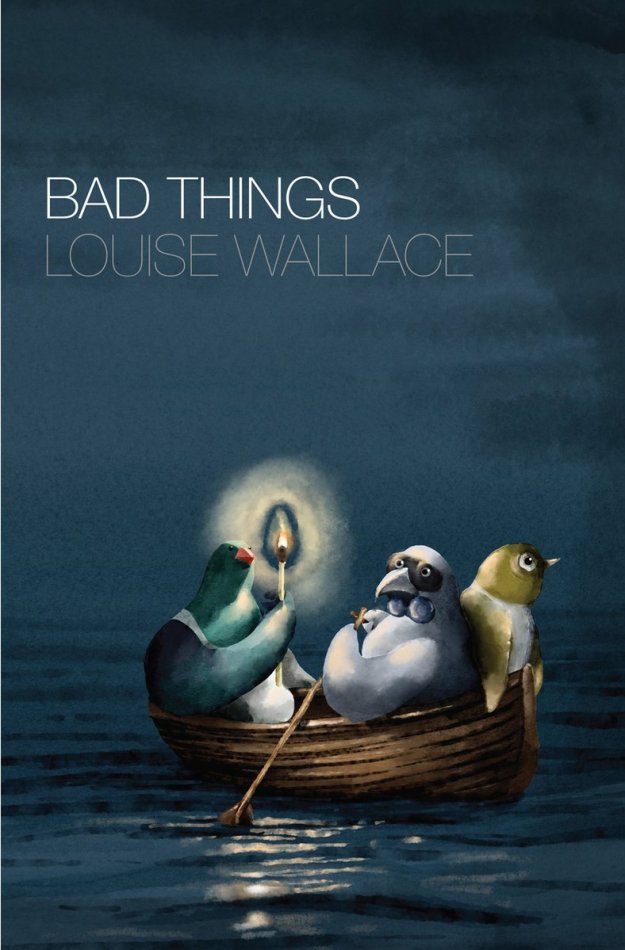

POETRY | CHOCOLATE

The taste of poetry, the sound of chocolate and the sense of books. We’ve matched medieval humours with contemporary New Zealand poets and some of the best chocolate you’ll find, ever.
Join us at Ekor Bookshop for a multi-sensual, medieval-medicine-inspired poetry reading and chocolate tasting.
Featuring: Nick Ascroft, Hannah Mettner, Louise Wallace, and Freya Daly Sadgrove.
Chocolate curated and introduced by Luke Owen Smith (The Chocolate Bar).
Chocolate (and poetry) included in ticket price.

With Donna in Berlin, New Year 2013/14.
You have to start somewhere
in these morose times,
a clearing in a forest say,
filled with golden shafts of sunlight
and skirmishes. A little later
your itinerary will take you past
weathered churches on plains that stretch
as far as the eye can see.
from ‘The lifeguard’ in The Lifeguard (2013) and Selected Poems
To celebrate the arrival of Selected Poems (Auckland University Press, 2017), Ian Wedde agreed to talk about poetry with me.
Born in Blenheim (a twin of Dave) in October 1946, Ian has lived in Bangladesh, England, Jordan, France, Germany, now lives in Auckland with his wife Donna Malane, a screen-writer and novelist, they have five children and five grandchildren, has published seven novels and sixteen collections of poetry as well as books of essays and assorted art books and catalogues. Most recent book is Selected Poems (AUP, 2017) with marvellous art work by John Reynolds. New Zealand poet laureate 2011-12, Prime Minister’s Award for Literary Achievement (poetry) 2014.
Cover and internal art work: John Reynolds
The Interview
PG: Did poetry feature in your childhood? What activities delighted you as a young boy?
IW: There wasn’t a lot of poetry in my childhood, though my father chanting John Masefield’s ‘Cargoes’ as he rowed across Waikawa Bay in the Marlborough Sounds was memorable – the rhythm was right but the words were deeply weird to me, which was what I liked.
Quinquireme of Nineveh from distant Ophir,
Rowing home to haven in sunny Palestine,
With a cargo of ivory,
And apes and peacocks,
Sandalwood, cedarwood, and sweet white wine.
PG: What were some key influences when you first started writing?
IW: A link between the deeply lost-in-it world of reading stories and the hypnotic secret ecstasy of writing things, or trying to. Also the fascination of not understanding either what I was reading sometimes (I happened on Browning’s ‘Sordello’ by accident) or why writing was so mesmerising. Also Kipling, because of the poems associated with the Jungle Books, which I was addicted to.
PG: Or at university?
IW: At university I was obsessive about getting my hands on contemporary American poetry after or off the shoulder of the great modernists – post Pound-and-Eliot if you like. Post-Beats, for that matter. William Carlos Williams above all, though of course Spring and All and Kora in Hell were published in the 1920s – but those early books like Spring and All and Kora in Hell incorporated prose and poetry, they seemed to be experimental and interesting in ways that the accredited modernist masters were not. I loved Williams’ humanity and love of sparrows and weedstalks, but also the marvellous delicacy of thought that articulated his lines. Robert Creeley was important, his frugal counterpoint; Denise Levertov’s makeover of the exhausted lyric; Gary Snyder’s ecological ethic that made for a new kind of eclogue; Frank O’Hara’s urbane vernacular and before long Ted Berrigan, especially Berrigan’s Sonnets. John Ashbery’s ‘The Tennis Court Oath’ amazed me. Also French poets, but always sheeting back to Rimbaud. Pablo Neruda in bulk, his marvellous relish for the sensuous world and its political demands on our responsibilities. Elizabeth Bishop’s The Complete Poems. John Wieners because he broke so many rules without showing off.
I study my son’s face, to treasure it.
Each day (now, & now) it’s changed & I’ve lost
what I love, loved.
from ‘Paradiso Terrestre’ in Earthly Sonnets for Carlos (1975) and Selected Poems
PG: The birth of your first son prompted Earthly: Sonnets for Carlos. While some New Zealand men have written fatherhood poems (notably Graham Lindsay) I cannot think of another extended sequence such as yours. The prolonged contemplation allows greater complexity when facing what might at first seem unsayable – the miracle of a new-born baby. Did your son’s arrival throw your relationship with writing in the air?
IW: I usually threw my infant son in the air. It was a time of wonder. I also walked around with him quite a lot at night, those rhythms shaped how I thought and how the poems moved.
PG: What draws you to the longer sequence?
IW: A disinclination to get to the point in timely fashion or to admit there is one worth ending with. There are dear friends whose conversations and phonecalls I love because they do go on. Mostly I like giving in to the drifts and swerves of language that takes me to places I can’t get to by intention. A tendency rapidly to lose interest in the self-centred, anecdotal lyric in which a certain kind of modesty often strikes me as sham.
PG: Have other things elbowed your writing—refreshed, transformed, derailed, sent askew in good ways, sparking in new directions? A book or theory or idea or chance encounter or unexpected experience?
IW: Probably art more than anything, and music. The ways in which our perceptions of phenomena trigger thought I find fascinating and seductive. I’m an easy weeper – I’ve been known to sniffle during the opening credits of movies just because it’s so amazing that we can do this stuff. I love art in its many guises because at its best it can be so capable of subversion – of subverting representation as mimesis, subverting personal testament, or markers of class and taste – and because at its worst it can be all those things, and boring to boot, especially as cultural capital. Music perhaps because it’s just off the camber of what language does in poetry, unless of course we’re talking about poets as song-writers, that fabulous ancient lineage. During the time I spent in Jordan in 1969-70 the poetry of Mahmoud Darwish and others was a revelation – how it had a vast, loyal, politically disenfranchised radio audience of Palestinians and at the same time reached deeply into classical histories, reached the audiences of the Egyptian singer Oum Kalsoum and spoke to intellectuals such as Edward Said.
(..) If trees &
suchlike don’t tell on me I understand
my son will & soon, too. His new blue eyes
see everything. Soon he’ll learn to see
less. O the whole great foundation is sand.
But the drought has broken today, this rain!
pecks neat holes in the world’s salty fabu-
less diamond-backed carapace & doubt comes
out, a swampy stink of old terrapin.
What shall I say? ‘I hid nothing from you,
but from myself. that I dream, little one,
from ‘for Rose’ in Earthly Sonnets for Carlos (1975) and Selected Poems
PG: For me Sonnets for Carlos is a collection imbued with love deep within the roots of the line. Yet when I regard the expanse of your writing across the decades, love seems to be an active ingredient whether it is for the dead poet Horace, blistered peppers on the hot plate, the beauty of a city street, family or the wide stretch of home. Do you agree? What do you see as active ingredients that have endured?
Late autumn’s good up around
The neighbourhood mountain’s misty flank in the morning
When the piss-trail of the morning’s promenade’s fresh
And even an old dog can still feel
The sac of earth trembling under his running feet.
from ‘5.4 To Mount Victoria’ in The Commonplace Odes (2001) and Selected Poems
IW: ‘Love’ is an easy word to utter and an even easier one to claim. Looking at what’s in this new book of selected poems, what I think I see repeated quite often is a claim that I ‘love’ the commonplace world – William Carlos Williams’ world of sparrows and weedstalks, if you like. I love appetite and enjoyment and relish and so the preparation of meals and so forth. I love thought that has a vigorous appetite, that enjoys tasty discussion. But I think you have to love this kind of ‘love’ knowing it comes at a cost, that grief or anger are its stalkers. I think there’s quite a lot of anger and frustration in my poems.
PG: In your introduction, ‘Enjoyment,’ you talk about the joy of writing poetry. That feeling must be contagious because in my view your poetry is a joy to read. For some writers, writing is a dark and painful process while for others it is energising. Do you also have patches like these? Do you have writing patterns, routines or rituals?
IW: For me writing – or thinking about writing – poetry really is a tremendous pleasure, at once a kind of rapture or abeyance of self, and a complete deployment of the self’s capacities. I’d never describe it as painful, though it can be tough when the critical phase kicks in and you realise that your rapture has generated a steaming heap. But then there’s a certain pleasure in consigning the pile of shit to its bucket. Much of what I write starts with walking around with a little notebook, and in a sense nothing in the notebook is ever wasted, even if what happens to it ends up getting chucked.
PG: You refer to the pleasure generated when ‘a poem veers off, carried along by a momentum that’s not quite mine, towards a direction neither I, nor the poem’s reader, is anticipating.’ There is a sense of writing into the unknown, but could you conversely say you write into into the known in unpredictable ways?
IW: No, I’m really talking about how my let’s call it ‘overarching concept’ can be highjacked by language itself – I go along with that, in a sense, and try to keep a very light hand on the tiller (as in that mixed metaphor).
PG: I am thinking, for example, of The Commonplace Odes and Three Regrets and a Hymn to Beauty where home infuses the poems in searing physical detail along with home-nourished states of mind. I rate these two books in my handful of sublime New Zealand reading experiences ( I am thinking too of the way your books have been long-term, book mentors along with those of Michele Leggott, Bill Manhire, Bernadette Hall, Cilla McQueen). The language is pitch perfect but it is that glorious tension between the known and the unknown that elevates me—along with the roving intellect and the physical beacons. I am reminded of Kafka’s yearning to read books that, like an axe, cut through the frozen sea within us. Do you have a book in your oeuvre that has particularly worked for you?
IW: Do you mean books I’ve read? I think there have been lots of them, over time. Perhaps the one that keeps on being non-negotiable is Rimbaud’s Oeuvres complètes (Gallimard, 1972) and subsequent translations, including those by Samuel Beckett, John Ashbery and Jeremy Harding, among others. Rimbaud’s pronouncements in May 1871 at the age of seventeen in letters to Georges Izambard and Paul Demeny that ‘I is somebody else’ (Je est un autre) remains for me one of the most potent codes with which to approach the way in which the poet (at seventeen) can become a ‘drunken boat’ that morphs into the child the poet was ten years earlier, playing with his toy boat on a pond, and finally the ship that swims under the frightful gaze of the prison hulks that incarcerated the Communard prisoners of 1871 that were the seventeen year old Rimbaud’s heroes. But if you mean one of my own books that I think has come close to that kind of sorcery, then pass.
Beauty
you’re the trouble I’m in
because there’s a lot of sweetness in my life
with that rude kind of magnificence
as when they hung Le Bateau upside down,
unusually animated and sparkling.
Happy birthday Montgomery Clift:
where did I see this guy – in Red River
or From Here to Eternity?
Accept and you become whole
bend and you straighten.
from ‘A hymn to beauty: days of a year’ in Three Regrets and a Hymn to Beauty (2005) and Selected Poems
PG: The allure of language in its slippery elusive glory, its ability to make music and bear all manner of freight, is a potent force for the poet. When a poem succeeds for you, or comes close, what is language doing? Do you have a poem or two that continue to resonate at the level of language? For me, there is an ongoing musicality, an enviable musicality, that provides shifting keys harmonies and chords.
IW: I think any poem that’s worth reading ‘resonates at the level of language’, which is to say the language doesn’t just do what it’s told to, rather it subverts or distracts the task of making itself understood. ‘Musicality’ in the language of poems can be a distraction or, at worst, an indulgence, an invitation to the categorisation ‘poetic’. I like the idea of meaning-chords as riffs, vertical rather than linear.
(..) the lovely world has everything I need,
It has my kids, my sweetheart, my friends, it has a new book
With mouth-watering risotto recipes in it,
The kind of plump rice you might have relished,
Horace, in the Sabine noon, yellowed with saffron.
‘The zen poet’ is another of you, he wrote a poem
About making stew in the desert which changed my life.
A good cookbook is as good as a book of poems
Any day, because it can’t be any more pretentious
Than the produce you savour with friends as night falls.
from ‘1.2 To the cookbook’ in The Commonplace Odes (2005) and Selected Poems
PG: In ‘To the cookbook,’ we read that ‘A good cookbook is as good as a book of poems.’ Women have long been denigrated for domestic traces in their writing. I take issue with this on so many levels. Food, including the cooking of food, adds a sensual zest, like finely judged salt and pepper, to your poetry, and indeed opens fascinating windows upon relations between food, life and writing. How do these connections work for you? Are you offended if I describe some of your poems as mouth-watering?
IW: Not in the least offended. It’s a compliment, thank you. And then, Neruda’s ‘Ode to Tomatoes’ is one of the most slyly political poems ever written, as is Gary Snyder’s ‘How to Make Stew in the Pinacate Desert’.
PG: The word subversion crops up in your introduction. You relish subverting expectations of what language ought to or can do. Do you see other subversions at work?
IW: I try to subvert myself, not always with much success.
PG: The Selected Poems underlines how important your reading life is and how it has sustained and infiltrated your writing life. Name three books from any time or any place that have mattered deeply.
IW: Geoff Park’s Nga Uruora: The Groves of Life; May Gibbs, The Complete Adventures of Snugglepot and Cuddlepie; Ovid, Metamorphoses.
PG: Name three New Zealand poetry books that have resonated with you.
IW: Nga Moteatea (4 vols.); R.A.K. Mason, Collected Poems; take your pick of poets who are also song-writers, we have some great ones: Hinemoana Baker, Teremoana Rapley, Bill Manhire, Dominic Hoey known as Tourettes, the Dam Native crew, lots more in this country.
PG: Have you been attracted or influenced by any poetry movements? Or conversely repelled?
IW: Constantly.
If I wanted to translate
silence I would have to be
deaf, to remember silence
I would have to recognise
its opposite, for instance
singing, a miracle, not
too much to ask I hope, and
why wouldn’t I hope, why not?
from ‘Shadow stands up’ in The Lifeguard (2013) and Selected Poems
PG: In your introduction you suggest it is over to the reader to make sense of the way your writing has changed—over to us to decipher the recurring motifs and predilections, the side steps, the shifts in attention and concerns. Time and age are under the spotlight right from the start, in the first poem addressed to Matisse. Just one question then. Do you feel you have greater freedom at 70 when you pick up your writing pen?
IW: I have less compunction about putting the pen down and going for a walk. With or without my notebook.
Henri Emile Benoît Matisse je vous salue!
Let me tell you a secret.
Your work goes on.
I’d only seen your things in art books
bite sized. I dreamed there was a bright room
in my head somewhere
which you were making real stroke
by counterpointed stroke
& where I would some day retire
to an armchair in the corner:
the final element of a composition
that perfectly described itself.
from ‘Homage to Matisse’ in Homage to Matisse (1971) and Selected Poems
Auckland University Press page
Radio NZ review
Herald piece with Greg Fleming
Discussed in Anna Jackson’s essay on the Epistle Poem





I picked up the latest Sport the other day and the cover was so good that I didn’t want to open the issue for ages. Sam Duckor-Jones’s drawing is like a poem that is strange, off-kilter, mesmerisingly good (someone is adrift awkwardly in the sky).
Just inside there is list of books that Victoria University Press are publishing this year: 8 fiction, 11 poetry, 2 plays/poetry-music, 9 non-fiction. I have been musing lately on VUP’s productiveness and how it is to be utterly lauded. In a tough publishing climate, VUP work hard to showcase New Zealand writing in diverse forms and with diverse preoccupations. I hear niggles (especially when VUP got such a clean sweep at the Book Awards) yet I have no time for such gripes. This is a chance to celebrate a publisher sticking its neck out and publishing quality writing whichever way you look. I don’t see the VUP stable as a set of clones – the exact opposite. On my blog I only have time to review the books I love (and even then I don’t get to them all) and interview poets that have struck a chord at some point. It is very seldom I skip over a VUP poetry book because it has missed the mark for me as a reader. If I look back at books published over the past few years, I see an eclectic mix as opposed to a restrictive school of poetry. Think of the wry wit of James Brown, the breathtaking musicality and heart-stopping moves of Bill Manhire, the grit of Geoff Cochrane, the anarchy and surrealism of Hera Lindsay Bird, the contemplative detail along everyday trails of Jenny Bornholdt, the inventive, unpredictabliity of Hannah Mettner. I have adored this poetry and yes, I will sing its praises from the rafters.
In ‘The Old Guard New Guard’ session at AWF17 and in response to Andrew Johnston raising the clone issue, Bill Manhire summed up his aims and ways of working when he was teaching at IIML. The conversation utterly resonated with me and a few things he said corresponded perfectly with my idea for Poetry Shelf’s Winter Season (to be posted in July!). The essential aim was for students to find their own voice (Teju Cole talked about this a little too). I loved this idea: ‘Write what I don’t know but it will somehow be mine.’ In workshops, Bill wanted students ‘to jump the tracks, to go sideways from themselves.’ He wanted them ‘to turn themselves into other poems’ and ‘to produce poems that mattered to them.’ Bill also applied this to himself and talked about the way he might get too comfortable and thus seek out ways to elbow himself sideways off the writing tracks (my words sorry as I didn’t record this). These notions really resonated with me. As poets we are all attached to the mysterious thing called voice: our voice, how to sustain it, how to tilt or transform or nurture it. I love the idea of sidestepping the usual ruts and paths.
The latest issue of Sport is chiefly a celebration of writing that has come out of Wellington or is part of the VUP stable. I don’t have an issue with this and I applaud the range and diversity of writing within. There is a fabulous interview (Bill Manhire interviews John Gallas). I now want to track down John’s poetry – the taster of poems confirms he is a poet to add to your shelves. Hope the poetry interview (or of other genres) becomes a regular feature of Sport particularly if it is conducted over months at leisure by email as this one was. Great reading!
Also loved the cluster of essays in the middle by John Newton, Virginia Were and Giovanni Tiso. Another essential ingredient that adds verve and challenges.
The poets range from James Brown to Frances Samuel ( conjunctional wit produced out of found material to slightly strange, reader-hooked storytelling); from the luminous detail of Elizabeth Smither to the surreally personal and personally surreal of Rata Gordon; from the bolt in the eye of Claire Orchard to the tender detail of Harry Ricketts. One of my favourite new poets, Amy Leigh Wicks, haunts me, as does Bill Nelson, in the unfolding detail and the way the poems move. Good to read Bob Orr sharply conjuring place, Rachel O’Neill’s prose-like agility, Jake Brown’s bright jumpcut portrait of a town, the stark, sharp tug of Natalie Morrison’s fairytale-ing.
I haven’t finished reading yet: still Anna Jackson, Vincent O’Sullivan, Jake Arthur, Helen Heath, Kerrin P Sharpe and more. In my bag for today. Ha! A poetry bag!
So this seems like the perfect occasion to say congratulations to Fergus Barrowman and his team at VUP. As a writer, reader and commentator on NZ poetry, I am in debt to the extent of your gifts to NZ literature. As for Bill Manhire, I reckon it is about time a poet got the top Honours in a Queen’s Honour’s list along with those who have done extraordinary things in the business world. Bill has gifted so much with generosity and humbleness, he has enhanced what we both read and write, and has written poetry collections that sing like no other.
Yes there is magnificent poetry in all its forms accruing the length and breadth of NZ, fabulous poets and poetry projects, tireless ambassadors (Michele Leggott, Bernadette Hall, Emma Neale, David Eggleton) but this is VUP’s year and I applaud you!

Apirana Taylor and Kiri Piahana Wong
Vincent O’Sullivan and Lynley Edmeades
This terrific project forms a little poetry reading house where you enter the rooms off the side and you don’t know what you will find. There is a vitality and a freshness as established and emerging poets and those in-between come together in poem conversations. Love it! (I am part of it but no idea how the poetry house would unfold)
I could have chosen any of these words – there is a lot to say for velocity in a poem for instance – but I have just read Anne Tyler’s Vinegar Girl so I am choosing vinegar. Vinegar Girl is a reworking of the story of Shakespeare’s The Taming of the Shrew – a play I have always liked. Anne Tyler has the heroine, Kate, courted by her father’s research assistant, Pyotr, for visa reasons, and the title comes from his perplexity over the proverb she uses in an argument with him: you catch more flies with honey than with vinegar. But why would you want to catch flies, he wonders. Actually what I liked about the book was how sweet it was – I am still buzzing about it – but I think there is a place for sharpness in poetry. To move from flies to fleas, Donne’s flea poem makes a witty courtship poem because of his acerbic disparagement of the conventional pieties of the girl he is courting – and because he includes in the poem her equally quick disparagement of his self-serving arguments with her squashing of his flea. I like a certain acerbity in a poem, a sharp-sighted view of the world, that I find in the poetry of Helen Rickerby for example, with her historical portraits in My Iron Spine that are somehow unsparing and sympathetic at the same time, or in the poetry of Anne Kennedy, with the attention she pays to the gaps between what we say and what we think, how we say things and what we mean (perhaps not quite the gap we think), what we begin to say and the revisions we make. And in Janet Charman’s writing, too, I find the same unsparing sympathy, the same rather unnerving attention to the way language works to express and betray us, and the same resistance I find in both Helen Rickerby’s work and Anne Kennedy’s to the way women’s lives have been told in stories that are not the stories we might want to tell if we were the ones telling them – and we are.
©Anna Jackson 2017
Anna Jackson lives in Island Bay, Wellington, lectures at Victoria University, and has published six collections of poetry, most recently I, Clodia (AUP, 2014). With Helen Rickerby and Angelina Sbroma she quite often runs conferences and other events for talking and thinking about writing, this year a conference on Poetry and the Essay.
‘Hera did not get a chance to read another poem (until I invited her to do so in question time) or to talk about the way her book offers so much more to the reader. The quirkiness, the sharp surreal detail, the blurred borders, the fluency, the sense of confession that may be grainy truth mixed with grainy lies. The exuberant joy in language. The electric switches and dovetails as the poem moves.’ PG
I wrote a short piece on The Old Guard New Gard event at AWF17 because for whatever reason Andrew Johnston did not give equal airspace to Hera Lindsay Bird. He had a conversation with Bill Manhire that roamed wider and deeper. I filled several notebook pages with thoughts to return to.
What has intrigued and unsettled me is the way some people are still immune to the fact a woman is given less talk-space in a public forum.
David Larsen sung the session’s praises but made no mention of the lopsided allocation of time; the simple fact Andrew invited Bill to read two poems (one longish) and Hera one felt wrong. Unlike David, I do not think there was a deep and wide ranging engagement with what Hera’s poetry is doing. From her mouth. By hearing her poems.
It felt like David was at another session: ‘They’re an uneven pair, in that Manhire has vastly more past to talk about, and all of it’s so interesting that the session could easily have edged into being MANHIRE! (…and Bird.) Johnston didn’t let that happen’
This statement almost implies the New Guard, with less life and writing experience, has less to talk about. I don’t think it works like that. And it did happen.
David also wrote: ‘Bird talked more than he did about the specific character of her work, and also about its reception and what the experience of sudden fame has been like.’
Again I felt the conversation was limited and did not expose the variety of things Hera’s debut collection is doing.
Briar Lawry’s review on The Booksellers site also remains blind to the partial eclipse of Hera but catches the conversation flow.
I do not know why the sideline happened, and I do not think it was deliberate, but I am drawing attention to it because it seemed like a replay of the Old Guard of New Zealand poetry where men ruled the poetry roost and women’s voices were sidelined, and even worse, denigrated, devalued and not given prominent visibility in the fledgling canon. And that felt like such an irony.
I have experienced several examples of being sidelined by a male poet in a public forum but I was not and am still not prepared to hang out personal anecdotes. However I am prepared to challenge or highlight ways in which women are disadvantaged by men in our literary landscapes.

 NZ Poetry Shelf